
Explaining Your Sapphire Hobby
How do you explain a sapphire hobby without losing your audience? Lead with something anyone can appreciate, such as a stone in good light. Then offer one or two simple facts: sapphires come in almost every color, ruby is the same mineral, and every natural stone is unique. Translate your vocabulary as you go, answer the common questions honestly, read the room, and keep a sense of humor.
Start With the Simple Wow Factor
Before diving into trace elements, begin with what anyone can appreciate. Show a sapphire in good light and let it speak for itself. You might say:
- “Sapphires come in almost every color, not just blue.”
- “They are among the hardest natural gemstones, second only to diamond among popular gems.”
- “Each natural sapphire is unique, so no two are exactly alike.”
Simple, true facts are often the best way to spark interest.
Explain What a Sapphire Actually Is
People are often surprised to learn that ruby and sapphire are the same mineral. Try this:
“Sapphire is a mineral called corundum, which is made of aluminum and oxygen. When it is red, we call it ruby. Every other color is sapphire.”
If they want more, add that tiny amounts of other elements create the colors. The full chemistry is in The Science Behind Sapphire Color, and how sapphires form underground is in How Sapphires Form Underground, so you can point curious friends there rather than reciting it over dinner.
Show, Don’t Tell: Stones From Our Inventory
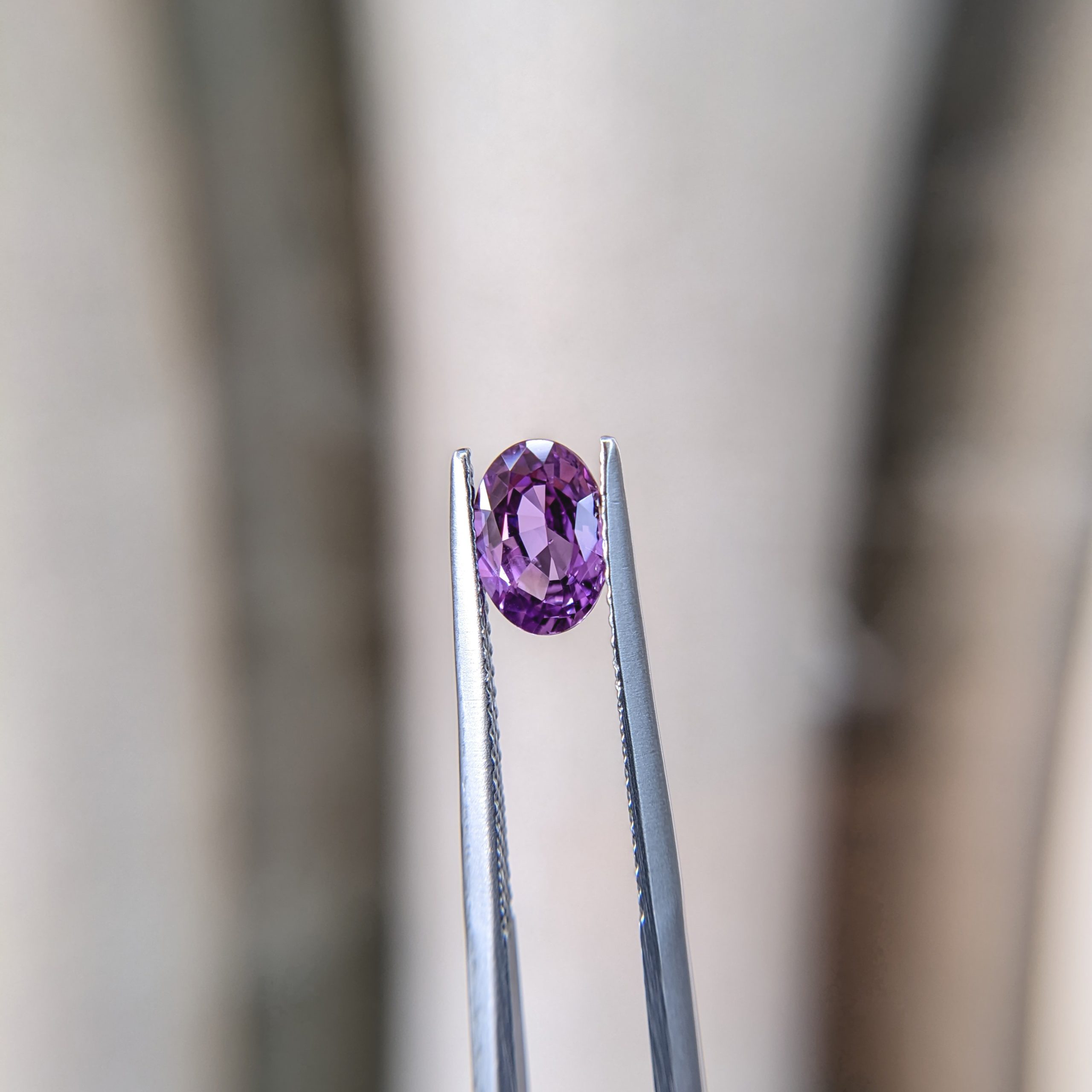
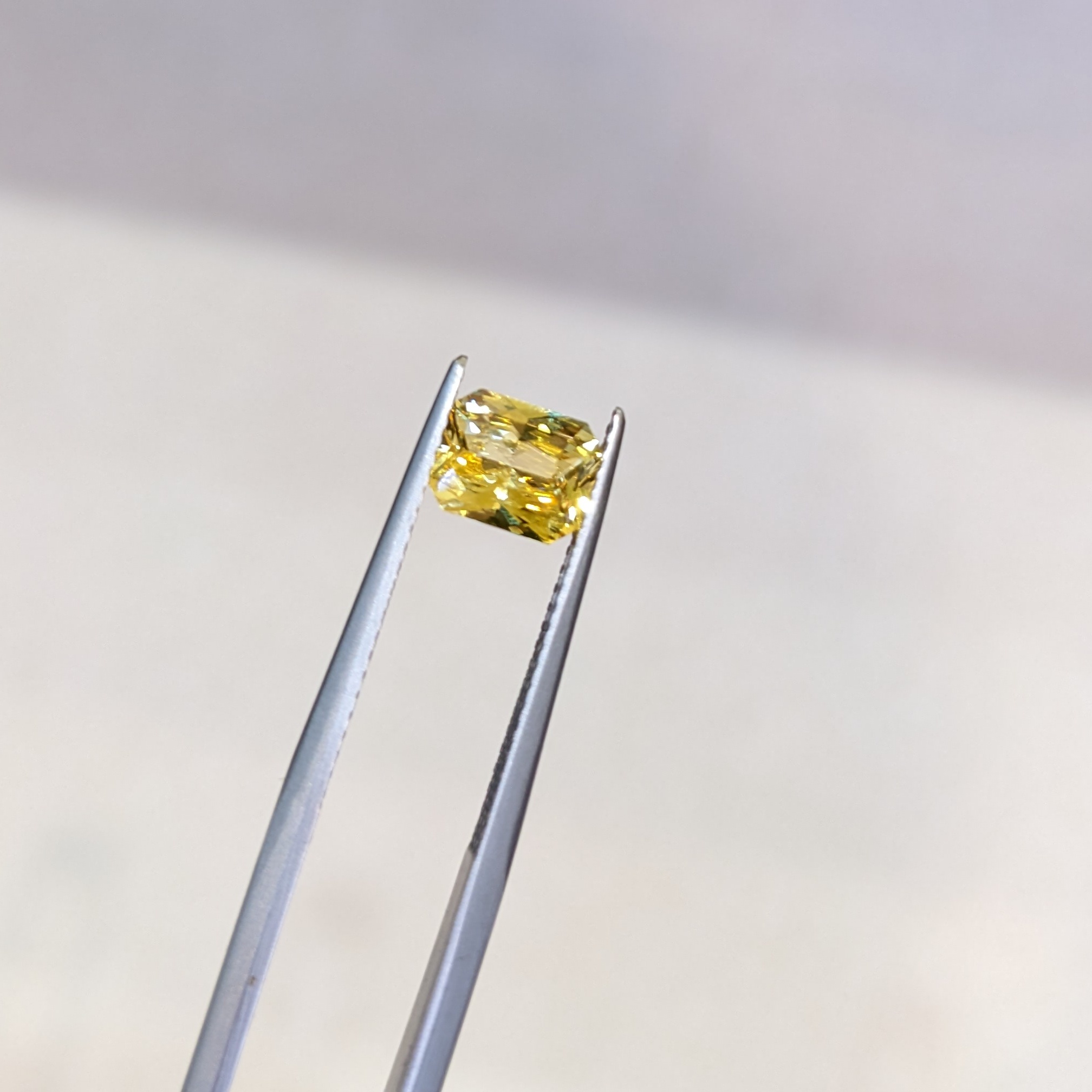
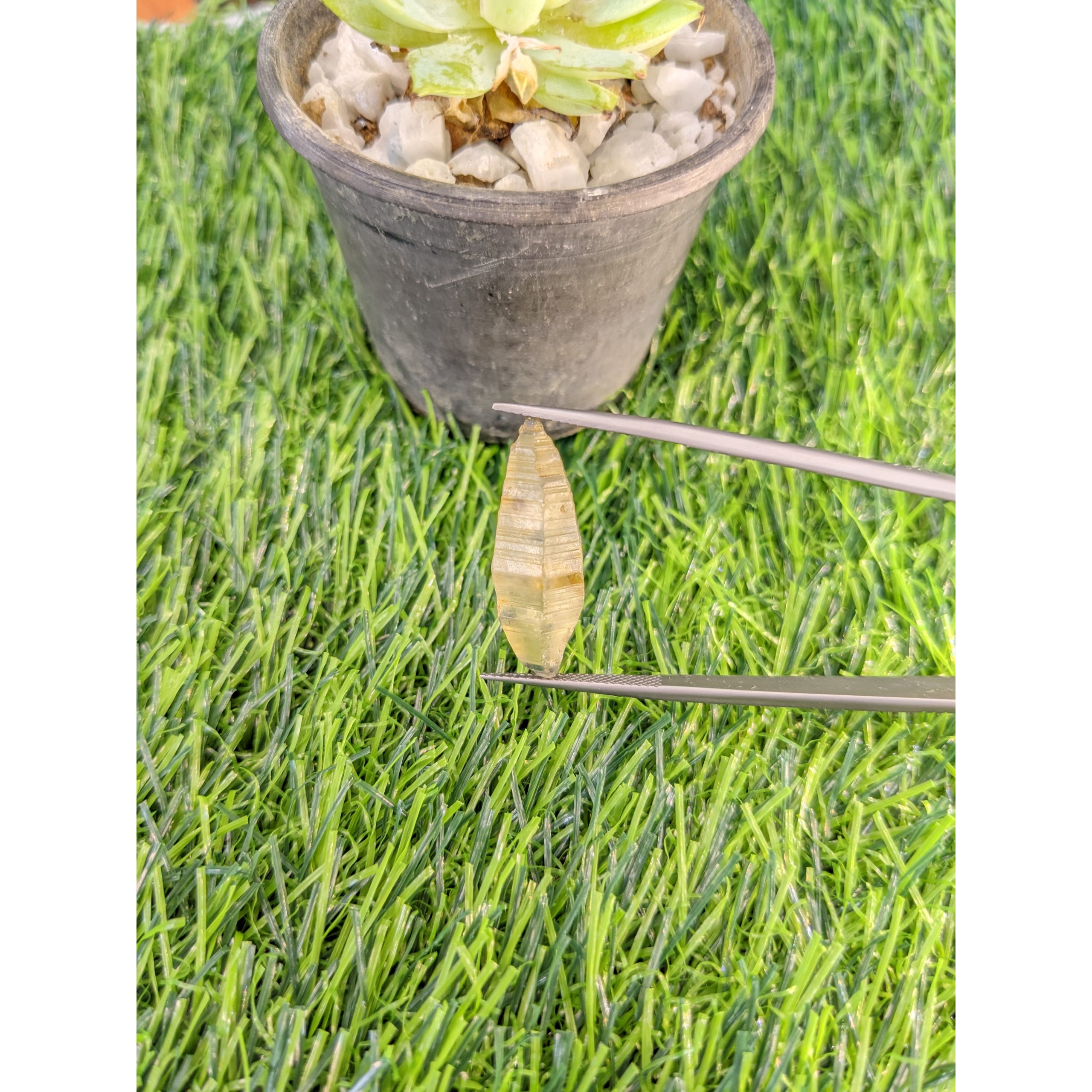
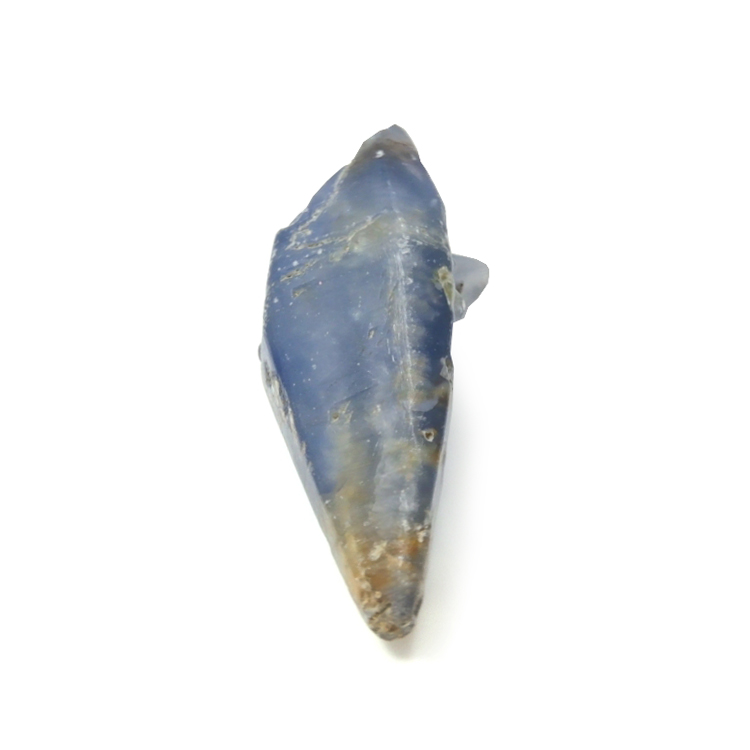
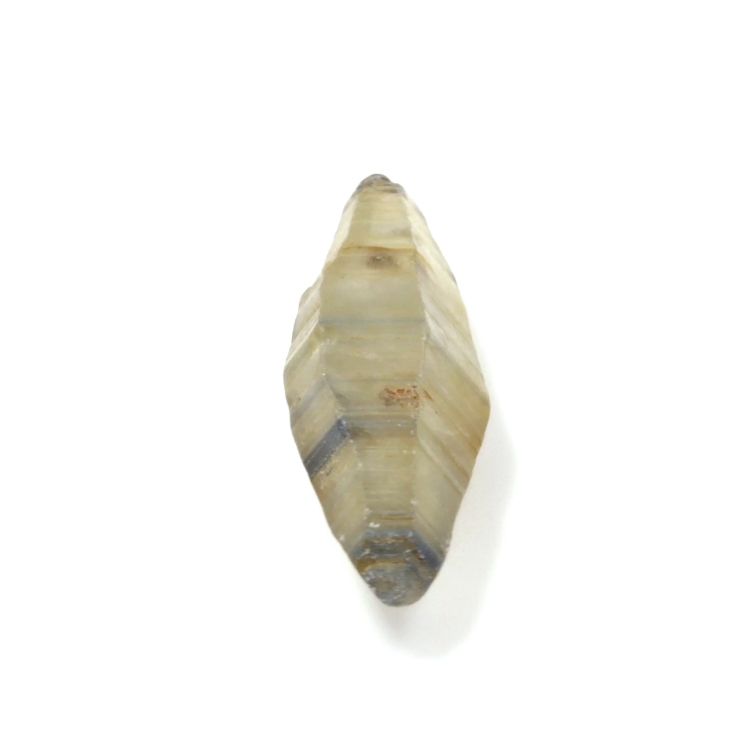
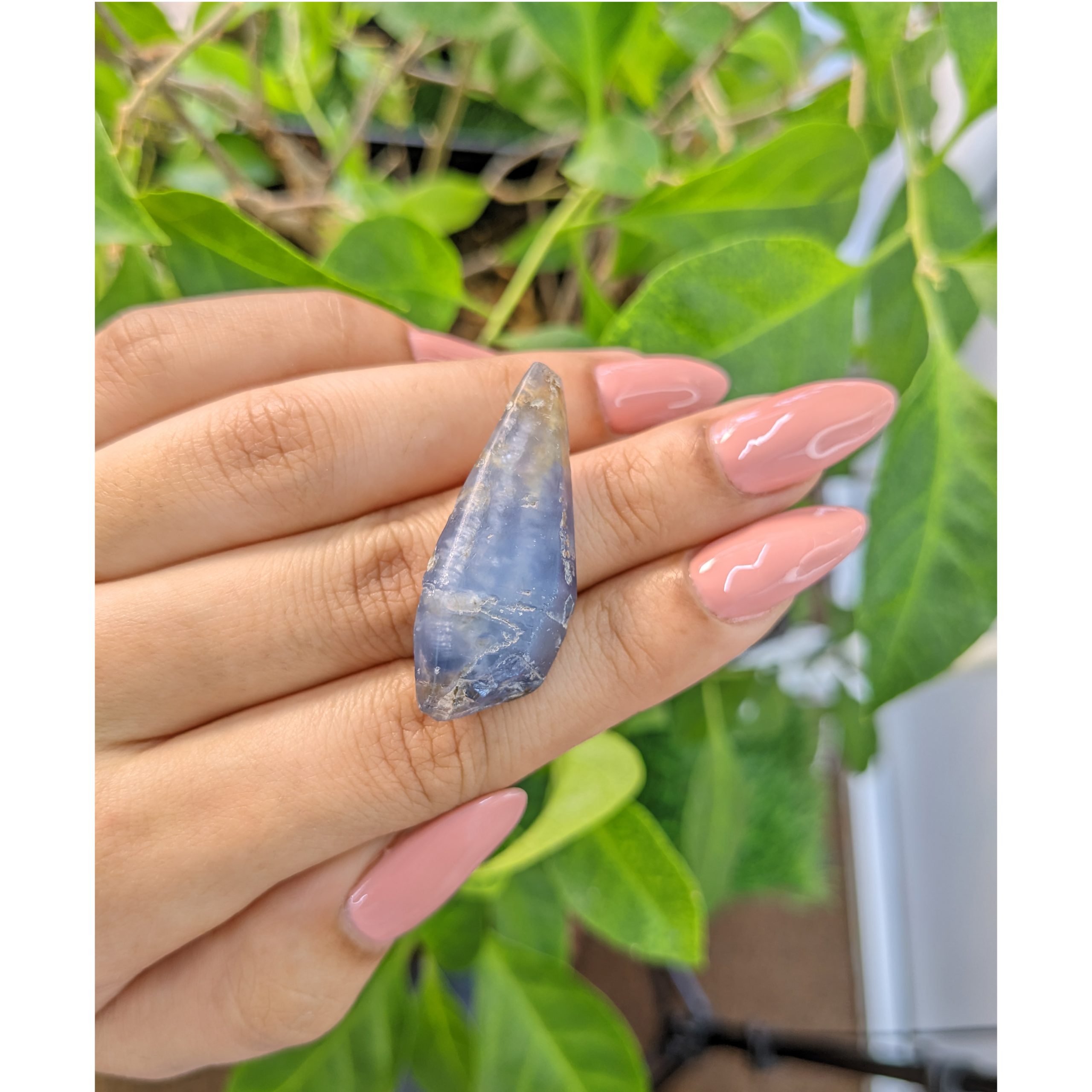
A tray is usually more persuasive than a lecture. To show what a sapphire looks like before cutting, the 51.60 ct Ceylon rough blue crystal S11417 and the 20.11 ct Ceylon rough yellow crystal S11409 are both listed as No Enhancement, and in the photographs they look quite different from the polished gems most people picture. To show that sapphire is not only blue, a few cut stones tell the story quickly: the pink S4039, the yellow Y5495, the bluish green S7232, and the purple S9338.
The photos below show a good way to share stones as well. Tweezers and a plain background keep attention on the gem, and a hand shot adds scale.
Show Them in Motion
Three short phone videos of stones on the hand, the easiest way to show a friend how a sapphire sparkles and shifts as it moves.
Translate Your Gem Vocabulary
Every hobby has its own language. Sharing a few terms with friendly explanations can make your enthusiasm easier to follow.
Silk
“Silk is a term for very fine needle-like inclusions, usually rutile, inside a sapphire. A little bit can soften the light and make the color look velvety.” More on what inclusions can tell you is in The Secrets Inside a Sapphire.
Pleochroism
“Some gems show slightly different colors depending on which direction you look through them. Sapphires do this, which is why cutters orient the rough carefully.” The science is in The Science Behind Sapphire Color.
Heat Treatment
“Many sapphires are heated to improve their color or clarity. It is a common, accepted practice, as long as it is disclosed. Unheated stones are rarer.”
Padparadscha
“It is a rare pink-orange sapphire. The name is usually said to come from the Sinhalese word for lotus.” If someone asks for more, What Makes a Sapphire a Padparadscha? is a friendly place to start.
Share What Makes It Fun for You
Every collector has a different reason for loving sapphires. Explaining yours makes the hobby relatable.
The Thrill of the Hunt
Searching for a particular color, size, or cut can feel like a treasure hunt. Comparing stones and finally finding “the one” is genuinely exciting.
Learning Something New
Sapphires connect geology, chemistry, history, craftsmanship, and design. Every stone offers something to learn.
The Story Behind Each Gem
Each sapphire formed deep underground over a very long time, was recovered by miners, cut by skilled artisans, and eventually reached you. That journey is part of the appeal.
Creativity and Design
Choosing settings, metals, and designs for custom jewelry lets you express your personal style.
Address the Common Questions Gracefully
“Isn’t it expensive?”
Like many hobbies, sapphire collecting can fit various budgets. Small sapphires, lighter colors, or less traditional shades can be quite accessible. Many collectors enjoy studying stones as much as buying them.
“Are they real?”
Explain the difference between natural, synthetic, and imitation stones. Natural sapphires form in the earth; synthetic sapphires have the same chemistry but are grown in a laboratory; imitations, such as glass, only look similar. Reputable sellers disclose this clearly.
“Why do you need a loupe?”
A 10x loupe helps you see inclusions, cutting quality, and surface details. It is like a magnifying glass for gems, and it is often how you discover a stone’s personality.
“Is it an investment?”
It is wise to be honest here: gemstones are best enjoyed for their beauty and meaning. Prices depend on many factors, and buying gems purely as an investment carries risk. Most collectors buy because they love the stones.
Keep It Balanced (and Have Fun)
Enthusiasm is contagious, but even the most supportive friends may not want a full lecture on corundum chemistry at dinner. A few tips:
- Read the room. Share a little, then see if people want more.
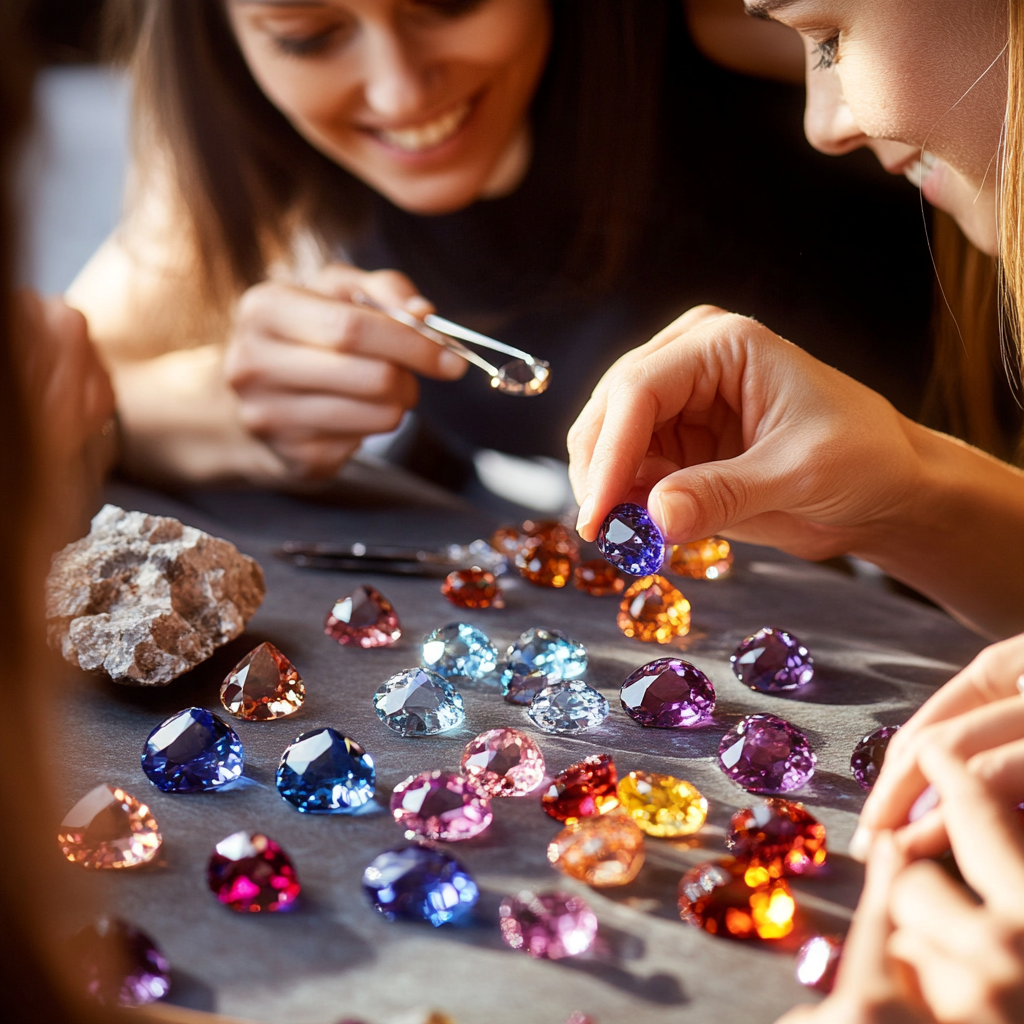
- Use visuals. A gem tray or a few photos can say more than a long explanation.
- Invite participation. Let someone hold a loupe or guess a stone’s color under different lights.
- Laugh at yourself. A little self-awareness goes a long way.
Connect With Fellow Enthusiasts
If you crave deeper conversation, connect with people who share your interest. Gem and mineral clubs, educational courses in gemology, gem shows, and online communities can be welcoming places to learn and swap stories. You may find your enthusiasm is perfectly normal after all.
Keeping a Simple Gem Journal
One gentle way to share your hobby is to keep a gem journal. Note each stone’s color, shape, measurements, treatment disclosure, and any documentation, along with a few words about why you chose it. Add photos taken in daylight and indoor light. A journal helps you remember details, makes insurance and future decisions easier, and gives friends and family an approachable window into what you love. It may even become a cherished record of your collection years from now.
A real example: you might record the S9338 as a 1.34 ct purple oval, 7.84 × 5.48 mm, with No Enhancement, and note why it caught your eye.
Frequently Asked Questions
What is the best way to start a sapphire hobby?
Begin by learning the basics of color, clarity, cut, and treatment. Look at many stones, ask questions, and consider starting with a small, well-documented sapphire.
Do I need special tools?
A 10x loupe, a neutral gem tray, and access to good daylight are a great start. A notebook for recording observations can also be helpful.
How can I explain why I love sapphires?
Focus on what excites you, whether that is color, rarity, science, history, or design, and share simple, accurate facts.
Are sapphire collectors only interested in blue stones?
Not at all. Many collectors are drawn to pink, yellow, teal, parti-color, padparadscha, and color-change sapphires.
Which sapphire should I show a friend first?
Choose something that needs no explanation. A Vivid blue such as the 1.56 ct S11898 in daylight is a good opener for the classic sapphire, and a pink or padparadscha stone quickly shows that there is more to sapphire than blue.
Conclusion
Explaining your sapphire hobby does not have to make you sound unhinged. Lead with beauty, share a few fascinating facts, translate your vocabulary, and let your genuine enthusiasm shine. With a little care, you might even inspire someone else to look more closely at the gems around them.
If you would like to explore new colors, add to your collection, or simply talk sapphires with people who understand, our team at The Natural Sapphire Company would be delighted to help. Explore our collection at thenaturalsapphirecompany.com.