
The Secrets Inside a Sapphire
To the naked eye, a beautiful sapphire may appear to be simply a brilliant field of blue. The Secrets Inside a Sapphire, however, begin to reveal themselves under magnification, where an entirely different world can appear. Tiny crystals, fine needles, fingerprints, color zones, and other internal features can preserve clues about how a sapphire formed millions of years ago.
For gemologists, these inclusions are not always flaws. They can be valuable evidence that helps determine whether a sapphire is natural, whether it has been treated, and, in some cases, where it may have originated.
What Are Inclusions in a Sapphire?
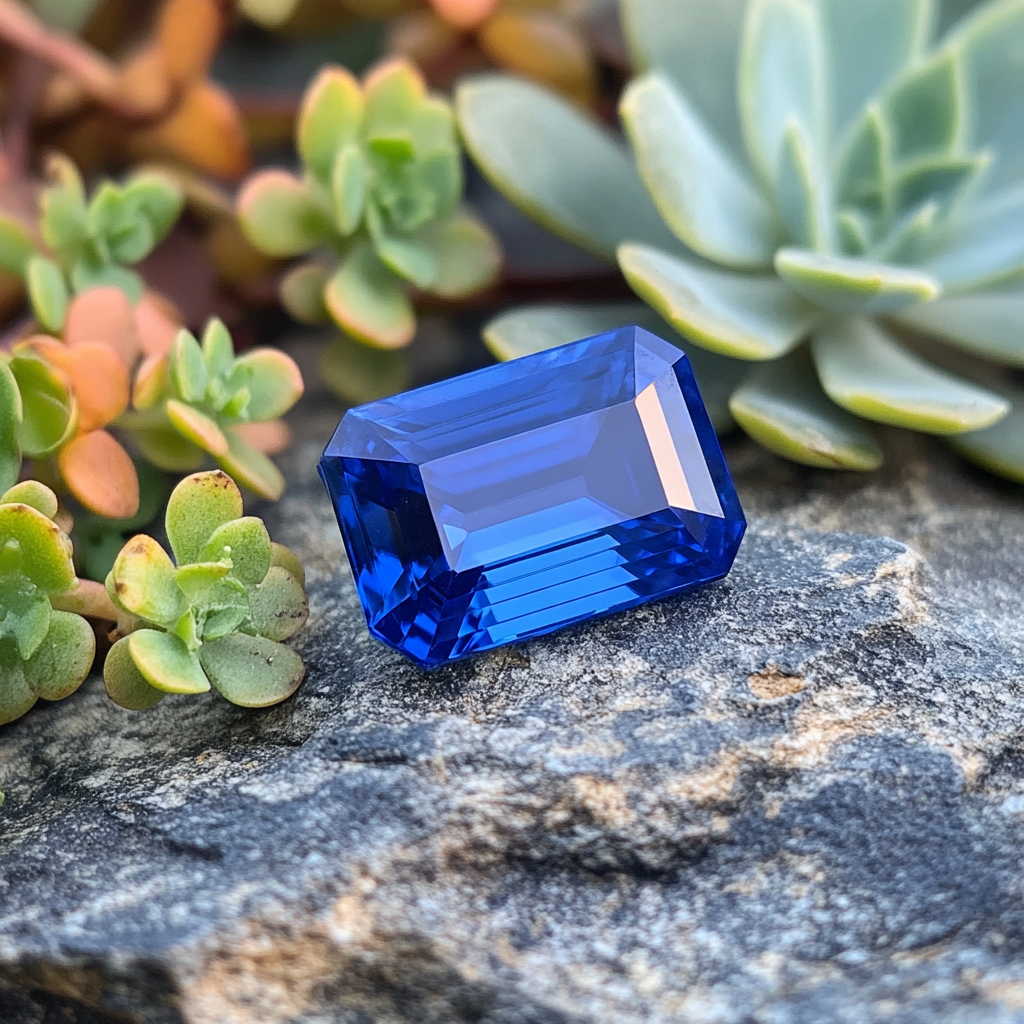
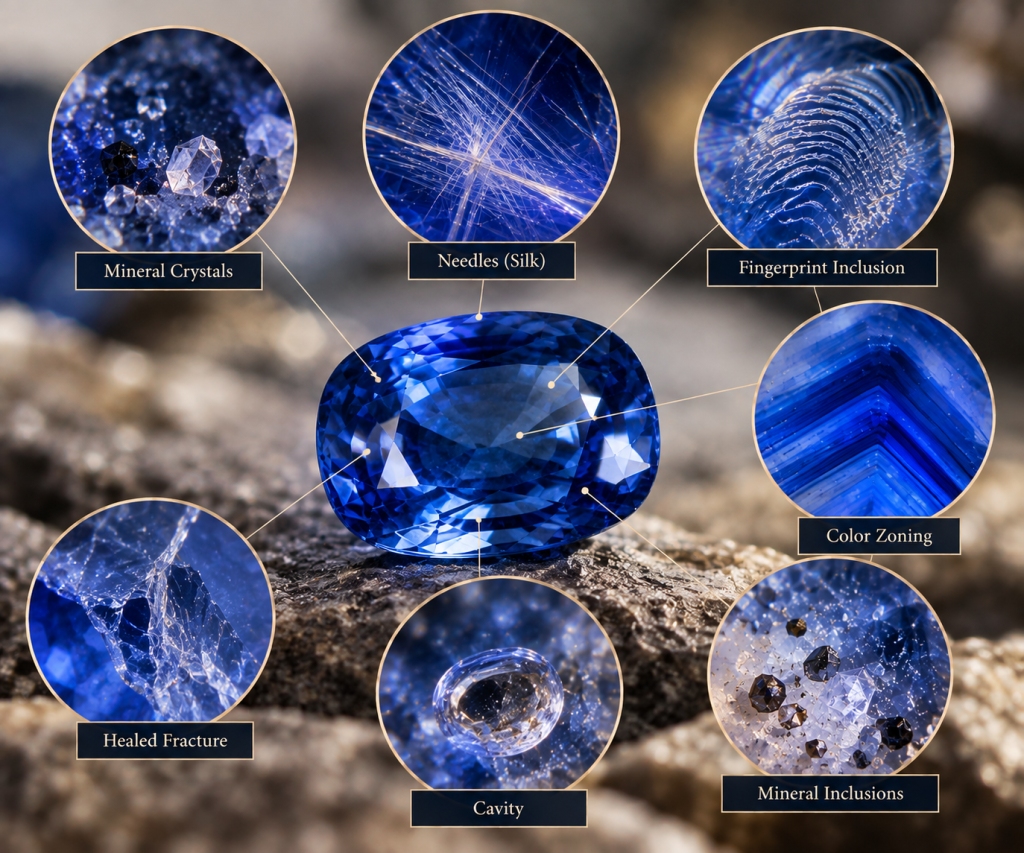
Inclusions are internal features that became trapped or developed within a gemstone during its formation. Because natural sapphires grow under complex geological conditions, they commonly contain some type of internal characteristic.
These may include tiny mineral crystals, needles, healed fractures, cavities, or patterns of color zoning.
Rather than automatically reducing a sapphire’s value, certain inclusions can actually provide important information about its natural history.
The Famous “Silk” Inside Sapphires
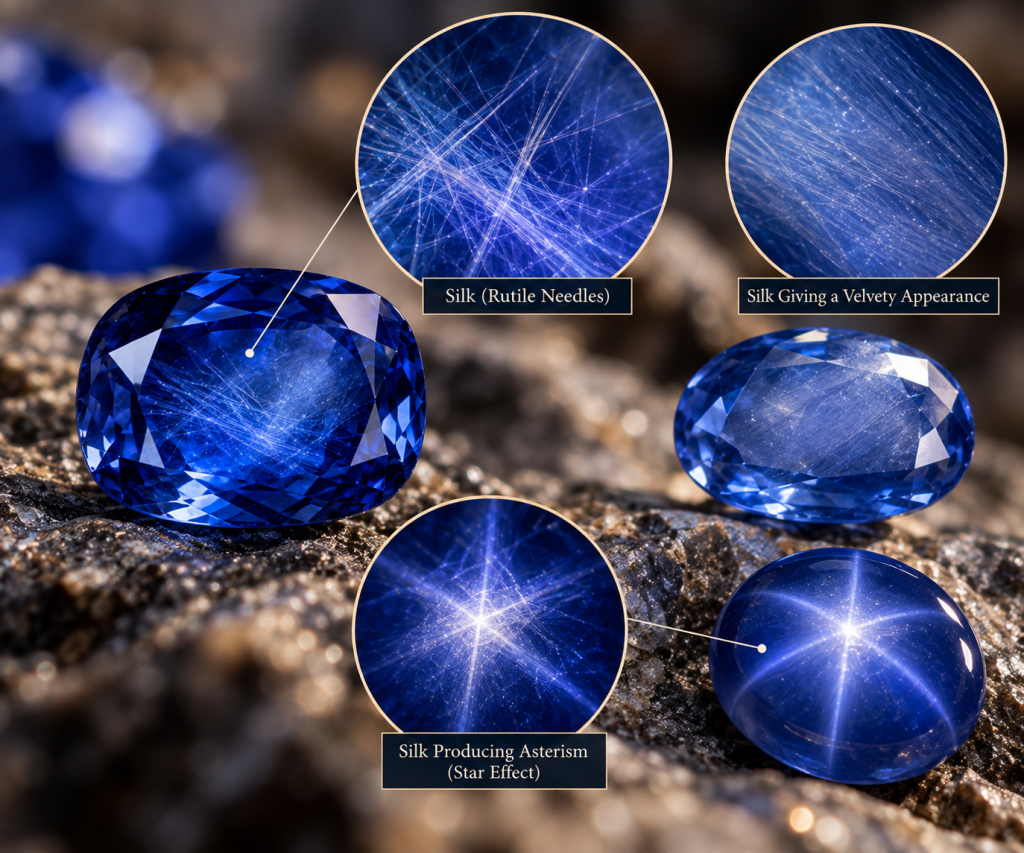
One of the best-known sapphire inclusions is known as silk.
Silk usually consists of extremely fine needles of minerals such as rutile. When these needles occur in certain patterns, they can give a sapphire a soft or slightly velvety appearance.
In some sapphires, dense and properly oriented needle-like inclusions can also help produce asterism, the star-shaped optical effect seen in star sapphires.
Silk can therefore be much more than an imperfection. It can contribute directly to the character and beauty of a gemstone.
Tiny Crystals Can Tell a Bigger Story
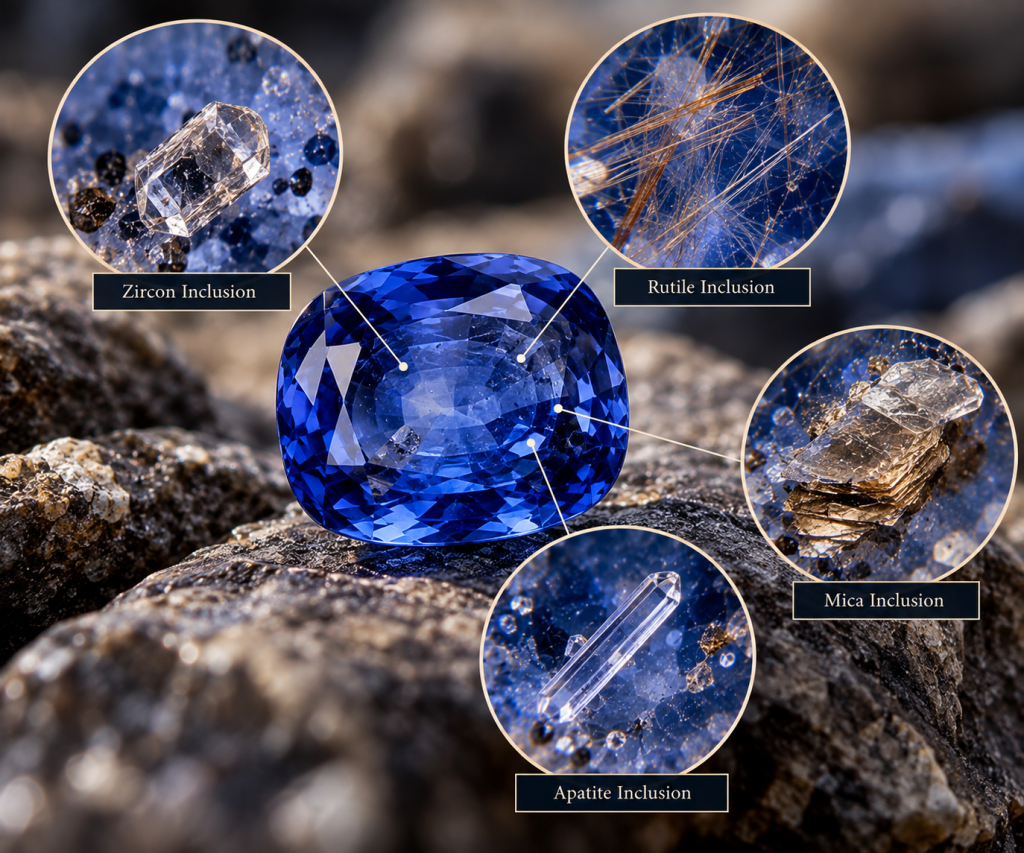
Sapphires may contain microscopic crystals of other minerals that were present while the sapphire was forming.
Depending on the geological environment, gemologists may encounter inclusions associated with minerals such as zircon, rutile, mica, or apatite.
The type, shape, arrangement, and relationship of these inclusions to the host sapphire can provide clues about the geological conditions in which the stone developed.
Think of them as tiny pieces of geological evidence preserved inside the gem.
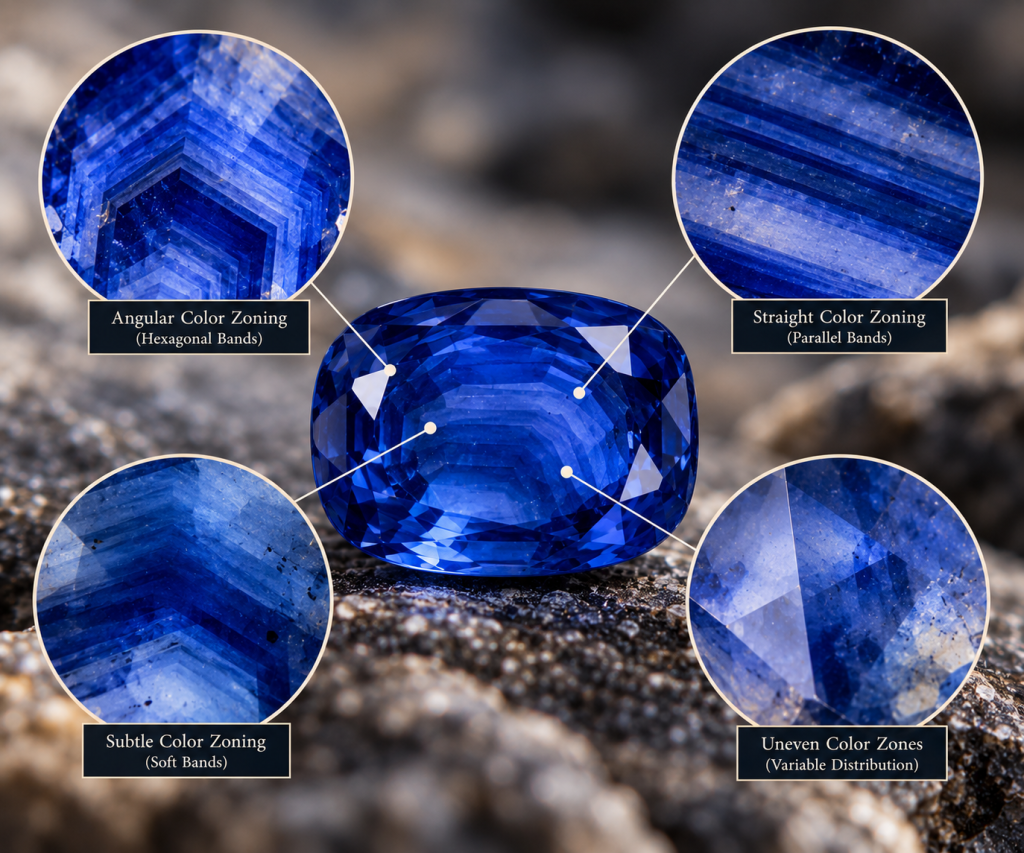
Color Zoning: A Record of Sapphire Growth
Have you ever noticed areas of slightly different color inside a sapphire?
This is known as color zoning.
As a sapphire crystal grows, changes in its chemical environment can cause color to develop unevenly. Under magnification, these variations may appear as straight, angular, or hexagonal bands.
Color zoning can help gemologists understand the growth history of a sapphire and may also provide useful information when distinguishing natural stones from some synthetic materials.
Skilled cutters often orient a sapphire carefully so that its color zoning contributes to an attractive and even face-up appearance.
Fingerprints Inside a Sapphire
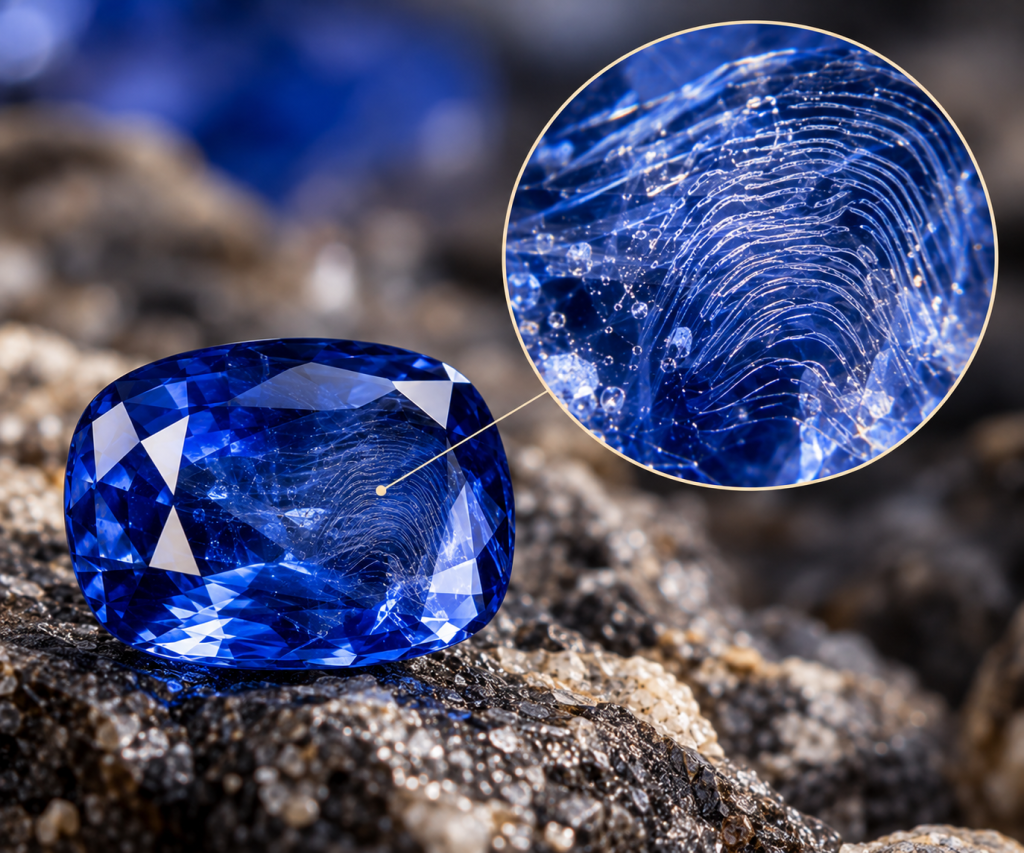
Some sapphires contain patterns that look surprisingly similar to human fingerprints. These remarkable features are part of The Secrets Inside a Sapphire, offering a glimpse into the gemstone’s natural formation.
These so-called fingerprint inclusions are usually networks of tiny healed fractures and fluid-related features. They form when fractures inside a developing gemstone partially heal over geological time.
Their appearance can provide another indication of the complex natural processes a sapphire experienced before reaching the Earth’s surface.
Can Inclusions Reveal Where a Sapphire Came From?
Sometimes, but not by themselves.
Sapphires from famous sources such as Sri Lanka, Kashmir, Myanmar, Madagascar, and Australia may show combinations of internal characteristics associated with their geological environments.
For example, gemologists may study mineral inclusions, growth structures, color zoning, and other microscopic characteristics when investigating geographic origin.
However, there is considerable overlap between sapphires from different deposits. A single inclusion is rarely enough to declare that a sapphire came from a particular country.
Professional gemological laboratories therefore combine microscopic examination with techniques such as spectroscopy and trace-element analysis before giving an opinion on geographic origin.
Inclusions Can Reveal Heat Treatment
The Secrets Inside a Sapphire can also reveal important clues about whether the gemstone has undergone treatment. Its internal features can preserve evidence of changes caused by exposure to heat.
Heating may alter existing inclusions. Fine rutile silk can partially or completely dissolve, crystals may develop changes around their edges, and fractures or other internal features can respond to high temperatures.
Experienced gemologists study these changes to determine whether a sapphire shows evidence of heat treatment.
This is particularly important for collectors because an exceptional sapphire with no evidence of heating may command a significant premium over a comparable heated stone.
Does a Clean Sapphire Mean It Is Better?
Not necessarily.
Clarity is certainly an important quality factor, especially when inclusions are large enough to distract from the stone’s beauty or affect its durability.
But sapphires should not always be judged by the same clarity expectations as diamonds.
A natural sapphire can contain visible or microscopic inclusions and still be exceptionally beautiful and valuable. In some cases, completely flawless-looking material may actually encourage a gemologist to investigate the stone more carefully to determine whether it is natural or synthetic.
The important question is often not simply “Does this sapphire have inclusions?” but “What do those inclusions tell us?”
A Hidden World Inside Every Sapphire
The next time you look at a natural sapphire, remember that some of its most fascinating features may be too small to see without magnification. The Secrets Inside a Sapphire can be found in these tiny internal details, each offering clues about the gemstone’s remarkable journey.
Its silk may reveal part of its growth history. Tiny crystals may preserve evidence of its geological environment. Color zoning can record changes that occurred as the crystal developed, while altered inclusions may reveal whether humans later subjected the stone to heat.
For sapphire enthusiasts, inclusions transform a gemstone into something more than a beautiful object. They are tiny records of a journey that began deep within the Earth, carrying clues that gemologists can still read millions of years later.
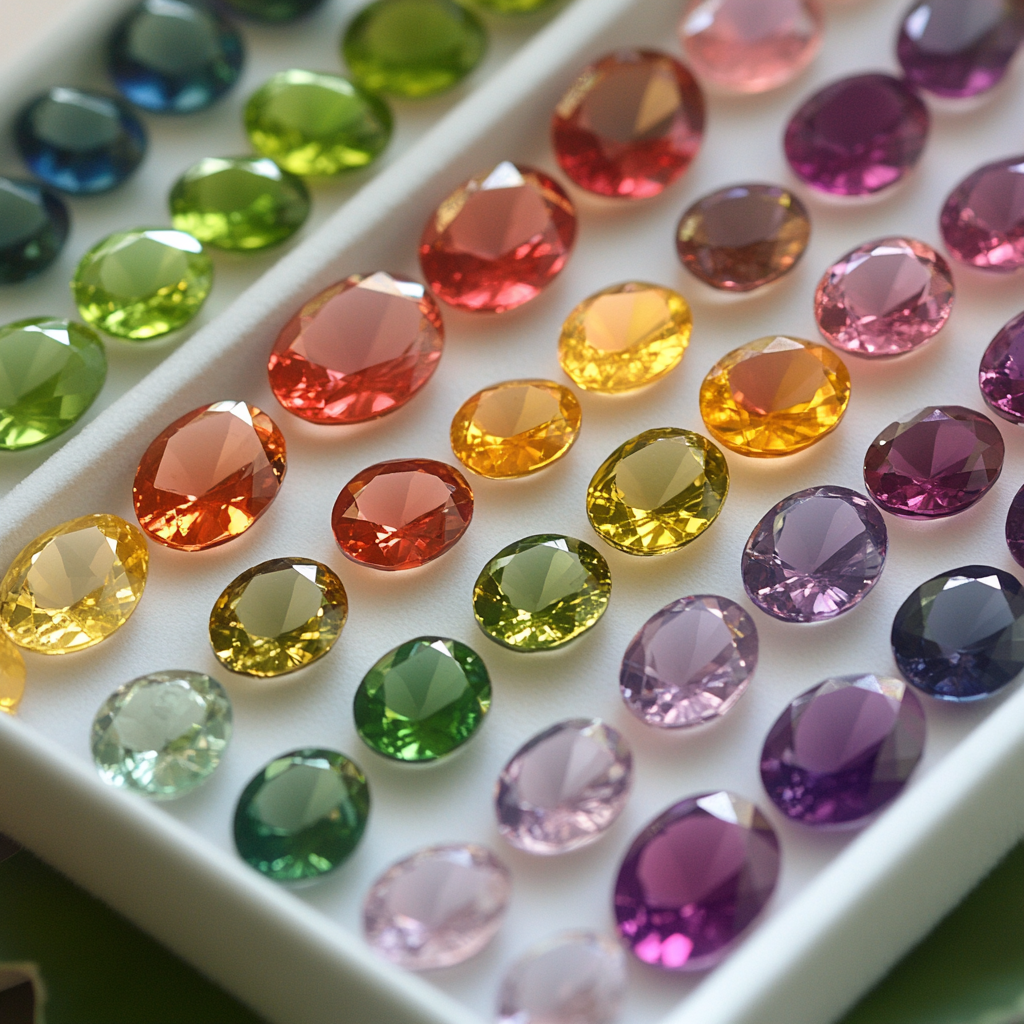
Explore our exceptional collection of natural sapphires, featuring a captivating variety of colors, shapes, and unique characteristics, and discover the perfect sapphire to add to your collection or create a truly one-of-a-kind piece of jewelry.