
- Stone7
- Reports3


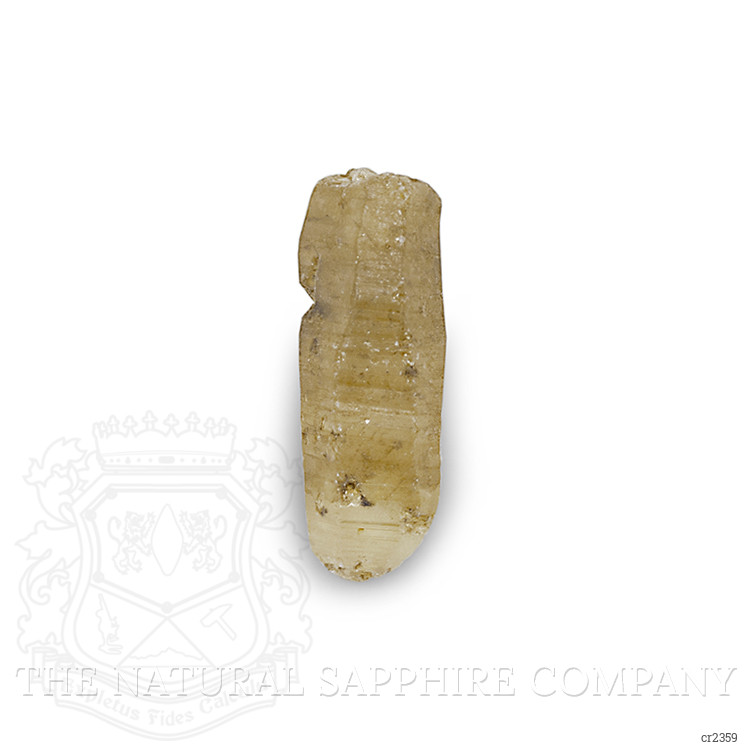
4.79 Ct. Yellowish Brown Sapphire Crystal from Ceylon (Sri Lanka)
This loose stone is available to ship now
Item ID: | CR2359 |
|---|---|
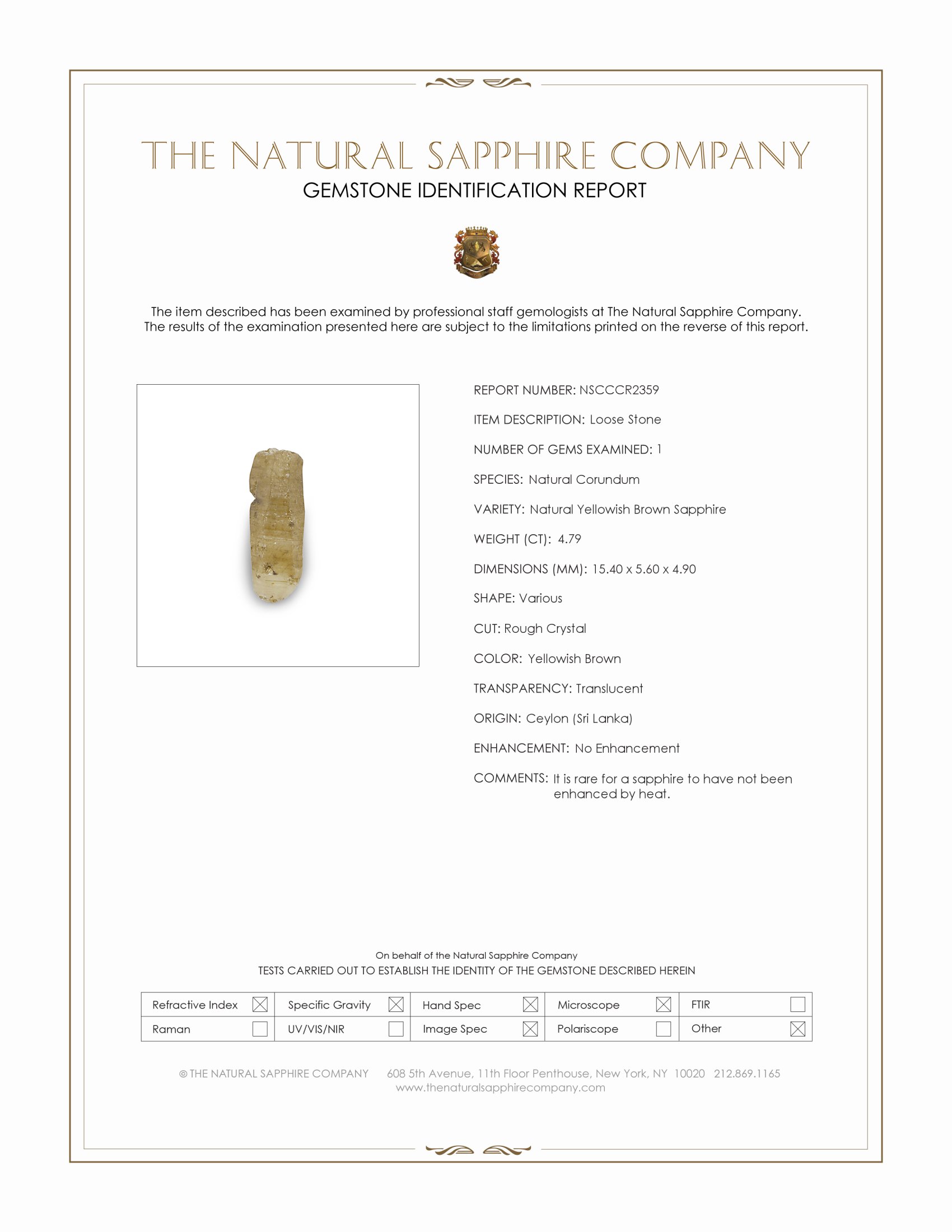
Dimensions (MM): help | Length: 15.4 Width: 5.6 Height: 4.9 |
Weight: | 4.79 Ct. |
Color: help | Yellowish Brown |
Color intensity: help | Medium |
Clarity: help | Included |
Shape: help | Various |
Cut: | Rough Crystal |
Cutting style: | Crystal |
Enhancements: help | No Enhancement |
Origin: help | Ceylon (Sri Lanka) |
Per carat price: help | $6 |
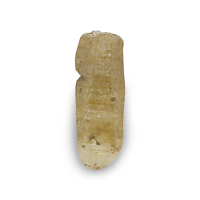
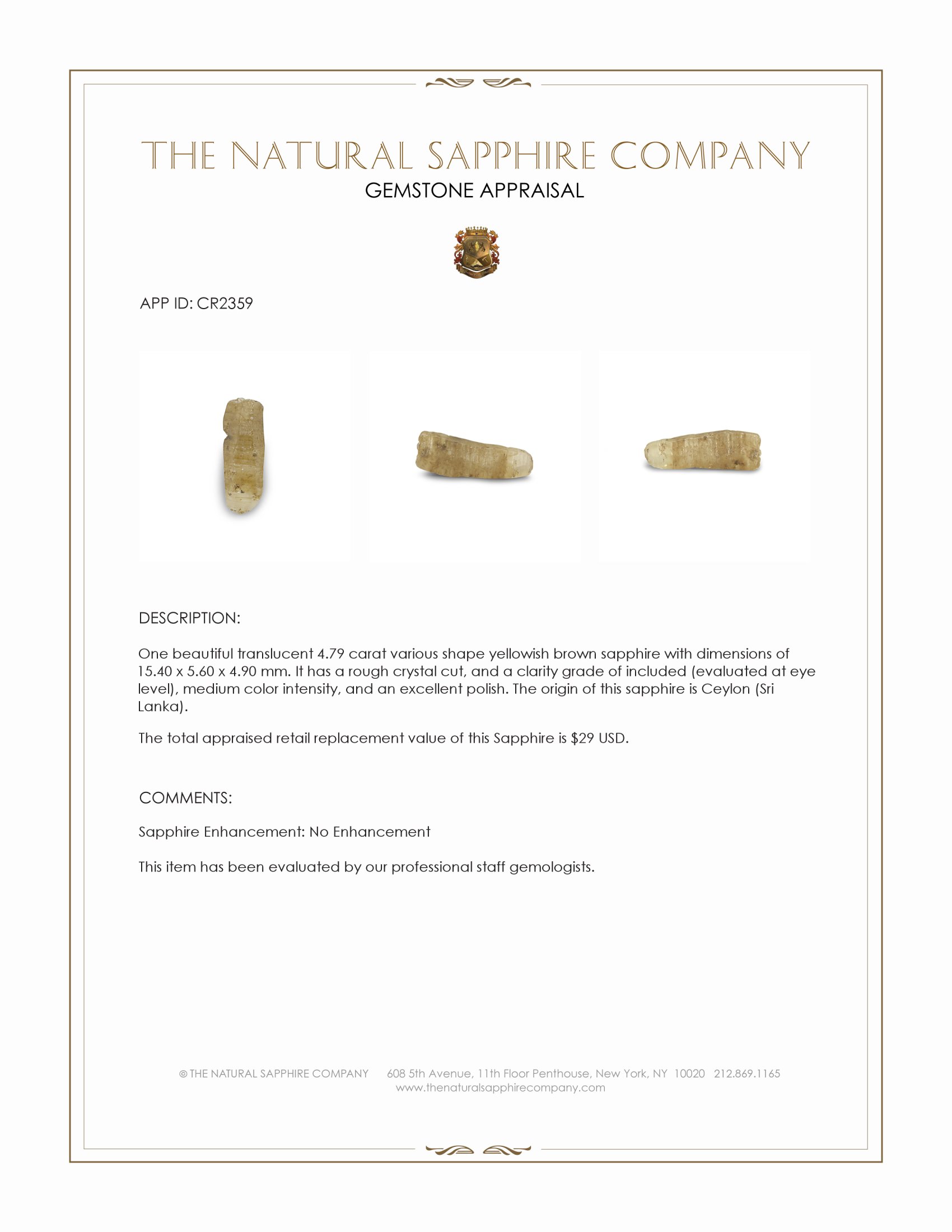
This translucent 4.79 carat Ceylon sapphire measures 15.40 by 5.60 by 4.90 mm, and presents in a various shape rough crystal cut with an overall yellowish brown hue and medium color intensity. The specimen is graded included at eye level, with internal features visible to a trained observer, and yet it displays an excellent polish on its externally preserved crystal faces. There has been no enhancement applied, the corundum remains untreated and natural, and the combination of translucency and surface polish emphasizes the stone body color rather than bright table facets. The crystal habit is prismatic with elongated growth faces that give the piece a fingerlike profile, and the rough crystal cut preserves natural terminations and growth lines that are of interest to collectors and cutters seeking authentic Sri Lankan material. For buyers who value provenance and unaltered material, this sapphire is a textbook example of an unheated Ceylon crystal where natural color distribution and internal morphology are left intact.
From a cutting and gemological perspective, the stone offers clear technical cues for how it can be oriented and fashioned, while also posing practical limitations. The prismatic elongation favors cutting along the c axis for cabochon work, or across the prism for faceted shapes that balance face up color with weight retention. Given the included clarity grade at eye level, planning would prioritize removal of surface reaching flaws and optimization of pavilion angles to maximize light return for a medium tone stone, while accepting some internal character as part of the natural aesthetic. Optical properties typical of corundum apply, including a refractive index range around 1.762 to 1.770, and low birefringence around 0.008, which means faceting must be executed with precise orientation to control pleochroic effects. The yellowish brown hue is likely to exhibit differential absorption along the ordinary and extraordinary rays, so an experienced cutter can exploit pleochroism to produce a warmer face up appearance or a more honeyed tone depending on facet orientation. The excellent polish on the existing faces indicates that surface preparation can achieve high luster, even when working with natural growth morphology.
Comparatively, this Sri Lankan yellowish brown sapphire sits stylistically and tonally between several well known sapphire producing regions, and those contrasts are useful when advising clients on expected color behavior and market appeal. Ceylon sapphires are often prized for their clarity and lively translucency, and this piece reflects that tendency in its relatively bright medium tone, in contrast to many Australian brown sapphires which commonly present with deeper, cooler brown tones and stronger greenish overtones that reduce apparent brilliance. Madagascar produces a wide range of yellows and golds, often with cleaner, more vivid yellow saturation at similar tones, so a Madagascar yellow would tend to appear brighter and less brown than this Ceylon crystal. Burmese and Thai golden sapphires can show richer, more saturated golden to honey tones when compared to this specimen, making those origins better known for intense warm golds rather than the softer yellowish brown we see here. Montanan sapphires, by contrast, can exhibit steely or champagne tones with grayish overlays, which is a distinct visual language from the warmer, more translucent character of this Ceylon stone. Mentioning Kashmir serves as a contrast in hue and tone, since Kashmir material is historically associated with velvety blue saturation, a markedly different color story, and is cited only to underline how origin shapes the palette rather than to draw a direct equivalence.
For collectors and designers seeking an authentic, untreated example of Sri Lankan corundum, this 4.79 carat crystal is an attractive technical specimen and a practical option for bespoke work. The stone will respond well to settings that emphasize its translucent depth, such as open backed bezel work or a custom mount that allows light entry from the pavilion to enhance the medium tone, and it can be left as a polished crystal for cabinet display that celebrates natural morphology. Because the sapphire is unheated and unenhanced, its market value benefits from rarity among yellow to brown corundum, and The Natural Sapphire Company stands behind the origin and treatment status provided with the piece. If you require additional spectral data, inclusion photography, or cutting recommendations tailored to a specific design brief, our gemological team can provide targeted analysis and planning, ensuring the final result maximizes color and character while respecting the natural features of this Ceylon sapphire.


