
- Stone6
- Reports2
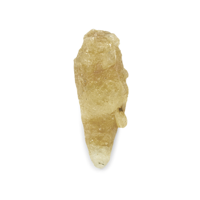


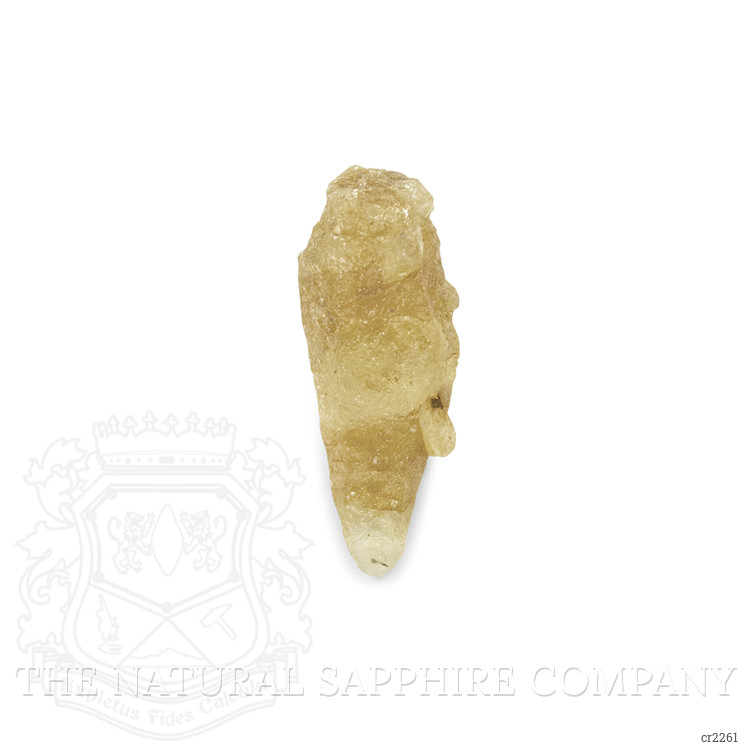
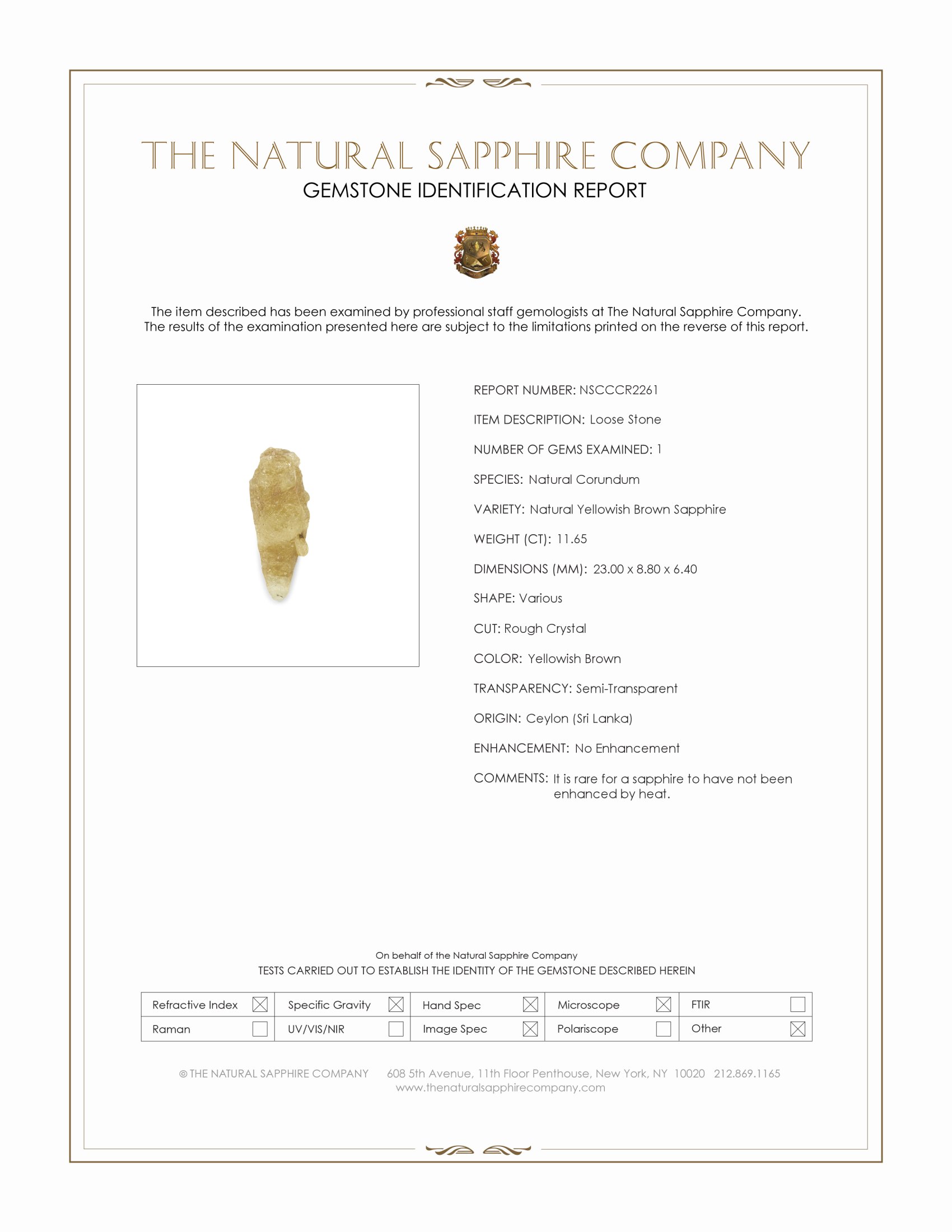
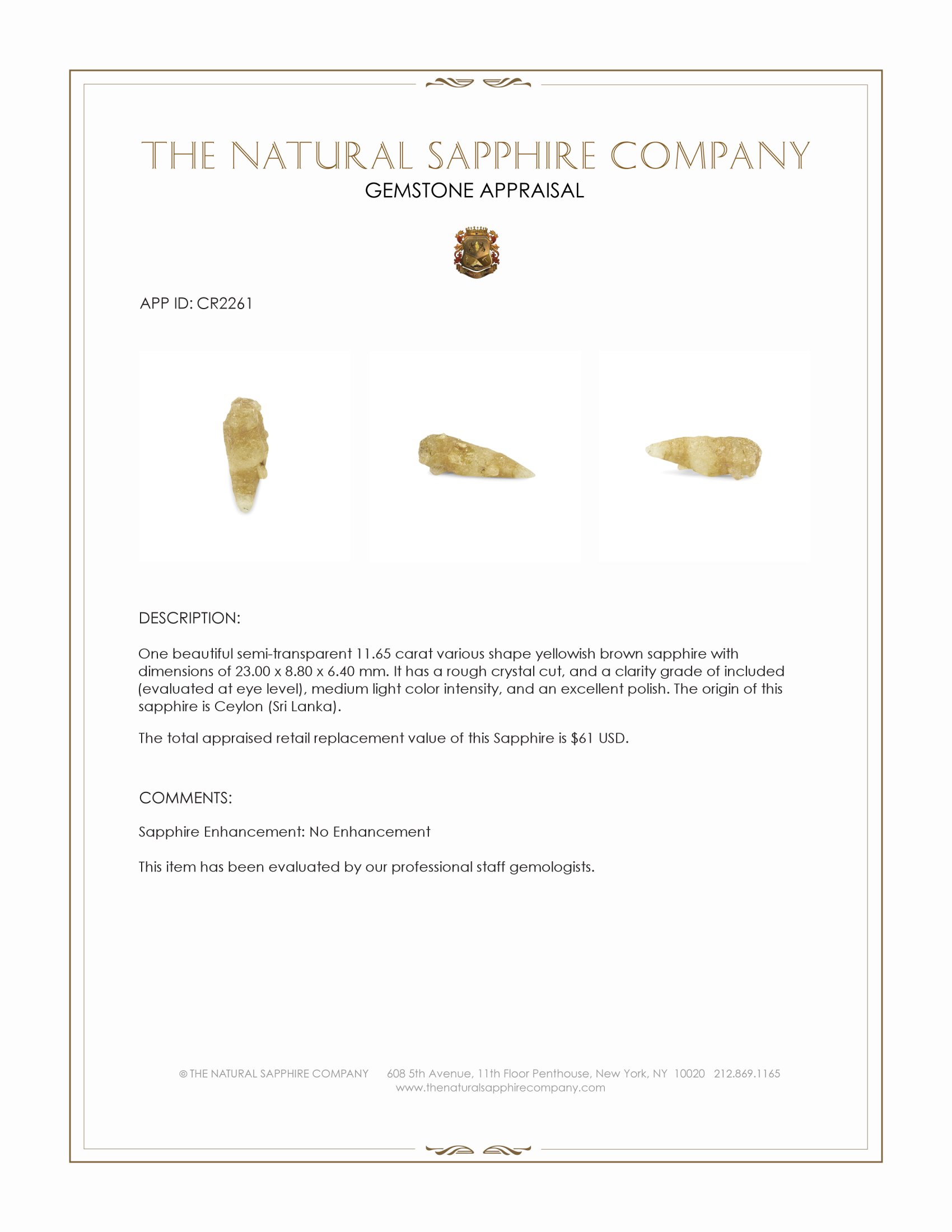
11.65 Ct. Yellowish Brown Sapphire Crystal from Ceylon (Sri Lanka)
This loose stone is available to ship now
Item ID: | CR2261 |
|---|---|
Dimensions (MM): help | Length: 23 Width: 8.8 Height: 6.4 |
Weight: | 11.65 Ct. |
Color: help | Yellowish Brown |
Color intensity: help | Medium Light |
Clarity: help | Included |
Shape: help | Various |
Cut: | Rough Crystal |
Cutting style: | Crystal |
Enhancements: help | No Enhancement |
Origin: help | Ceylon (Sri Lanka) |
Per carat price: help | $5 |
This specimen is an 11.65 carat semi transparent sapphire in a natural various shape, with dimensions 23.00 by 8.80 by 6.40 millimeters, presented in a rough crystal cut. The overall habit is distinctly prismatic, consistent with corundum growth morphology, and the piece retains elongated natural terminations which give it a fingerlike profile. Surface finishing on selected faces has been executed to an excellent polish, yielding a strong vitreous luster on those planes while preserving the original crystalline character elsewhere. Origin is Ceylon, Sri Lanka, and the stone has undergone no enhancement, a factor that is material to both collector value and lapidary planning. The weight and proportions make this a substantial rough crystal, and its semi transparent body means light transmission is appreciable, while internal features scatter light in a way that produces a soft, diffused appearance rather than sharp facet brilliance in its current state.
Color is best described as yellowish brown with a medium light intensity, a tone and saturation profile that is typical of iron induced chromophore behavior in corundum. The hue sits toward the warmer side of the yellow spectrum with brown modifiers that deepen the overall appearance without crossing into dark tonalities. Because corundum frequently exhibits pleochroism, differential viewing along the crystallographic axes can reveal shifts from paler yellow to distinctly brownish zones, and working with the orientation of the crystal during cutting will be critical to maximize the most desirable hue on the table or pavilion of a finished gem. Clarity has been graded included at eye level, and the internal character includes growth zoning and discrete crystalline inclusions, with minor surface reaching cavities in places. These inclusions create light scattering and give the sapphire its semi transparent quality, and they also act as fingerprints of natural formation, important for provenance verification and for buyers who prioritize untreated material.
From a lapidary planning perspective there are two logical pathways, depending on buyer priorities. If the goal is to retain carat weight and natural character, the piece can be set as a sculptural rough crystal or mounted in a bezel or custom gallery to showcase the natural terminations and high polish planes. This approach preserves the 11.65 carat weight and the provenance value of an untreated Ceylon specimen. If faceting is preferred to increase optical performance and symmetry, the elongated prism suggests an orientation for an oval, emerald step, or custom freeform mixed cut. Estimated finished yields for elongated prismatic rough of this morphology typically range from about forty percent to fifty five percent by weight when conventional faceting is applied, depending on how aggressively inclusions and zoning are removed and on whether natural terminations are preserved. That range would produce a finished gem in the vicinity of four and a half to six and a half carats, as a practical planning figure for cutter strategy. The excellent polish on the existing faces will assist the lapidary in achieving strong facet facets and vitrification of polished planes with minimal additional finishing, and the inherent hardness of corundum, nine on the Mohs scale, ensures durability for daily wear once fashioned and mounted.
For the technically minded buyer or lapidary collector, this untreated Ceylon sapphire from The Natural Sapphire Company offers a combination of natural crystalline form, identifiable geologic origin, and workable material characteristics. Documentation of origin and treatment status is material to value, and the absence of heat or other enhancement increases the appeal to purists and high end collectors. If cutting is desired, we recommend a pre cutting consultation to review orientation using loupe and directional lighting, to decide on retention of natural terminations, and to develop a weight retention versus color optimization plan. If preservation of the rough is the priority, the stone presents beautifully in a bespoke setting that showcases the prismatic silhouette and the excellent polished faces. Please contact The Natural Sapphire Company for a technical appraisal, lapidary planning, or bespoke setting options, and we will provide measured yield projections and cutting simulations tailored to your specific aesthetic and commercial objectives.


