
- Stone14
- Reports3


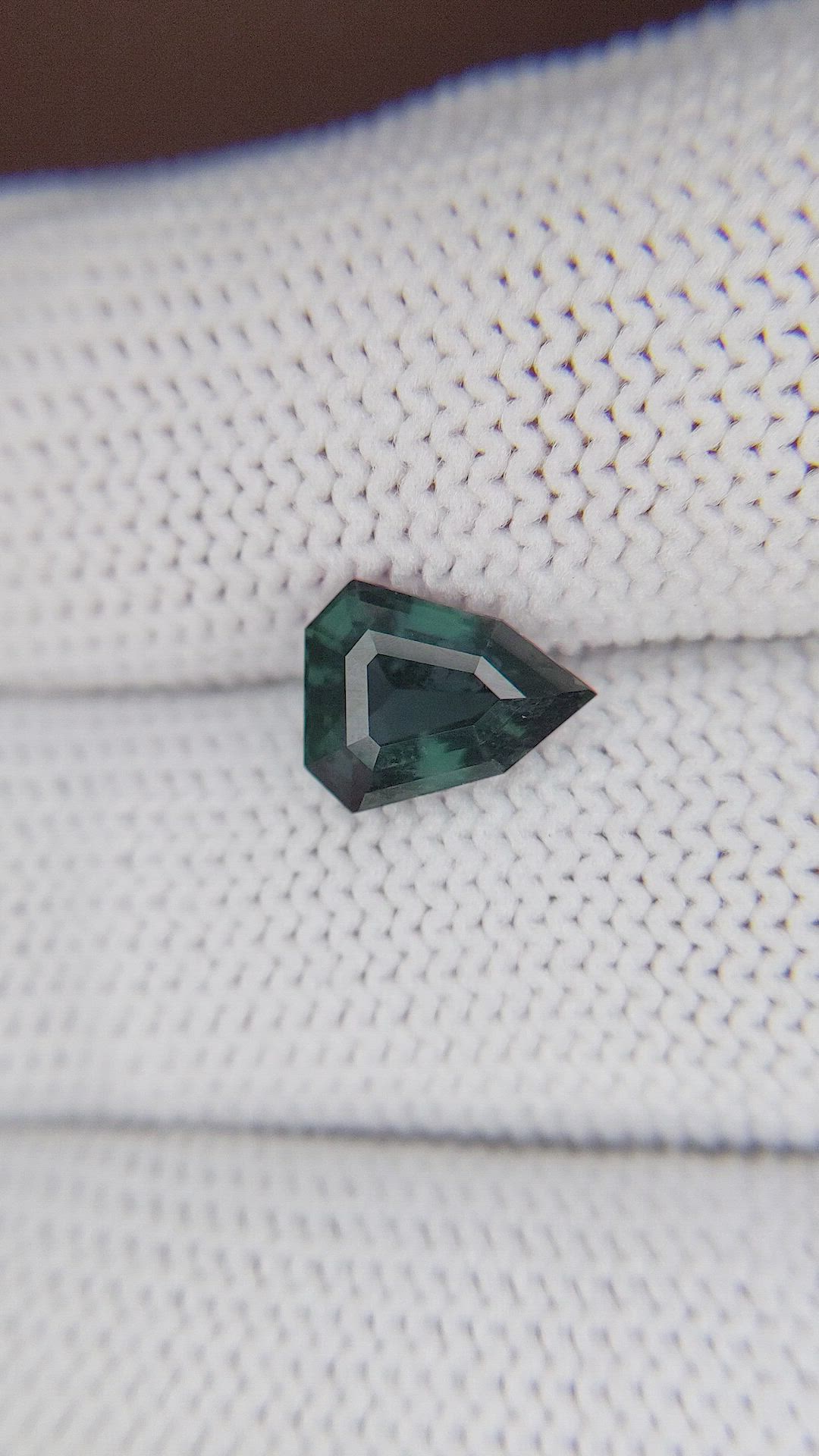
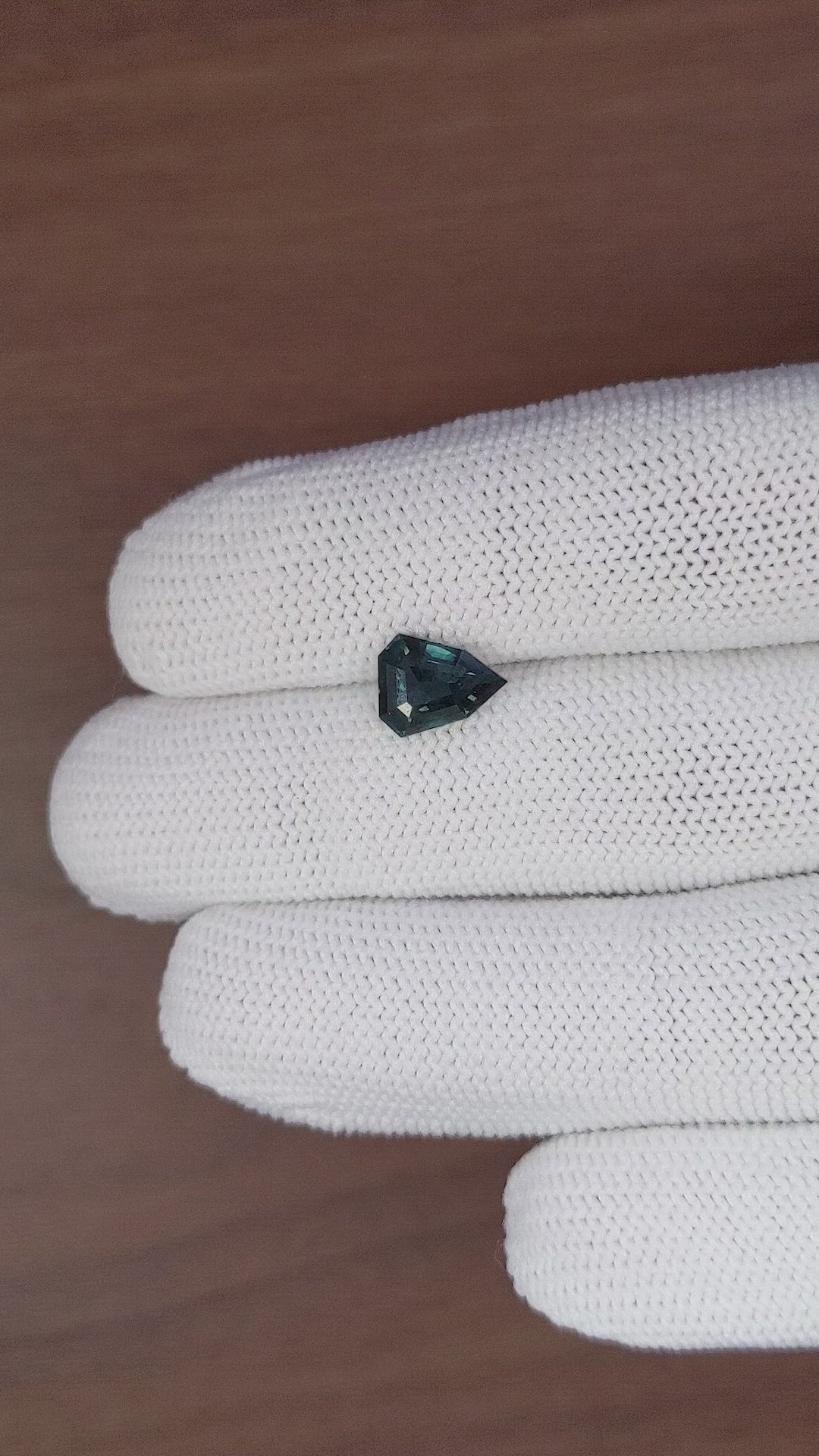
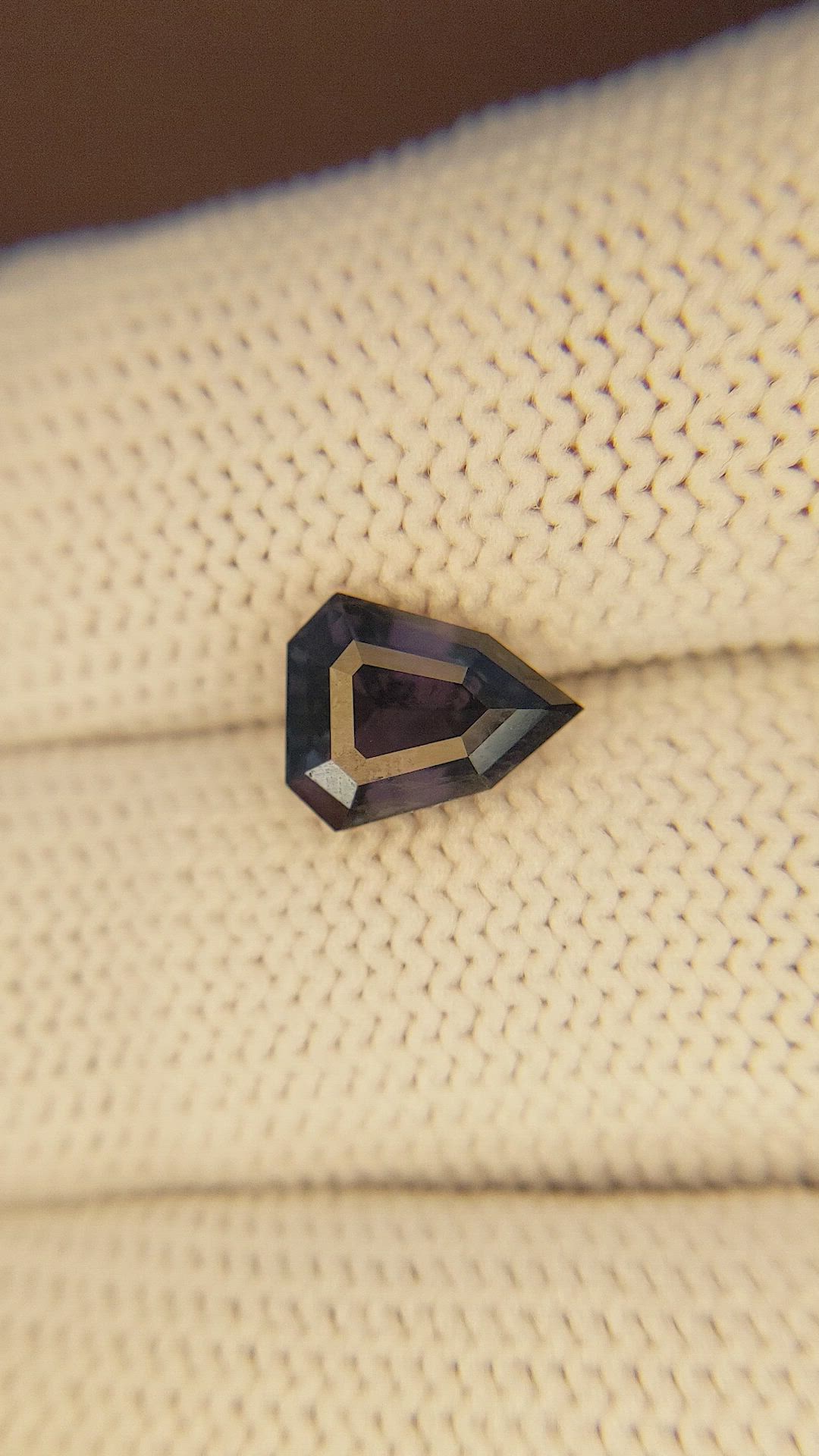
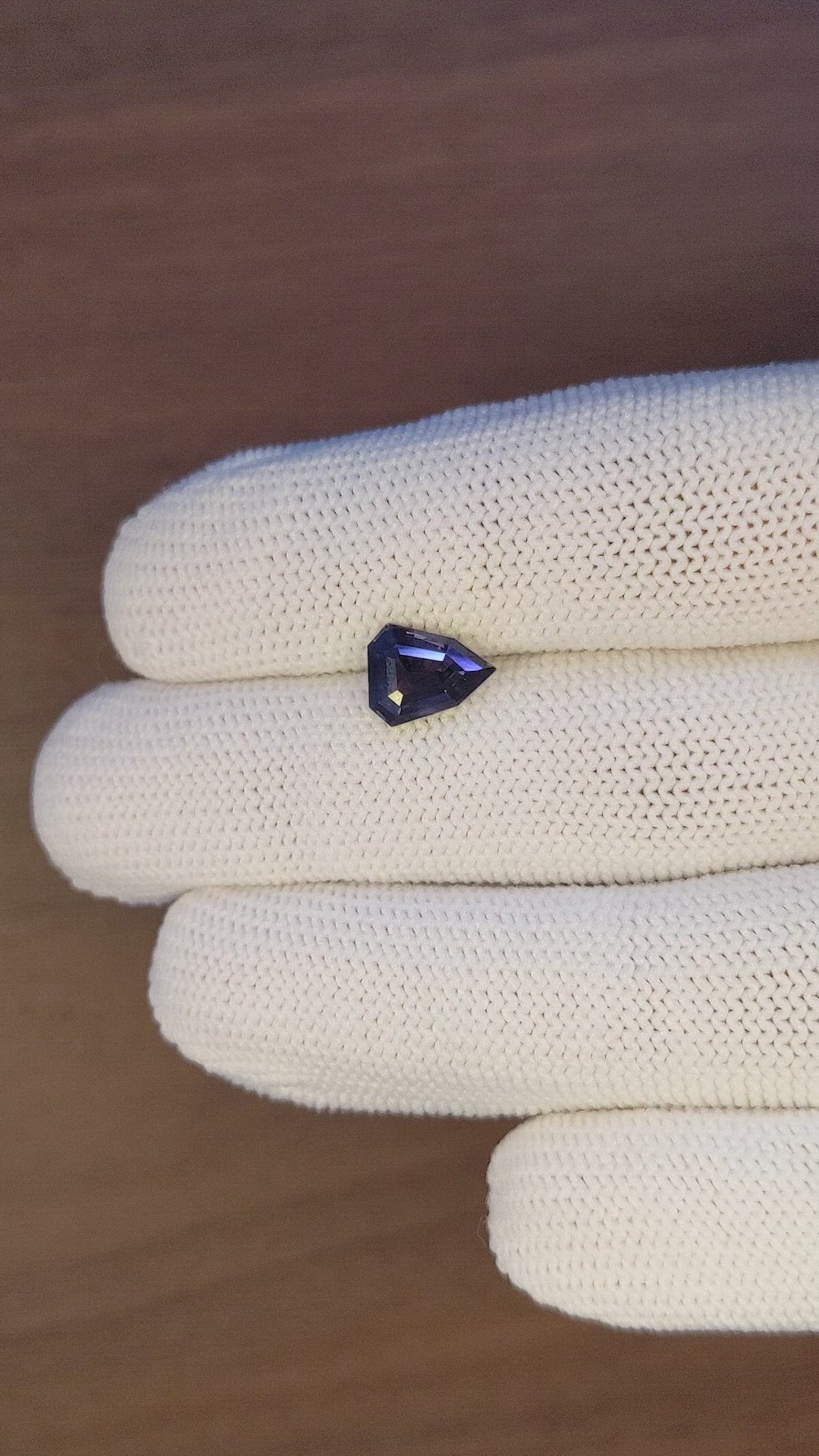
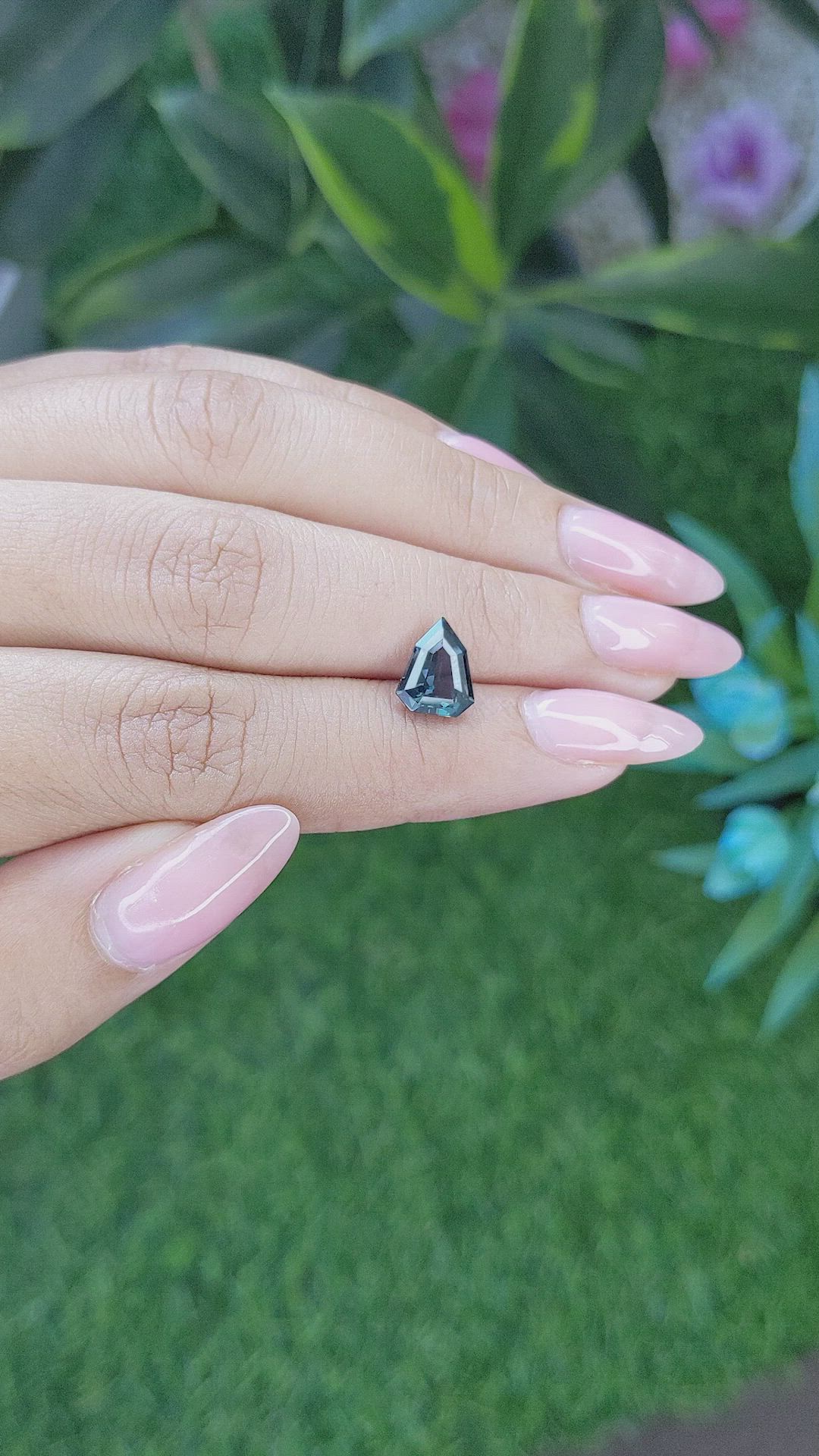
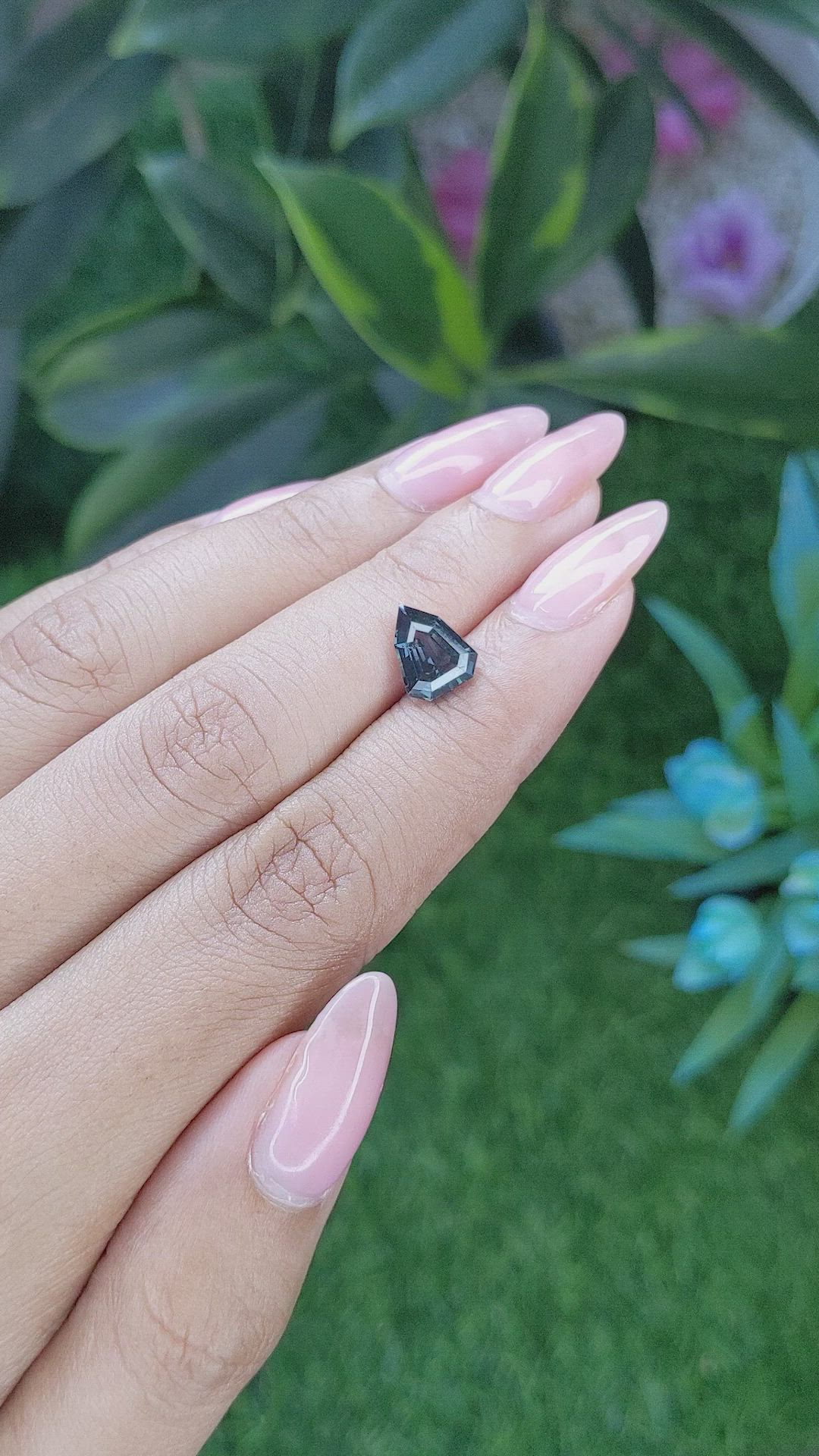




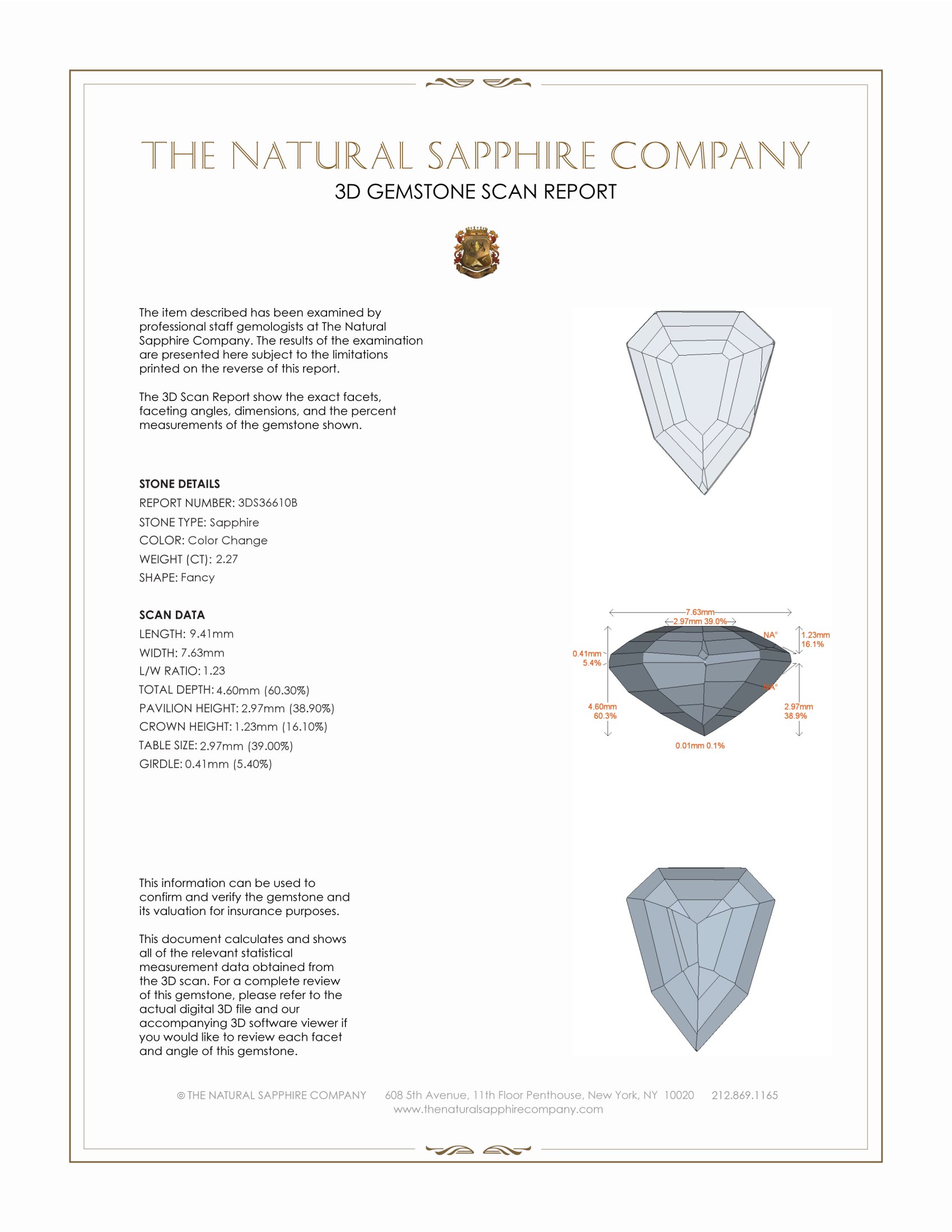


2.27 Ct. Color Change Sapphire from Africa
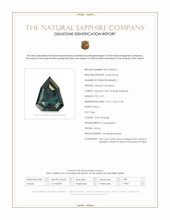
Item ID: | S36610 |
|---|---|
Dimensions (MM): help | Length: 9.41 Width: 7.63 Height: 4.6 |
Weight: | 2.27 Ct. |
Color: help | Color Change |
Color intensity: help | Vivid |
Clarity: help | Very Very Slightly Included |
Shape: help | Fancy |
Cut: | Step Cut |
Cutting style: | Faceted |
Enhancements: help | No Enhancement |
Origin: help | Africa |
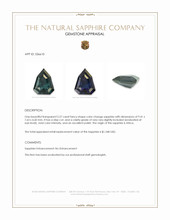
This 2.27 carat fancy shape color change sapphire measures 9.41 x 7.63 x 4.60 mm, and presents an exceptional combination of optical complexity and gemological purity. The stone exhibits vivid color intensity, shifting perceptibly between descriptive tones under differing light sources, and is fully transparent, allowing its internal color dynamics to be read with clarity. The clarity is graded as very very slightly included, evaluated at eye level, and those minute inclusions do not interrupt the path of light through the pavilion and crown, preserving maximum brilliance and color saturation. The piece is a step cut, a faceting choice that produces broad, parallel facet planes to emphasize color blocks and subtle tonal shifts rather than scintillation, and the polish is excellent, resulting in crisp facet junctions and a smooth, reflective surface. This sapphire is unenhanced, with no heat treatment or diffusion, and its reported origin is Africa, a source that produces some of the most compelling color change material available today, as documented and verified by The Natural Sapphire Company.
The step cut deserves closer technical attention because it dictates how the stone presents its color change and how the cutter balanced weight retention against optical performance. Step faceting yields a sequence of concentric, parallel facets on the crown and pavilion that act to consolidate and display chromatic zones. Unlike brilliant cuts that maximize dispersion and sparkle, the step cut delivers flat, broad flashes of tone that reveal the sapphire s intrinsic color palette in a controlled manner. For a color change sapphire, that control is invaluable, because it allows the gem to show its predominant hue in daylight, and then transition to a distinctly different hue under incandescent illumination, without fragmenting the signal into excessive flashes. At 9.41 mm by 7.63 mm and a depth of 4.60 mm, the proportions place this stone in an optic regime that favors surface color concentration across the table and crown planes, while maintaining sufficient pavilion depth to support internal light return. The excellent polish enhances facet clarity, and the step cut s facet geometry was executed to high tolerance so that light transmission and the color change phenomenon remain uninterrupted by surface distortion or raised facet ridges.
From a craft and traceability perspective, the journey of this sapphire from its African origin to market was governed by a sequence of technical decisions intended to preserve natural properties and maximize gem performance. The rough material was field sorted to identify color change candidates, and those selected showed promising dichroic behavior under standard daylight and warm light simulators. An optical mapping exercise followed, using transmitted light and reflective imaging to determine the principal optical axes, inclusion orientation, and potential parting planes. The master cutter then oriented the rough so that the long axis of the finished fancy shape would align with the strongest color differential, thereby optimizing the magnitude of the visible change between lighting environments. The preforming stage established the step facet plan, emphasizing broad crown planes and measured pavilion steps, and the final cutting was executed with diamond abrasives on controlled laps to maintain parallelism and meet strict facet angle tolerances. The polishing sequence concluded with fine diamond polishing compounds, applied to produce the excellent polish reported, and every stage was documented for provenance and quality control. The Natural Sapphire Company oversaw grading and certification, confirming the no enhancement status and African origin, and ensuring that this particular example reached market with full disclosure of its technical history.
For a knowledgeable buyer considering mounting options and long term care, several technical points merit attention. Sapphire has a refractive index around 1.76 to 1.77 and a hardness of 9 on the Mohs scale, so it is well suited to enduring everyday wear in rings or pendants, provided proper setting design is employed. The step cut and the stone s dimensions favor settings that display the table and allow controlled viewing angles, so semi bezel or low four prong settings with open gallery work very well to showcase the color change without excessive light leakage. The vivid color intensity means color contrast with mounting metal should be considered carefully, as yellow gold can warm the stone s appearance under certain lights while platinum or white gold will present the cooler side of the color range more starkly. Because the color change effect is lighting dependent, viewing the stone in both daylight and a warm incandescent or LED source is recommended before finalizing a design, and The Natural Sapphire Company can provide calibrated light comparisons and high resolution imagery to assist in decision making. We offer bespoke mounting services that take the facet geometry and table orientation into account, ensuring that prong placement and bezel contours do not obscure the step facets or interfere with the optical path that produces the change in hue.
This sapphire is presented for purchase with full technical documentation and a narrative of its craft, provenance, and grading, all maintained by The Natural Sapphire Company. For collectors and connoisseurs who prioritize natural condition, this unenhanced, vividly colored, step cut, color change sapphire offers a rare combination of optical drama and technical purity. Inquiries regarding certification details, bespoke setting design, light comparison images, and secure inspection are welcomed, and we will provide the technical data, facet diagrams, and condition photographs necessary for an informed acquisition. This gem s journey from African rough to a meticulously executed step cut exemplifies deliberate decisions at each stage to preserve natural color, enhance optical performance, and certify authenticity, making it an excellent candidate for a technically minded buyer who seeks both gemstone integrity and exceptional visual character.


