
- Stone9
- Reports4
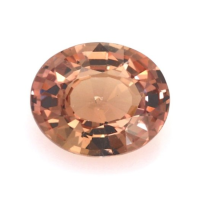






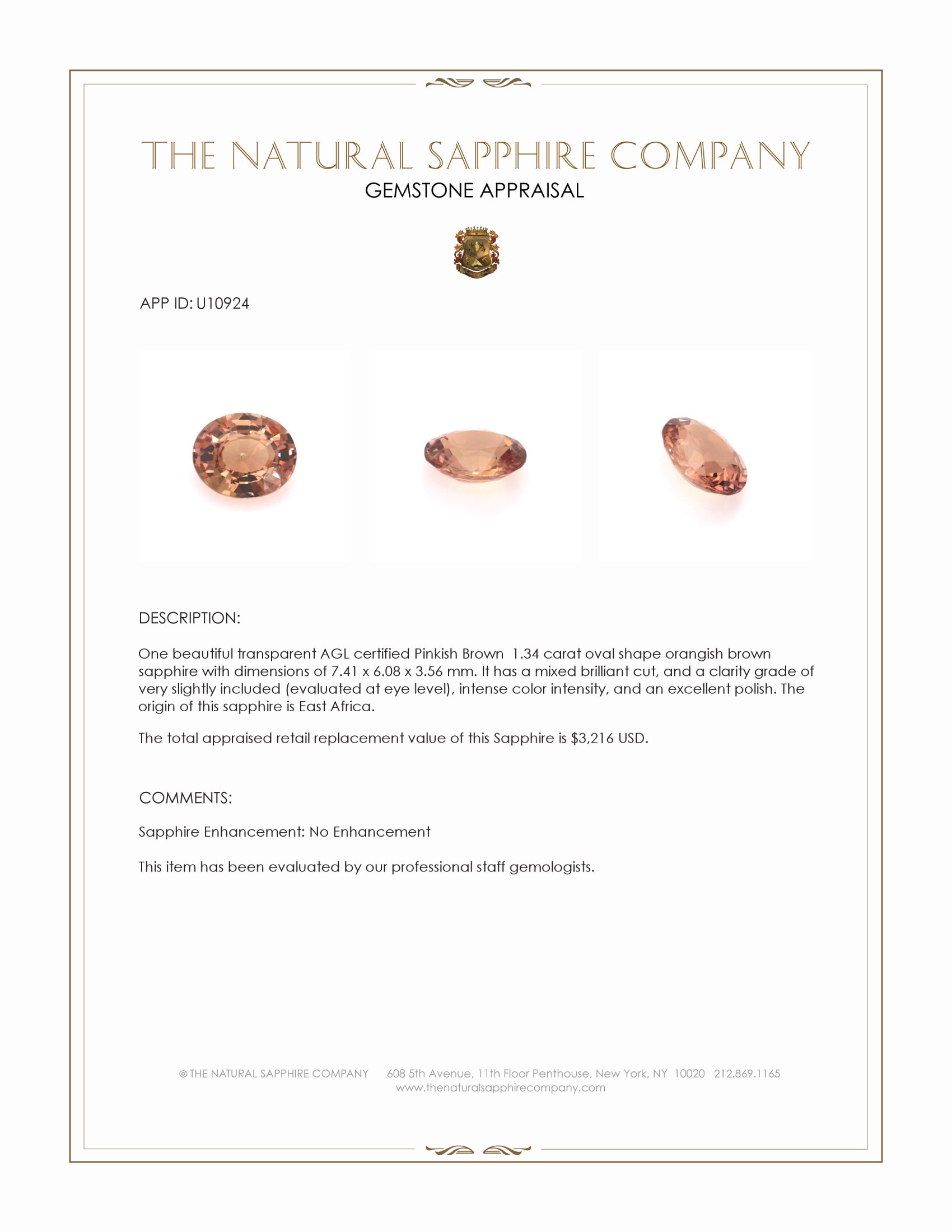
1.34 Ct. Orangish Brown Sapphire from East Africa
This loose stone is available to ship now
Item ID: | U10924 |
|---|---|
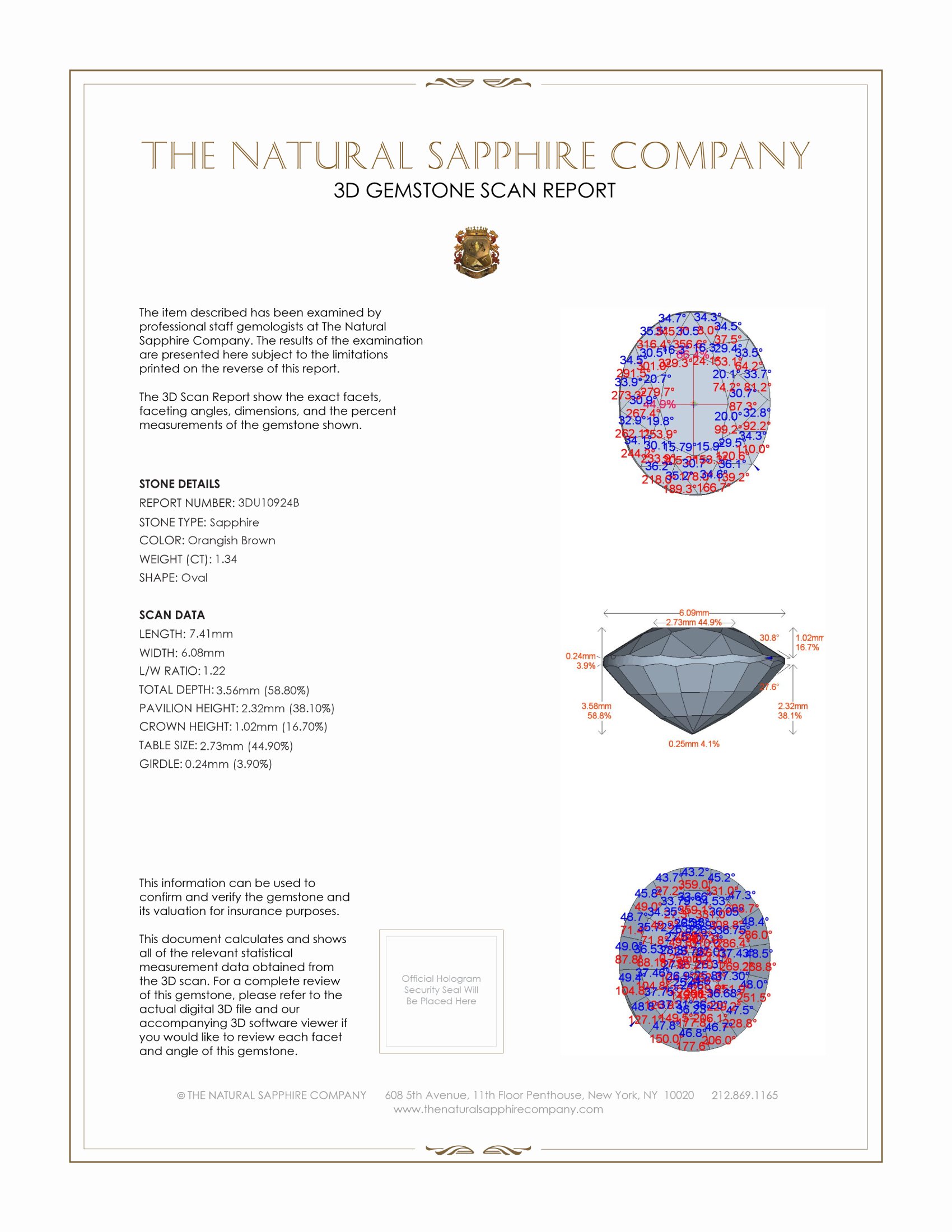
Dimensions (MM): help | Length: 7.41 Width: 6.08 Height: 3.56 |
Weight: | 1.34 Ct. |
Color: help | Orangish Brown |
Color intensity: help | Intense |
Clarity: help | Very Slightly Included |
Shape: help | Oval |
Cut: | Mixed Brilliant |
Cutting style: | Faceted |
Enhancements: help | No Enhancement |
Origin: help | East Africa |
Per carat price: help | $2,400 |
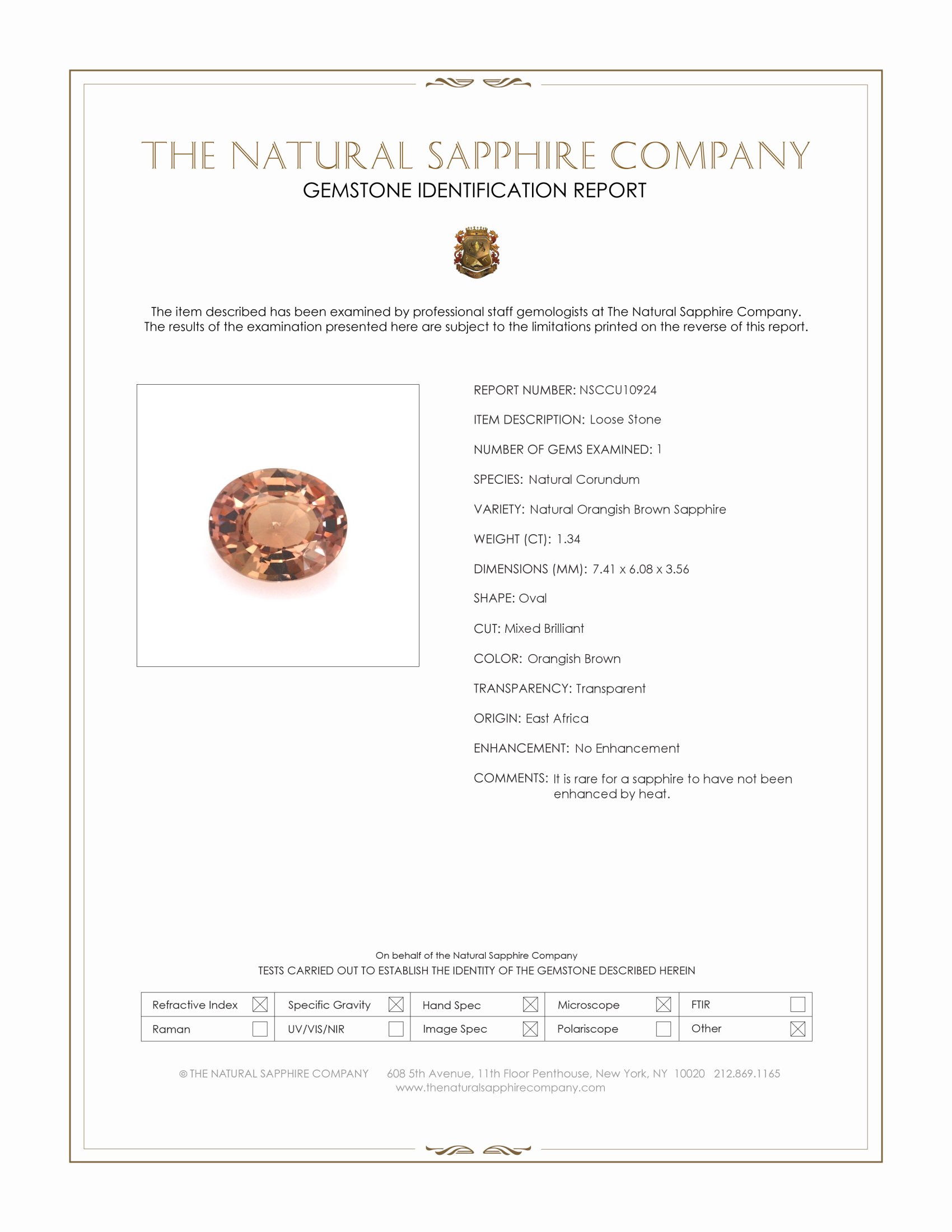
This oval shape, AGL certified pinkish brown sapphire weighs 1.34 carats, and measures 7.41 by 6.08 by 3.56 millimeters, combining a refined proportion with an impressive presence for its weight class. The stone exhibits an intense color intensity, presenting a nuanced blend of orangish brown and pinkish brown hues that shift subtly with viewing angle, a pleochroic characteristic we document in the accompanying AGL report. The cut is a mixed brilliant, executed to optimize both scintillation and color depth, and the polish is graded excellent, delivering crisp facet junctions and a smooth, reflective table. Clarity is described as very slightly included at eye level, consistent with high quality natural sapphire material, and the stone is untreated, no enhancement, an increasingly rare attribute that preserves the original lattice and color chemistry imparted by its East Africa origin. The Natural Sapphire Company is proud to present this gem with full laboratory documentation, allowing technically minded buyers to evaluate the precise parameters that define its optical performance and provenance.
The journey of this sapphire begins in a metamorphic host rock in East Africa, where tectonic and thermal processes concentrated aluminum and trace chromium and iron to form sapphire crystals over geological time. The rough was recovered by experienced miners using selective hand mining techniques employed in pockets that yield the most saturated material. Early sorting isolated this piece for its uncommon pinkish brown bodycolor and excellent transparency, traits that suggested it would respond well to a careful orientation and a mixed brilliant strategy. Prior to cutting, the rough was mapped using both optical loupe analysis and digital imaging to determine the pleochroic axes, internal zoning, and any potential stress planes. This planning stage is critical for a stone with multiple subtle hues, because the orientation of the table relative to the crystal axes will dictate whether the final gem reads more pinkish or more orangish under retail lighting.
Cutting and faceting were executed with attention to proportional optics and color management, beginning with an outline that preserves weight while minimizing windowing. The finished proportions yield a depth of 3.56 millimeters, representing a depth percentage of approximately 52.8 percent based on the mean of length and width, a figure that balances return of light with retention of bodycolor. The crown employs a brilliant facet schema to generate dynamic scintillation, maximizing small scale flashes that draw the eye, while the pavilion uses modified facets to enhance internal light retention and to saturate the bodycolor. This mixed brilliant approach is deliberate for sapphires that contain warm brown and pink tonalities, because it concentrates color in the body while preserving lively surface brilliance. The clarity, evaluated as very slightly included, indicates minor internal features that are well dispersed and do not interrupt transparency or compromise toughness. Excellent polish ensures that the surface is free of abrasions that could scatter light, and the absence of treatments confirms that the observed color and optical behavior are intrinsic to the material.
From lapidary to market, the finishing touches included a full gemological report from AGL verifying weight, dimensions, cut description, clarity grade, color characterization, and East Africa origin, along with confirmation of no enhancement. The Natural Sapphire Company prepared high resolution viewing images and calibrated color references, and the piece was cataloged with exacting provenance notes to support collectors and designers who require traceability. For setting recommendations, the stone responds particularly well to warm metals, with 18 karat rose gold lending emphasis to the pinkish component, and 18 karat yellow gold amplifying the orangish brown facets, while platinum or white gold provides a neutral frame that emphasizes contrast and brilliance. This sapphire is ideally proportioned for a bespoke engagement ring, pendant, or statement piece where the mixed brilliant cut can interact with directional lighting, but it will also sit comfortably in classic four or six prong settings that preserve light entry to the pavilion. Buyers who prioritize untreated material, documented origin, and precision cutting will find this 1.34 carat oval sapphire a technically satisfying choice, and The Natural Sapphire Company stands ready to provide additional facet level imagery, mounting services, and independent appraisal documentation to complete the acquisition with confidence.


