


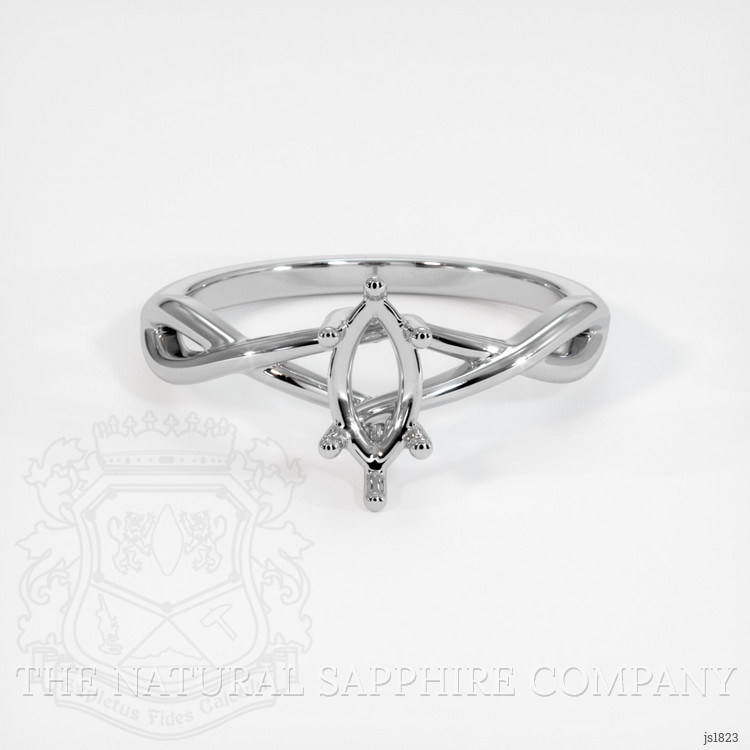

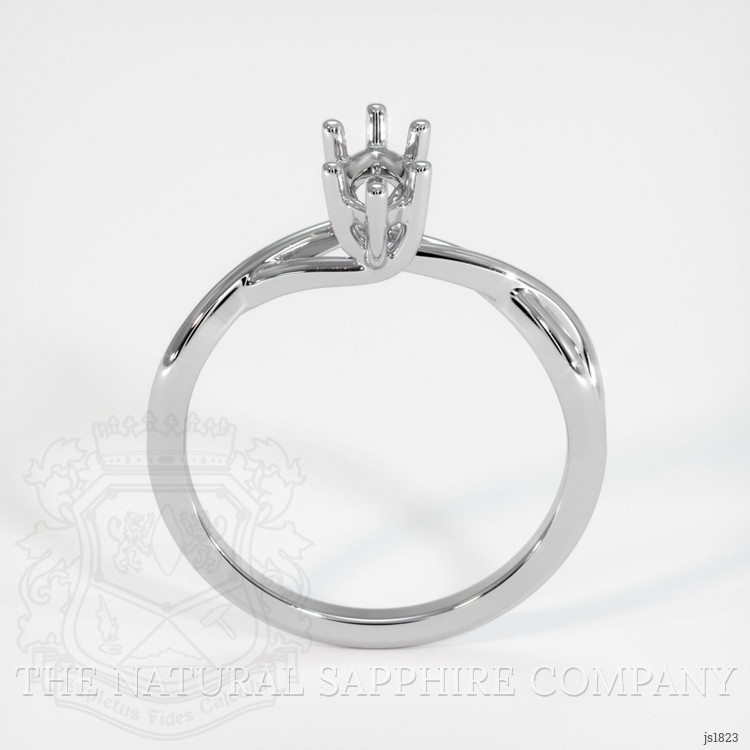

Silver Solitaire Ring Setting


The solitaire silhouette presented here is a studied expression of single stone emphasis, a custom made ring setting engineered to present one striking gemstone as the unequivocal focal point. The design language is intentionally restrained, allowing the cut class and material properties of the center gem to dictate visual impact. For corundum stones, round brilliant, cushion modified brilliant, and oval brilliant cuts are recommended when maximum light return and scintillation are desired, because their facet maps promote strong internal reflections and lively spectral dispersion. For emeralds, step cut proportions are advised to preserve color saturation and emphasize depth of tone, while accepting that facet geometry will yield broader flashes of light rather than the pinpoint scintillation typical of brilliant cuts. Color grading considerations are integral to the selection process, ruby and sapphire hue saturation and tone should be evaluated on a vivid to medium vivid scale, because overly dark tone can restrict light transit, and for emeralds, clarity and the presence of typical internal characteristics should be balanced against a medium tone and vivid green hue to optimize perceived color strength. Because this setting is custom made, seat geometry and gallery proportion can be tailored to the selected facet style and color grade, ensuring that the table and pavilion interact with the surrounding metal and cut angles to maximize desired optical effects.
The setting architecture is deliberately engineered to enhance both security and light performance, using a raised, multi prong crown that secures the girdle and pavilion shoulder with controlled contact geometry. The prongs are machined with a tapered profile that distributes lateral loads along the girdle, and the prong tips are shaped and burnished to a radius that minimizes stress concentration on delicate girdles. Seat tolerances are cut to match measured girdle thickness, ensuring even contact around the circumference, and the prongs terminate into shoulders that are either soldered or laser welded to the head body, creating a continuous load path from the stone to the shank. The shank itself employs an intertwining split shoulder, which increases lateral stiffness and provides a secondary restraint against torque while allowing side light access to the crown. Metal selection has structural implications, rose gold and yellow gold provide ductility that absorbs small impacts without fracturing, while platinum offers superior work hardening and retention of prong profile over time, and white gold is typically finished with a rhodium plating to achieve a bright white appearance that can be re plated as part of routine maintenance. All joint interfaces are hand finished to eliminate micro gullies that can collect debris, and microscopic inspection is used to verify that prong thickness and seat engagement meet specified parameters before final polishing.
Optical engineering of the mounting focuses on maximizing useful light return without sacrificing security, the prong spacing and crown elevation are optimized to strike a balance between exposure of the table for illumination and protection of the pavilion and girdle. The open under gallery is pierced and contoured to create reflective planes beneath the pavilion, which act as secondary mirrors returning light through the crown, and the mirror finish on internal surfaces is executed to a high polish that increases internal contrast and apparent brilliance. For brilliant cut stones, alignment of table perpendicularity to the finger plane is achieved by precise seating of the girdle in a calibrated collet, reducing optical tilt that can cause light leakage. For step cut emeralds, the head geometry is adjusted to minimize side light that can wash color, instead favoring depth of field and even face up saturation. Fabrication employs a combination of CAD CAM modeling to simulate light paths and lost wax casting followed by hand filing and lap polishing to achieve tight tolerances, and where necessary laser welding is used to reinforce high stress zones without annealing adjacent metal. Final quality control includes gemological verification of cut proportions and color parameters, tactile testing of prong resilience, and documentation of recommended maintenance intervals, because periodic re tipping and checking of prong engagement preserves both security and optical performance over the lifetime of the piece. Customization options include choice of metal, selection of sapphire, ruby, emerald, or other gemstones, and adjustment of crown profile to suit preferred cut and color grade, all executed with technical precision for buyers who appreciate exacting craftsmanship.

