
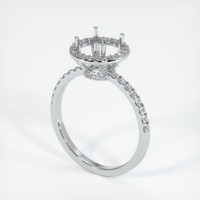
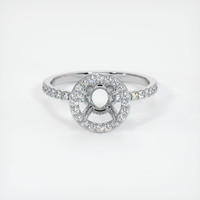
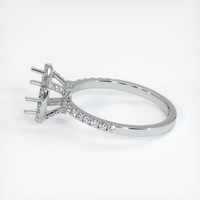
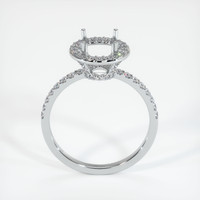
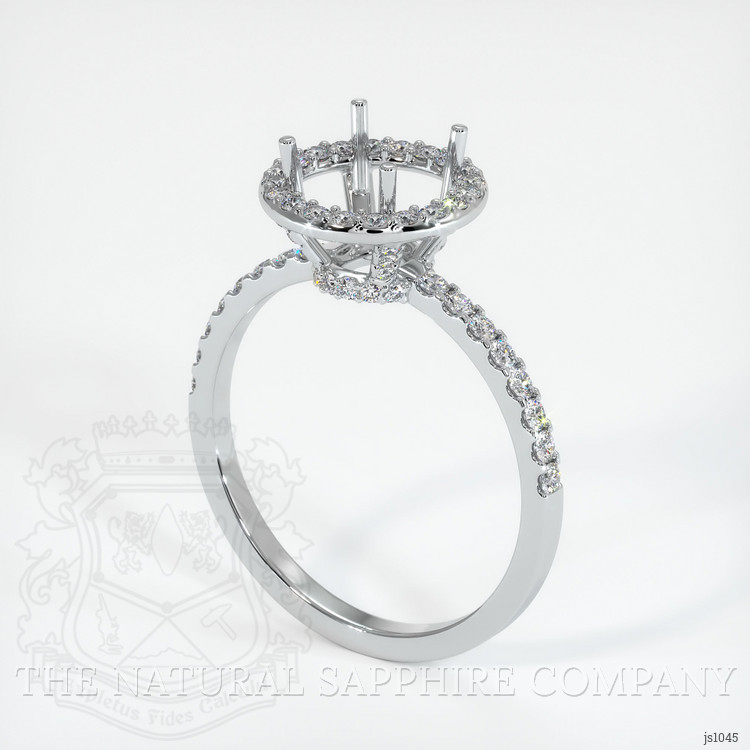


Silver Pave Ring Setting


The halo style presents a central gemstone encircled by a continuous ring of smaller stones, a configuration that amplifies apparent diameter and optical return. In technical terms the halo acts as a refractive and reflective complement to the center stone, the small stones capturing and redirecting light that would otherwise exit laterally, thereby increasing perceived brilliance and scintillation. The halo stones are typically matched in cut and proportion to the center gem, for example ideal brilliant cut melee diamonds surrounding a brilliant cut sapphire to harmonize facet geometry and light behavior. The halo can be designed with varying crown heights and inner diameters to control the amount of visible metal versus stone, allowing either a tight, fully encrusted ring that creates a seamless shimmer, or a lofted halo that introduces a bright ring of light beneath the crown of the center stone. Precision in setting geometry is critical, the pavilion angles and table sizes of halo melee must be consistent within a narrow tolerance to avoid optical disruption, and stone orientation is controlled to maximize face up brightness. When the halo uses matched color grades and clarity windows, the result is a balanced field of light that enhances the center without creating unwanted color contrast or grainy appearance.
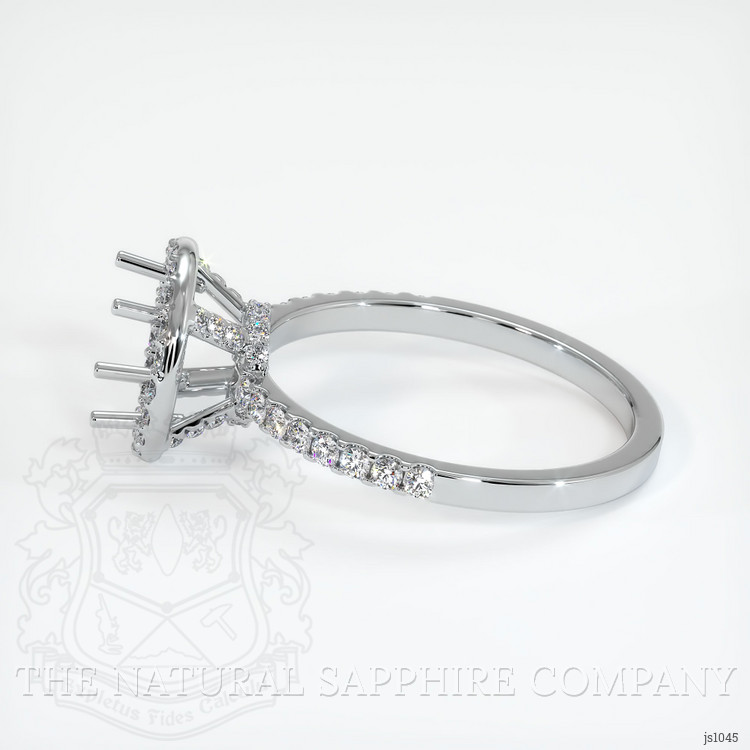
The pave style involves closely set small diamonds or gemstones arranged to create a continuous plane of sparkle along the band and into the halo, a technique that depends on tight bead or shared prong work and exacting sizing of each melee. In a true pave the stones are set in individual seats, with pairs of tiny beads raised and burnished around each girdle to secure the stone, while in shared prong pave adjacent stones share a single prong to minimize metal visibility. Micro pave uses very small melee, often under two millimeters in diameter, set under magnification with specialized gravers and burnishers to produce an almost seamless surface of light. The technical demands include maintaining consistent crown heights and girdle thicknesses, controlling the spacing between stones often to fractions of a millimeter, and ensuring each seat is cut to the correct depth so that table exposure and pavilion support produce uniform scintillation. Pavé lines are often executed with slight curvature to follow finger ergonomics, and the cumulative carat weight is distributed to favor an even visual density, preventing dark voids or overconcentration that can disrupt the perceived continuity.
This custom made ring setting is offered in rose gold, white gold, yellow gold, and platinum, and is engineered to accommodate a variety of center stone types including sapphire, ruby, emerald, and other gemstones, with adaptation of setting geometry to suit faceting styles and physical properties. For brilliant cut sapphires and rubies the prong tips and basket aperture are dimensioned to allow optimal crown exposure for light entry while maintaining adequate pavilion support, and for step cut emeralds the seat is designed to align with the girdle plane to prevent rocking and to accommodate the common inclusion patterns of beryl based gems. Metal selection influences both aesthetics and structural performance, platinum being specified where maximum tensile strength and low malleability are desired, and 14 karat or 18 karat gold alloys chosen when color warmth or rose gold patina are required. The setting accepts a range of center stone proportions, from deep pavilions through to shallow cuts, by offering a customizable undergallery and adjustable prong heights, allowing the center stone to be positioned at an elevation that optimizes face up color saturation and light return. Pavé melee are graded for color and clarity according to industry standards, typically near colorless for diamonds used in white gold and platinum settings to preserve brightness, and warmer tones selected for rose or yellow gold to create harmonious color relationships.
The design enhances both security and brilliance through an integrated approach to prong architecture, undergallery engineering, and meticulous pavé bead work. Security is provided by a configuration of four or six fine tipped prongs with both tapered and squared cross sections to distribute load and resist deformation, the prongs being drawn up from a reinforced basket that transfers impact forces into the shank rather than to the stone girdle. The basket design incorporates a peripheral halo seat and inner collar to reduce lateral play, while the undergallery features a contoured bridge that supports pavilion tip alignment and facilitates cleaning access. For softer or included stones such as emeralds the setting can be specified with additional protective features, including lowered crown exposure and partial bezel elements integrated into the halo, to reduce chip risk. Brilliance is maximized by aligning the facet geometry of the center stone with the halo and band melee, controlling light paths by tuning pavilion angles and table proportions so that returned rays from halo stones reenter the center pavilion for secondary reflection. Craftsmanship techniques include hand cutting of seats under magnification, selective burnishing of beads, ultrasonic cleaning and inspection under 10x magnification, and final laser soldering of high stress junctions to ensure long term stability. The result is a setting that combines precise optical engineering with robust structural detail, producing a halo and pave ring that secures the center gem while elevating its visual impact.

