

Silver Antique Style Ring Setting


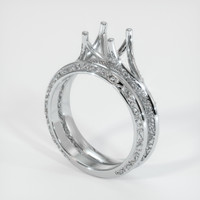
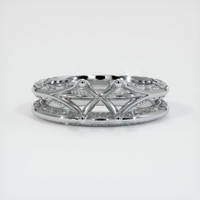
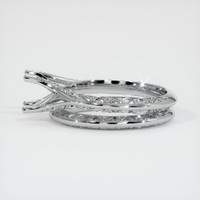
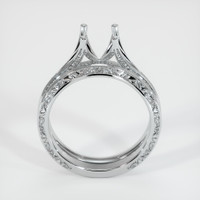
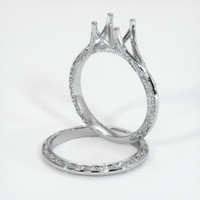
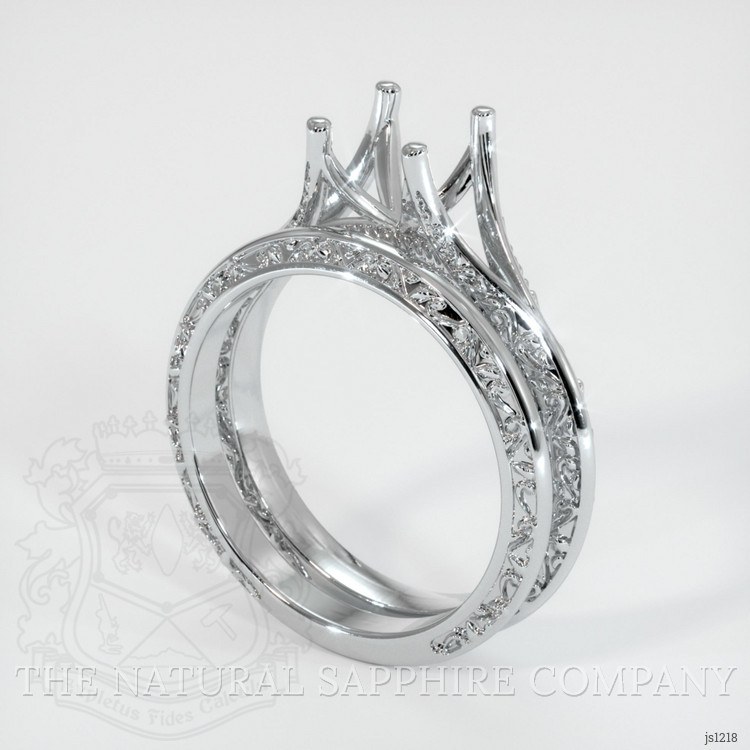
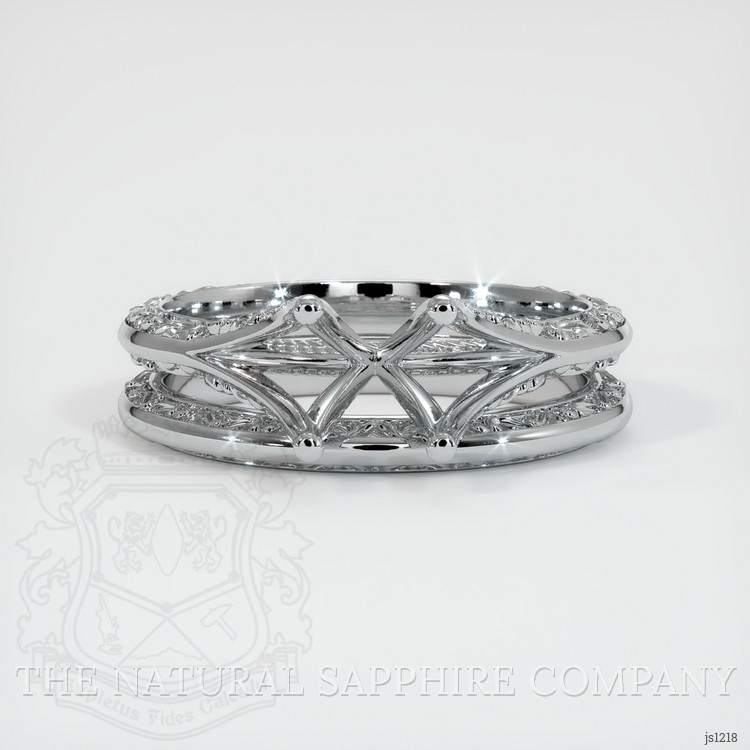
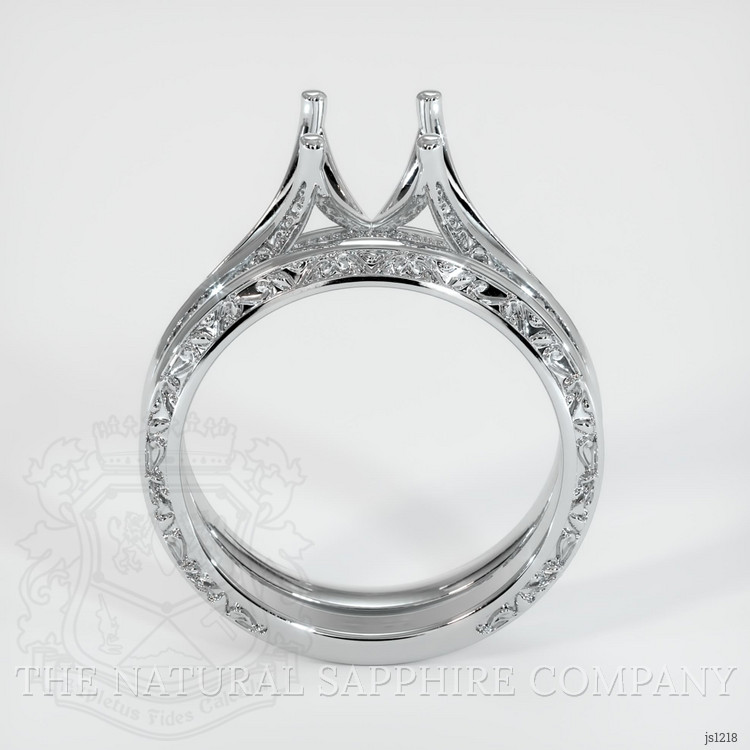
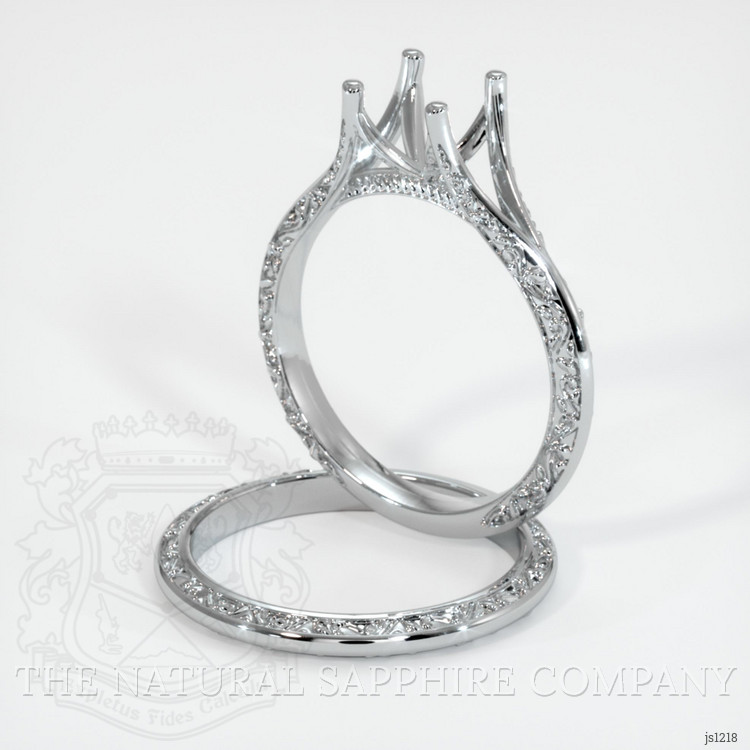
This wedding set presents a coordinated engagement ring and wedding band designed to read as a single, unified object when worn together, combining proportional symmetry with deliberate antique detailing. The engagement ring is conceived as a supportive head suitable for a loose center gemstone, and the wedding band is contoured to nest against that head so that the two rings align flush along the finger. The overall silhouette emphasizes continuous lines rather than isolated elements, so engraving motifs, milgrain edges, and pavé accented surfaces are repeated across both pieces to create visual continuity. The design language draws from antique precedents, with openwork galleries and delicate lattice understructures that both reduce weight and allow light to reach the center stone from multiple angles. The result is a wedding set that reads as one crafted composition, with each component balanced for proportion, comfort, and a seamless transition from engagement ring to band.
Materials and stone options are specified to accommodate varying preferences and long term wear. The setting metal is available in rose gold, white gold, yellow gold, or platinum, with each option selected for its color response, alloy behavior, and maintenance profile. Platinum offers a naturally white tone and strong resistance to wear, and it is often chosen for durability in daily wear settings. White gold provides a bright white appearance when finished with rhodium plating, and it offers a slightly lighter weight profile. Rose gold presents a warm coppery hue that harmonizes with red and pink gemstones, and yellow gold retains a classic, traditional presence. The center stone can be a sapphire, a ruby, an emerald, or another gemstone chosen for color and durability, and the setting is engineered to accept gems with comparable girdle dimensions while maintaining secure multi prong or bezel seating according to the stone type. Accent stones are hand set into matching channels or pavé rows where appropriate, and all seatings are executed to factory tolerance levels so that stones lie secure and flat against the metal surfaces.
The custom made process integrates precision fabrication with traditional finishing techniques to ensure that a loose gemstone becomes a precisely seated focal point. Initial design review establishes the exact dimensions and proportions required to accommodate the chosen center stone, and the setting is translated into a CAD model that defines prong geometry, gallery openness, and band contouring. From that digital model a casting or milled prototype is created, followed by hand filing, engraving, and the application of antique finishes such as hand applied milgrain and selective polishing. The antique style is achieved through a combination of mechanical engraving and human finishing, producing subtle variances that signal craftsmanship rather than machine uniformity. Ring profiles are calibrated so that the engagement head and wedding band lock together comfortably, and tolerances are held to industry standards for friction fit and alignment. Final inspection includes gem seat checks, prong tension testing, and a staged polish that preserves the engraved detail while producing the desired reflective planes. Custom sizing and finish options are accommodated before hand setting of the center stone and any accent stones, and the finished pair is delivered as a matched set rather than two separate items.
Beyond technical details, the setting transforms a loose gemstone into an object of personal meaning by coupling material integrity with considered form. The transition from a raw or unmounted gem to a precisely articulated ring introduces context and narrative, as the metalwork frames color and brilliance in a way that is both protective and aesthetic. An antique inspired design often creates a sense of lineage, because engraving and lattice work recall historic forming techniques and invite association with heirloom pieces. With practical considerations such as durable metal selection and secure setting geometry, the piece is intended to endure through daily activity and to retain its proportional unity as an emblem of shared commitment. Maintenance is straightforward, with periodic inspection of prong tension and routine professional cleaning recommended to preserve both structural integrity and visual depth. When a loose sapphire, ruby, or emerald is placed into this matched setting, the stone becomes a wearable marker of intent, its optical properties enhanced by the engineered gallery and its emotional value reinforced by the continuity of the matched band and engagement ring.

