
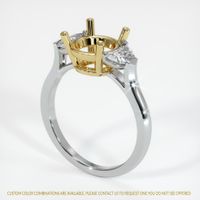


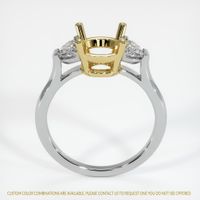
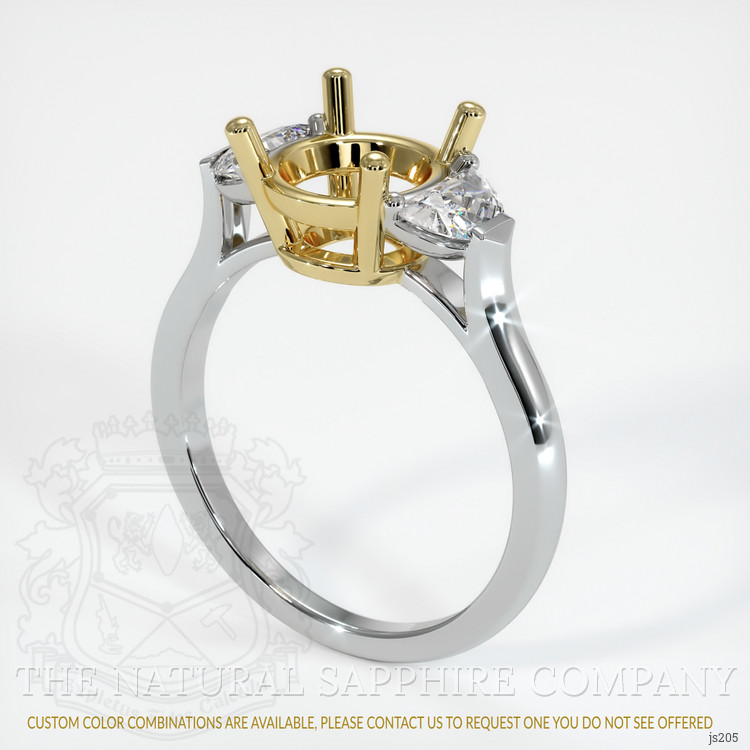
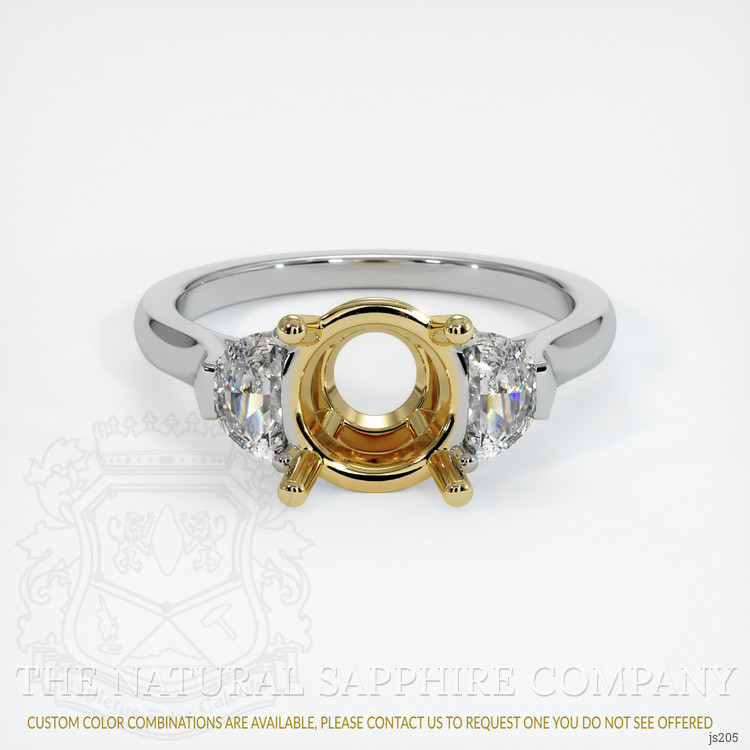
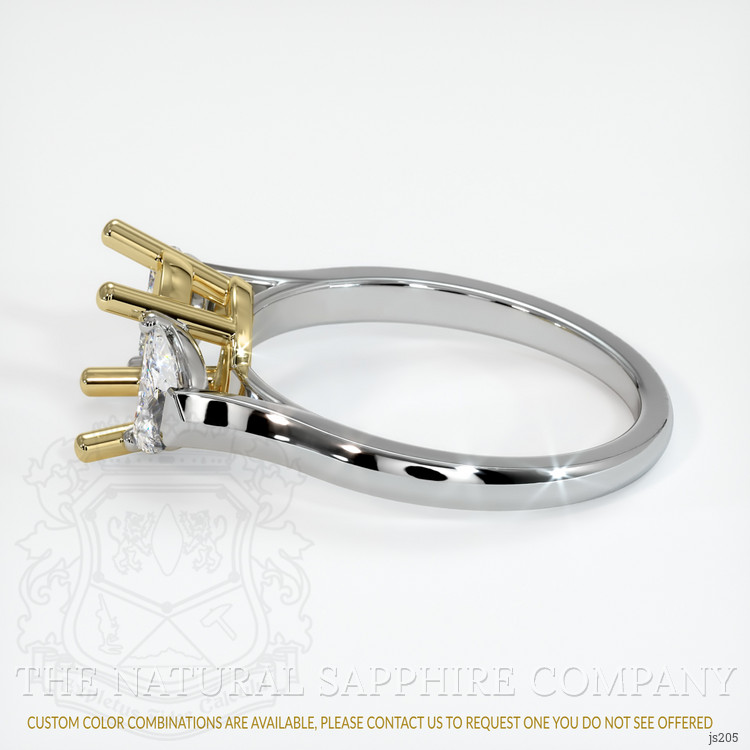
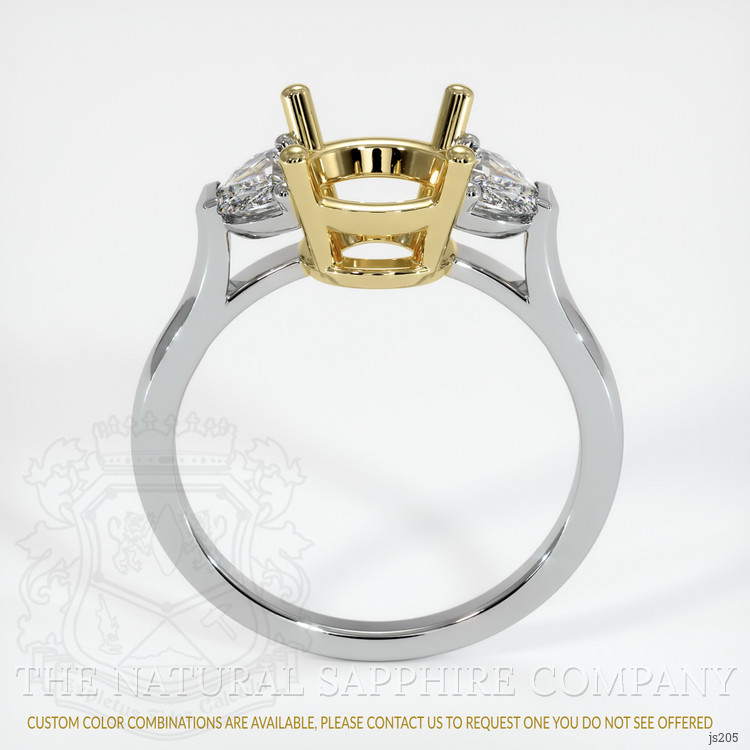
18K Yellow & White Three Stone Ring Setting


The three stone configuration in this custom made ring setting is engineered to communicate a narrative through geometry and optical alignment, each element referencing the past, the present, and the future while maximizing visual continuity and light return. The center seat is designed to accept a range of pavilion oriented gemstones including sapphire, ruby, emerald, or other calibrated gemstones, with the surrounding architecture optimized to complement either brilliant cut or mixed cut centres. Four half moon side stones are integrated into the shoulder taper in a symmetric arrangement, two on each side, creating a graduated silhouette that guides the eye toward the centre. The half moon shape is intentionally selected for its ability to nestle against round and oval centres while preserving table exposure and minimizing metal obstruction along the crown. Faceting considerations are specified at the design stage, with recommended centre stone crown angles and table ratios provided to align pavilion facet geometry with the half moon satellites, ensuring coherent facet dialogue that enhances scintillation and color uniformity.
The setting employs a series of innovative microstructure techniques to maximize light exposure and gemstone brilliance, starting with an elevated eight prong basket that provides unobstructed light intake through both crown and pavilion apertures. The prongs are tapered and milled with a precise distal profile, reducing metal footprint at the girdle while retaining structural mass at the base where stress concentrations occur. The gallery is scalloped and undercut to form light tunnels beneath the pavilion, with polished reflector planes machine finished and hand buffed to mirror incoming light back through the table and crown facets, increasing perceived brightness. Seat angles for the half moons are precision cut to match pavilion cant angles, creating minimal air gaps and eliminating light leakage at the bezel interface. Micro prong and low crown retention options are available for side stones to balance security with maximum crown exposure, and the mounting cavity is stress relieved through thermal cycling after casting to stabilize metal memory before final setting.
Material selection and metallurgical considerations are integral to optical performance and long term wearability, with options in rose gold, white gold, yellow gold, platinum, and two tone yellow and white constructions. Platinum is specified when minimal prong thickness is desired without compromising tensile strength, permitting slimmer prongs that present less metal to incoming light, thereby increasing apparent stone size and fire. White gold is offered with rhodium surfacing where a bright, neutral reflector plane is preferred, however alloy composition and karat selection are calibrated to balance hardness for setting with ductility for prong burnishing. Rose gold introduces a warm reflective backdrop that can deepen saturation of red and pink hues in rubies and padparadscha influenced sapphires, while yellow gold complements warm tone gemstones and can be employed in two tone constructs to create a directional return that enhances particular hue profiles in the centre stone. All casting is performed from CAD milled waxes with CNC verified tolerances, and critical junctions are laser welded to preserve geometric tolerances without introducing bulk.
Craftsmanship techniques combine modern digital precision with traditional hand finishing to achieve optical and mechanical excellence, beginning with CAD driven design verification for facet alignment and stress analysis, followed by investment casting, manual chasing to refine prong geometry, and microscopic inspection during setting. Each stone is seated with controlled torque applied to the prongs, using gauge verified tools and loupe magnification to confirm girdle clearance and pavilion exposure. For coloured gemstones, we recommend matching saturation and tone between centre and half moon satellites, and specifying complementary faceting styles such as brilliant modified cuts for high sparkle or step facets for color emphasis, with attention paid to girdle thickness and culet presence to avoid unwanted light escape. Final finishing includes multi stage polishing of both visible and internal reflector surfaces, ultrasonic cleaning, and a final verification of security under simulated wear loads. Routine maintenance recommendations include periodic prong inspections and rhodium refinishing where applicable, ensuring that the engineered light pathways and the delicate balance between metal and stone remain optimized for long term brilliance and structural integrity.

