


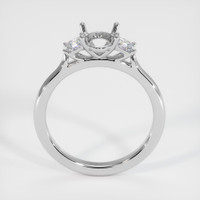


18K White Gold Three Stone Ring Setting


You have been searching for a ring that answers both the desire for meaning and the need for everyday durability, and this custom made ring setting arrives as the clear solution. Crafted to accommodate a choice of center gemstones such as sapphire, ruby, emerald, or another fine gemstone, and offered in a range of metals including rose gold, white gold, yellow gold, white and yellow, and yellow and white, this piece invites you to tailor both color and character. The design reads as a three stone composition with a distinguished low profile flush set approach, and it includes four refined side stones cut in the Asscher octagon shape to add measured sparkle on each shoulder. Whether you are seeking the perfect engagement ring that balances symbolism with subtlety, or a collector grade setting that showcases a rare center gem while remaining wearable every day, this single ring brings those priorities together with thoughtful proportions and artisan attention to detail.
The flush set style embedded into this design places stones so they sit seamlessly into the metal, creating a sleek, modern look with minimal elevation, and flush set refers to a straight band being able to sit flush with the main ring. With this low profile presentation the side stones and any band that joins it will align cleanly without gaps, which is ideal for anyone who values a tidy silhouette and comfort during daily life. Paired with the three stone configuration the ring also carries emotional resonance, as three stones often represent the past, present, and future, creating a meaningful and elegant design that is easy to explain and beautiful to wear. Please note that this listing describes a single ring only, set up to receive your chosen center gemstone and paired side stones so that the finished piece reads as one cohesive jewel that will complement a companion straight band when desired.
Beyond aesthetics this setting was engineered with longevity in mind, making it a reliable choice for constant wear. The flush seated accents reduce the risk of catching because the girdles are nested within the metal plane, and the low center profile keeps the main gemstone protected by the surrounding prong and gallery architecture. Where the center stone is mounted, the prong structure and the reinforcing under gallery are designed to cradle the stone while distributing impact forces around the band rather than at a single vulnerable point. The choice of metals gives you practical options, as rose gold alloys bring a measure of hardness from their copper content, while white gold can be strengthened through careful alloy selection and regular maintenance to preserve its polished look. The Asscher octagon side stones are cut to present strong step facets and square based geometry that pair well with flush mounting, and having four precisely set side stones contributes to balance and stability across the setting. If your priority is a ring that reads as elegant and significant, yet will not demand precious care beyond routine cleaning and occasional inspection, this custom setting answers that need while leaving room for personal choice of center gem and metal. If you would like help selecting the perfect center stone, or if you prefer a particular metal to match an existing band, I can guide you through the options and ensure the finished single ring fits your vision.

