
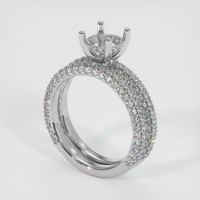
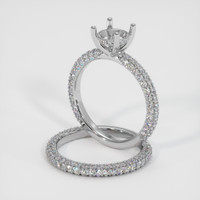
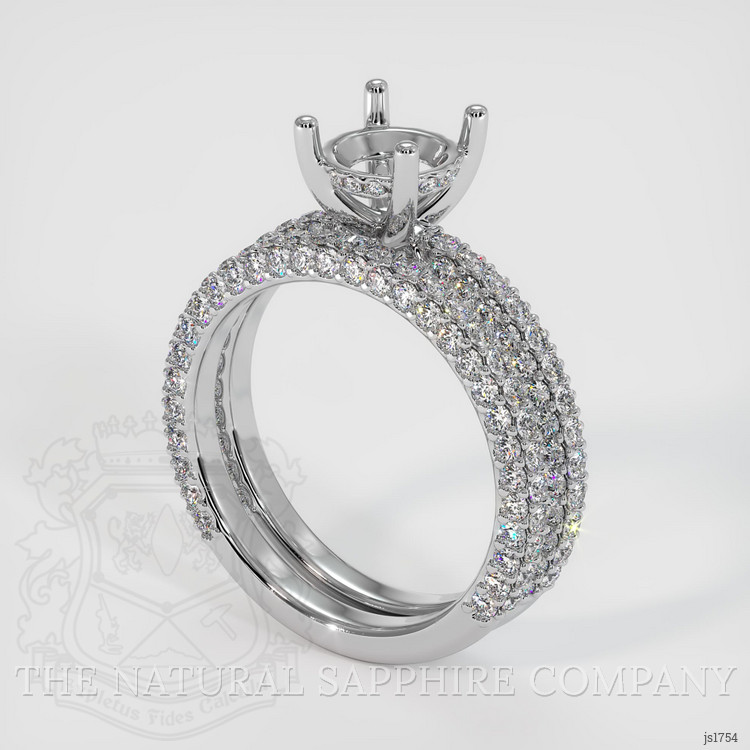
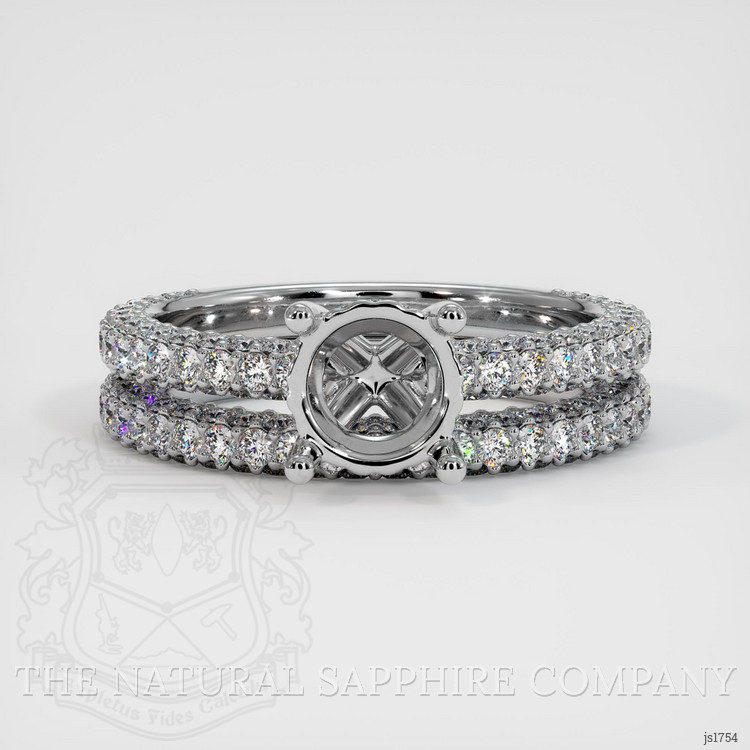
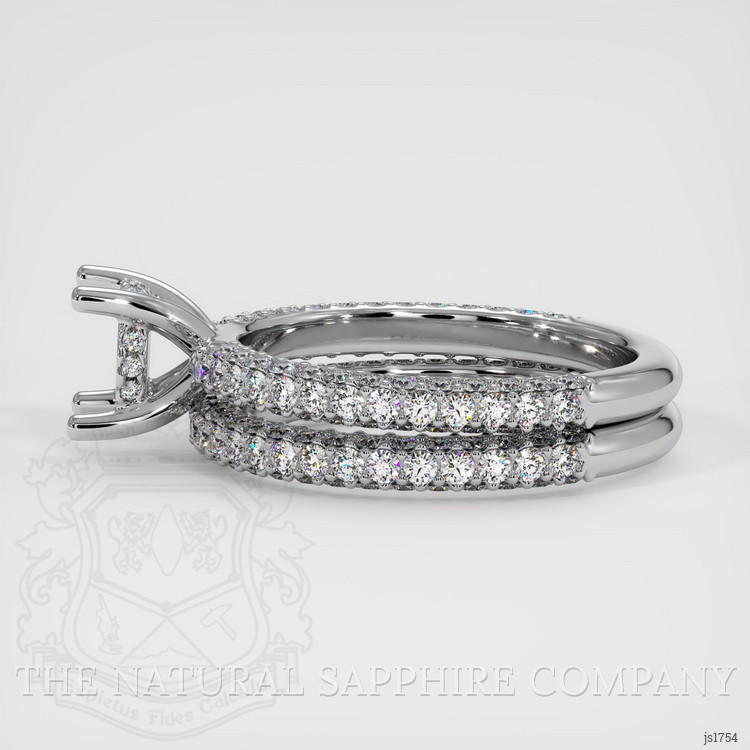
18K White Gold Pave Ring Setting


Flush set style describes a method of seating a gemstone within the plane of the metal so that the crown sits nearly level with the band, creating a low profile and a streamlined silhouette. In practice this means the metal is cut to receive the pavilion or girdle of the center stone and the surrounding metal is burnished over the girdle to lock the stone in place. The engineering details matter, because the seat depth, bezel lip thickness, and band wall gauge determine both durability and the final elevation above the finger. For colored gemstones such as sapphire, ruby, and emerald, faceting orientation and girdle thickness are evaluated prior to setting, to confirm that the pavilion angles and girdle proportions allow a true flush seat without risking stress fractures. Flush set refers to a single ring construction, designed so that a straight band may sit flush against it, rather than implying a paired set, and every flush set is engineered with a flat mating surface or a precisely contoured channel where a companion band can rest without rocking. When crafted in rose gold, white gold, yellow gold, or platinum, the metal flow and malleability influence how tightly the lip is formed, with platinum requiring higher tool forces and rose gold allowing a warmer finish, while a low profile enhances everyday wearability and reduces snagging, ideal for active lifestyles.
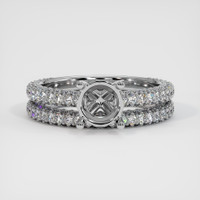
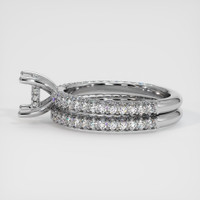
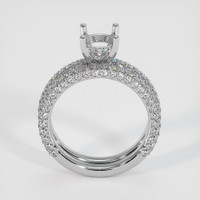
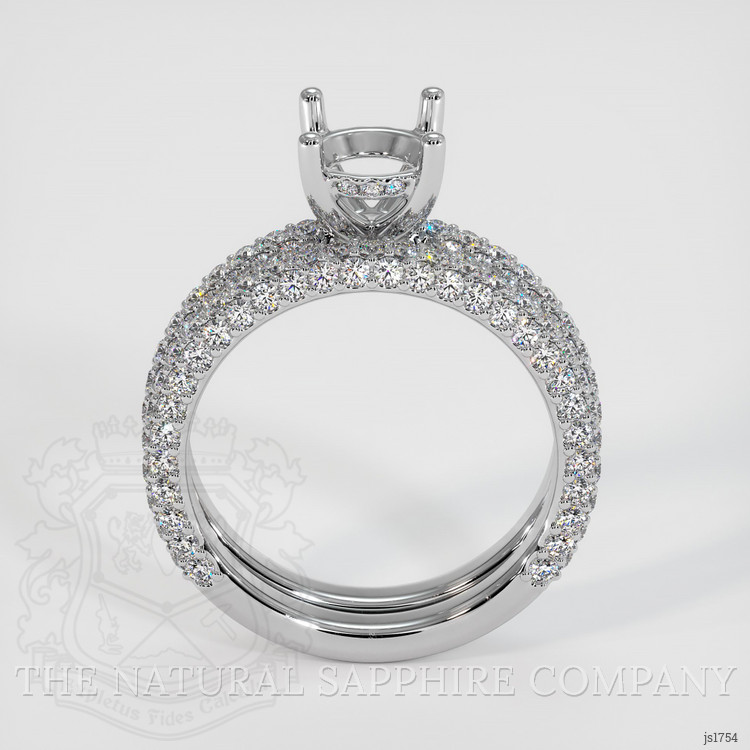
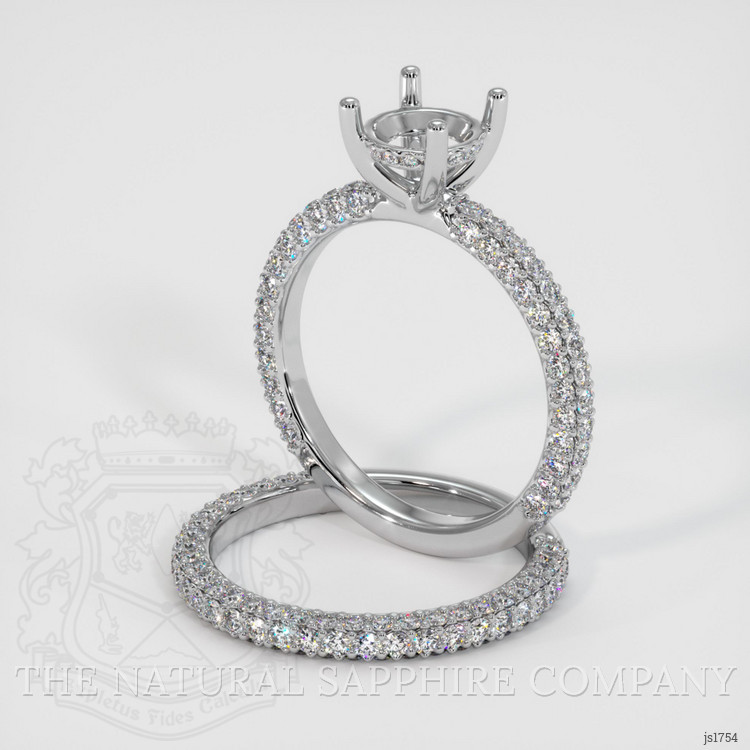
Pave style uses rows of small diamonds or other melee gemstones set closely together so that the metal is minimized and the surface reads as continuous scintillation. Technically this is achieved by precise calibration of roundness, diameter, and variance in stone size, with typical melee ranges from 0.01 carat to 0.10 carat, and with micro pave techniques using tightly matched 0.01 carat to 0.02 carat stones. The gem setter employs bead setting or grain setting, raising minute beads of metal between stones, or uses channel rails for double row pavings that are visible in the provided imagery, where each stone is matched for color and clarity to produce uniform light return. The pavings shown illustrate a double row configuration around the band, with crown facets intentionally oriented to maximize reflective return into the viewer plane, and with precise spacing of 0.1 mm to 0.3 mm between stones to create an uninterrupted field of brilliance. Craftsmanship notes include a recommended minimum metal thickness under pavings of 1.0 mm to 1.5 mm to retain structural integrity, and the use of laser welds for reinforcement at stress points. For colored center stones, the pavings act as a bright white reference, enhancing perceived saturation of sapphires, rubies, or emeralds, while careful selection of melee whiteness or slight warmth can tune the overall color balance.
Wedding set style integrates a coordinated engagement ring and wedding band, conceived together to produce a cohesive visual and mechanical pairing, rather than two independent pieces. The engineering considerations include mating profiles, band widths, crown heights, and prong placement so that when stacked the set reads as a single unified piece. In a designed wedding set, the engagement ring will often feature a crown or head geometry that allows the wedding band to nest beneath, or the wedding band will have a slight scallop or radius to match the engagement ring girdle, achieving zero gap and consistent contact along the circumference. Hidden halo is a technique that places a halo of melee stones beneath the center stone crown, set into the gallery or underlay, increasing apparent diameter and redirecting light into the pavilion. The hidden halo is specified using smaller melee, often 0.8 mm to 1.2 mm in diameter, seated in a stepped gallery that also serves as a fastening point for the head, and it can be implemented with different metal colors to influence the perceived warmth or coolness of the center stone. When configuring a wedding set, we plan for tolerances of 0.05 mm between mating surfaces, and we prototype using CAD and resin prints to confirm stackability before final casting and hand setting.
This custom made ring setting brings technical clarity to aesthetic purpose, designed to instill confidence through precision, proportion, and optical science. For center stones select from sapphire, ruby, emerald, or other gemstones, and bear in mind faceting style recommendations for each. For sapphires and rubies which are corundum, brilliant mixed cuts and modified step cuts both perform well, with crown angles around 34 degrees and pavilion depths optimized to 42 percent to 44 percent for optimal return, while maintaining a table proportion that balances fire and brilliance. For emeralds, which often exhibit natural inclusions, calibrated step cuts and custom girdle engineering reduce fracture risk and preserve color saturation, and an eye clean grade is favored for pavings to contrast with the richer body color. Metal selection adjusts optical outcome, rose gold deepens red and pink tones, yellow gold reinforces warmth and traditional character, white gold and platinum increase apparent whiteness of surrounding pavings and provide a cooler backdrop for blue sapphires. Our production process begins with client consultation and gem evaluation, proceeds to CAD modeling that specifies facet orientation and setting relief, continues through lost wax or direct metal 3D printing casting, then to hand finishing and precision setting, with every melee matched for diameter, color and clarity, and final quality control including tension testing, stone retention checks, and surface polish to a jewelry grade finish.
If you seek a ring that conveys elegance and confidence, this custom setting achieves that through measurable decisions in geometry, gem selection, and metal choice, rather than by mere ornament. The flush set option prioritizes a sleek modern profile and the ability to pair seamlessly with a straight wedding band, the pave option maximizes surface scintillation with closely matched melee, the wedding set option creates a harmonious stacked silhouette that reads as one complete object, and the hidden halo enhances perceived size and light return without adding visible bulk. We can advise on ideal facet maps and color grades for your center stone, propose melee specifications and metal alloys that meet your wear and metal fatigue expectations, and provide a technical mock up for your approval. Contact us to review gem particulars, secure a CAD render, and begin the custom build, and we will document the specifications and tolerances so you receive a ring that is both technically sound and emotionally resonant.

