
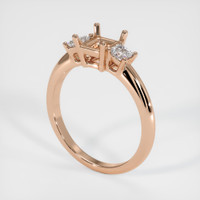
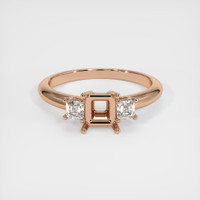
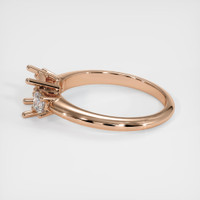
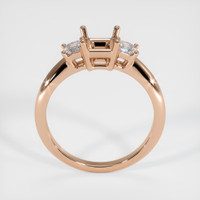
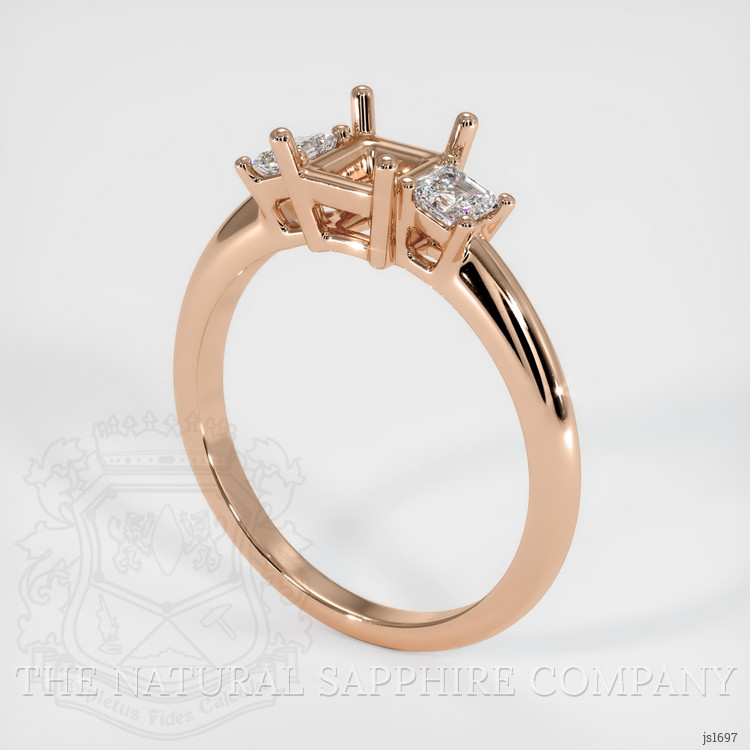
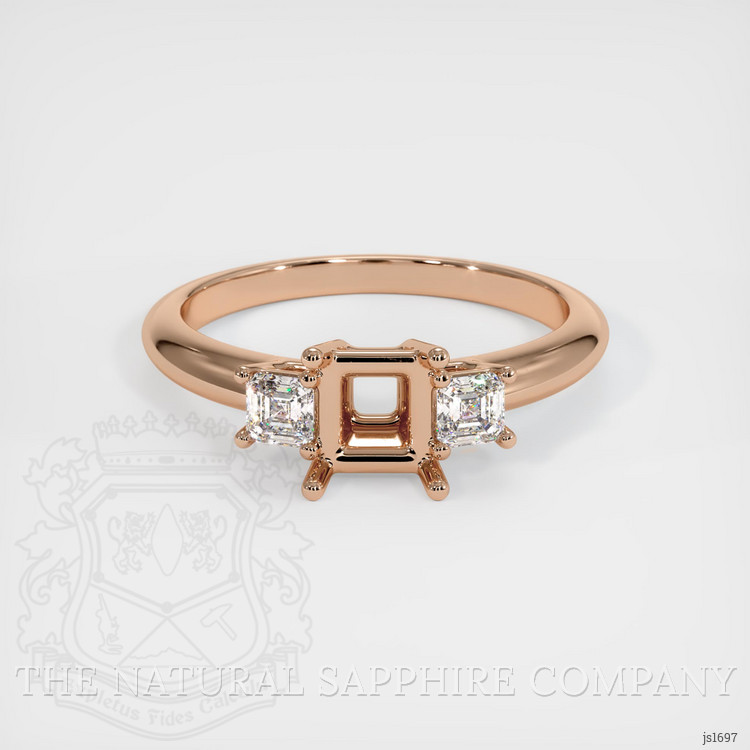
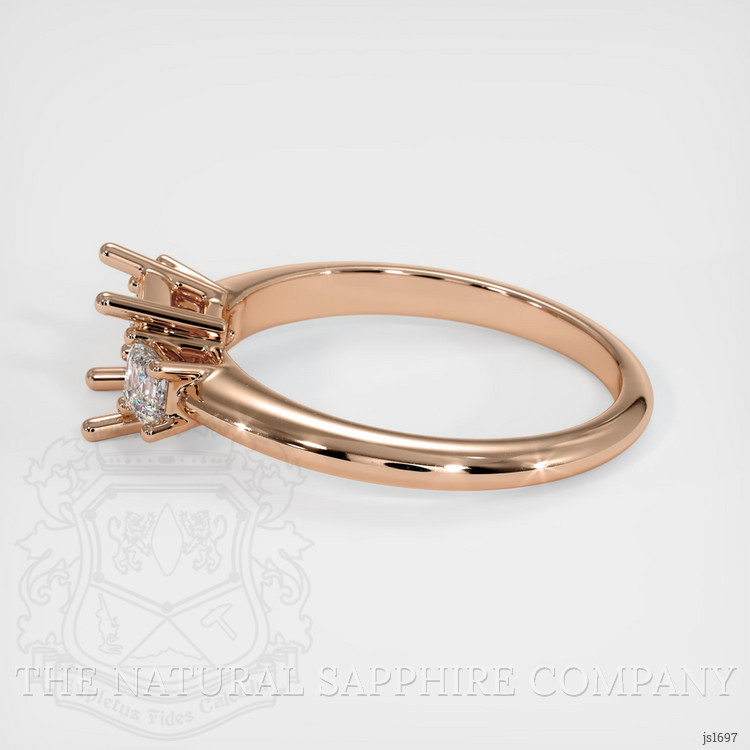
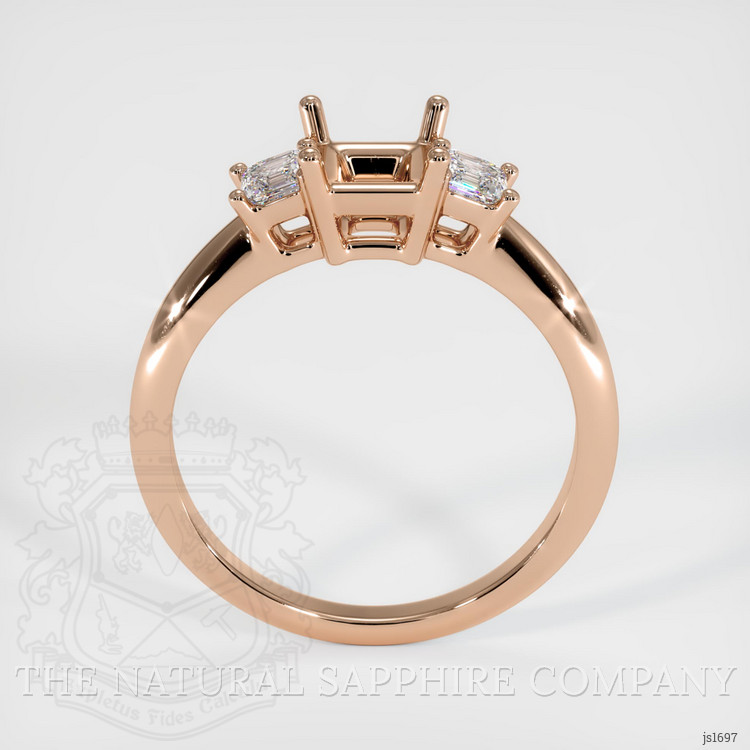
18K Rose Gold Three Stone Ring Setting


The three stone design on this custom made ring setting articulates a clear narrative through geometry and proportion, each element calibrated to represent past, present, and future while delivering structural integrity and optical balance. The central seat is sculpted to accept a choice of center stones including sapphire, ruby, emerald, or a bespoke gemstone. Flanking the central seat are four asscher octagon side stones, set with precision to create lateral symmetry and to emphasize the central mass. The gallery and basket geometry use vertical and horizontal struts that maintain optimal light ingress and egress through the pavilion facets, while providing mechanical support to prevent canting under load. Prong architecture is specified with tapered profiles and knife edges where required to minimize metal coverage on the table and crown, enhancing the visible face up area of each stone. The setting metal options include rose gold, white gold, yellow gold, platinum, and mixed metal combinations such as white and yellow metals, allowing clients to choose an alloy that best complements the hue and refractive character of the chosen gemstones.
Selecting the center gemstone demands attention to facet design and color grading, because the optical interplay between the center and the asscher octagon side stones depends on complementary cut styles and proportions. For sapphire and ruby, which are commonly cut in mixed cuts or modified cushions to maximize color saturation, we recommend pavilion depth and crown angle relationships that favor brilliance without inducing windowing, with table sizes tailored to the carat weight to preserve face up color saturation. For emeralds, which are traditionally step cut to promote depth of color, attention to clarity grading is essential because cradle setting will expose the pavilion and any included fissures, and standard practice for emerald commissions includes disclosure of clarity treatments such as oiling. When choosing color grades, precise hue and tone specification will be made, for sapphires preferring vivid or royal blue with medium to strong tone, for rubies aiming for vivid red to slightly purplish red depending on origin preferences, and for emeralds focusing on medium deep green with even saturation. Cut quality metrics such as pavilion angle, crown height, table percentage, and symmetry are specified to industry tolerances to ensure predictable light return when mounted.
The four asscher octagon side stones are selected for step cutting precision and facet symmetry, providing a distinct contrast to a brilliant or mixed cut center stone or an elegantly matched step cut center emerald. Asscher octagon cuts have truncated step facets on the crown and pavilion that create concentric flashes and luminous plateaus, and their light performance emphasizes clarity and facet symmetry rather than scintillation. For this reason, we grade side stone clarity more stringently when using asscher octagon shapes, because inclusions tend to be more visible in large step facets. Facet junction accuracy, polished facet planes, and pavilion step parallelism are inspected under 10 power magnification, and any stones with windowing or uneven girdle thickness are rejected. The setting attaches each asscher octagon with micro prongs and low profile bezels where needed to reduce edge chipping risk, while precision milling of the seat ensures a line to line fit that prevents rocking. The result is a controlled optical frame around the center stone that enhances perceived size and emphasizes color contrast when colored center gemstones are selected.
From the perspective of craftsmanship and long term value this custom made ring setting represents an investment in durable design and meticulous finish work. Initial production begins with CAD modeling where exact prong heights, seat angles, and metal thicknesses are specified to balance wear resistance with light transmission. The model is produced by lost wax casting or direct metal printing depending on the chosen alloy, and all castings undergo stress relieving, shot peening, and hand filing to remove casting seams and porosity. Prong heads are burnished and rounded to eliminate stress risers, while the gallery is hand pierced and milled to promote airflow and ease of cleaning. Metal choice impacts wear characteristics, with platinum offering superior hardness and resistance to abrasion, white gold requiring periodic rhodium maintenance to preserve a bright white finish, and rose and yellow gold providing warm color tones with specific alloy compositions that influence malleability and durability. Karat selection is recommended based on lifestyle and desired finish, and for clients seeking mixed metal combinations we perform laser welding with matched alloys and finish to ensure seamless joins with no visible weld lines. Each setting is finished with a jeweler grade polish, and the final inspection includes a fitted test stone, torque testing of prongs under simulated wear, and a documented maintenance schedule. Choosing this three stone custom setting therefore secures not only aesthetic refinement but also the technical assurance of long term stability and heirloom quality.

