


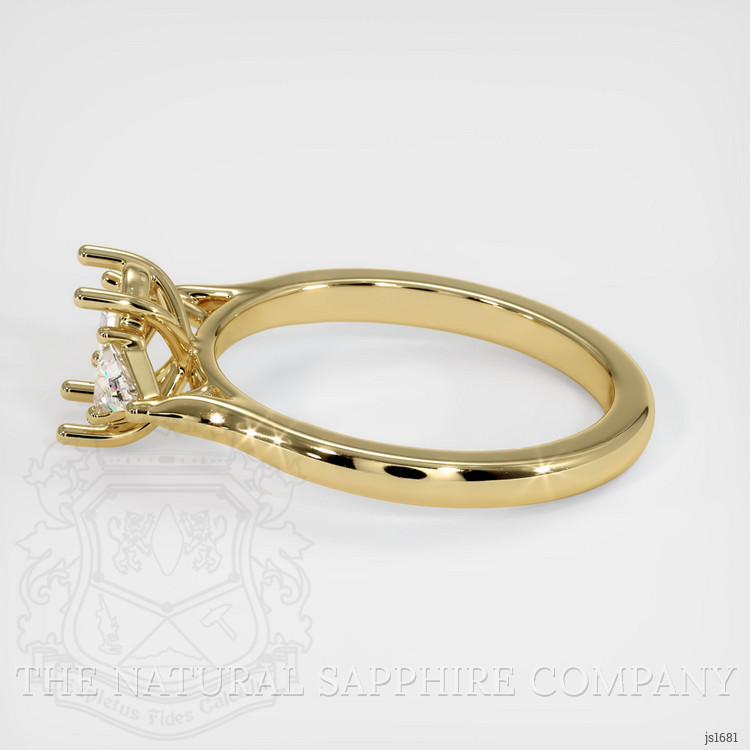

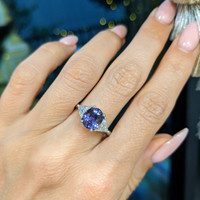
14K Yellow Gold Three Stone Ring Setting


The flush set concept in this custom ring setting refers to a design approach in which the band and the gem mounting are calibrated so that a straight wedding band or companion band can sit completely flush against the engagement ring without gaps, creating a unified and low profile silhouette. This setting is not a separate pair of rings, it is a single ring engineered to allow a companion band to nestle flush against it. In practice that requires a careful reduction of elevation in the shoulders and a precise shaping of the undergallery, so the ring achieves a sleek modern look when worn alone, and an exact flush union when paired with a straight band. The three stone feature of this design introduces a central gem flanked by additional gems, traditionally understood to symbolize the past, present, and future. That three stone composition yields a balance of symbolism and visual weight, and in this design the three stone layout is combined with flush set compatibility so that the entire assembly remains wearable and elegant in both solo and paired contexts.
This custom made setting is offered in rose gold, white gold, yellow gold, platinum, and a two tone white and yellow option, so metal choice can be selected to match personal taste and lifestyle. Gold will typically be supplied in either 14k or 18k depending on preference, with 14k offering greater scratch resistance and 18k providing richer color saturation and higher intrinsic gold content. White gold will be finished with rhodium plating for a bright white appearance, understanding that replating may be required over time. Platinum is available for clients seeking maximum durability and hypoallergenic properties, and it is denser than gold, which gives the ring a substantial feel and excellent long term wear. The central stone can be chosen from sapphire, ruby, emerald, or a custom gemstone, and each species has distinct grading criteria and provenance considerations that influence value and desirability.
For the educated buyer, understanding the nuances of sapphire, ruby, and emerald grading is essential. Sapphire and ruby are both varieties of corundum and are graded primarily on color saturation, hue, tone, cut quality, and clarity. The most valuable sapphires exhibit vivid saturated color with even tone and minimal zoning, with classic origins including Sri Lanka, Madagascar, and Kashmir, the latter being exceptionally rare and commanding premium prices. Rubies are prized for a pure, vivid red with a hint of blue, often described as pigeon blood when of the highest quality, and notable historical sources include Myanmar and Mozambique. Heat treatment is common and acceptable when disclosed, and buyers should request full treatment disclosure and laboratory reports. Emeralds are beryl and present a different metric because inclusions are typical, and clarity is often described using terms that reflect the presence of characteristic fissures rather than fault. High quality emeralds from Colombia are prized for rich green color and transparency, and it is standard to expect some oiling or clarity enhancement, which should be disclosed. For ring side stones, this design accommodates four trillion cut side stones, which are triangular brilliant cut gems chosen for strong scintillation and crisp facets. Trillion cut stones require precise matching of angles and measurements for symmetry, and the cutter will aim for optimal table size and pavilion angles to maximize light return. When selecting side trillions, consider weight distribution so that the center stone remains the focal point, and request matching reports or detailed measurements for consistency.
The tale of the jeweler setting a gemstone into this ring is a narrative of technical care and artisanal judgment. After selecting a validated center gem with accompanying documentation from an accredited laboratory when appropriate, the master setter mounts the chosen center gem into the prepared head, carefully aligning the girdle to sit at the intended elevation. Prongs are formed and tightened, and for this design special attention is paid to the shoulder profiles to maintain flush compatibility. The trillion side stones are set next, each one measured under magnification to ensure perfect symmetry and secure seating. For flush related surfaces, the undergallery and band edge are burnished and contoured with micrometer precision, so a straight companion band will meet the engagement ring without rocking or visible gap. The jeweler uses a combination of hand tools and micro welds to reinforce settings without changing visual lines, and a final polish removes any tool marks while preserving crisp facet junctions. Each ring is inspected with a loupe and microscope, checked for prong integrity and stone security, and measured for fit. The result is a single, custom ring setting that offers the symbolic elegance of a three stone composition, the modern, streamlined profile associated with flush set design, and the technical documentation and craftsmanship that an informed buyer requires.

