
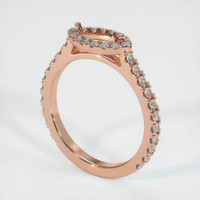
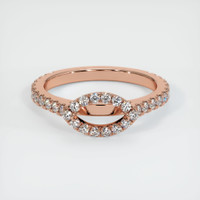
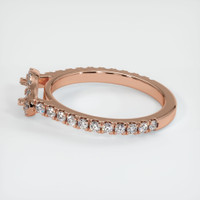
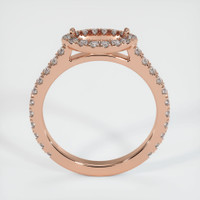
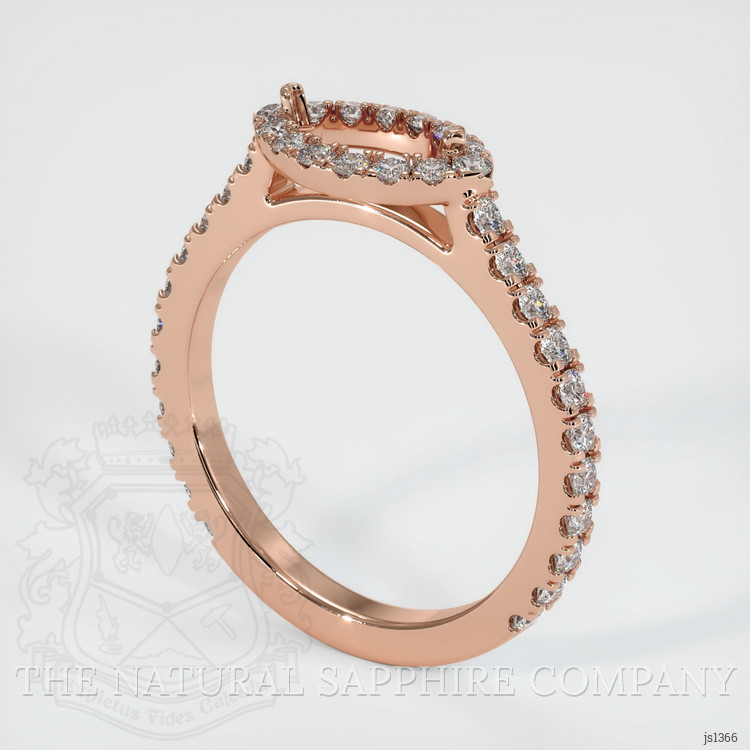
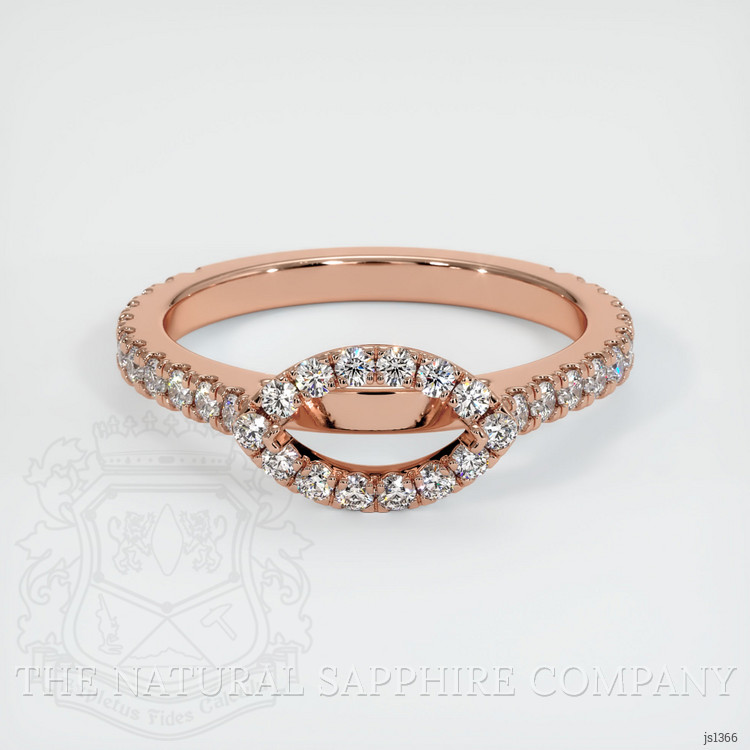
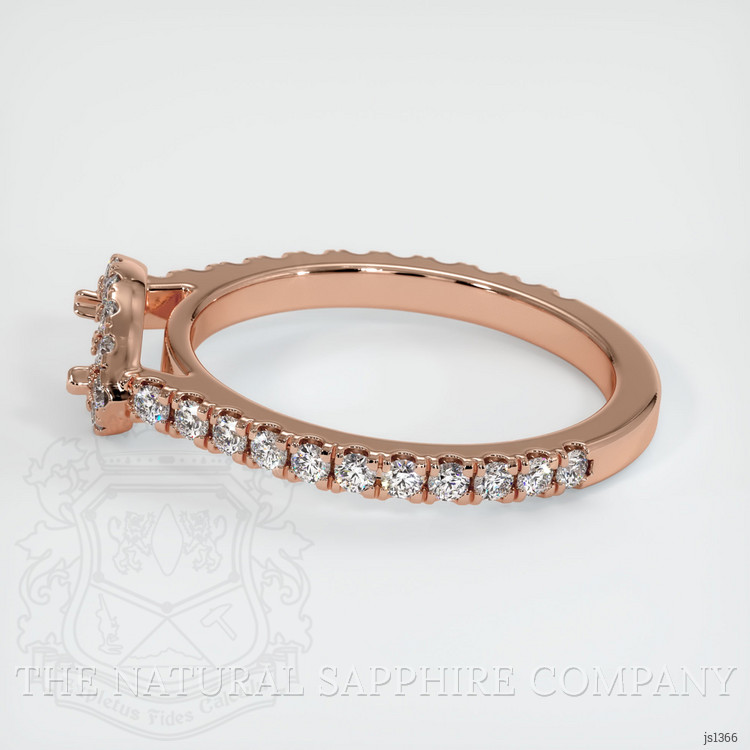
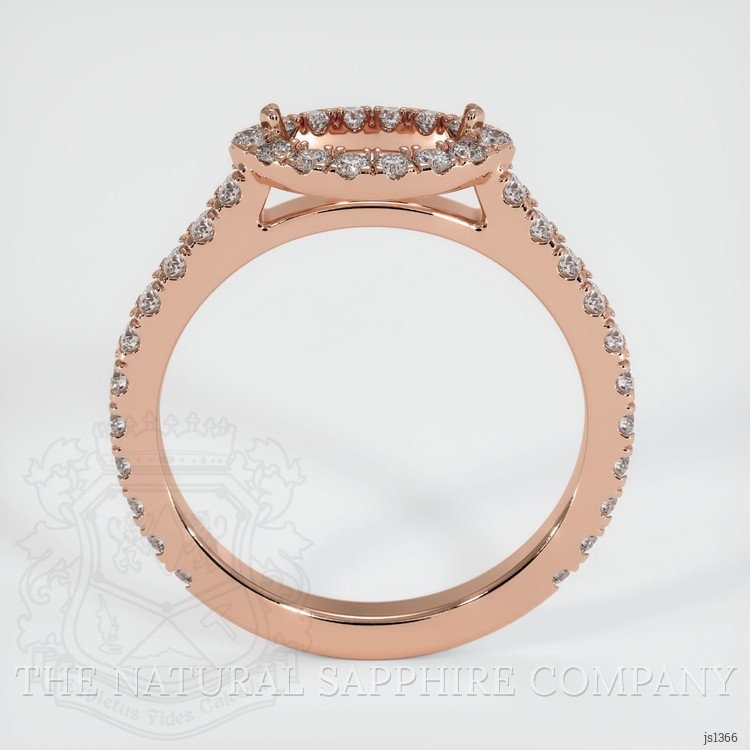
14K Rose Gold Pave Ring Setting


The halo style described here centralizes a principal gemstone within a contiguous ring of smaller stones, a geometry that amplifies apparent diameter and optical return by increasing the amount of reflected light directed through the table of the center gem, this halo ring functions as both an optical enhancer and a framing device, the surrounding stones are typically small round brilliant cuts set to closely follow the crown outline of the center gem, when paired with a round brilliant center the halo reinforces scintillation and fire through complementary facet orientations, when married to a step cut center such as an emerald cut or asscher cut the halo serves to soften the linear light return creating balanced face up brilliance, material choices for the halo and shank are available in rose gold, white gold, yellow gold, and platinum, each metal affects perceived color and contrast, rose gold with higher copper content will warm the overall presentation and can intensify the red and blue tones of sapphires and rubies, white gold benefits from rhodium plating to maximize white light reflection alongside diamonds or colorless stones, platinum provides superior density for secure gem seating and long term dimensional stability, for colored centers such as sapphire, ruby, or emerald, matching or contrasting halo stones can be selected to either reinforce saturation or create a distinct bezel of brilliance, careful attention to crown and pavilion angles is applied during design so halo facets collect and redirect light in-phase with the center stone, the result is an eye catching silhouette with engineered light performance.
The pave style implemented on this custom made setting uses closely set melee stones arranged along the shank and in the halo, these stones are typically round brilliant cuts in sizes commonly ranging from one to three points each when measured in carat weight, close setting density is achieved by precise bead and grain work or by micro prong techniques, the intent is to create a continuous plane of reflected light with minimal metal visibility, the success of pave depends on consistent diameter grading of the melee, tight control of girdle variation, and uniformity of table percentage so that adjacent facets align to produce a seamless scintillation field, setting techniques include hand pierced seats and laser cut tabletops in the case of mechanical preperation, the stones are placed into calibrated pierced holes and secured by forming tiny beads of metal around the girdle of each stone, spacing is reduced to a single bead width between stones to maximize contiguous sparkle, shared prong pavings and double row pavings are options depending on aesthetic and structural considerations, micro pave requires thicker shoulders beneath the stone beds to support repeated bead formation without thinning the shank excessively, this is addressed in the design phase by increasing shank core width and by engineering a sub shank rail that maintains ovality and resists bending.
Structurally this setting is designed for long lasting daily wear, the selection between metals is a key structural variable, platinum exhibits higher tensile strength and lower susceptibility to resorption relative to eighteen karat gold, eighteen karat yellow or rose gold balances ductility with hardness due to alloying copper and silver, fourteen karat gold provides increased abrasion resistance at the expense of a slightly paler hue in rose gold alloys, recommended dimensional parameters for endurance include a shank thickness at the finger contact point of approximately one and a half to two millimeters, with a shank core width beneath the pave field increased by up to thirty percent to preserve metal volume after bead setting, prongs for the center stone are specified with a minimum cross section designed to resist deformation, prong feet are flush with the seat to spread load across the girdle, gallery arches are engineered to maintain clearance while reinforcing the center seat through triangulated supports, critical manufacturing steps include computer aided design driven finite element analysis to identify stress concentrations, selective annealing to restore ductility after forming, and laser welding to produce clean junctions without introducing cold work embrittlement, stone seats are cut to match pavilion angles, creating full contact along the bearing surfaces, this reduces point loading and minimizes the chance of chips on softer gem materials, for colored gems such as emeralds where cleavage and inclusions are common, center seats incorporate protective prong geometry and slightly elevated bezels to lower exposure to lateral impacts.
Craftsmanship techniques deployed combine machine precision and hand finishing to achieve both optical and mechanical excellence, initial CAD files are translated to five axis CNC milling for bulk removal followed by hand fitting of the pavé beds and final shaping of prongs, each melee is hand selected for diameter tolerance, color uniformity, and cut quality, facet alignment is verified under low angle lighting to ensure consistent flash, center gemstone choices are evaluated by hue, saturation, and tone for sapphires and rubies, acceptable trade offs for these corundum varieties center on medium to strong saturation with even hue distribution and minimal silk or rutile inclusions that scatter light detrimentally, for emeralds clarity grading is balanced against the desirability of rich green saturation, cutters often favor minor clarity enhancements through oiling which is disclosed and managed within the setting seat to avoid long term containment issues, recommended cuts include round brilliant and cushion for maximum face up brilliance in saturated stones, oval and cushion cuts elongate finger appearance and work well within the halo profile, emerald cuts for emeralds and step cut sapphires provide an elegant table orientation that benefits from a delicate halo to increase perceived size without overwhelming the stone, maintenance recommendations include periodic prong retipping approximately every twelve to twenty four months depending on wear, gentle cleaning methods for softer or treated gems, rhodium replating for white gold to restore high reflectivity, and routine inspection of bead integrity across the pave field, the cumulative result is a custom made halo and pave ring setting that offers considered optical engineering, meticulous gem matching, and reinforced structural design suitable for daily wear by knowledgeable collectors and connoisseurs.

