

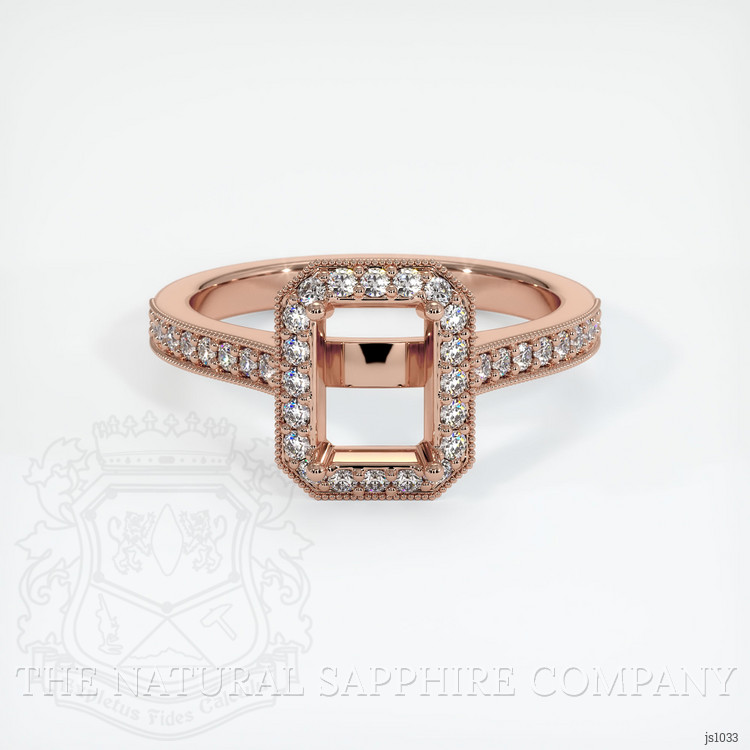
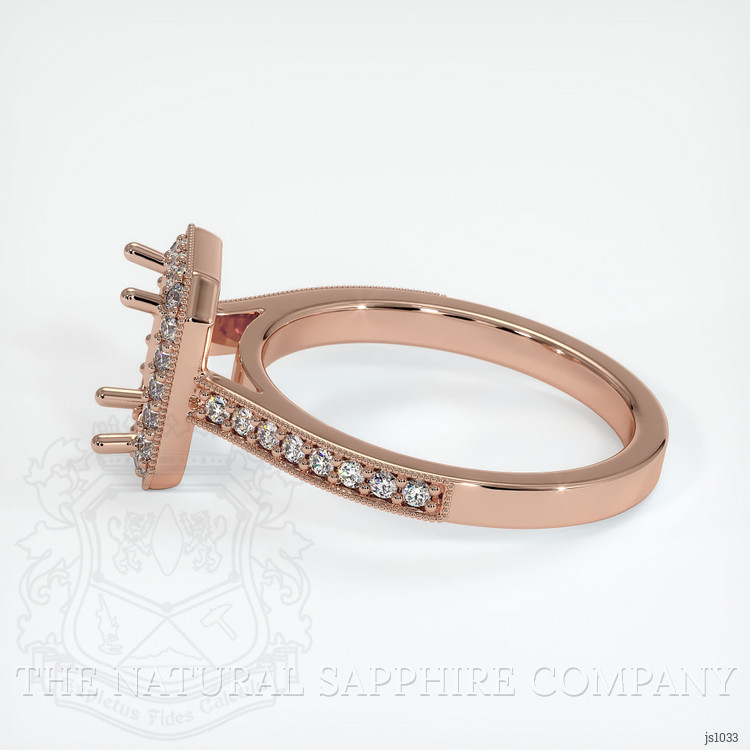
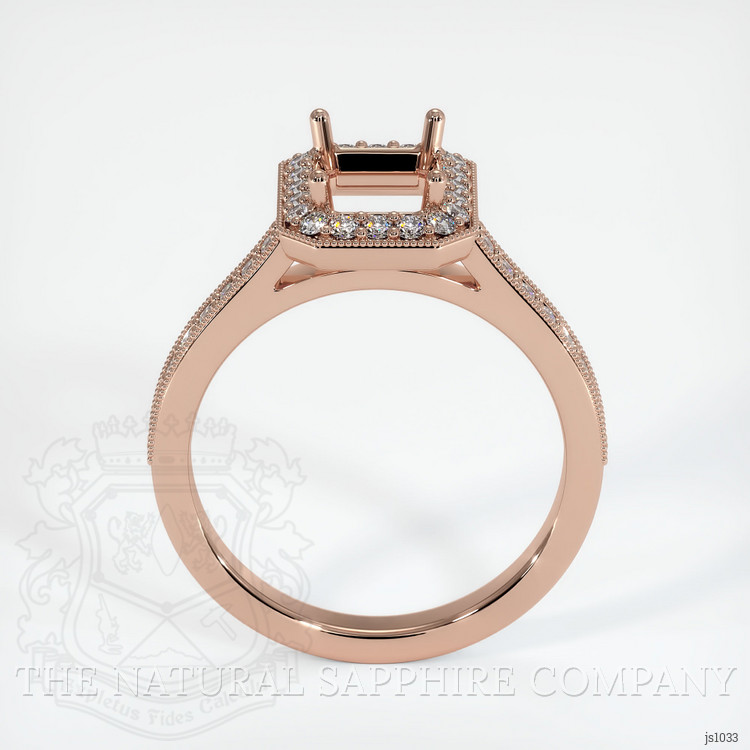
14K Rose Gold Pave Ring Setting


Halo style refers to a design in which a primary center gemstone is encircled by a continuous ring of smaller stones, each calibrated to complement the proportions and optical properties of the center piece, the halo functions both as a visual amplifier and as a structural frame, increasing perceived carat weight and frontal spread while directing light back into the center stone, in practice the halo stones are most often brilliant cut melee diamonds or colored gem melee, set in close proximity to the center to minimize gaps and maximize return, when paired with a step cut center stone such as an emerald cut the halo compensates for the step cuts lower scintillation by introducing numerous small brilliant facets that create contrast and liveliness, when paired with brilliant cut centers the halo reinforces the primary stone s sparkle by creating secondary flashes that surround the main facet pattern, the halo profile may be executed as a flush halo where the smaller stones sit level with the gallery, or as a raised halo where the ring sits above the band plane to create a stronger architectural silhouette, meticulous attention to pavilion depth, girdle thickness, and prong placement is required to ensure the halo stones do not shadow the center gem and to preserve consistent light return across the ensemble.
Pave style denotes a technique where small diamonds or gemstones are set closely together so that metal is minimized and the surface reads as a continuous plane of brilliance, the technique relies on precise seat cutting and bead or grain setting to secure each melee while maintaining even spacing and alignment, technical success in pave depends on three factors, consistent diameter grading of the melee, accurate bead formation to bite into the stone girdles without inducing fractures, and a stable metal foundation that resists deformation under wear, micro pave uses very small melee typically in the 0.8 to 1.5 millimeter range and requires high magnification finishing to eliminate light leaks between stones, slightly larger pavings can be used for greater durability while still preserving a seamless appearance, pavings may be applied along the shank, on the gallery, or as the surface of halo rings, the optical effect is a continuous scintillation map that works especially well in contrast to softer metal finishes, in white metal settings the addition of rhodium plating can enhance the apparent whiteness of the melee, whereas in rose or yellow gold the warm metal tones interact with colored center stones to shift perceived hue and saturation, these interactions are considered during metal selection and stone pairing to achieve the intended chromatic balance.
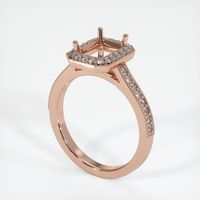
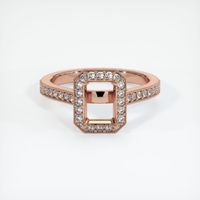
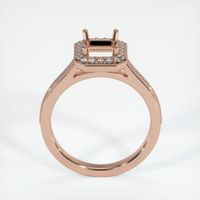
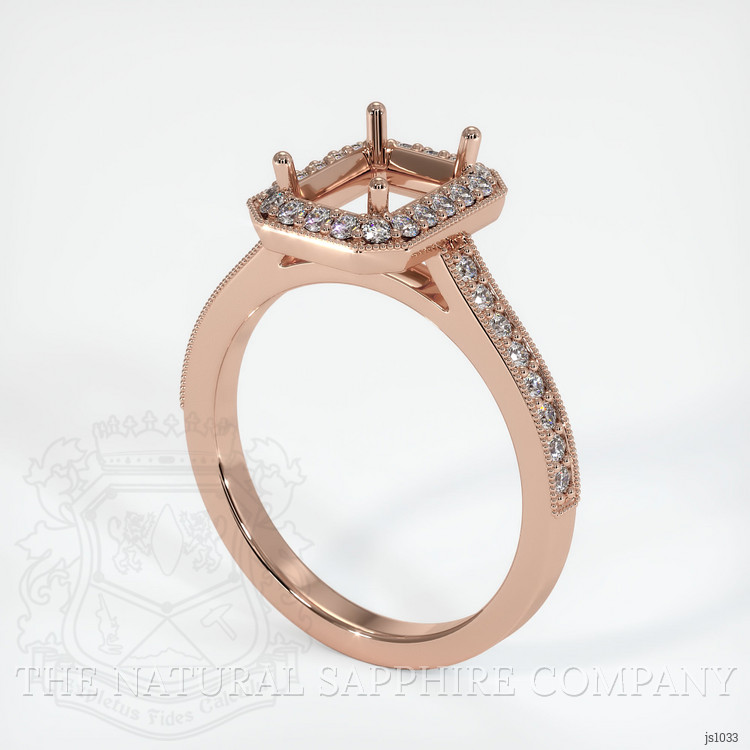
This custom made ring setting is engineered to accept a variety of center stone types including sapphire, ruby, emerald, and other colored gemstones, the visual in the reference shows a rectangular head likely intended for an emerald cut or radiant cut center, the head is designed with four primary prongs and a surrounding halo of melee, prong geometry is specified to balance security with light accessibility, prong thickness, toe radius, and bending clearance are established during CAD modeling to match the girdle profile of the selected center, for colored stones the choice of faceting style is critical, a step cut emerald will be specified with table to depth ratios that preserve color saturation while minimizing windowing, typical emerald cut proportions recommended are a table in the range of 60 to 70 percent and a depth in the range of 60 to 66 percent for larger stones, for sapphires and rubies a mixed or brilliant cut can enhance scintillation without excessively diluting color, target facet angles are adjusted to the refractive index of corundum to optimize return, when the client selects a diamond as a center stone, we suggest round brilliant cut proportions with a table of 58 to 62 percent and depth of 58 to 62 percent to achieve optimal balance between brilliance and fire, center stone bezel and seat tolerances are held within plus or minus one tenth of a millimeter during fabrication to ensure a precise fit and minimal movement.
The band and pave details are executed with precision casting followed by hand setting and finishing to minimize porosity and ensure geometric fidelity, options include 14k and 18k rose gold, 14k and 18k yellow gold, 14k and 18k white gold with optional rhodium plating, and platinum 950 for maximum wear resistance and hypoallergenic properties, material selection informs wall thickness and shoulder profile, for example platinum requires slightly thicker walls to achieve comparable tensile properties and to resist distortion under prong stress, the melee used in the halo and shank pavings are typically conflict free diamonds graded in the G to H color range with VS to SI clarity for a balance of value and visual whiteness, clients wishing for higher color purity may select F or better color and VS clarity, alternative melee options include matched corundum melee for colored halos and small emeralds for green accents, setting techniques include grain set pavings with hand formed grains, bead set pavings where tiny beads are raised to secure each stone, and channel sections where row stability is prioritized, each setting receives hand polished beveling and final inspection under 10 to 30 times magnification to verify grain uniformity, seat concentricity, and the absence of burs that could abrade the center stone or wearer.
Customization options extend to prong count and profile, halo inner diameter to control how much of the center crown is visible, shank thickness and tapering to optimize comfort and ring balance, clients may request split shoulder pavings or straight shanks, laser engraving of interior hallmarks and serial numbers is available for provenance, recommended maintenance includes annual inspections to verify seat integrity, periodic ultrasonic cleaning only after consulting on the treatment status of colored stones since certain emeralds are commonly oil treated and sensitive to aggressive cleaning, rhodium replating intervals for white gold depend on wear patterns but typically occur every 18 to 24 months, platinum will not require plating but benefits from occasional polishing to address surface patina, when selecting a center emerald the buyer should expect natural inclusions often described as jardin which do not indicate poor quality but rather are characteristic of natural beryl, for rubies and sapphires the grader will report on hue, tone, and saturation, with top tier stones exhibiting strong vivid saturation and even tone, our atelier provides CAD renderings and physical wax prototypes for approval prior to casting, we perform final setting and finishing in house to control tolerances and achieve the precise optical relationships between center, halo, and pave, this ring is intended for clients who value technical refinement, measured proportions, and the interplay of faceting and metal chemistry to produce a durable and highly luminous piece.

