
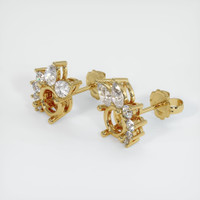
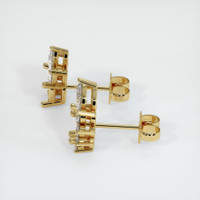
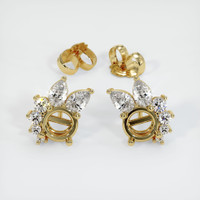
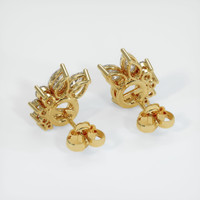
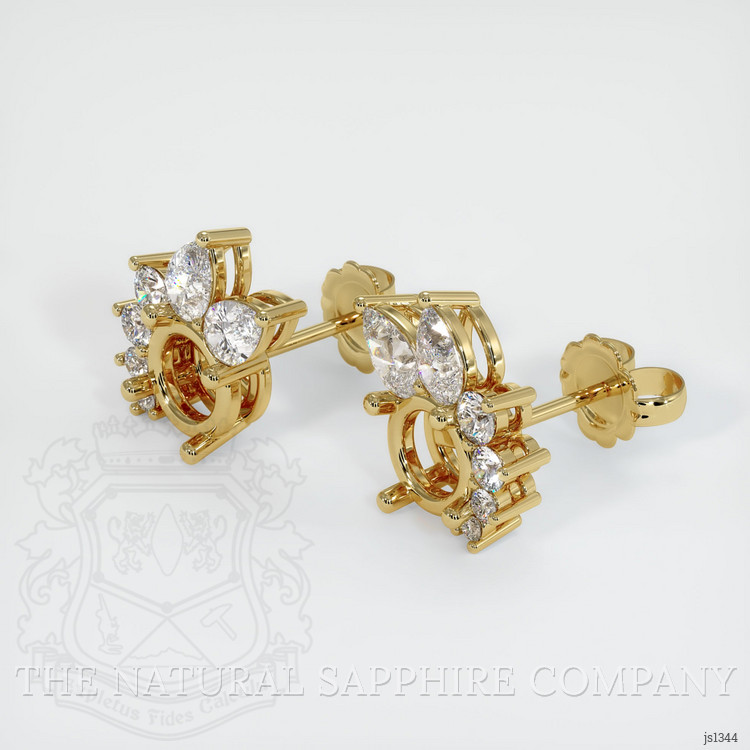
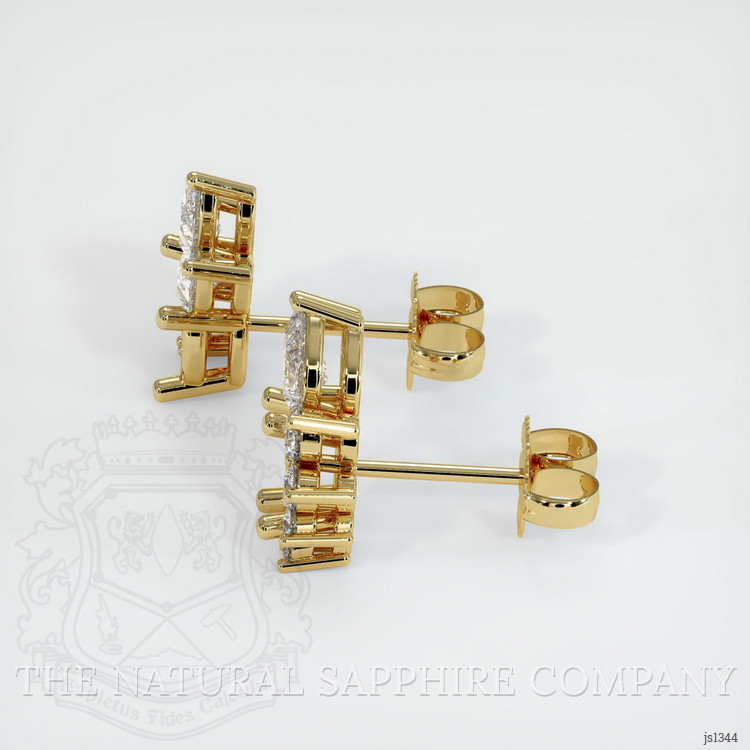
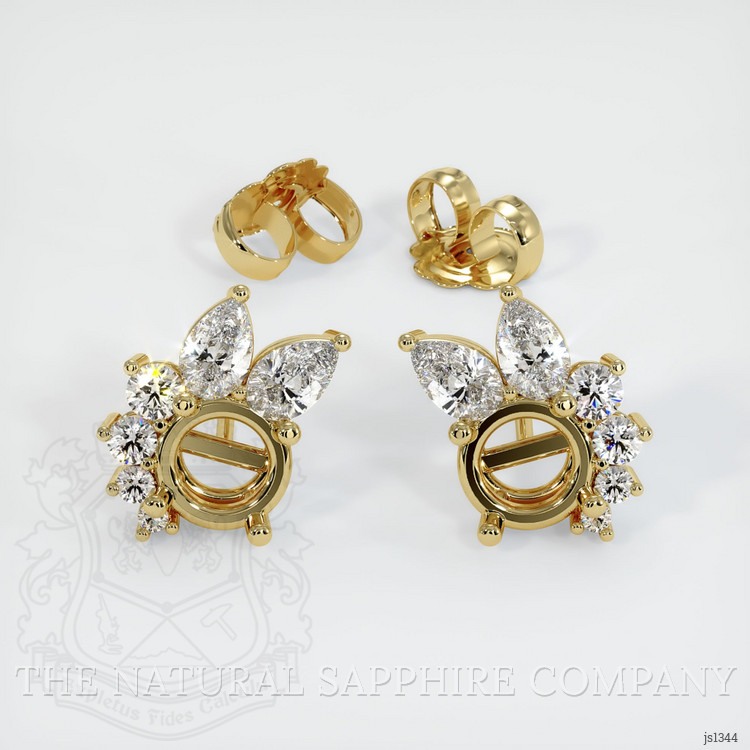
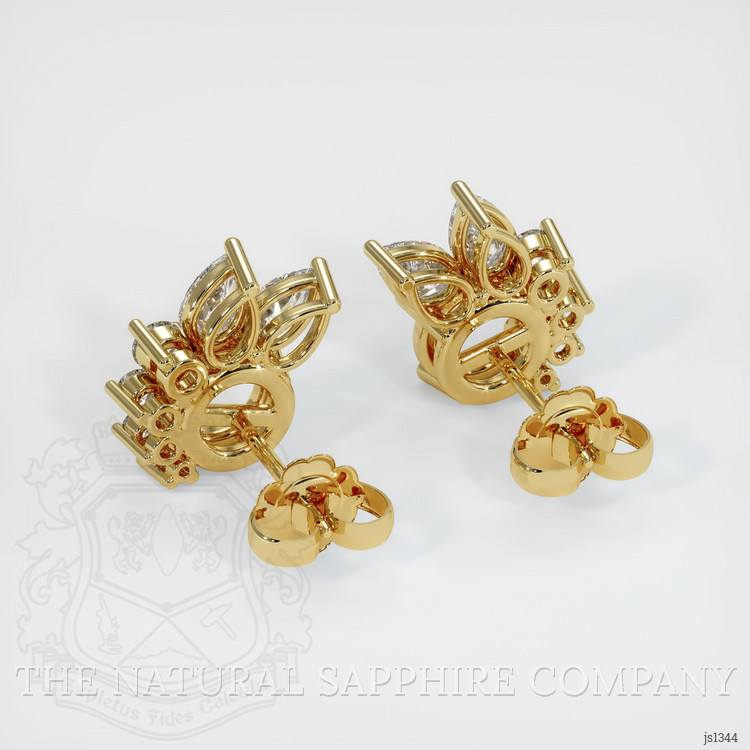

18K Yellow Gold Accent Stones Earring Setting


The design language of this accent stone configuration is engineered to maximize optical return while maintaining a secure, low profile for everyday wear. The layout comprises a single centralized seat designed to accept a variety of center stones including sapphire, ruby, emerald, or other calibrated gemstones, and a surrounding cluster of six accent stones, arranged as four round brilliants and two pear brilliants. The round accents are specified to the classic brilliant faceting schema, typically 57 or 58 facets, with table proportions optimized between 53 and 58 percent and crown angles near 34 to 35 degrees when a brilliant cut is used, to ensure scintillation that complements the central gem. The pear accents employ a modified brilliant faceting with a precise tip geometry and a rounded girdle, and they are oriented to form a directional sweep that increases perceived size and draws light into the center seat. Mechanical considerations include prong radii sized to the accent stone girdles, V tip prongs securing the pear points, and micro prong cups for the rounds, all set to maintain an interstone clearance between pavilion walls and metal of 0.1 to 0.2 millimeters to avoid light obstruction. The central basket is open on the pavilion to allow full light return, and the seat angle is cut to match the pavilion angle of the chosen center stone, with CAD driven tolerances held to plus or minus 0.05 millimeters to guarantee optical alignment and even table plane across the assembly.
The creation of each earring begins with parametric sketching and proportion studies, followed by precision CAD modeling and virtual light tracing to predict and refine how facets interact across mixed cuts. Once the model meets brightness and symmetry objectives, a high resolution resin print of the wax pattern is produced and invested for lost wax castings in the selected precious metal. Whether cast in rose gold, white gold, yellow gold, or platinum, the framework undergoes a multi stage bench process, including fettling, pinning, and controlled annealing where required to relieve stress and avoid distortion of prong geometry. Prong shoulders are milled and shaped to targeted thicknesses, commonly in the 0.9 to 1.1 millimeter range for prongs that must secure pear tips and round shoulders without overpowering the stones. Critical joints are laser welded to add reinforcement at stress points, and posts and friction backs are calibrated for axial strength and torsional stability. Setting is carried out under 10X magnification, starting with the larger pear accents, then the rounds, and finally the central stone seat, with each prong burnished precisely against the stone girdles to distribute hoop stress. Quality control checks include loupe inspection for prong bite and symmetry, a caliper check for seat depth and table plane, and light performance verification to ensure the accent stones deliver the intended halo effect rather than masking the center gem.
Material selection and gemological matching are treated as technical choices that materially affect both appearance and longevity. Platinum 950 is recommended when maximum durability and minimal long term maintenance are priorities, due to its high density and resistance to wear, and because prongs in platinum can be made slightly slimmer for a delicate appearance while retaining structural integrity. White gold is commonly alloyed to 14 or 18 karat, and is rhodium plated to achieve a bright white finish, with typical rhodium plating applied to a controlled thickness to avoid masking fine prong detail. Rose gold gains its hue from copper content and provides a warm optical backdrop that enhances red and pink tones, making it an excellent choice for rubies and warm sapphires, while yellow gold can deepen the appearance of green tones in emeralds. For center stone selection, corundum species such as sapphire and ruby benefit from firm pavilion proportions to maintain strong color saturation, while emeralds are often chosen with the expectation of minor clarity enhancement, and seat design accounts for potential clarity treatments and inclusions. When the accents are diamonds, recommended specifications balance color and clarity with budget and visual goals, such as F to G color and VS to SI clarity for round accents that provide high brilliance without visible inclusions under normal viewing. For colored accent stones, spectral and hue matching is controlled to tight tolerances, within one hue grade and within 0.2 millimeters in diameter for rounds, to ensure homogeneous sparkle. Each custom earring setting is assembled and inspected by master setters who confirm that mechanical tolerances, facet alignment, and color harmony meet our technical and aesthetic standards, and we stand ready to advise on the optimal combination of metal, center stone species, and facet proportions to realize the intended optical performance and durability.

