
- Bracelet11
- Reports2
-oval-blue-sapphire-bracelet-10.4500-cts-j11134-1.jpg?d=200x200&v=20250613190435)
-oval-blue-sapphire-bracelet-10.4500-cts-j11134-2.jpg?d=200x200&v=20250613190431)
-oval-blue-sapphire-bracelet-10.4500-cts-j11134-3.jpg?d=200x200&v=20250613190431)
-oval-blue-sapphire-bracelet-10.4500-cts-j11134-4.jpg?d=200x200&v=20250613190431)
-oval-blue-sapphire-bracelet-10.4500-cts-j11134-lifestyleimage-1.jpg?d=200x200&v=20250617044742)



-oval-blue-sapphire-bracelet-10.4500-cts-j11134-1.jpg?d=750x750&s=nsc&v=20250613190435)
-oval-blue-sapphire-bracelet-10.4500-cts-j11134-2.jpg?d=750x750&s=nsc&v=20250613190431)
-oval-blue-sapphire-bracelet-10.4500-cts-j11134-3.jpg?d=750x750&s=nsc&v=20250613190431)
-oval-blue-sapphire-bracelet-10.4500-cts-j11134-4.jpg?d=750x750&s=nsc&v=20250613190431)
-oval-blue-sapphire-bracelet-10.4500-cts-j11134-lifestyleimage-1.jpg?d=750x750&s=nsc&v=20250617044742)
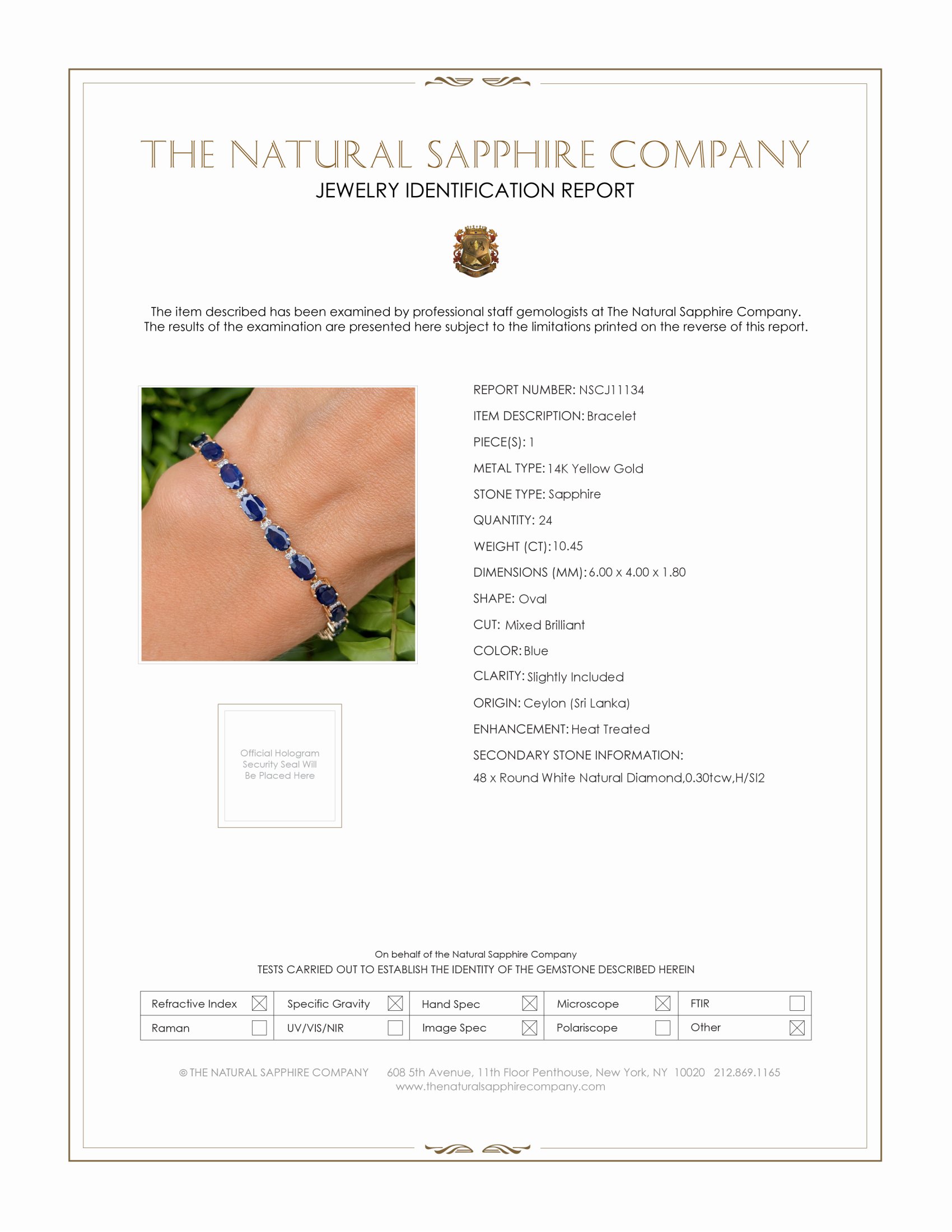
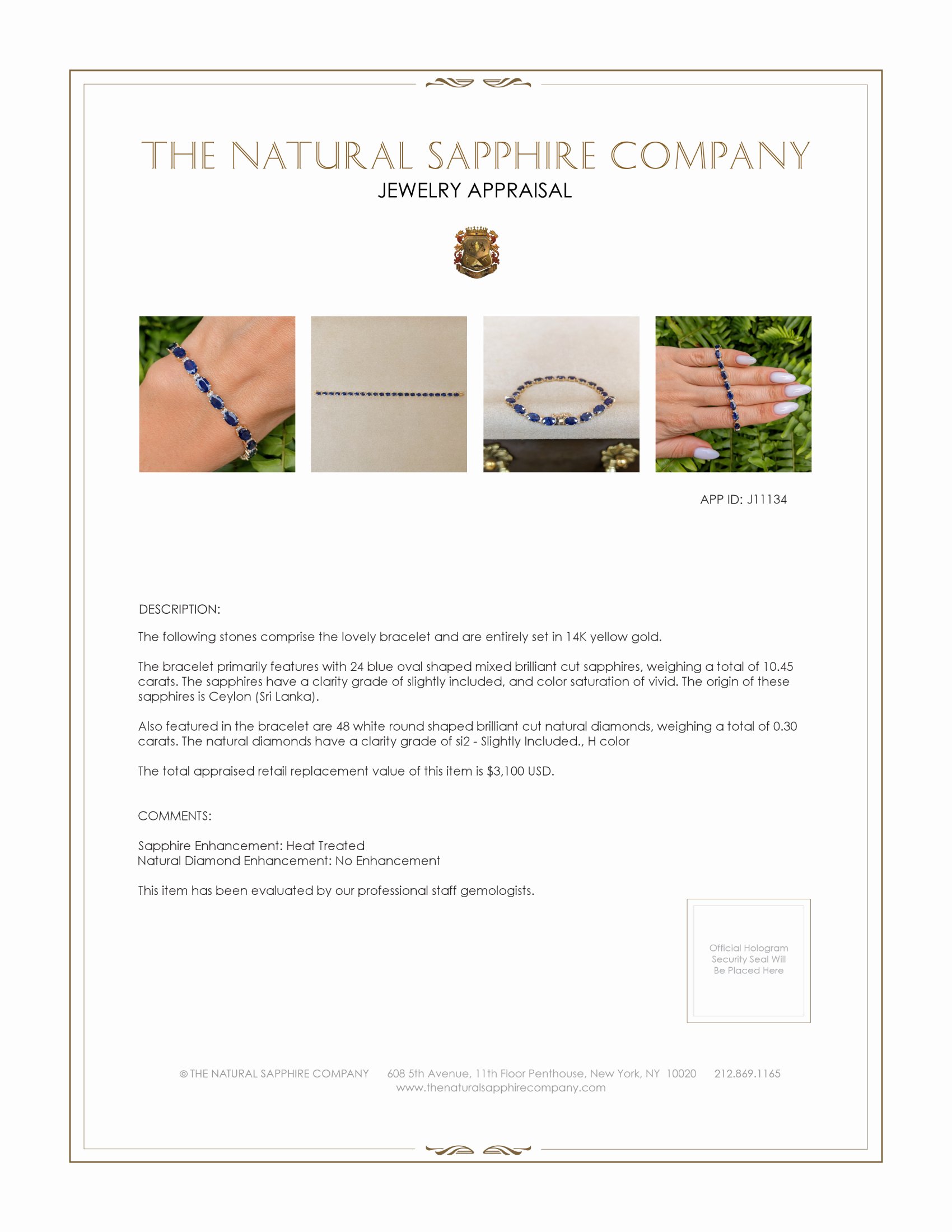
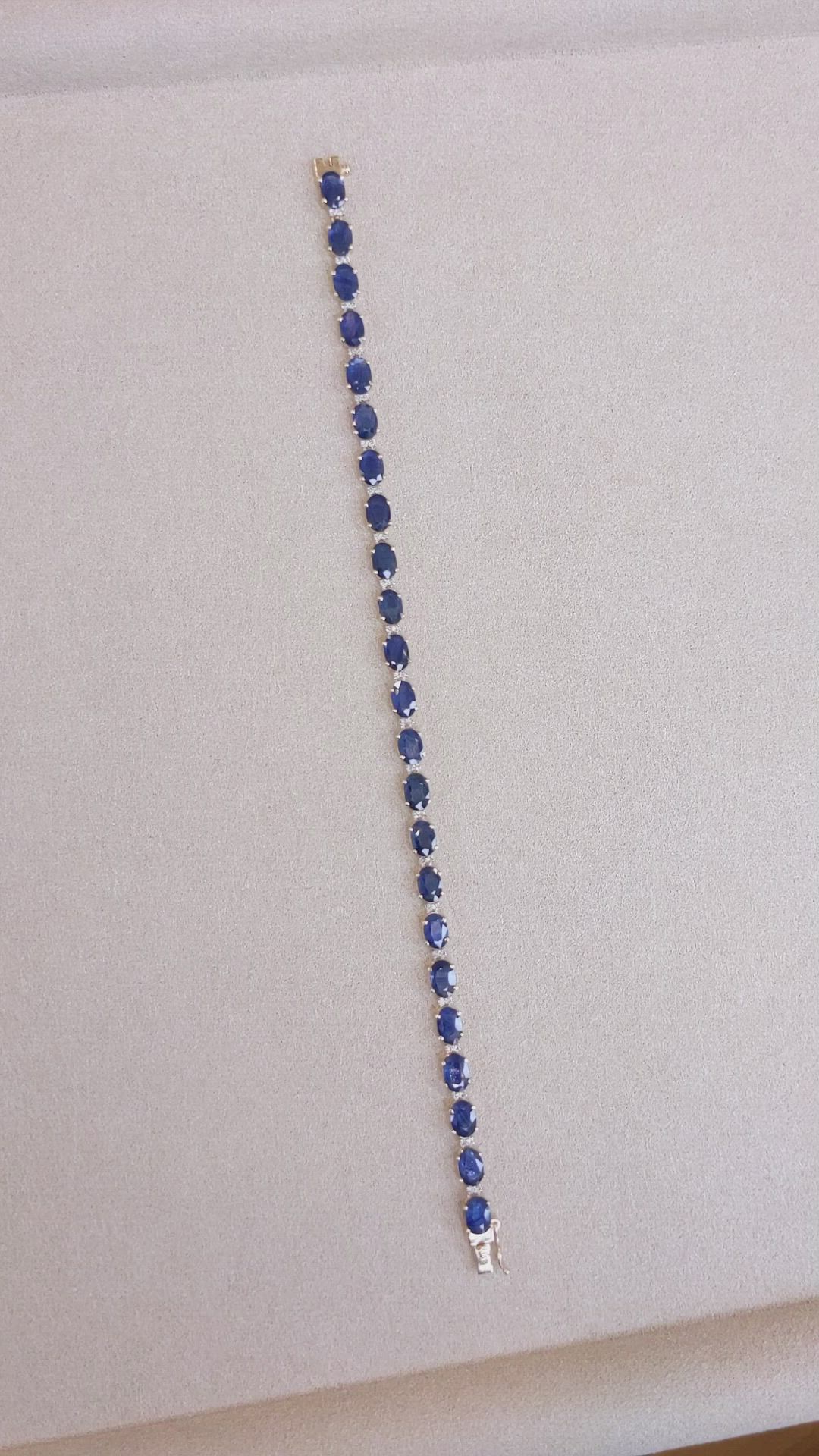
10.45 Ct.Tw.Total Carat Weight Blue Sapphire and Natural Diamond Tennis/Line Bracelet, 14K Yellow Gold
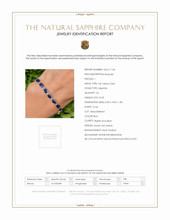
Stone type: | Sapphire | Natural Diamond |
|---|---|---|
Quantity: | 24 | 48 |
Dimensions (MM): help | Length: 6 Width: 4 Height: 1.8 | Length: 0.8 Width: 0.8 Height: 0.5 |
Total weight: | 10.45 Ct.Tw. | 0.30 Ct.Tw. |
Color: | Blue | White |
Color intensity: help | Vivid | N/A |
Color grade | N/A | H |
Clarity: | Slightly Included | SI2 - Slightly Included |
Shape: help | Oval | Round |
Cut: | Mixed Brilliant | Brilliant |
Cutting style: | Faceted | Faceted |
Enhancements: help | Heat Treated | No Enhancement |
Origin: help | Ceylon (Sri Lanka) | unknown |
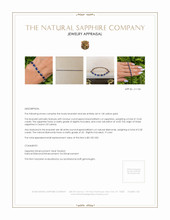
This bracelet pairs deep blue oval sapphires with 14K yellow gold, a combination that directs attention to precise setting work as much as to the gemstones themselves. Each sapphire is individually seated in a low-profile four-claw prong mount designed to reveal the stone face while maintaining secure retention. The prongs are tapered and angled to match the natural curve of the ovals, a deliberate choice that minimizes metal coverage across the table and maximizes the visible surface area of each stone. The open-backed gallery beneath every setting is calibrated to admit light from multiple angles, enhancing color saturation and internal fire without compromising the structural integrity of the seat. Consistency in stone orientation and spacing is achieved through calibrated template work during the initial link fabrication, ensuring that the visual rhythm of ovals and linkages remains uniform along the bracelet arc.
The process begins with individual profiling of each sapphire to determine the precise seat geometry required for a stable mount. Each stone is measured and the gold seat is hand-formed to closely match the pavilion contours and girdle profile, so that pressure is applied evenly when the claws are set. Prong heads are cut and shaped using fine burs and tools, then burnished over the girdle to lock the stone in place, a method that preserves the pavilion and reduces the need for excessive force. Throughout setting, the stones are handled with non-abrasive tools and checked under magnification to avoid chipping or facet damage. After initial setting, the prongs are meticulously rounded and polished to remove tool marks, then lightly re-tipped and tightened as necessary to maintain a uniform appearance and mechanical security.
Link construction and articulation are executed to balance durability with fluidity. Individual sapphire mounts are connected by short, articulated links that allow the bracelet to conform to the wrist while maintaining consistent table alignment of the ovals. Each connection is soldered and then flex-tested to eliminate weak points, with joints finished flush to prevent snagging on fabric. The closure is integrated into the line of links so that it reads as part of the design rather than an appended element, and it is engineered to sit low against the wrist for comfort. Surface finishing is completed with controlled polishing stages that bring a warm, even luster to the 14K yellow gold, while preserving crisp edges at the prongs and link junctions. Final hand-polishing restores the metal to a satin or high-gloss specification according to design intent, and every transition between stone and metal is examined to ensure there are no visible seams or excess solder.
Quality control and long-term wear considerations are integral components of the craftsmanship. Each bracelet undergoes staged inspection from initial setting to final assembly, including microscopic examination of prong integrity, verification of stone seating stability, and measurement of link tolerances to ensure even drape. The piece is subjected to a light mechanical stress test to simulate daily motion and to confirm that the articulation points and clasp perform reliably. Maintenance guidance is provided with the understanding that periodic professional inspection will help the settings remain secure over time, including re-tipping of prongs when minor wear is detected and regular cleaning to preserve the stones intrinsic color and brilliance. The cumulative result of these methods is a bracelet in which each gemstone is not merely placed, but precisely calibrated and protected, reflecting an approach to setting that privileges fit, finish, and long-term performance.


