
- Stone10
- Reports2
-rough-yellow-crystal-27.8200-cts-s11398-1.jpg?d=200x200&v=20240214010205)
-rough-yellow-crystal-27.8200-cts-s11398-lifestyleimage-1.jpg?d=200x200&v=20240215040058)
-rough-yellow-crystal-27.8200-cts-s11398-lifestyleimage-2.jpg?d=200x200&v=20240215040058)


-rough-yellow-crystal-27.8200-cts-s11398-1.jpg?d=750x750&s=nsc&v=20240214010205)
-rough-yellow-crystal-27.8200-cts-s11398-lifestyleimage-1.jpg?d=750x750&s=nsc&v=20240215040058)
-rough-yellow-crystal-27.8200-cts-s11398-lifestyleimage-2.jpg?d=750x750&s=nsc&v=20240215040058)


27.82 Ct. Yellow Rough Sapphire from Ceylon (Sri Lanka)
This loose stone is available to ship now
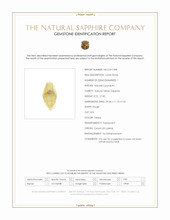
Item ID: | S11398 |
|---|---|
Dimensions (MM): help | Length: 29.46 Width: 11.13 Height: 9.32 |
Weight: | 27.82 Ct. |
Color: help | Yellow |
Color intensity: help | Medium |
Clarity: help | Very Slightly Included |
Shape: help | Rough |
Cut: | N/A |
Cutting style: | N/A |
Enhancements: help | No Enhancement |
Origin: help | Ceylon (Sri Lanka) |
Per carat price: help | $24 |
One beautiful translucent 27.82 carat rough shape yellow sapphire is presented with dimensions of 29.46 by 11.13 by 9.32 mm, a clarity grade of very slightly included evaluated at eye level, medium color intensity, and an excellent polish. This piece is entirely natural with no enhancement, and it originates from Ceylon Sri Lanka, a provenance long associated with high quality sapphires. At this substantial carat weight and with its generous dimensions, the crystal offers an immediate visual presence, suitable for collectors who prize natural rough material, and for cutters who are planning a significant finished gem. The Natural Sapphire Company certifies the details of this stone, and we describe its attributes precisely so that an educated buyer can assess how the raw beauty, the clarity profile, and the origin combine to determine its market value and potential yield if a faceted gem is contemplated.
Although the stone is described as a rough shape with no standard cut, the existing form and the excellent polish materially enhance the gemstone's interaction with light. Rough or partially shaped sapphires often present natural crystal planes and cleavage orientations that act as reflective surfaces when polished. In this instance the polished surfaces allow light to enter the crystal, scatter through the body of the stone, and reflect back along internal planes that are inherent to corundum. The result is a balanced expression of brightness and internal glow rather than the pinpoint scintillation associated with fully faceted stones. For a yellow sapphire with medium color intensity, this kind of light behavior emphasizes the warmth and saturation of the body color, creating a uniformly luminous appearance. If a cutter elects to orient the pavilion along the dominant crystal axes, the polished rough can reveal the best combination of color and light return, and the current excellent polish allows collectors to appreciate this interplay immediately, without the need for additional finishing.
The clarity grade of very slightly included evaluated at eye level communicates important information for an informed purchaser. In practical terms this means small inclusions are visible to the unaided eye under careful observation, but they are not so numerous or so dominant as to disrupt the stone's overall transparency or its appeal. In sapphires from Ceylon it is common to find silk like rutile needles, mineral crystals, or growth zoning, and these features are often regarded as diagnostic evidence of natural formation. Such inclusions can also be beneficial from a valuation perspective, because they support natural origin and reduce the likelihood of undisclosed treatments. The translucency of this particular rough shape, combined with the excellent polish, mitigates the visual impact of the inclusions, permitting light to diffuse attractively rather than being absorbed in dark pockets. For many buyers the presence of minor natural inclusions is acceptable and even desirable, as they contribute to the gemological story of the stone and confirm authenticity, while the absence of any enhancement ensures that the color and clarity are entirely natural attributes that will remain stable over time.
Origin is a decisive factor for many collectors and connoisseurs, and the Ceylon Sri Lanka provenance carries both historical cachet and specific gemological expectations. Sapphires from this region are celebrated for their vivid colors, fine crystal habits, and a particular character of light responsiveness that often stems from the geological conditions under which they formed. A natural, unenhanced 27.82 carat yellow sapphire from Ceylon represents a combination of geological rarity and market desirability, particularly given the stone's size and condition. For an educated buyer considering this specimen there are clear options and trade offs to weigh. The stone can be retained as a polished rough for display, mounted as a cabochon to take advantage of the translucency and warm body color, or carefully cleaved and faceted to maximize color saturation and brilliance. Each choice affects the final weight, the apparent color, and the light performance, and a cutter informed by the initial polish and the internal structure will typically recover an optimized finished gem. The Natural Sapphire Company stands ready to provide further technical details, microscopy images, and cutting recommendations, and to assist serious purchasers with provenance documentation, pricing guidance, and bespoke cutting services if desired.


