
- Stone14
- Reports2
-various-blue-sapphire-16.4000-cts-s36081-1.jpg?d=200x200&v=20260123003559)
-various-blue-sapphire-16.4000-cts-s36081-lifestyleimage-1.jpg?d=200x200&v=20260127035229)
-various-blue-sapphire-16.4000-cts-s36081-lifestyleimage-2.jpg?d=200x200&v=20260127035229)
-various-blue-sapphire-16.4000-cts-s36081-lifestyleimage-3.jpg?d=200x200&v=20260127035229)
-various-blue-sapphire-16.4000-cts-s36081-lifestyleimage-4.jpg?d=200x200&v=20260127035229)

-various-blue-sapphire-16.4000-cts-s36081-1.jpg?d=750x750&s=nsc&v=20260123003559)
-various-blue-sapphire-16.4000-cts-s36081-lifestyleimage-1.jpg?d=750x750&s=nsc&v=20260127035229)
-various-blue-sapphire-16.4000-cts-s36081-lifestyleimage-2.jpg?d=750x750&s=nsc&v=20260127035229)
-various-blue-sapphire-16.4000-cts-s36081-lifestyleimage-3.jpg?d=750x750&s=nsc&v=20260127035229)
-various-blue-sapphire-16.4000-cts-s36081-lifestyleimage-4.jpg?d=750x750&s=nsc&v=20260127035229)

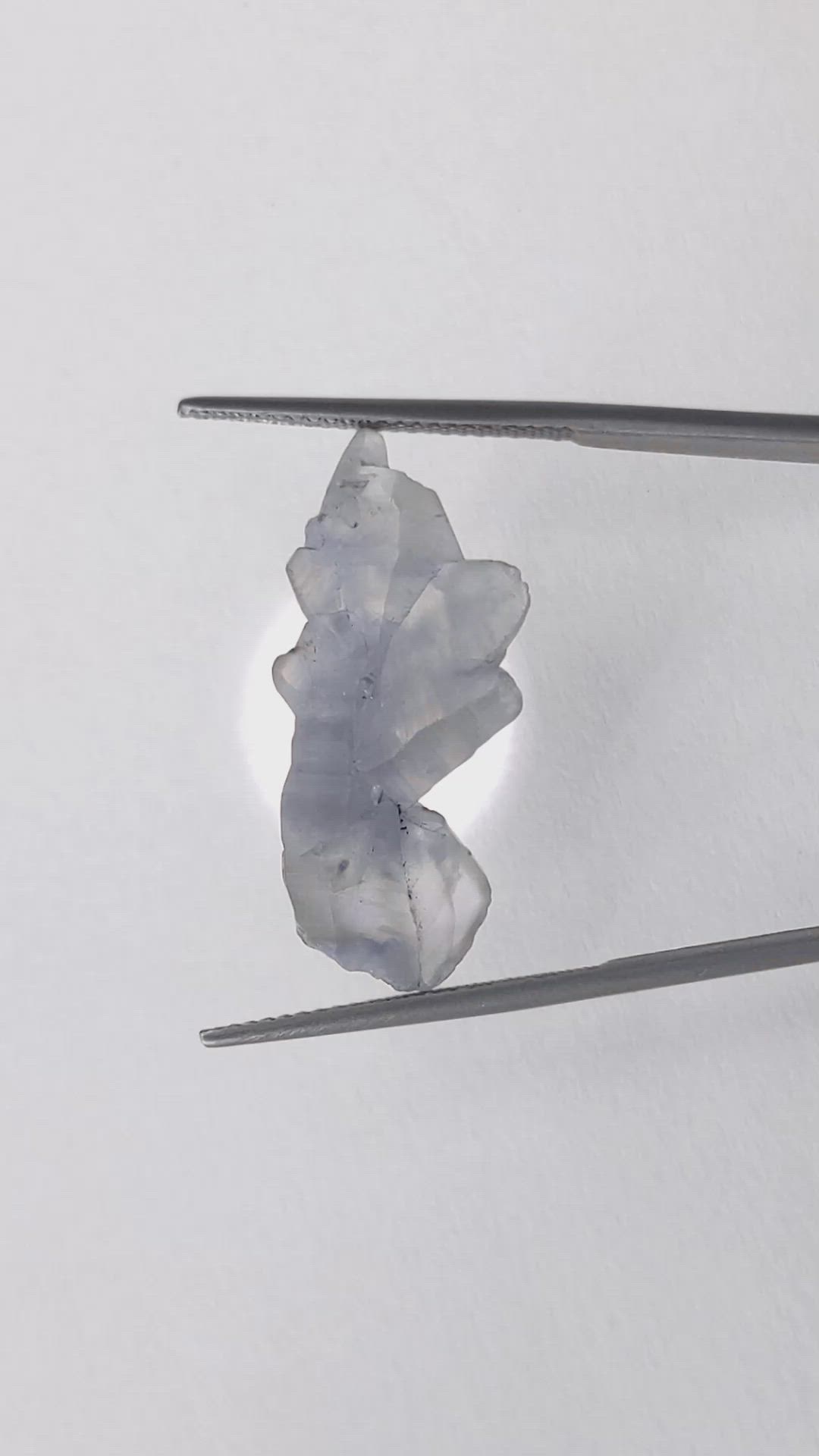
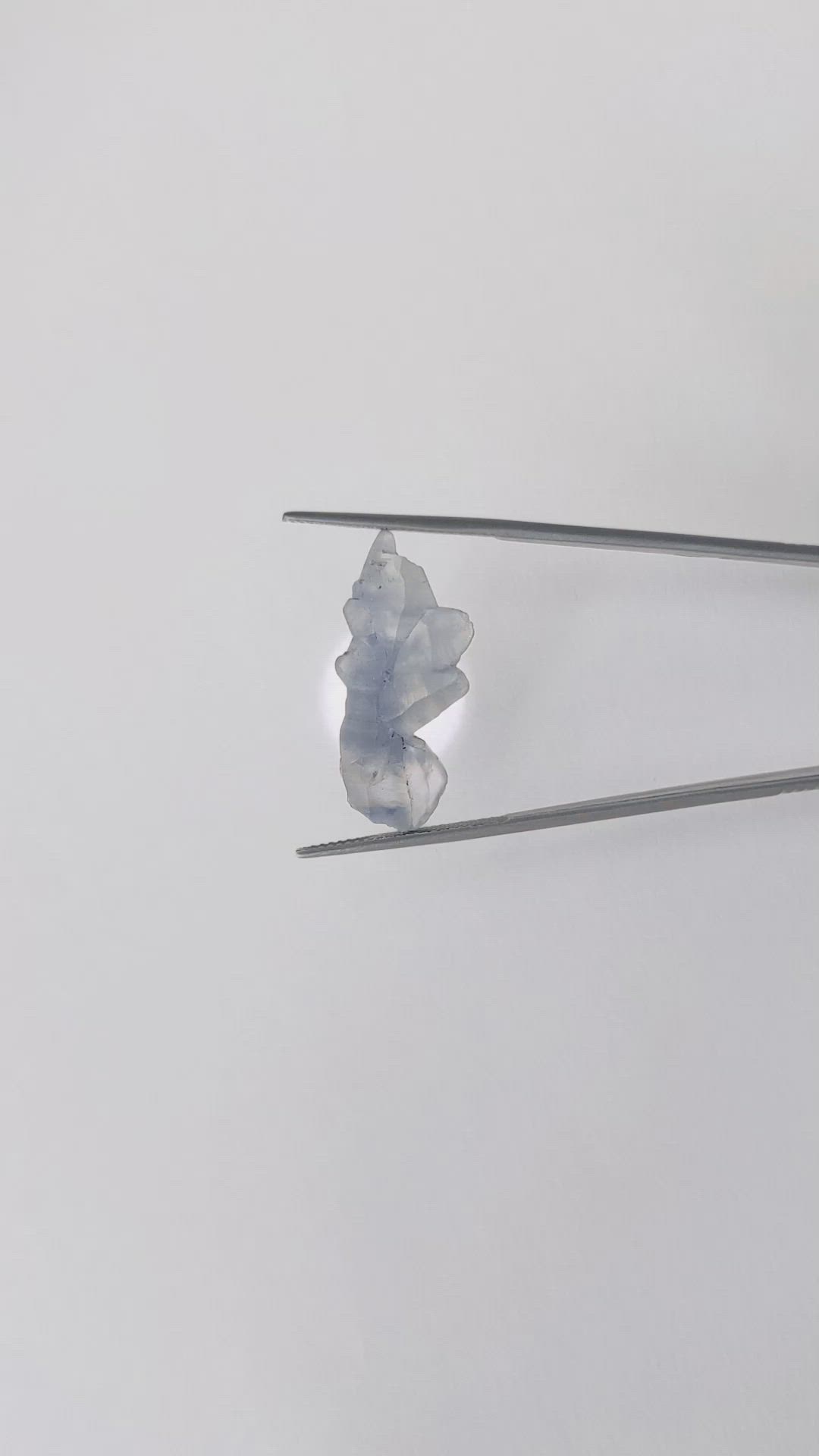
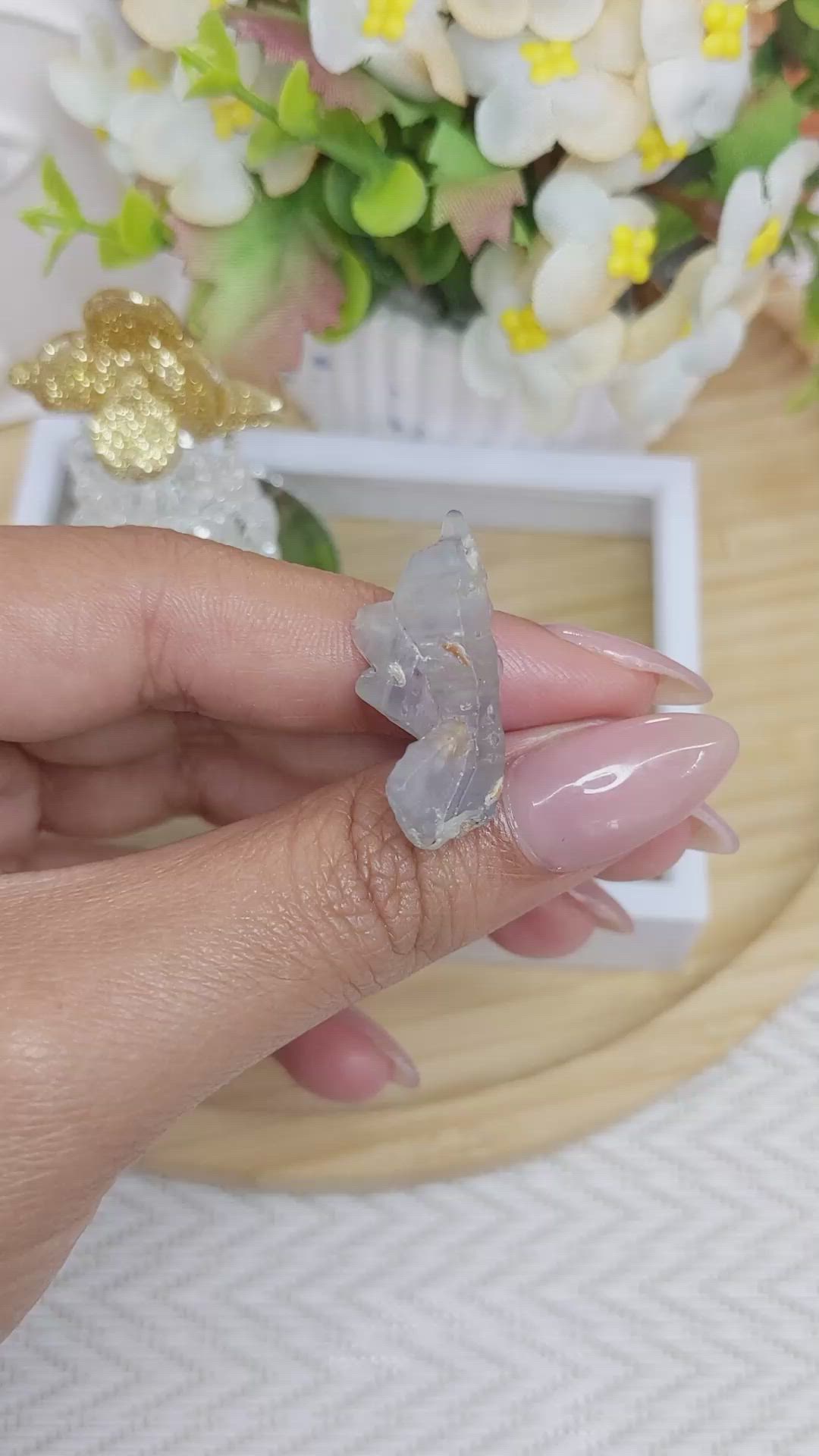
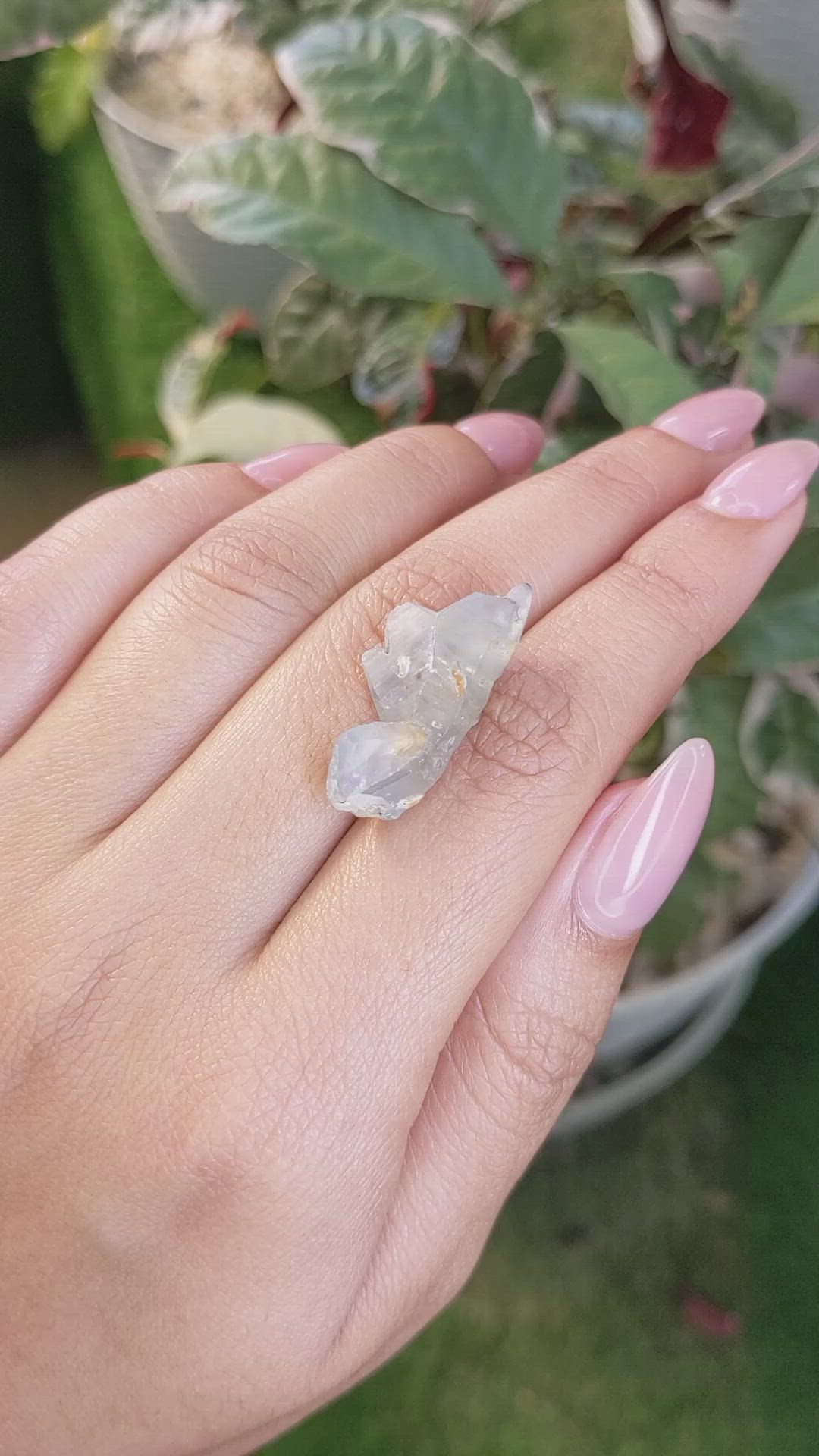
16.40 Ct. Blue Rough Sapphire Crystal from Ceylon (Sri Lanka)
This loose stone ships by Apr 12
Item ID: | S36081 |
|---|---|
Dimensions (MM): help | Length: 28.04 Width: 12.4 Height: 11.1 |
Weight: | 16.40 Ct. |
Color: help | Blue |
Color intensity: help | Light |
Clarity: help | Very Slightly Included |
Shape: help | Rough |
Cut: | Rough Crystal |
Cutting style: | Crystal |
Enhancements: help | No Enhancement |
Origin: help | Ceylon (Sri Lanka) |
Per carat price: help | $20 |
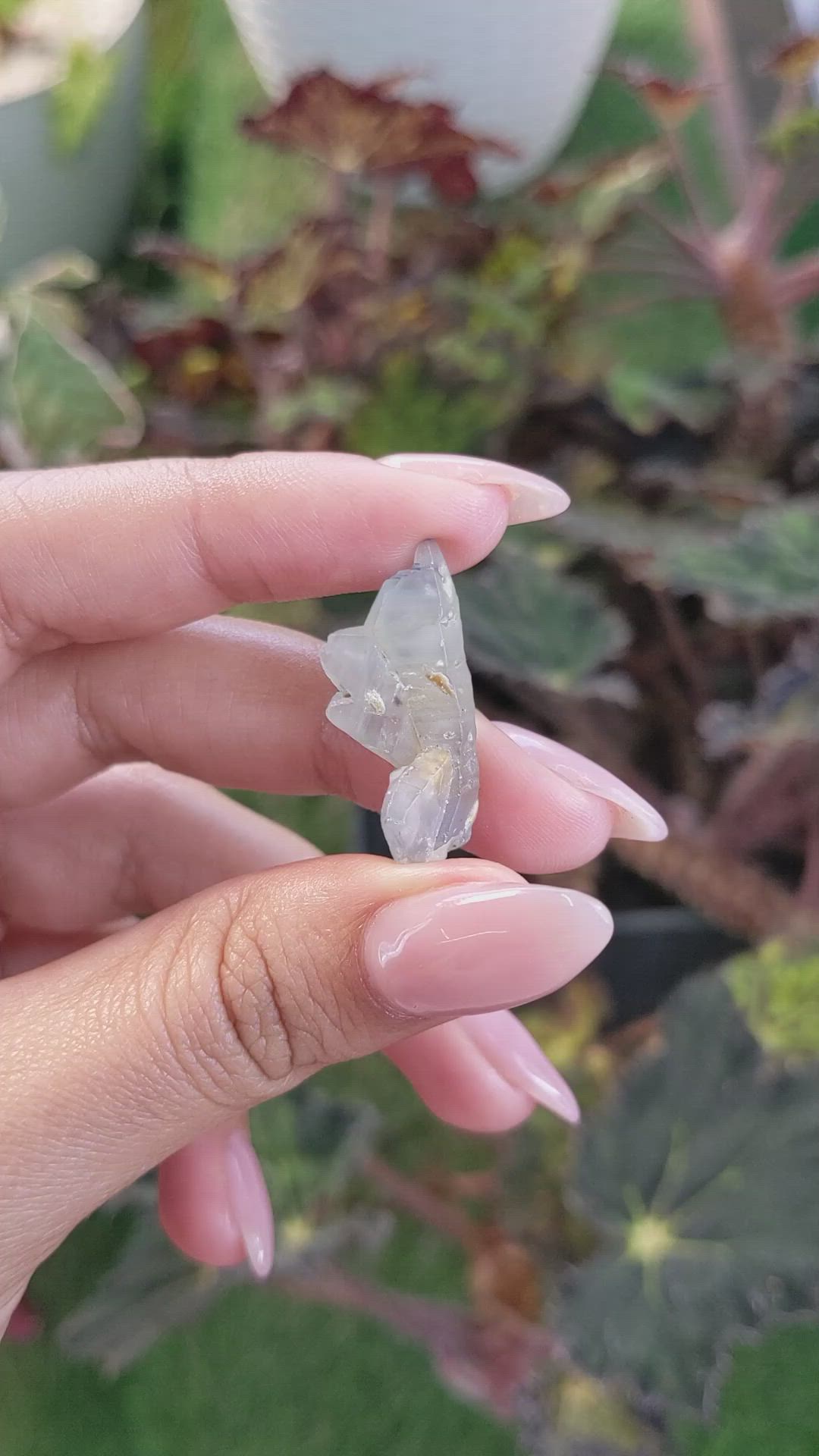
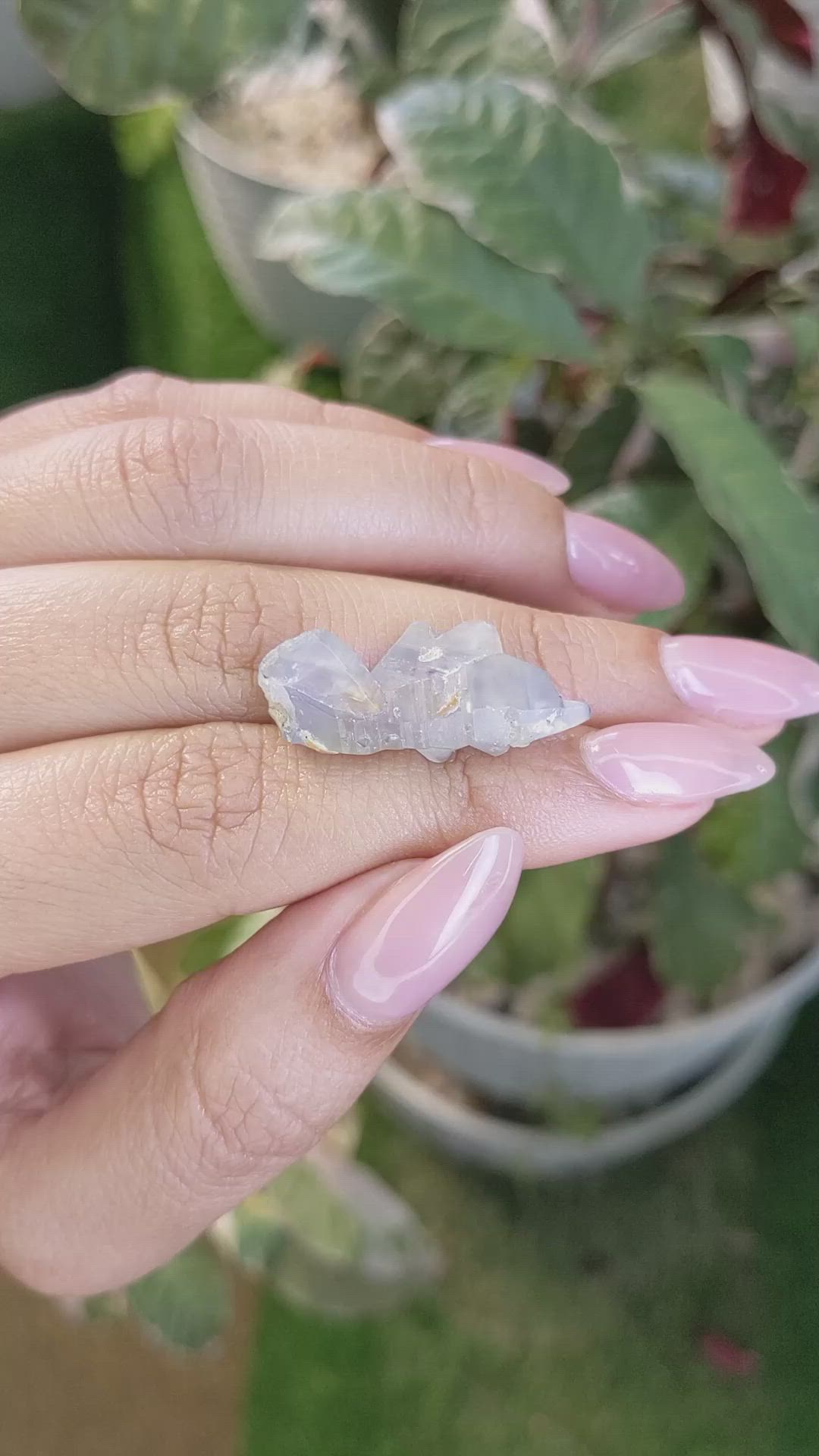
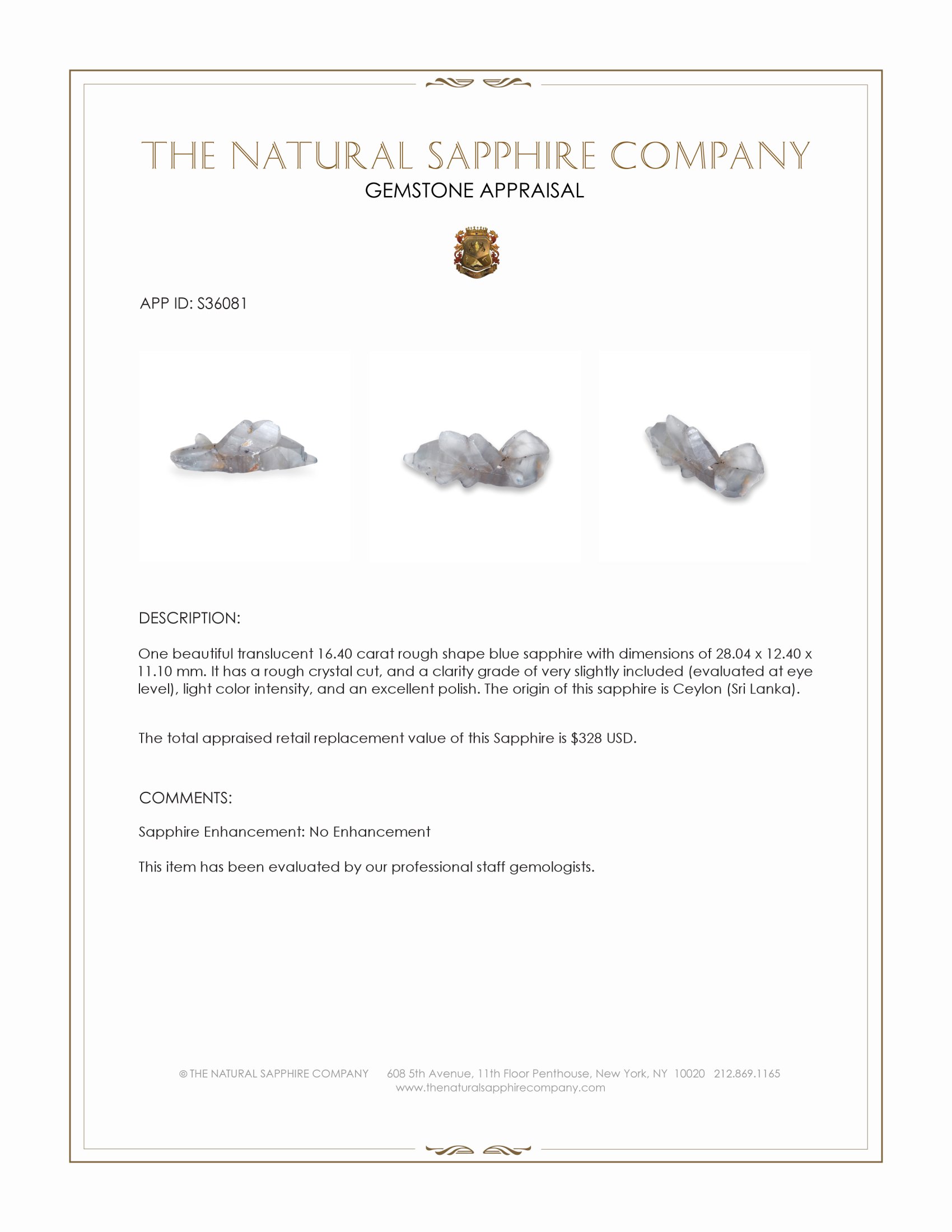
This translucent blue sapphire weighs 16.40 carats, and presents in a various shape measuring 28.04 x 12.40 x 11.10 mm, offering a substantial presence for bespoke jewellery projects. The stone retains its natural rough crystal cut, which preserves the original crystal habit and presents a sculptural silhouette rather than a conventional faceted outline. Clarity is graded as very slightly included, evaluated at eye level, and the surface finish has an excellent polish that enhances the stone surface and the soft transmission of light through the material. Color intensity is described as very light blue, a subtle and airy hue that reads as cool and refined, with internal features that are small and unobtrusive to typical visual inspection at normal viewing distance. This sapphire is reported as untreated, with no enhancement, and its origin is Ceylon, Sri Lanka, a region historically associated with fine natural sapphires. The Natural Sapphire Company stands behind the stated characteristics and provenance, providing a clear technical profile for designers and collectors.
The rough crystal form of this stone gives it a distinctive aesthetic, combining organic contours with a refined polish that highlights the translucent body. The various shape translates into design flexibility, particularly for pieces that emphasize natural geometry and texture, such as sculptural rings and asymmetric pendants. Very light blue coloration allows for versatile pairing with a wide range of metals, from warm yellow gold to cool platinum, and the internal clarity being very slightly included contributes marks of natural origin rather than detracting from visual appeal. The excellent polish aids in controlling surface reflections, so the stone offers gentle glow and internal depth rather than aggressive brilliance. Because the stone retains portions of its natural crystal facets and terminations, the result is a piece that reads as both raw and finished, suitable for clients seeking a balance between natural character and refined workmanship.
From a durability perspective, sapphire is a member of the corundum mineral family, which occupies a 9 on the Mohs hardness scale, making it one of the hardest and most wear resistant gem materials available after diamond, which is a 10. A Mohs 9 rating indicates strong resistance to scratching from most common materials encountered in everyday wear, and as such this sapphire is well suited for rings and other jewellery that receive regular use. By comparison, typical gem materials include topaz at about 8, quartz at about 7, and common opals in the range 5.5 to 6.5, which are significantly softer and more susceptible to abrasion. Despite the excellent hardness, the rough crystal morphology and the presence of natural terminations should be considered when choosing a setting, because sharp or projecting crystal points can be more vulnerable to mechanical impact and chipping than a fully conventional faceted girdle. For this reason a protective bezel, elevated rail, or a minimal prong setting that cradles protruding points is recommended for long term durability, and routine care should avoid strong knocks, ultrasonic cleaning, and prolonged exposure to aggressive cleaning chemicals, to preserve both the polished surfaces and the natural crystal features.
For projects that incorporate contrasting materials, note that the opal type most commonly specified for pairing is White Opal, which offers a soft, milky body color and a play of spectral flashes that can complement a very light blue sapphire. White Opal is relatively delicate on the Mohs scale, and requires more protective design treatment than corundum, however when combined thoughtfully, the contrast between a durable sapphire and a tender white opal can create compelling visual tension, with the sapphire providing structural longevity and the opal adding iridescent accent. The stone described here, with its Ceylon provenance, untreated status, and substantial 16.40 carat weight, provides a stable and authentic centerpiece for such combined designs, or for standalone settings that emphasize its rough crystal character. The Natural Sapphire Company can provide further technical information and recommendations for setting style and protective measures, and can assist with bespoke design consultation to ensure the final piece optimizes both the natural beauty and the physical longevity of the gemstones involved.


