
- Stone11
- Reports2
-pear-violet-sapphire-2.2500-cts-s33141-1.jpg?d=200x200&v=20251111154807)
-pear-violet-sapphire-2.2500-cts-s33141-lifestyleimage-1.jpg?d=200x200&v=20251112154902)
-pear-violet-sapphire-2.2500-cts-s33141-lifestyleimage-2.jpg?d=200x200&v=20251112154903)

-pear-violet-sapphire-2.2500-cts-s33141-1.jpg?d=750x750&s=nsc&v=20251111154807)
-pear-violet-sapphire-2.2500-cts-s33141-lifestyleimage-1.jpg?d=750x750&s=nsc&v=20251112154902)
-pear-violet-sapphire-2.2500-cts-s33141-lifestyleimage-2.jpg?d=750x750&s=nsc&v=20251112154903)

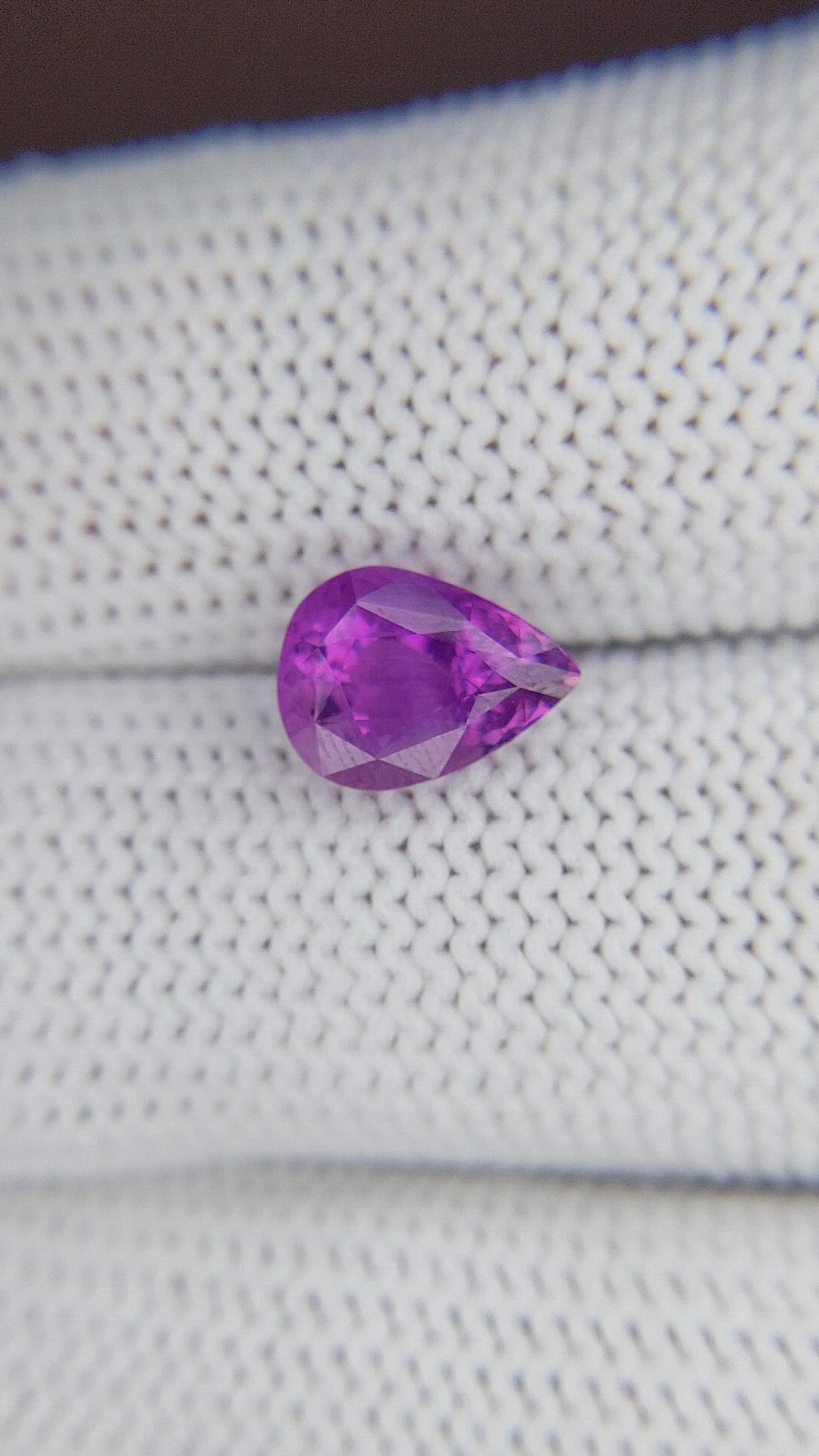
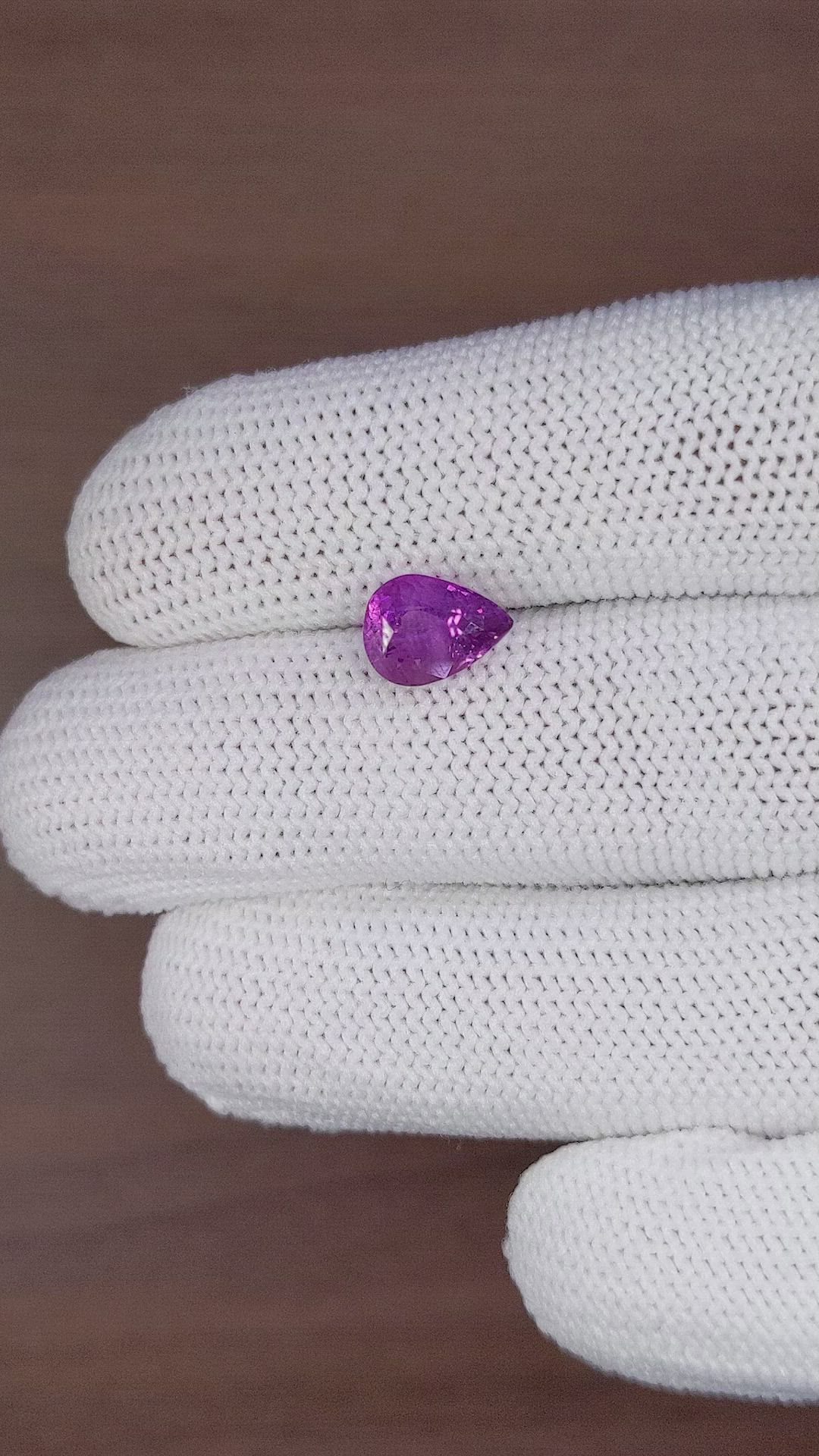
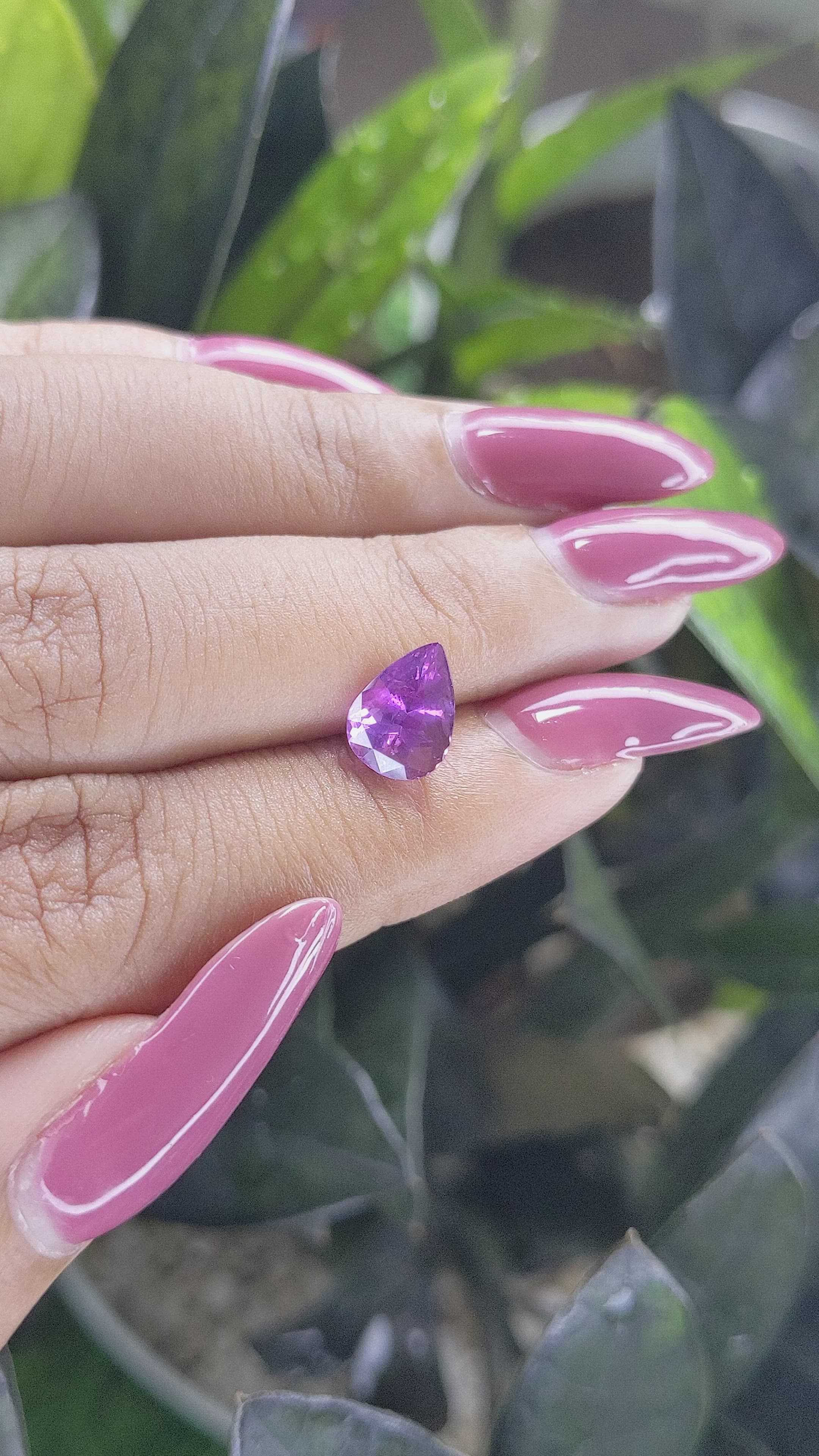
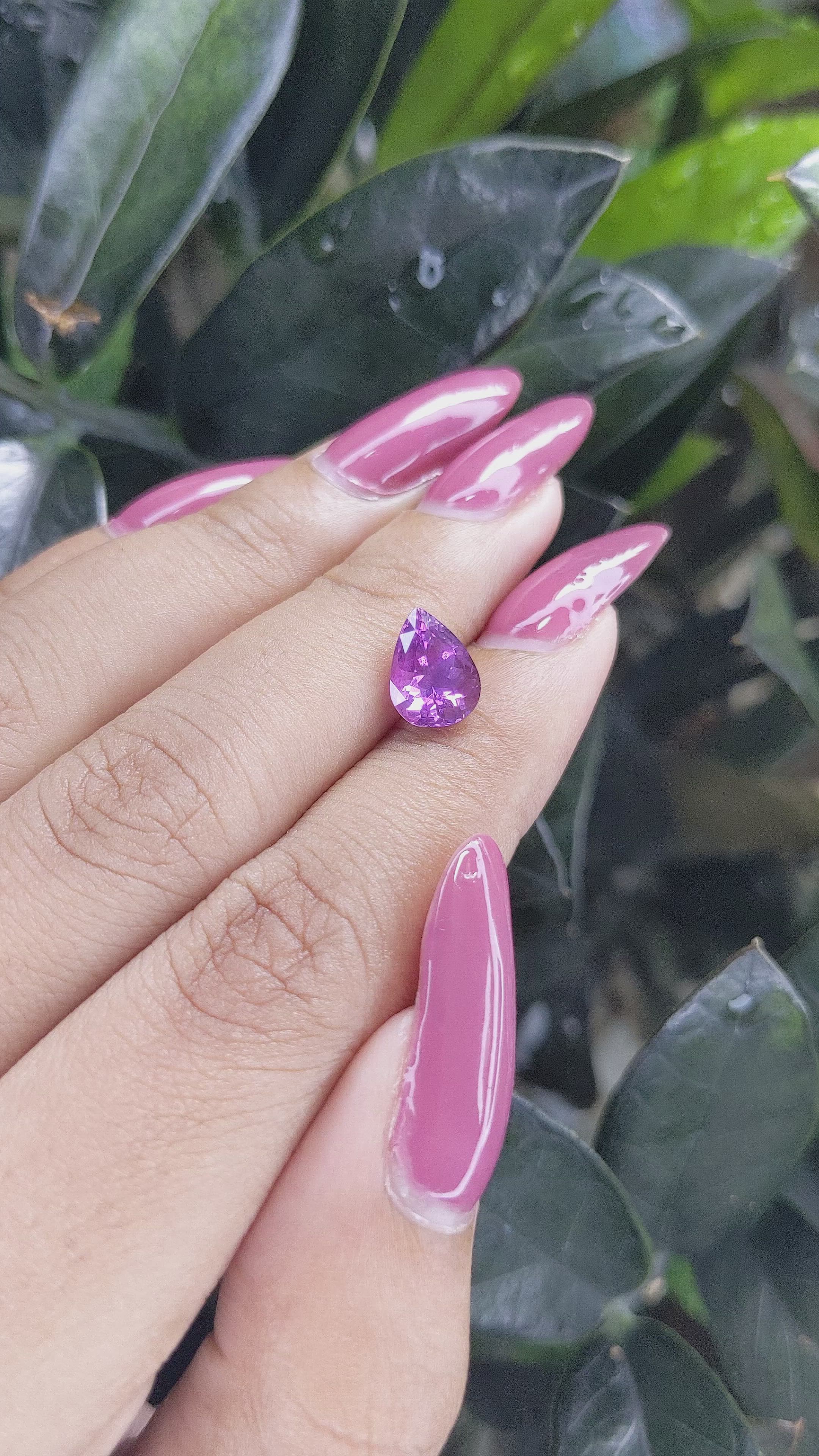
2.25 Ct. Purple Sapphire from Ceylon (Sri Lanka)
This loose stone ships by Jan 20
Item ID: | S33141 |
|---|---|
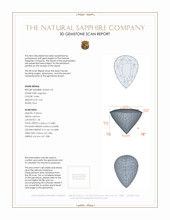
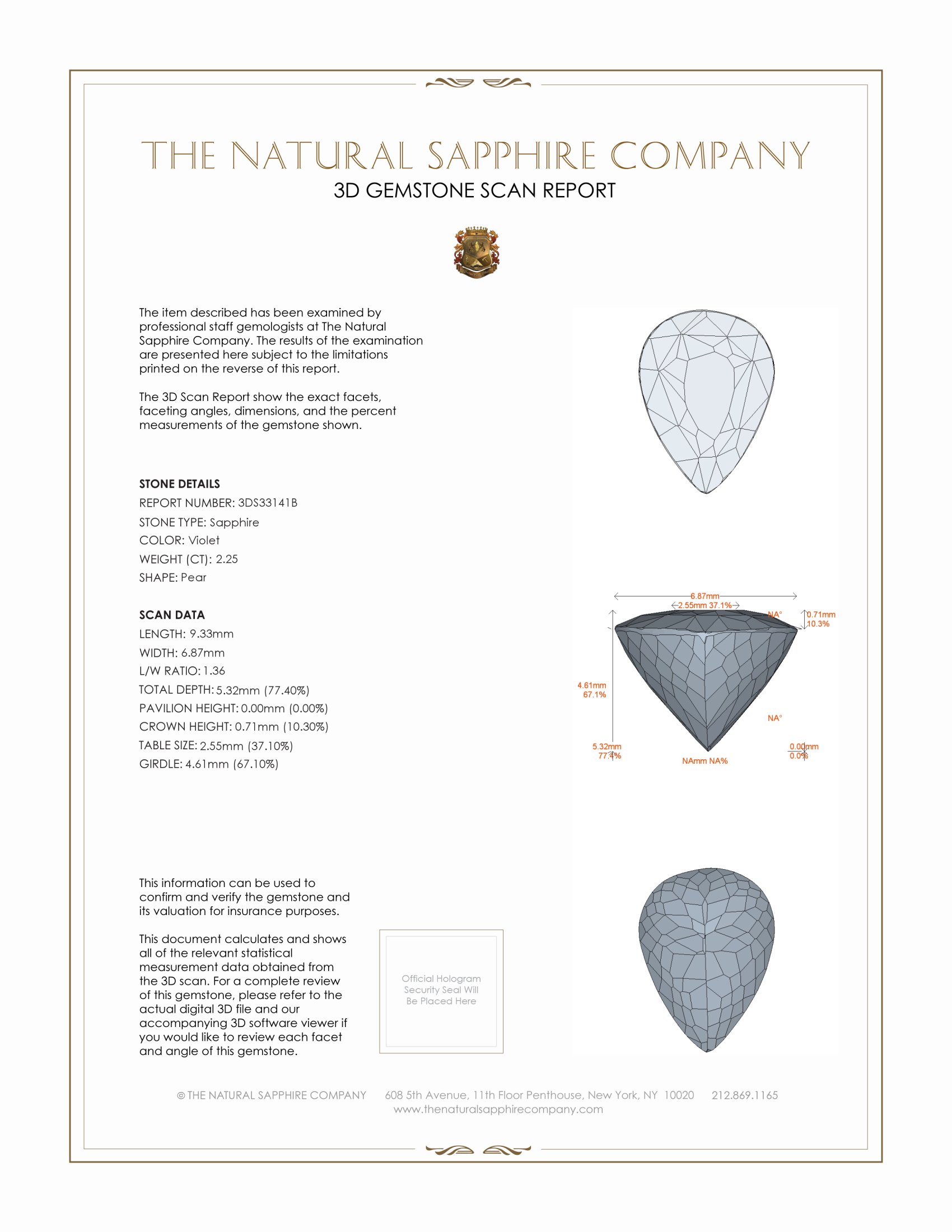
Dimensions (MM): help | Length: 9.33 Width: 6.87 Height: 5.32 |
Weight: | 2.25 Ct. |
Color: help | Purple |
Color intensity: help | Intense |
Clarity: help | Very Slightly Included |
Shape: help | Pear |
Cut: | Mixed Brilliant |
Cutting style: | Faceted |
Enhancements: help | Heat Treated |
Origin: help | Ceylon (Sri Lanka) |
Per carat price: help | $711 |
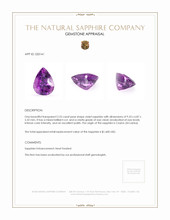
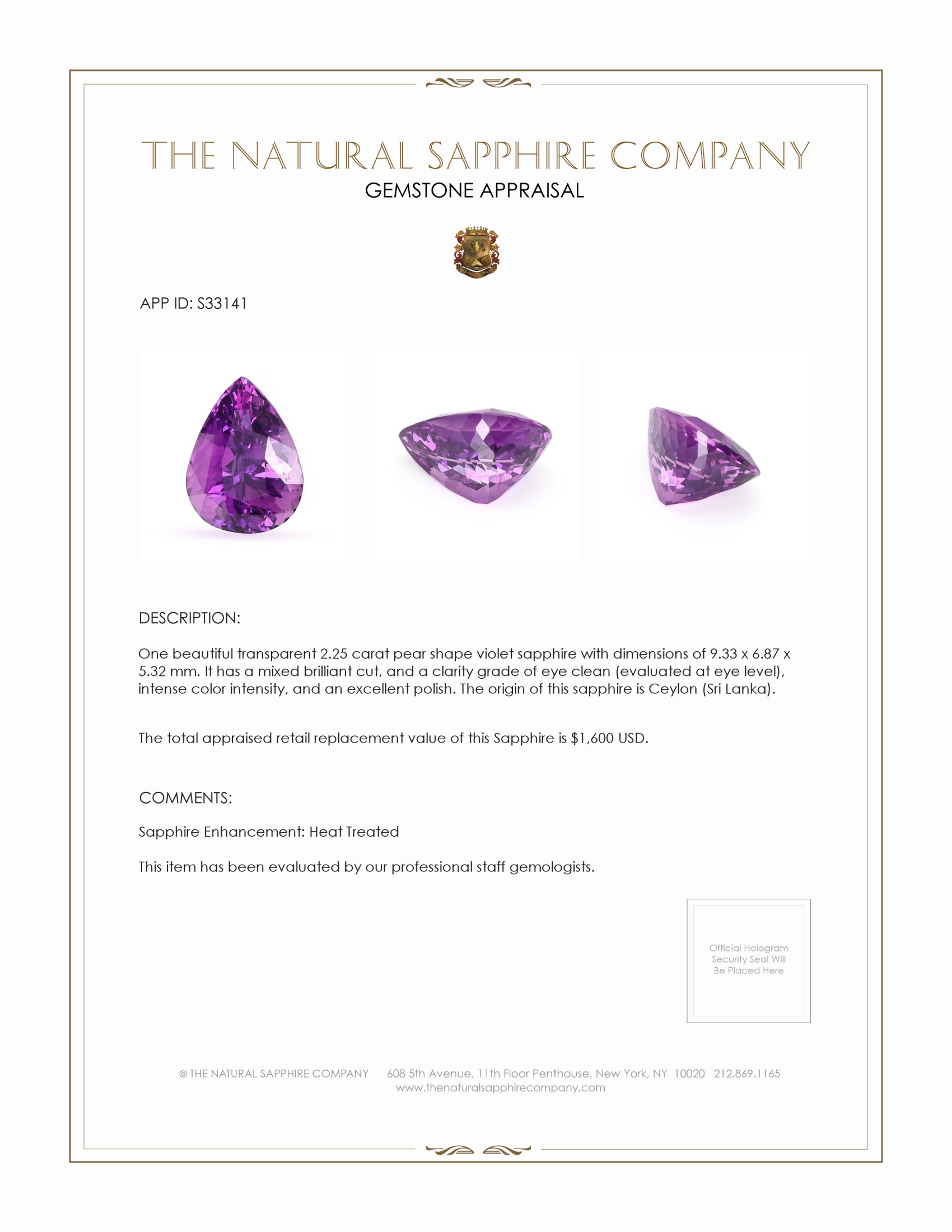
This pear shaped purple sapphire is a technically refined gemstone, precisely described as a transparent 2.25 carat pear shape, with dimensions of 9.33 by 6.87 by 5.32 millimeters. Originating from Ceylon Sri Lanka, and offered by The Natural Sapphire Company, this sapphire exhibits intense color intensity and an excellent polish. The clarity is graded as very slightly included when evaluated at eye level, indicating that inclusions are minute and do not compromise overall transparency or performance. The stone has undergone standard heat treatment to enhance color saturation and improve clarity, a stable and well understood process in corundum that yields improved homogeneity without reducing toughness. The combination of weight and proportions presents a lively face up presentation suitable for fine jewelry, while the expert polish and precise finishing speak to high craftsmanship standards maintained by our cutters and graders.
The mixed brilliant cut applied to this pear shape is engineered to optimize light reflection across the unusual silhouette of a pear. The cutter has combined a brilliant style crown with a coordinated pavilion faceting scheme that balances return with contrast. The crown faceting uses calibrated kite and star facets to control the entry and initial dispersion of light, while the pavilion facets are arranged to maximize internal reflection and channel light back through the crown in lively flashes. This balance is crucial in a pear shape, because the tapered point and rounded shoulder each require different facet relationships to avoid light leakage or dead zones. The length to width ratio of approximately 1.36 produces a slightly broader pear that favors face up spread and strong table brightness, and the pavilion depth has been carefully tuned to avoid excessive light leakage through the culet area. Symmetry is held to close tolerances, ensuring that opposed facets meet precisely to create recurring paths for photons to follow, which translates into a consistent pattern of scintillation and a controlled bow tie effect that is minimal in this particular cutting execution.
The way the cut enhances the sapphire’s inherent properties of light reflection is central to this gem’s appeal to technically minded buyers. Corundum has a high refractive index and relatively low dispersion compared with diamond, so the cutter must orient facets to maximize total internal reflection and directional return of light rather than relying on fire alone. The mixed brilliant arrangement in this pear shape creates a network of optical corridors that trap and redirect light, producing strong internal flashes and crisp scintillation when viewed in motion. The intense purple color benefits from this arrangement because well placed pavilion facets prevent color leakage into the girdle and instead return richly saturated violet tones to the observer. The crown angles and table proportion are chosen to produce optimal contrast, so that flashes of lighter violet and deeper plum appear alternately as the piece moves, accentuating both tone and saturation. The excellent polish allows subtle facet junctions to act as mirrors rather than diffuse surfaces, preserving specular highlights and ensuring that the light returns are bright and well defined. The result is a sapphire that reads as lively and deep at the same time, with both spread of color and high brilliance achieved through precise optical engineering.
From a clarity and setting perspective the cutter and polisher have used the mixed brilliant design to conceal and downplay the very slightly included aspects while maximizing brilliance and durability. Inclusions observed at eye level are minimal, and their location relative to the table and critical facets has been taken into account during orientation and faceting, so that light paths are uninterrupted and clarity appears stronger face up. Heat treatment was applied prior to cutting in order to improve color uniformity and to relax crystal lattice anomalies that can interfere with transparency, a common practice for Ceylon sapphires that yields stable and predictable results. The material remains corundum, hardness nine on the Mohs scale, and is suitable for daily wear when set in secure mounts. For settings The Natural Sapphire Company recommends designs that protect the tapered point while allowing generous table exposure to showcase the stone’s mixed brilliant play. Bezel and prong options can be tailored to preserve optical performance, and our team can advise on ideal mounting depths and gallery design to maintain the engineered light paths established by the cutter. If you would like further details on facet diagrams or in hand images to evaluate the optical performance under different lighting, The Natural Sapphire Company can provide additional material and advice to support custom setting and purchase decisions.


