
- Stone14
- Reports3
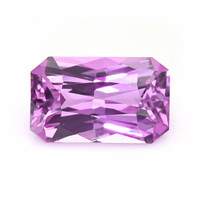
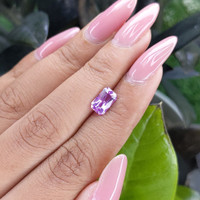
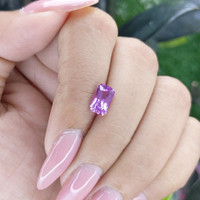
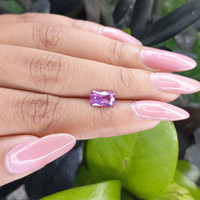
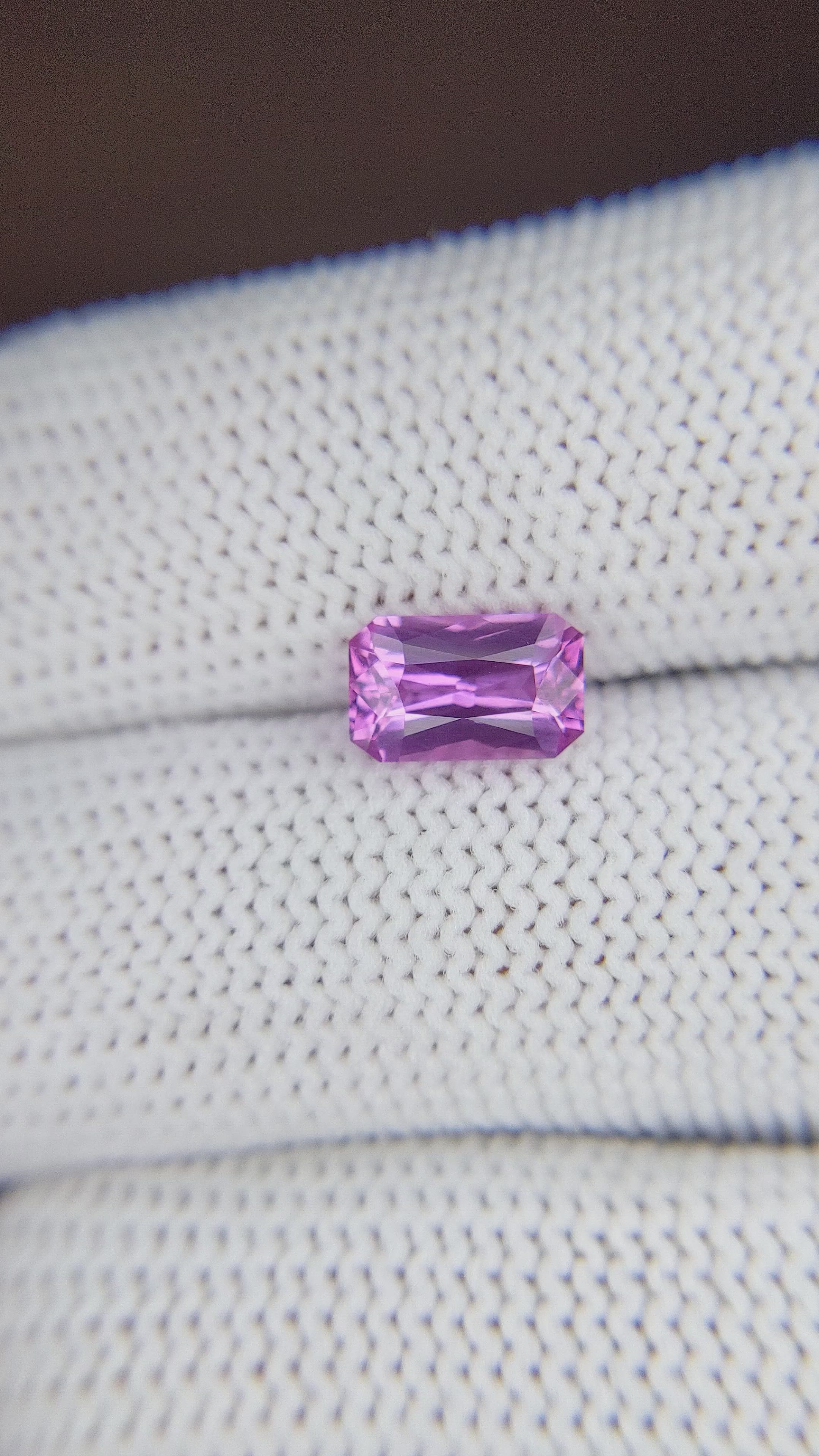

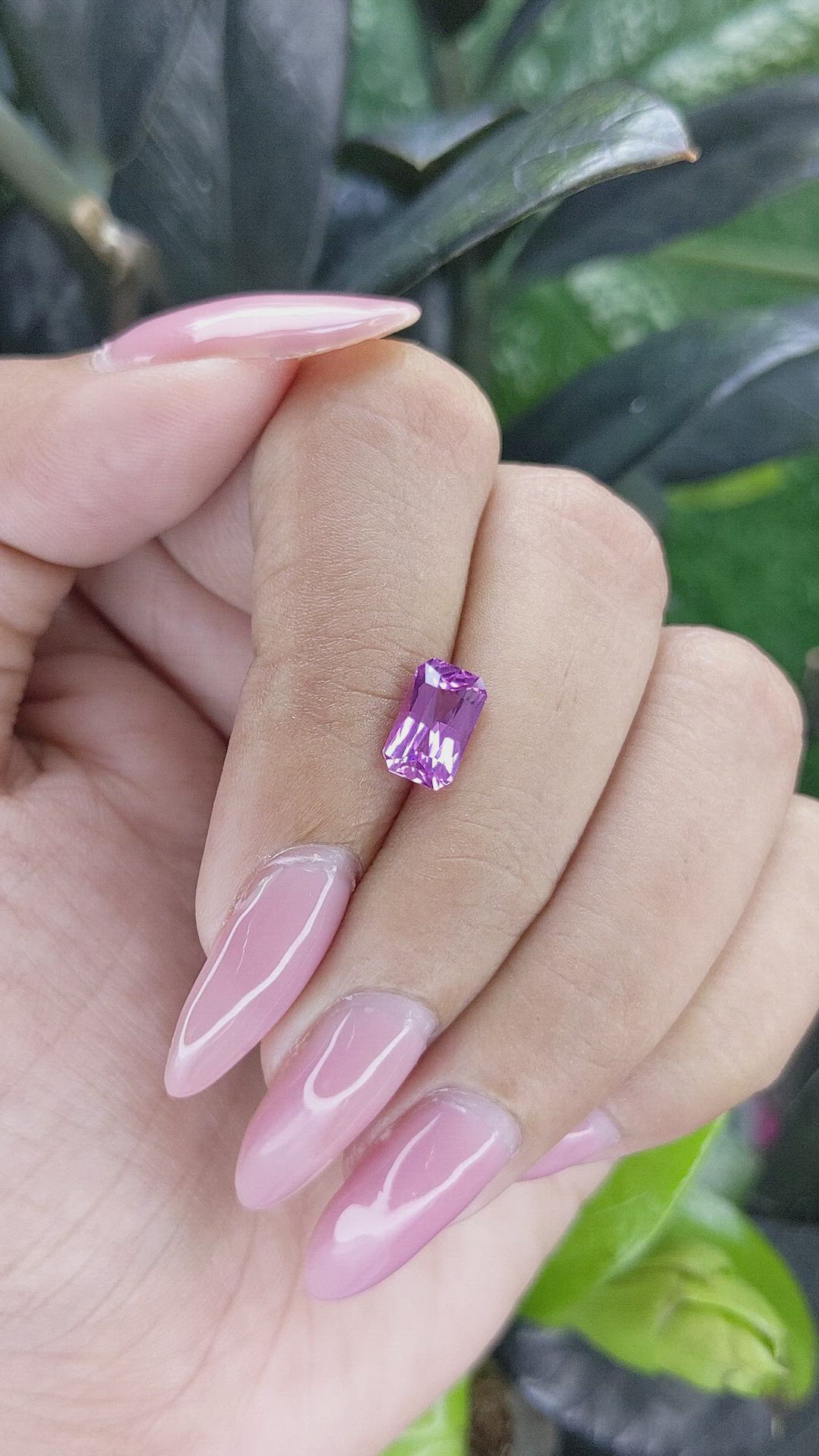
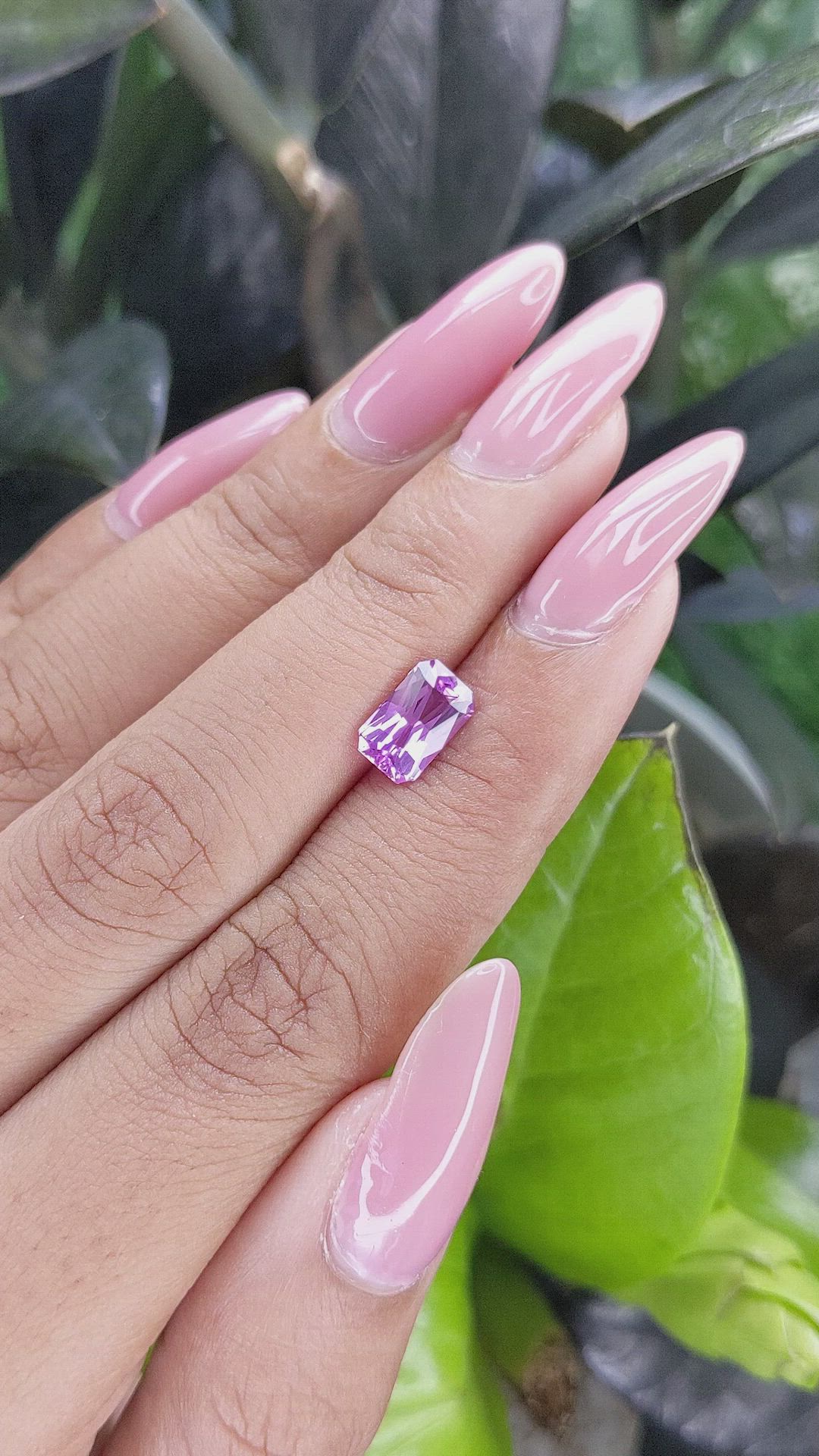
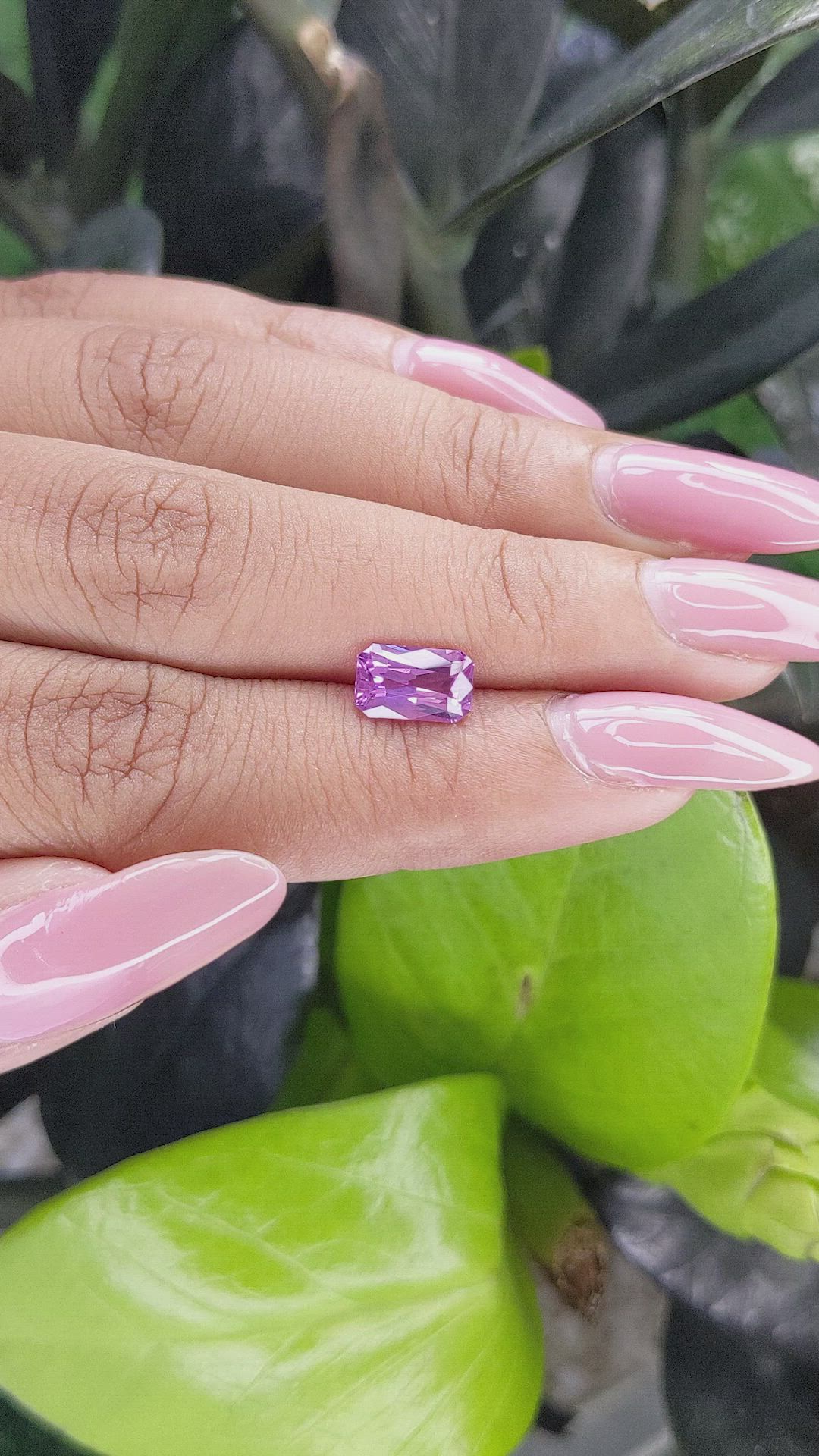


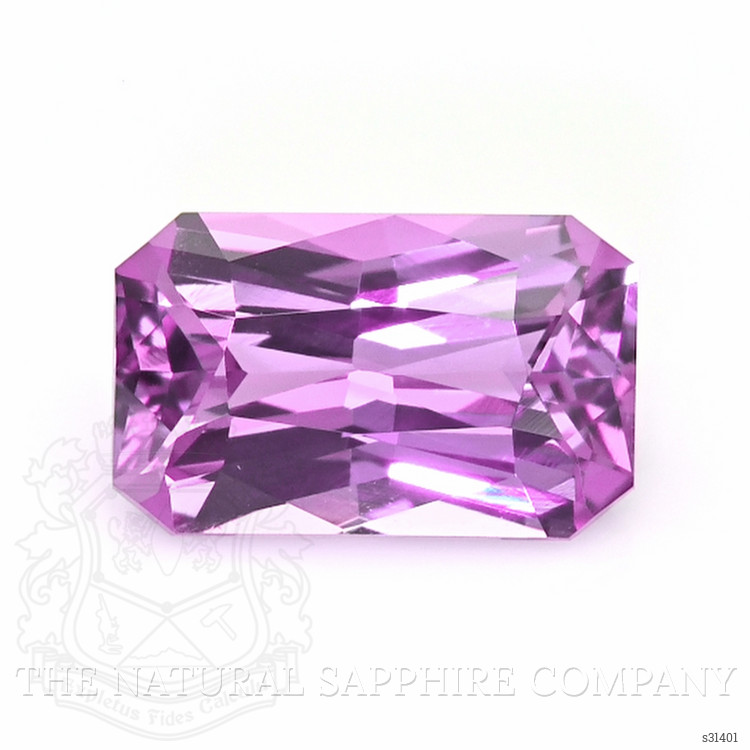
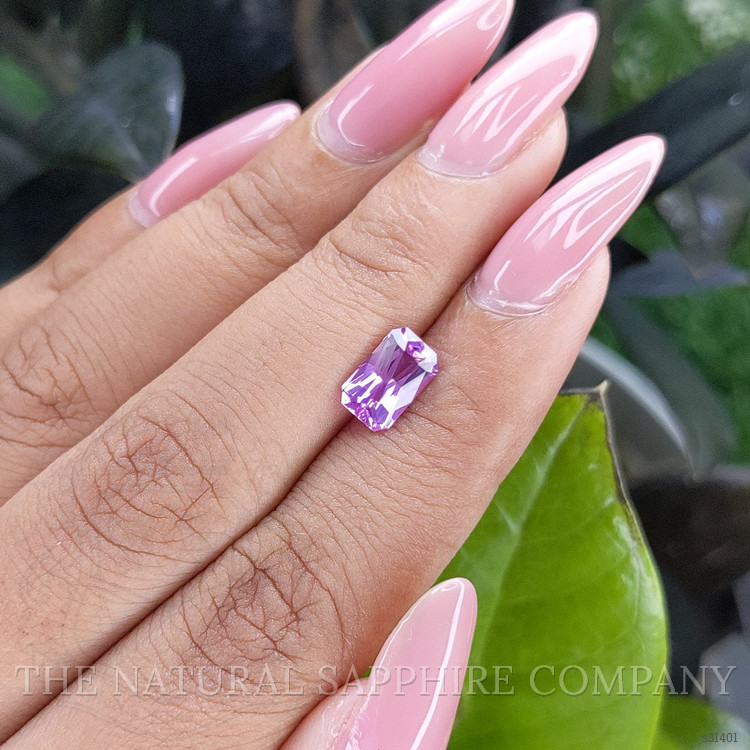
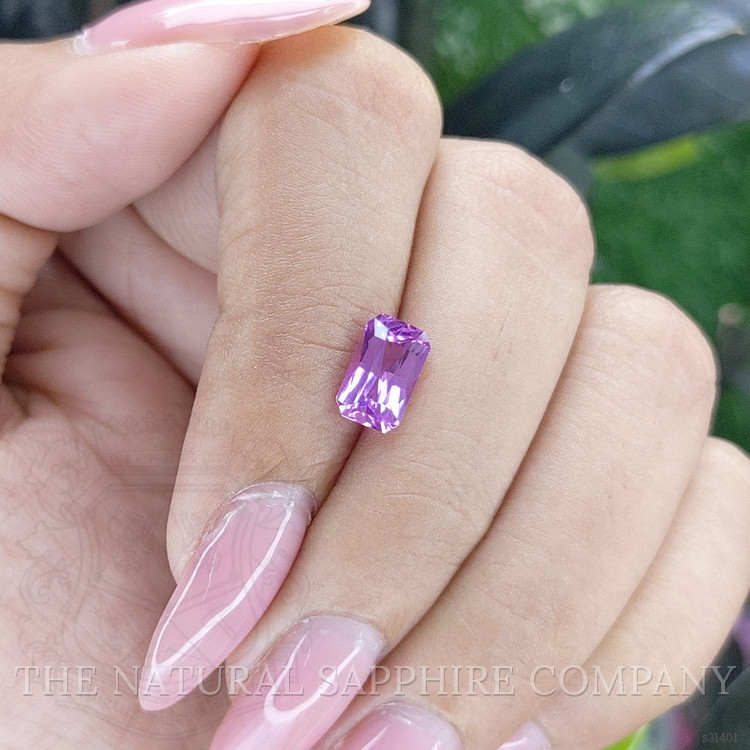
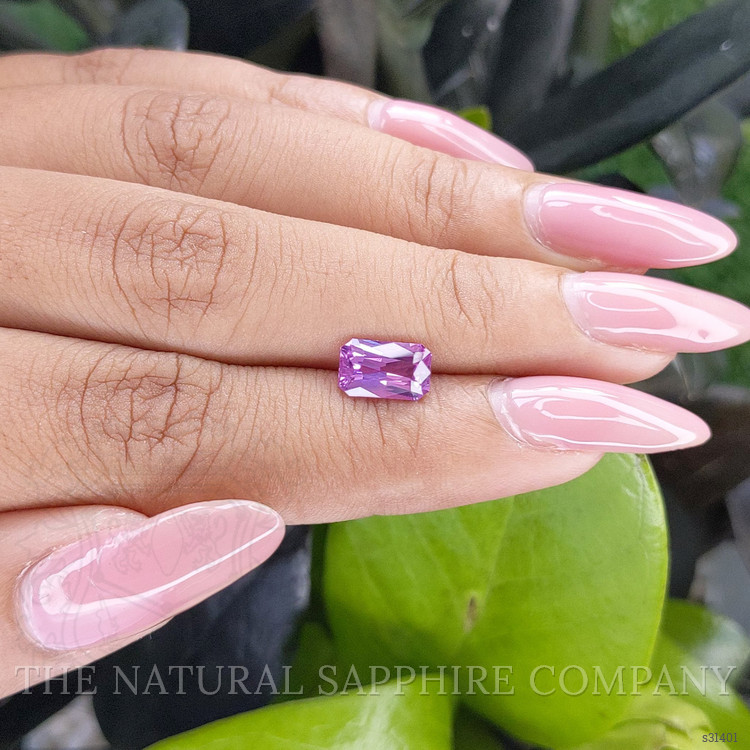

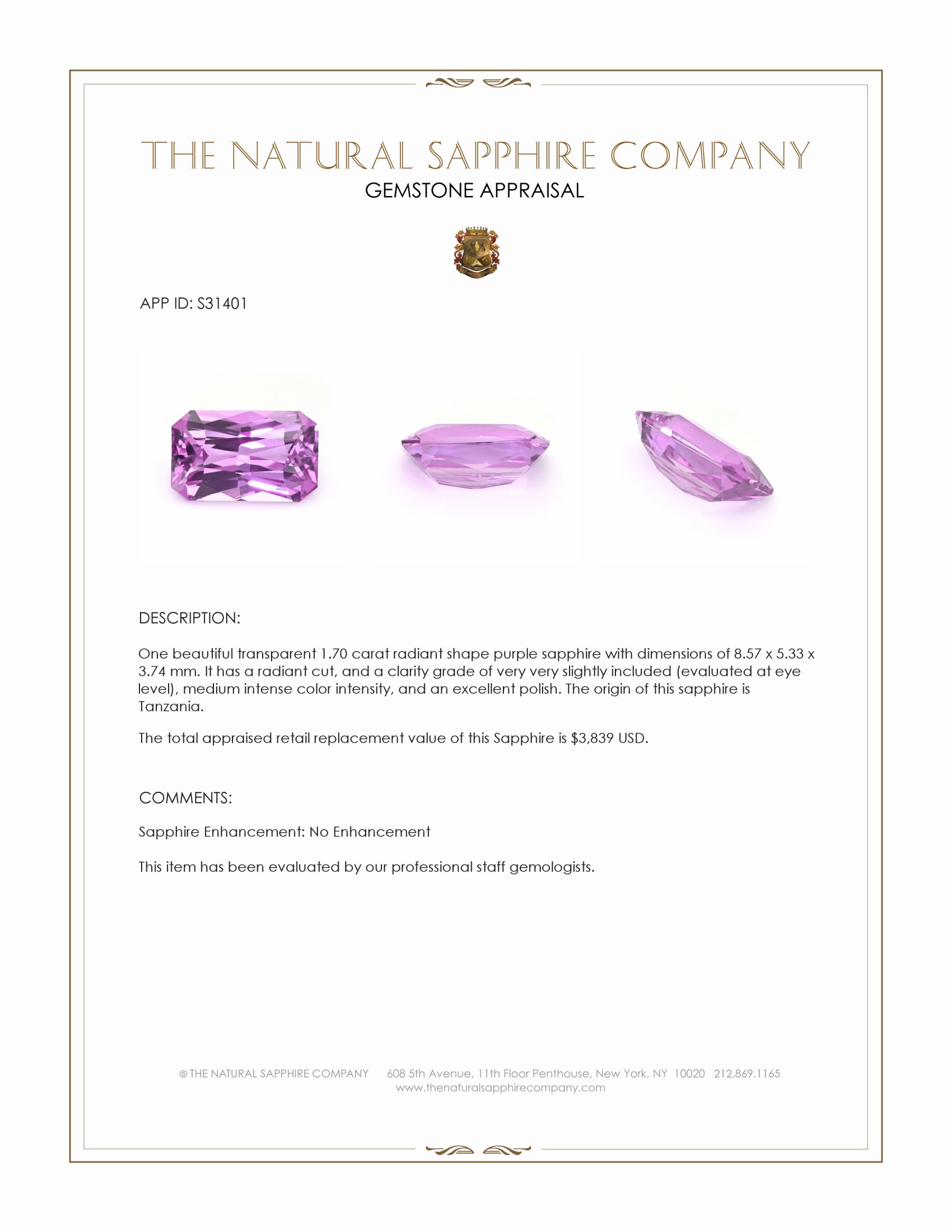
1.70 Ct. Purple Sapphire from Tanzania
This loose stone ships by Jan 31
Item ID: | S31401 |
|---|---|
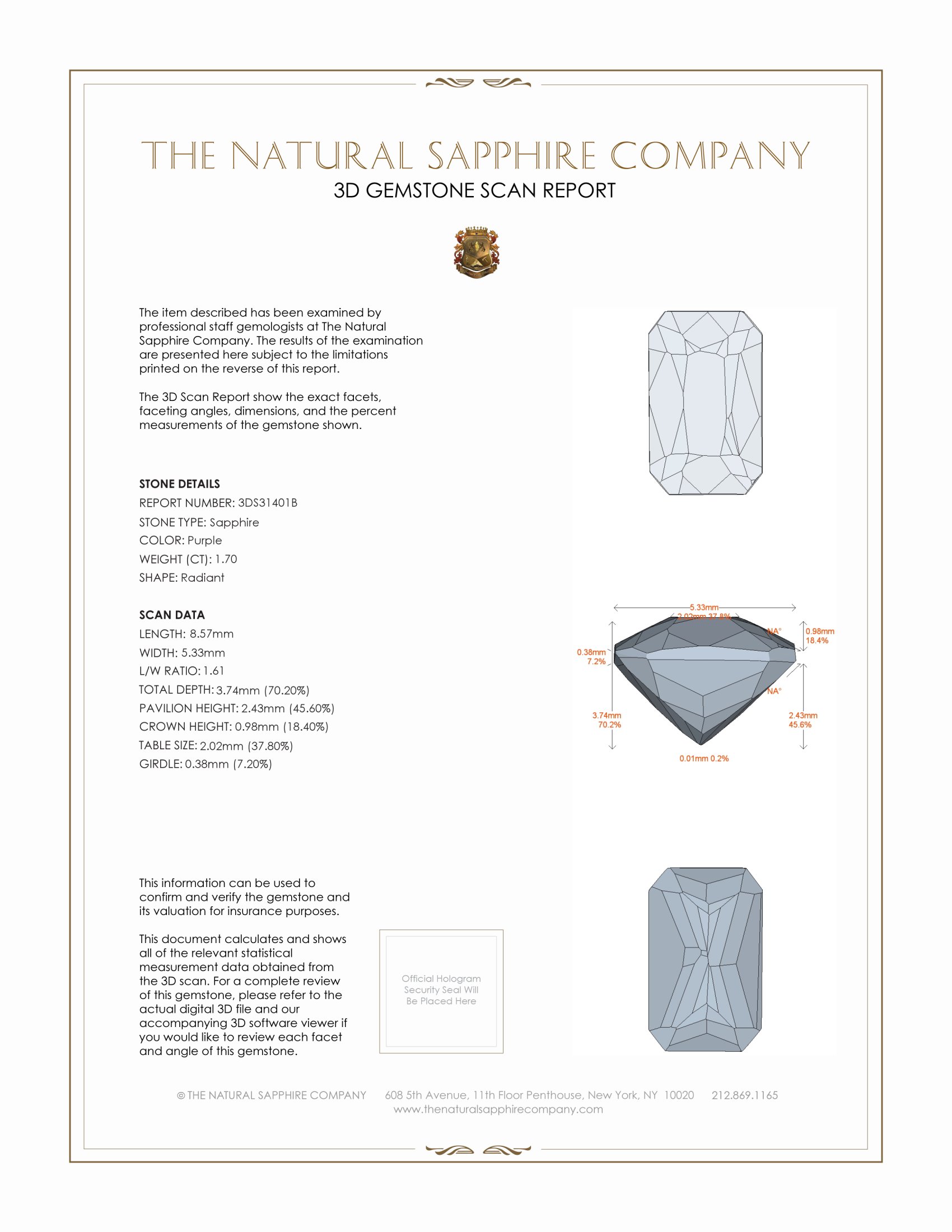
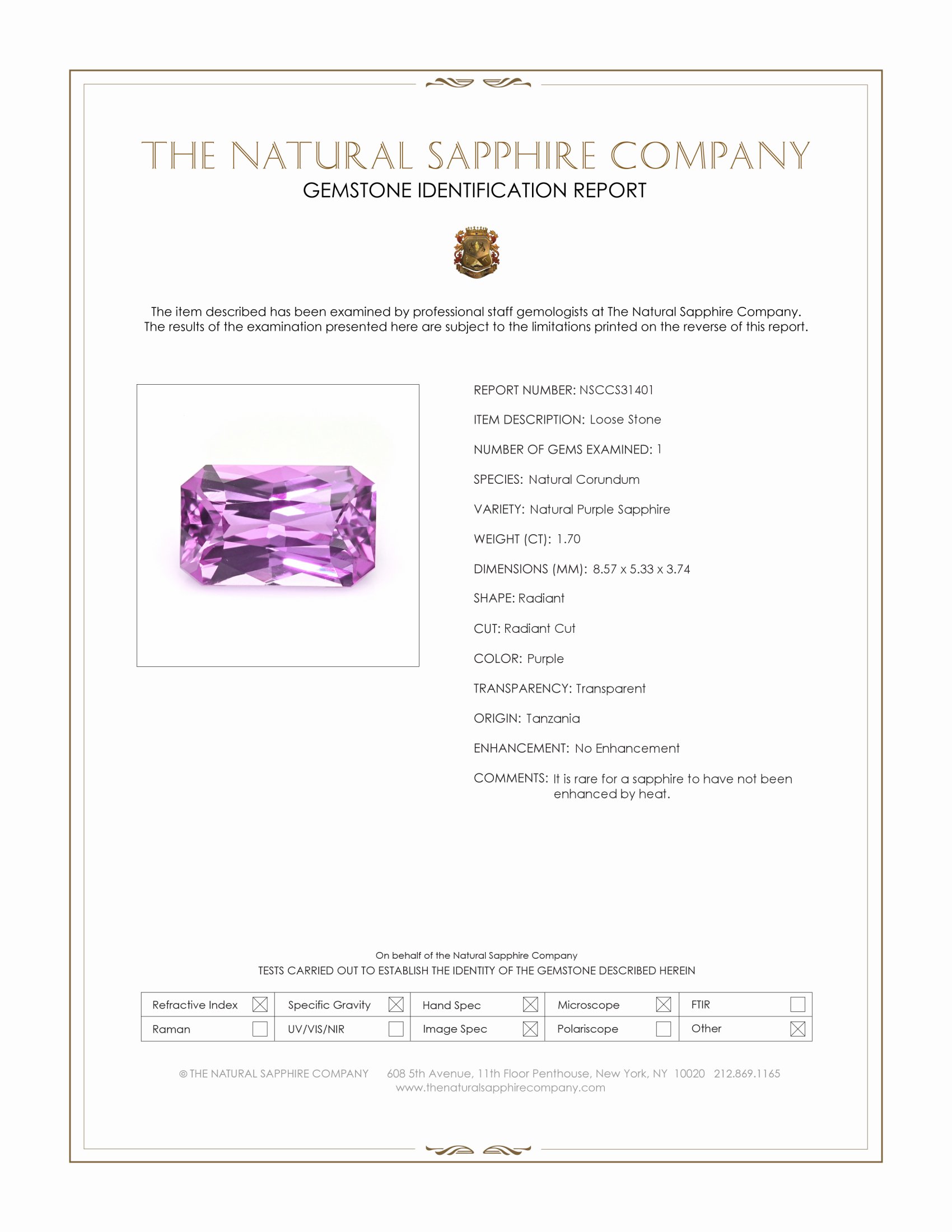
Dimensions (MM): help | Length: 8.57 Width: 5.33 Height: 3.74 |
Weight: | 1.70 Ct. |
Color: help | Purple |
Color intensity: help | Medium Intense |
Clarity: help | Very Very Slightly Included |
Shape: help | Radiant |
Cut: | Radiant Cut |
Cutting style: | Faceted |
Enhancements: help | No Enhancement |
Origin: help | Tanzania |
Per carat price: help | $2,258 |
This 1.70 carat radiant shape purple sapphire from Tanzania exemplifies deliberate cutting and material quality, with exact measurements of 8.57 by 5.33 by 3.74 millimeters. The length to width ratio is approximately 1.61, giving the gem an elongated rectangular outline that enhances face up presence while preserving balanced light performance. The measured depth relative to the average of the length and width is approximately fifty three point eight percent, a proportion that favors a larger apparent size and a brighter appearance in table up viewing. The radiant cut employed here is a hybrid facet architecture combining a brilliant style crown with a modified pavilion and trimmed corners, delivering a complex interplay of large and small facets that produces both broad flash and fine scintillation. The excellent polish and precise facet junctions recorded on this stone minimize light leakage and optimize internal reflection, while the symmetry inherent in the faceting plan yields consistent contrast patterns across the table and crown facets.
Color is medium intense purple, a saturation and tone pairing that reads vivid while maintaining good light transmission. The purple hue displays evenness across the table with subtle variations at facet junctions that create lively color movement without harsh zoning. Because the sapphire is untreated, the color originates from natural trace element chemistry typical of Tanzanian material, and the absence of enhancement preserves the original chromatic character. Clarity is described as very very slightly included when evaluated at eye level, indicating inclusions are minimal and do not materially obstruct the path of light through the stone. The combination of transparency and this high clarity grade supports strong brilliance and clear facet definition, allowing the pavilion and crown facets to act as effective mirrors that return light to the viewer with high fidelity.
From a gem optical standpoint, corundum with a refractive index of approximately one point seven six two to one point seven seven eight and a low dispersion value around zero point zero one eight behaves differently than many colored gem alternatives. The relatively high refractive index enhances contrast and sparkle compared with lower index materials such as quartz, which has a refractive index near one point five five, and this sapphire therefore exhibits crisper facet outlines and more pronounced mirror like flashes. Compared with spinel, which has a slightly lower refractive index near one point seven one five, the sapphire displays marginally greater brilliance and a firmer facet return. Dispersion or fire in corundum is modest, so the purple sapphire gives priority to pure color and crisp brilliance rather than colorful spectral flashes. The radiant cut amplifies the stone s internal reflections more effectively than traditional step cuts, because the abundant brilliant style facets create multiple overlapping light returns, while maintaining the elegance of trimmed corners for secure settings.
When compared to other sapphires and stones within the same market category, this Tanzanian purple sapphire occupies a distinct visual niche. Blue sapphires often rely on deep saturation and a slightly different facet emphasis to enhance velvety blue color, whereas this purple example benefits from the radiant cut s ability to distribute medium intense saturation evenly across the table, avoiding dark pinpoints and providing a uniform face up color. Pink sapphires can appear softer in tone under similar cuts, and their lower contrast can be counteracted by heavier facet contrast, which is less necessary in this specimen due to its natural vibrancy and excellent polish. Against amethyst, a quartz species commonly used for purple stones, the sapphire offers superior hardness, durable wearability, and a more energetic brilliance as a function of its higher refractive index, making it more suitable for everyday jewelry. The Natural Sapphire Company presents this untreated Tanzanian radiant sapphire as a technical expression of corundum craftsmanship, a stone where optimized proportions, meticulous facet work, and provenance combine to deliver predictable optical performance, excellent durability, and collector appeal.


