
- Stone14
- Reports3
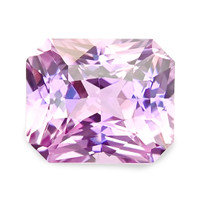
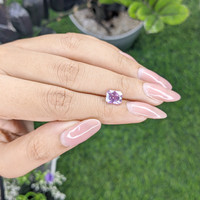
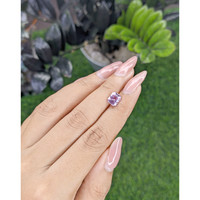
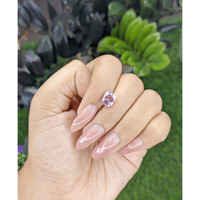
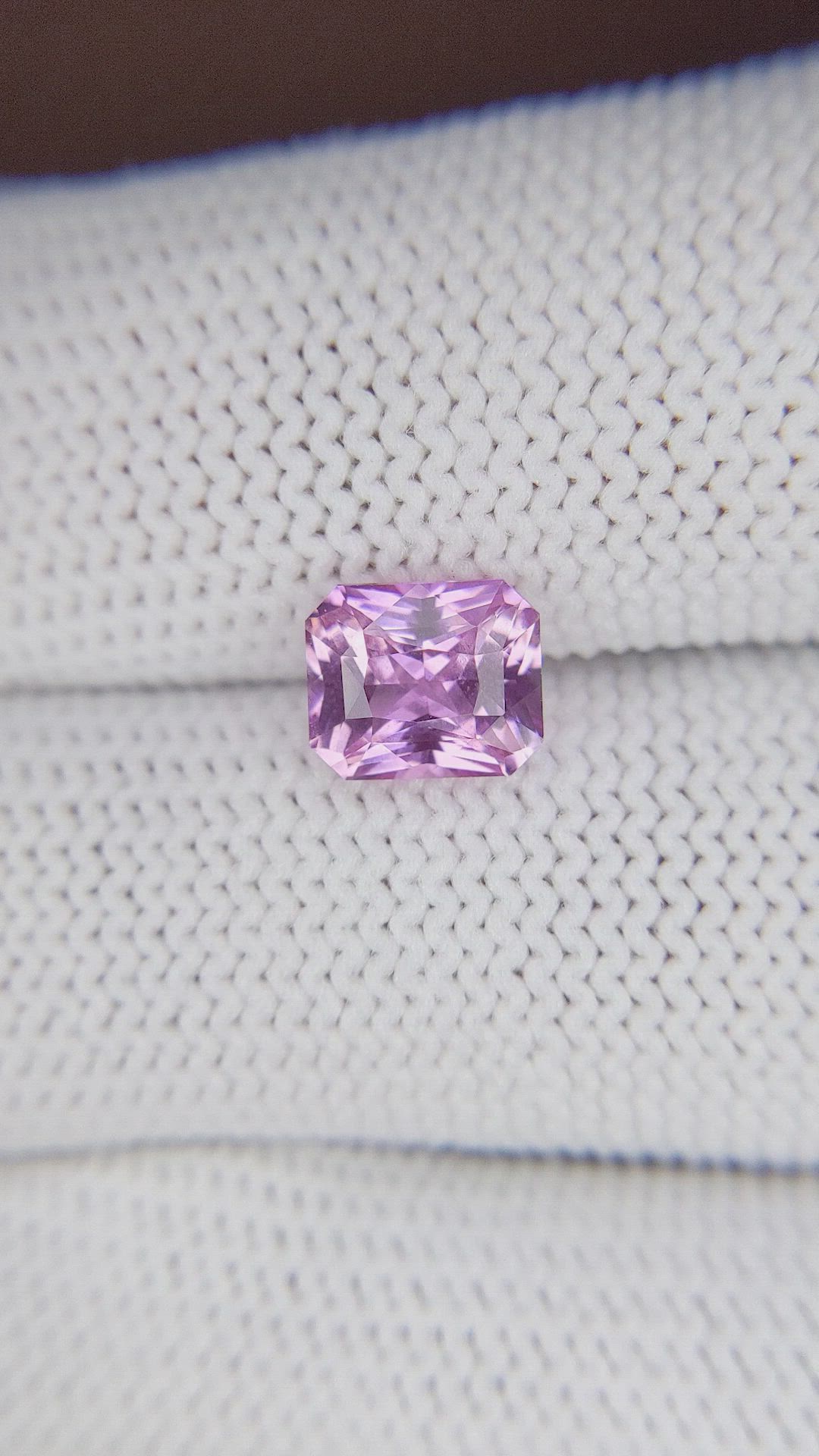
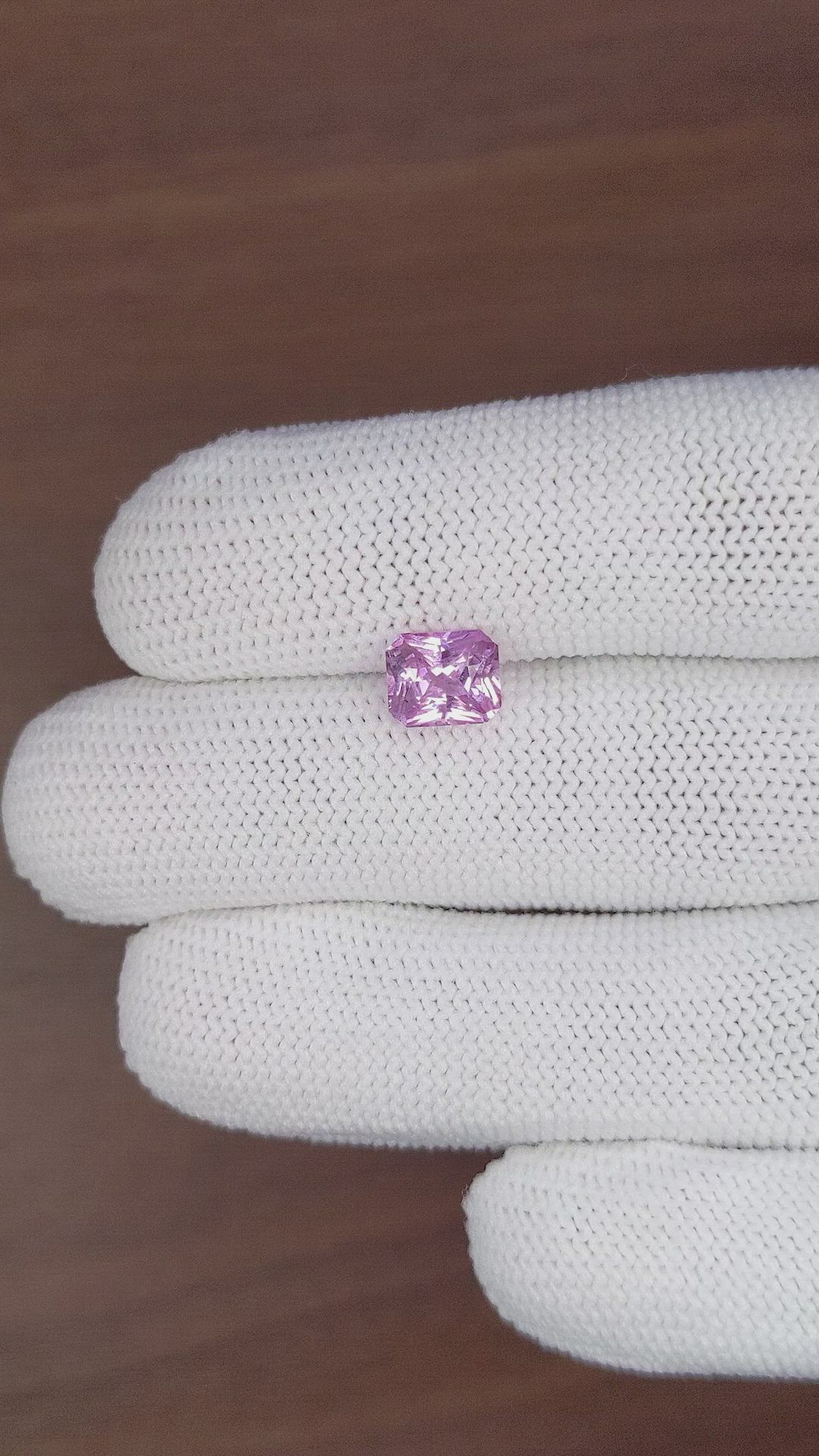
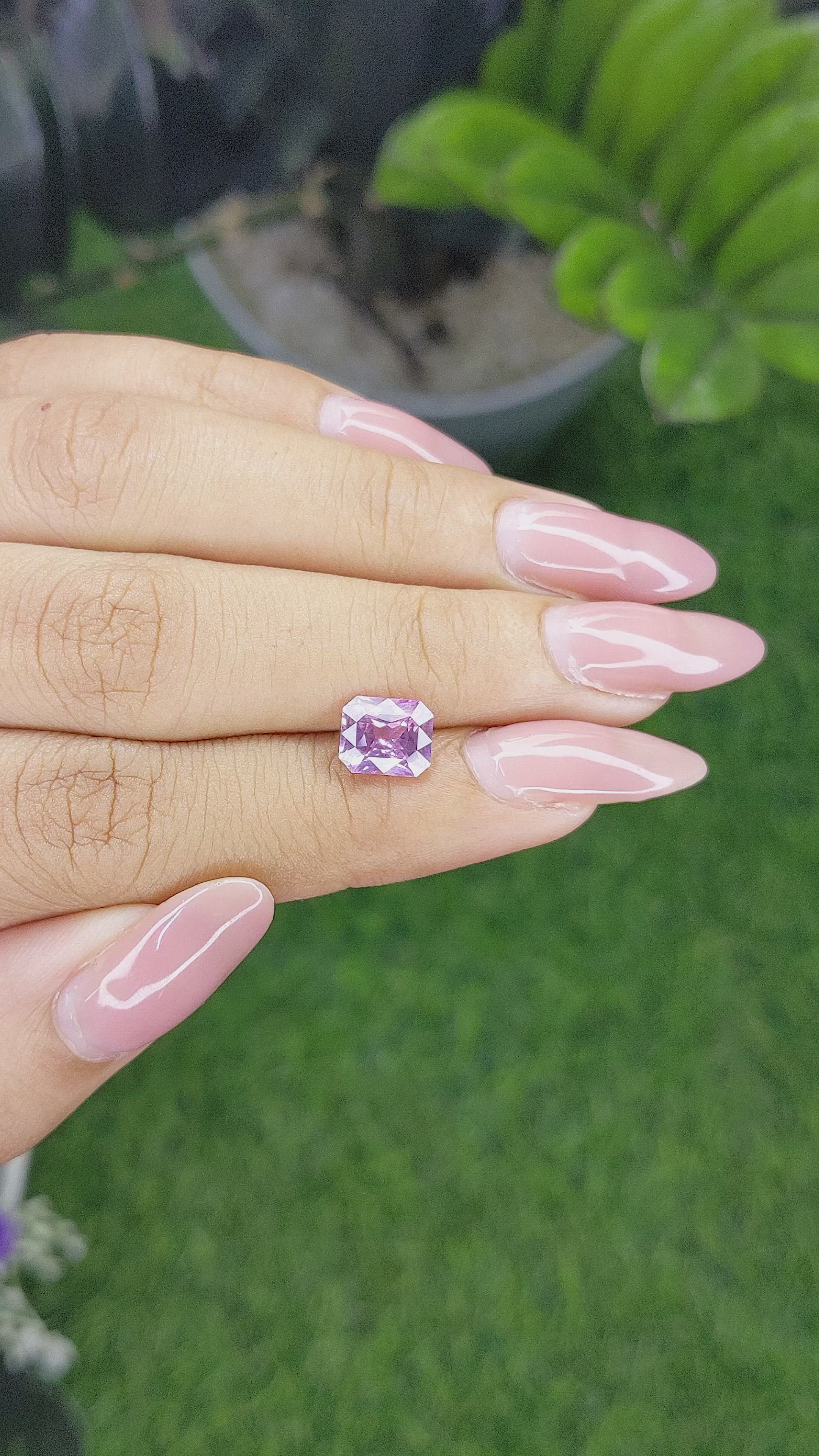
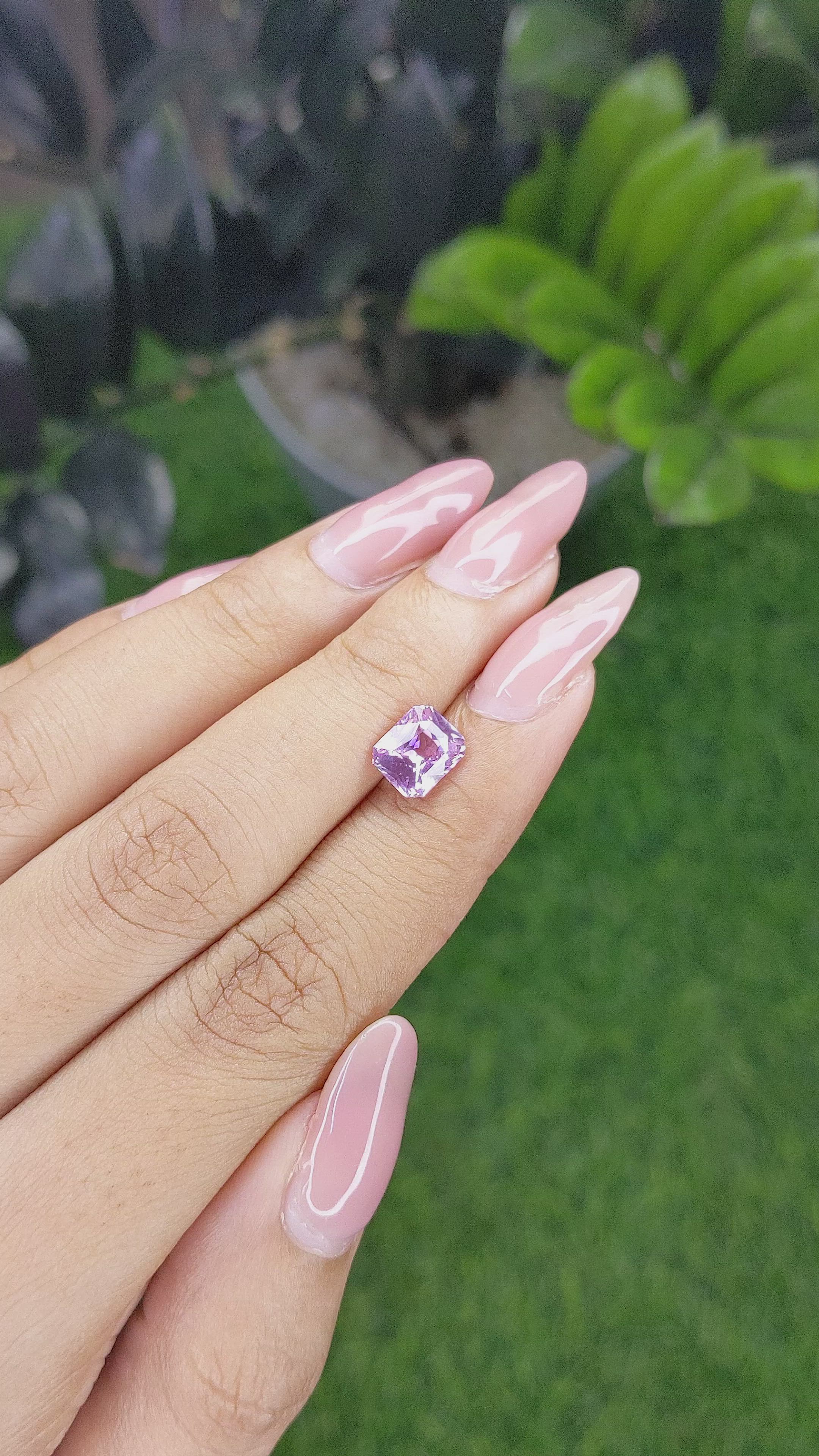
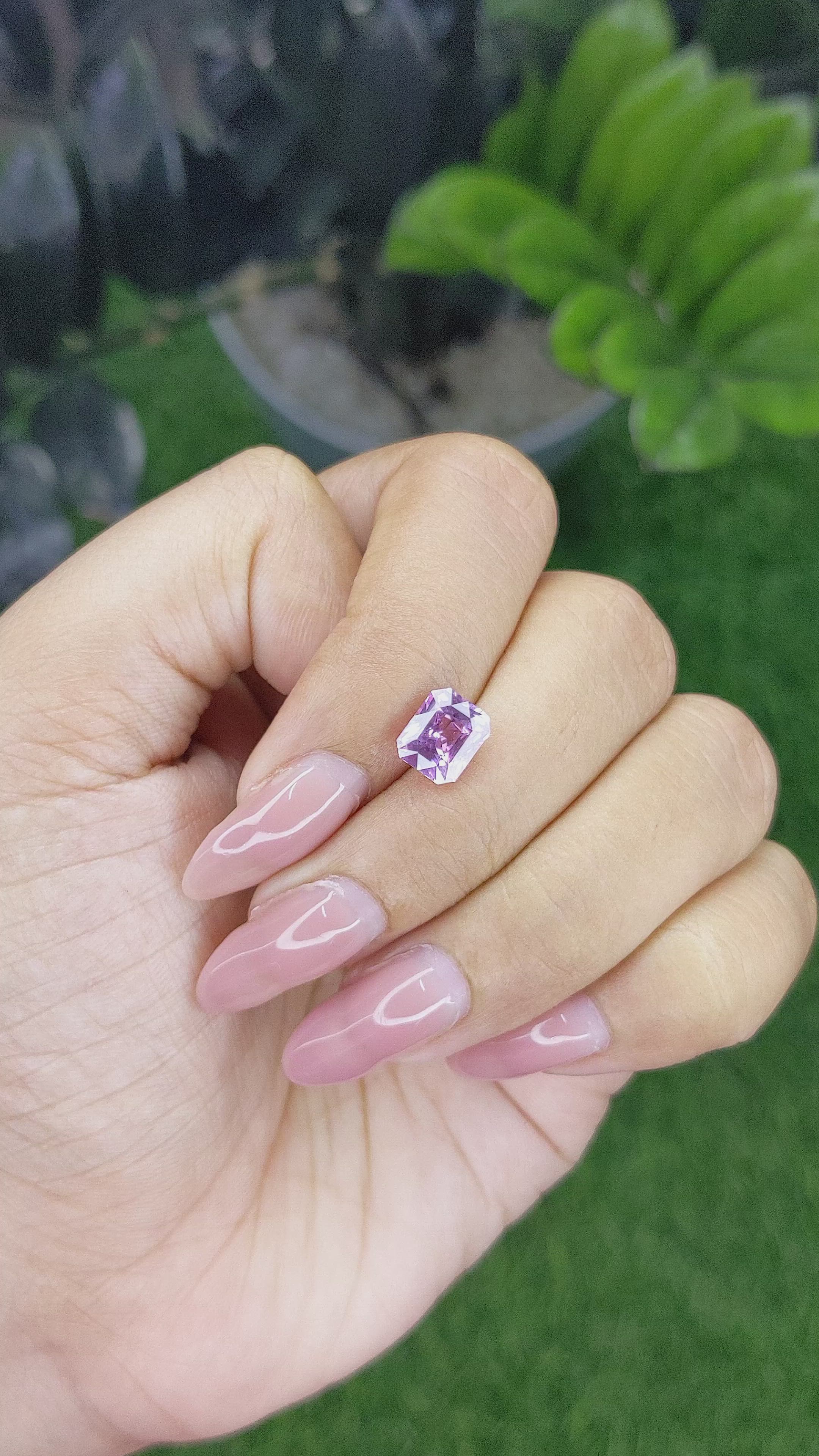

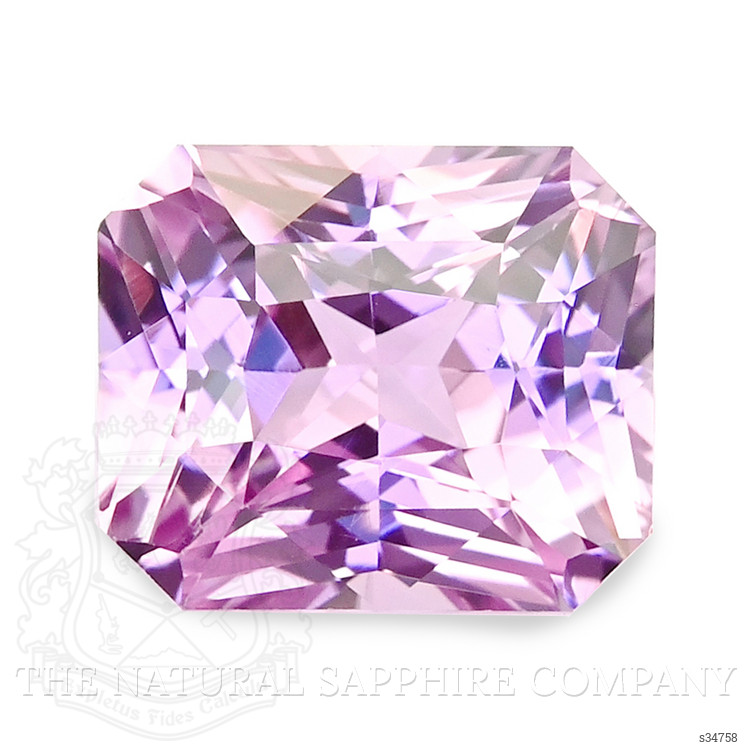
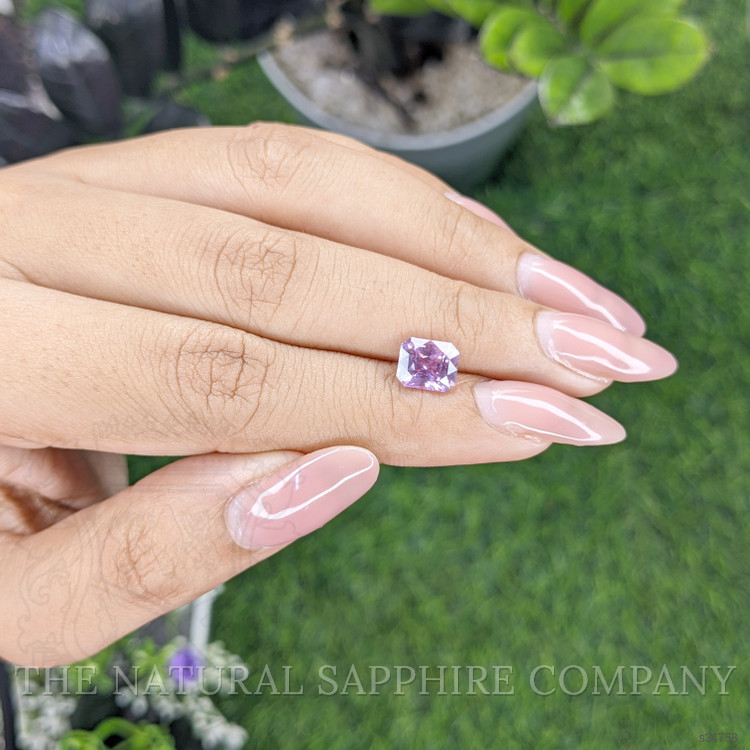
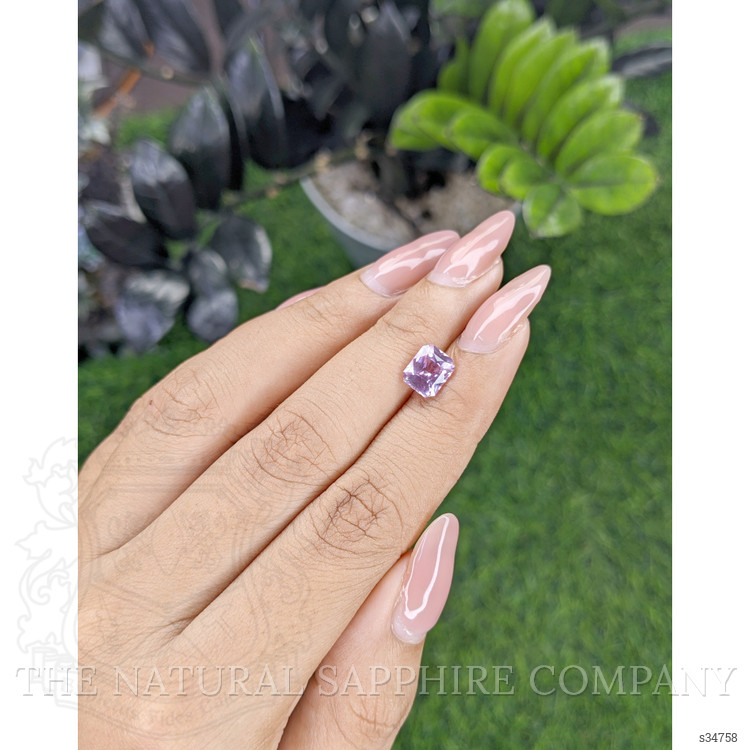
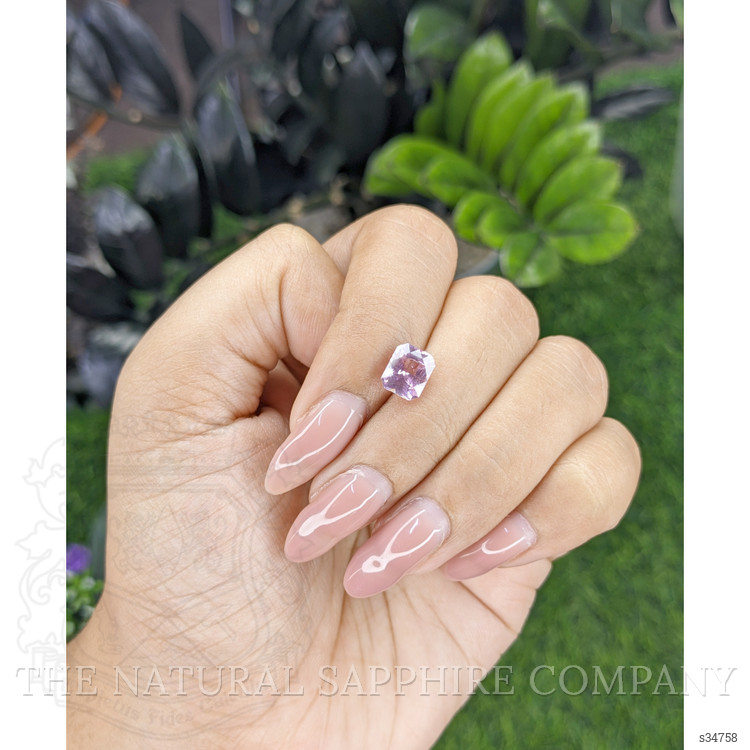


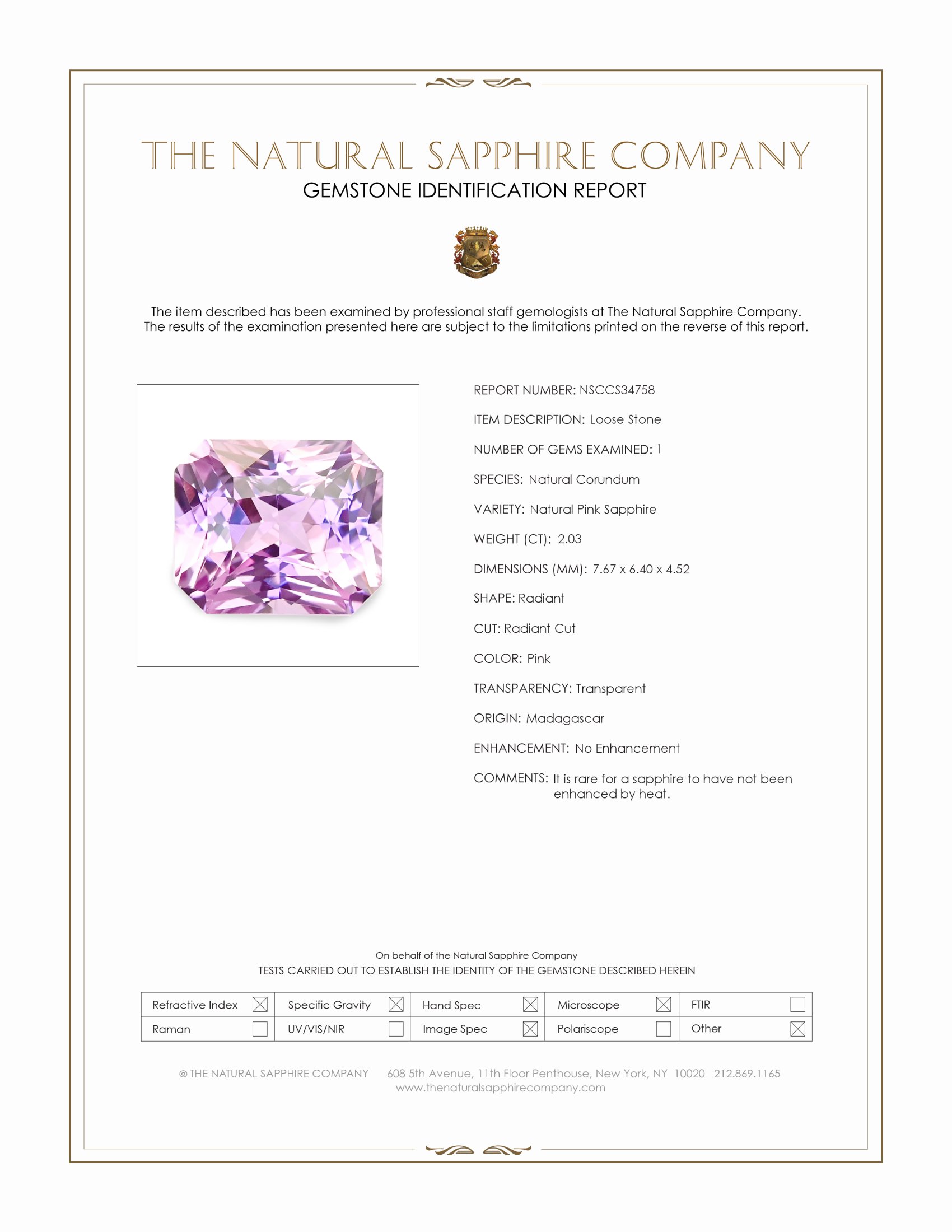
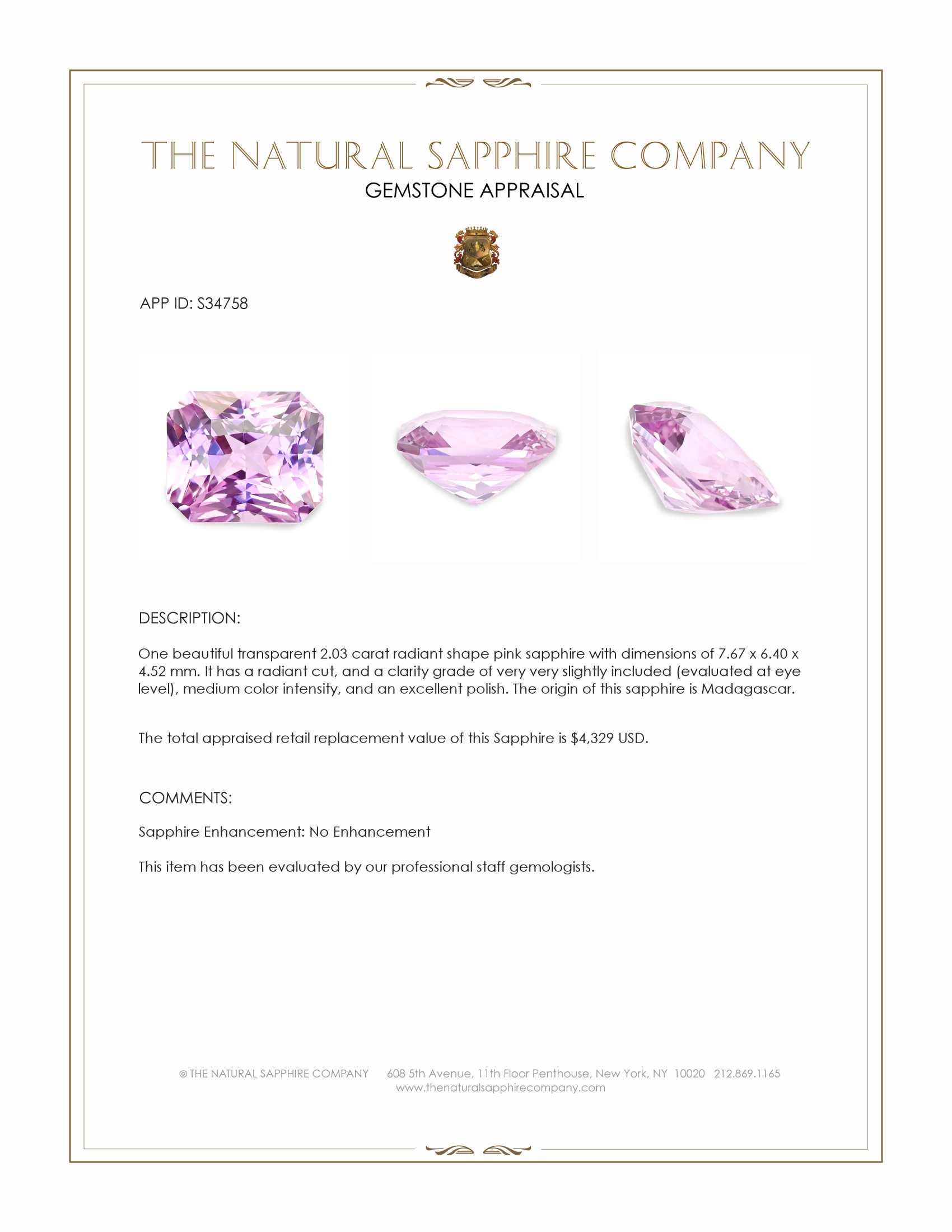
2.03 Ct. Pink Sapphire from Madagascar
This loose stone ships by Feb 7
Item ID: | S34758 |
|---|---|
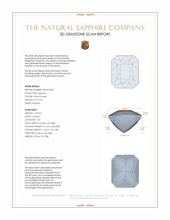
Dimensions (MM): help | Length: 7.67 Width: 6.4 Height: 4.52 |
Weight: | 2.03 Ct. |
Color: help | Pink |
Color intensity: help | Medium |
Clarity: help | Very Very Slightly Included |
Shape: help | Radiant |
Cut: | Radiant Cut |
Cutting style: | Faceted |
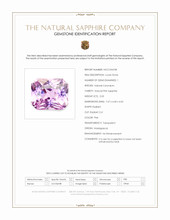
Enhancements: help | No Enhancement |
Origin: help | Madagascar |
Per carat price: help | $2,133 |
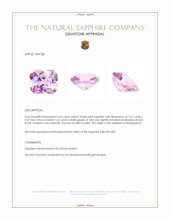
This 2.03 carat radiant shape pink sapphire presents as a transparent, precision cut gemstone, with exact dimensions of 7.67 x 6.40 x 4.52 mm, and a measured depth percentage of approximately 64 percent. The radiant cut used here is a carefully executed hybrid faceting scheme, combining a brilliant style crown with an optimized pavilion facet pattern, trimmed corners, and a well proportioned table to balance scintillation with color saturation. That faceting scheme creates a lively play of pinpoint scintillation and larger flashes, which emphasizes the medium color intensity of the stone without producing an overly dark appearance. The clarity is graded as very very slightly included when evaluated at eye level, meaning that inclusions are minimal and do not interrupt the gem's transparency or its ability to transmit light cleanly, and the excellent polish further enhances surface finish and facet junction crispness, reducing light leakage and improving overall brilliance. The stone is untreated, reported as no enhancement, and that lack of treatment preserves the original crystal lattice and natural absorption features, making the optical and structural characteristics authentic to its Madagascar provenance.
From a material science perspective the Madagascar origin is significant, because sapphires from that region frequently exhibit a nuanced pink hue with subtle pleochroism that responds well to mixed faceting. The medium color intensity in this specimen indicates a balance between saturation and lightness that allows the radiant cut to distribute color evenly across the table and crown planes, avoiding the pronounced color zoning that can make a gem appear uneven under different lighting conditions. The cutter has evidently prioritized retention of weight while refining pavilion angles to achieve the approximate 64 percent depth, a useful compromise that intensifies perceived color saturation without creating a closed or overly dark window. The very very slightly included clarity grade at eye level informs the trained buyer that there are natural growth features or mineral inclusions, but they are sufficiently small or positioned so as not to interfere with faceting symmetry or polish. For connoisseurs, these inclusions serve as a reliable internal fingerprint, supporting origin determination and confirming that the gem is natural rather than synthetic.
When comparing this natural, untreated Madagascar pink sapphire to lab grown alternatives, there are several technical and market distinctions to consider. Lab grown sapphires are produced under controlled conditions that often result in very uniform color distribution, fewer inclusions, and sometimes a lower cost per carat, but they lack the geological complexity that produces the microscopic growth features present in natural stones. Those natural growth features influence light dispersion, internal reflections, and the subtle variations in hue that create depth and visual interest in a hand cut radiant stone. Natural sapphires, particularly untreated examples, also retain absorption bands and trace element signatures that allow gemological laboratories to verify origin and natural formation, which is critical for collectors and institutions that value provenance. From a craftsmanship standpoint, cutters working with natural rough must make decisions to navigate internal zoning and inclusions, decisions which result in unique facet arrangements and optical personalities that cannot be replicated in identical fashion by synthesis.
Choosing a natural, untreated Madagascar pink sapphire from The Natural Sapphire Company delivers technical advantages in terms of rarity, provenance, and long term value. Natural stones are finite and their untreated state commands a premium because the color and clarity are the result of geological processes spanning millions of years. For investors and discerning buyers the presence of natural inclusions and certified origin contributes to market liquidity and resale recognition. For designers and jewelers the radiant cut on a natural stone offers a tactile and visual complexity that elevates bespoke settings, because the way light behaves within a natural crystal is influenced by subtle asymmetries and trace element distribution that create character under different illuminants. At The Natural Sapphire Company we document origin and enhancement status, and we apply strict standards for cut, polish, and proportion to ensure that an untreated 2.03 carat radiant pink sapphire, with the dimensions and properties described, performs optimally in both mounted and loose presentations. If you appreciate the technical subtleties of natural gem formation, the workmanship applied to facet geometry, and the value conferred by provenance and lack of enhancement, this Madagascar radiant pink sapphire represents a compelling choice.


