
- Stone13
- Reports3


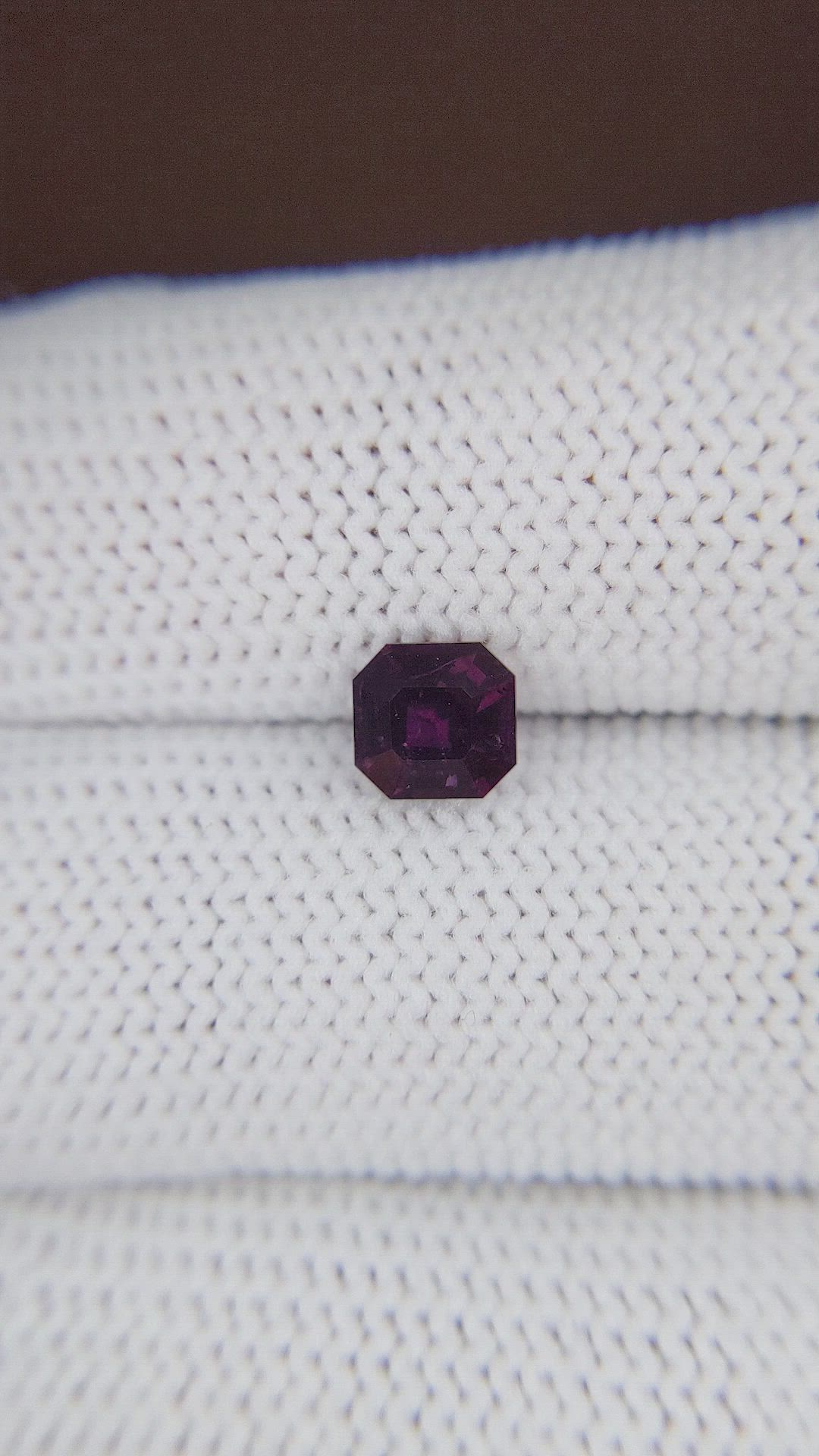
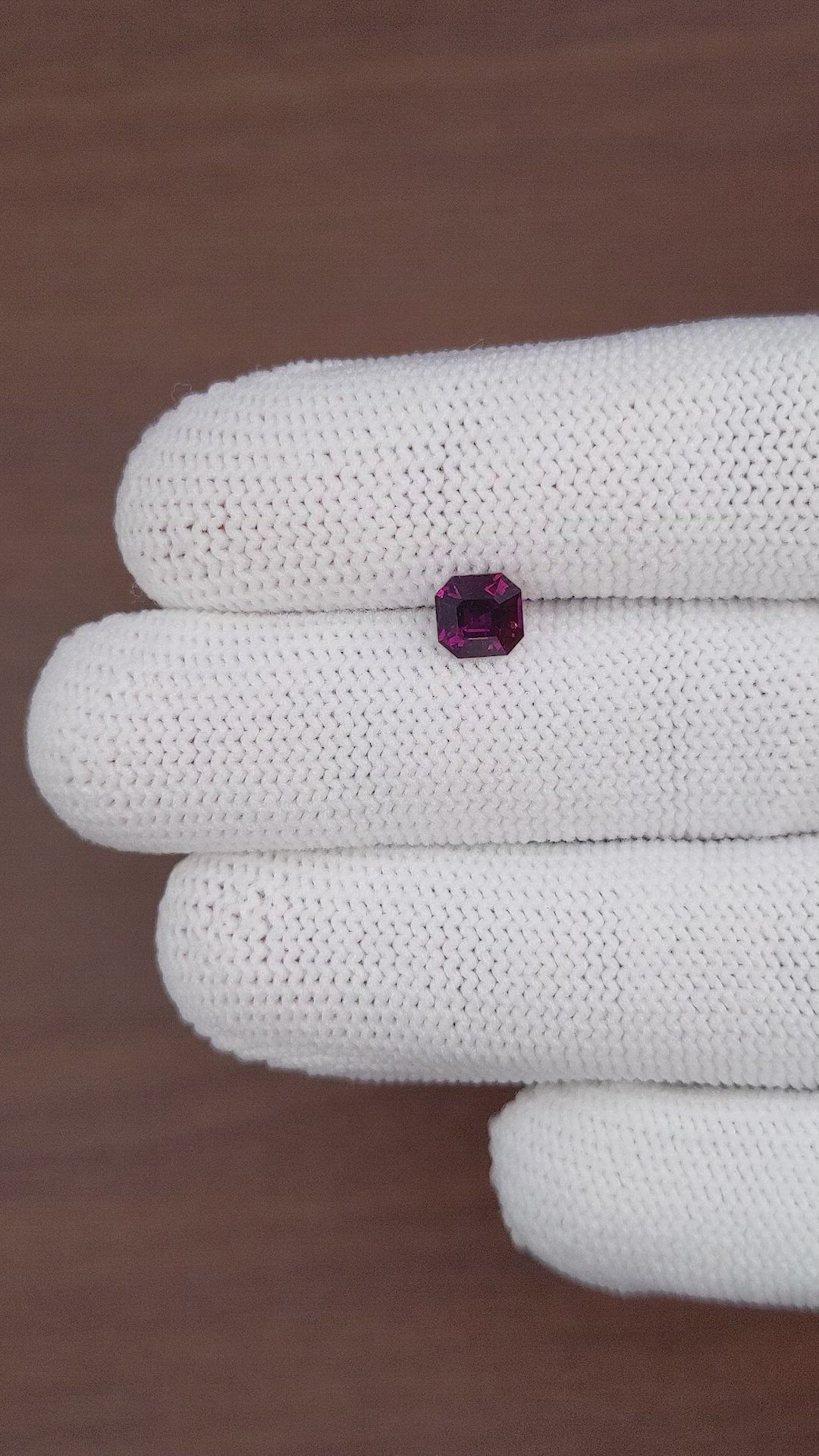
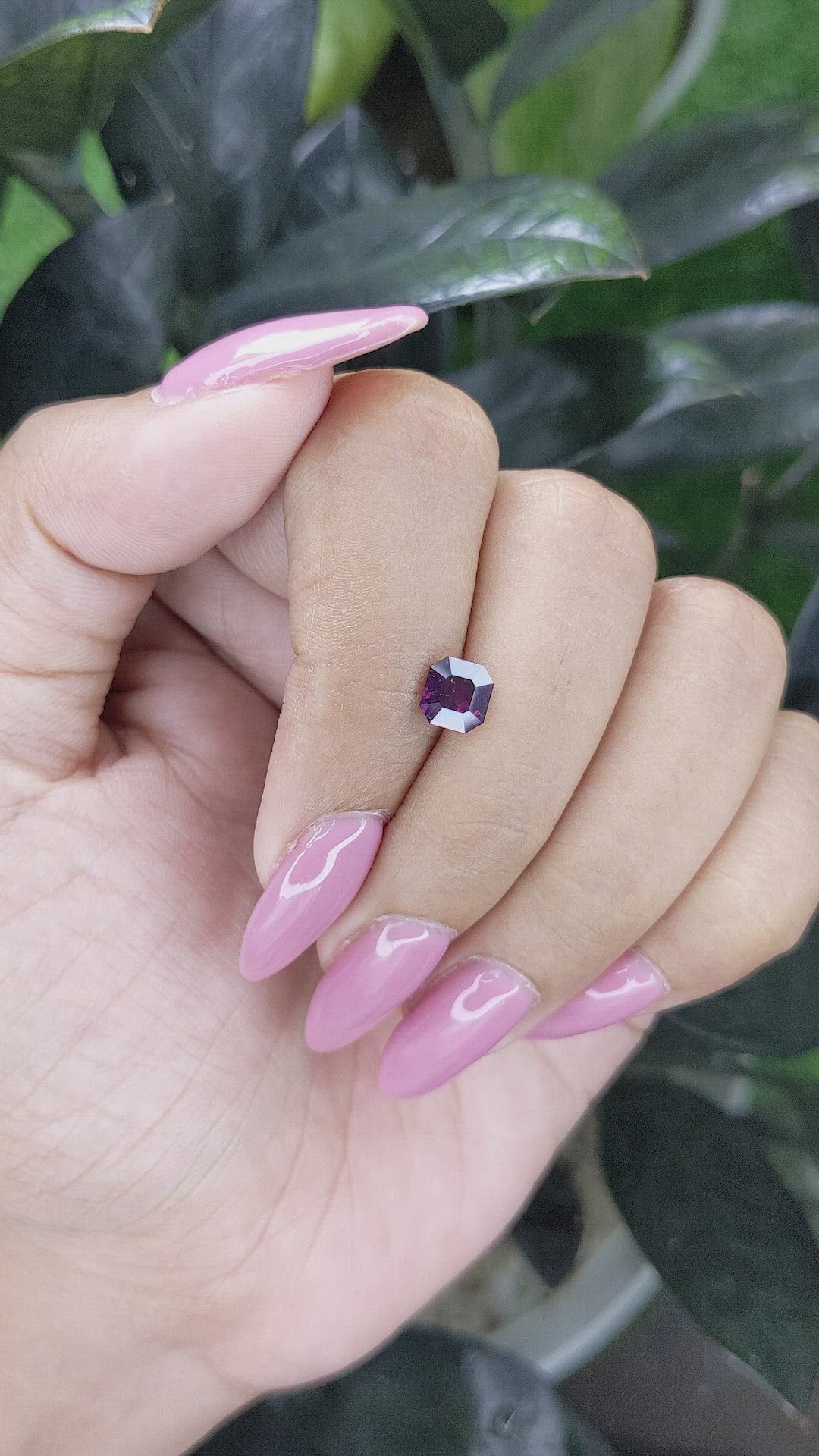
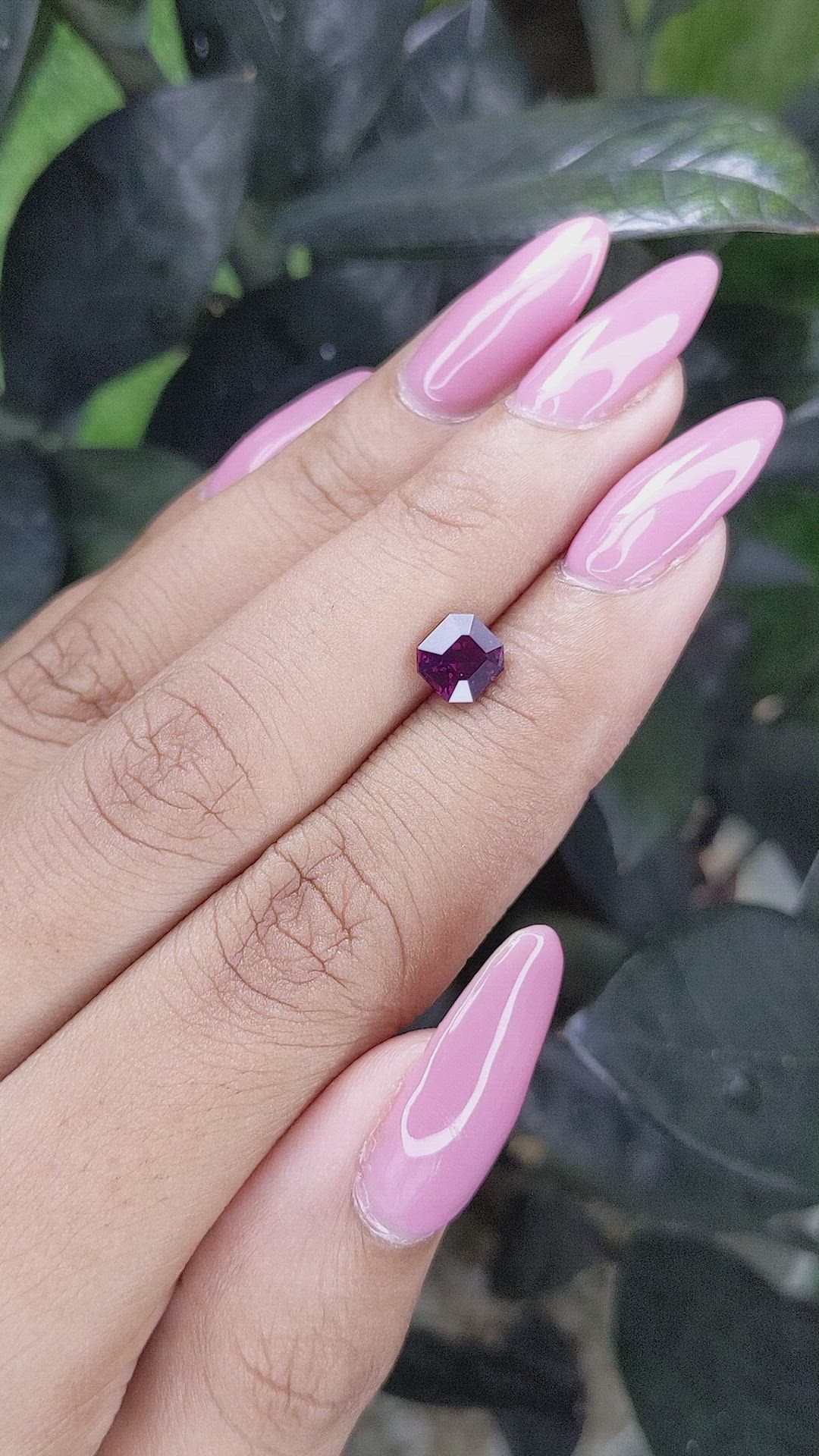



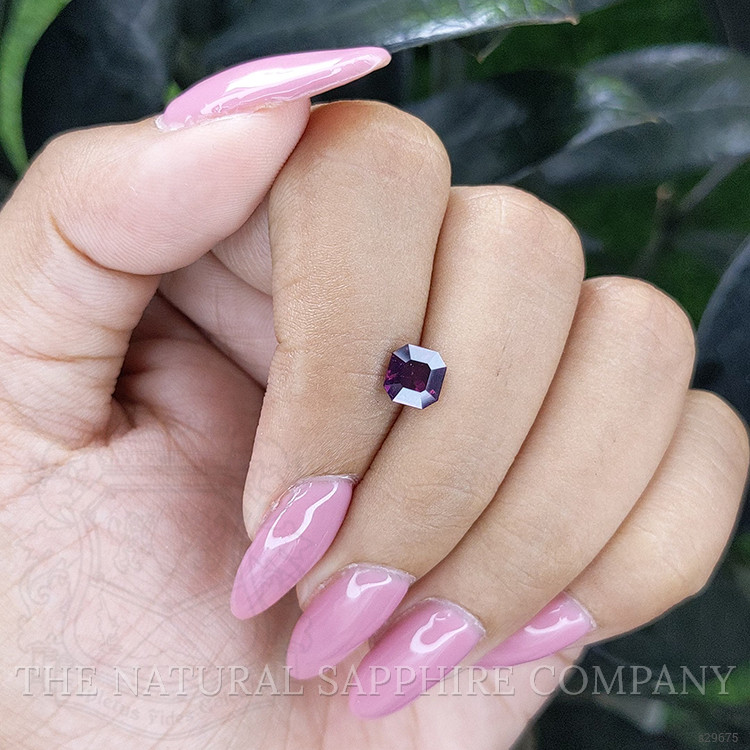


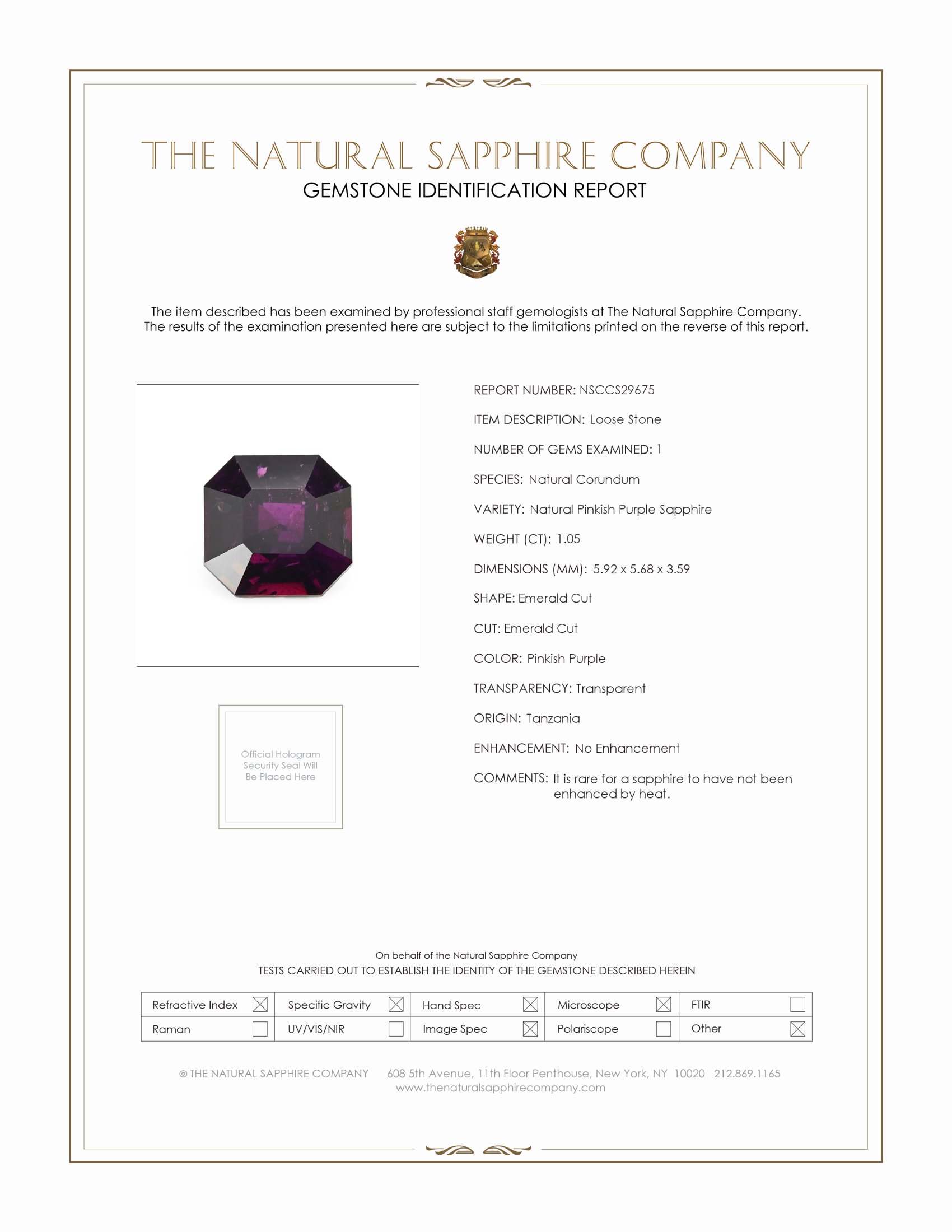

1.05 Ct. Pinkish Purple Sapphire from Tanzania
This loose stone ships by Feb 13
Item ID: | S29675 |
|---|---|
Dimensions (MM): help | Length: 5.92 Width: 5.68 Height: 3.59 |
Weight: | 1.05 Ct. |
Color: help | Pinkish Purple |
Color intensity: help | Dark |
Clarity: help | Slightly Included |
Shape: help | Emerald Cut |
Cut: | Emerald Cut |
Cutting style: | Faceted |
Enhancements: help | No Enhancement |
Origin: help | Tanzania |
Per carat price: help | $840 |
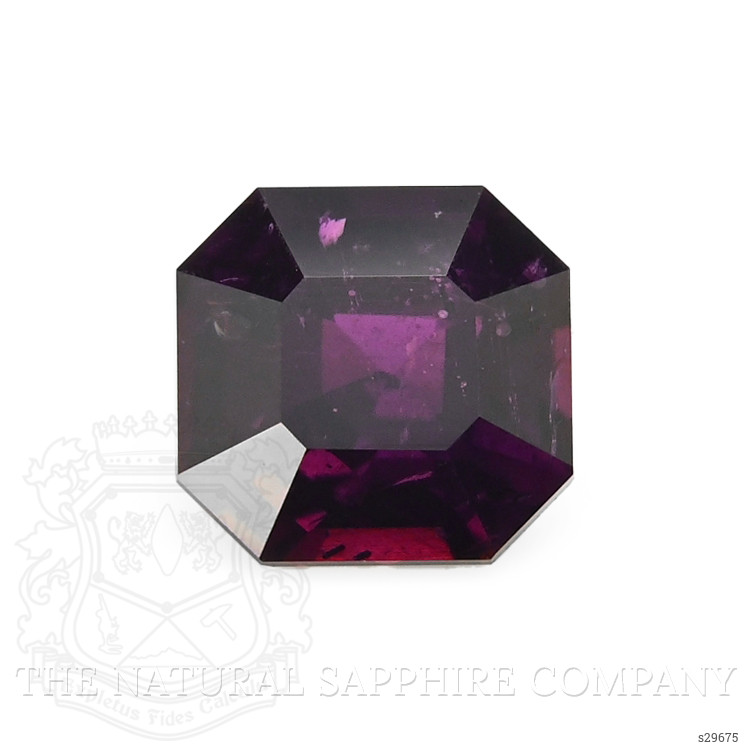
This 1.05 carat, emerald cut pinkish purple sapphire measures 5.92 by 5.68 by 3.59 millimeters, and exhibits proportions that are engineered to maximize the depth of hue while maintaining step facet brilliance. The octagonal emerald cut presents broad rectangular facets on the crown and pavilion, producing the large, flat flash planes that collectors seek in step cut sapphires. The pavilion depth relative to the average diameter is approximately sixty two percent, a proportion that favors color saturation over scintillation, and that deep profile contributes to the stone being graded with dark color intensity. The spacing and alignment of the step facets are executed with careful symmetry, the table plane is centered and balanced with respect to the girdle, and the facet junctions show crisp meet points, all of which are complemented by an excellent polish that yields mirror like facet surfaces and strong facet contrast under directional light. This combination of weight, shape, and cutting philosophy results in a compact one carat jewel that reads with concentrated pinkish purple tones when viewed table up, and that retains visual stability when set in jewelry.
At eye level the clarity is evaluated as slightly included, and it is these internal features that provide the sapphire with an unmistakable inclusion signature. Under magnification and at practical viewing distances the stone displays an array of discrete reflective crystals, small platelets, and narrow healed fissures that sit primarily along growth planes. These inclusions are not randomly distributed, they are arranged in thin, planar orientations and in localized clusters that interact with the step facets to produce characteristic flashes of warm pink and cool violet as the gem is tilted. There is also fine, localized zoning that registers as deeper magenta patches surrounded by cooler purple fields, a pattern that becomes more pronounced through the flat table and along the pavilion steps. Where the facet planes intersect these internal features, light is partially blocked and redirected, producing small windows and pinpoint glints that read as deliberate texture rather than as clouding. The net effect is a unique internal fingerprint, a topology of reflective points and planar features that can be used to confirm identity and provenance during examination, and that endows the stone with visual complexity and dynamic color movement despite its step cut geometry.
From a treatment and origin perspective this sapphire is natural and has received no enhancement, a factor that preserves both its optical integrity and its collector value. The combination of dark color intensity, pinkish purple hue, and the particular inclusion palette is consistent with material sourced from Tanzania, and The Natural Sapphire Company confirms the stone as Tanzanian origin based on our sourcing and gemological review. The cutter elected an emerald cut approach to retain weight from the original rough, to emphasize color saturation, and to create the internal flash planes that allow the inclusion signature to be observed and appreciated. Craftsmanship notes include a well finished girdle that provides secure setting options, a pavilion angle set to emphasize depth of tone, and facet junctions that minimize windowing while preserving lustrous polish. Because the stone is untreated, light behavior is wholly a result of its inherent crystal structure, the map of internal inclusions, and the precision of the cutting work, making it particularly appealing to connoisseurs who prioritize natural color and structural authenticity.
For practical design considerations the stone performs best in settings that allow light to enter through the crown and to reflect from the pavilion planes, settings that avoid heavy metal backing which would deaden the subtle pink flashes. Metals that offer a warm contrast to the pinkish purple bodycolor are ideal when the intention is to enhance the pink component, while cooler white metals will emphasize the purple component, both outcomes achievable without altering the gem itself. The emerald cut silhouette and the one carat weight make this sapphire well suited to a refined solitaire, a halo design that frames the step facets with small melee for additional brilliance, or a bespoke two stone composition where the inclusion signature can be showcased as a focal detail. The stone is presented and supported by The Natural Sapphire Company, with documentation of weight, dimensions, clarity grade, polish grade, enhancement status, and country of origin, ensuring that collectors and designers receive full disclosure alongside a gem that carries a distinct and identifiable internal character.


