
- Stone13
- Reports4
-oval-padparadscha-sapphire-3.0300-cts-s31853-1.jpg?d=200x200&v=20251020170541)
-oval-padparadscha-sapphire-3.0300-cts-s31853-lifestyleimage-1.jpg?d=200x200&v=20251022000337)
-oval-padparadscha-sapphire-3.0300-cts-s31853-lifestyleimage-2.jpg?d=200x200&v=20251022000337)

-oval-padparadscha-sapphire-3.0300-cts-s31853-1.jpg?d=750x750&s=nsc&v=20251020170541)
-oval-padparadscha-sapphire-3.0300-cts-s31853-lifestyleimage-1.jpg?d=750x750&s=nsc&v=20251022000337)
-oval-padparadscha-sapphire-3.0300-cts-s31853-lifestyleimage-2.jpg?d=750x750&s=nsc&v=20251022000337)

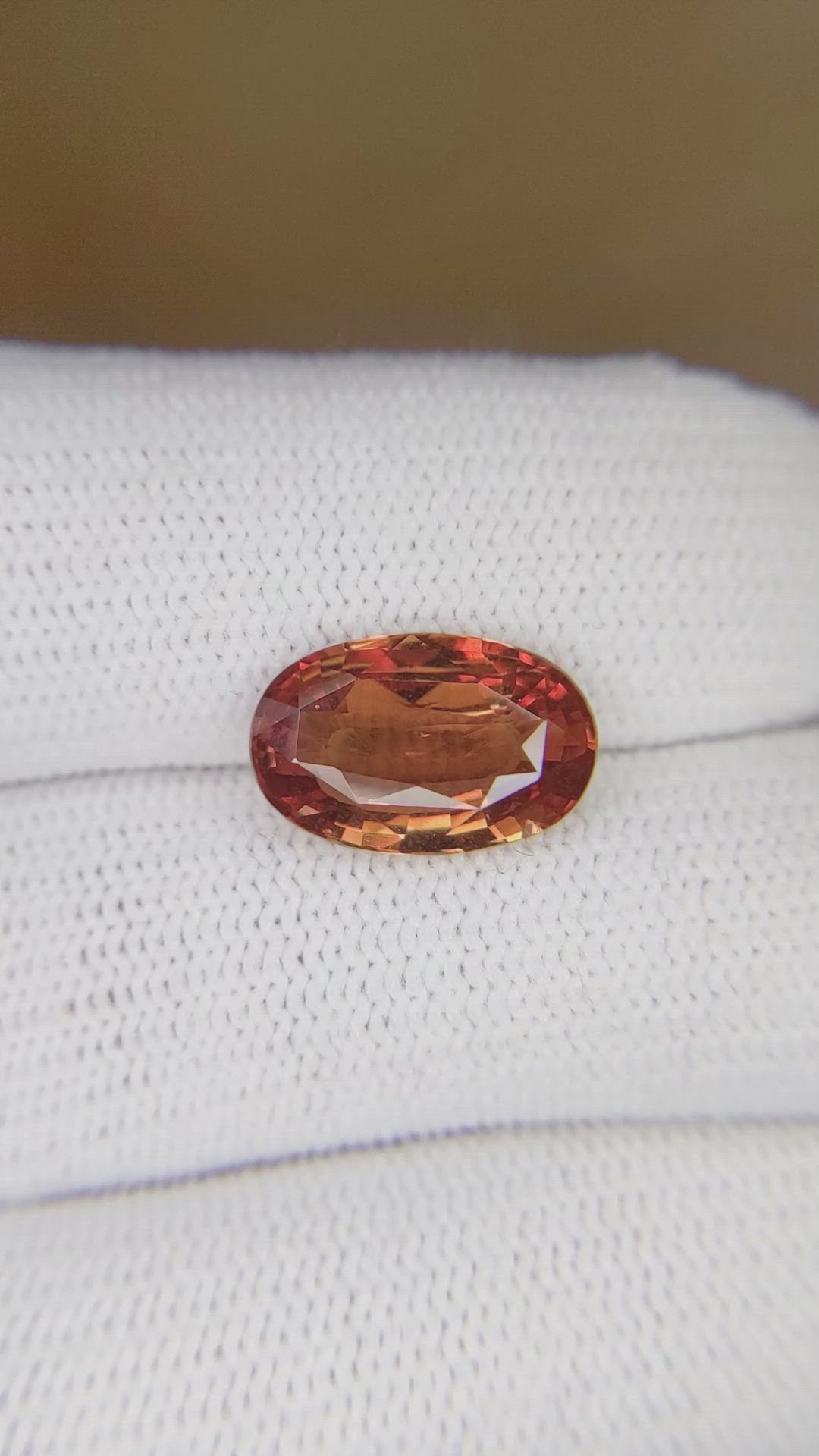
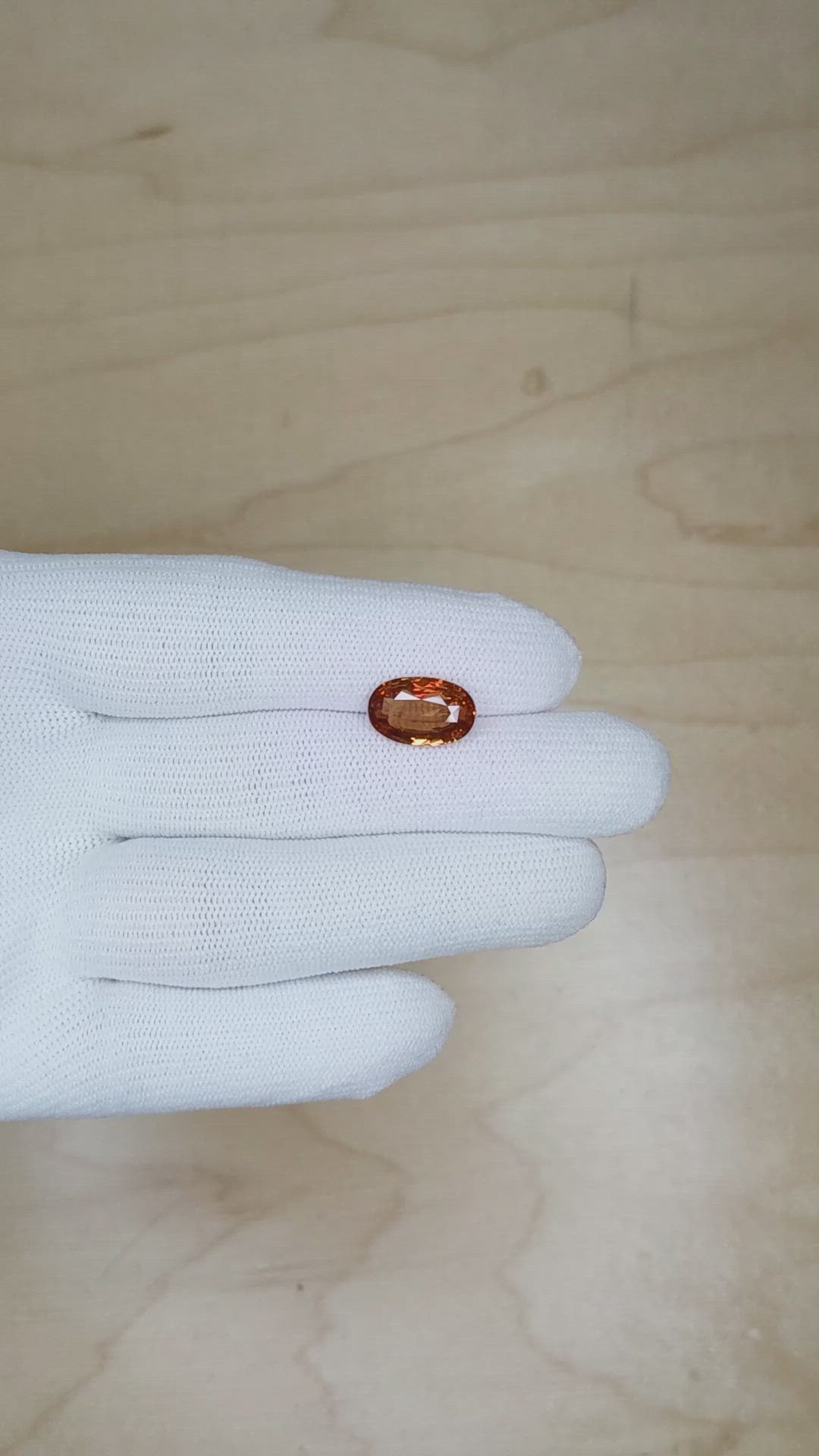
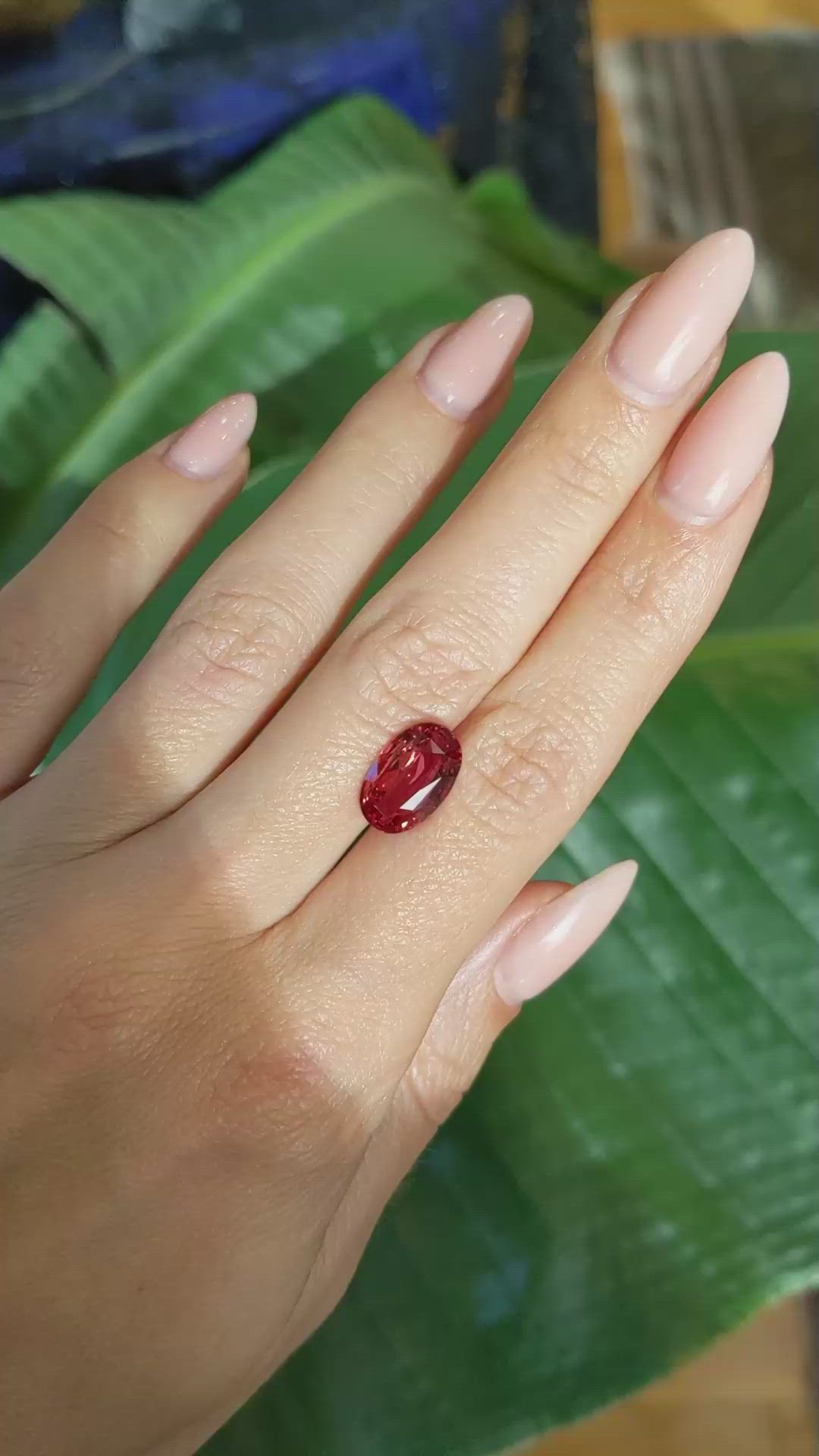
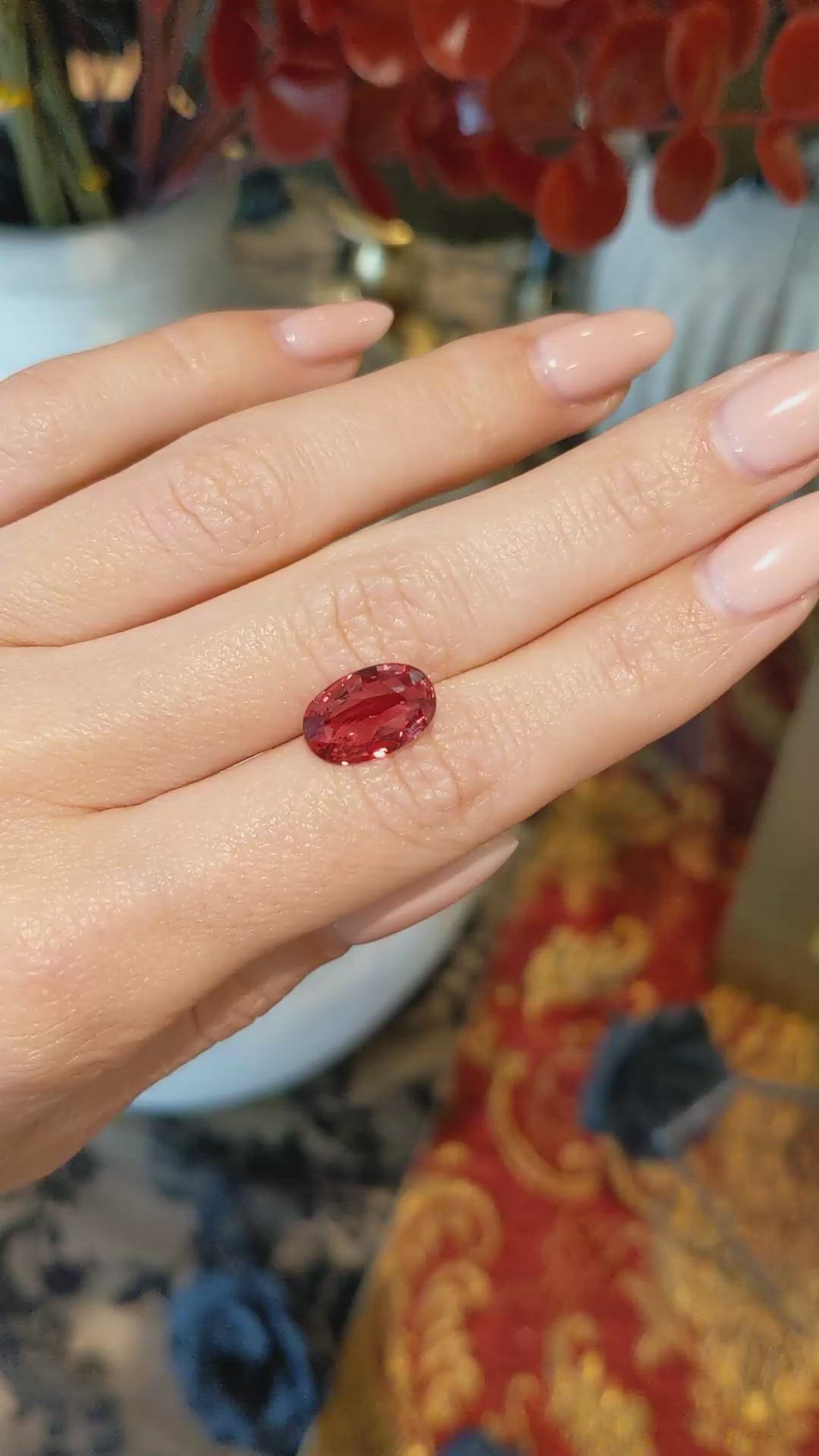
4.01 Ct. Padparadscha Sapphire from Ceylon (Sri Lanka)
This loose stone is available to ship now
Item ID: | S31853 |
|---|---|
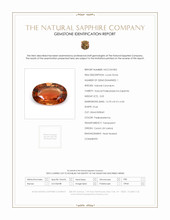
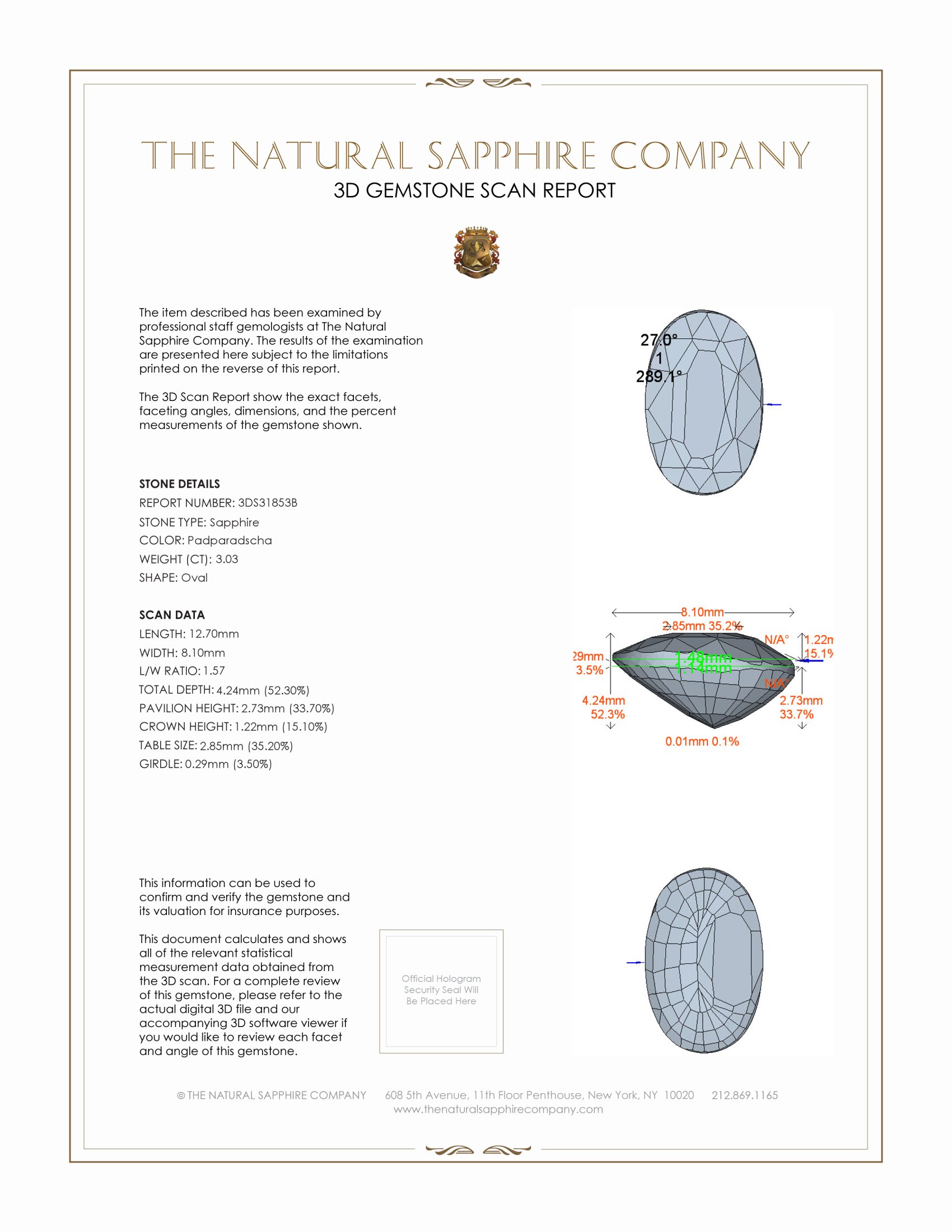
Dimensions (MM): help | Length: 12.7 Width: 8.1 Height: 4.24 |
Weight: | 4.01 Ct. |
Color: help | Padparadscha |
Color intensity: help | Intense |
Clarity: help | Very Slightly Included |
Shape: help | Oval |
Cut: | Mixed Brilliant |
Cutting style: | Faceted |
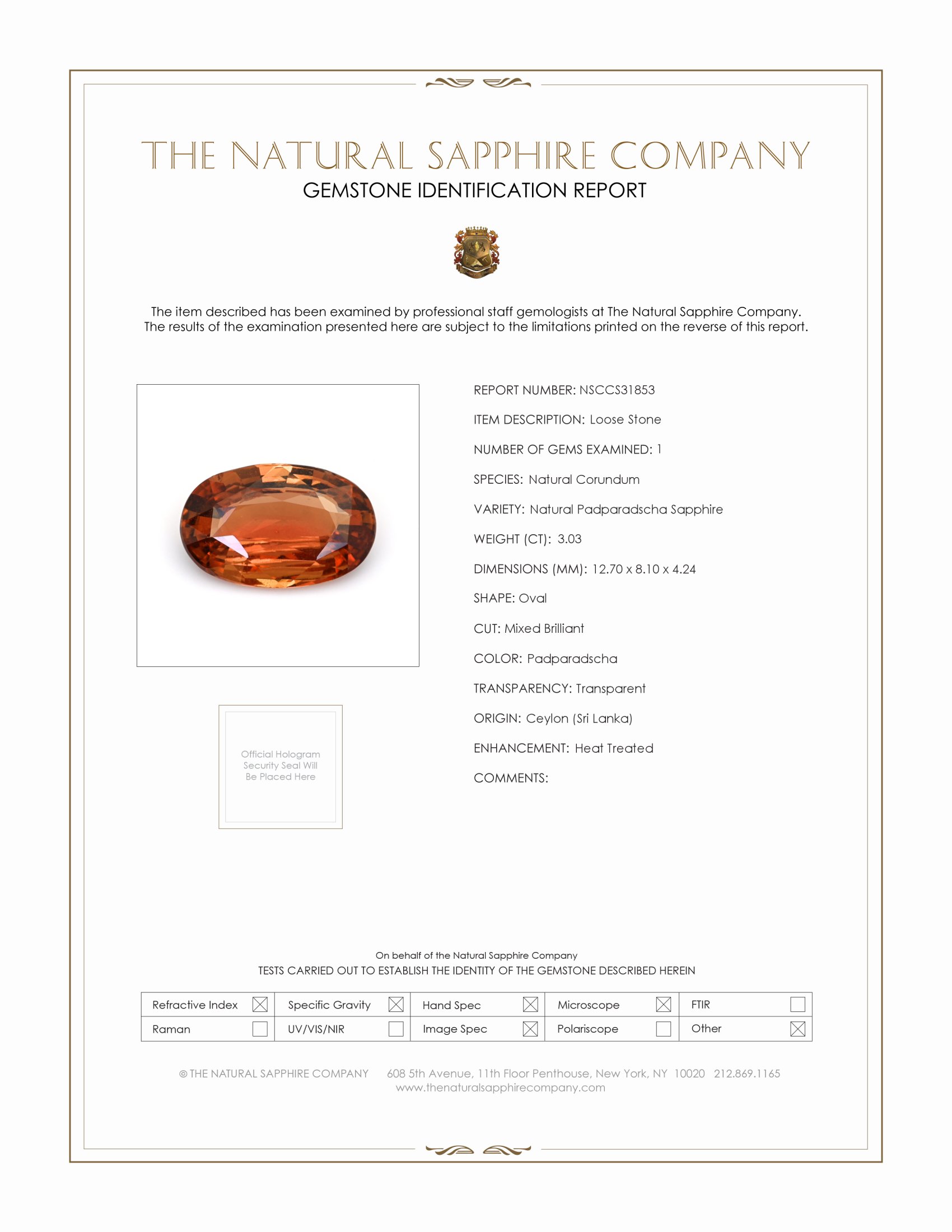
Enhancements: help | Heat Treated |
Origin: help | Ceylon (Sri Lanka) |
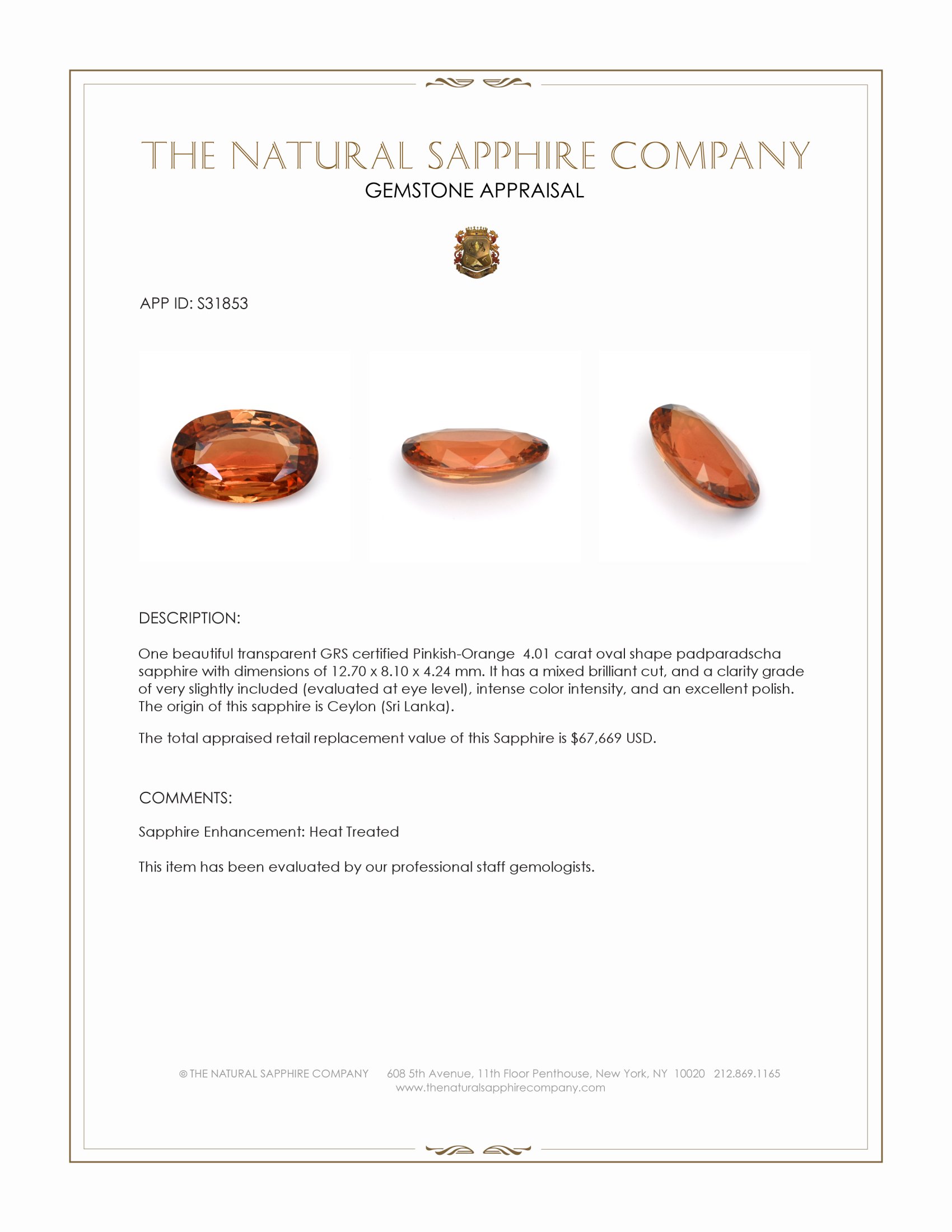
Per carat price: help | $16,875 |
There are few gemstones that carry the quiet authority of age and place, and this padparadscha sapphire speaks with that rare voice, a voice that recalls the long and storied gem traditions of Ceylon, Sri Lanka, where sapphires have been prized for millennia. From the ancient trading routes that connected the Indian Ocean to the courts of kings, stones of this colour were admired not only for their beauty, but for their association with the rising sun, with renewal, and with balance. The warm, pinkish orange hue of padparadscha sits between sunset and bloom, a colour that has been celebrated in poetry and in religion across South Asia, and it has always been selected for the pieces meant to be worn for generations. At The Natural Sapphire Company we honor that lineage, sourcing stones that embody the cultural memory and artisanal skill that made these gems legendary, and presenting them in a way that allows their heritage to be worn and continued.
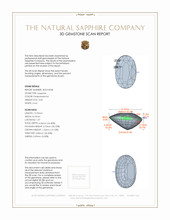
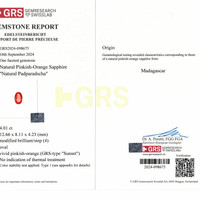
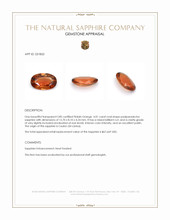
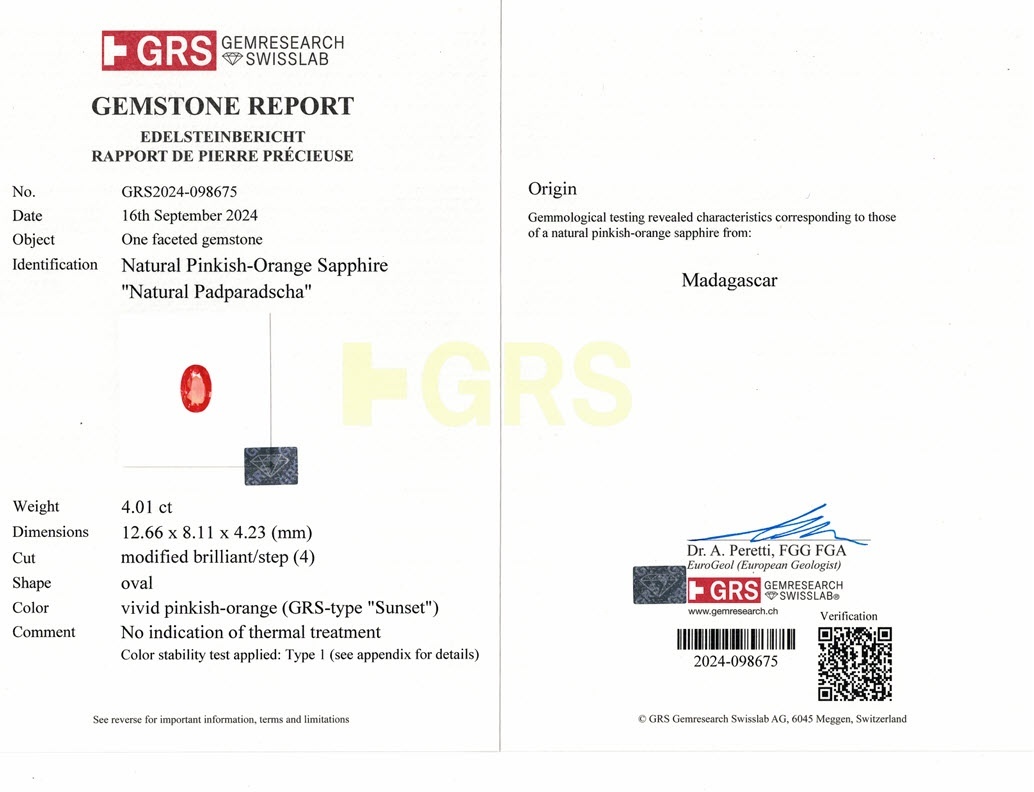
This particular padparadscha sapphire is a transparent, GRS certified treasure that weighs 4.01 carats, with measurements of 12.70 by 8.10 by 4.24 millimeters, and a refined oval shape that recalls classical seal stones and signet traditions. It has been fashioned with a mixed brilliant cut that captures and returns light with lively sophistication, and it carries a clarity grade of very slightly included, evaluated at eye level, meaning the stone appears clean and luminous to the viewer while retaining the natural character that speaks of its earthbound origin. The colour intensity is described as intense, and the polish has been rendered to an excellent standard, producing a surface that reflects centuries of lapidary refinement. The sapphire has been heat treated according to traditional, accepted enhancement techniques that have been used to reveal the finest expressions of a material without altering its essential identity. Its origin is Ceylon, Sri Lanka, a provenance that connects this gem to the oldest chapters of sapphire lore, and the GRS certification provides independent assurance of its attributes for collectors and connoisseurs.
Tradition has long dictated the ways in which such a stone is set and celebrated, and the options are as rich in history as the gem itself. Oval stones of this size and hue have historically been placed at the center of signet rings and amulets intended to bring warmth and clarity to the wearer, and they were often framed by simple gold settings that highlighted the gem, rather than competing with it. In period pieces from the Kandyan court to European art jewelry, a padparadscha was allowed to breathe within its mount, so that its inner fire could declare itself with minimal interruption. Modern interpretations that echo that heritage are equally compelling, including low bezel settings that protect the girdle and echo the protective talismans of old, and classical four or six claw settings that lift the stone and allow the mixed brilliant facets to catch candlelight and sunlight alike. For those who favour a more ornate path, a halo of warm yellow diamonds or old mine cuts can create a dialogue between eras, suggesting a jewel that might have belonged to a matriarch, handed down with stories and signatures added to its provenance.
Owning this padparadscha is to accept a responsibility to be its next steward, and The Natural Sapphire Company offers more than the gem itself, we offer guidance on honoring its lineage, with bespoke mounting services that respect traditional proportions and with documentation that traces its characteristics for future generations. The GRS certificate accompanies the stone, providing an authoritative record of its weight, measurements, cut, clarity, colour intensity, enhancement and origin, so that your possession is as transparent in its history as the gem is in its appearance. Care recommendations are straightforward, reflecting centuries of handling by those who treasured such stones, clean gently with warm water and mild soap, avoid extreme thermal shock and abrasive chemicals, and have bespoke settings checked periodically to keep the gem secure. For collectors the combination of rarity, origin, and the stone attributes make this padparadscha a meaningful addition, for those creating an heirloom it is a beginning to a narrative that can be inscribed into metal and memory. If you seek a jewel that honors tradition and carries that tradition forward, this padparadscha from Ceylon is ready to become a chapter in your family story, and The Natural Sapphire Company stands ready to assist in creating a setting that will allow this stone to be worn, admired, and preserved for the generations to come.


