
- Stone11
- Reports4
-emeraldcut-padparadscha-sapphire-1.6800-cts-s14144-1.jpg?d=200x200&v=20240620114136)
-emeraldcut-padparadscha-sapphire-1.6800-cts-s14144-lifestyleimage-1.jpg?d=200x200&v=20240623035217)


-emeraldcut-padparadscha-sapphire-1.6800-cts-s14144-1.jpg?d=750x750&s=nsc&v=20240620114136)
-emeraldcut-padparadscha-sapphire-1.6800-cts-s14144-lifestyleimage-1.jpg?d=750x750&s=nsc&v=20240623035217)



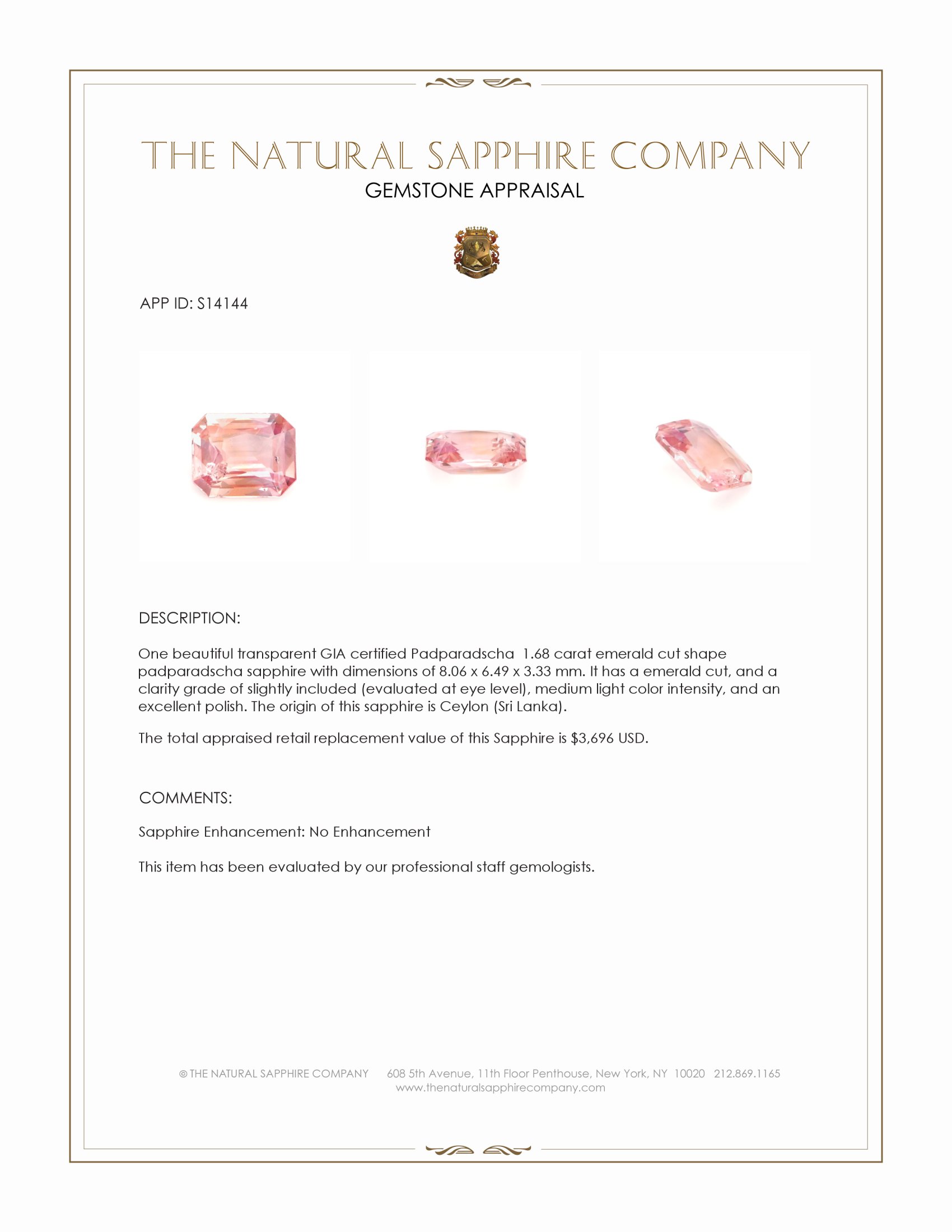
1.68 Ct. Padparadscha Sapphire from Ceylon (Sri Lanka)
This loose stone is available to ship now
Item ID: | S14144 |
|---|---|
Dimensions (MM): help | Length: 8.06 Width: 6.49 Height: 3.33 |
Weight: | 1.68 Ct. |
Color: help | Padparadscha |
Color intensity: help | Medium Light |
Clarity: help | Slightly Included |
Shape: help | Emerald Cut |
Cut: | Emerald Cut |
Cutting style: | Faceted |
Enhancements: help | No Enhancement |
Origin: help | Ceylon (Sri Lanka) |
Per carat price: help | $2,200 |
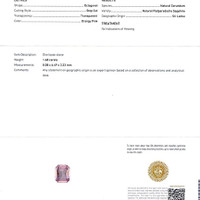
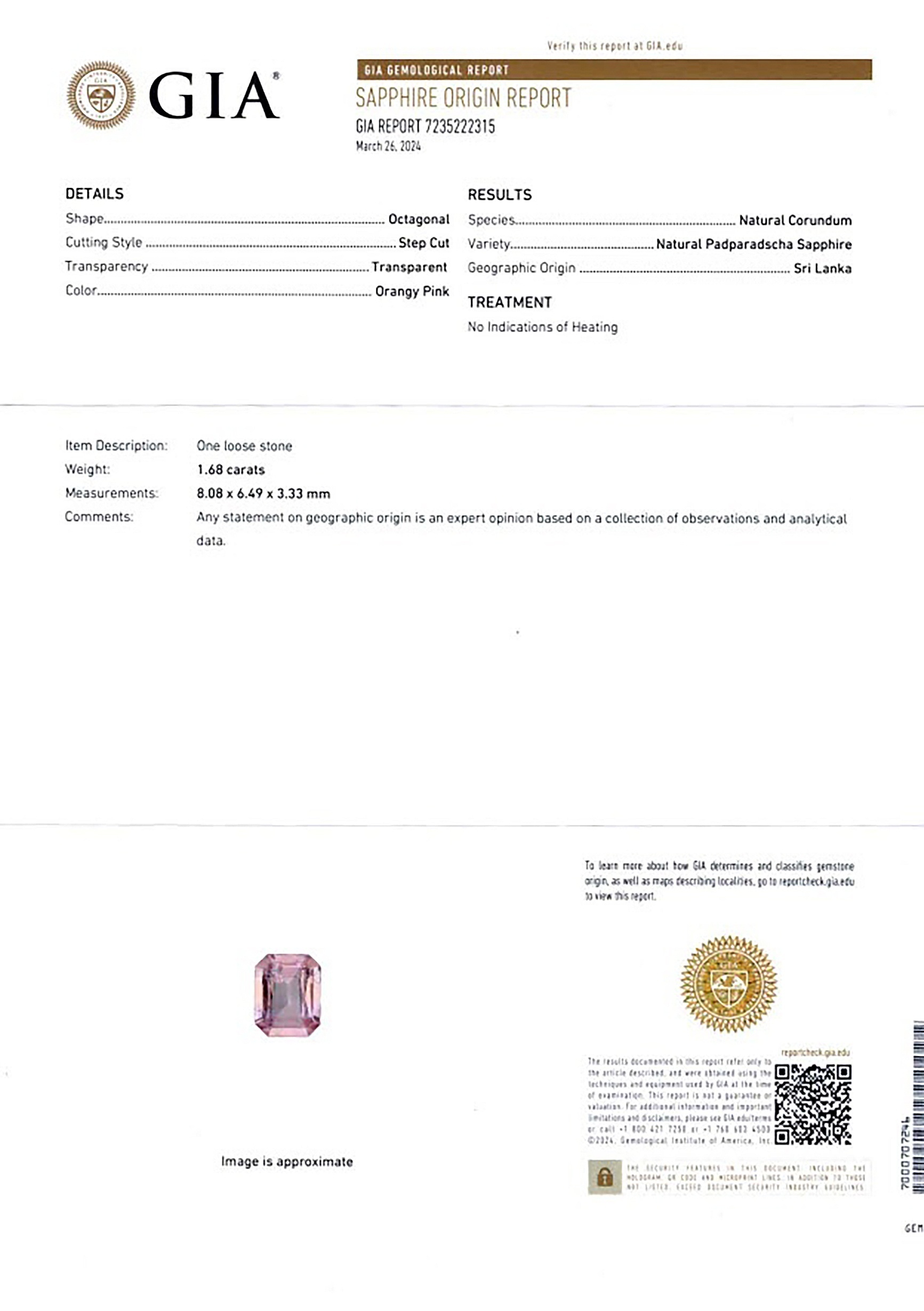
This padparadscha sapphire is a precisely documented gemstone, GIA certified, weighing 1.68 carats, with an emerald cut measuring 8.06 by 6.49 by 3.33 millimeters, which yields an approximate depth of 41 percent. The stone is transparent, with a clarity grade of slightly included when evaluated at eye level, and it displays a medium light color intensity typical of classic Ceylon origin sapphires. The polish has been graded excellent, and there has been no enhancement, meaning the color and optical behavior are entirely natural and stable, consistent with the pedigree expected from a Sri Lankan padparadscha. The emerald cut was chosen to prioritize face up color and a broad, even color presentation rather than extreme scintillation, which suits this particular padparadscha, because its charm lies in the delicate balance between pink and light orange tones that are most appreciable when presented on a wide, rectangular table. The Natural Sapphire Company presents this gem as an example of how origin, cutting style, and lack of treatment combine to create an authentic and collectible padparadscha.
From a faceting and craftsmanship perspective this stone is noteworthy for the way its step facet architecture interacts with the light. Emerald cut sapphires employ parallel step facets on both the crown and the pavilion, which create controlled, mirror like flashes and broad planes of reflected color, rather than the point source scintillation produced by brilliant cuts. With the excellent polish reported on the GIA document, facet junctions are crisp and reflect light with high fidelity, producing clean, defined flashes and allowing internal structure to be read clearly. The slightly included clarity grade means that inclusions may be visible at eye level under close inspection, however the step cut tendency to compartmentalize light can localize these internal features into discrete areas, often pushing attention back to the overall color wash. Because the stone is untreated, its absorptive properties and any subtle color zoning are natural, so the observer can appreciate authentic pleochroic tendencies where different pavilion and crown facets reveal shifts between the pink and warm salmon orange components when the gem is rotated.
The light performance of this padparadscha is nuanced and variable depending on the light source, which is an important consideration for setting design and daily wear. Under daylight and full spectrum lighting, the sapphire presents its truest medium light color intensity, with the pink and orange components balanced and the broad table of the emerald cut delivering an almost tile like display of color. In cool, fluorescent environments the shorter wavelength emphasis tends to bring forward the pinker component, creating a fresher, more coral appearance. Under incandescent and warm LED sources the orange component is enhanced, giving the gem a richer, warmer salmon tone and a softer glow, because longer wavelengths are transmitted and emphasized. In direct sunlight the gem exhibits stronger contrast between the step facets, producing bold, broad flashes across the crown and an increased perception of depth, while in diffuse or low light situations the emerald cut allows the gem to maintain a pleasing, subdued glow rather than disappearing, because its open table and moderate depth maximize face up presence. When set, an open gallery and prong setting will allow the most light to enter and return, maximizing color saturation and broad flashes, whereas a heavy bezel will restrict transmission and mute the stone. For metal pairing, warmer alloys such as rose gold or yellow gold will visually enhance the orange component and harmonize with the padparadscha tone, while white metals like platinum or white gold will create a contrasting backdrop that emphasizes the pink aspect and the gem clarity. The Natural Sapphire Company recommends considering a low profile prong or four corner mounting to preserve the emerald cut geometry and to allow the natural, untreated color to be viewed in a variety of lighting conditions.


