
- Stone12
- Reports3
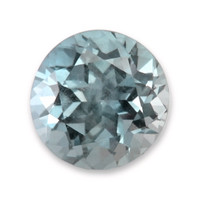
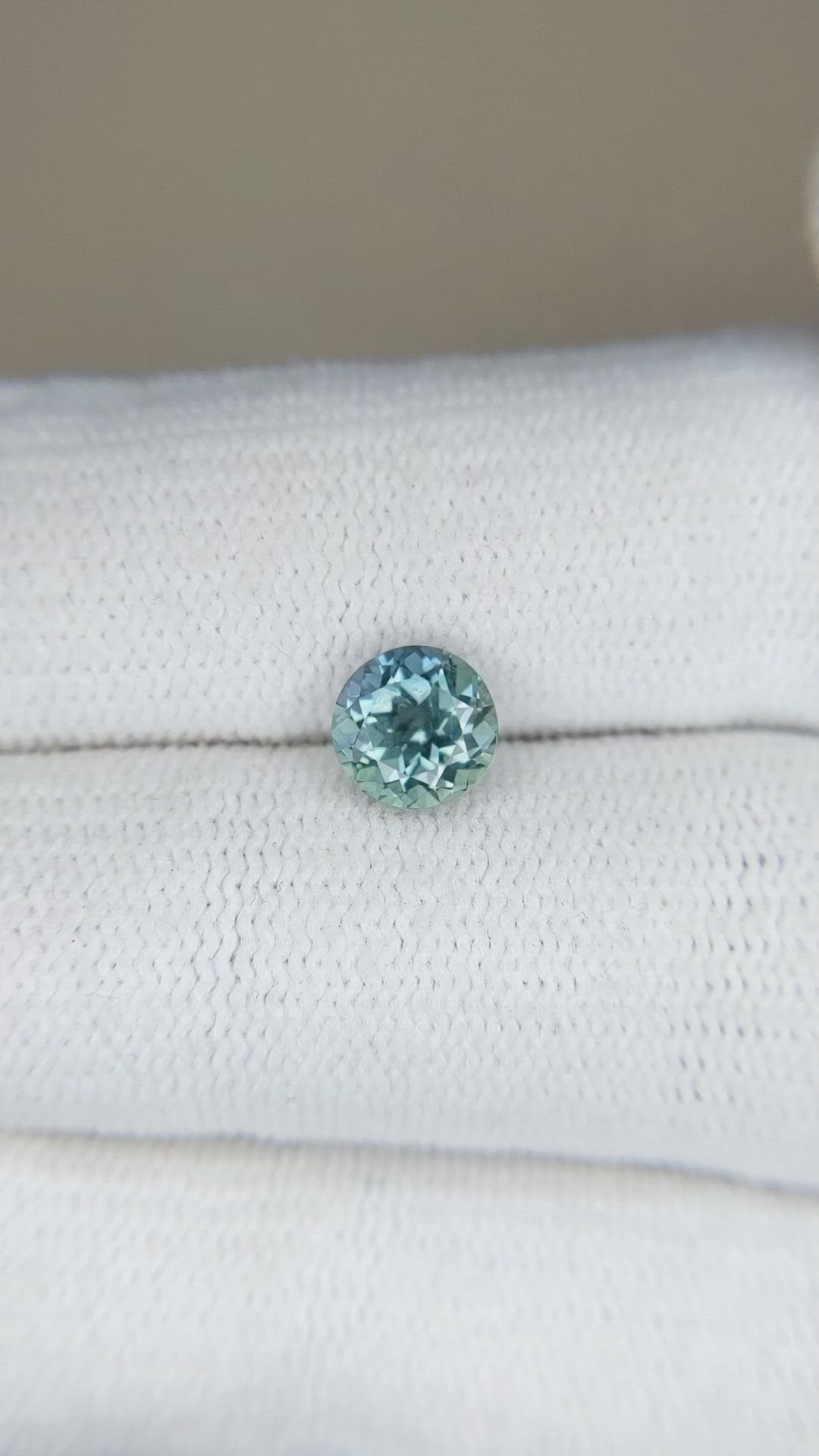
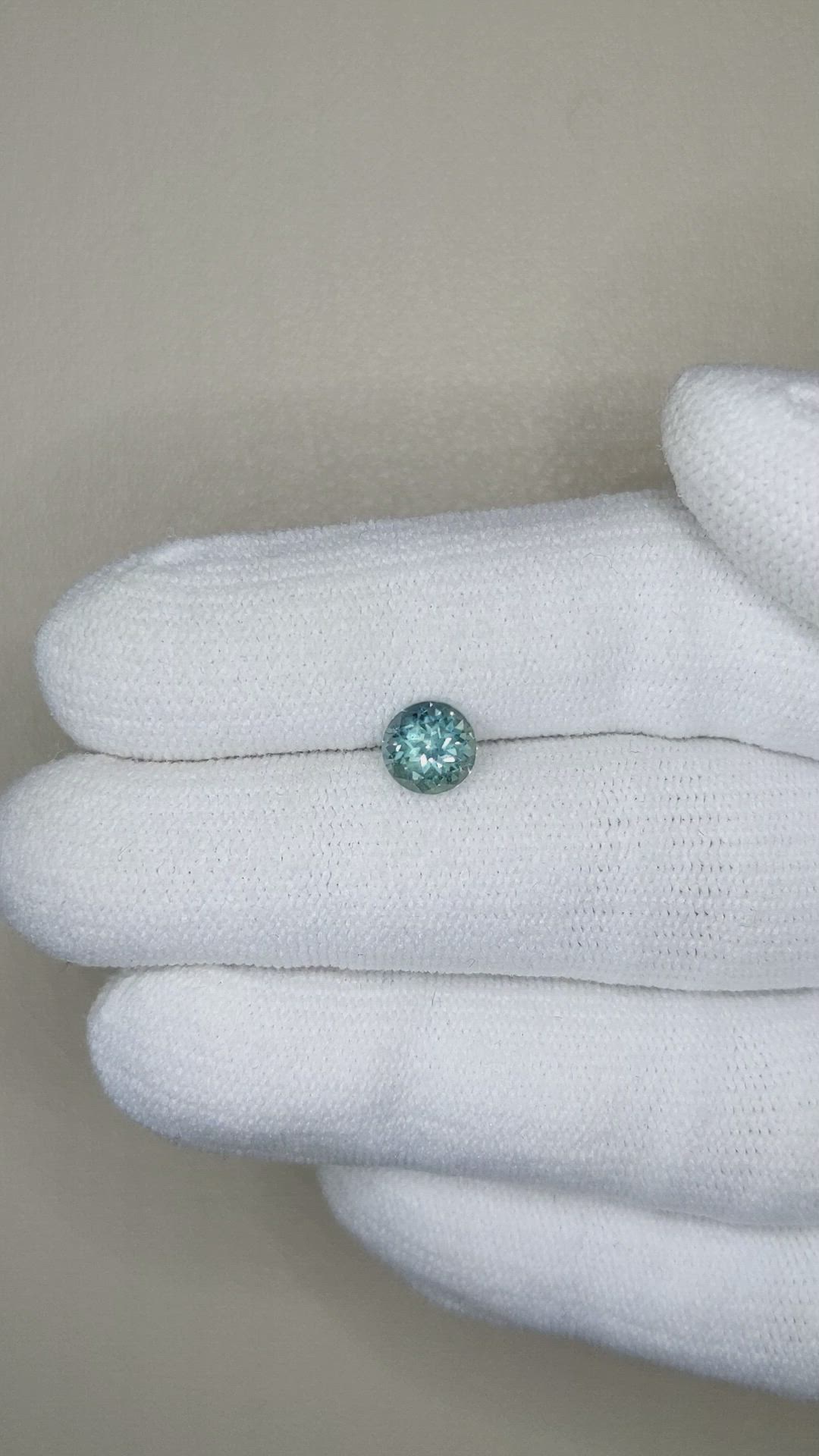
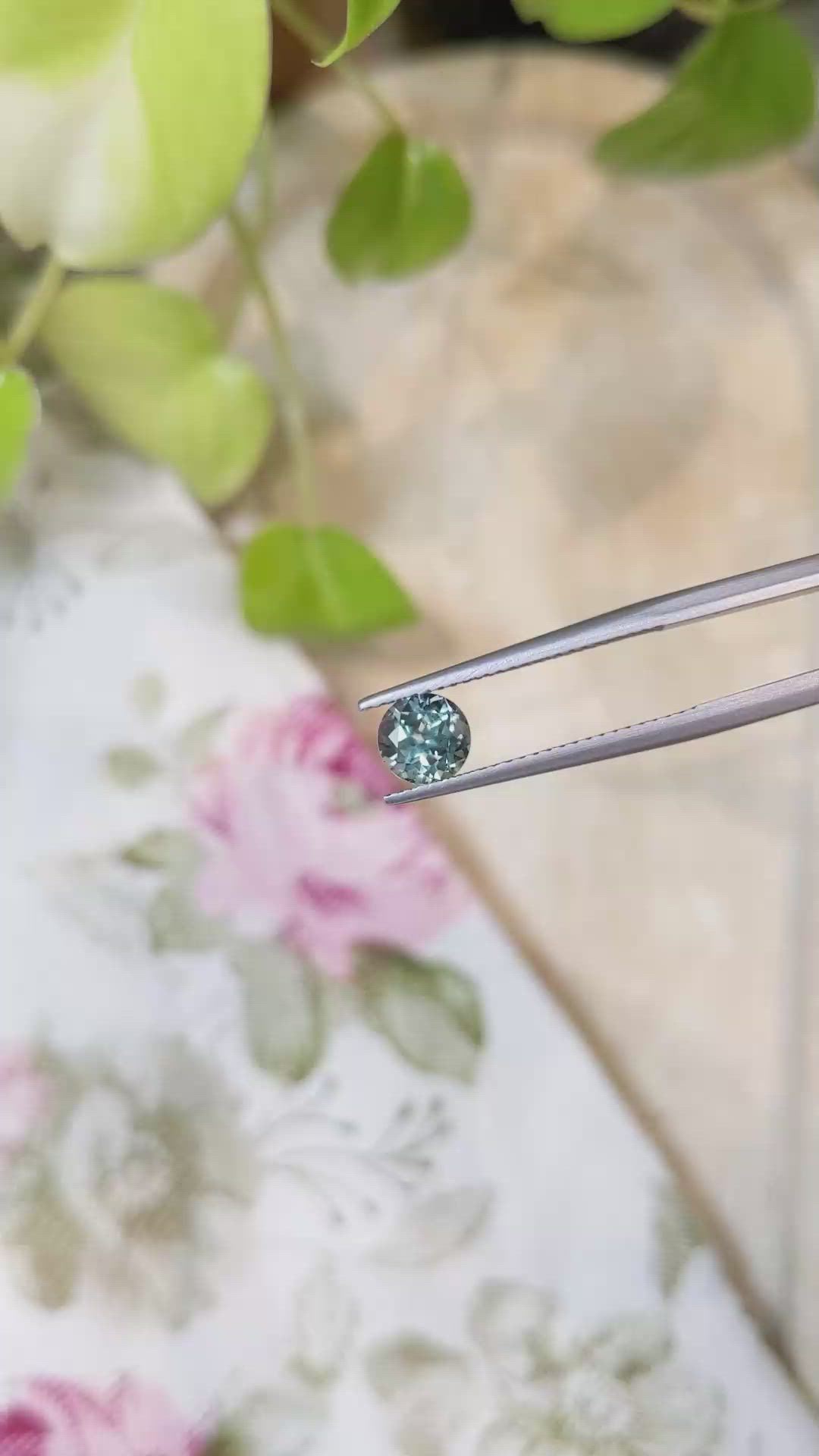
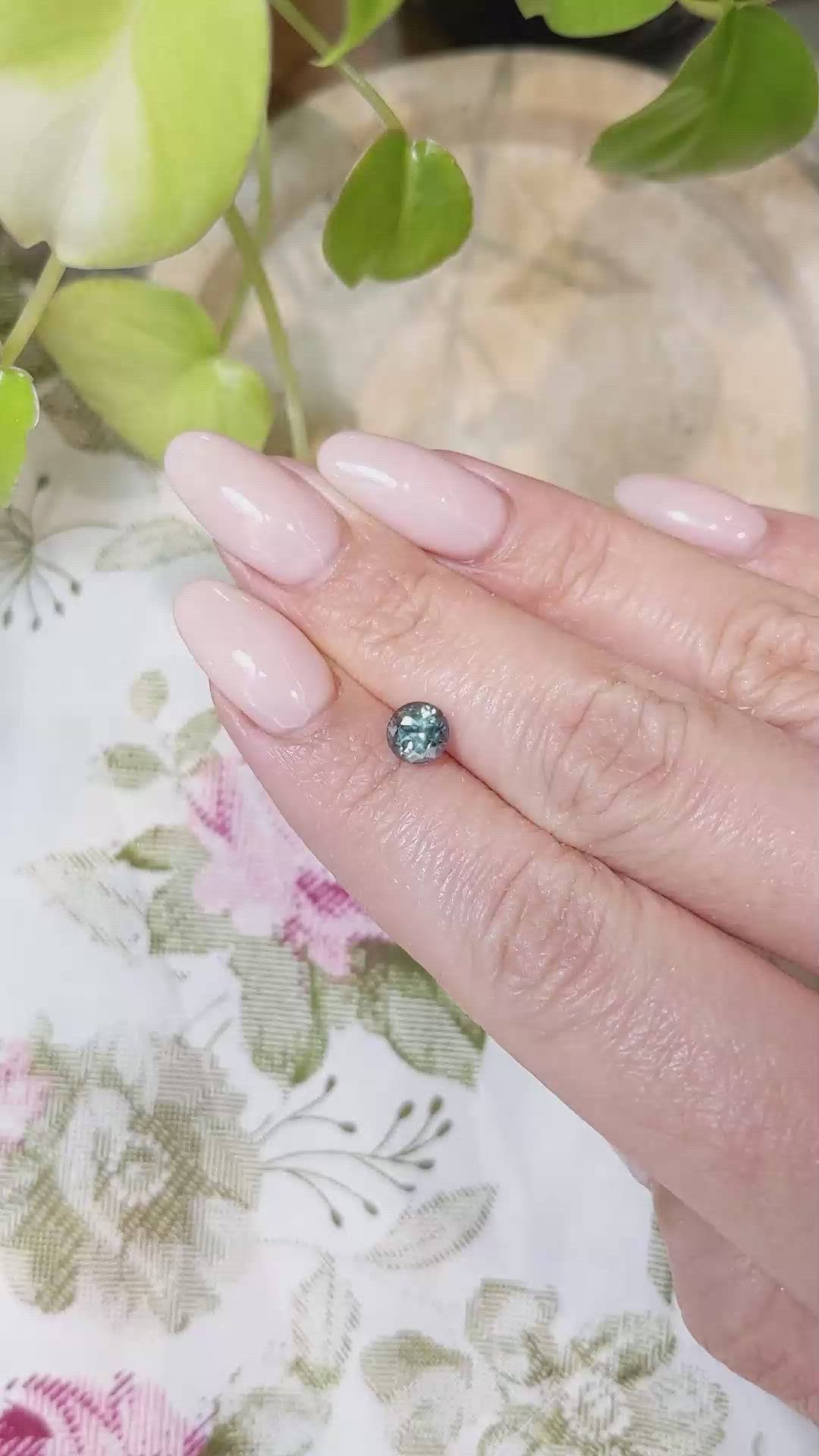

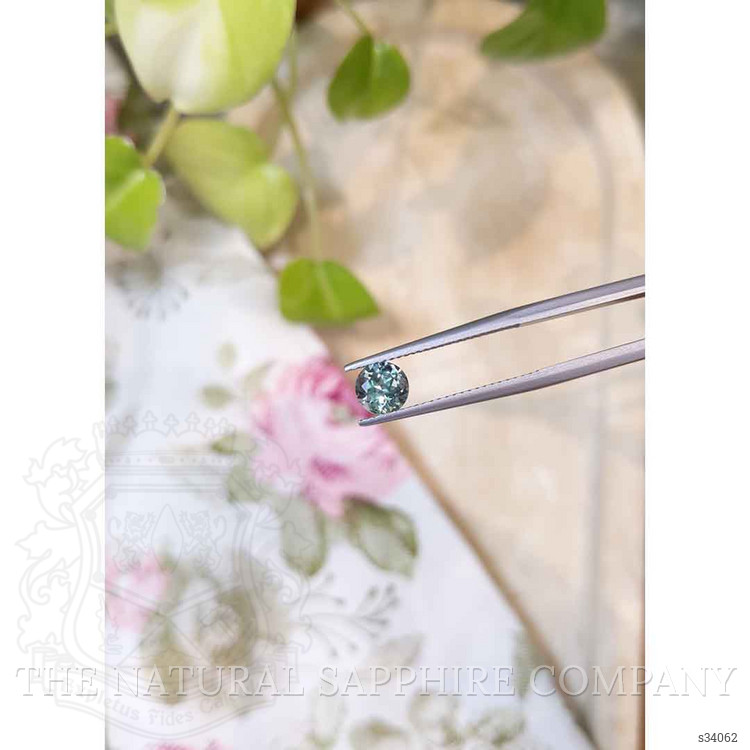

1.23 Ct. Bluish Green Sapphire from Montana
This loose stone is available to ship now
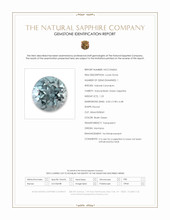
Item ID: | S34062 |
|---|---|
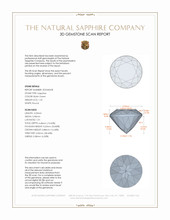
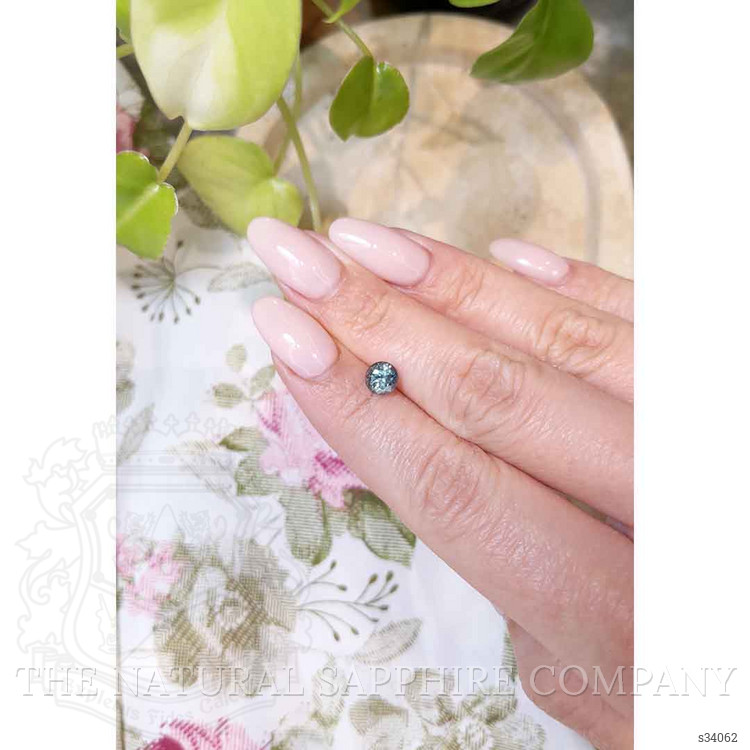
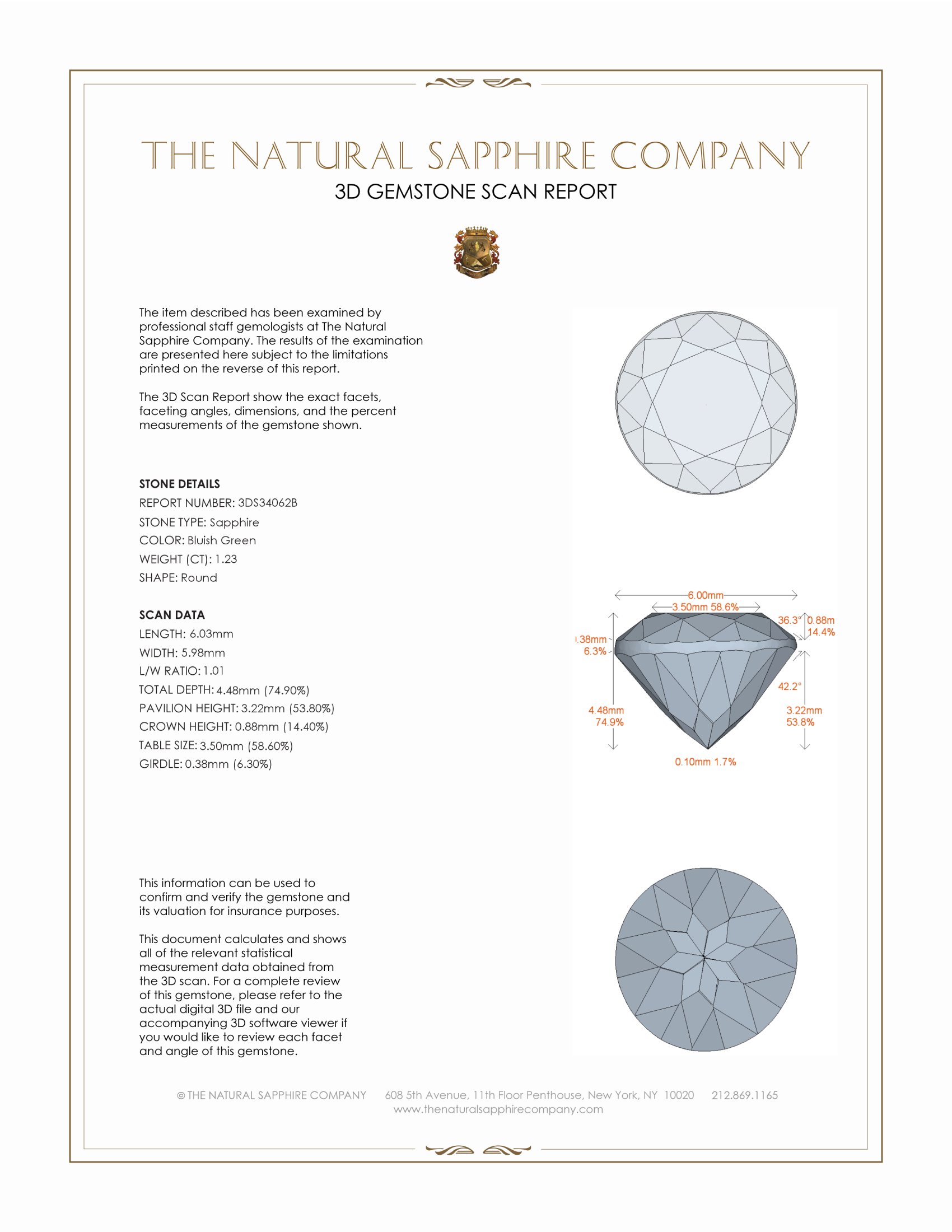
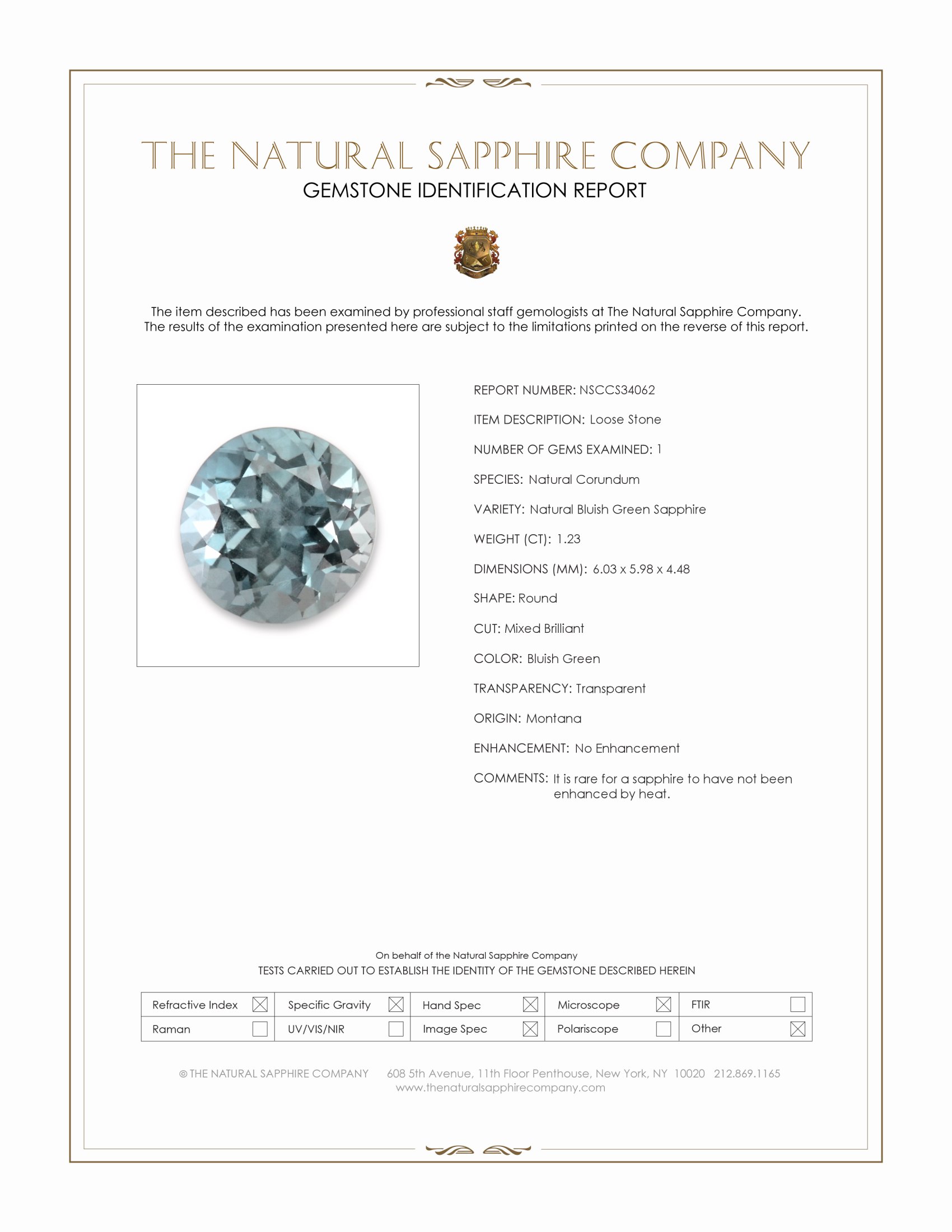
Dimensions (MM): help | Length: 6.03 Width: 5.98 Height: 4.48 |
Weight: | 1.23 Ct. |
Color: help | Bluish Green |
Color intensity: help | Medium |
Clarity: help | Very Slightly Included |
Shape: help | Round |
Cut: | Mixed Brilliant |
Cutting style: | Faceted |
Enhancements: help | No Enhancement |
Origin: help | Montana |
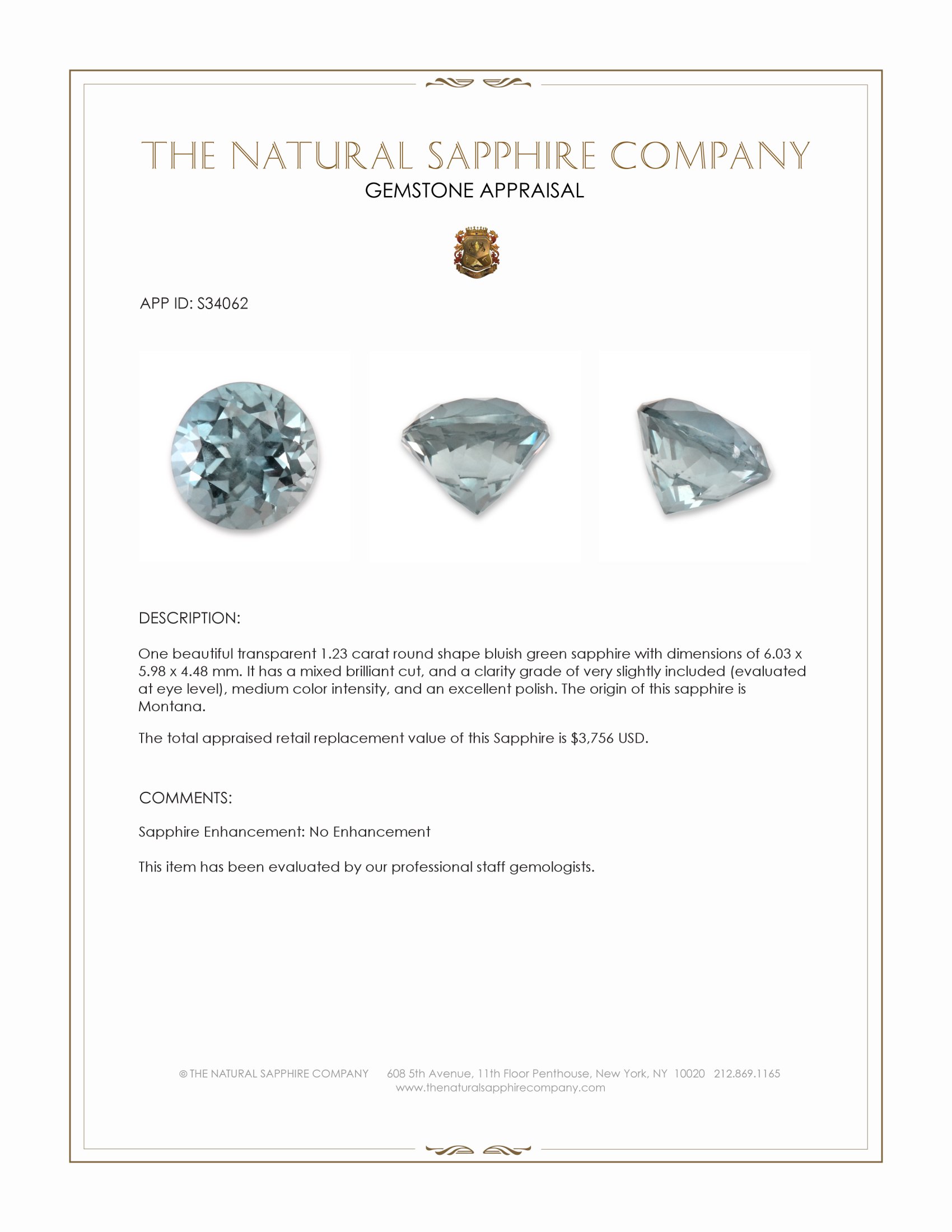
Per carat price: help | $3,054 |
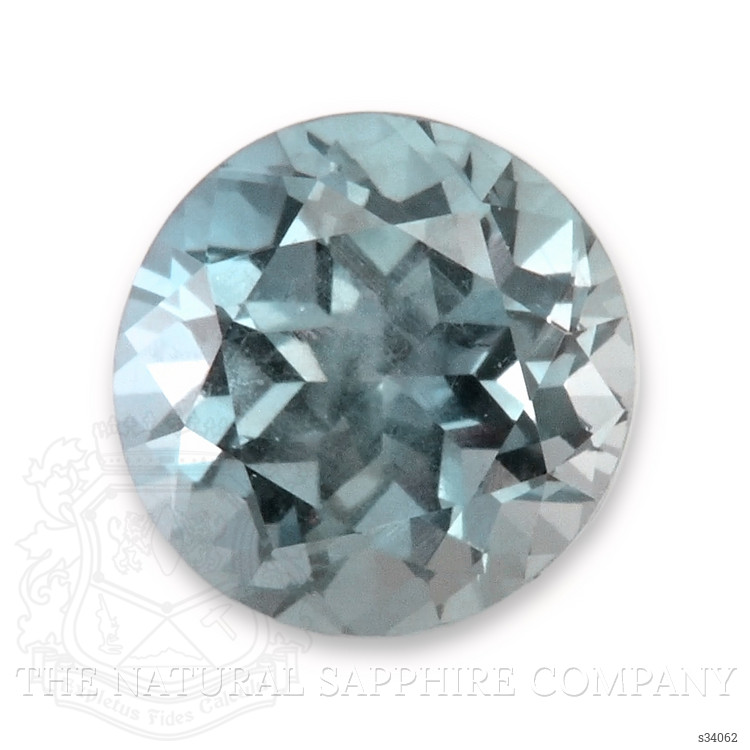
This Montana sapphire offered by The Natural Sapphire Company is a precisely proportioned, transparent 1.23 carat round, with calibrated dimensions of 6.03 x 5.98 x 4.48 millimeters. The gem displays a bluish green hue with medium color intensity, no enhancement, and a clarity grade of very slightly included, evaluated at eye level. The weight and dimensions place this stone squarely in the category of collectible small to medium size gems, where optical performance hinges on careful faceting and retention of original rough characteristics. The mixed brilliant cut chosen for this piece preserves weight while optimizing scintillation and face up presence, and the excellent polish maximizes contrast and facet definition, permitting the stone to present a lively, yet refined, visual character in a variety of lighting environments.
From a cutting and craftsmanship perspective, the mixed brilliant style employed here combines a brilliant facet pattern on the crown with more conservative pavilion geometry, calibrated to the original rough shape and color zoning typical of Montana material. The crown arrangement emphasizes star and kite facets to generate dynamic scintillation, while the pavilion facet disposition has been tailored to maintain desirable light return given a depth that reads on the deeper side for round stones. A deeper pavilion can enhance perceived color saturation, and in this specimen the cutter balanced depth and table proportions to achieve a medium intensity bluish green face up without introducing excessive windowing. The table and crown rise are engineered to create crisp facet junctions and strong internal reflections, and the excellent polish quality reduces surface scattering, allowing light to refract cleanly through the corundum lattice. The result is a transparent gem that displays tight, contrasted flashes and broad, soft color flashes, depending on viewing angle and lighting.
When compared to other gemstones in the same category, this Montana sapphire demonstrates reflective and optical behavior characteristic of corundum, but with regional nuances that differentiate it from sapphires from other origins and from alternative gem species. Corundum has a refractive index around one point seven six, which imparts stronger brilliance than beryl species such as aquamarine, which have a lower refractive index near one point five seven. Consequently, this sapphire will exhibit more pronounced light return and sharper facet reflections than an aquamarine of comparable cut and clarity, while the latter will tend to show broader, softer flashes and a more glass like luster. Compared with spinel, which has a refractive index near one point seven one to one point seven two, this sapphire shows marginally greater brilliance and slightly tighter facet contrast. Dispersion in corundum is low compared with diamond, and that results in less spectral fire, but in practice the mixed brilliant cut and the stone body color cooperate to produce attractive color flash and lively scintillation that often reads as more sophisticated than high dispersion stones when mounted in jewelry.
Within the sapphire family, origin driven attributes are important for reflective quality and apparent saturation. Montana sapphires frequently present lighter tones and pastel leaning colors relative to Ceylon and Kashmir material, which often have higher saturation and more vivid blue to cornflower profiles. This Montana stone, with its bluish green medium color intensity, benefits from a slightly softer body color that allows controlled light penetration, producing broad internal flashes rather than the highly concentrated color zoning sometimes seen in high saturation stones. In practical terms, under incandescent light the gem will show warmer, more muted blue green, while under daylight it will reveal cooler blue highlights, a behavior consistent with modest pleochroism in many sapphires. Compared to heated or diffusion treated sapphires, the natural, untreated state of this Montana gem yields a more nuanced refraction and color dispersion that collectors and connoisseurs value, because there is no artificial enhancement altering facet contrast or internal light scattering.
For practical use in fine jewelry, the optical profile of this sapphire suggests settings that support both protection and maximum light interaction. A setting that preserves table exposure and allows light to enter the pavilion will enhance brilliance and maintain the medium color intensity without over darkening the stone. Prong settings with minimal metal intrusion around the crown or low profile bezel settings with open bails can be effective, and the cutter has maintained excellent polish so that reflected highlights will remain crisp even when the stone is viewed against metal. The natural origin, untreated status, and the very slightly included clarity grade provide an appealing combination of transparency and natural character, suitable for collectors who value provenance and optical integrity. As representatives of The Natural Sapphire Company, we emphasize the meticulous cutting choices and the uncompromised polish that allow this Montana sapphire to compete favorably in reflective performance against many stones in its class, delivering balanced brilliance, elegant color, and durable wearability for a lifetime of use.


