
- Stone12
- Reports3
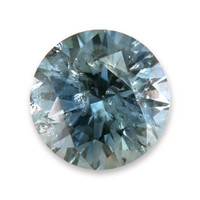
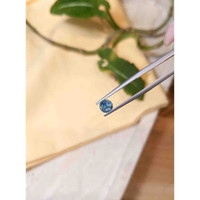
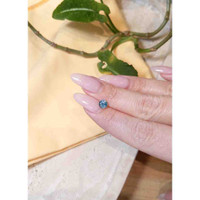
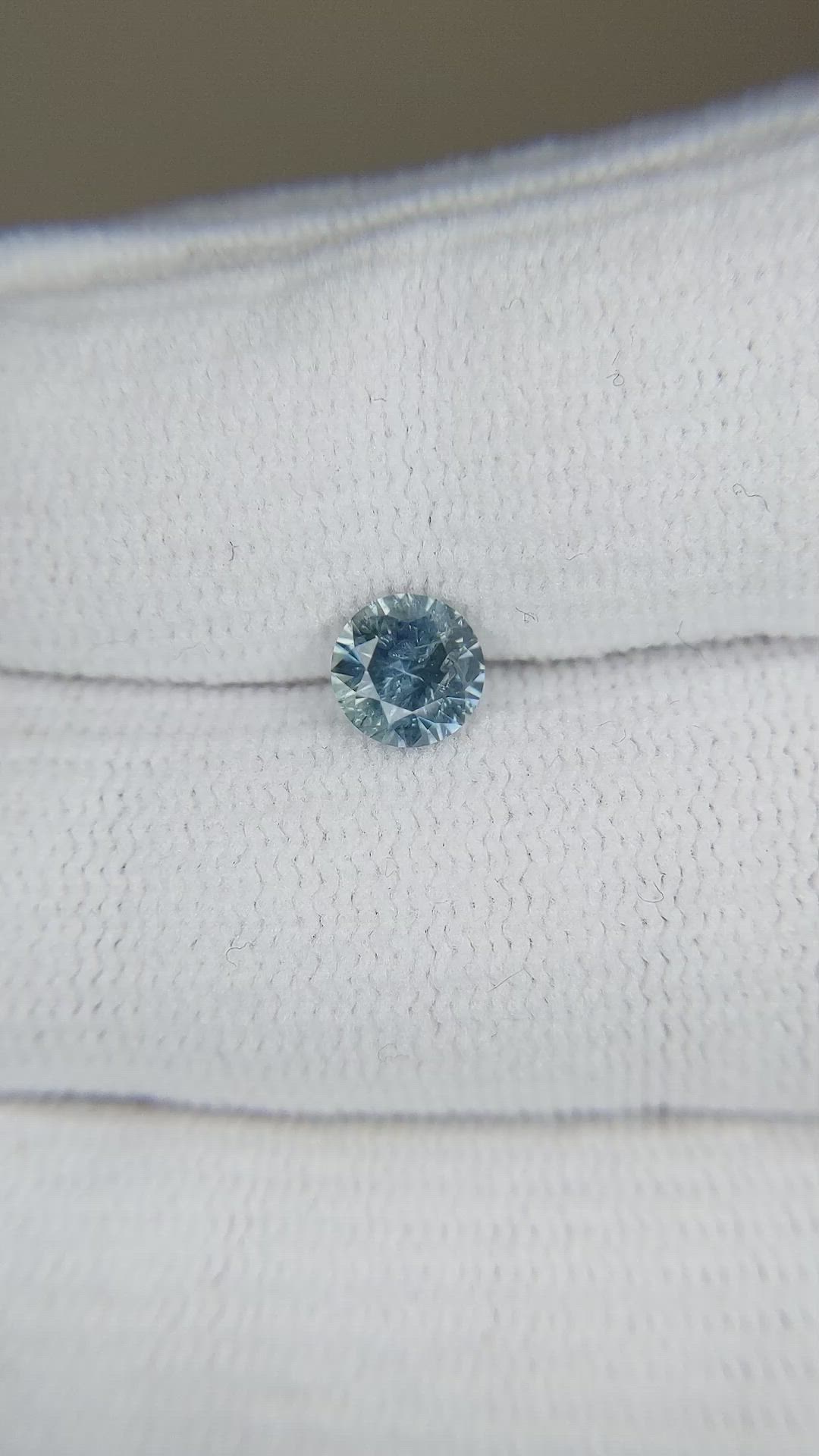
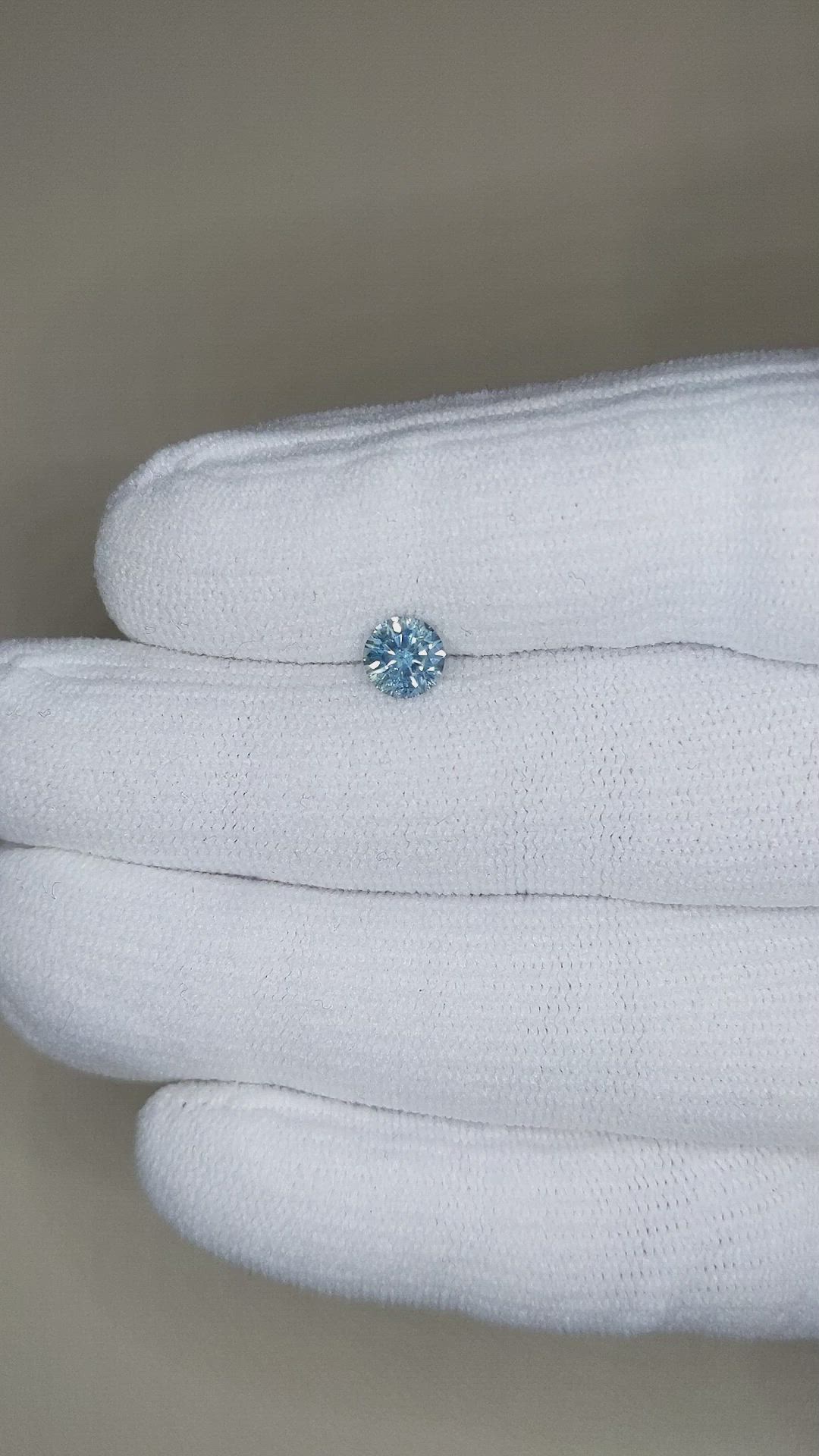
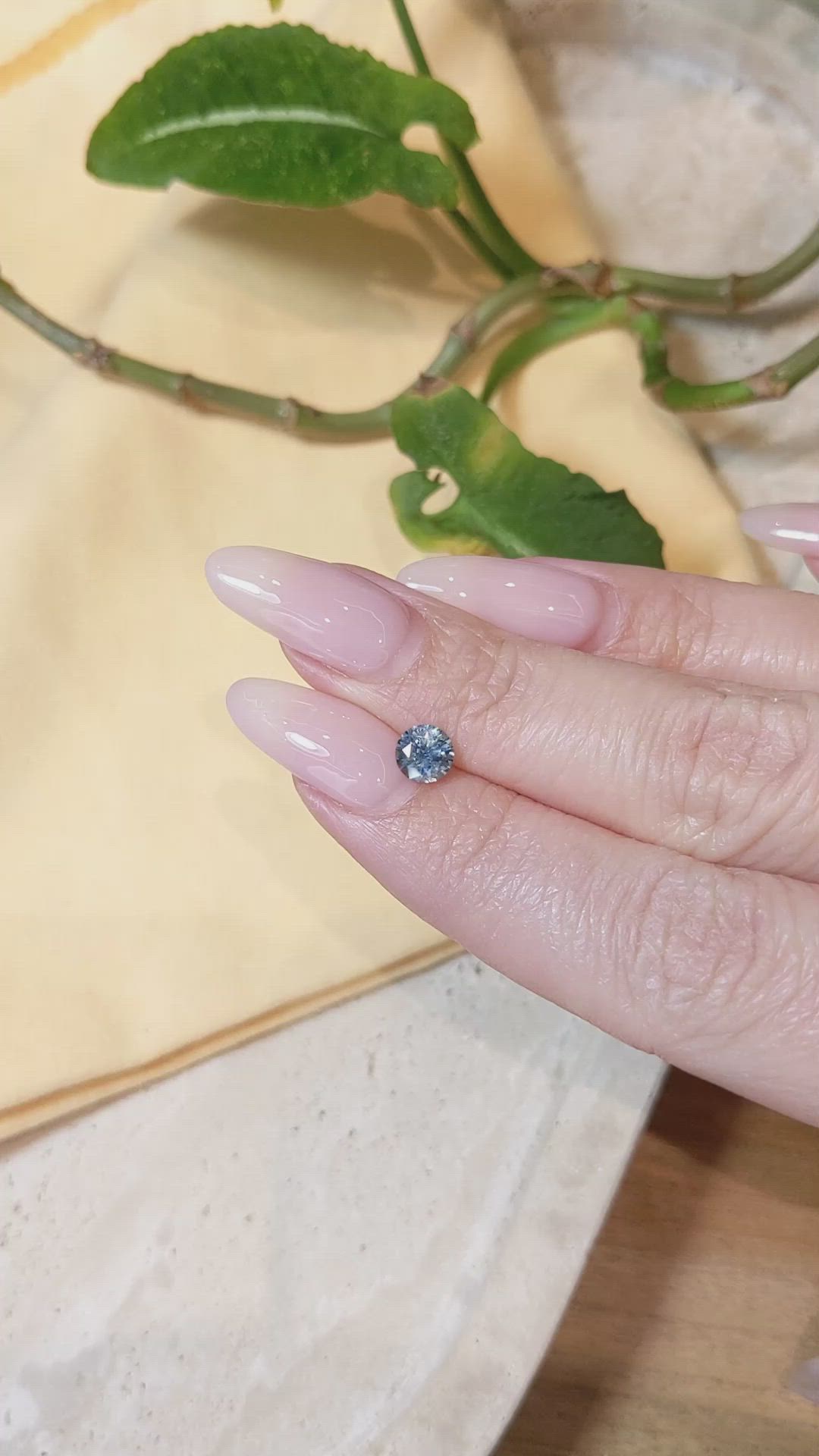
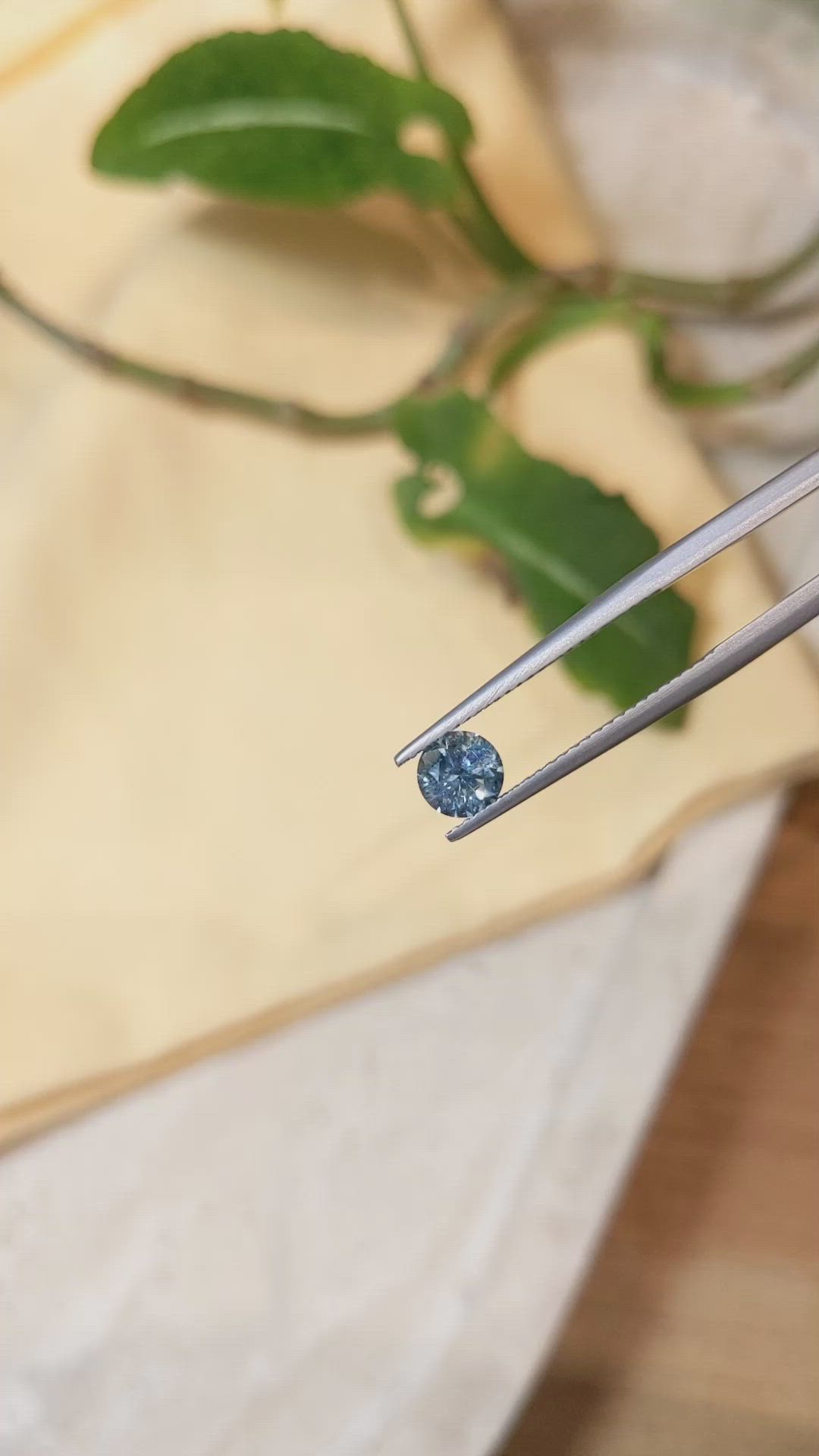



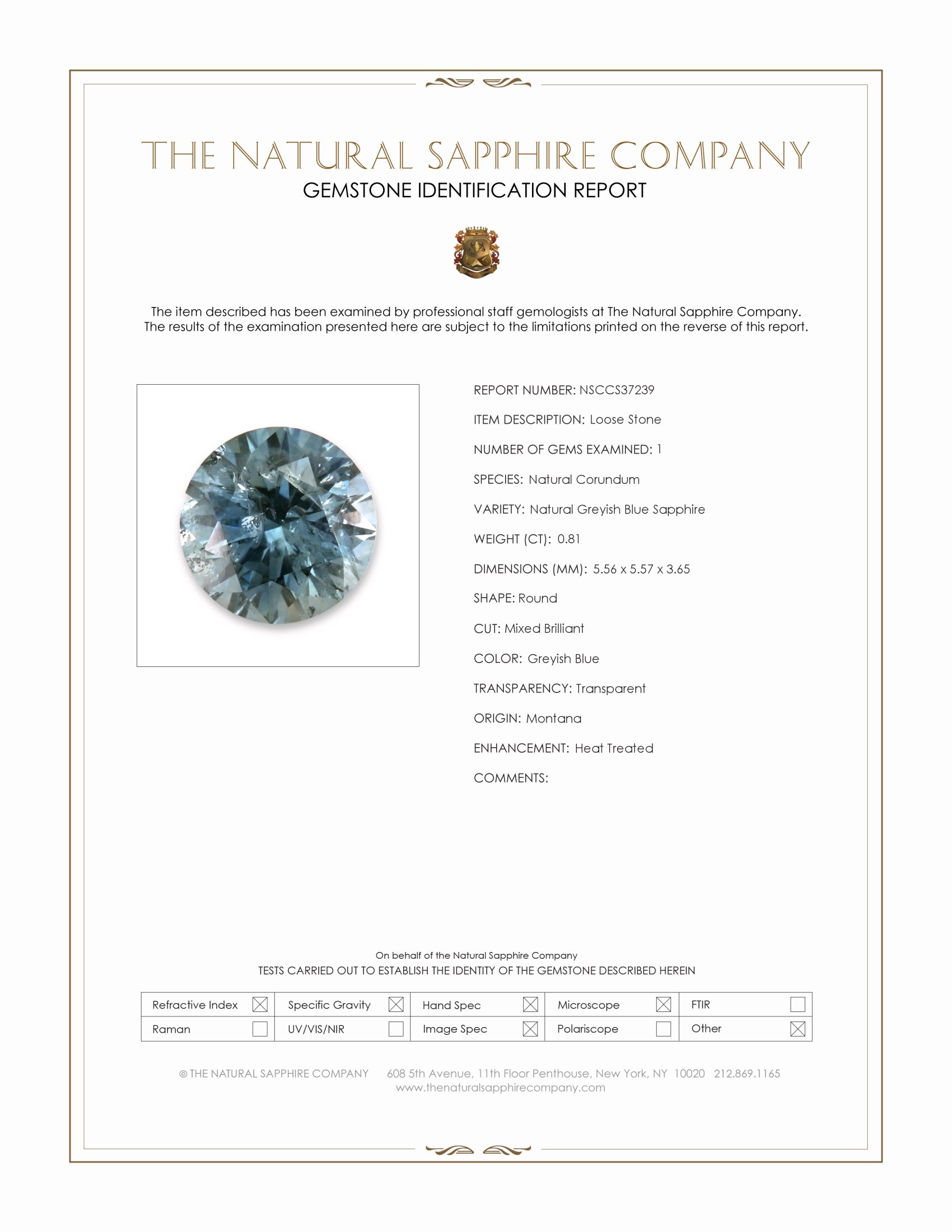
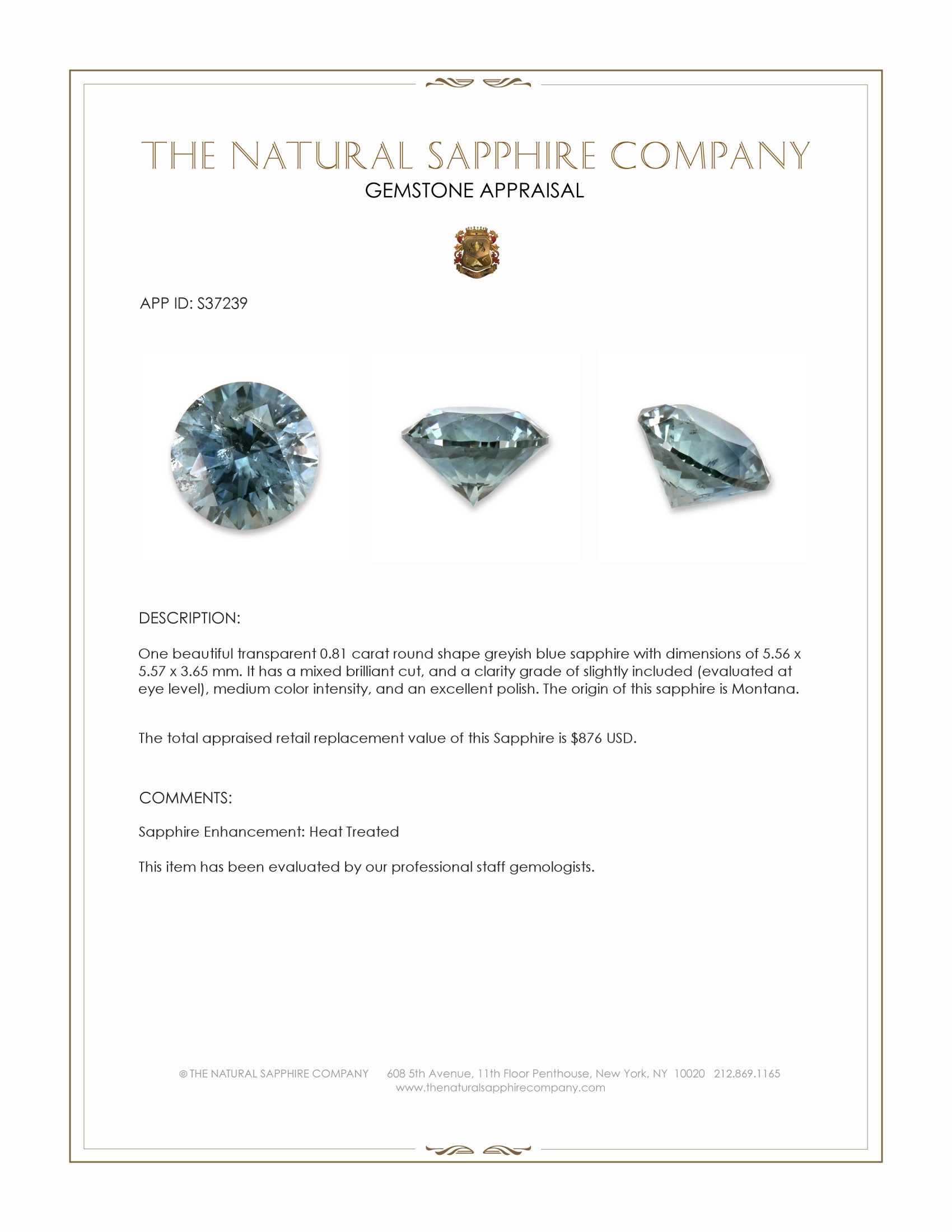
0.81 Ct. Greyish Blue Sapphire from Montana
This loose stone is available to ship now
Item ID: | S37239 |
|---|---|
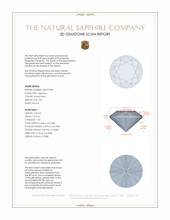
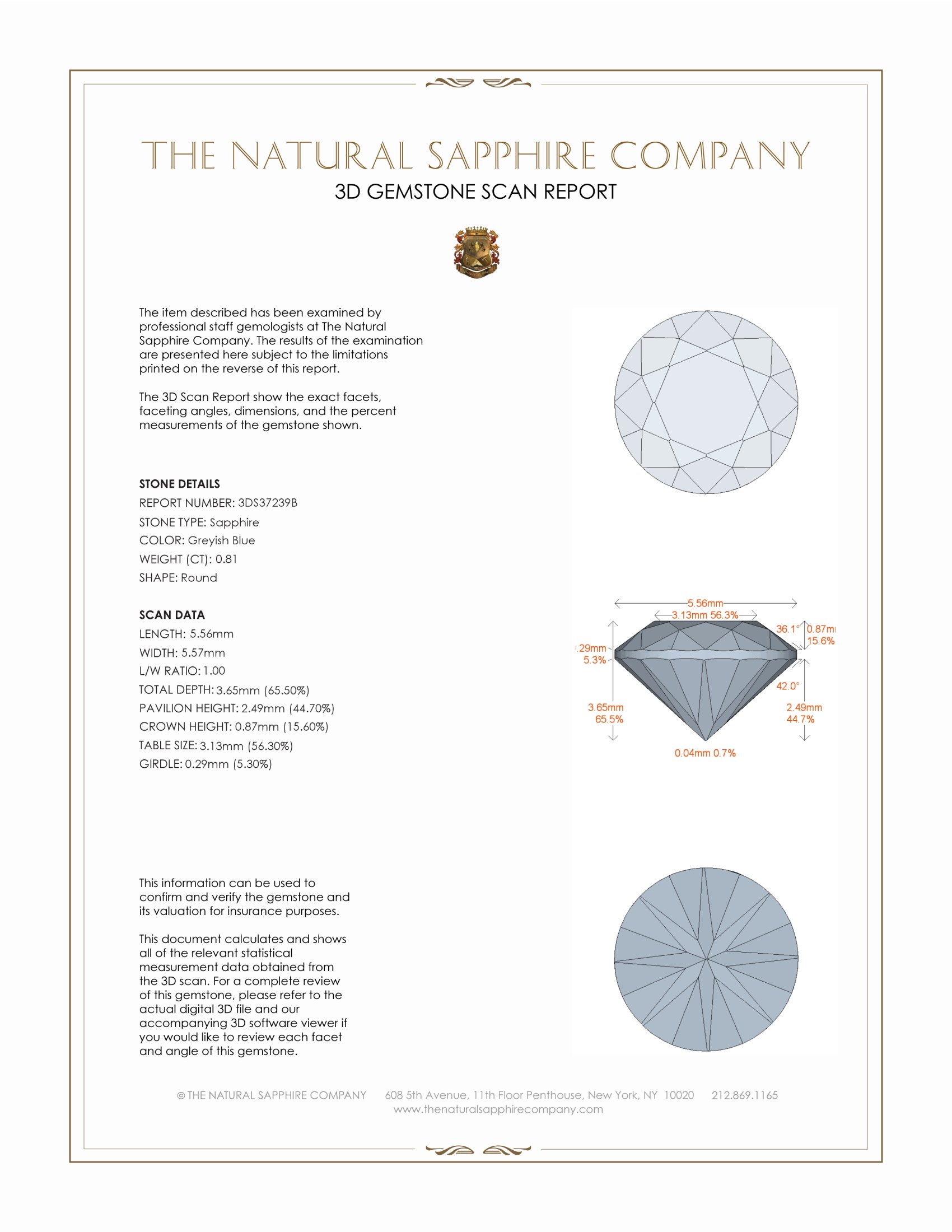
Dimensions (MM): help | Length: 5.56 Width: 5.57 Height: 3.65 |
Weight: | 0.81 Ct. |
Color: help | Greyish Blue |
Color intensity: help | Medium |
Clarity: help | Slightly Included |
Shape: help | Round |
Cut: | Mixed Brilliant |
Cutting style: | Faceted |
Enhancements: help | Heat Treated |
Origin: help | Montana |
Per carat price: help | $1,081 |
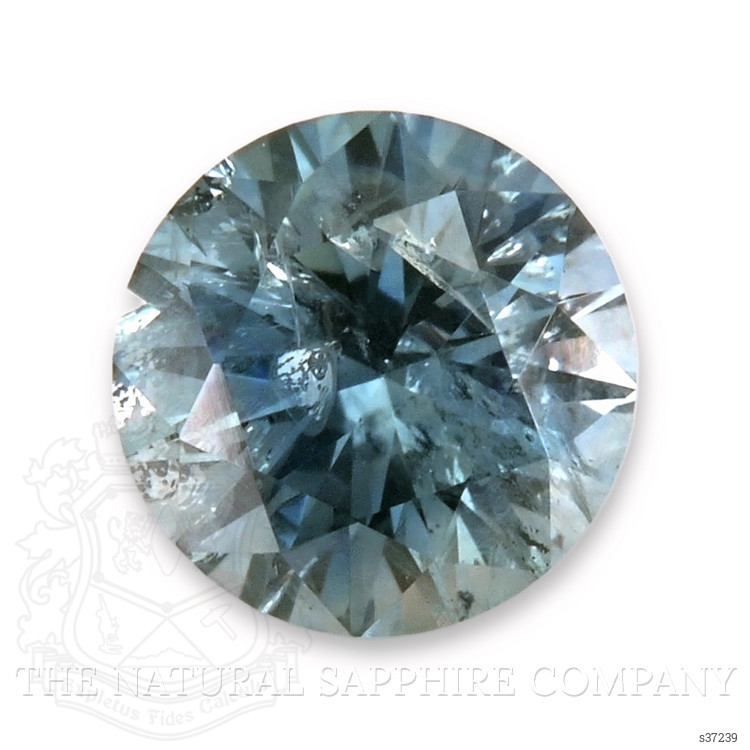
This listing describes one beautiful transparent 0.81 carat round shape greyish blue sapphire, dimensions 5.56 x 5.57 x 3.65 mm, origin Montana. The stone has a mixed brilliant cut, a clarity grade slightly included, evaluated at eye level, a medium color intensity, an excellent polish, and a standard heat treatment enhancement. At this small scale the cutter has preserved material and maximized yield while still achieving refined optical performance. The near perfect circular girdle outline and balanced diameter values indicate careful preform work, and the 3.65 mm total depth yields a depth to average diameter ratio of approximately 65.6 percent, a proportion that supports strong light return for a mixed brilliant configuration. The Natural Sapphire Company presents this stone as an example of how regional material and considered facet design combine to produce a sapphire with both character and technical merit.
From a structural perspective this sapphire is a corundum, aluminum oxide crystallized in the trigonal system, with inherent optical properties that favor bright reflections and controlled internal light scattering. The refractive index of corundum in gem quality material sits near 1.762 to 1.770, and the low but measurable birefringence on the order of 0.008 to 0.010 allows for subtle doubling of facet junctions under certain viewing angles, which can enhance the perception of depth without undermining overall transparency. The mixed brilliant cut used here pairs a faceted crown designed for optimal angular acceptance with a pavilion geometry that prioritizes return over extreme dispersion, so that the moderate color saturation, described here as greyish blue with medium intensity, is presented as a stable, lively hue rather than a deep wash that would reduce scintillation. The slightly included clarity grade, evaluated at eye level, denotes small internal crystal or healed fracture features that are visible with careful inspection but that do not interrupt the key facet junctions or the primary light paths. Those inclusions sit within the internal volume in positions that have been taken into account by the cutter, and in some viewing orientations they interact with reflected light to produce additional pinpoint highlights, increasing apparent sparkle rather than detracting from it. The excellent polish reduces micro surface scattering and keeps light throughput high, so facet reflections remain crisp and contrasty.
The sparkle and overall optical performance of this Montana greyish blue sapphire are the result of several interacting factors, making its brilliance distinct from many other gems. First, the inherent optical density of corundum concentrates reflected energy into narrow angular windows, and the mixed brilliant faceting exploits those windows by aligning crown and pavilion facet angles to minimize leakage and maximize return. Second, the stone proportions, specifically the 65.6 percent depth to diameter ratio, place the critical internal reflections in planes that reinforce return to the observer rather than into escape angles, so the stone exhibits sustained brilliance across slight changes in orientation. Third, the medium color intensity and the greyish blue hue reduce excessive absorption in the spectral regions that would otherwise dull scintillation, allowing both white flashes and blue flashes to be perceived without color saturation swallowing contrast. Finally, the combination of slight inclusions and exceptional polish contributes micro contrast, those micro contrast differentials that human vision reads as sparkle, while the low birefringence prevents disruptive doubling of facet images that can soften scintillation. Because of these controlled parameters The Natural Sapphire Company can present this sapphire as an item whose sparkle is not merely bright, but structurally optimized, a balance of refractive properties, facet geometry, and material character. Its hardness and chemical stability, typical of sapphire, ensure that this optical performance will be durable in wearable settings, and the stone can be set in a range of mounting geometries that preserve its light return, including open bezel designs, prong settings that maximize crown exposure, and raised gallery mounts that keep the pavilion free for light entrance and exit.


