
- Stone12
- Reports3
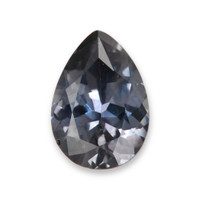
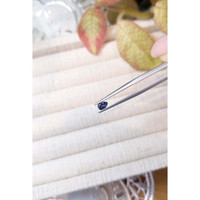
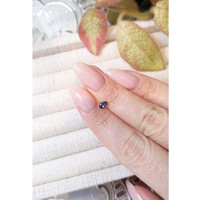
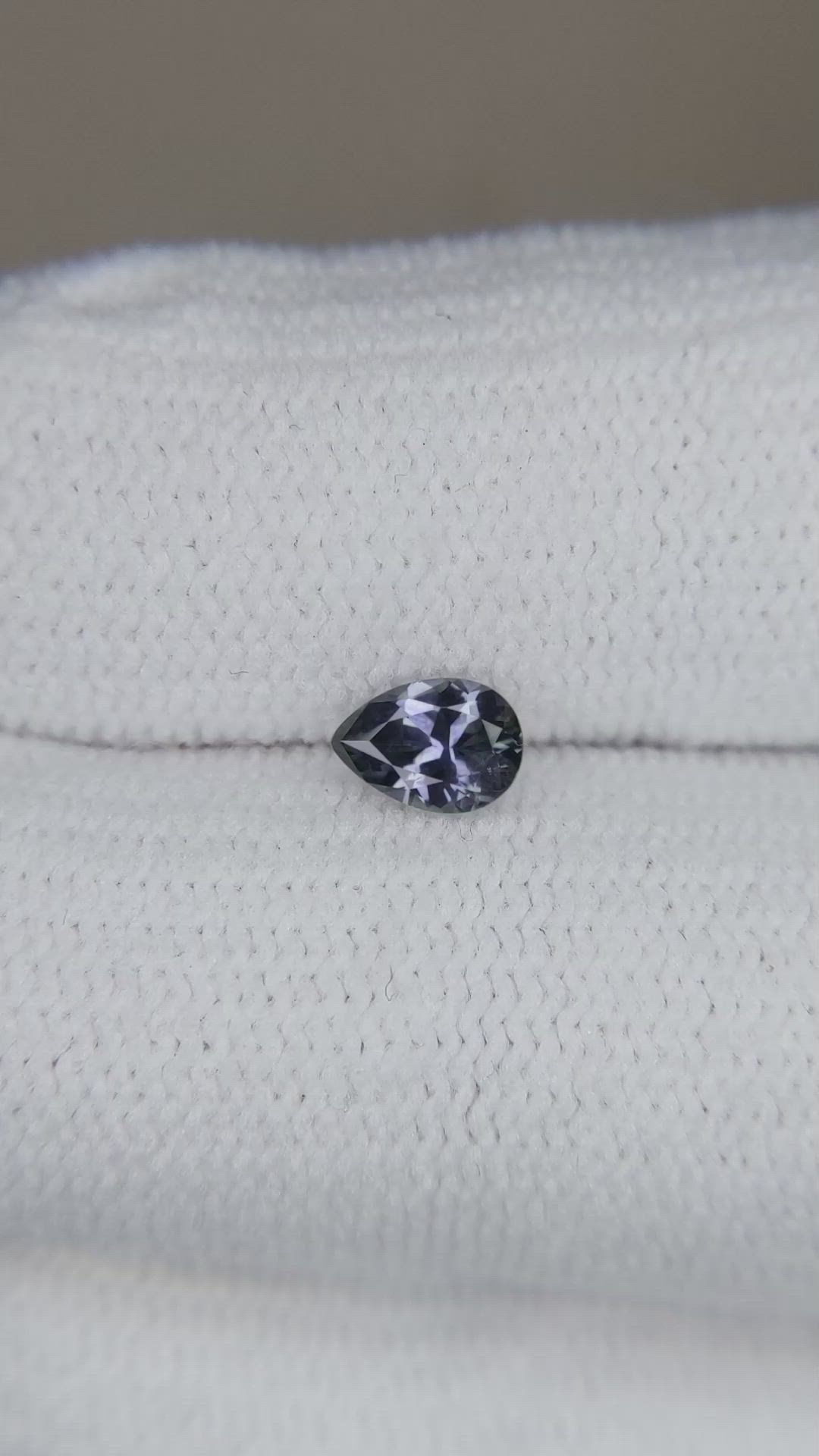

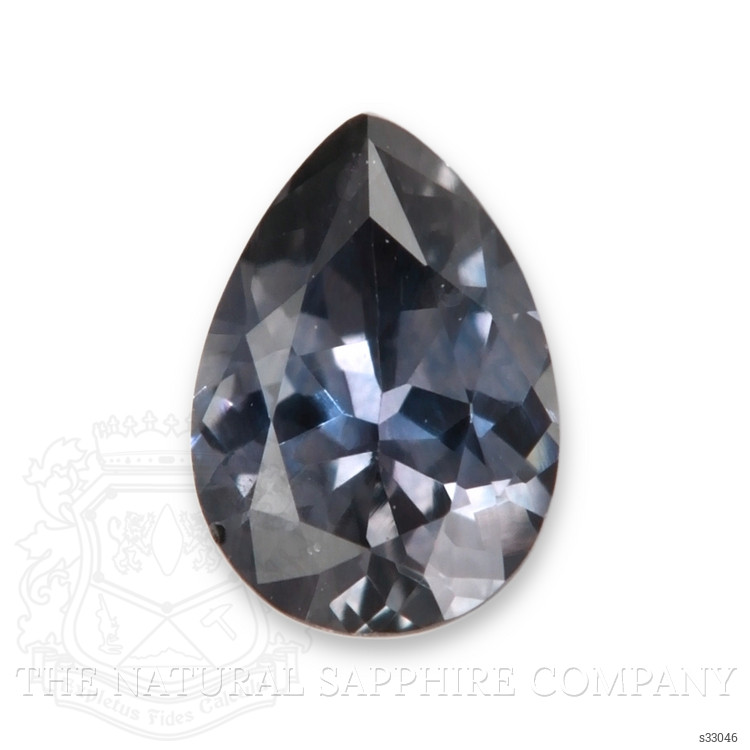
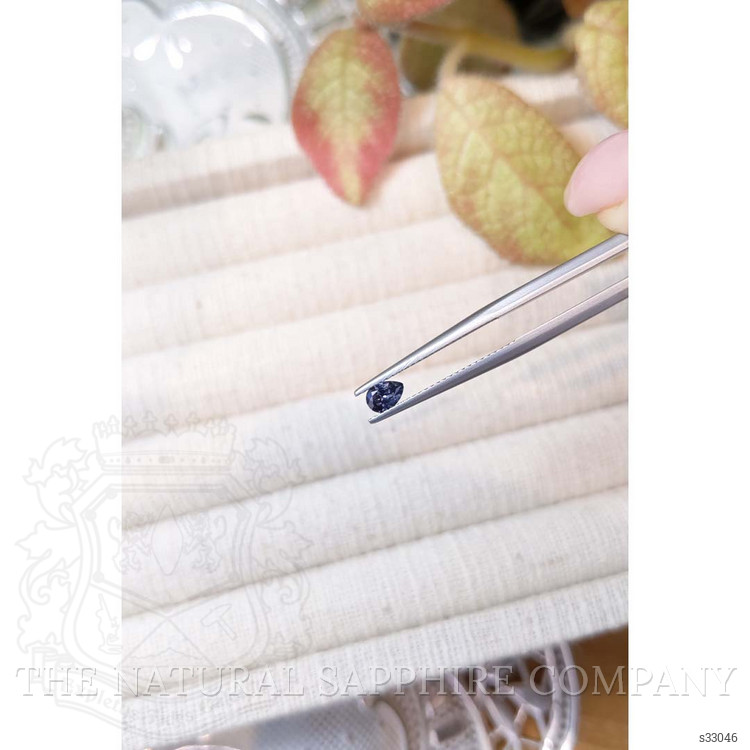
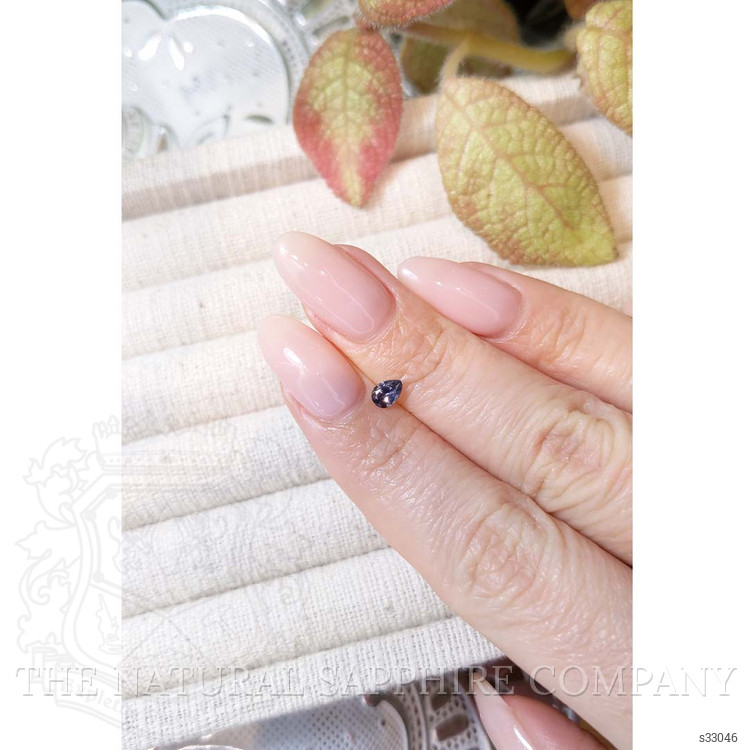

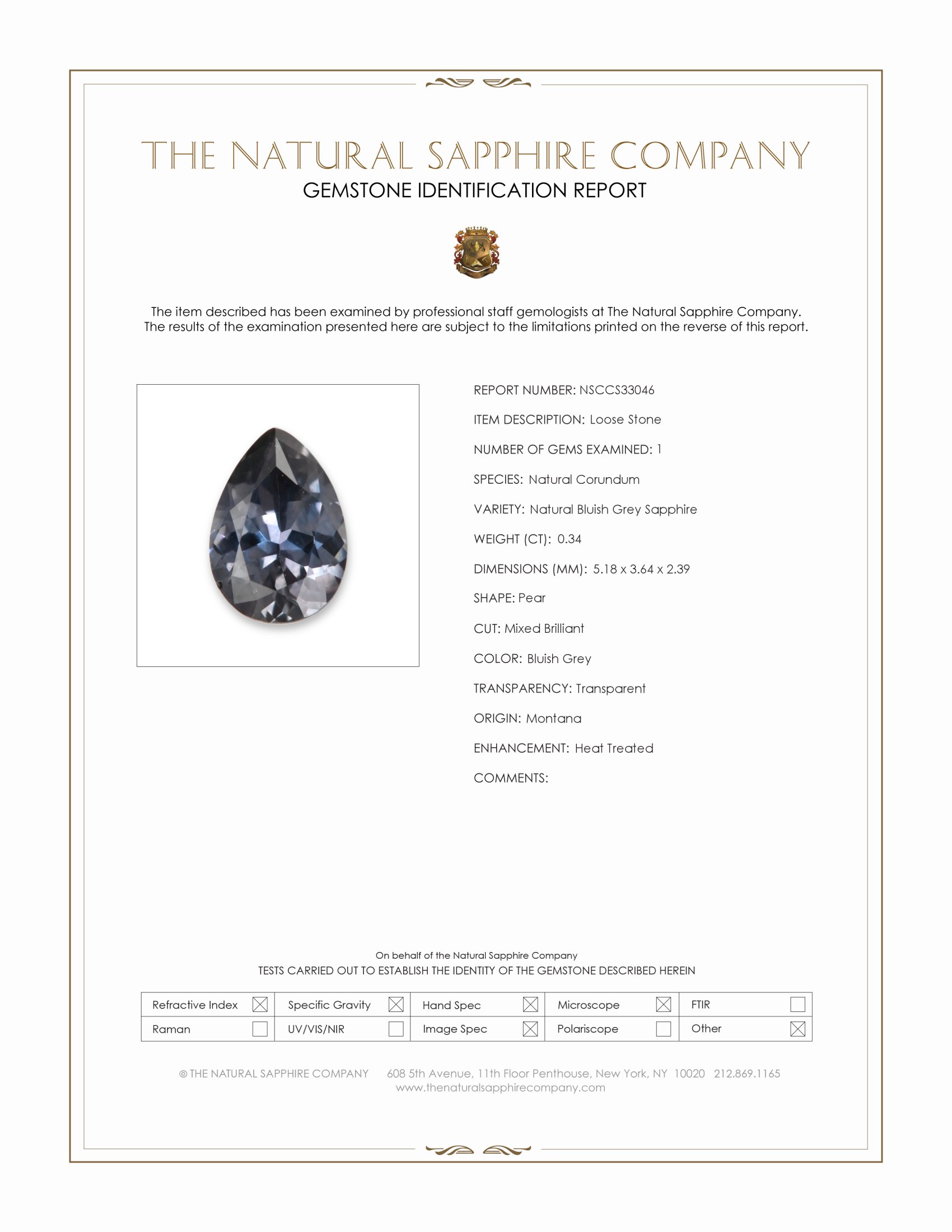
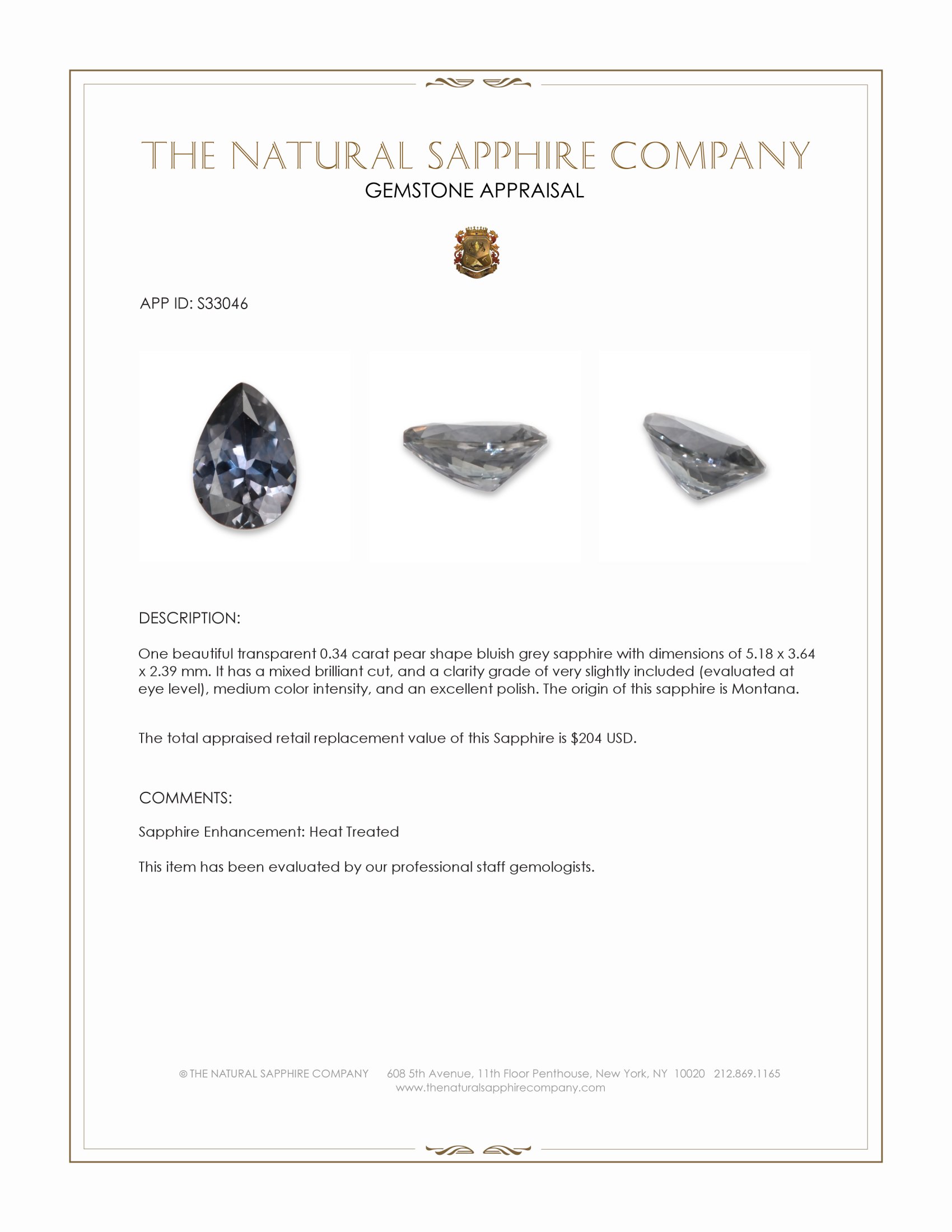
0.34 Ct. Bluish Grey Sapphire from Montana
This loose stone is available to ship now
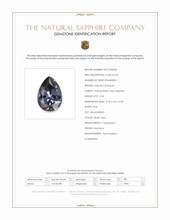
Item ID: | S33046 |
|---|---|
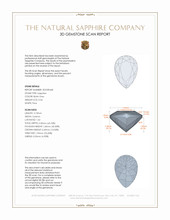
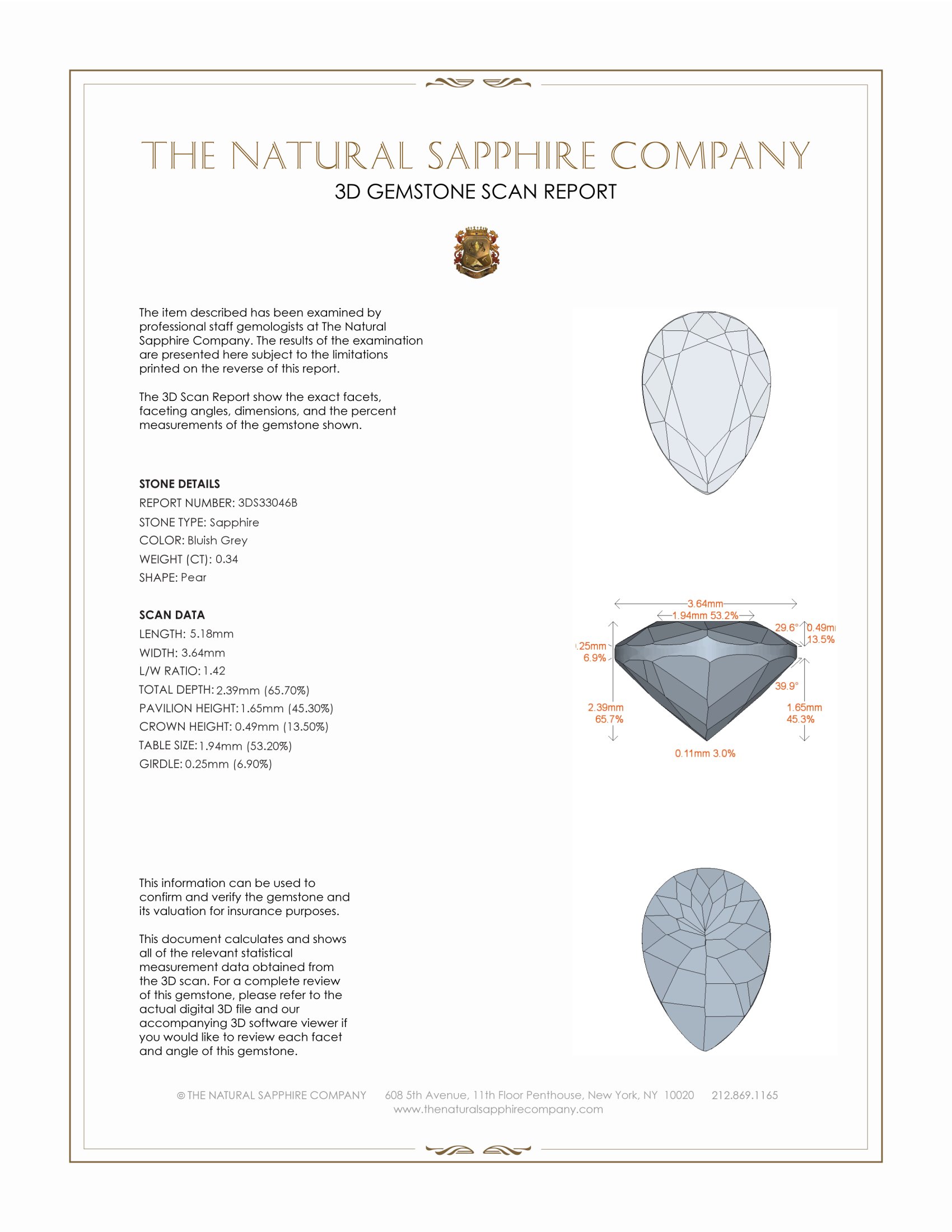
Dimensions (MM): help | Length: 5.18 Width: 3.64 Height: 2.39 |
Weight: | 0.34 Ct. |
Color: help | Bluish Grey |
Color intensity: help | Medium |
Clarity: help | Very Slightly Included |
Shape: help | Pear |
Cut: | Mixed Brilliant |
Cutting style: | Faceted |
Enhancements: help | Heat Treated |
Origin: help | Montana |
Per carat price: help | $600 |
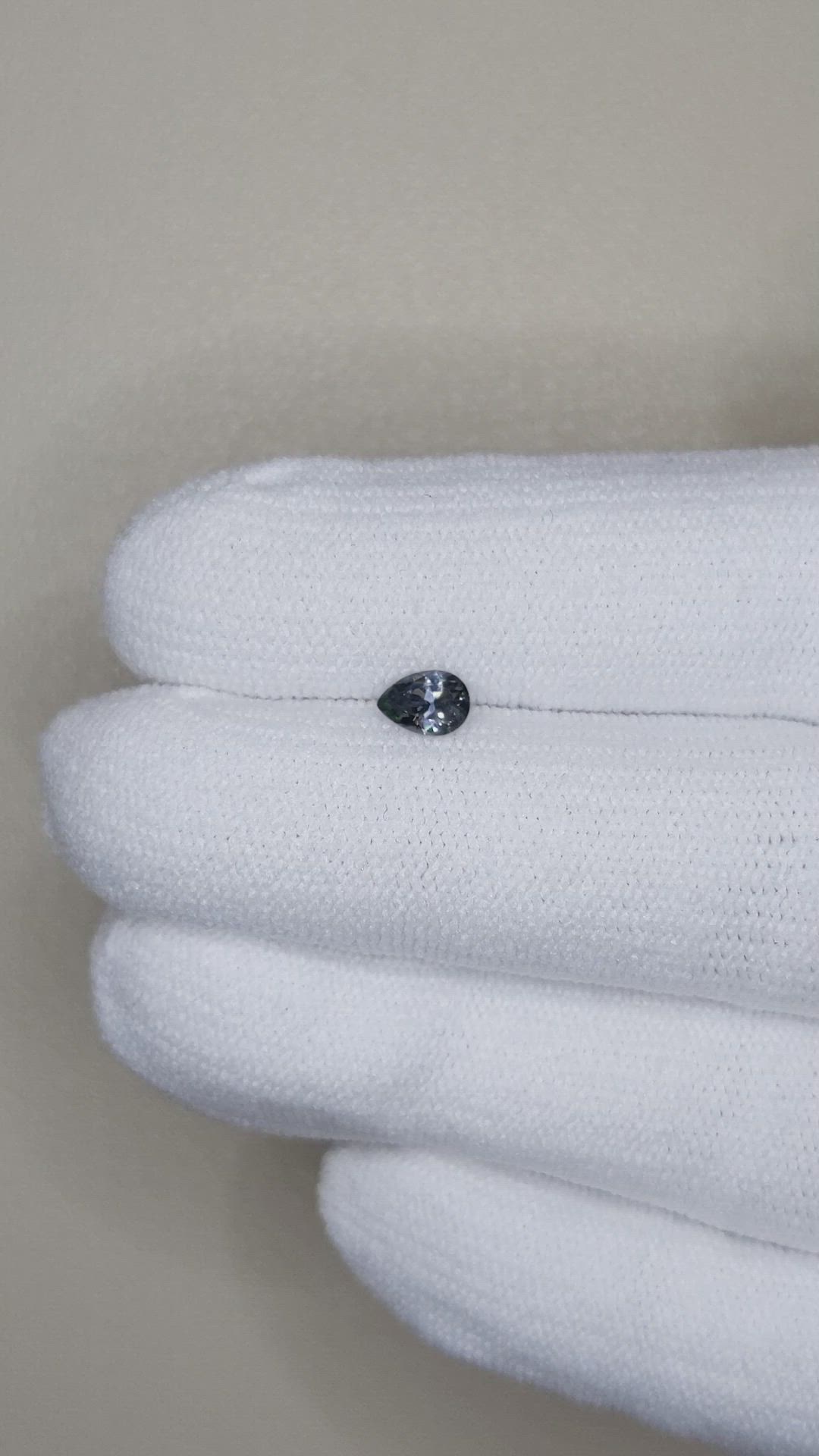
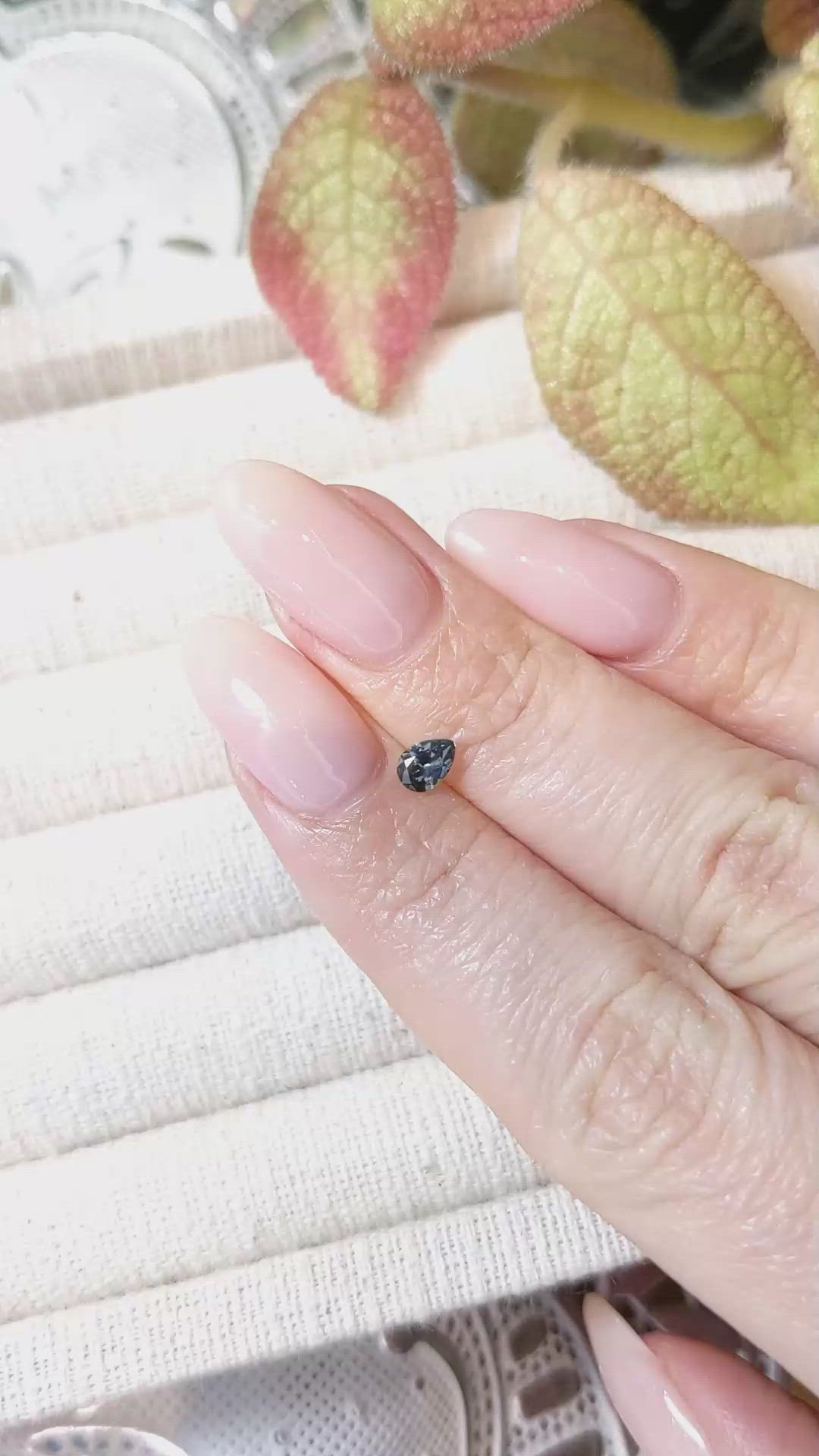
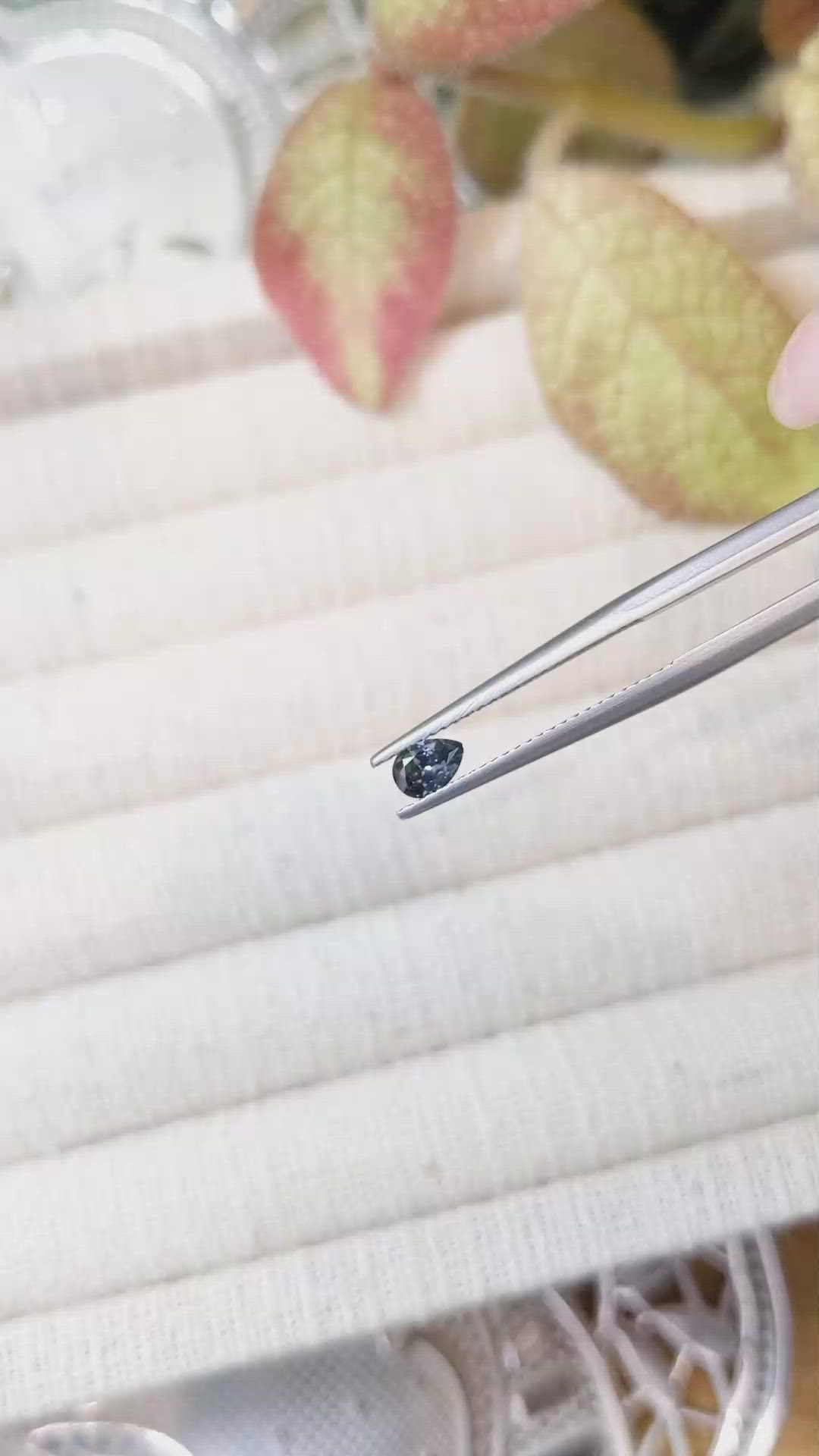
This pear shape sapphire from The Natural Sapphire Company presents as a transparent natural corundum weighing 0.34 carat, with precise dimensions of 5.18 by 3.64 by 2.39 mm. The gem has been fashioned in a mixed brilliant cut, combining a faceted crown designed for scintillation with a pavilion optimized for light return. Clarity is graded as very slightly included at eye level, indicating minimal disturbance to internal light paths when viewed without magnification. Color is described as bluish grey, with a medium intense saturation, and the surface shows an excellent polish. The stone has been heat treated, a standard enhancement for clarity and color stabilization in sapphire, and its reported origin is Montana, a source known for producing sapphires with unique tonal modifiers and cool, silvery overtones.
From a faceting and optical engineering perspective, the mixed brilliant cut used here balances contrast and brightness. The crown faceting produces numerous small facets around the table that create localized specular highlights, enhancing scintillation as the stone moves. The pavilion facets are angled to favor internal reflection over light leakage, and the overall depth relative to the average of length and width yields an efficient light return geometry. Using the provided dimensions, the average diameter based on length and width is approximately 4.41 mm, and the measured depth of 2.39 mm corresponds to a depth ratio near 54 percent. This depth ratio sits within an effective range for pear shapes aimed at preserving face up spread while maintaining sufficient pavilion angles for constructive interference of reflected light. The excellent polish on every facet intersection minimizes diffusion and maximizes mirror like reflection at facet junctions, which is critical in a lightly saturated stone where contrast must be preserved to show color and brilliance.
Optically, corundum has a refractive index in the range typical for sapphires, and this Montana bluish grey example exhibits the characteristic high specific refractivity and a slight birefringence intrinsic to the species, enhancing the stone s internal life without introducing unwanted doubling at the table. The bluish grey hue, combined with medium intensity, produces a cooler, more muted saturation than the classic velvety blue associated with Kashmir or the vivid cornflower blue often seen from Sri Lanka. The color modifier reduces chromatic dispersion, which in practice means that the gem presents broader, more tonal flashes rather than strong spectral fire. The mixed brilliant faceting compensates for this by producing a network of small, high contrast flashes across the crown, yielding lively scintillation despite the subdued color. In comparison to other sapphires, this Montana piece offers a more silvery reflective quality, less overtly saturated but more complex in its interplay of blue and grey, especially when viewed under variable lighting. In direct lighting, the stone demonstrates crisp specular reflections and controlled windowing, a testament to both the cutting strategy and the clarity grade.
When comparing reflective qualities to other gemstones within the sapphire family and to common alternatives in the market, several distinctions emerge. Compared to high saturation blue sapphires from Kashmir or certain Sri Lankan examples, this Montana sapphire returns less pure chromatic intensity and exhibits lower localized dispersion, resulting in a softer, more metallic luster. Versus Australian or Thai blues that often show stronger inky saturation, the bluish grey tone of this stone emphasizes tonal modulation and detail in facet junction reflections rather than deep centralized glow. Against spinel and topaz of comparable weights, the sapphire s refractive index affords stronger surface brilliance and a denser return of light, while its birefringence adds subtle depth that these singly refractive gems cannot match. Relative to diamond, which has far greater dispersion and brilliance, the sapphire offers less fire but greater color persistence and a warmer, more complex internal glow. For a buyer seeking a sapphire with restrained but sophisticated reflective behavior, the mixed brilliant cut and excellent polish on this Montana stone deliver a technical solution that maximizes the perceived brightness and scintillation appropriate to its medium intense, bluish grey color, while preserving the natural character associated with its origin.
For setting recommendations and practical use, the pear shape and modest dimensions make this sapphire well suited to delicate solitaire, halo, or three stone configurations, where the mixed brilliant cutting will interact dynamically with the mounting and surrounding accents. The very slightly included clarity at eye level means inclusions are unlikely to disrupt optical performance in typical jewelry lighting, and the excellent polish ensures edge to edge reflective continuity. Heat treatment has stabilized color and minimized internal strain, providing confidence in the long term behavior of the gem within conventional jewelry environments. At The Natural Sapphire Company we can advise on faceting orientation relative to the finger plane, ideal table exposure for mounted face up color presentation, and complementary metal choices to enhance the bluish grey tone. For collectors and connoisseurs who appreciate precise optical engineering and regional character, this Montana pear sapphire represents a technically refined example of corundum, combining careful cutting, polished execution, and a distinctive, cool tonal palette.


