
- Stone12
- Reports3
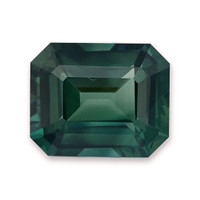


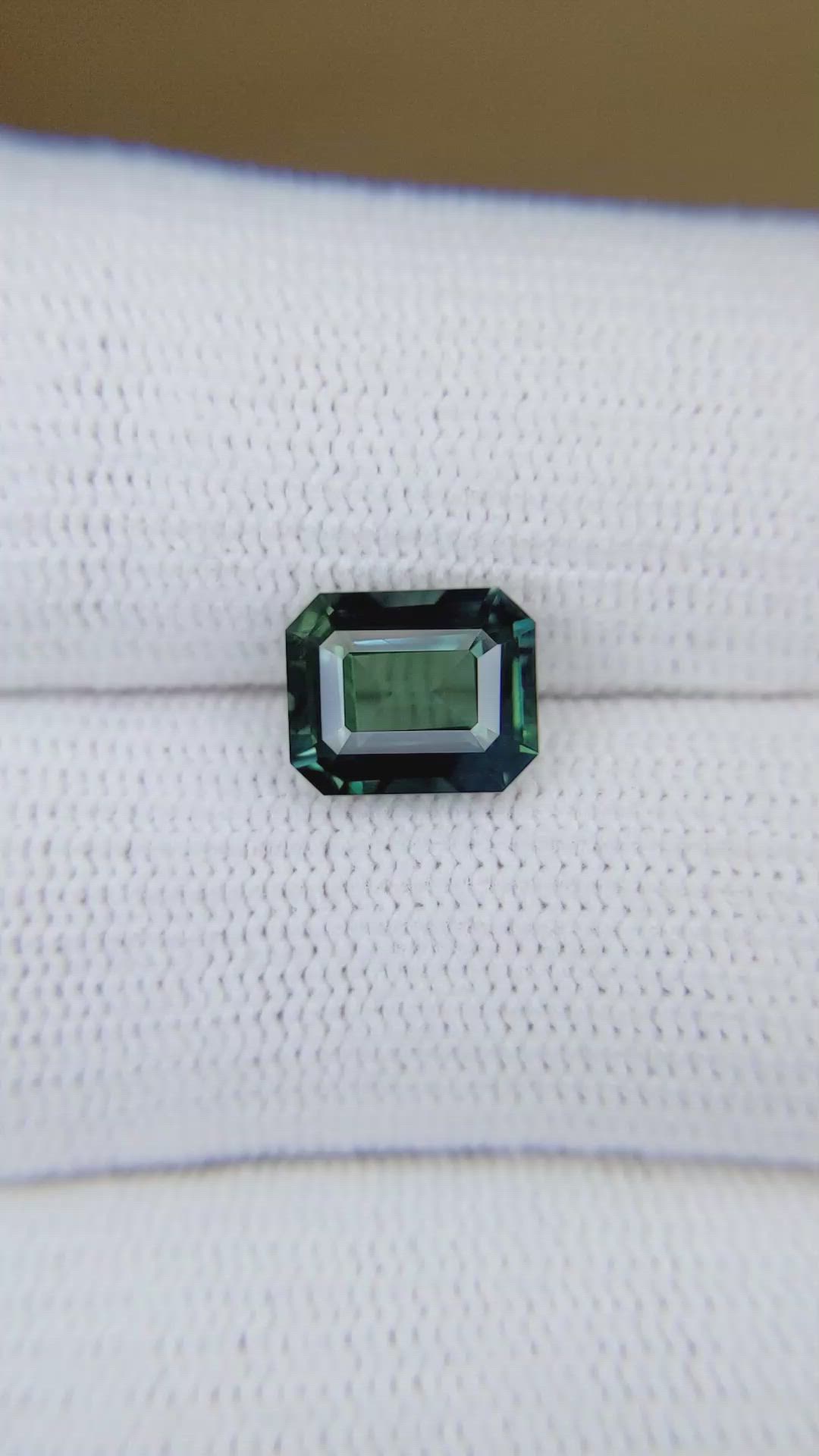
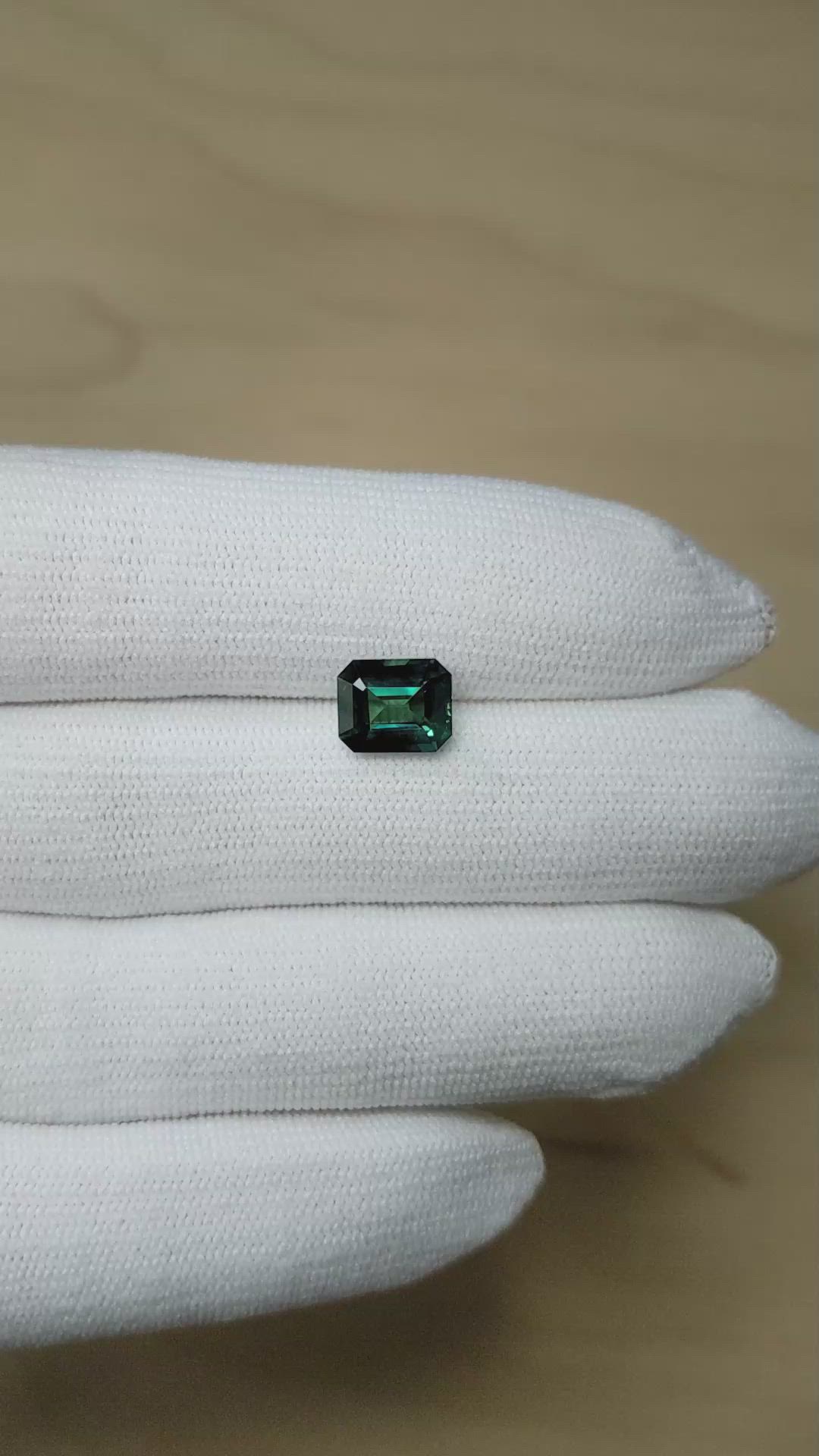
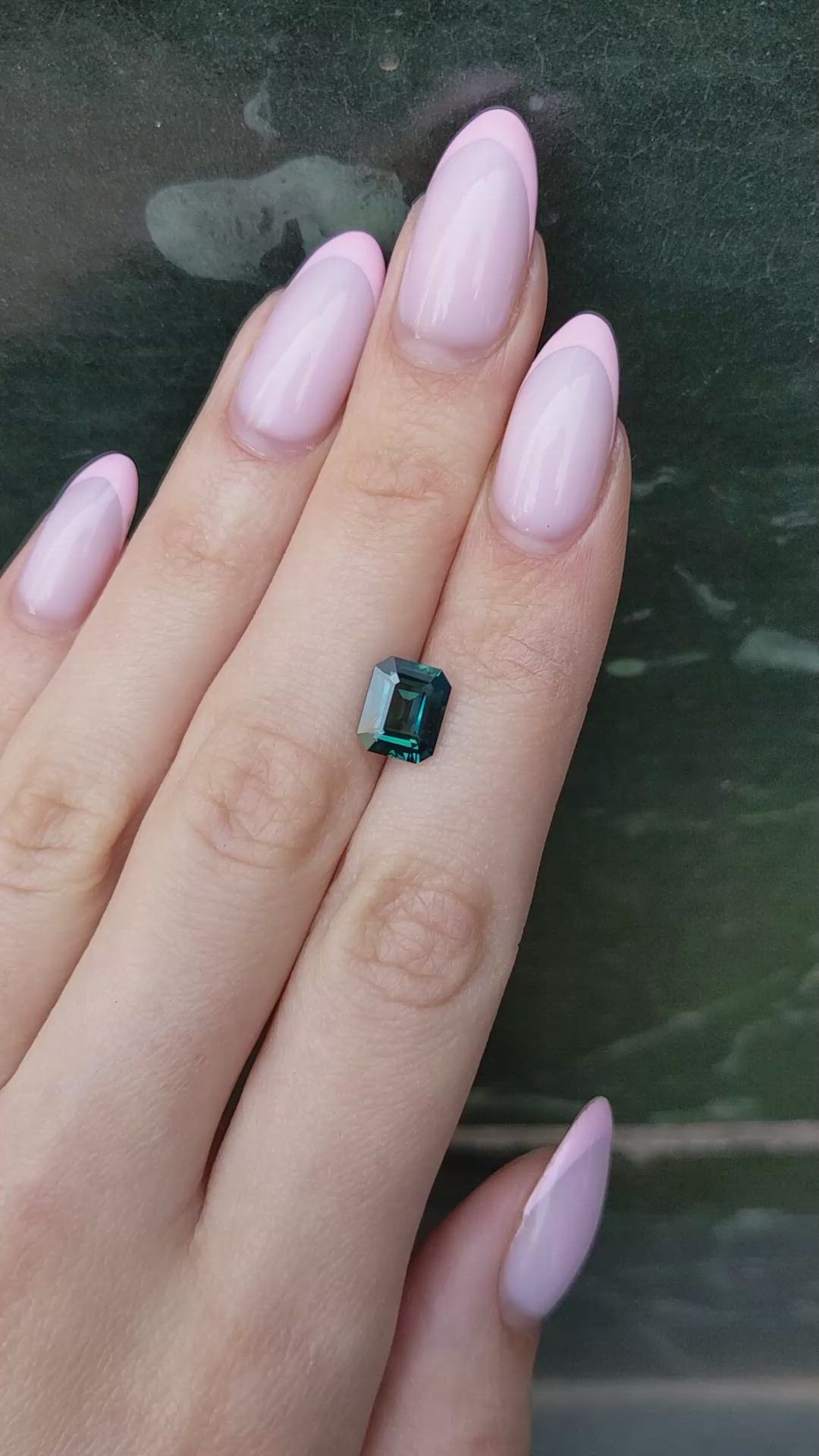
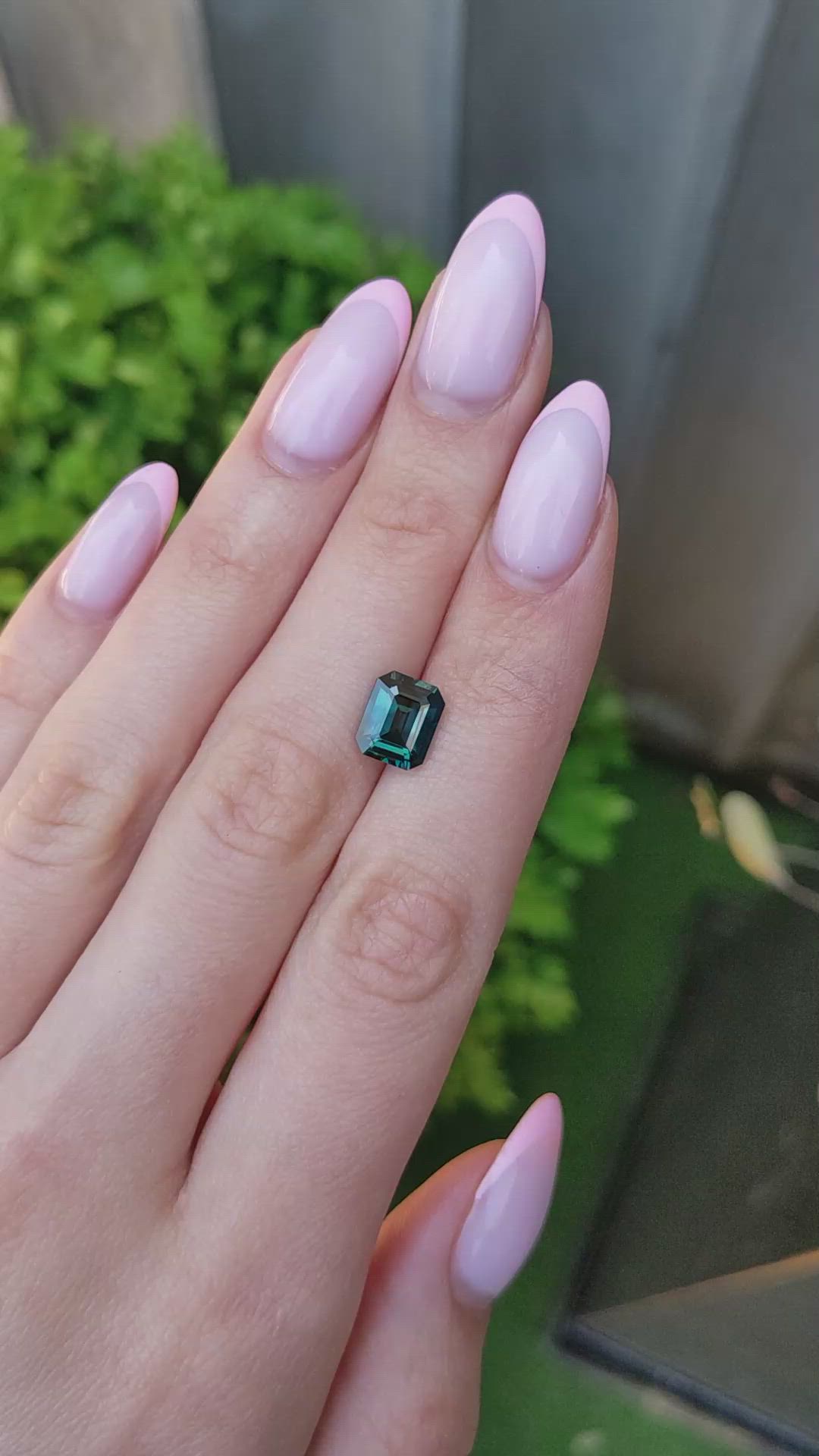



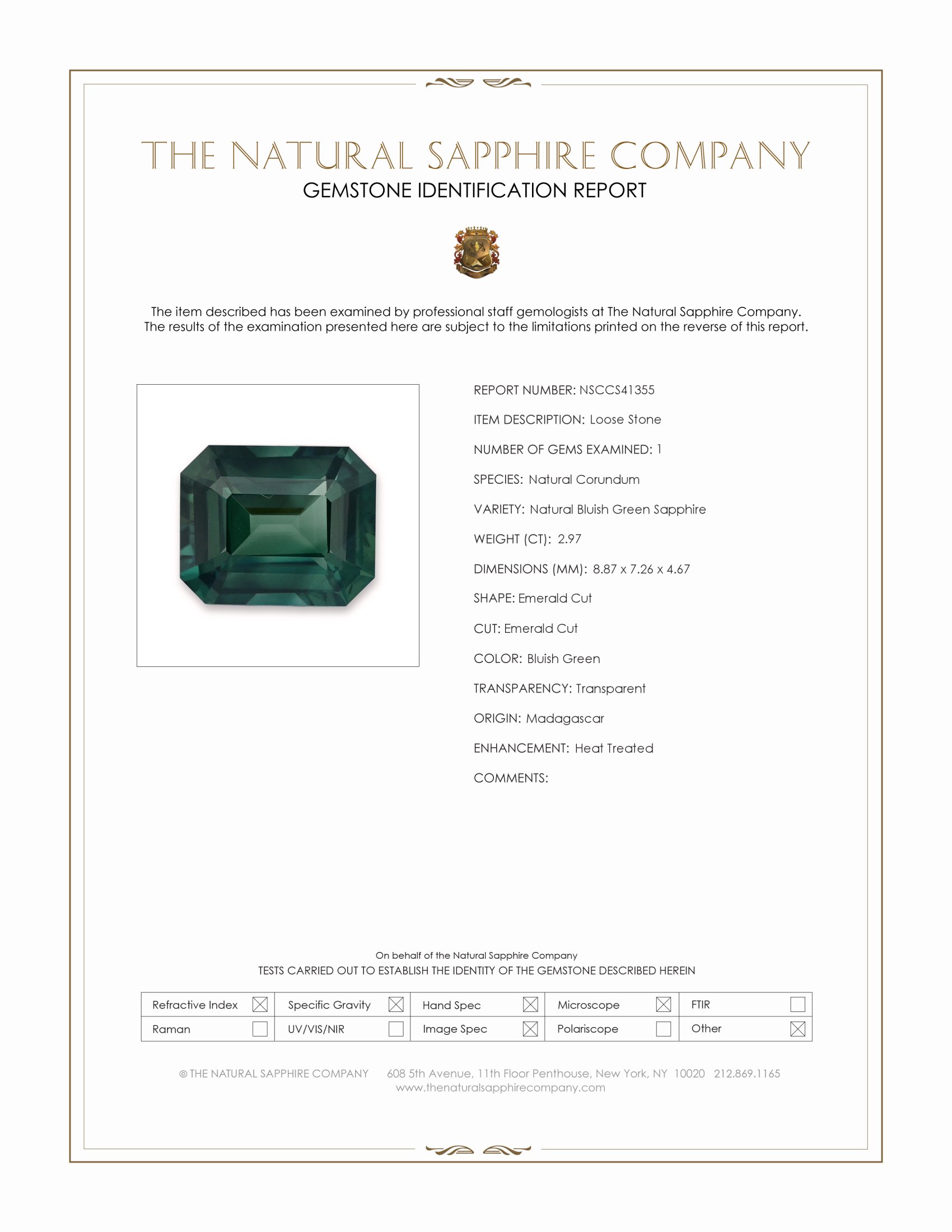
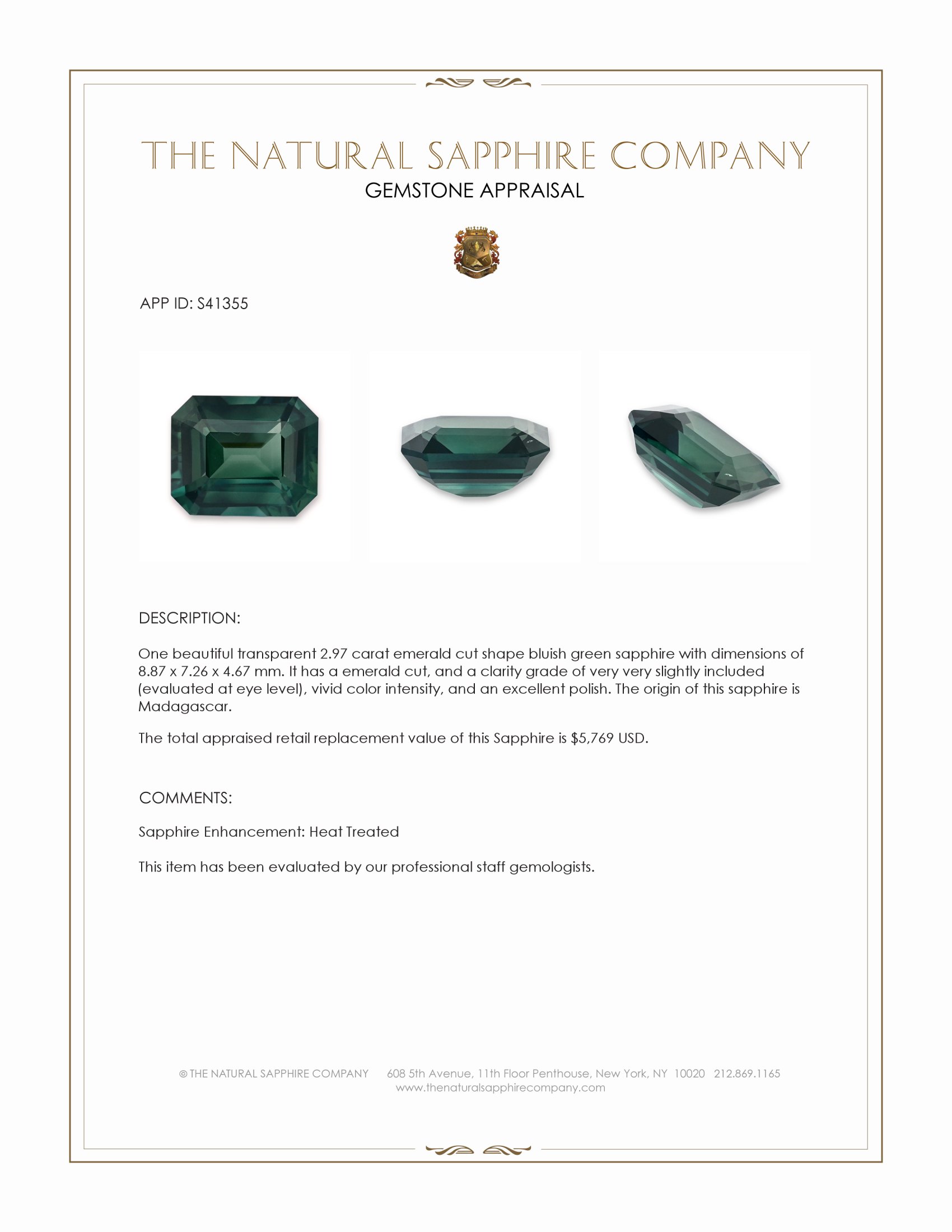
2.97 Ct. Bluish Green Sapphire from Madagascar
This loose stone is available to ship now
Item ID: | S41355 |
|---|---|
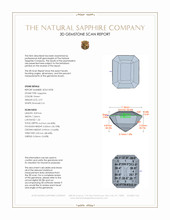
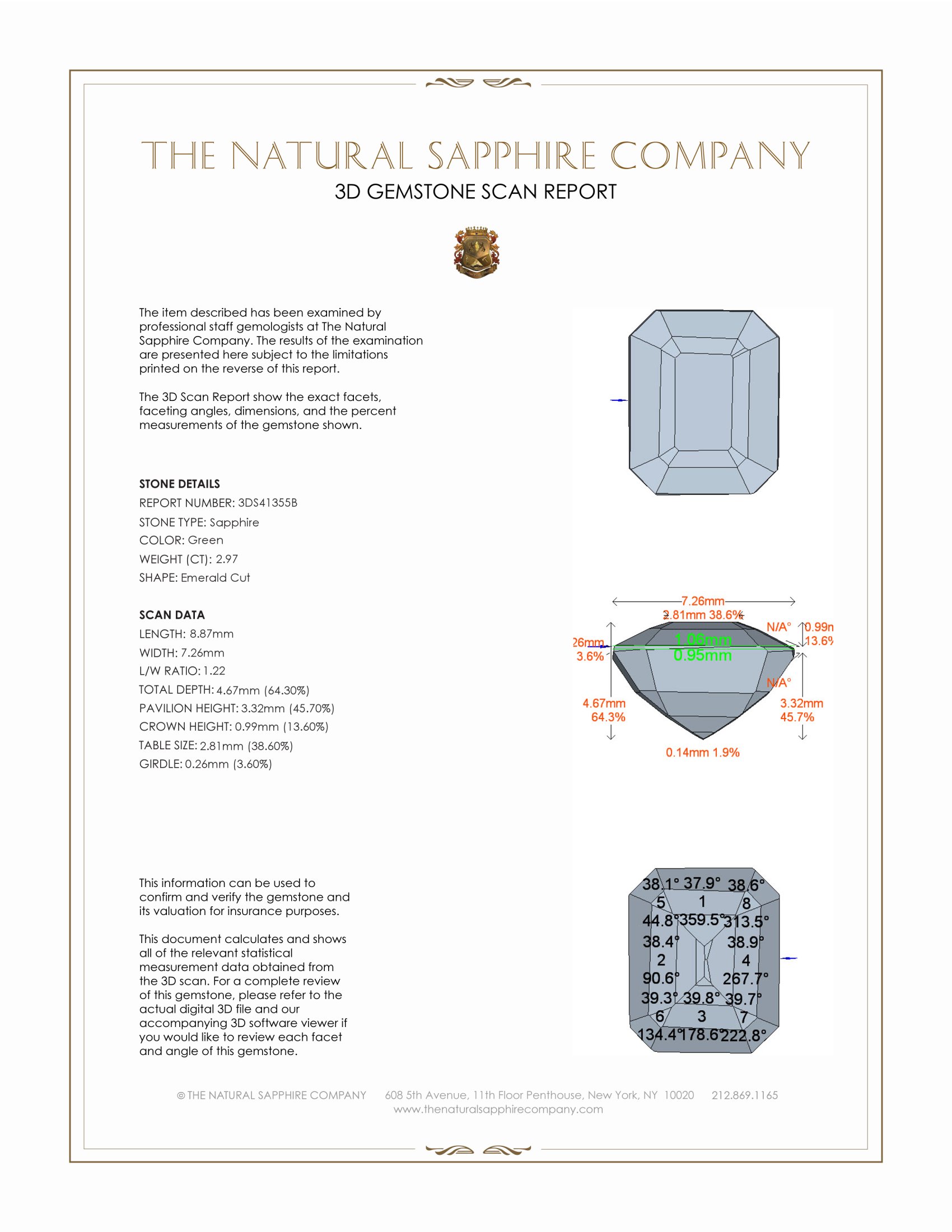
Dimensions (MM): help | Length: 8.87 Width: 7.26 Height: 4.67 |
Weight: | 2.97 Ct. |
Color: help | Bluish Green |
Color intensity: help | Vivid |
Clarity: help | Very Very Slightly Included |
Shape: help | Emerald Cut |
Cut: | Emerald Cut |
Cutting style: | Faceted |
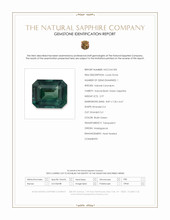
Enhancements: help | Heat Treated |
Origin: help | Madagascar |
Per carat price: help | $1,942 |
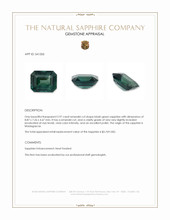
This transparent 2.97 carat emerald cut bluish green sapphire measures 8.87 x 7.26 x 4.67 mm, with a depth of 4.67 mm that yields a depth ratio of approximately 57.9 percent, and it has been precision cut into a classic emerald step cut to emphasize color and clarity. At The Natural Sapphire Company we note the stone presents a vivid color intensity, concentrated and evenly distributed across the broad table and step facets, and an excellent polish that produces clean facet junctions and crisp light return across the major planes. The clarity grade is very very slightly included as evaluated at eye level, which in practice delivers an eye clean face up appearance, with inclusions confined to minor crystal or rutile interruptions visible only under magnification and not disrupting the broad color flashes typical of a step cut. Enhancement is heat treatment, completed to standard industry practice, and the stone is documented as originating from Madagascar, a source noted for producing saturated and lively blue to bluish green corundum in recent decades.
Optically, this sapphire benefits from the intrinsic material properties of corundum, with a refractive index in the range of approximately 1.762 to 1.770, a birefringence on the order of 0.008 to 0.010, and a dispersion of approximately 0.018, characteristics that together yield stronger brilliance and contrast than most beryl and tourmaline varieties, while producing less fire than diamond. Compared to spinel, which has a lower refractive index near 1.718 but similar dispersion, this sapphire will show somewhat greater brilliance and stronger facet contrast, although spinel can appear more lively in small brilliant cuts due to its typically cleaner clarity. Against beryl group stones such as emerald or aquamarine, with refractive indices around 1.577 to 1.583 and dispersion near 0.014, the sapphire exhibits notably higher light return and deeper apparent saturation per millimeter of material, which is particularly advantageous in an emerald cut where color depth is read across wide, flat facets. When set side by side with tourmaline, which has refractive indices approximately 1.624 to 1.644, the sapphire projects a denser, more internally reflective appearance, and its hardness of Mohs 9 confers superior resistance to abrasion relative to most other colored gems, supporting longevity of facet polish and surface integrity.
From a cutting and setting perspective, the emerald cut here is employed to maximize face up color and to showcase the stone s very very slightly included clarity, rather than to prioritize scintillation as a brilliant cut would. The step facet architecture produces broad, linear flashes and a clean, architectural light pattern that communicates color saturation, hue, and clarity very directly, making this piece desirable for connoisseurs who prioritize hue uniformity and optical purity. The measured depth percent of approximately 57.9 percent is within the ideal range for a rectangular step cut, balancing face up spread with sufficient pavilion depth to promote internal reflection without causing dark windowing. For mounting, settings that present a large table and minimal bezel obstruction, such as four prong or low profile bezel variants with open gallery work, will optimize perceived color and allow the emerald cut s plane facets to interact with ambient light, whereas heavier closed bezels will mute the dynamic flashes and emphasize color saturation at the expense of contrast. Heat treatment enhances color homogeneity in this Madagascar sapphire, and the resulting stability of tone and saturation is consistent with standard gemological expectations, supporting its suitability for daily wear in engagement style settings and in bespoke collector pieces. The Natural Sapphire Company offers this sapphire as a technically vetted example of high clarity, vivid hue, and exemplary faceting, intended for buyers who assess gems primarily by optical performance, material metrics, and cutting proportions.


