
- Stone11
- Reports3
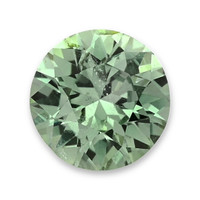


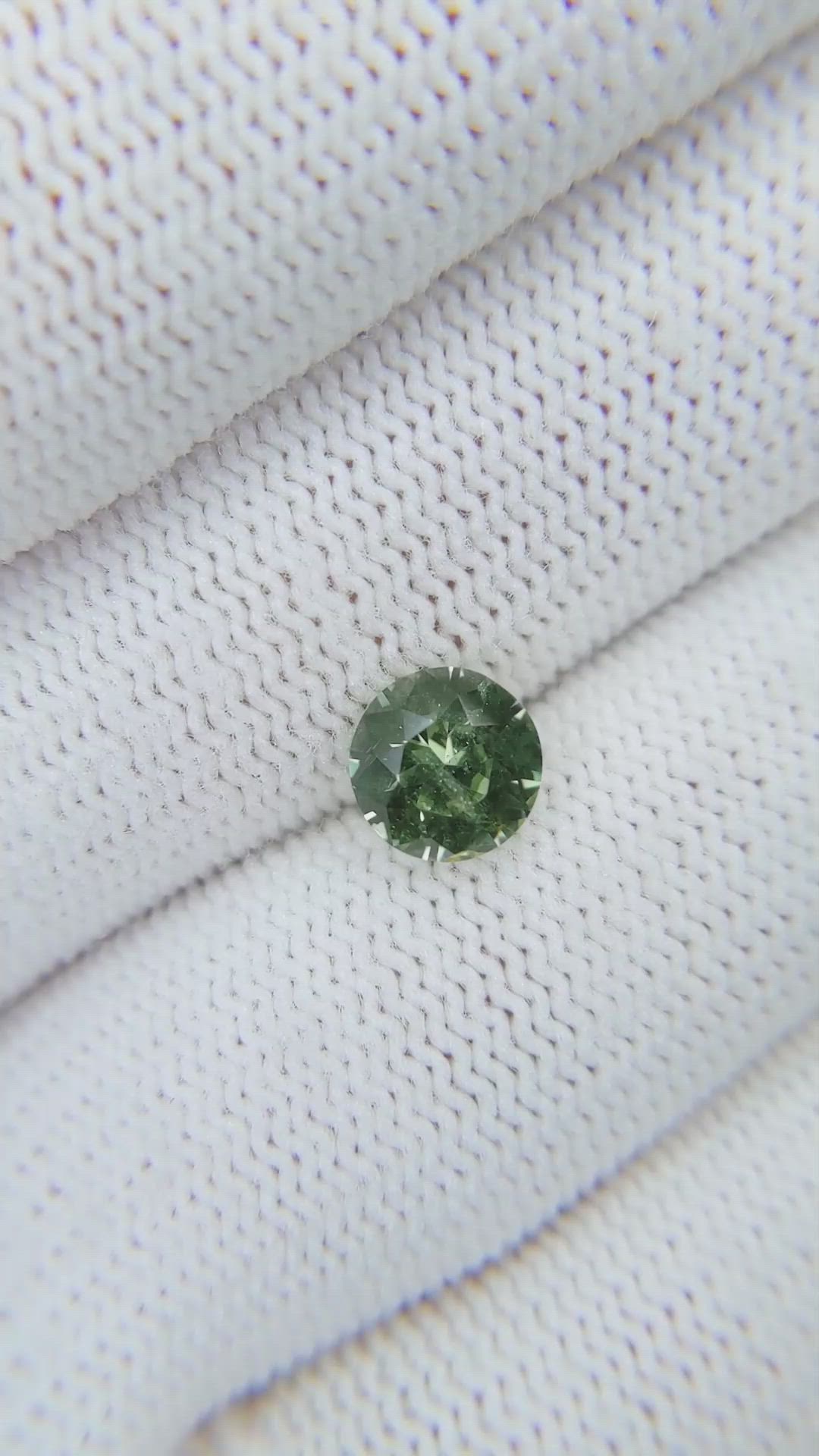
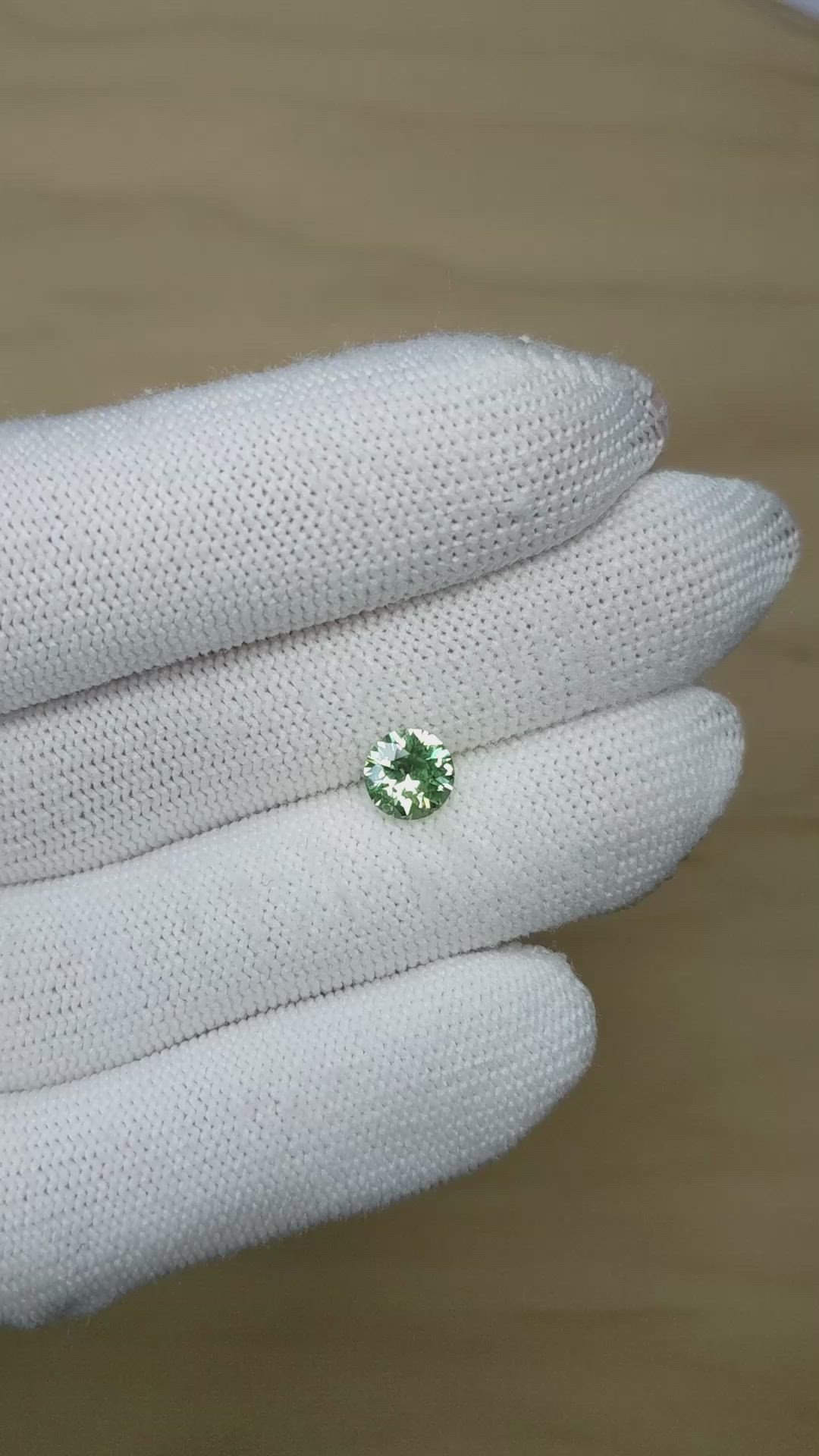
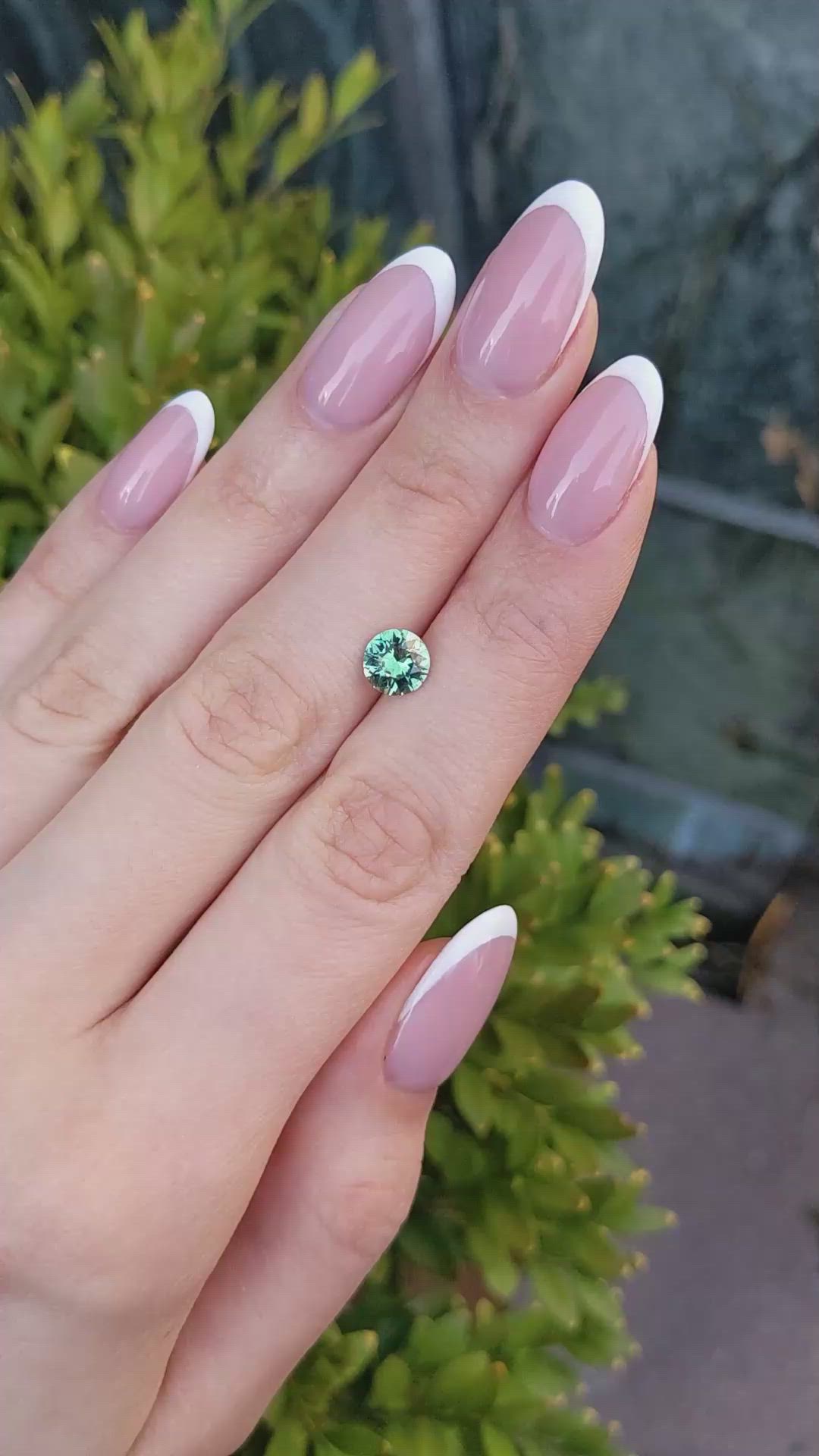




1.64 Ct. Green Sapphire from Montana
This loose stone is available to ship now
Item ID: | S38581 |
|---|---|
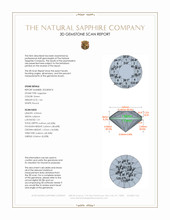
Dimensions (MM): help | Length: 6.96 Width: 6.86 Height: 4.49 |
Weight: | 1.64 Ct. |
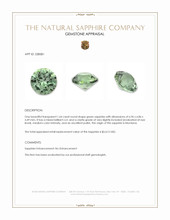
Color: help | Green |
Color intensity: help | Medium |
Clarity: help | Very Slightly Included |
Shape: help | Round |
Cut: | Mixed Brilliant Cut |
Cutting style: | Faceted |
Enhancements: help | No Enhancement |
Origin: help | Montana |
Per carat price: help | $3,423 |
This transparent green sapphire weighs 1.64 carat, and is presented in a classic round shape, with precise measurements of 6.96 x 6.86 x 4.49 mm. The cutting style is a mixed brilliant, chosen to balance face up color with lively facet scintillation, and the polish is graded excellent, delivering crisp facet junctions and a smooth surface finish. Clarity is described as very slightly included, evaluated at eye level, indicating modest internal features that are visible under careful inspection but do not meaningfully interrupt the gem s transparency or light performance. Color is of medium intensity, a steady and even green that reads as natural and restrained rather than overtly saturated, and there has been no enhancement to alter hue or clarity. The origin of this sapphire is Montana, and the piece is presented with the provenance and grading information used by The Natural Sapphire Company.
The geological story of this sapphire began millions of years ago deep within the continental crust, in an environment where aluminum rich material, low in silica, was subjected to sustained heat and pressure. Under these conditions corundum crystals nucleated, composing pure aluminum oxide, and as growth proceeded trace concentrations of iron, and to a lesser extent titanium, became incorporated into the crystal lattice. Those trace elements govern the sapphire s coloration, and in this specimen the balance of iron and titanium produced the subdued green that defines its appearance today. Slow crystal growth allowed for high transparency and orderly atomic arrangement, so that when the crystal was later liberated from its original host it retained clean optical qualities and the ability to refract light with clarity.
Over successive geological epochs the host rocks were uplifted, fractured, and exposed to surface weathering, processes that gradually liberated individual sapphire crystals from their parent pegmatite, metamorphic, or localized igneous settings. Running water and seasonal freeze thaw moved crystals downstream into gravel filled channels, where heavier minerals concentrated in placer deposits within streams and riverbeds. In Montana those alluvial traps preserved corundum crystals until modern prospecting and mining techniques recovered them. Weathering and transport polished crystal surfaces to a more rounded form in some cases, and subsequent human cutting reshaped the rough material into the round mixed brilliant that maximizes both its color and its optical return. The timeframe for these cycles of crystallization, uplift, erosion, and deposition spans millions of years, and each stage left measurable traces in the stone s internal character and external proportions.
Cutting and finishing were performed with attention to the sapphire s inherent strengths, matching facet angles to the stone s refractive properties so that the medium intensity green displays depth without appearing dark, and so that the excellent polish enhances window free brilliance. The mixed brilliant cut provides a controlled balance of crown and pavilion facets, which disperses light while preserving face up color, and the final stone presents as well proportioned at 6.96 x 6.86 x 4.49 mm, suitable for a range of jewelry settings that require both presence and subtlety. The very slightly included clarity grade, evaluated at eye level, reflects a natural internal fabric that testifies to the gem s geological past, rather than to modern treatment, and the absence of enhancement confirms the stone s untreated state. The Natural Sapphire Company documents origin and treatment status as part of its standard practice, ensuring transparency about provenance and quality. This green Montana sapphire thus carries both the technical specifications valued by connoisseurs, and a geological narrative that began deep underground millions of years ago, culminating in a finished gem that is stable, enduring, and straightforwardly described.


