
- Stone8
- Reports3
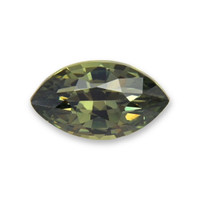
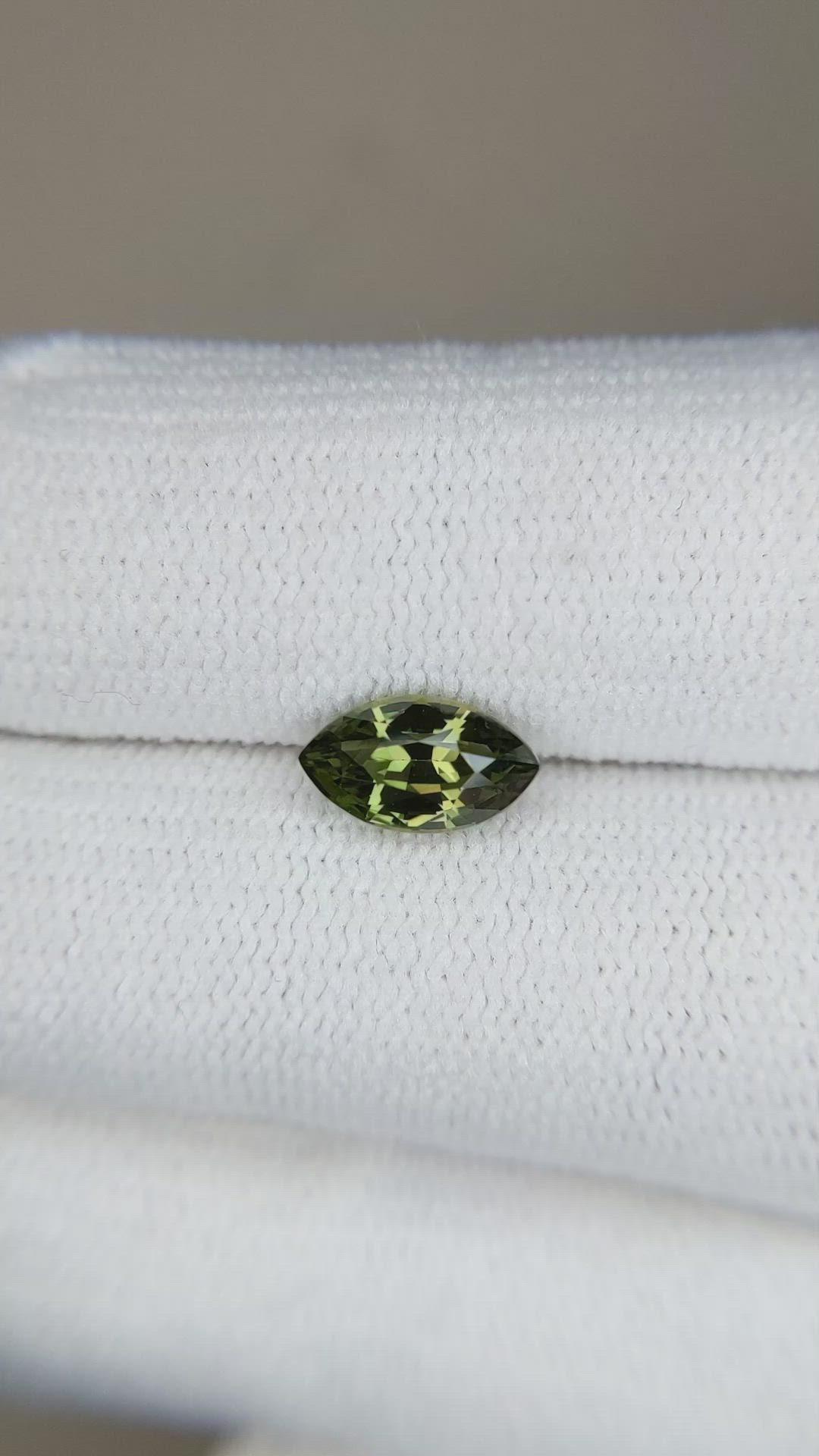
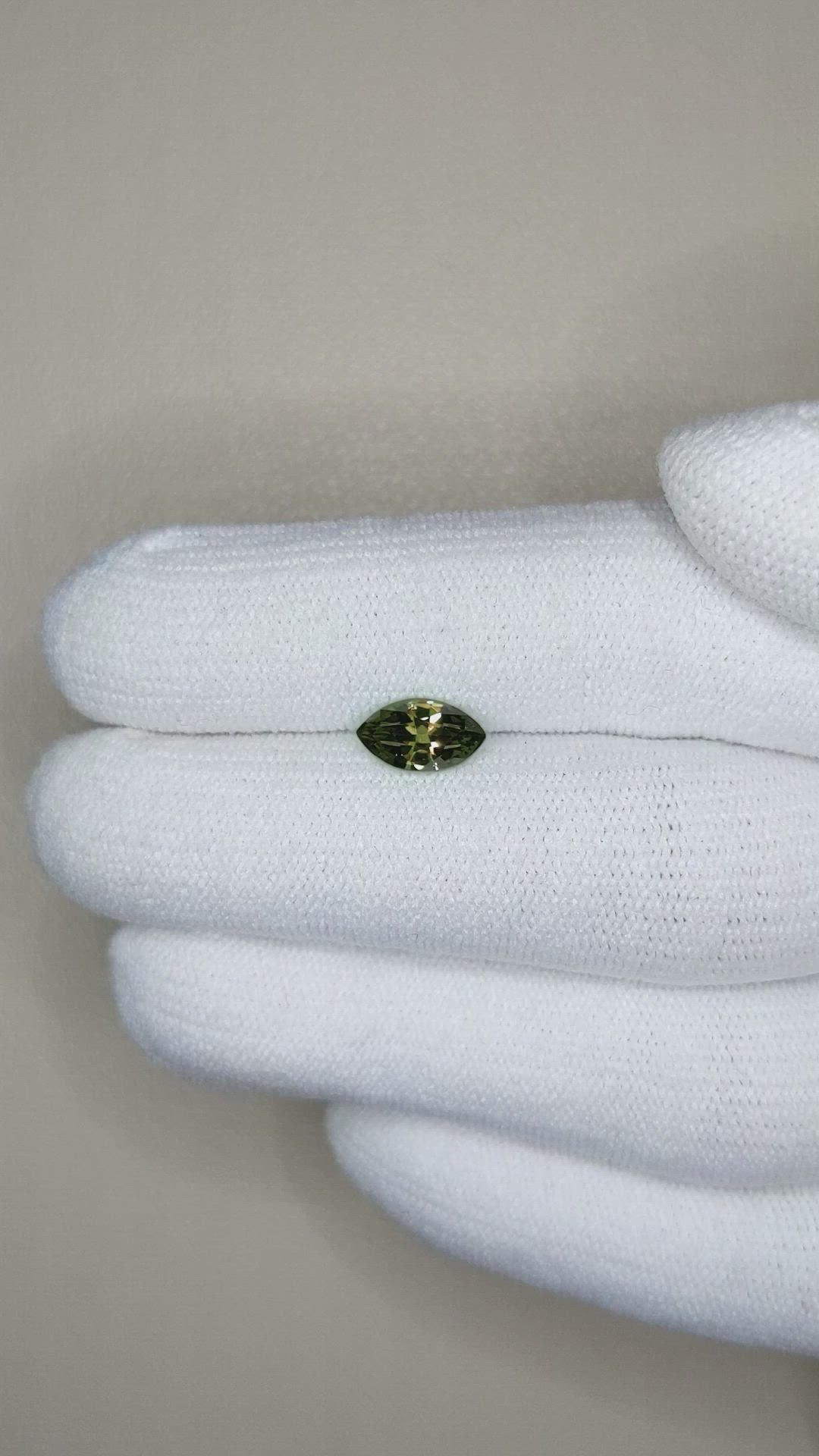


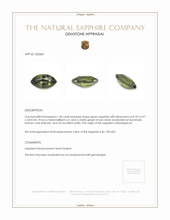
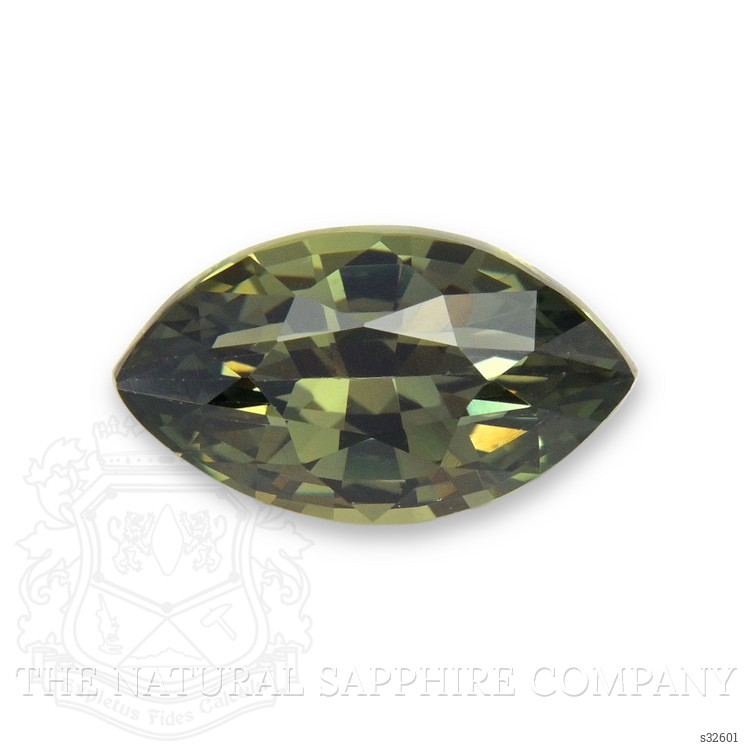


1.28 Ct. Green Sapphire from Madagascar
Item ID: | S32601 |
|---|---|
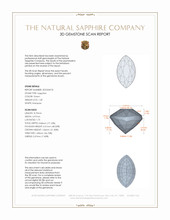
Dimensions (MM): help | Length: 8.7 Width: 4.97 Height: 3.83 |
Weight: | 1.28 Ct. |
Color: help | Green |
Color intensity: help | Intense |
Clarity: help | Eye Clean |
Shape: help | Marquise |
Cut: | Mixed Brilliant |
Cutting style: | Faceted |
Enhancements: help | Heat Treated |
Origin: help | Madagascar |
Per carat price: help | $1,350 |
This 1.28 carat marquise green sapphire presents a technically refined package of proportions, faceting and polish, suitable for a buyer who values exacting craftsmanship. The stone measures 8.70 x 4.97 x 3.83 mm, and the marquise outline has been executed with careful control of length to width ratio to preserve optical balance and minimize excessive bow tie contrast. The mixed brilliant cut employed here uses a brilliant style crown coupled with a modified pavilion arrangement, a faceting strategy selected to optimize return of incident light while retaining rough weight. The table and crown angles have been calibrated to encourage strong scintillation, and the pavilion facet layout is tuned to prevent light leakage along the keel, resulting in an efficient internal light economy. Clarity is graded as eye clean at normal viewing distance, indicating that the stone presents no visible inclusions to the unaided eye, and the excellent polish expresses crisp facet junctions and minimal surface abrasions, enabling high fidelity of facet reflection. The sapphire is transparent and displays intense color saturation, and the material has undergone routine heat treatment to stabilize color and reduce silk without altering the fundamental character of the stone. This specimen originates from Madagascar, a source known for producing corundum with complex color zoning and strong saturation in secondary hues.
From an optical materials perspective, this green sapphire performs differently than many other green gemstones in the marketplace, due to the inherent refractive and dispersion properties of corundum. Corundum typically exhibits a refractive index in the high one point seven range, and a modest dispersion value, combined with a specific gravity around four point zero, which collectively yield a type of brilliance characterized by strong internal reflectivity and controlled fire. Compared to peridot, which has a lower refractive index, this sapphire shows crisper facet reflections and greater apparent brightness under the same lighting conditions. Compared to tourmaline, which often displays pleochroism but lower overall refractivity, the sapphire tends to present more energetic scintillation and crisper facet contrast. When set against sharp high dispersion stones such as tsavorite garnet, the sapphire will generally exhibit less fiery spectral breakup due to lower dispersion, however the sapphire compensates with superior light return and a harder, more durable surface. Relative to emerald, a beryl species with a lower refractive index and common clarity issues, this sapphire presents cleaner facet reflections and greater resistance to wear, while delivering a denser visual presence due to higher specific gravity. The mixed brilliant faceting on this marquise has been optimized to take full advantage of corundum optical constants, yielding lively, angular flashes from the crown facets and a well modulated scintillation pattern from the pavilion facets, while the excellent polish accentuates the stone surface reflectivity and minimizes stray light absorption.
Craftsmanship considerations and practical handling notes are relevant for a discerning buyer. The marquise silhouette inherently generates a light distribution pattern that can include a bow tie across the center, and in this example The Natural Sapphire Company has adjusted pavilion depth and facet alignment to reduce pronounced dark zones, resulting in an even face up appearance when viewed in both direct and diffuse lighting. The intense color intensity in this Madagascar sapphire reads as a balanced olive green to slightly yellowish green tone in mixed lighting, and the material demonstrates subtle pleochroic shifts between slightly more yellow green and more bluish green directions, an optical trait that can be used creatively in jewelry design to enhance perceived depth. Heat treatment is a common and stable enhancement for corundum, and in this stone the heat process has been executed to remove silk and intensify hue without introducing glassy fills or unstable treatments, preserving long term stability for everyday wear. For settings, a low profile bezel will protect the delicate points of the marquise, while a well engineered prong setting can showcase the faceting and maximize brilliance, the excellent polish and eye clean clarity permit close mounting without visible inclusions or surface disruption. For buyers who prioritize technical specifications and optical performance, this marquise green sapphire offers a compelling balance of cut engineering, material quality, and stable enhancement history, and The Natural Sapphire Company stands ready to provide additional measured data and viewing images to assist in evaluation and selection.


