
- Stone14
- Reports3


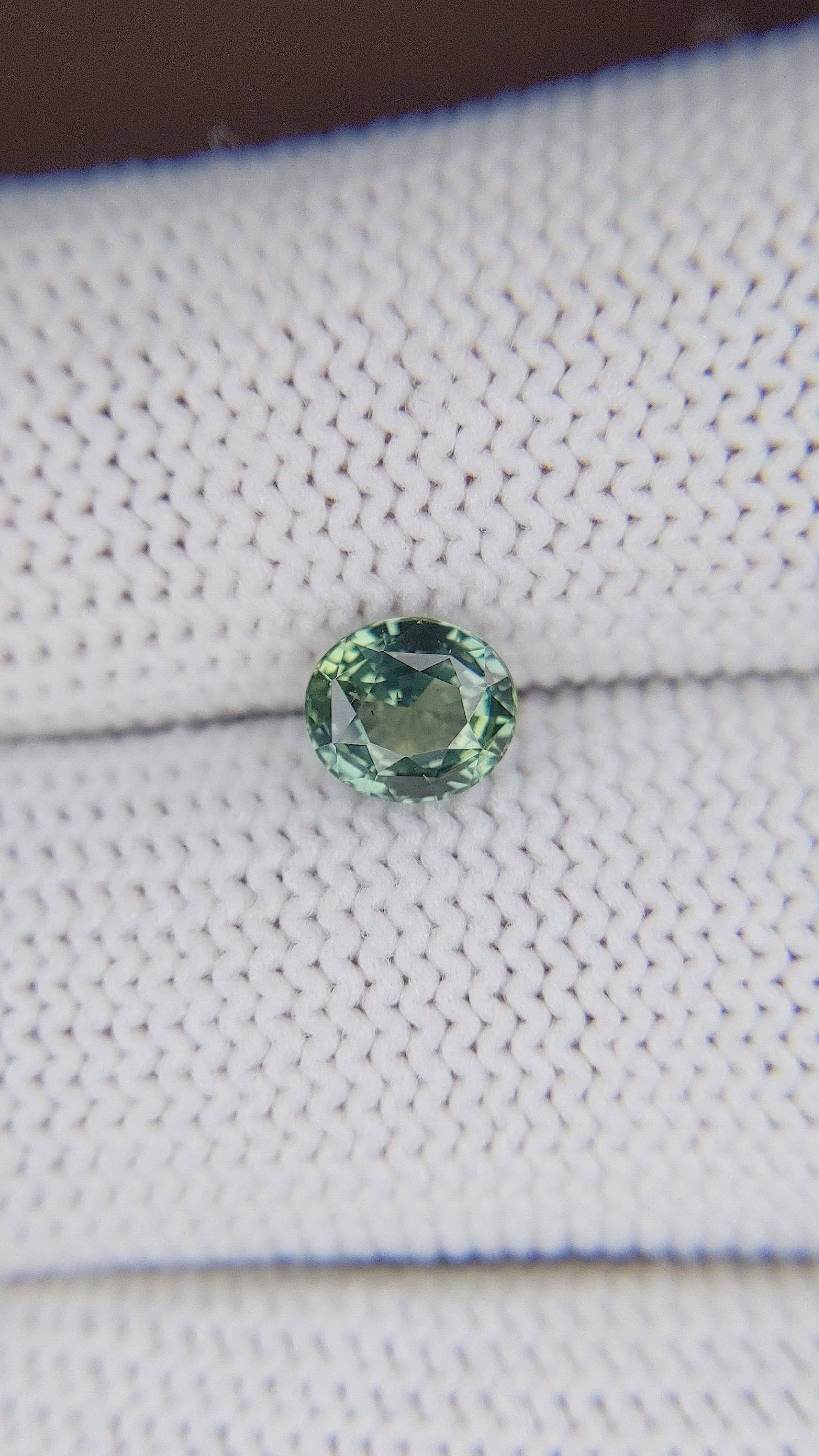
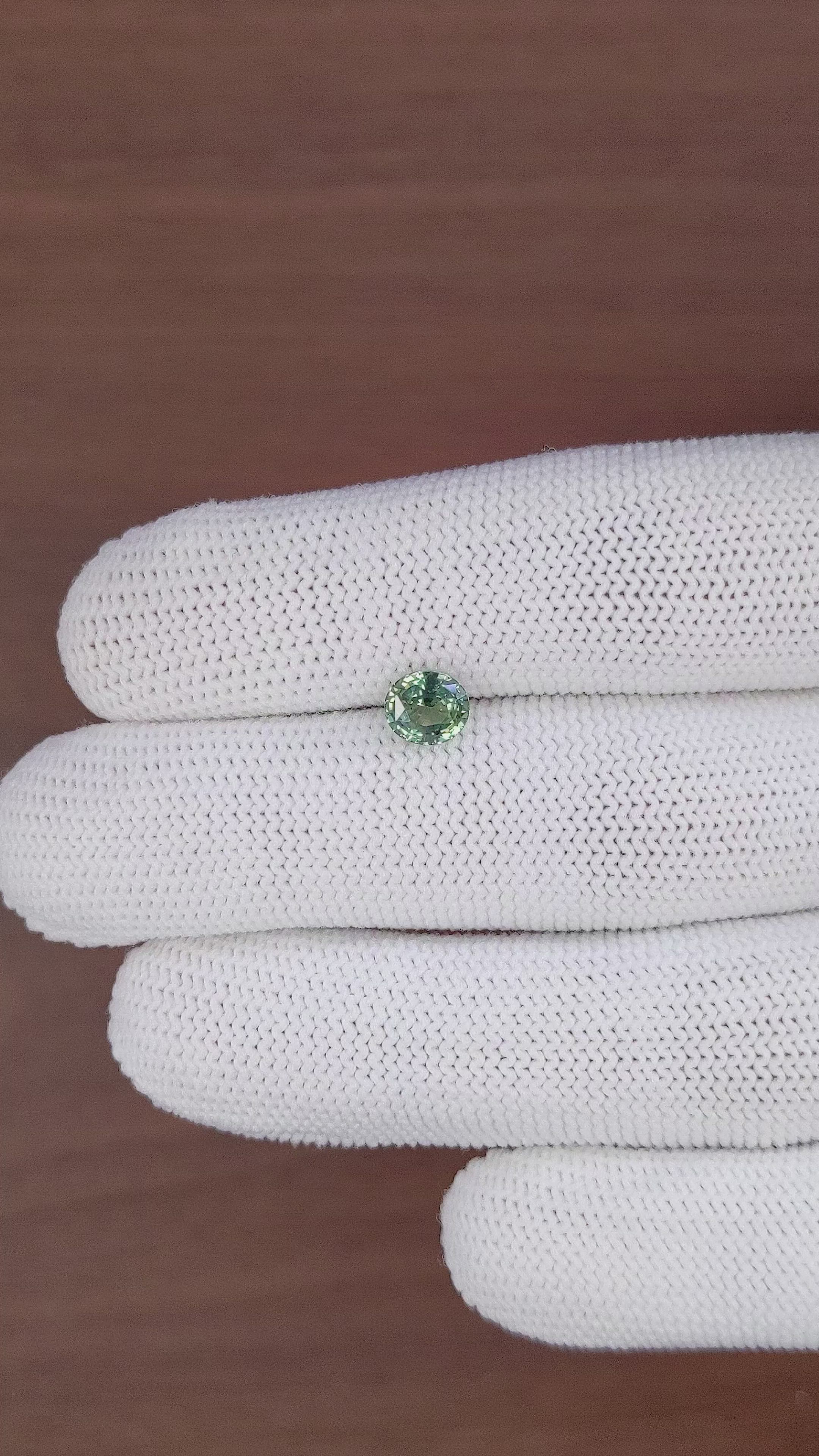
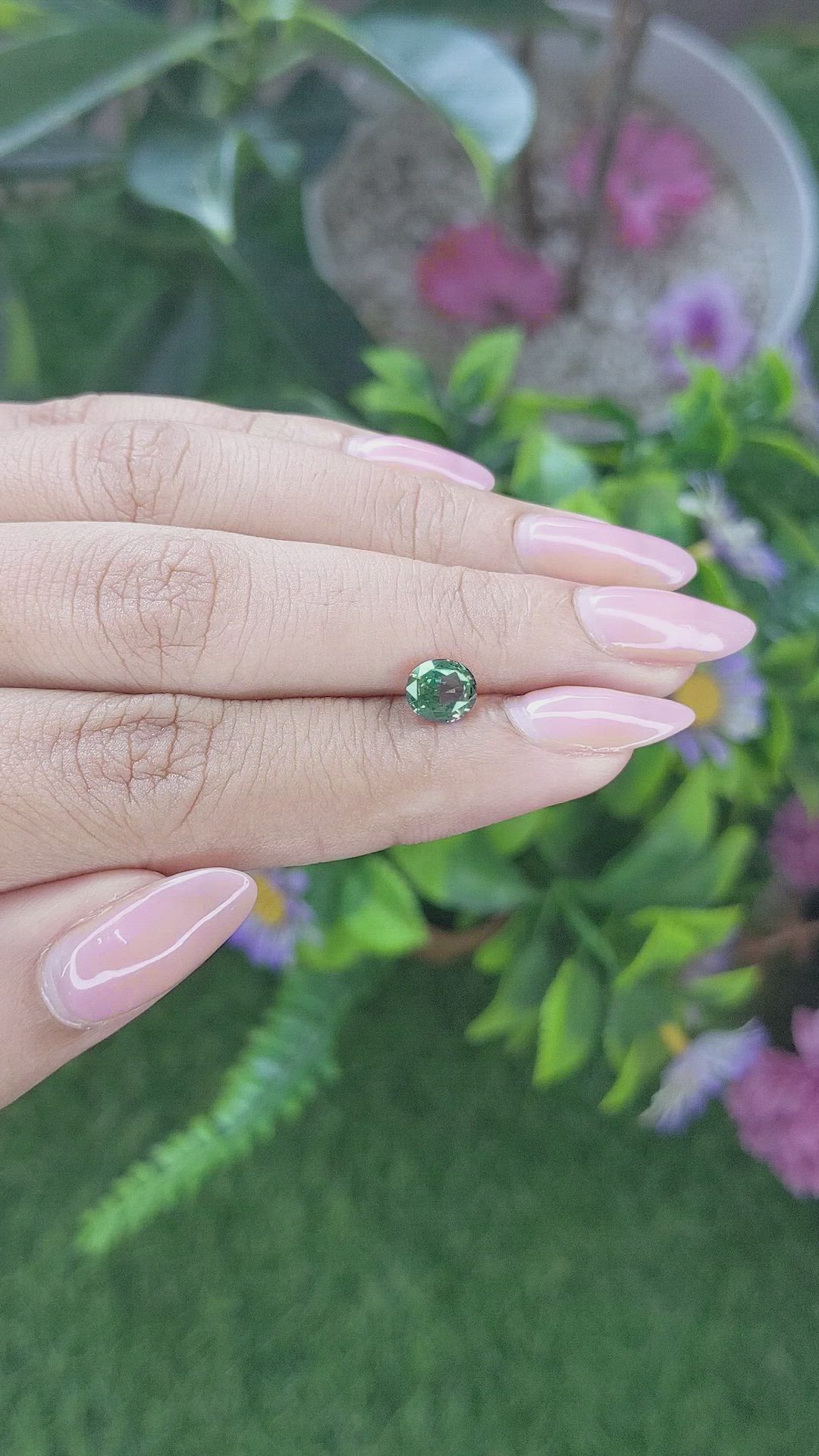
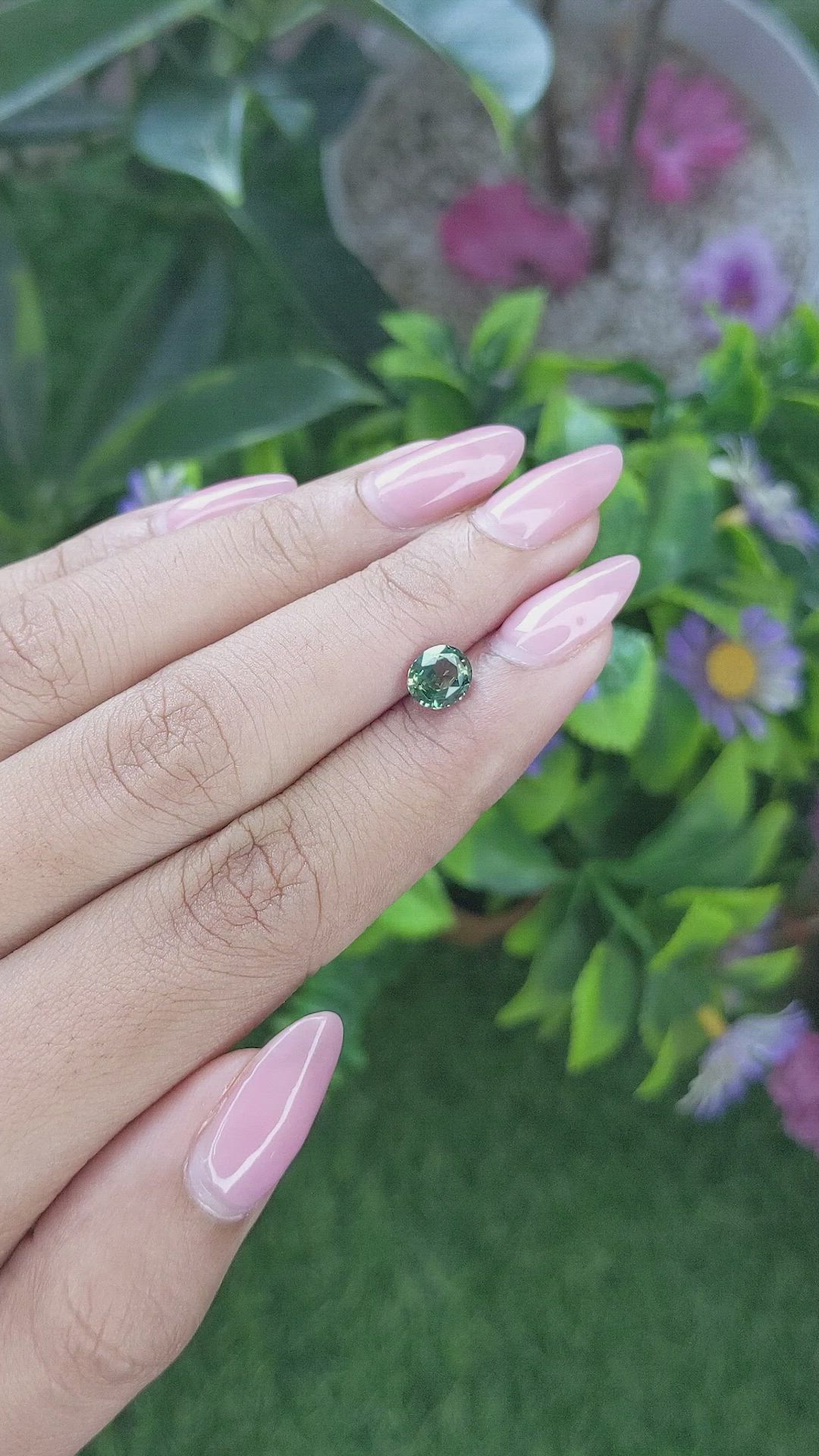
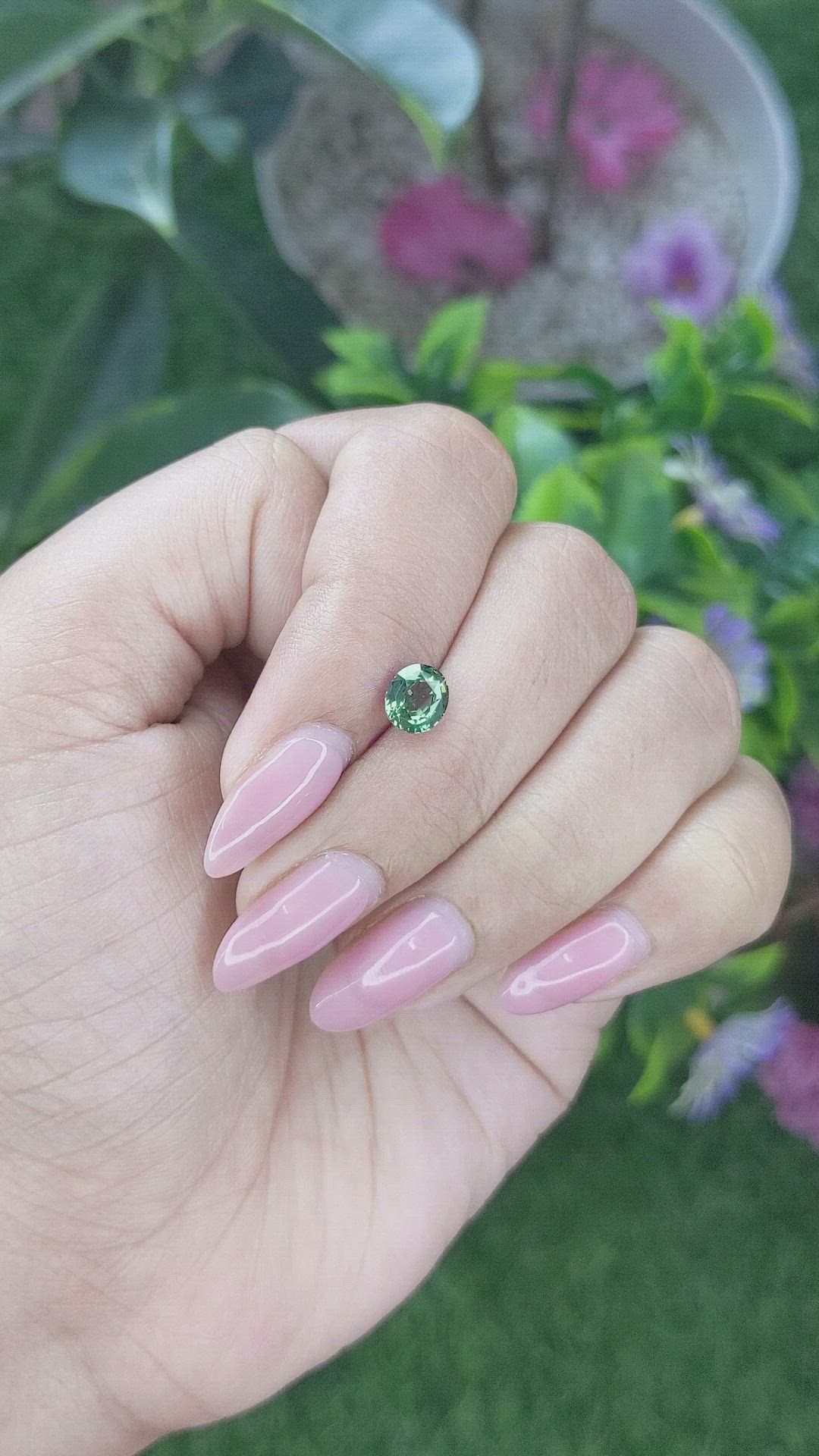




1.25 Ct. Green Sapphire from Tanzania
This loose stone ships by Apr 24
Item ID: | S38375 |
|---|---|
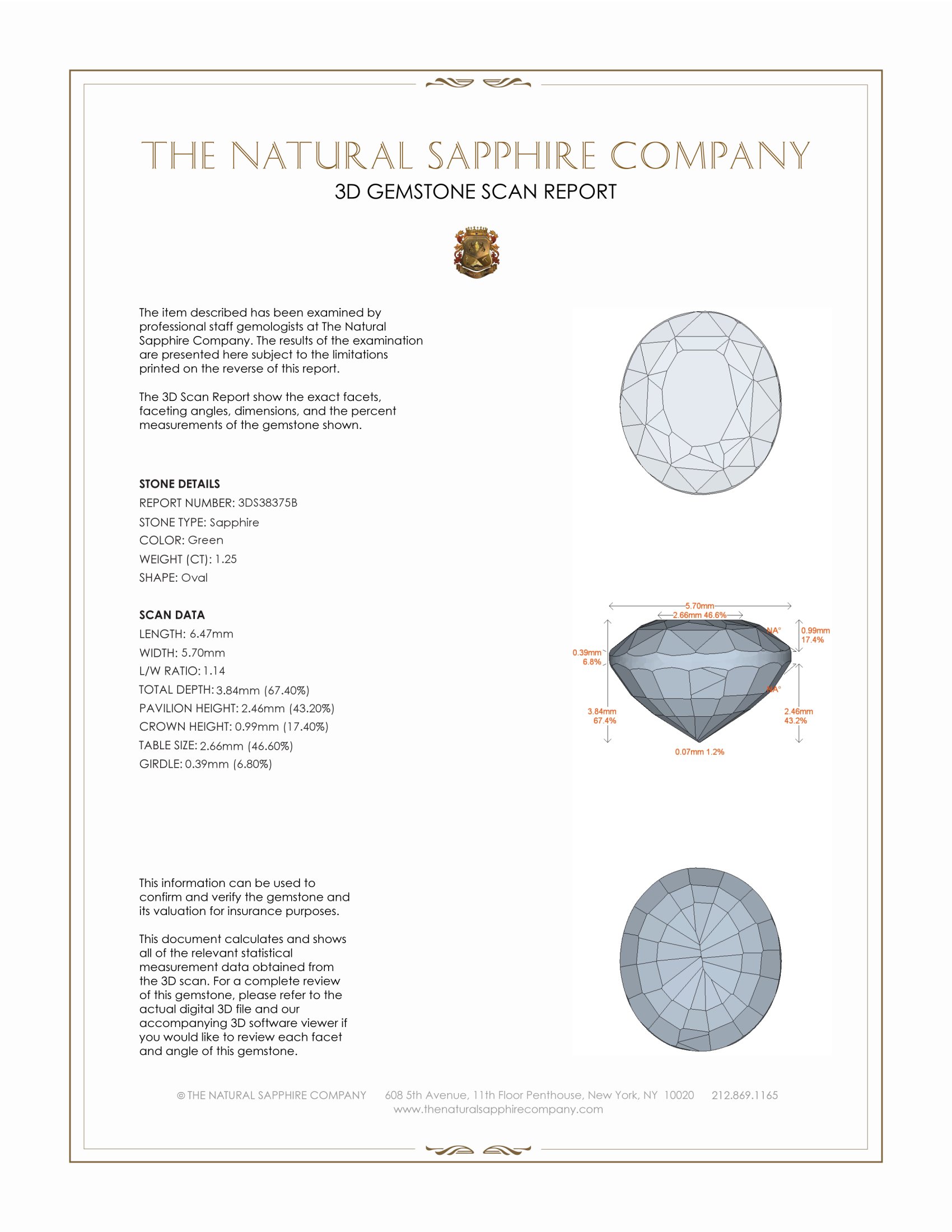
Dimensions (MM): help | Length: 6.47 Width: 5.7 Height: 3.84 |
Weight: | 1.25 Ct. |
Color: help | Green |
Color intensity: help | Medium |
Clarity: help | Slightly Included |
Shape: help | Oval |
Cut: | Mixed Brilliant |
Cutting style: | Faceted |
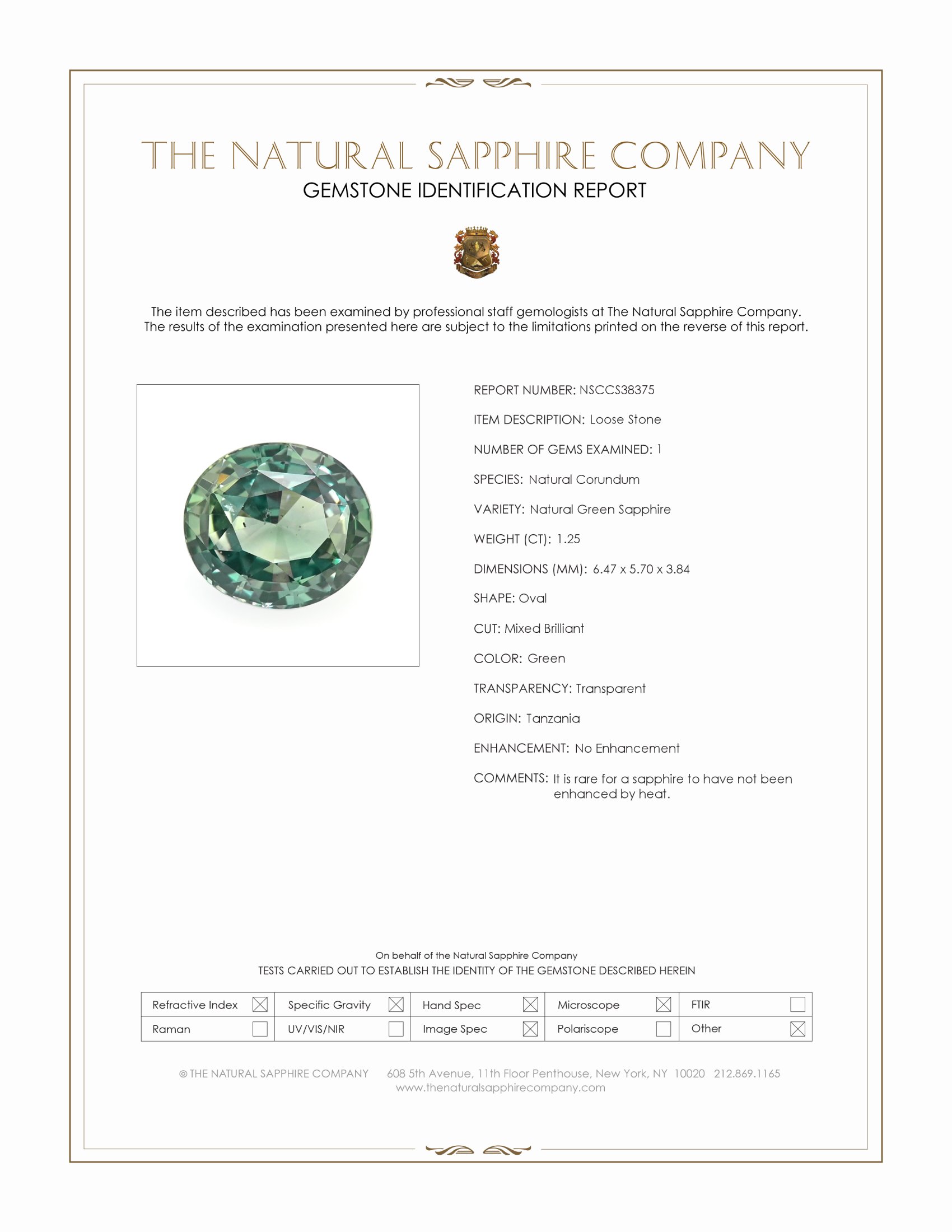
Enhancements: help | No Enhancement |
Origin: help | Tanzania |
Per carat price: help | $480 |
One beautiful transparent 1.25 carat oval green sapphire is presented here with dimensions of 6.47 x 5.70 x 3.84 mm, a mixed brilliant cut, and an excellent polish, originating from Tanzania. This sapphire displays a medium color intensity that balances a lively green hue with notable clarity, evaluated as slightly included at eye level. The mixed brilliant cut combines facets designed for both table and pavilion to maximize light return and create well defined flashes of brilliance across the surface, while the oval outline provides a classic yet contemporary profile that sits elegantly in rings and pendants. Importantly, this stone has undergone no enhancement, a characteristic that preserves the natural state of its color and internal features, and that will be meaningful to buyers who prioritize untreated material and natural provenance.
From a gem grading perspective the clarity grade of slightly included at eye level indicates that the stone contains inclusions that are visible under direct inspection but do not dominate the gem or prevent it from exhibiting strong optical performance. Slight inclusions in corundum often take the form of small crystal or pinpoint features that can be seen when examined closely, however in a well cut mixed brilliant they tend to be masked by facet reflections and the dynamic play of light. The excellent polish contributes directly to the perceived sharpness of facet junctions and the overall surface brightness, so even with slight inclusions the stone maintains a crisp look. The dimensions and depth relationship, with a 3.84 mm depth for an oval of this girdle size, support efficient light return through the crown and pavilion, helping to preserve both brilliance and face up color, and ensuring that the gem reads as a vivid green in a variety of lighting environments.
When comparing reflective qualities to other gemstones within its category, this Tanzanian green sapphire merits close attention. Corundum, the mineral family that includes sapphires, has a refractive index that is higher than that of beryl and many common green gems, which translates into stronger light return and a crisper appearance than stones with lower refractive indices. Compared to emerald, which is a beryl, the sapphire will typically display greater brilliance and more lively flashes, because emeralds tend to have lower refractive indices and often heavier inclusions that diffuse light. Against green tourmaline, the sapphire again shows superior light performance in most cases, as tourmaline can have attractive color saturation but generally returns less light at facet junctions. Compared to tsavorite garnet, which is also prized for vivid green, a corundum sapphire will usually show a slightly different sparkle quality, with corundum offering a steadier, more scintillating reflection, whereas garnet can show intense but more localized flashes due to its higher dispersion. The mixed brilliant cut on this sapphire emphasizes a combination of broad flash and scintillation, making its reflective behavior balanced between lively fire and sustained brilliance, a trait that discerning buyers often prefer when selecting stones for everyday wear.
For the educated buyer considering value and long term wearability, several factors make this stone especially compelling. First, the hardness of corundum is a significant practical advantage, it ranks 9 on the Mohs scale which means it is resistant to scratches and well suited to rings and other jewelry subjected to frequent use. Second, the absence of enhancement is a key value attribute, since untreated stones command premium interest among collectors and clients who seek natural color and untouched formation. Third, Tanzanian origin is notable because Tanzania has become recognized for producing sapphires with distinctive and attractive color ranges, and buyers often place importance on traceable origins when assessing both rarity and provenance. Finally, The Natural Sapphire Company stands ready to provide detailed information on this stone, including high resolution imagery and any available documentation regarding origin and assessment methods, enabling a buyer to make a confident and informed decision. This green sapphire combines technical quality with aesthetic versatility, offering an elegant green face up color, strong light performance compared to many alternative green gems, and the durable characteristics that make it an enduring and valuable choice.


