
- Stone15
- Reports4
-round-bluishgreen-sapphire-1.2500-cts-s36137-1.jpg?d=200x200&v=20260112232508)
-round-green-sapphire-1.2500-cts-s36137-lifestyleimage-1.jpg?d=200x200&v=20260216034815)
-round-green-sapphire-1.2500-cts-s36137-lifestyleimage-2.jpg?d=200x200&v=20260216034815)
-round-green-sapphire-1.2500-cts-s36137-lifestyleimage-3.jpg?d=200x200&v=20260216034815)


-round-bluishgreen-sapphire-1.2500-cts-s36137-1.jpg?d=750x750&s=nsc&v=20260112232508)
-round-green-sapphire-1.2500-cts-s36137-lifestyleimage-1.jpg?d=750x750&s=nsc&v=20260216034815)
-round-green-sapphire-1.2500-cts-s36137-lifestyleimage-2.jpg?d=750x750&s=nsc&v=20260216034815)
-round-green-sapphire-1.2500-cts-s36137-lifestyleimage-3.jpg?d=750x750&s=nsc&v=20260216034815)




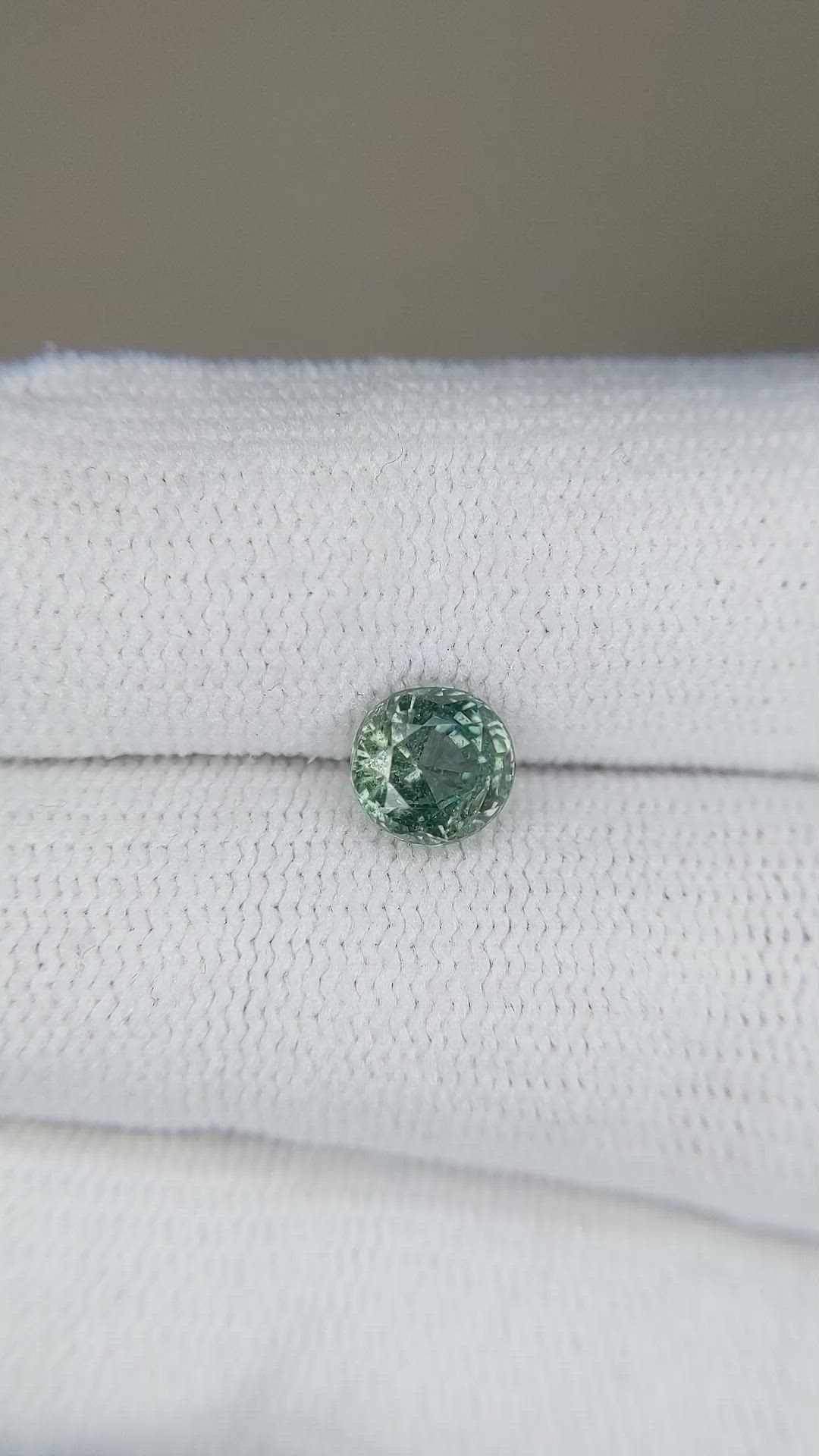
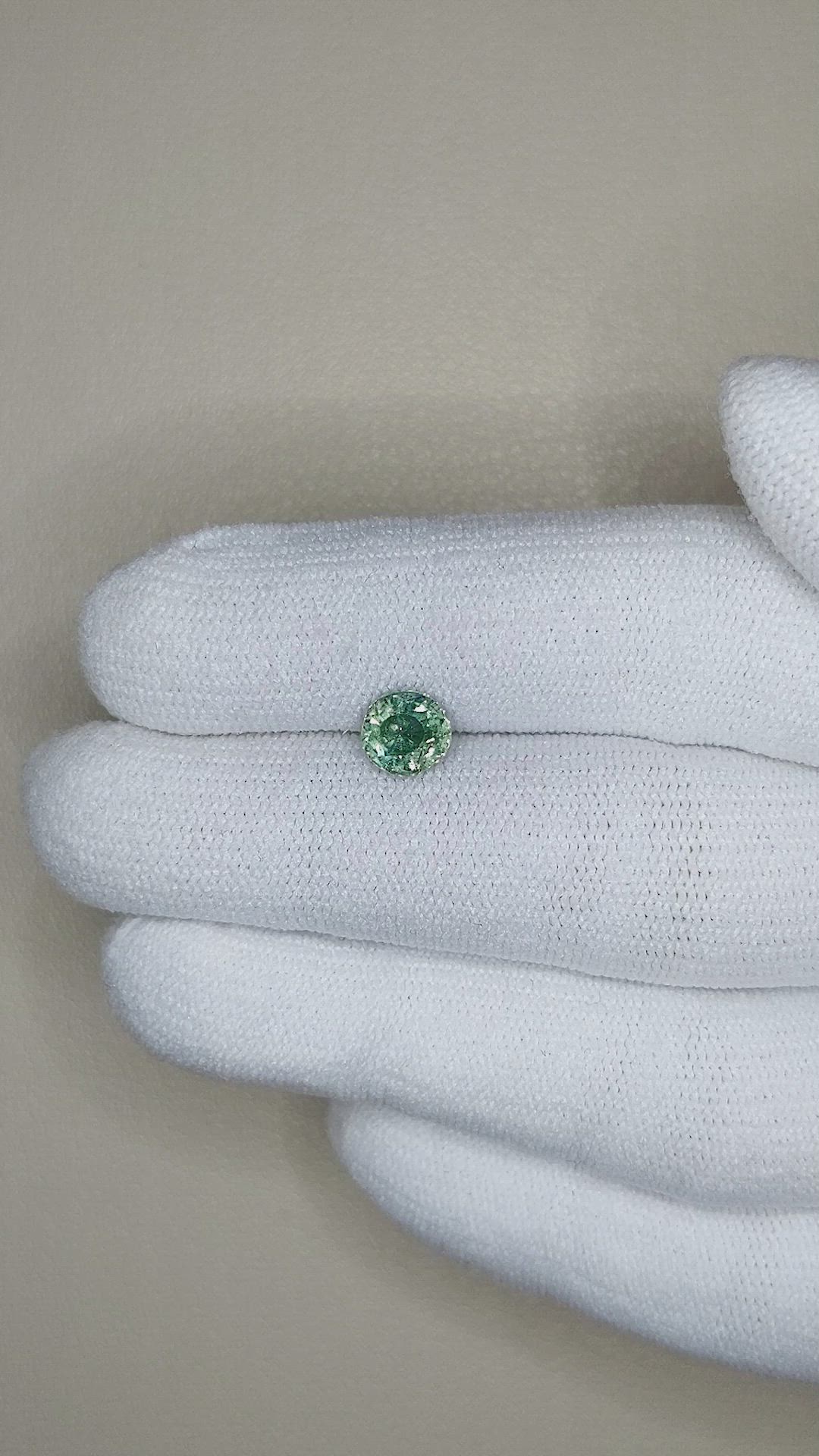
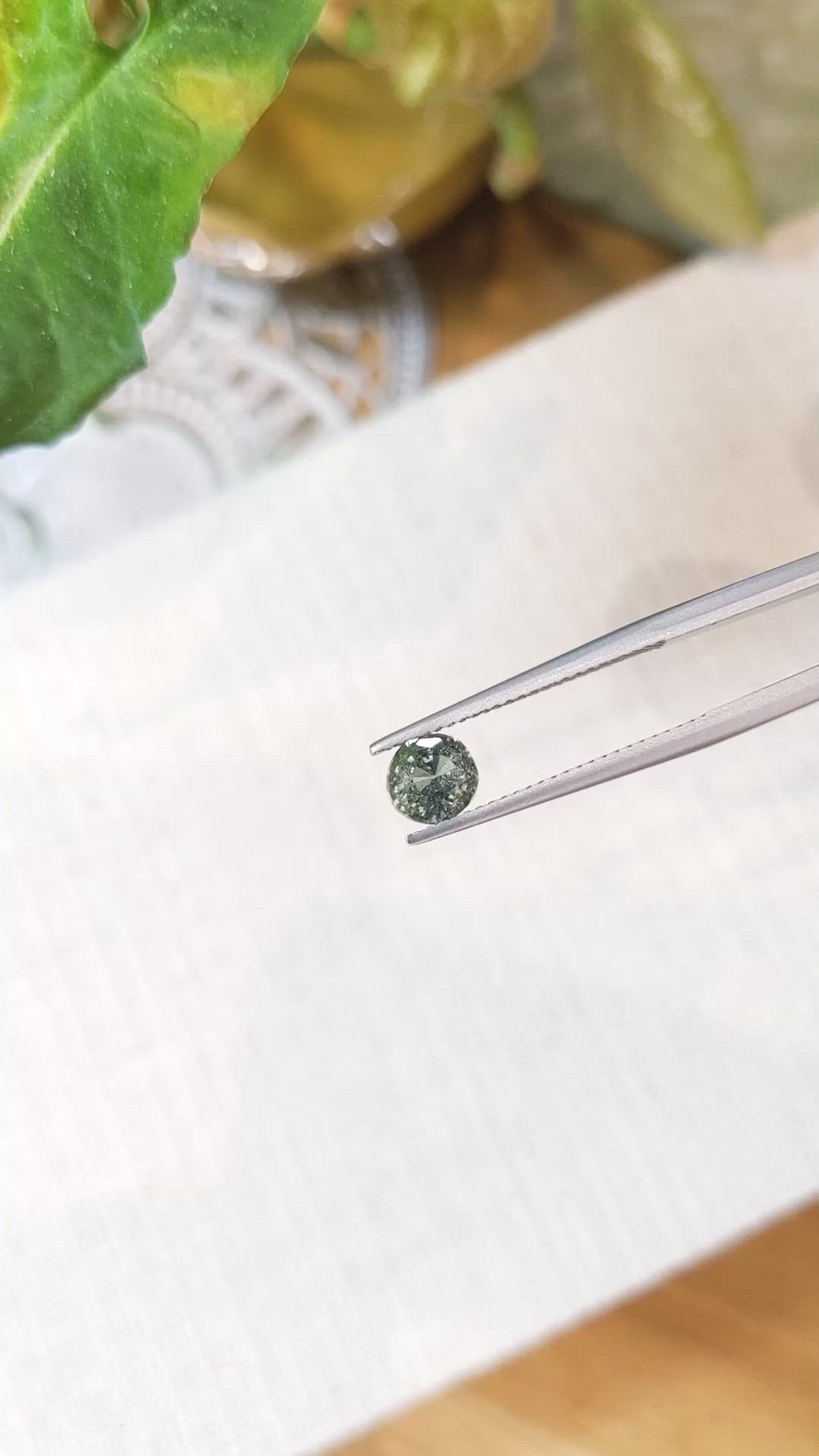
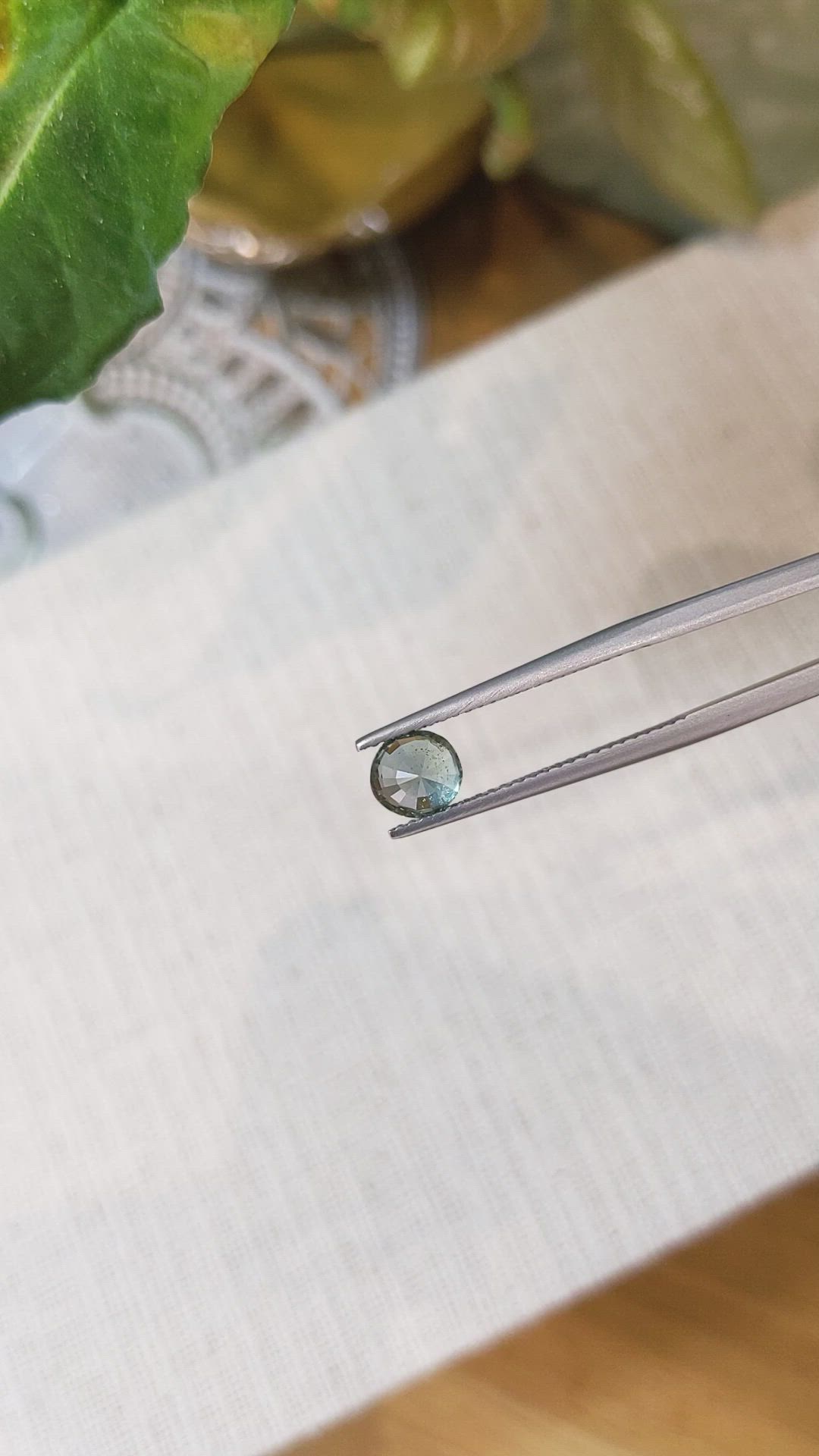
1.25 Ct. Green Sapphire from Ceylon (Sri Lanka)
Item ID: | S36137 |
|---|---|
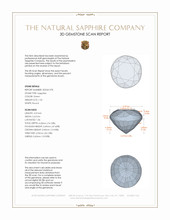
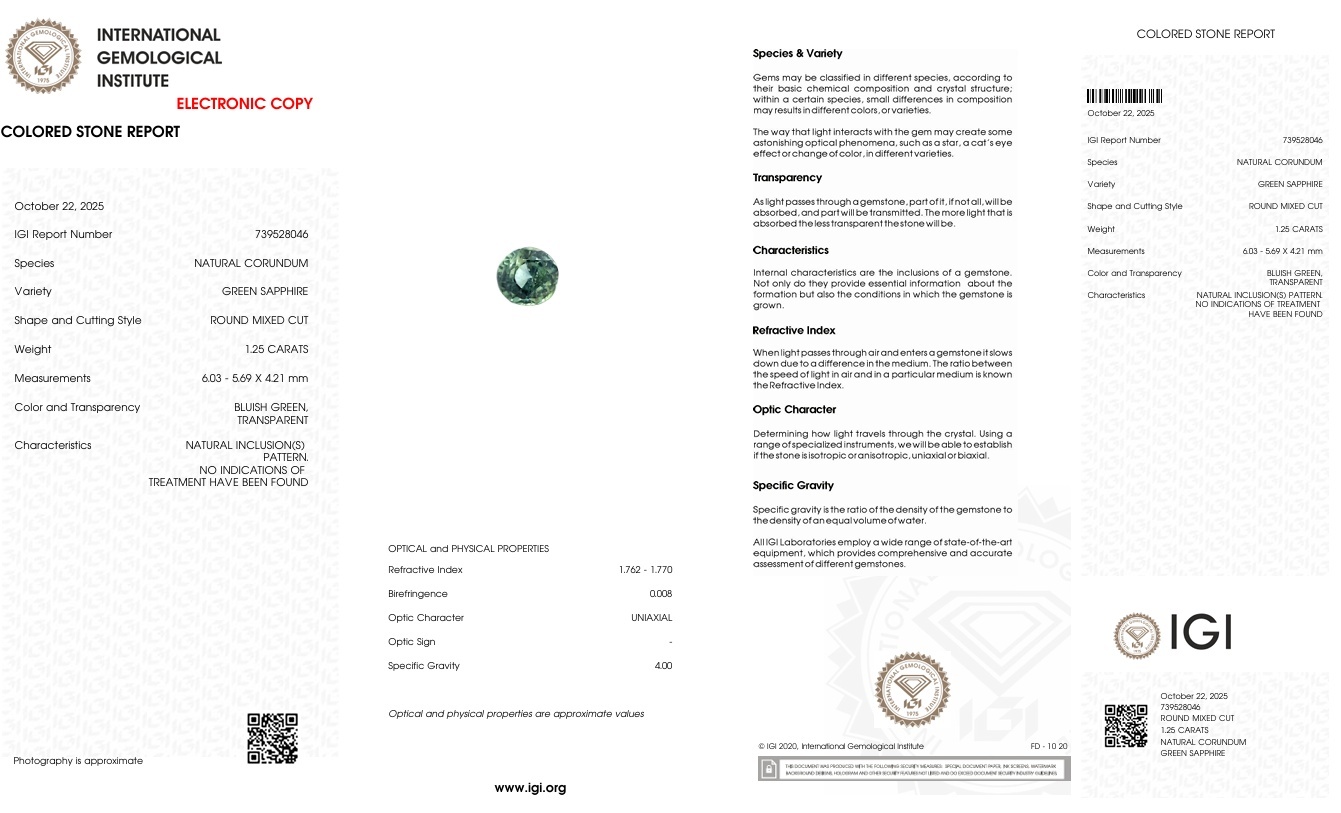
Dimensions (MM): help | Length: 6.01 Width: 5.67 Height: 4.2 |
Weight: | 1.25 Ct. |
Color: help | Green |
Color intensity: help | Medium |
Clarity: help | Slightly Included |
Shape: help | Round |
Cut: | Mixed Brilliant |
Cutting style: | Faceted |
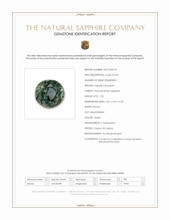
Enhancements: help | No Enhancement |
Origin: help | Ceylon (Sri Lanka) |
Per carat price: help | $560 |
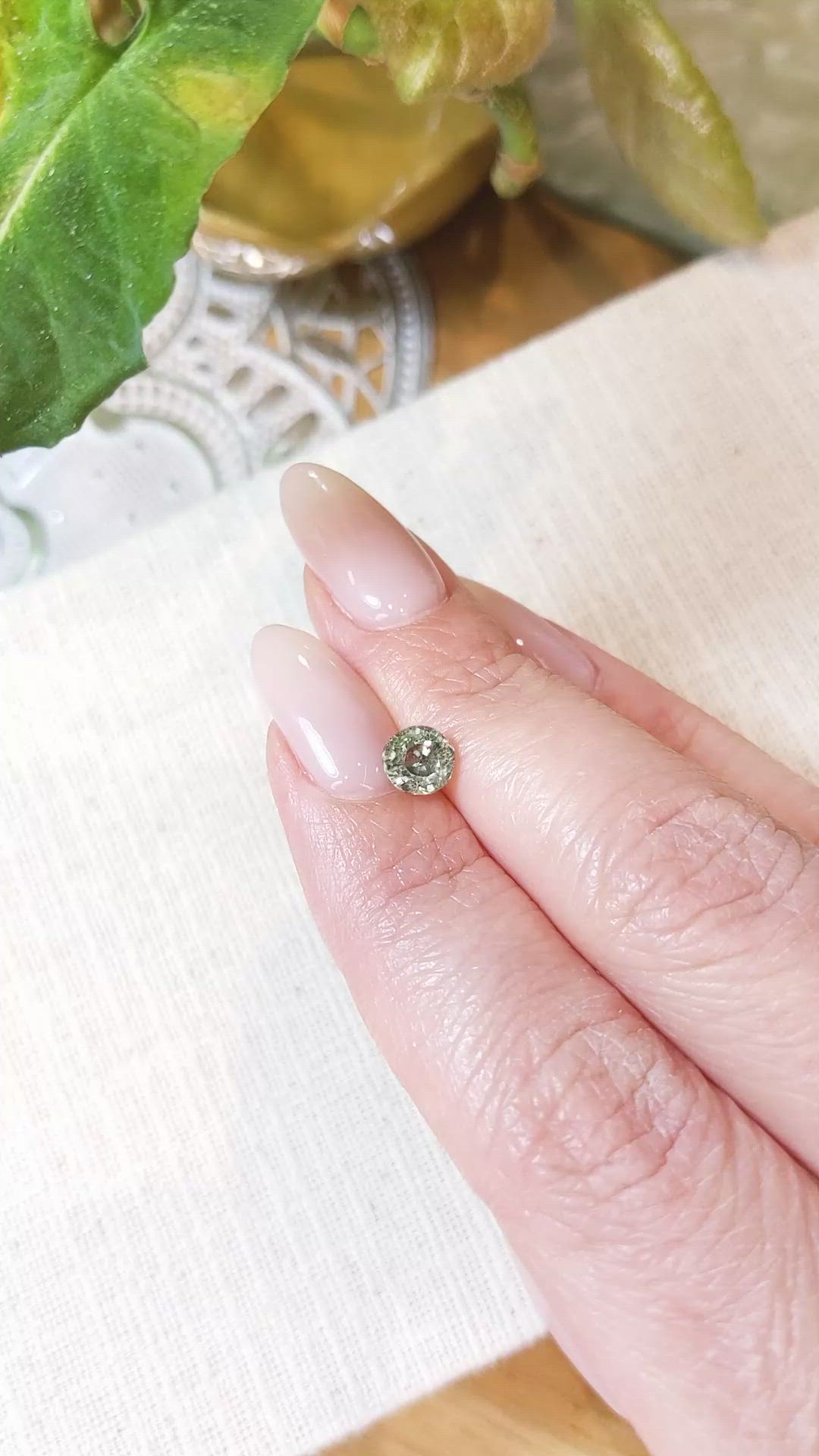
This listing describes a single, natural green sapphire of notable quality from Ceylon, Sri Lanka. The stone weighs 1.25 carats and is fashioned into a round shape with a mixed brilliant cut. Exact dimensions measure 6.01 x 5.67 x 4.20 millimeters, yielding an overall depth that is approximately 72 percent of the average diameter. The material is transparent, with a medium intense green hue that sits between soft pastel and deep forest tones, and the color presents a balanced saturation across the table. Clarity is graded as slightly included when evaluated at eye level, which means the stone retains strong visual appeal while showing internal features under close inspection that are consistent with naturally formed sapphires. Polish is excellent, producing crisp facet junctions and lively light return, and the sapphire has not undergone any enhancement.
The mixed brilliant cut used for this gem is selected to optimize both scintillation and color display. The pavilion facets contribute to depth and internal reflection, while the crown facets focus light toward the table, creating a pleasing combination of sparkle and color depth. At the stated dimensions the stone offers a compact profile suitable for a variety of settings, with the slightly deeper pavilion contributing to color saturation without overwhelming brilliance. The excellent polish ensures that light travels clearly through the stone, and the transparency allows the medium intense green to be appreciated from multiple viewing angles. The clarity grade of slightly included is typical for natural stones of this size and origin, and the internal characteristics serve as a natural fingerprint that confirms the gem is not synthetic.
When comparing this natural Ceylon sapphire to lab grown alternatives, several distinctions are relevant for buyers focused on provenance, rarity, and long term value. Lab grown sapphires are chemically and physically similar to natural corundum, and they offer uniform color and clarity at a more accessible price point. Natural sapphires, however, are formed over geological time under unique environmental conditions, and that process imparts subtle, one of a kind inclusions and growth patterns that cannot be replicated in the laboratory. Those natural inclusions are often appreciated by connoisseurs as part of a stones individuality, and they support accurate origin determination when paired with professional gemological analysis. Ceylon, Sri Lanka, has a long history of producing sapphires with distinctive color characteristics, and an untreated stone from this source carries both scientific and cultural provenance.
Beyond uniqueness and provenance, natural untreated sapphires like this one can offer advantages in perceived value and emotional resonance. Because they are finite and tied to specific mining regions, many collectors and clients view natural stones as heirloom quality, suitable for pieces intended to be passed down between generations. Natural sapphires that remain unenhanced are also prized because their color and clarity reflect the stones original state, without the need for heat treatment or diffusion to modify appearance. While market trends can vary and no guarantee of appreciation is appropriate, natural, untreated stones from reputable sources often command a pricing premium over comparable lab grown material. For everyday wear, sapphire ranks high for durability with a hardness second only to diamond among common gem materials, making this natural green sapphire a practical choice for rings and other jewelry that will be worn frequently.
For practical considerations and care, this 1.25 carat Ceylon green sapphire will perform well in a variety of settings, including solitaire rings, halo designs, and bespoke pieces that highlight color and cut. Secure prong or bezel settings help protect the girdle and pavilion, and routine maintenance involves gentle cleaning with warm water, mild detergent, and a soft brush, followed by careful drying. Avoid exposure to harsh chemicals and extreme mechanical shock, and have settings inspected periodically by a professional jeweler. The Natural Sapphire Company sources and inspects each stone through experienced gemologists, and we welcome inquiries about certification, matching stones for paired settings, and bespoke mounting options. This natural, untreated Ceylon sapphire represents a balance of gemological integrity, aesthetic appeal, and practical durability for clients seeking an authentic and enduring green sapphire.


