


- Ring19
- Stone5
- Setting5
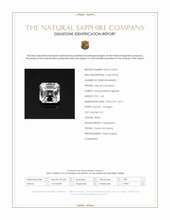
- Reports4
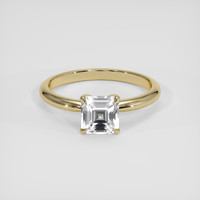
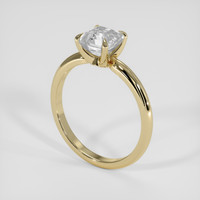
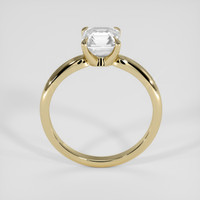








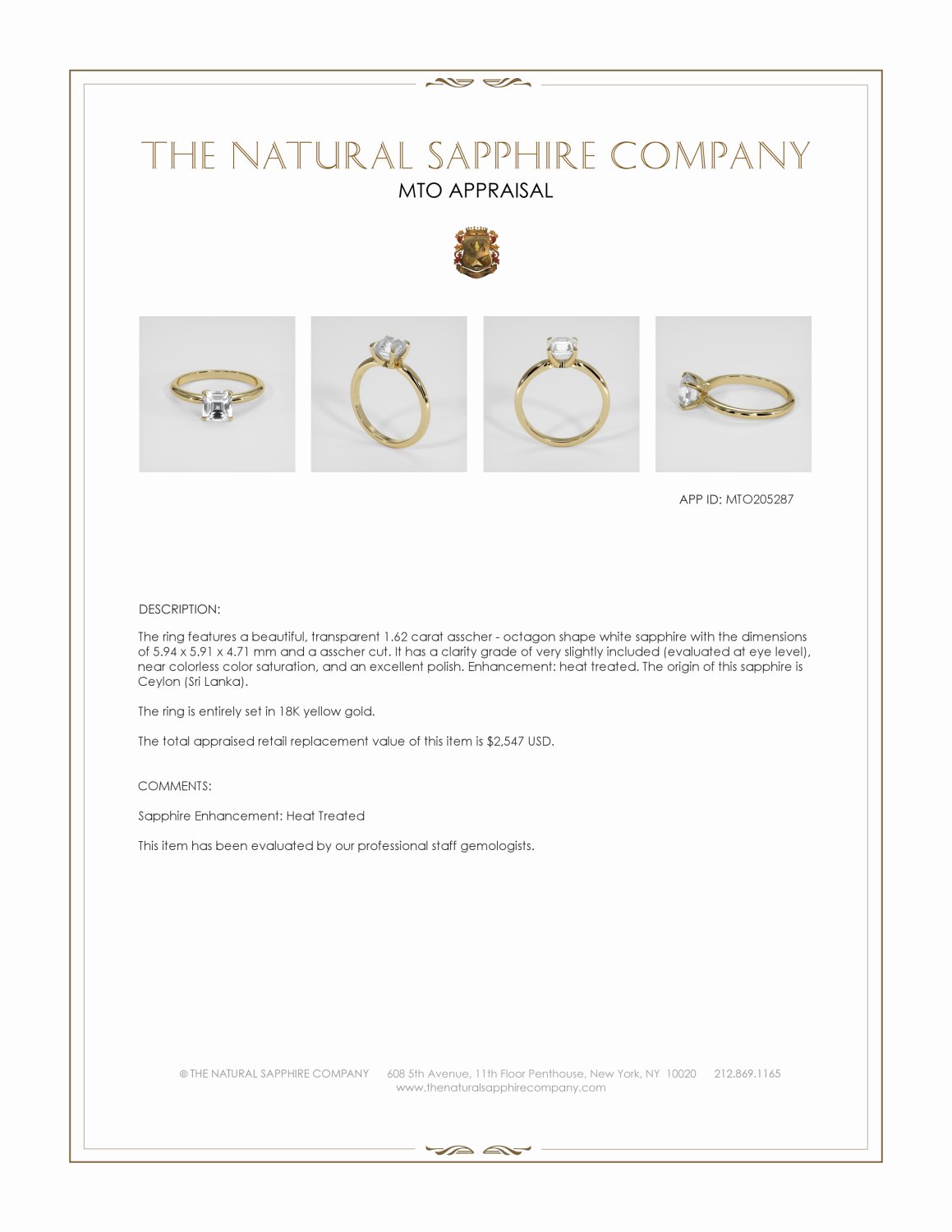

Solitaire White Sapphire Ring 1.62 Ct., 18K Yellow Gold


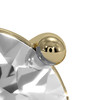
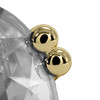


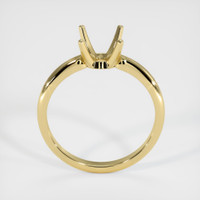
Wax Polymer Replica
Model of your Completed
Setting Design!

View 360° media
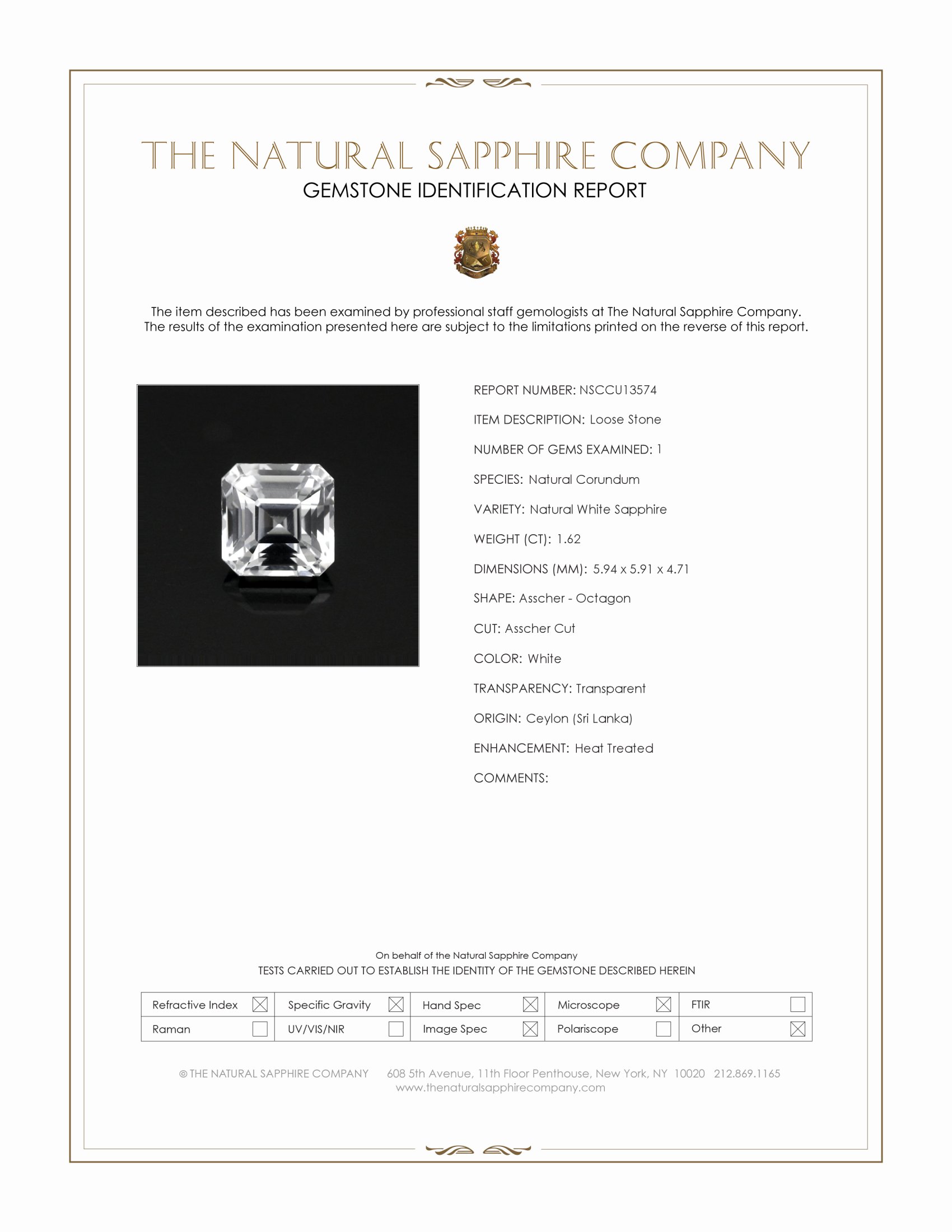
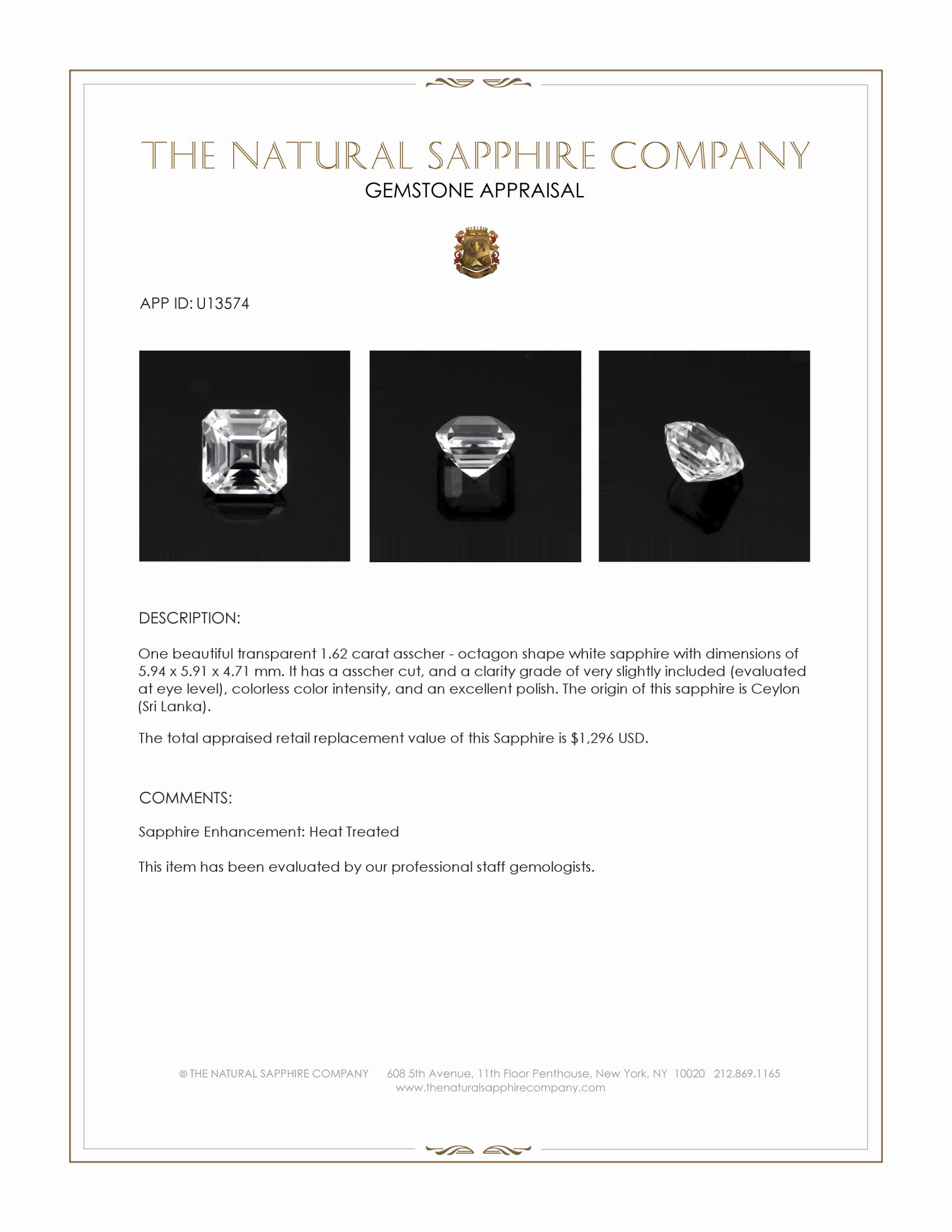
Item ID: | U13574 |
|---|---|
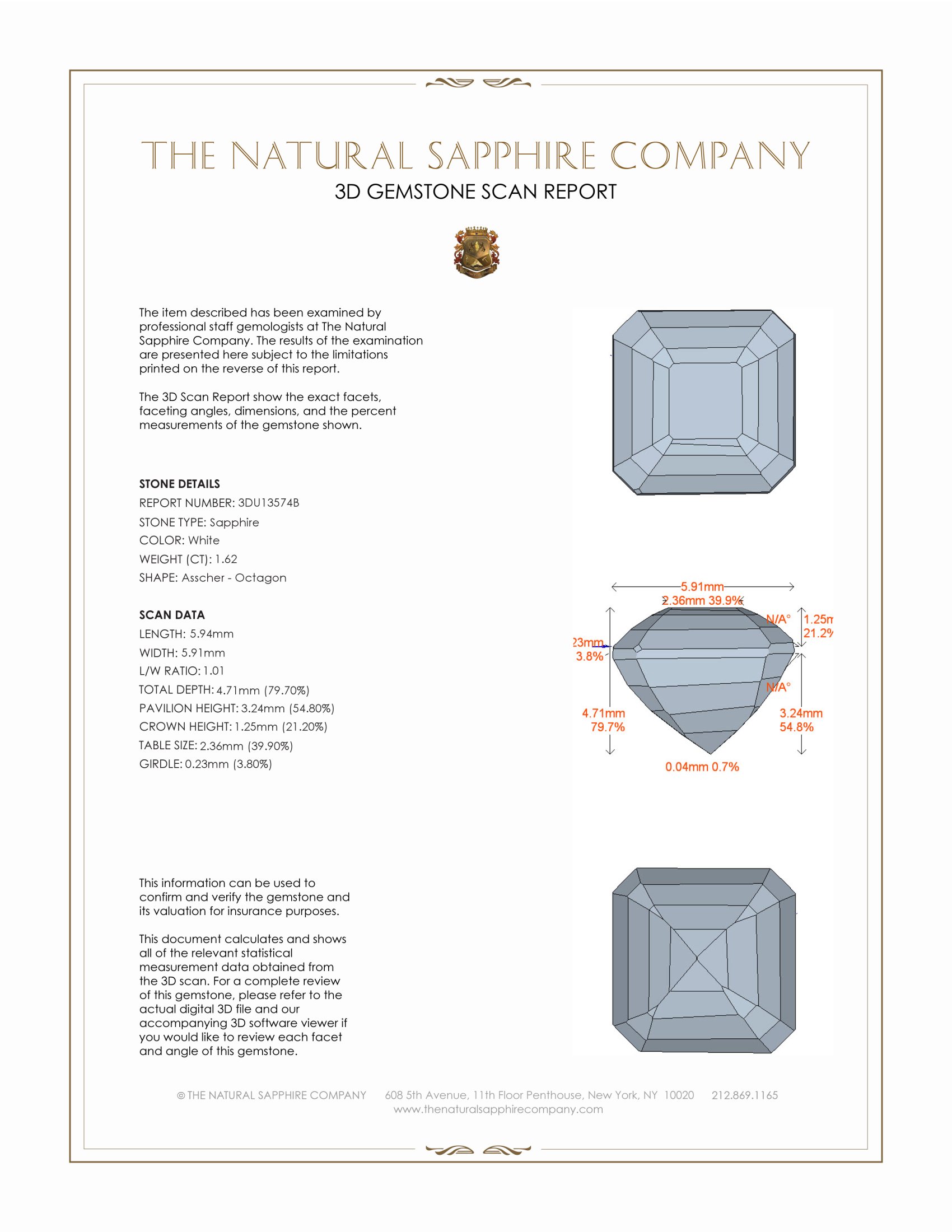
Dimensions (MM): help | Length: 5.94 Width: 5.91 Height: 4.71 |
Weight: | 1.62 Ct. |
Color: help | White |
Color intensity: help | Colorless |
Clarity: help | Very Slightly Included |
Shape: help | Asscher - Octagon |
Cut: | Asscher Cut |
Cutting style: | Faceted |
Enhancements: help | Heat Treated |
Origin: help | Ceylon (Sri Lanka) |
Per carat price: help | $800 |
This ring presents a considered balance between geometric precision and quiet refinement, designed to reflect the character of a wearer who values clarity, proportion, and deliberate simplicity. The center gem is a transparent 1.62 carat asscher octagon white sapphire, measuring 5.94 by 5.91 by 4.71 millimeters, cut in a classic asscher facet pattern. The stone originates from Ceylon, Sri Lanka, and has been heat treated to optimize its near colorless saturation and internal clarity. At eye level the sapphire is graded as very slightly included, with an excellent polish that enhances facet definition and overall surface finish. The Natural Sapphire Company presents this piece as an example of how careful gem selection and traditional cutting can produce an elegant solitaire that reads as composed and purposeful, rather than ornate.
The asscher cut is distinctive for its concentric step facets and large, open table, a structure that creates a hall of mirrors effect instead of a brilliant style of scintillation. In this white sapphire the step facets articulate light in broad flashes and linear reflections, emphasizing geometry and depth over sparkling twinkle. The near colorless body tone provides a clear, bright appearance, and the excellent polish allows clean transmission of light across the pavilion and crown. The very slightly included clarity grade means the stone retains visual transparency while maintaining character under magnification, and the proportions, particularly the relatively balanced pavilion depth, ensure the asscher planes remain well defined when viewed from the face. For a wearer whose personality leans toward precision and understated confidence, this optical language aligns with traits of measured restraint and refined clarity.
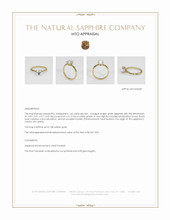
The mounting is executed in 14 karat yellow gold, in a four prong solitaire configuration that secures the asscher octagon while allowing ample light entry from the sides and beneath. The band is intentionally slender and gently rounded, providing a comfortable fit and a low visual profile that places emphasis on the geometry of the center stone. The prongs are set at the stone corners to follow the octagonal outline, offering both mechanical security and a pleasing symmetry that complements the step cut. The overall design reads as minimalist and enduring, suited to a wearer who prefers clean lines and functional beauty. The warm tone of the yellow gold introduces a subtle contrast to the white sapphire, softening the overall presence and communicating a classic sensibility with contemporary restraint.
Practical considerations are presented with the same clarity as the design. White sapphire is a durable gem suitable for regular wear, and heat treatment is a stable, standard enhancement that improves color and clarity without affecting the gem s long term performance. Routine care consists of gentle cleaning with warm, soapy water and a soft brush, avoiding harsh chemicals and ultrasonic cleaners where settings might need inspection. The Natural Sapphire Company provides provenance information and quality evaluation for this stone, supporting informed ownership and potential customization if a different band profile or metal is preferred. As an object, the ring functions both as a precise expression of personal taste and as a reliably constructed piece intended to be worn and appreciated daily, reflecting a wearer whose personality values authenticity, structure, and thoughtful understatement.


