
- Stone12
- Reports3

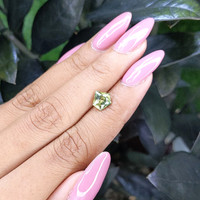

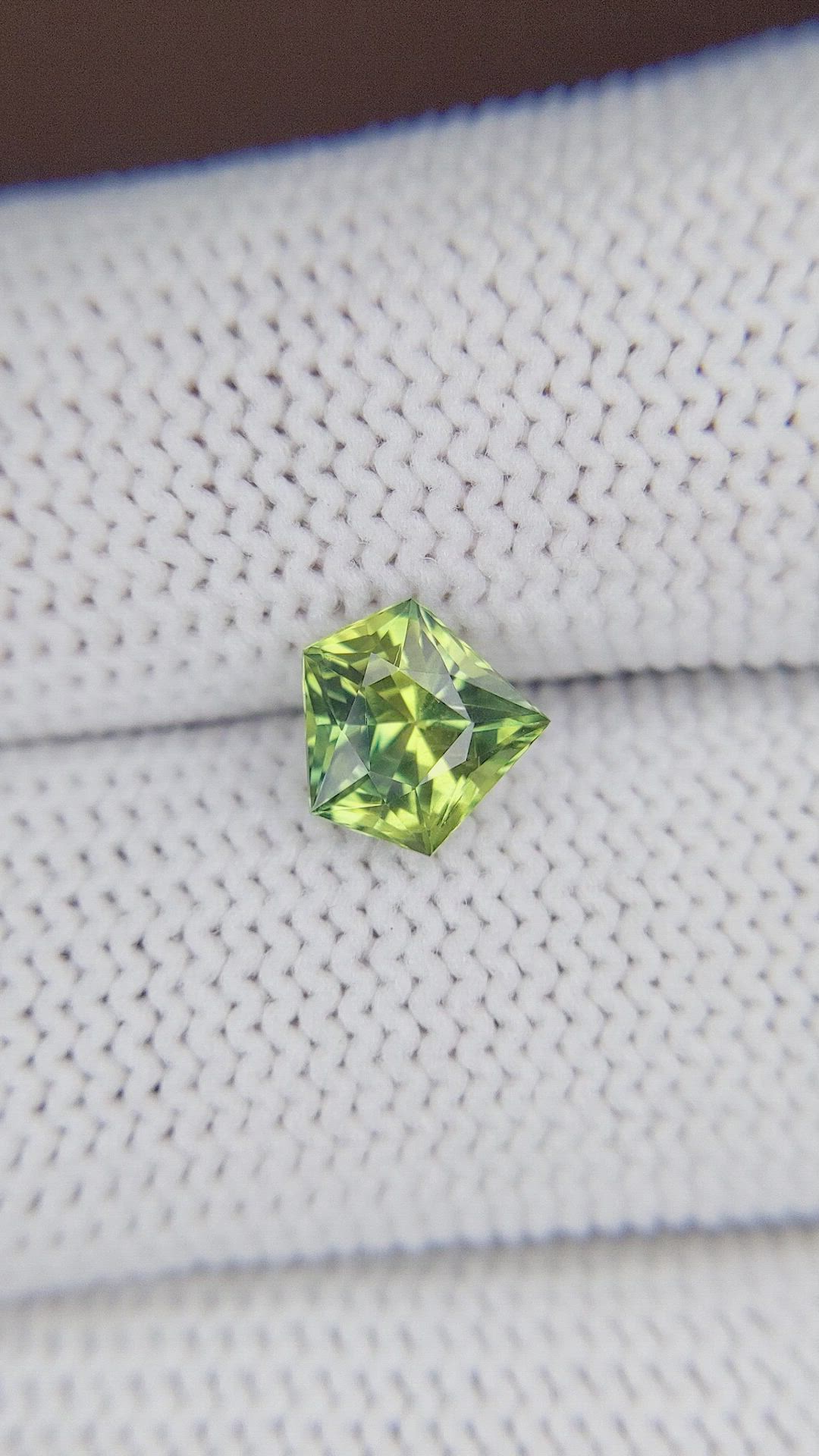
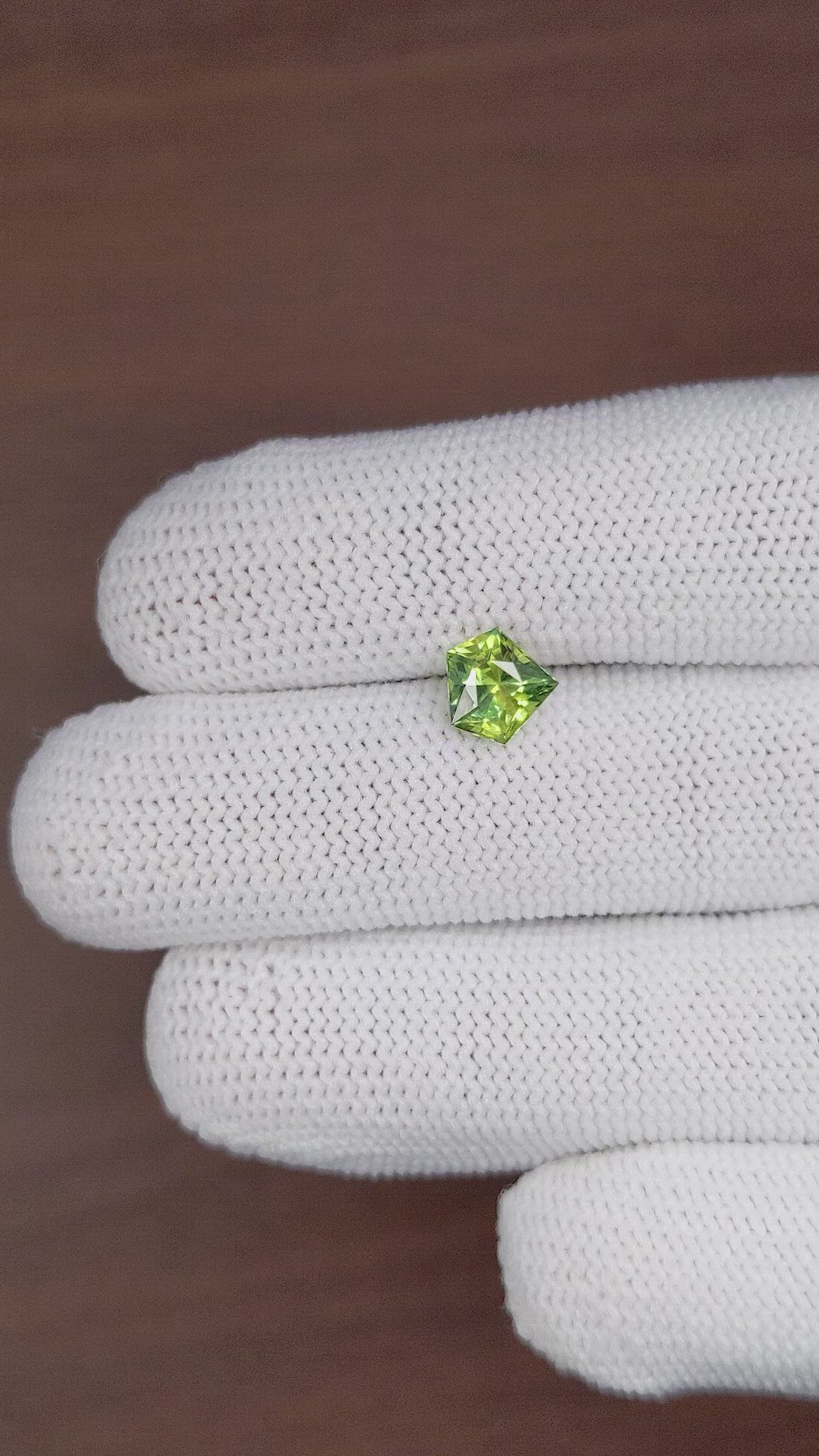
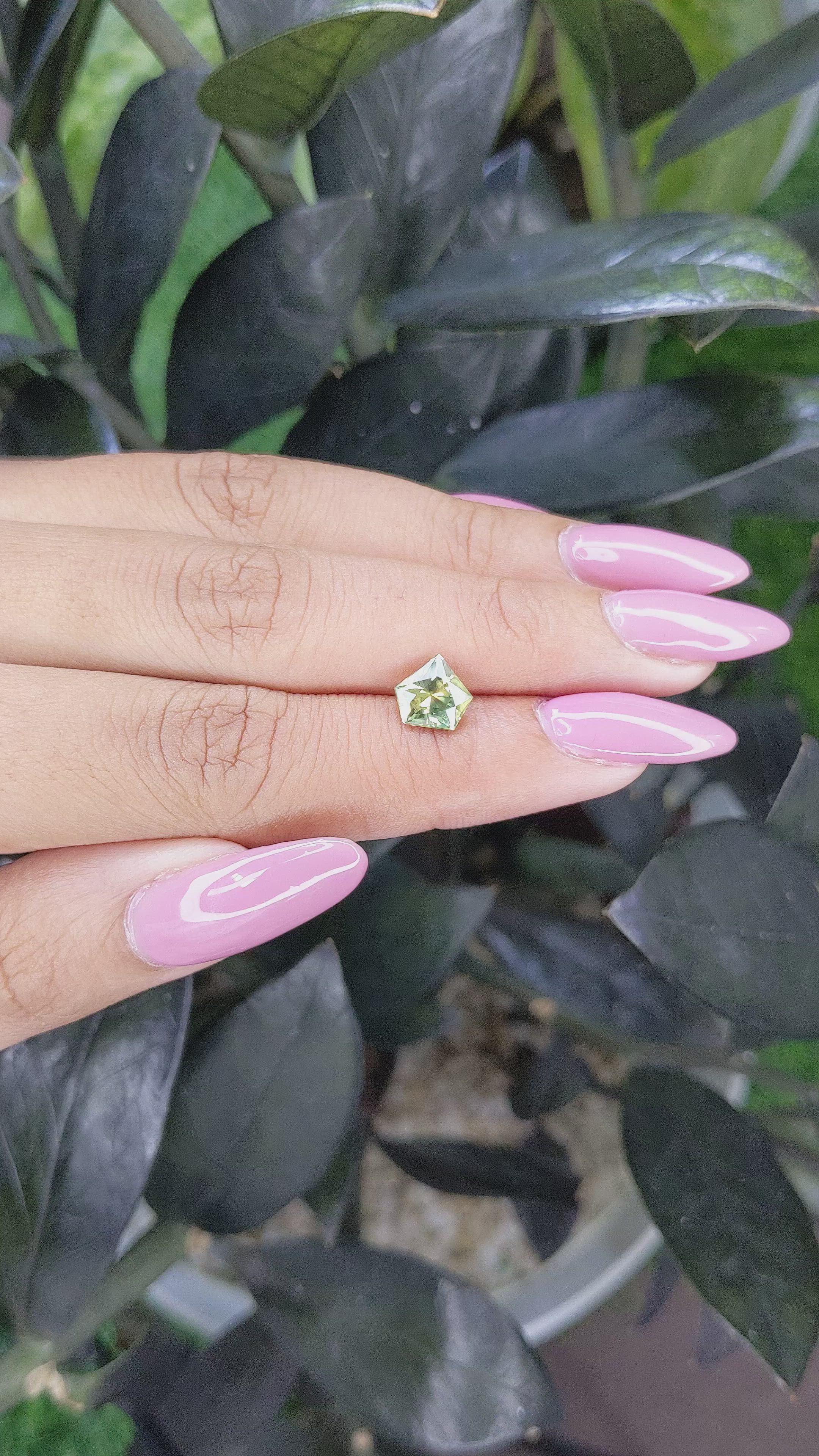
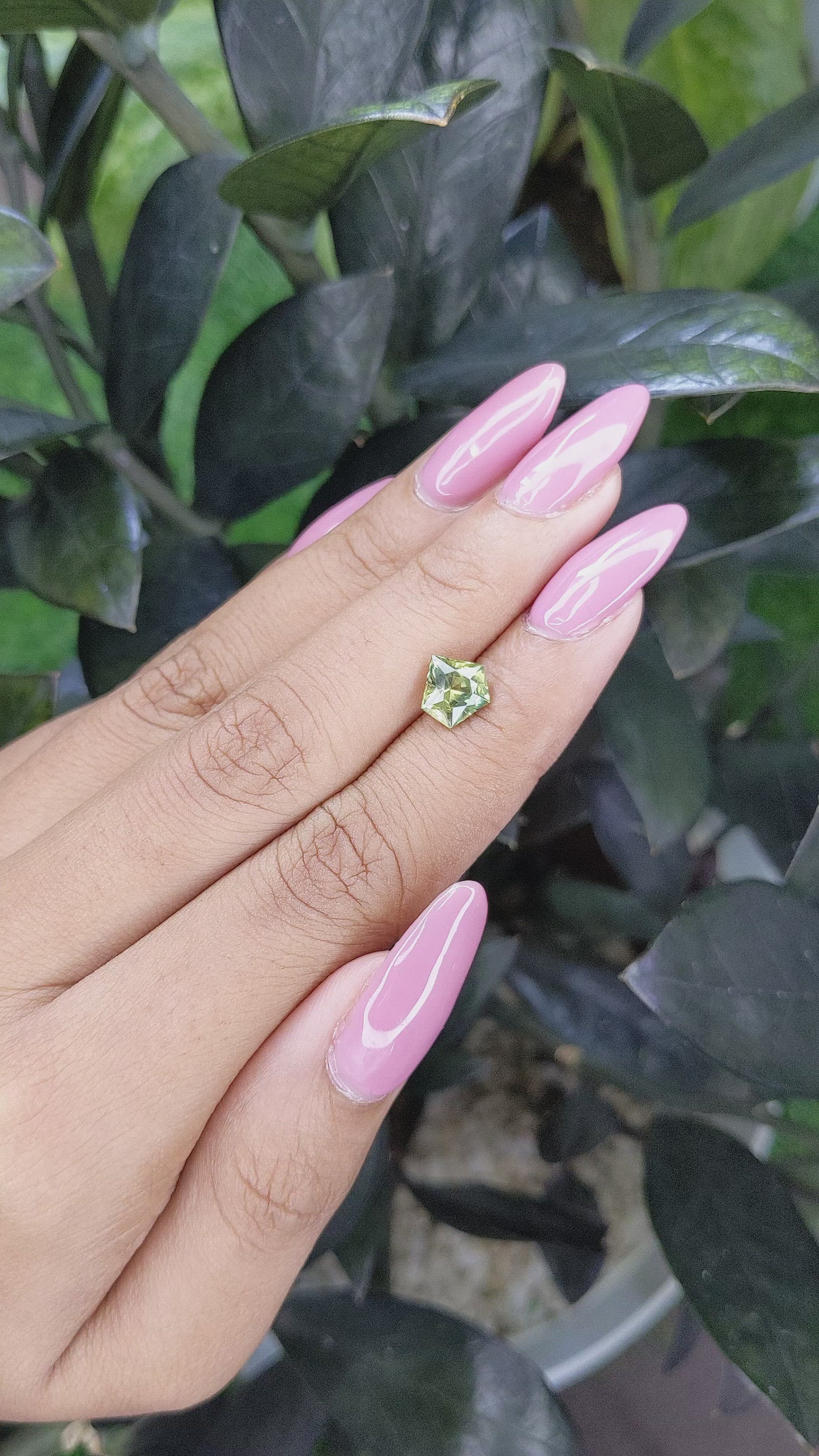


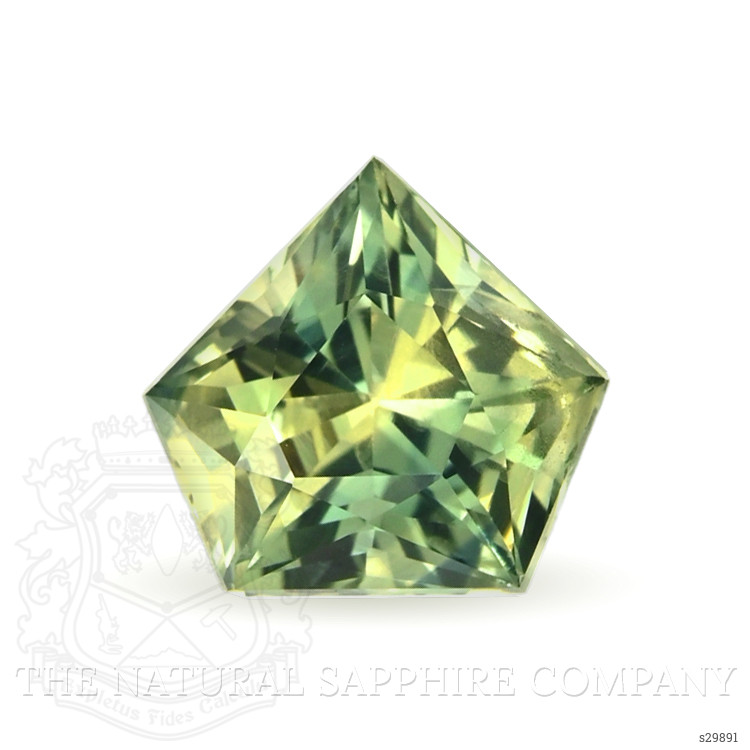
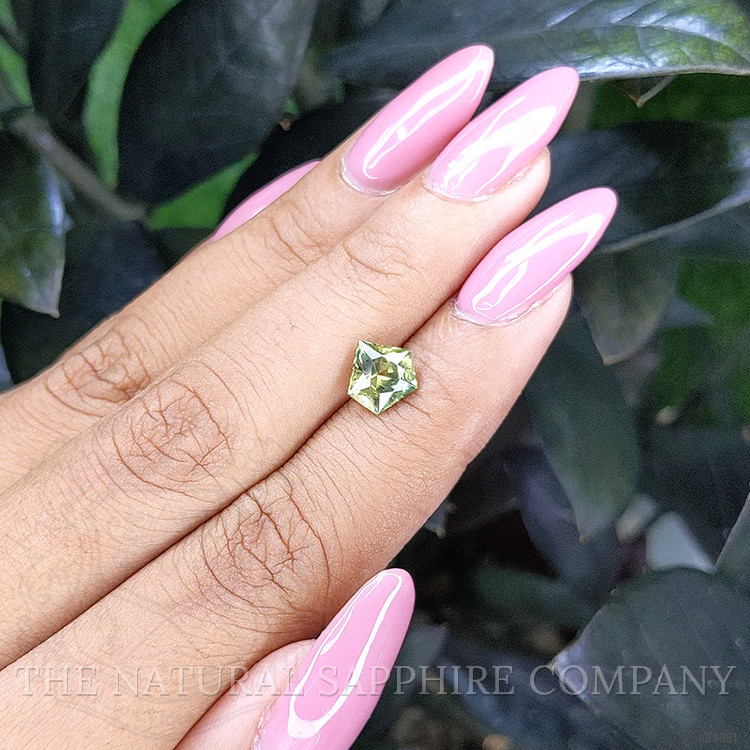
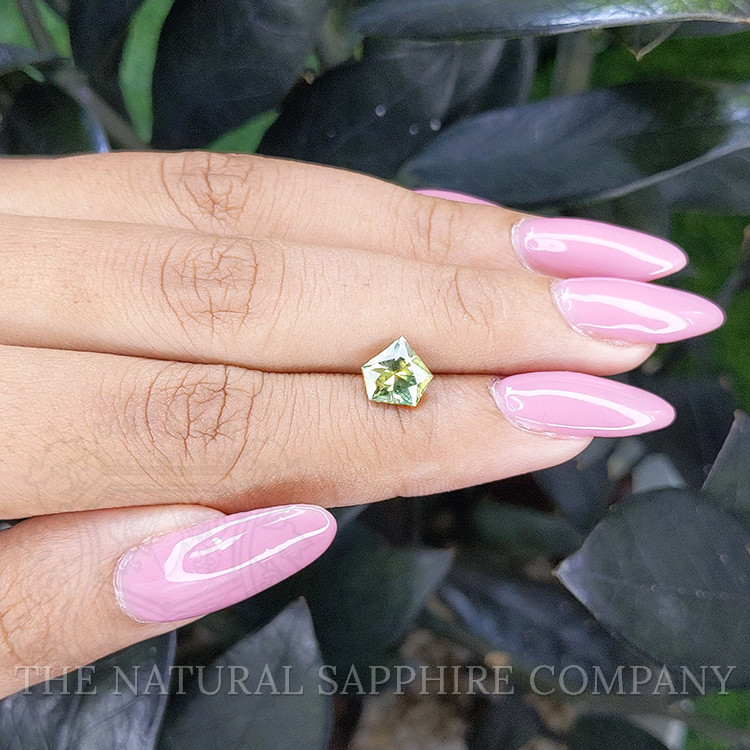

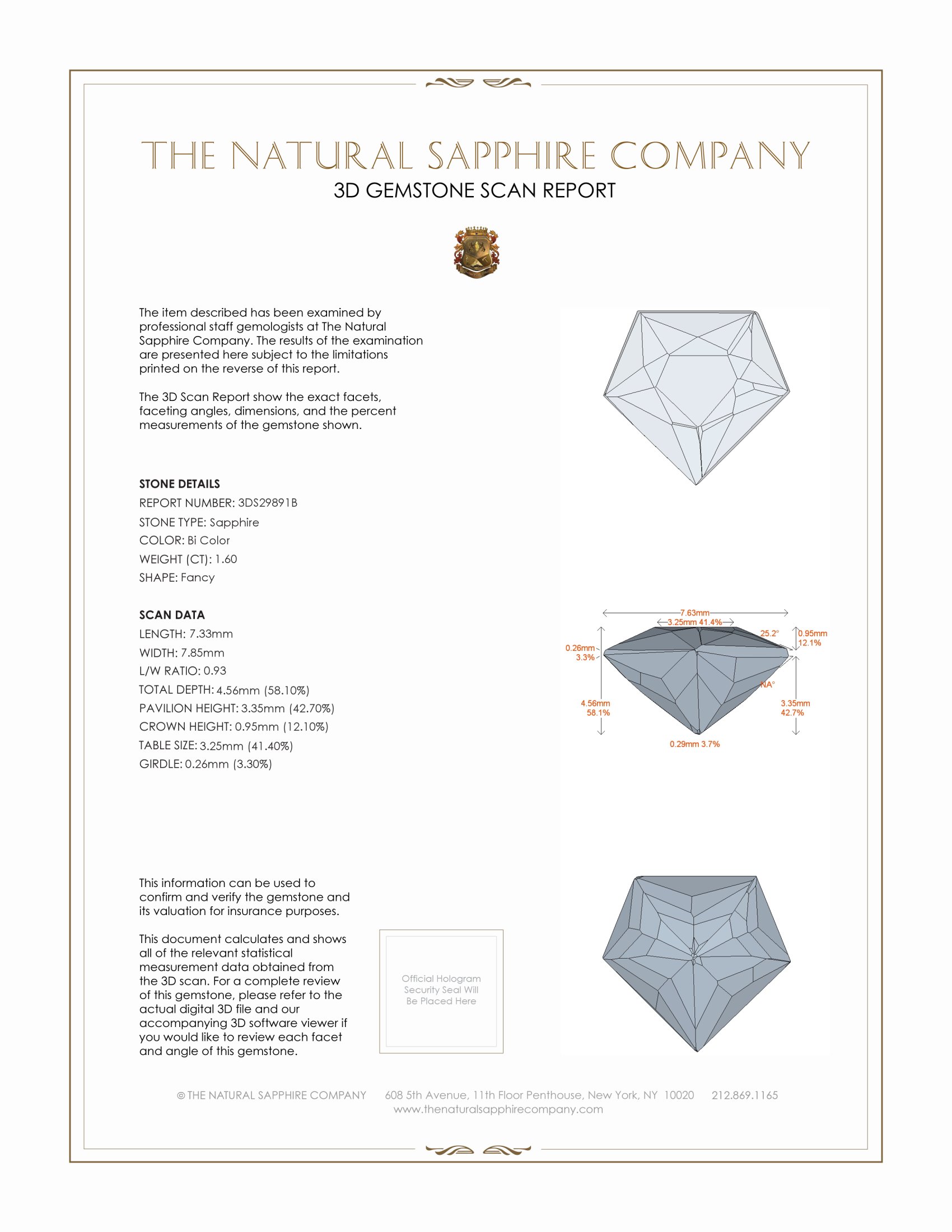
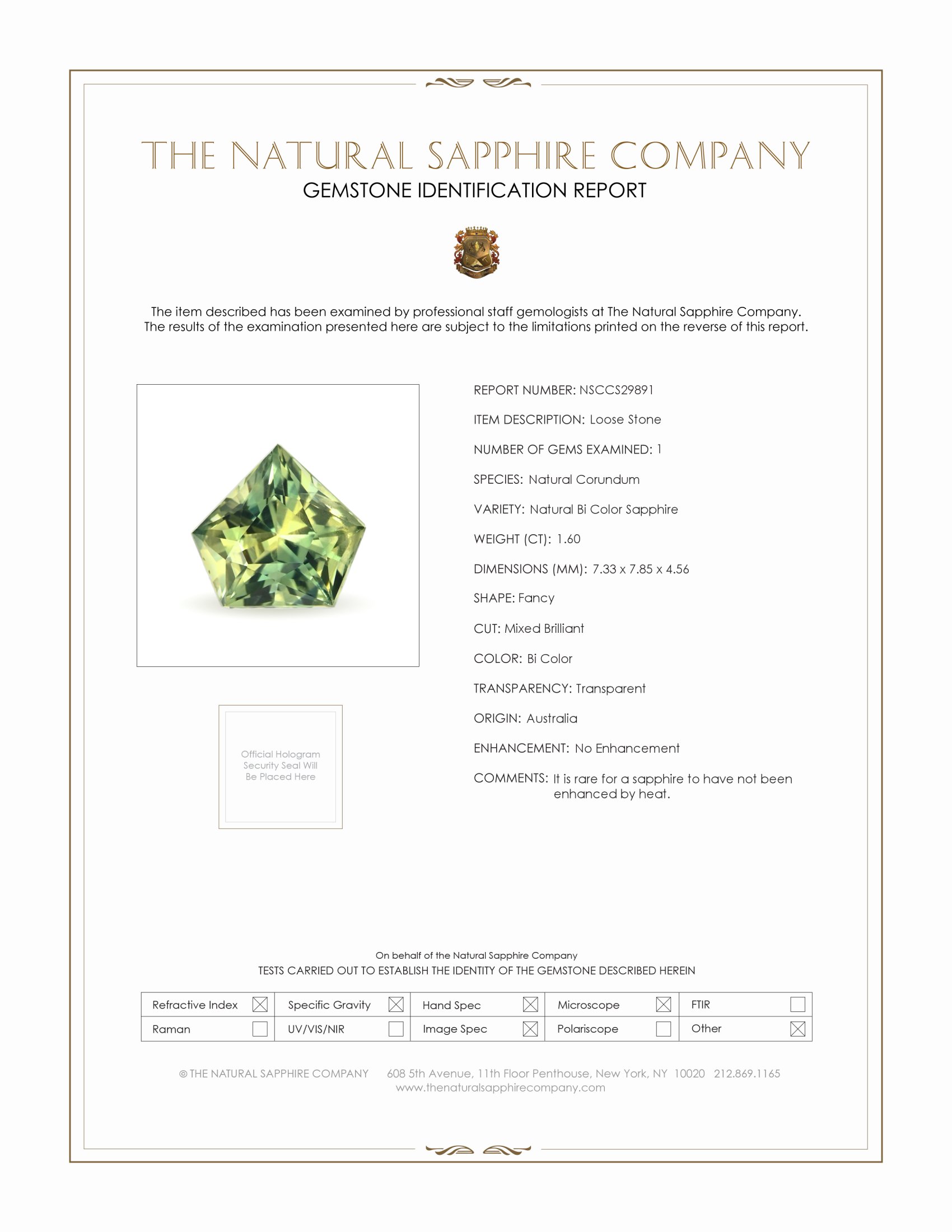
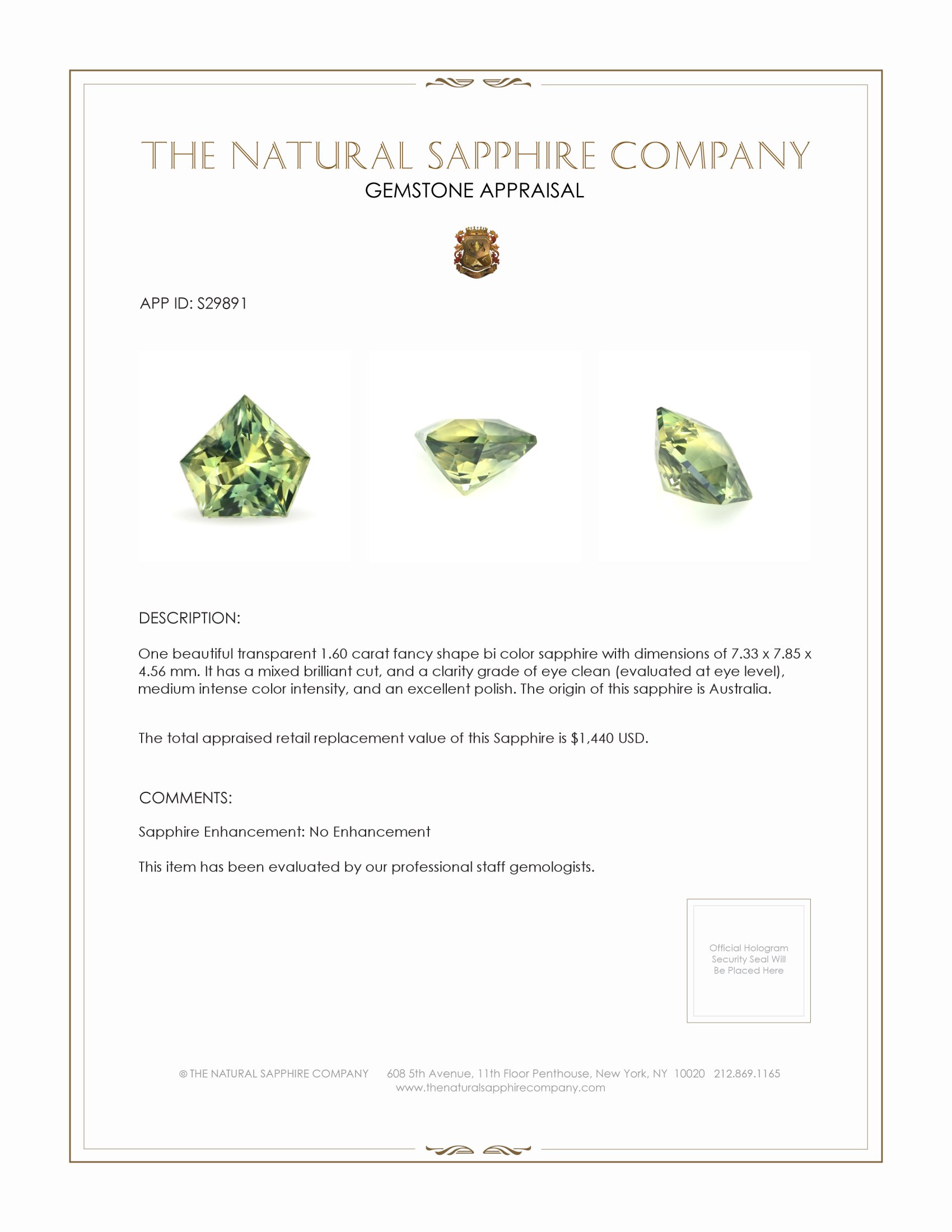
1.60 Ct. Bi Color Sapphire from Australia
This loose stone ships by Feb 27
Item ID: | S29891 |
|---|---|
Dimensions (MM): help | Length: 7.33 Width: 7.85 Height: 4.56 |
Weight: | 1.60 Ct. |
Color: help | Bi Color |
Color intensity: help | Medium Intense |
Clarity: help | Very Slightly Included |
Shape: help | Fancy |
Cut: | Mixed Brilliant |
Cutting style: | Faceted |
Enhancements: help | No Enhancement |
Origin: help | Australia |
Per carat price: help | $900 |
One transparent 1.60 carat fancy shape bi color sapphire is presented from Australia, with precise measurements of 7.33 x 7.85 x 4.56 mm. The stone is fashioned with a mixed brilliant cut, combining a faceted crown treatment that emphasizes brilliant facet facets, with a pavilion designed to enhance light return and scintillation. Clarity is graded as very slightly included, evaluated at eye level, which in practice means the inclusions are minor and do not disrupt the overall visual performance when the gem is set. Color intensity is described as medium intense, and the piece has an excellent polish that maximizes facet contrast and mirror like reflections. There has been no enhancement, so this sapphire presents its natural color and internal features without heat alteration or diffusion, and its origin is verified as Australia.
From a cutting and gemological perspective the mixed brilliant approach applied to this fancy shape is deliberate. The crown facets have been sized and angled to favor bright, pinpoint scintillation that plays across the pentagonal outline, while the pavilion facet set is configured to balance return and dispersion. The table size and crown height produce a depth ratio of approximately 60.1 percent when using an average girdle diameter of 7.59 mm and a depth of 4.56 mm, a geometry that yields strong face up spread for a 1.60 carat weight. The mixed brilliant schema also serves to translate the stone s pleochroic axes into controlled flash colors, so when the stone is oriented under spot lighting the yellow green component and the blue green component alternate in intensity. The excellent polish and careful facet junctions reduce light leakage and preserve contrast between brighter and darker facet zones, giving the gem a lively face up appearance that remains stable under varied lighting.
Color wise this bi color Australian sapphire occupies a complex position between olive yellow and blue green, with the dominant hue appearing as a yellow green in direct overhead viewing and a cooler blue green observable at steeper angles. The tone is primarily medium to medium dark, which allows the stone to read as saturated without appearing overly dense. Compared with Sri Lankan yellow sapphires, which typically present a cleaner, lemon to butter yellow hue with lighter tone and high brilliance, this Australian example is decidedly more complex and olive tinged, showing a secondary watery blue that Sri Lankan yellows rarely exhibit. Against Madagascar sapphires that produce vivid teal and bluish green tones, the Australian stone is less blue centric and carries a warmer yellow bias, producing a distinct bi color transition rather than a uniform teal. Compared with Montana sapphires from the United States, which often deliver grassy, mint and aquamarine leaning greens with generally lighter tone, this piece is deeper and shows stronger saturation, making it visually more substantial face up. By contrast with the classic cornflower and velvety blues of Kashmir or the deep royal blues of Burma, this sapphire sits outside that blue category entirely, offering instead a two tone experience that is unique to certain Australian occurrences where trace element chemistry and crystal growth conditions favor mixed hue expression.
The presence of natural pleochroism and subtle color zoning is a key selling point for connoisseurs and lapidaries considering this gem for a bespoke setting. Because the stone has not been heat treated, the color distribution and the precise relationship between hue, tone and saturation are intrinsic and stable, which enhances the collector value for those who prioritize untreated provenance. The cut optimizes the bi color effect by aligning major facets with the pleochroic axes, creating deliberate flashing between yellow green and blue green sectors as the stone moves. For mounting, an open back or semi mount that permits light to enter from the pavilion will accentuate the cooler blue green tone, while a closed back or heavier metal setting will emphasize the warmer yellow green. The measured proportions and mixed brilliant faceting also make this sapphire suitable for designs that exploit directional light, such as solitaire rings with raised bezels or pendant settings that allow rotation, so the wearer can experience the dynamic color interplay.
At The Natural Sapphire Company we document this sapphire s parameters and origin, and we present it as a high quality untreated example from Australia that showcases the region s characteristic bi color tendencies. The combination of a precise mixed brilliant cut, a depth engineered for optimal face up spread, very slightly included clarity at eye level, medium intense color intensity, and excellent polish produces a gem that will appeal to discerning buyers who appreciate technical craftsmanship and natural color complexity. For gemologists and jewelers specifying settings, note the stone s dimensions 7.33 by 7.85 by 4.56 mm, its weight of 1.60 carat, and its untreated status when assessing mounting style and lighting strategy. This sapphire stands as an excellent representative of the nuanced, olive to blue green spectrum found in certain Australian deposits, offering a distinct alternative to the more uniform hues associated with Sri Lanka, Madagascar, Montana, or classic blue producing regions.


