
- Stone14
- Reports3
-oval-blue-sapphire-4.5000-cts-s35450-1.jpg?d=200x200&v=20260113060255)
-oval-blue-sapphire-4.5000-cts-s35450-lifestyleimage-1.jpg?d=200x200&v=20260113060256)
-oval-blue-sapphire-4.5000-cts-s35450-lifestyleimage-2.jpg?d=200x200&v=20260113060255)
-oval-blue-sapphire-4.5000-cts-s35450-lifestyleimage-3.jpg?d=200x200&v=20260113060255)


-oval-blue-sapphire-4.5000-cts-s35450-1.jpg?d=750x750&s=nsc&v=20260113060255)
-oval-blue-sapphire-4.5000-cts-s35450-lifestyleimage-1.jpg?d=750x750&s=nsc&v=20260113060256)
-oval-blue-sapphire-4.5000-cts-s35450-lifestyleimage-2.jpg?d=750x750&s=nsc&v=20260113060255)
-oval-blue-sapphire-4.5000-cts-s35450-lifestyleimage-3.jpg?d=750x750&s=nsc&v=20260113060255)


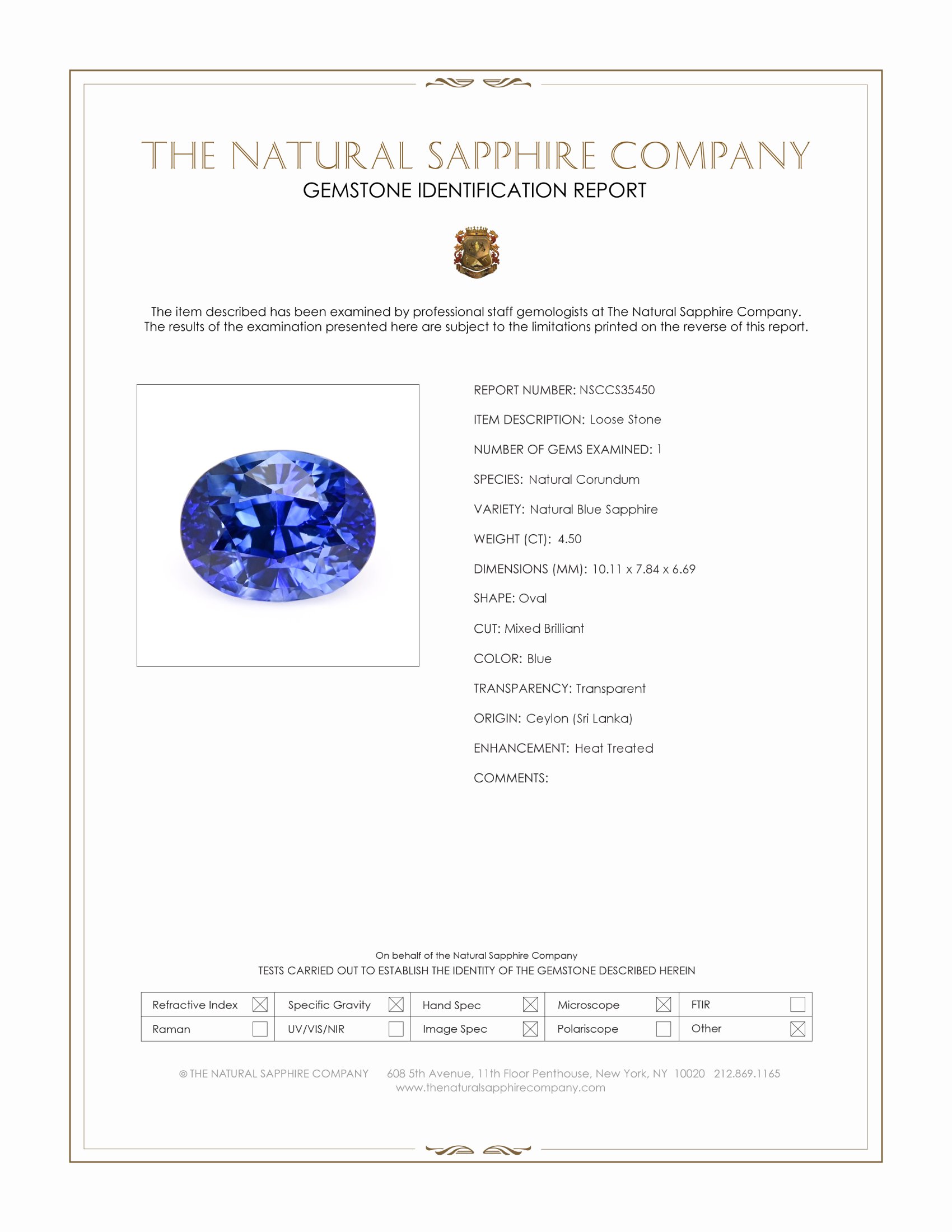

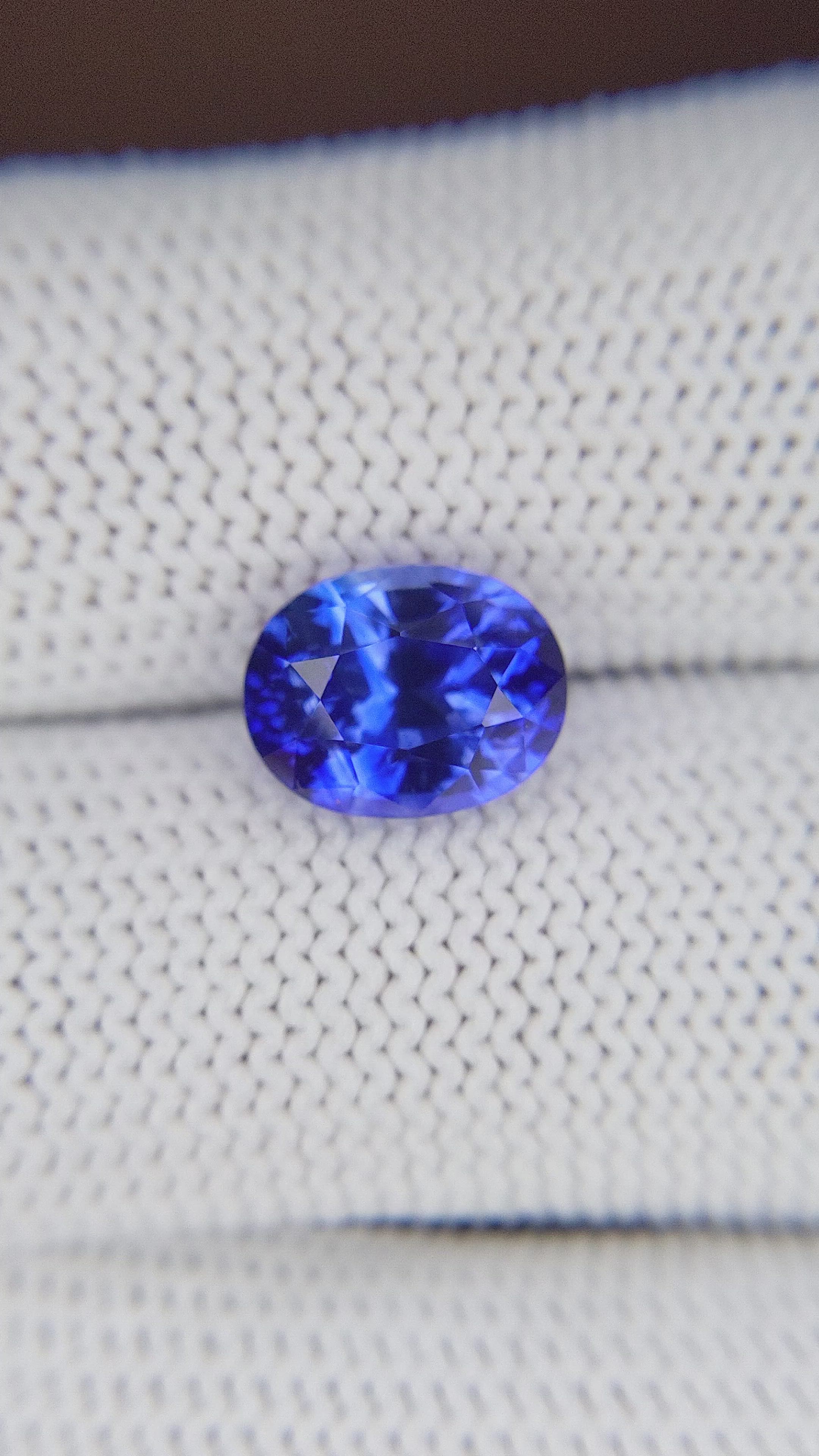
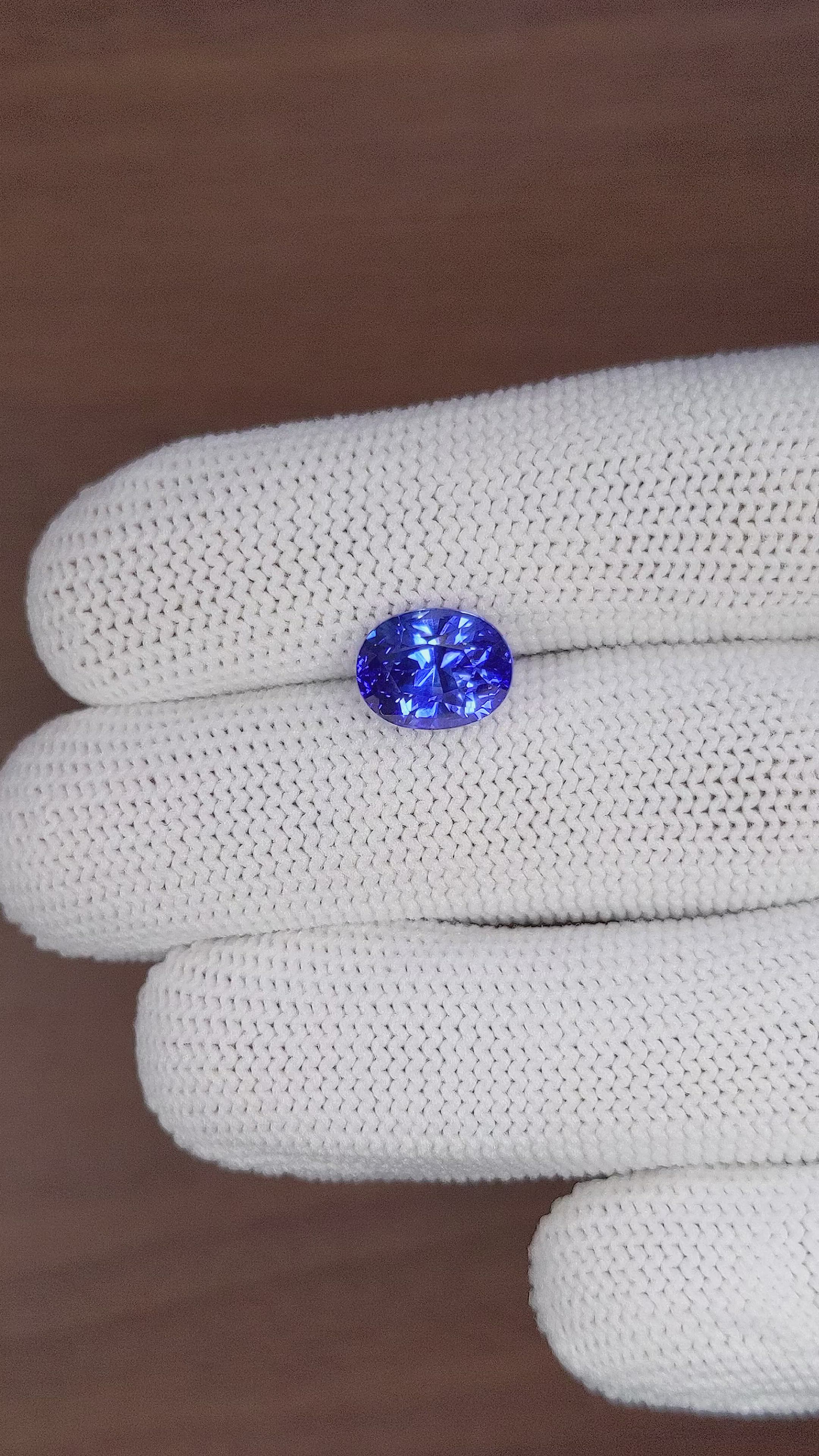
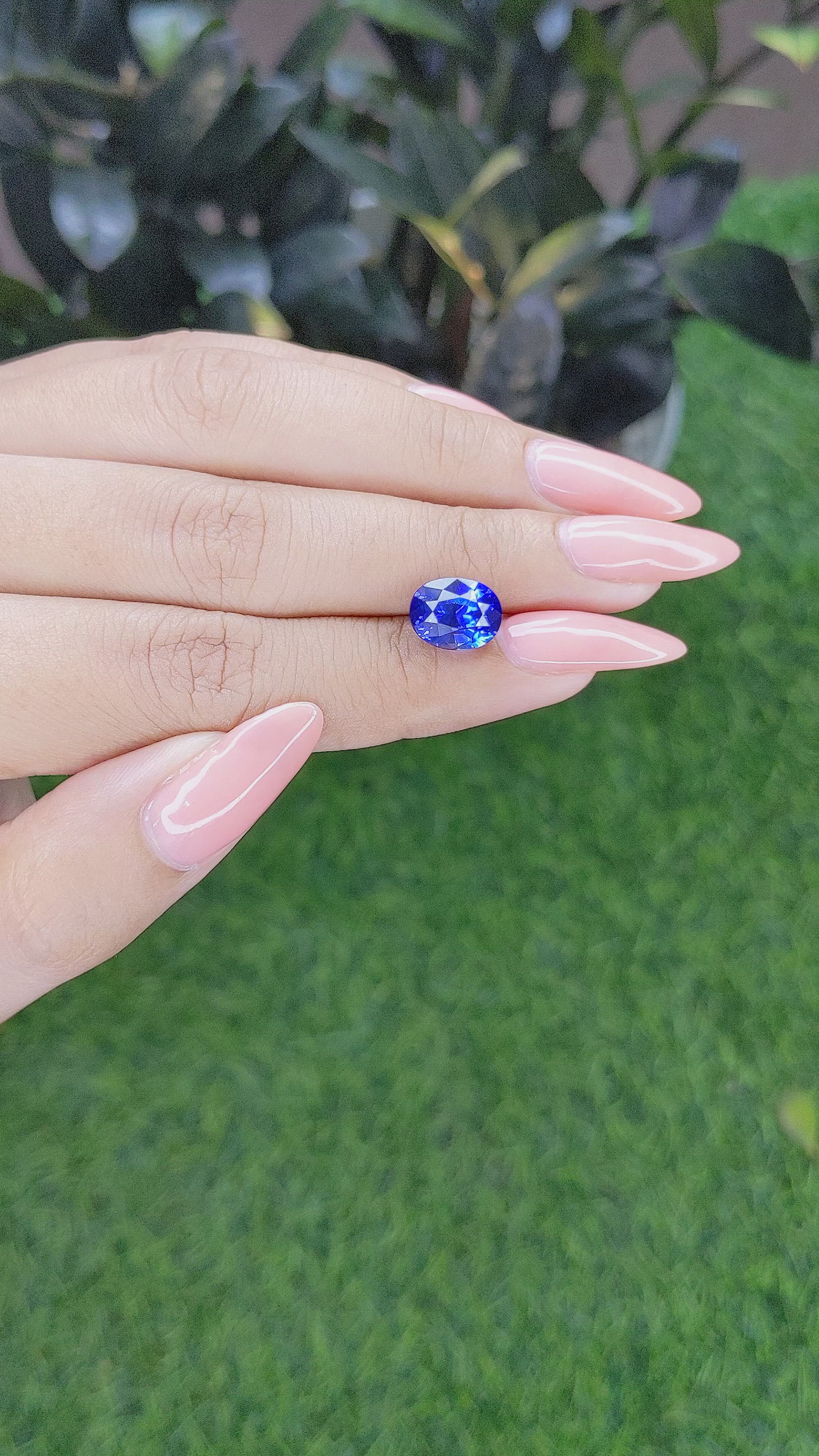
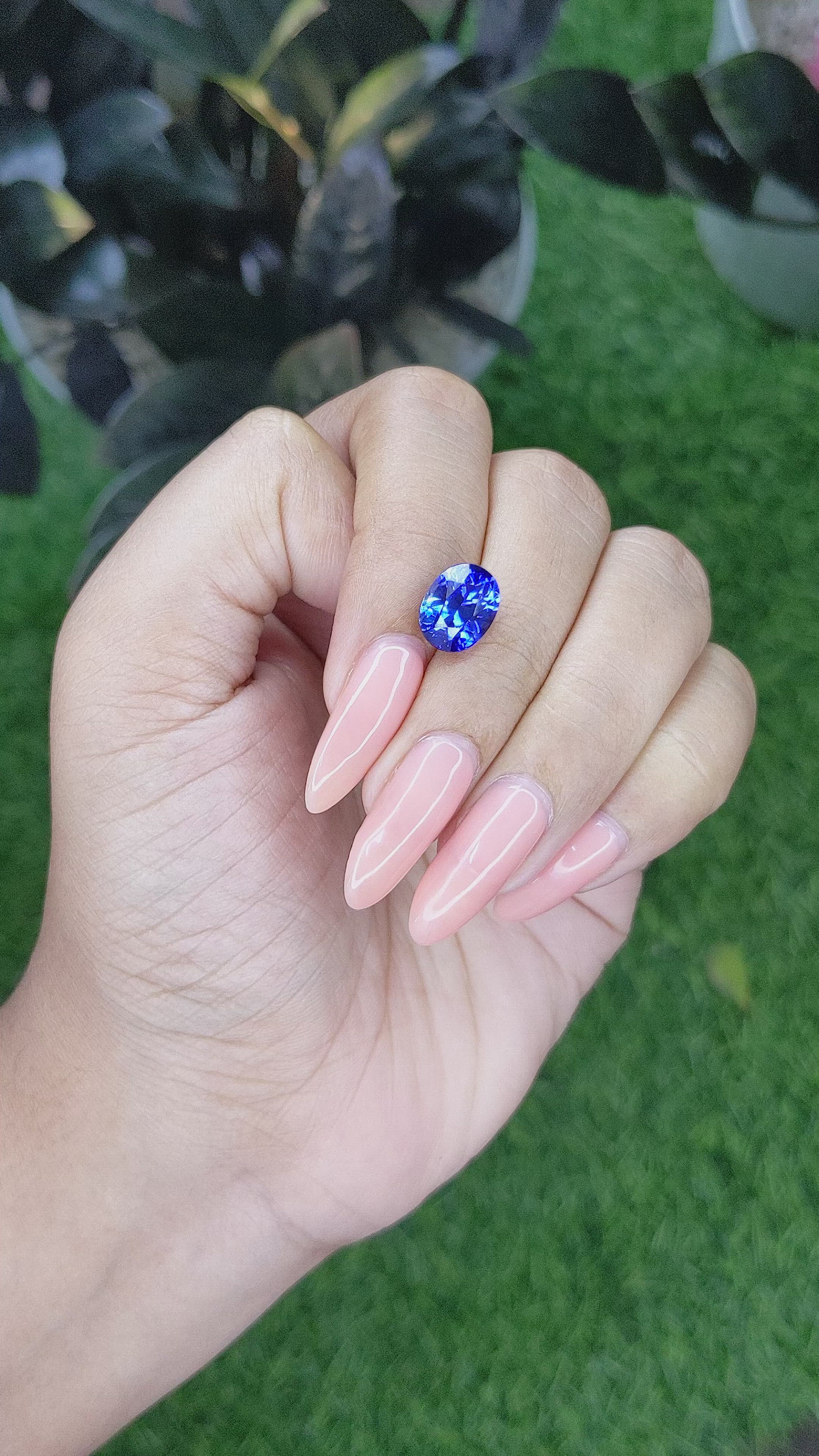
4.50 Ct. Blue Sapphire from Ceylon (Sri Lanka)
This loose stone ships by Feb 14
Item ID: | S35450 |
|---|---|
Dimensions (MM): help | Length: 10.11 Width: 7.84 Height: 6.69 |
Weight: | 4.50 Ct. |
Color: help | Blue |
Color intensity: help | Intense |
Clarity: help | Eye Clean |
Shape: help | Oval |
Cut: | Mixed Brilliant |
Cutting style: | Faceted |
Enhancements: help | Heat Treated |
Origin: help | Ceylon (Sri Lanka) |
Per carat price: help | $2,890 |
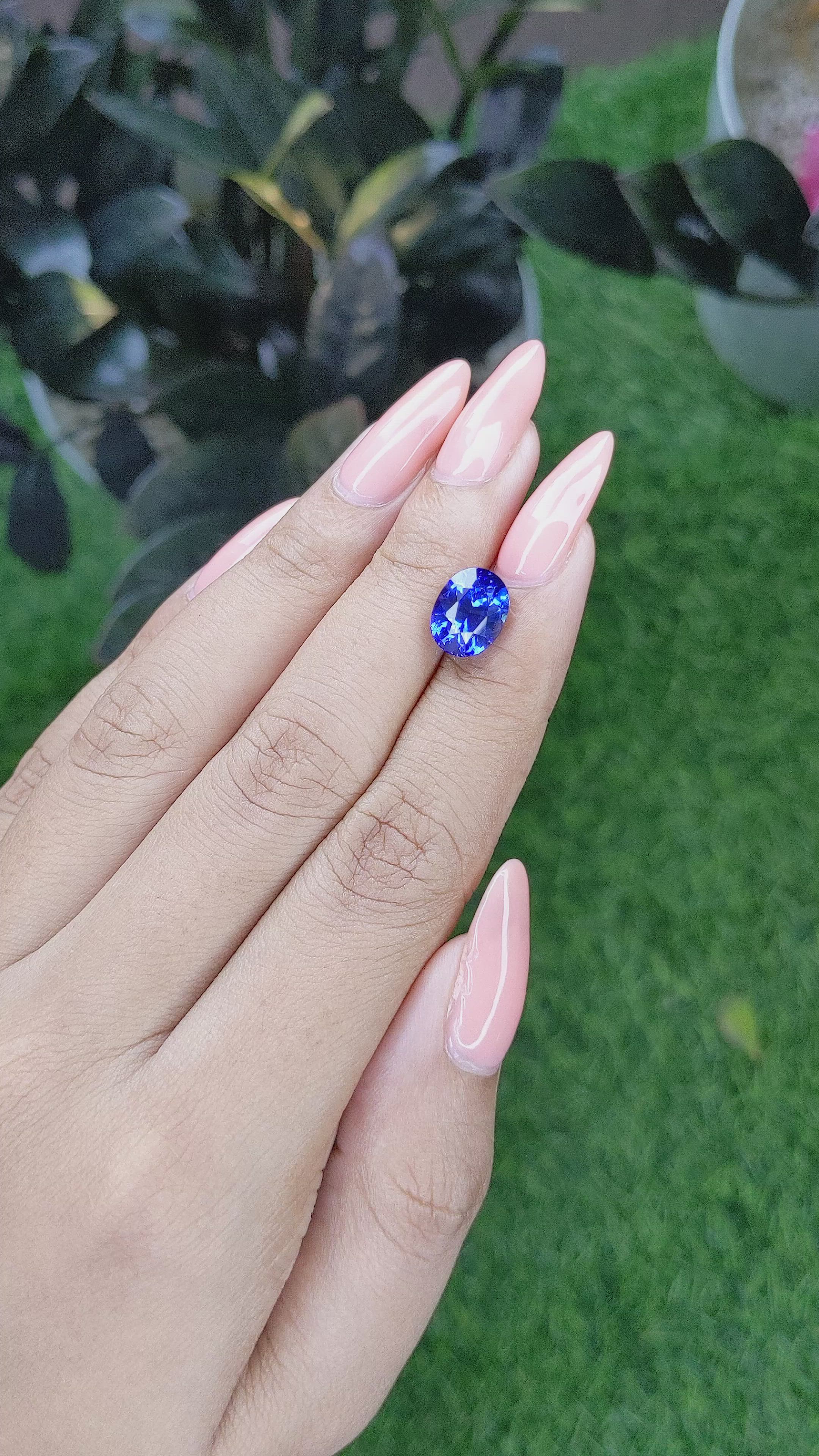
This transparent blue sapphire weighs 4.50 carats, and presents an elegant oval silhouette with dimensions of 10.11 x 7.84 x 6.69 mm. The stone is fashioned in a mixed brilliant cut, a design that balances concentrated table brilliance with a faceted pavilion that returns light with depth and scintillation. The clarity is graded as eye clean, evaluated at eye level, which allows the intense blue hue to remain unobstructed by visible inclusions, and the polish has been assessed as excellent, delivering a smooth, reflective finish across all facets. The surface condition and symmetry of the cut have been prepared to maximize optical performance, and the stone has undergone standard heat treatment, a widely accepted enhancement to stabilize and intensify color. The Natural Sapphire Company documents the origin of this sapphire as Ceylon Sri Lanka, a region renowned for producing sapphires with vivid saturation and lively tone.
The sapphire began its story deep within the earth millions of years ago during a time of tectonic upheaval and thermal transformation. In the ancient crust that now underlies Sri Lanka, layers rich in aluminum bearing minerals were subjected to profound burial, pressure, and elevated temperatures during regional metamorphism. Under these conditions aluminum oxide reconstituted into the hexagonal crystal lattice of corundum, the mineral species that defines sapphires. Trace elements, primarily titanium and iron, were available in minute concentrations within the host rocks, and their incorporation into the corundum structure is what produced the blue color, through well understood charge transfer and light absorption mechanisms. Crystal growth occurred slowly, over extended geological time, allowing the lattice to develop clarity and form, and the resulting corundum crystals attained sufficient size to later be recovered as gem material.
Following their crystallization, these corundum crystals experienced subsequent geological processes that prepared them for eventual discovery at the surface. Uplift and erosion stripped away overlying strata, and weathering liberated crystals from their primary metamorphic host into alluvial channels. Transport by water rounded crystal terminations and concentrated gem material in river gravels and secondary deposits, where human hands centuries later identified and collected them. Once recovered, the rough sapphire was evaluated and planned, then cleaved or sawn and shaped by a lapidary artisan. The mixed brilliant cut was selected deliberately to present intense color while preserving weight, the oval outline promoting even color distribution, and the facet architecture enhancing life and scintillation. At eye level the stone appears free of significant inclusions, a condition described as eye clean, and the excellent polish indicates careful finishing that yields crisp facet junctions and bright reflections. The disclosed heat treatment is consistent with industry practice, employing controlled thermal exposure to modify the stone at a microscopic level, improving tone and saturation in a stable and permanent manner without introducing foreign substances.
Provenance and documented treatment are integral to the assessment of any significant gemstone, and this sapphire is presented with full disclosure of origin and enhancement. The Natural Sapphire Company provides a recorded history for this gem, confirming its Ceylon Sri Lanka origin, and the combination of transparent body, intense color intensity, and a refined mixed brilliant cut positions the gem for use in a variety of fine jewelry settings where both optical performance and durable stability are required. For settings that emphasize the face up color, a secure bezel or four prong setting will preserve the stone while allowing light to interact with the pavilion and crown as designed. Routine care includes avoiding prolonged exposure to extreme heat and harsh chemicals, and professional cleaning and inspection of the setting will protect both gem and mount. This sapphire is the result of deep time and precise human craft, a specimen that retains the geological signature of its formation while offering the technical refinement expected by discerning gem collectors and jewelers.


