
- Stone14
- Reports3
-oval-blue-sapphire-3.0800-cts-s32022-1.jpg?d=200x200&v=20251031003531)


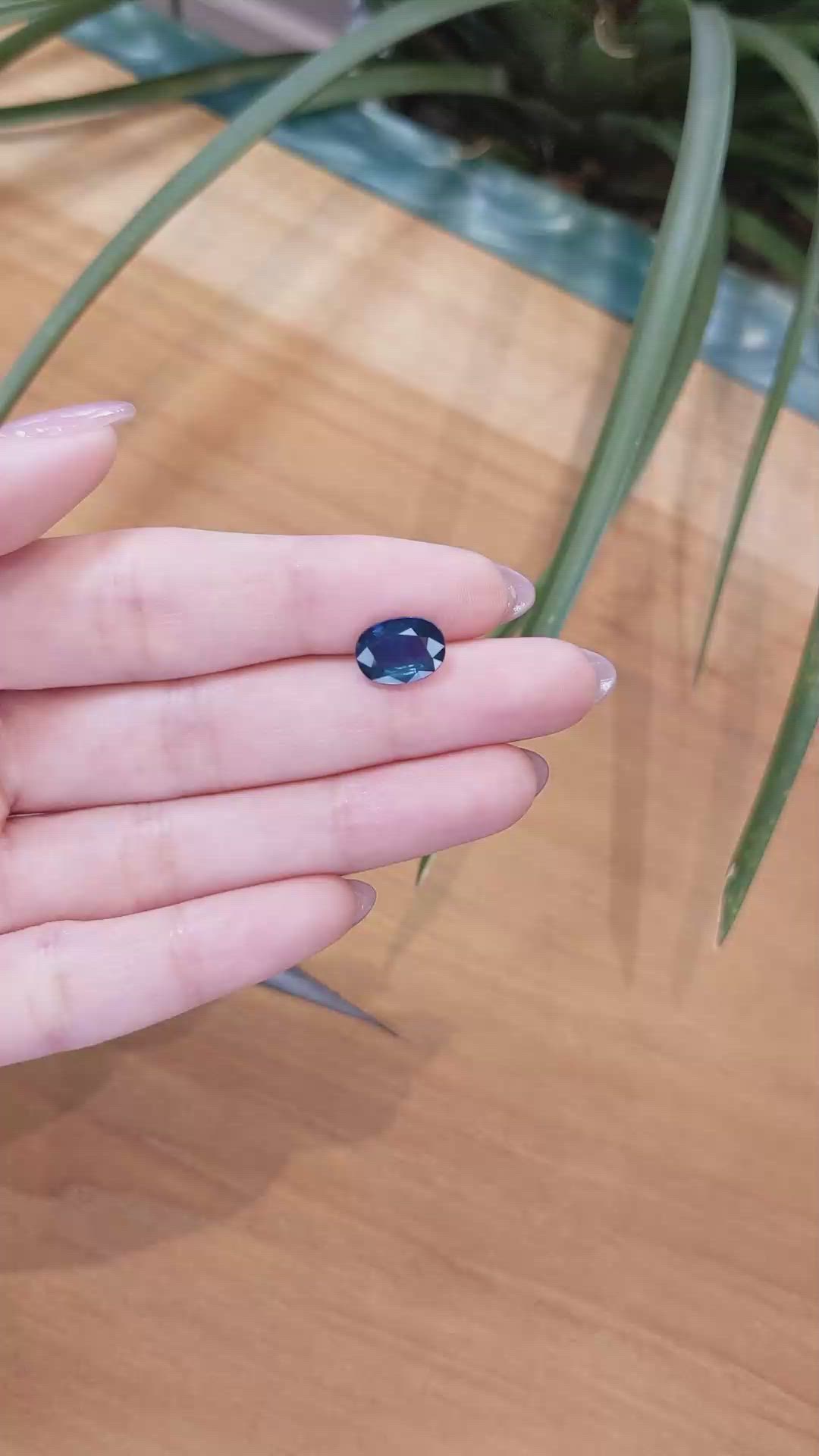


-oval-blue-sapphire-3.0800-cts-s32022-1.jpg?d=750x750&s=nsc&v=20251031003531)


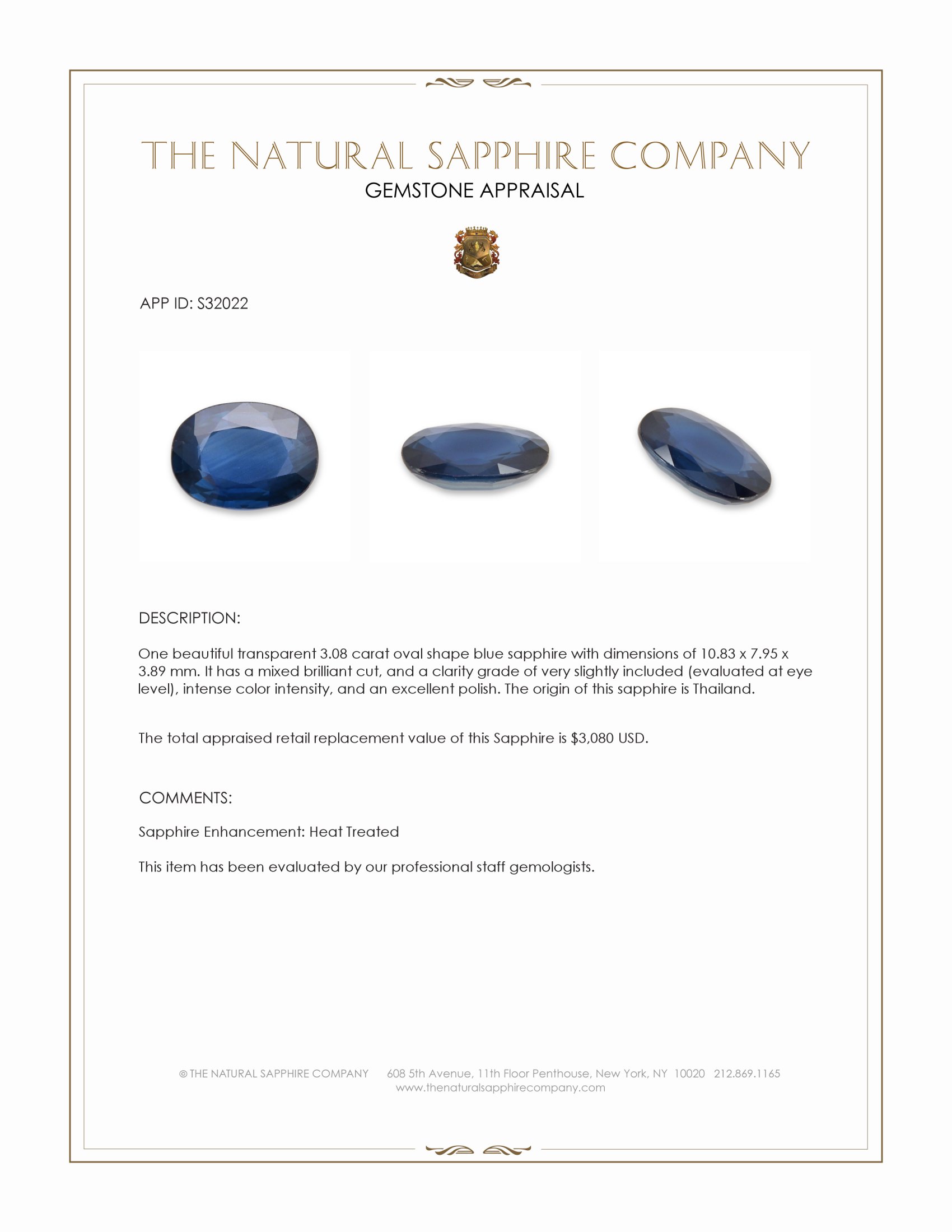
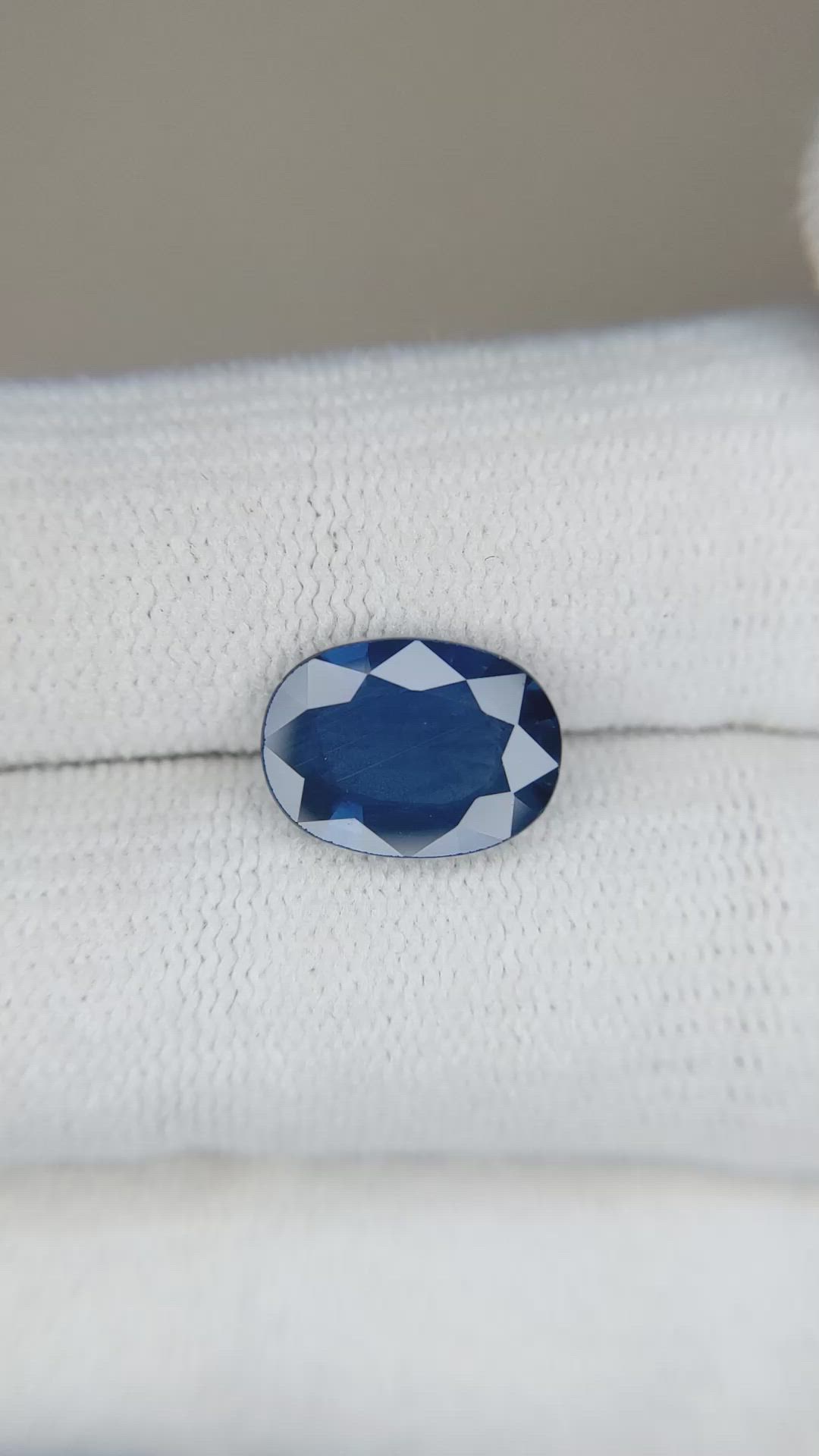
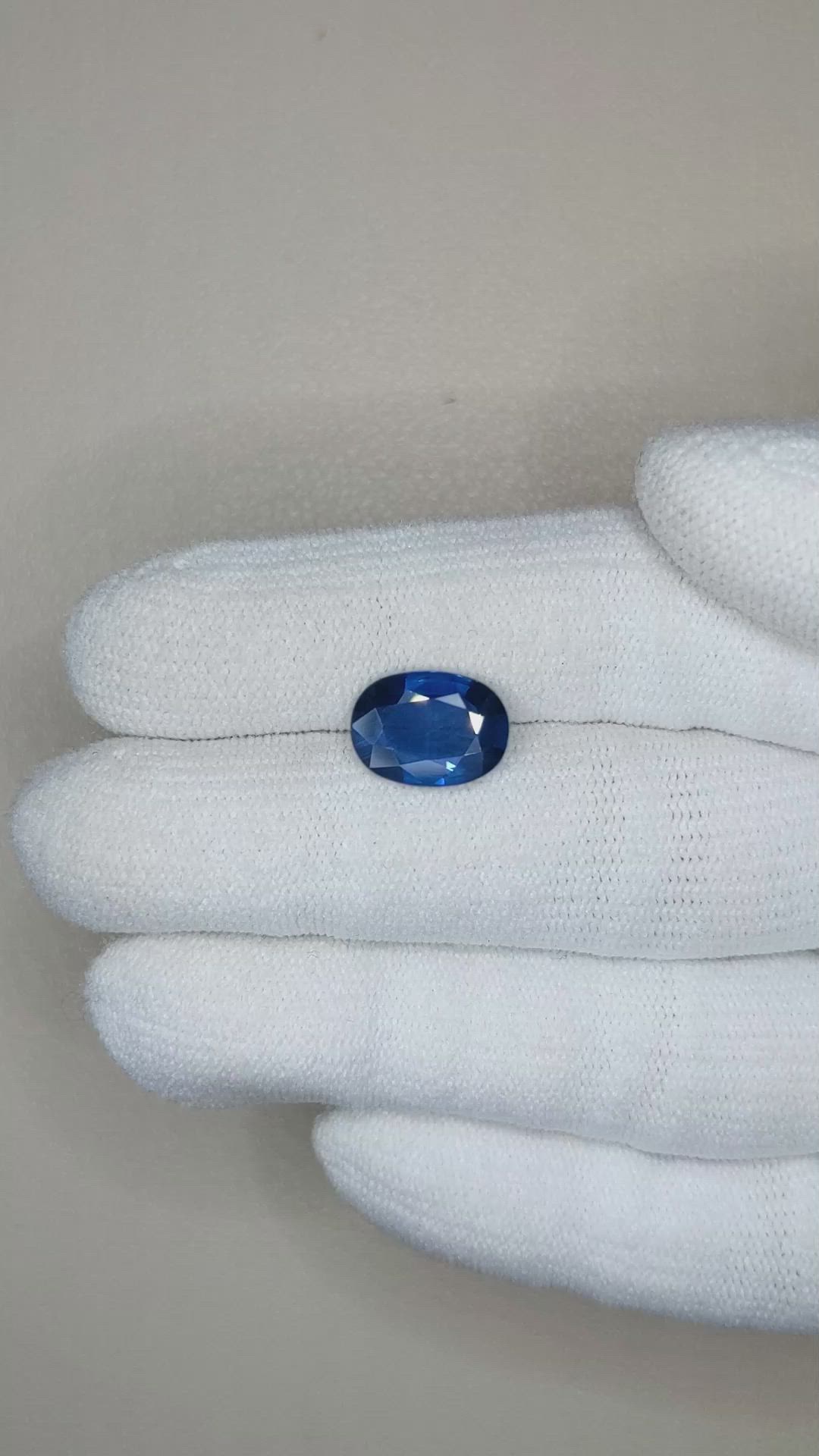
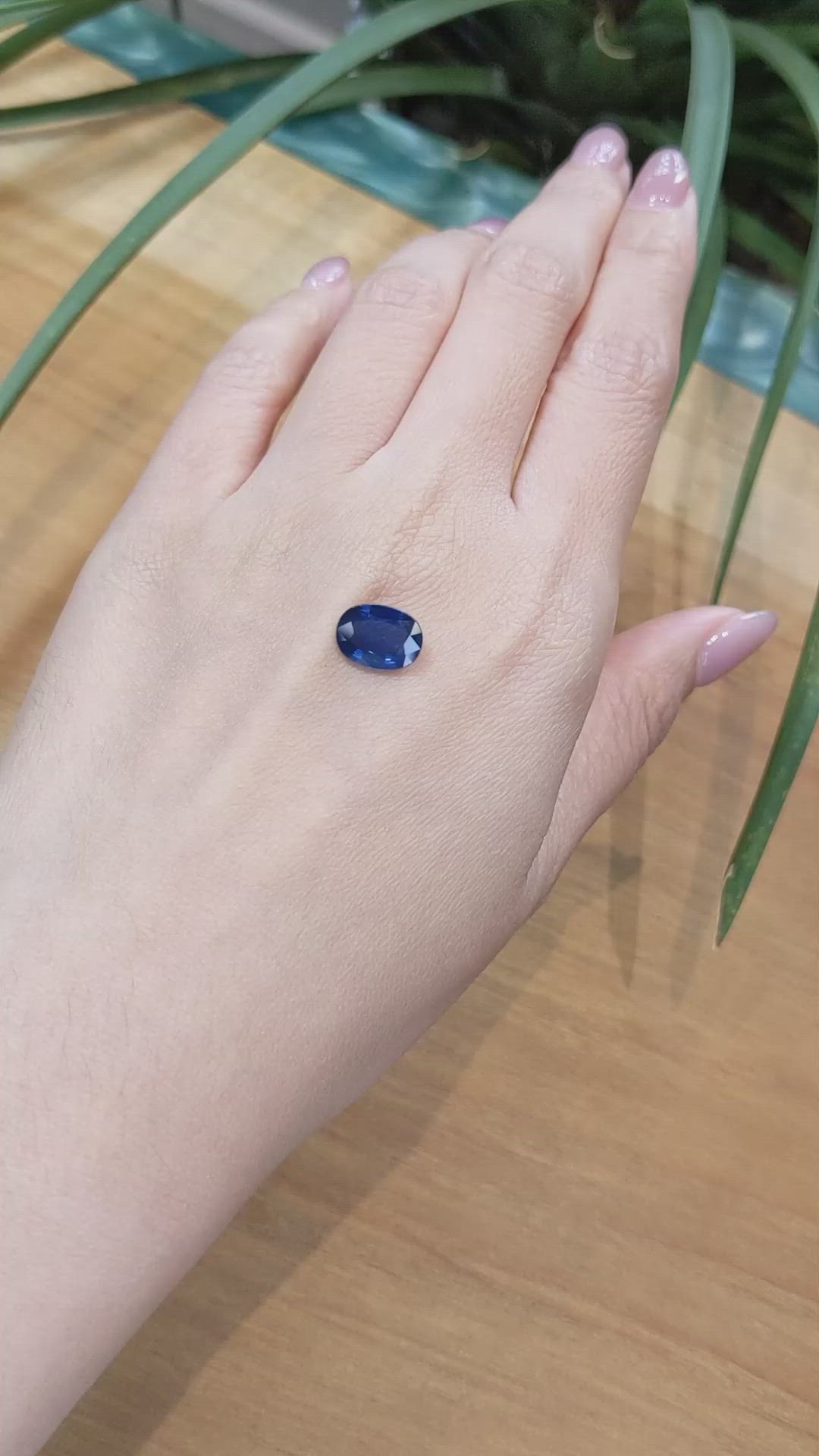
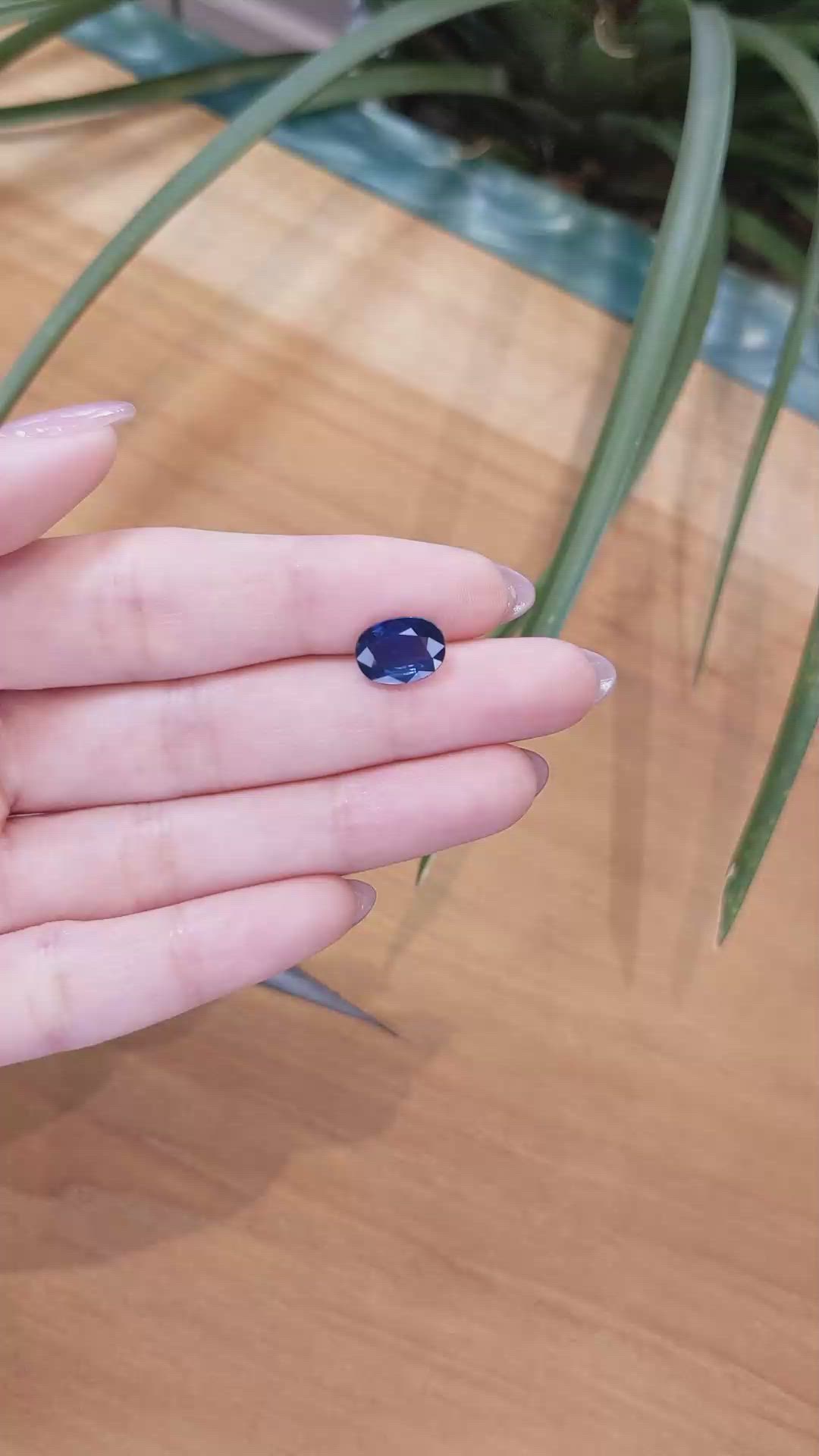
3.08 Ct. Blue Sapphire from Thailand
This loose stone is available to ship now
Item ID: | S32022 |
|---|---|
Dimensions (MM): help | Length: 10.83 Width: 7.95 Height: 3.89 |
Weight: | 3.08 Ct. |
Color: help | Blue |
Color intensity: help | Intense |
Clarity: help | Very Slightly Included |
Shape: help | Oval |
Cut: | Mixed Brilliant |
Cutting style: | Faceted |
Enhancements: help | Heat Treated |
Origin: help | Thailand |
Per carat price: help | $1,000 |
This piece is a transparent, oval shape natural blue sapphire weighing 3.08 carats, with exact dimensions of 10.83 by 7.95 by 3.89 millimeters. The length to width ratio of 1.36 places the stone squarely within the classic oval proportions that are most flattering in fine jewelry, and the measured depth of 3.89 millimeters yields a depth percentage of approximately 41 percent relative to the average of the length and width, a proportion that favors color saturation over excessive light leakage. The cutter selected a mixed brilliant cut, combining a brilliant facet geometry on the crown with more linear pavilion faceting. This approach is deliberate for sapphires, because the brilliant crown maximizes return and scintillation across a broad viewing angle, while the pavilion’s linear facets help to preserve color saturation and guide light through the body of the stone rather than dispersing it. The finish is described as excellent polish, with crisp facet junctions and symmetrical facet layout that produce uniform light return and reduce windowing. The stone shows intense color intensity in the blue range, with clean transmission and the expected pleochroic behavior of corundum under different orientations. The sapphire has been heat treated, a standard, stable, and permanent enhancement to improve color and clarity, and it originates from Thailand, a known source for classic deep, velvety blue material.
At the clarity grade indicated as very slightly included when evaluated at eye level, this sapphire presents minimal visual distractions to the naked eye. The internal features are minor, confined to localized areas that do not interrupt the stone’s overall transparency or its ability to exhibit saturated blue when set. From a gemological standpoint, corundum’s refractive index around 1.762 to 1.770 and a specific gravity near 4.00 contribute to strong light return for a well-cut specimen, and this sapphire’s cutting geometry leverages those physical properties. The mixed brilliant layout was chosen to balance several tradeoffs encountered in small-to-medium sized oval material, specifically the need to retain weight from the rough without sacrificing the optical performance expected in a jewelry-grade stone. The cutter preserved a favorable table to crown relationship so that the crown facets deliver flashes of lighter blue and the pavilion facets deepen the body color, creating an appearance that is vivid under both direct and diffused lighting. The excellent polish further minimizes surface diffusion of light and accentuates facet crispness, delivering clean, well-defined flashes rather than dull or hazy reflections.
When compared with lab-grown sapphires, natural stones like this Thai sapphire offer a number of technical and market advantages that will appeal to knowledgeable buyers. Lab-grown material achieves uniform color and low inclusion levels because growth conditions are controlled, which can be advantageous for predictable production and lower cost, however lab-grown stones lack the geological history recorded in natural corundum. Natural sapphires contain trace element signatures, subtle zoning patterns, and inclusion assemblages that are the product of specific pressure, temperature, and chemical environments over geologic time, and those features function as a gemological fingerprint of origin, which for this stone is Thailand. From a technical viewpoint, those natural characteristics influence how light is absorbed and scattered at the micro scale, creating complex, dynamic visual effects that are difficult to replicate in synthetic material. In addition, natural, properly disclosed heat-treated sapphires retain long-term desirability and generally stronger secondary market value, because rarity and provenance are important drivers for connoisseurs and collectors. The Natural Sapphire Company maintains full disclosure of treatment and origin, ensuring that buyers understand the enhancement history and geological provenance.
Beyond aesthetics and collectibility, there are practical considerations that favor natural material for high-end use. Natural corundum, including heat-treated examples, is stable under normal wear and will not respond differently to routine jewelers’ re-settings or repairs, while a natural inclusion pattern often provides a unique internal structure that can actually help hide minor surface abrasion over years of wear. The combination of a durable Mohs hardness of nine, the thoughtful mixed brilliant cutting strategy that optimizes color and light return, and the excellent polish work performed on this 3.08 carat oval yields a stone that is both visually compelling and technically sound for use in a principal ring, pendant, or bespoke commission. If you are evaluating this sapphire against synthetics, consider that the intangible attributes of provenance, geological complexity, and long-term market preference are as much a part of the gem’s technical profile as its measured dimensions and facet arrangement. The Natural Sapphire Company will provide transparent documentation and support to confirm the stone’s characteristics, and we are available to discuss setting options and certification for clients who require formal lab reports.


