
- Stone12
- Reports3
-pear-blue-sapphire-2.5500-cts-s31517-1.jpg?d=200x200&v=20251027012516)
-pear-blue-sapphire-2.5500-cts-s31517-lifestyleimage-1.jpg?d=200x200&v=20251111020718)
-pear-blue-sapphire-2.5500-cts-s31517-lifestyleimage-2.jpg?d=200x200&v=20251111020718)


-pear-blue-sapphire-2.5500-cts-s31517-1.jpg?d=750x750&s=nsc&v=20251027012516)
-pear-blue-sapphire-2.5500-cts-s31517-lifestyleimage-1.jpg?d=750x750&s=nsc&v=20251111020718)
-pear-blue-sapphire-2.5500-cts-s31517-lifestyleimage-2.jpg?d=750x750&s=nsc&v=20251111020718)

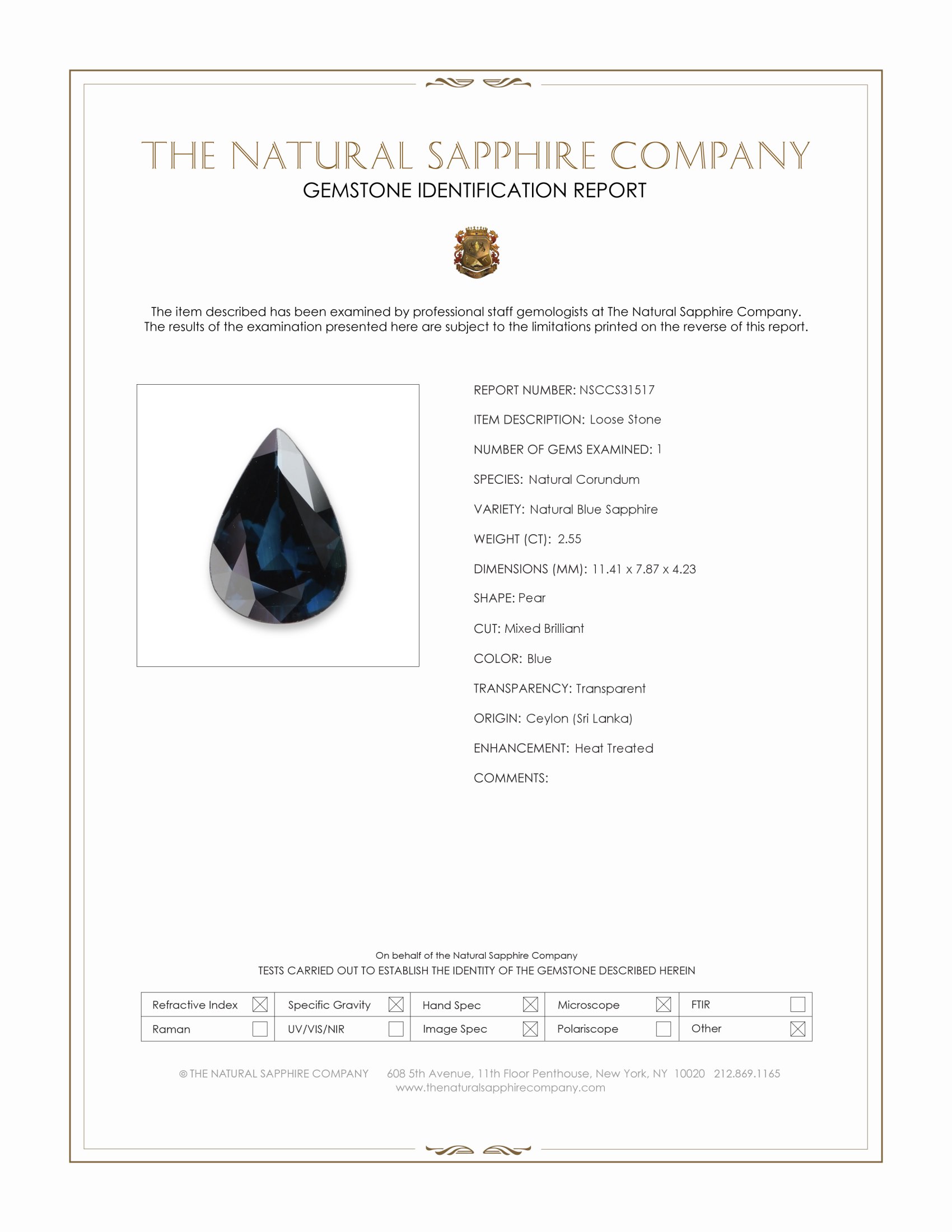
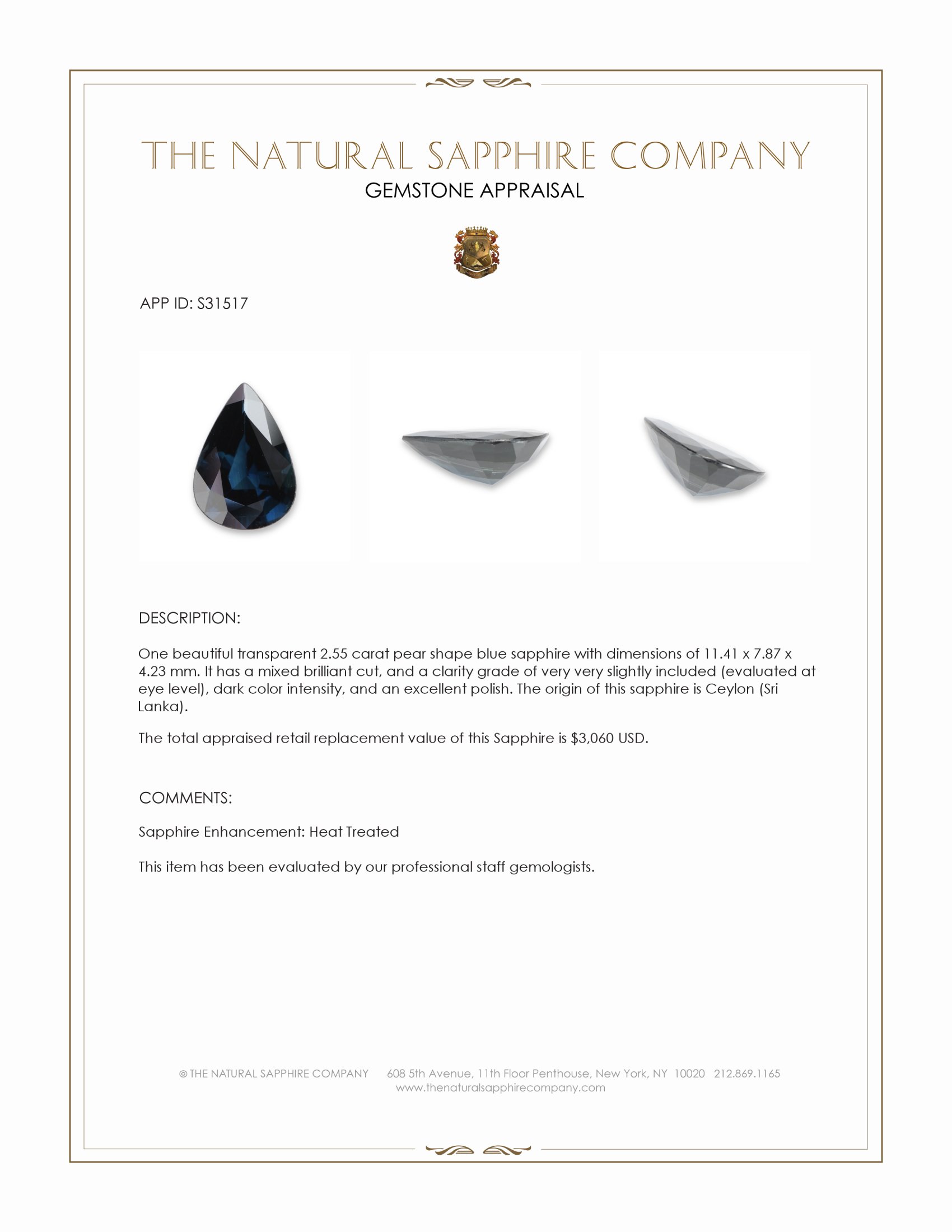
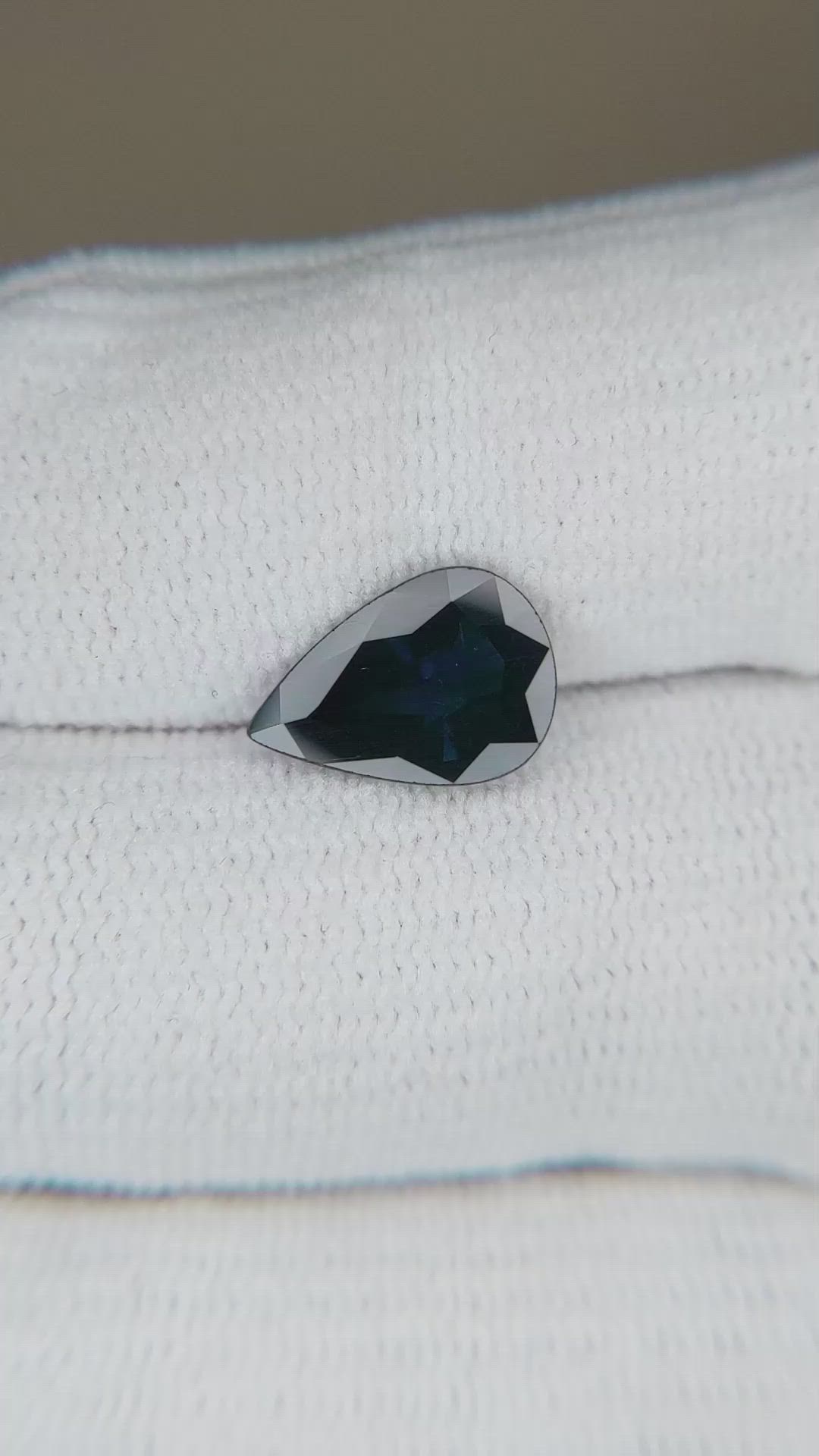
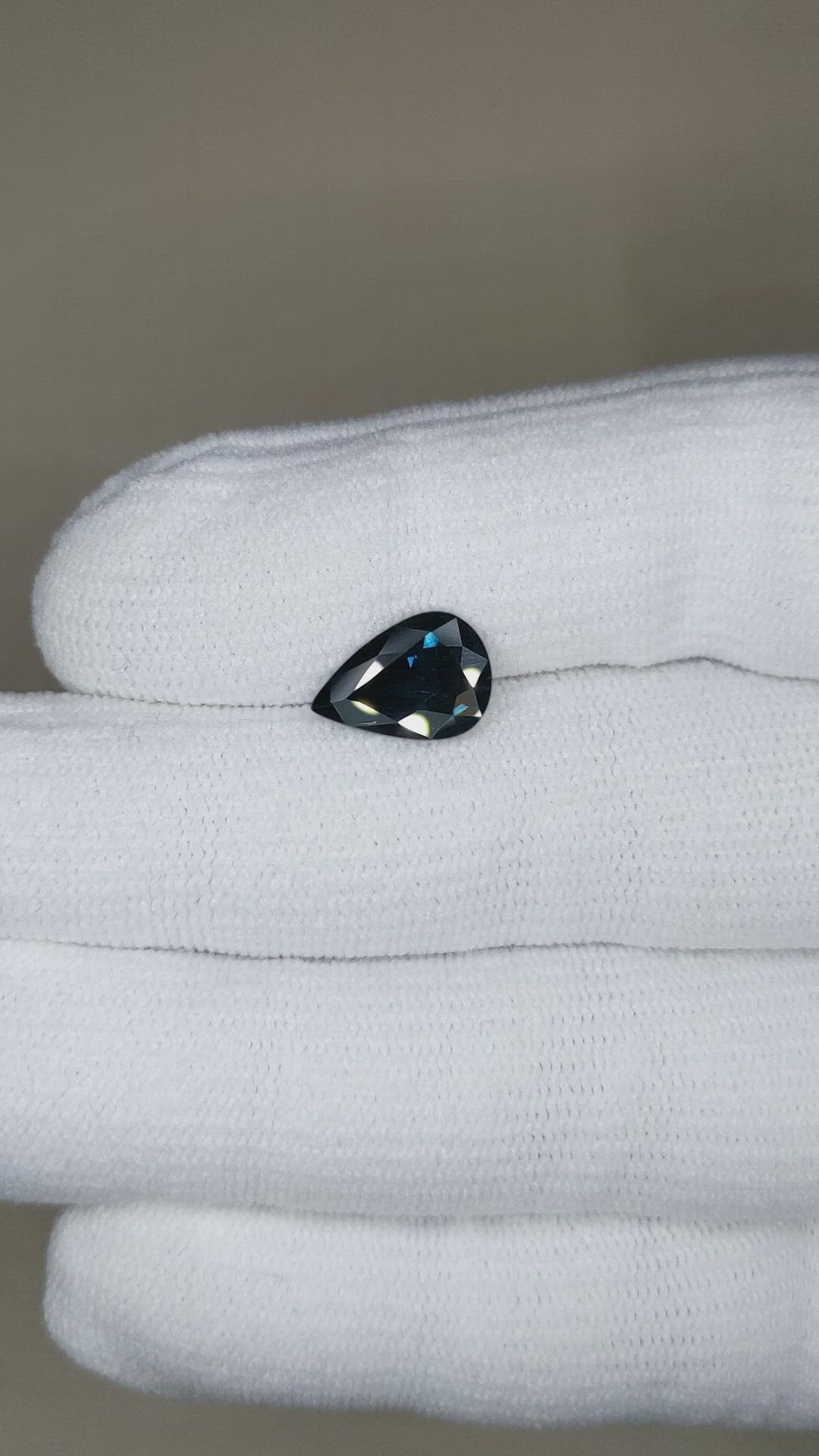
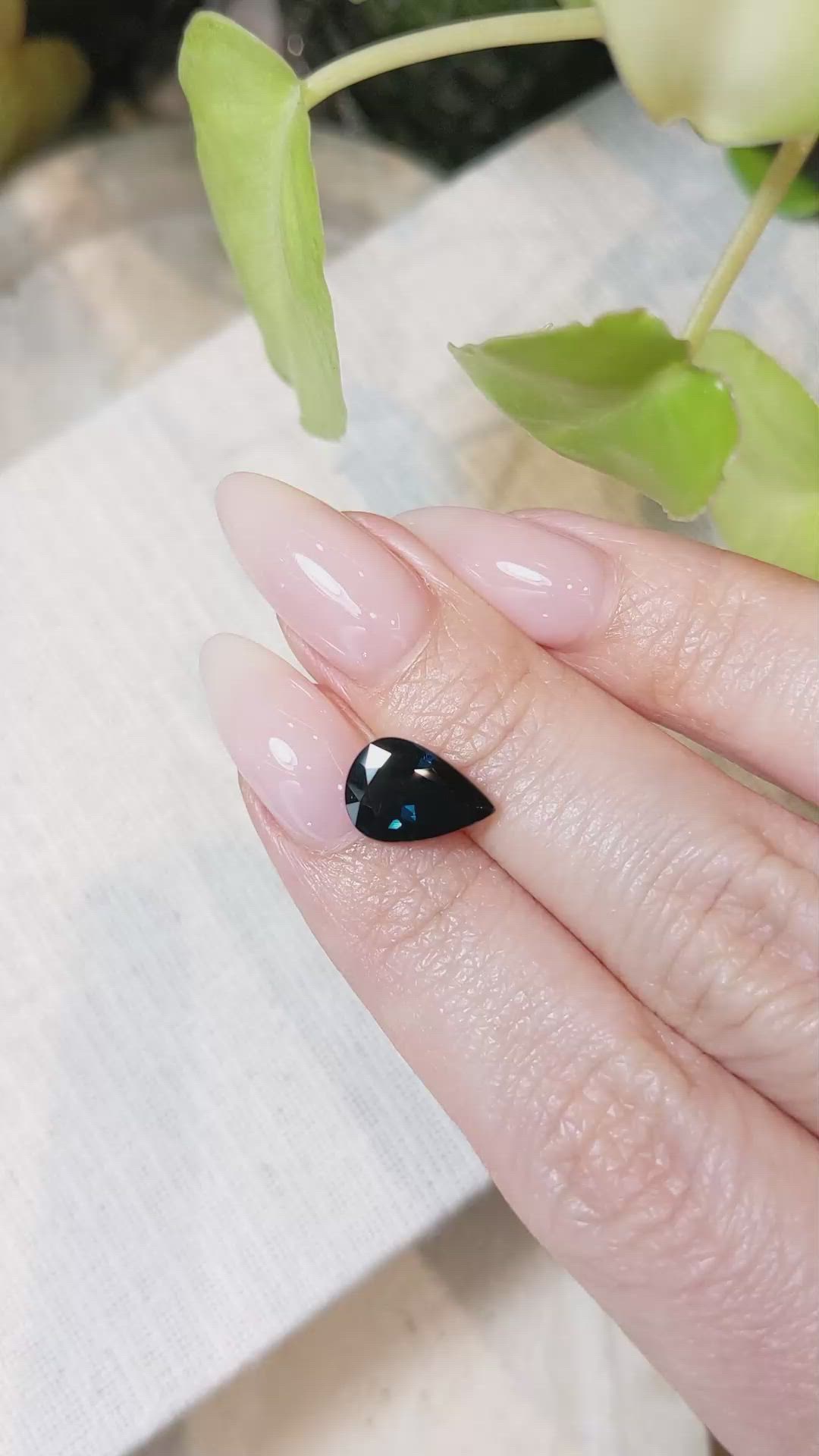
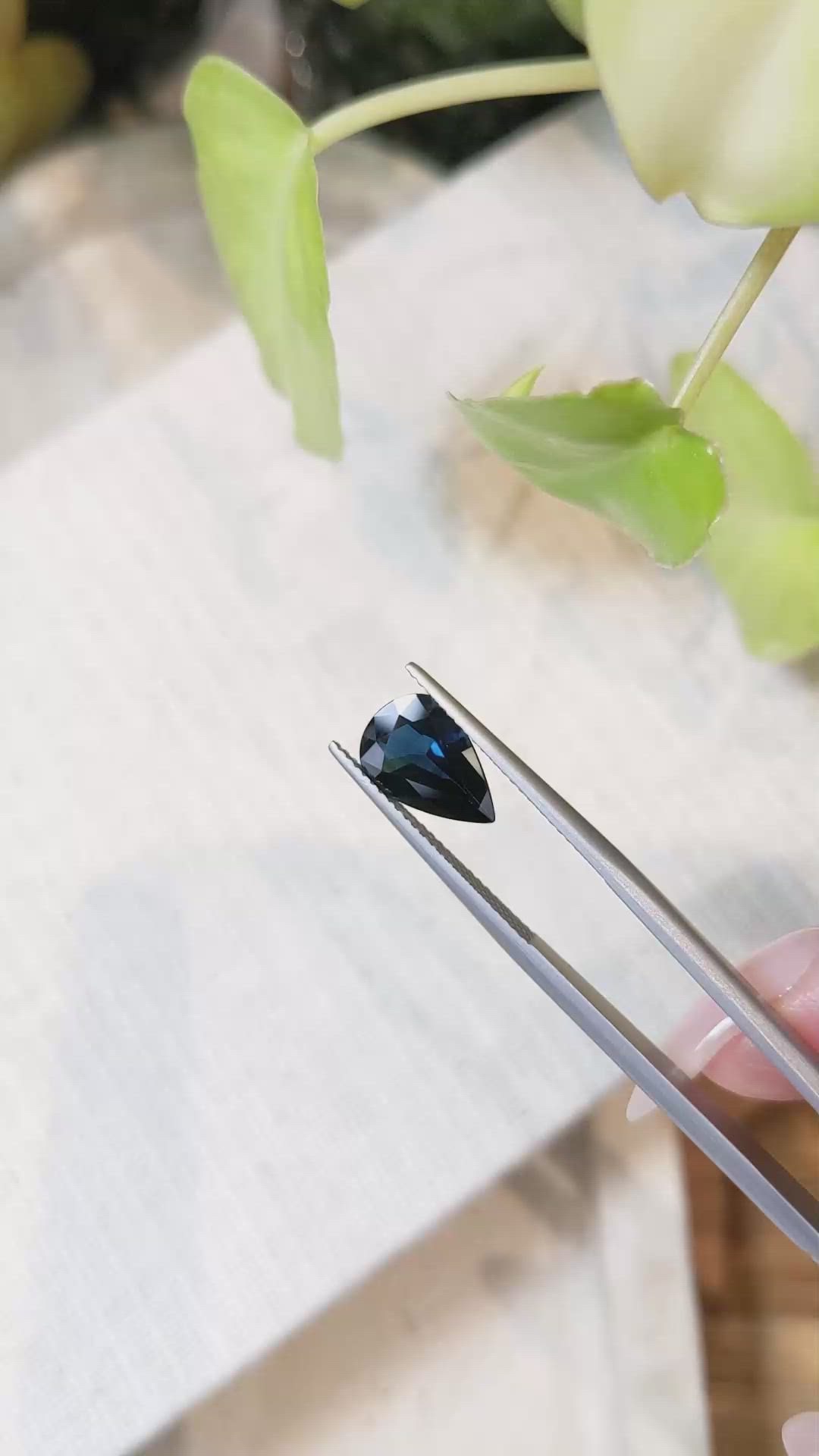
2.55 Ct. Blue Sapphire from Ceylon (Sri Lanka)
This loose stone is available to ship now
Item ID: | S31517 |
|---|---|
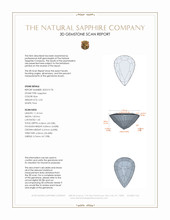
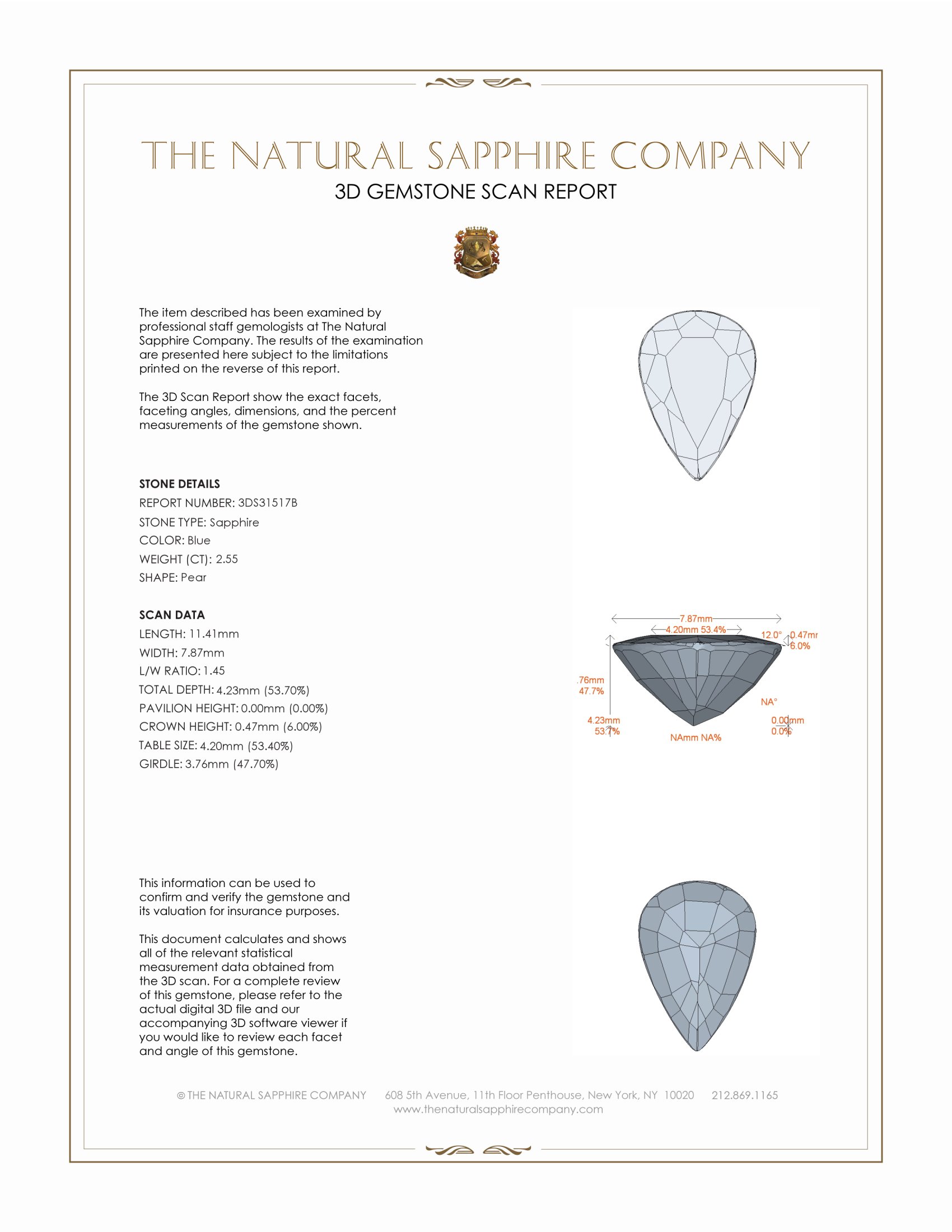
Dimensions (MM): help | Length: 11.41 Width: 7.87 Height: 4.23 |
Weight: | 2.55 Ct. |
Color: help | Blue |
Color intensity: help | Dark |
Clarity: help | Very Very Slightly Included |
Shape: help | Pear |
Cut: | Mixed Brilliant |
Cutting style: | Faceted |
Enhancements: help | Heat Treated |
Origin: help | Ceylon (Sri Lanka) |
Per carat price: help | $1,200 |
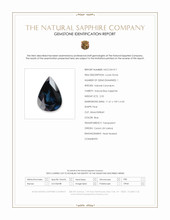
This transparent pear shaped blue sapphire weighs 2.55 carats and measures 11.41 x 7.87 x 4.23 millimeters, with a mixed brilliant cut and an excellent polish. The cutter preserved as much rough as practical to maintain a rich dark color intensity typical of select Ceylon material, while employing a mixed brilliant pavilion and a faceted crown to optimize both color saturation and dynamic scintillation. The measured depth of 4.23 millimeters relative to the stone profile yields a depth ratio in the region of 0.44, a deliberate compromise that maintains face up presence and weight, while allowing pavilion facetting to create controlled light return. Clarity is recorded as very very slightly included at eye level, an assessment that conveys an exceptional degree of visual cleanliness under normal viewing, and the gem has been heat treated to enhance tone and remove residual brown overtones, a customary and stable enhancement for Sri Lankan sapphires. The provenance from Ceylon Sri Lanka is significant, because the material often exhibits a characteristic interplay of blue saturation and internal silk that gives individual stones a strong regional signature, and this particular stone is offered by The Natural Sapphire Company with full disclosure of treatment and origin.
The inclusions in this sapphire are the defining element of its unmistakable signature, and they are technically interesting through both their morphology and their optical effects. Fine, oriented rutile needles occur in sparse networks that are not dense enough to affect transparency, yet they scatter light in a way that produces localized diffusion and a velvety microtexture in certain crown facet windows. These silk assemblages have been partially modified by heat, which can blur the sharpness of rutile aggregates and impart a softer internal sheen, but microscopic angular crystal inclusions remain, acting as specular reflectors that generate concentrated flashes of electric blue when struck by directed light. There are also small negative crystal cavities and healed feather planes that form planar internal mirrors, and these features refract and internally reflect light differently across the pavilion facets, producing alternating zones of deep saturated blue and near black contrast on face up viewing. Pinpoint mineral inclusions, distributed at a low density, serve as scattering centers that enhance sparkle under point illumination, while isolated crystal platelets produce tiny window effects that can appear as bright spots or as articulate flashes depending on the viewing angle. Taken together these inclusion types form a composite internal topology, and this topology is what gives the stone an identifiable fingerprint that will remain stable and unique for the life of the piece, even after the applied heat treatment.
The cutter exploited these inclusion characteristics deliberately, orienting the pear axis to align with the dominant silk direction and fashioning pavilion facets that convert the internal structure into optical drama. The mixed brilliant schema uses a brilliant crown pattern to maximize scintillation, while the pavilion shaping incorporates larger facets that create deep color windows so that the stone reads as intensely blue in diffused light, and exhibits lively contrast in spotlight conditions. Excellent polish ensures that facet junctions are sharp and that light transmission is not compromised by surface lapping, which is critical when working with a stone that relies on internal features for personality. For mounting, settings that allow light entry through the pavilion such as semi open backs or bezel designs with a light channel will best reveal the internal flashes and velvety zones, while halo arrangements can heighten perceived size without obscuring the signature internal pattern. The Natural Sapphire Company stands behind this sapphire with precise imaging and provenance information, and we can provide additional facet orientation photographs and guidance for setting to preserve and showcase the stone identity. For buyers who appreciate the interplay of classical Sri Lankan coloration and a distinct inclusion fingerprint, this 2.55 carat pear sapphire offers both technical excellence and an unmistakable internal signature that will be evident under loupe and to the naked eye alike.


