
- Stone13
- Reports3
-oval-blue-sapphire-2.3000-cts-s31489-1.jpg?d=200x200&v=20251026235651)
-oval-blue-sapphire-2.2000-cts-s31489-lifestyleimage-1.jpg?d=200x200&v=20251110050457)
-oval-blue-sapphire-2.2000-cts-s31489-lifestyleimage-2.jpg?d=200x200&v=20251110050457)
-oval-blue-sapphire-2.2000-cts-s31489-lifestyleimage-3.jpg?d=200x200&v=20251110050457)

-oval-blue-sapphire-2.3000-cts-s31489-1.jpg?d=750x750&s=nsc&v=20251026235651)
-oval-blue-sapphire-2.2000-cts-s31489-lifestyleimage-1.jpg?d=750x750&s=nsc&v=20251110050457)
-oval-blue-sapphire-2.2000-cts-s31489-lifestyleimage-2.jpg?d=750x750&s=nsc&v=20251110050457)
-oval-blue-sapphire-2.2000-cts-s31489-lifestyleimage-3.jpg?d=750x750&s=nsc&v=20251110050457)

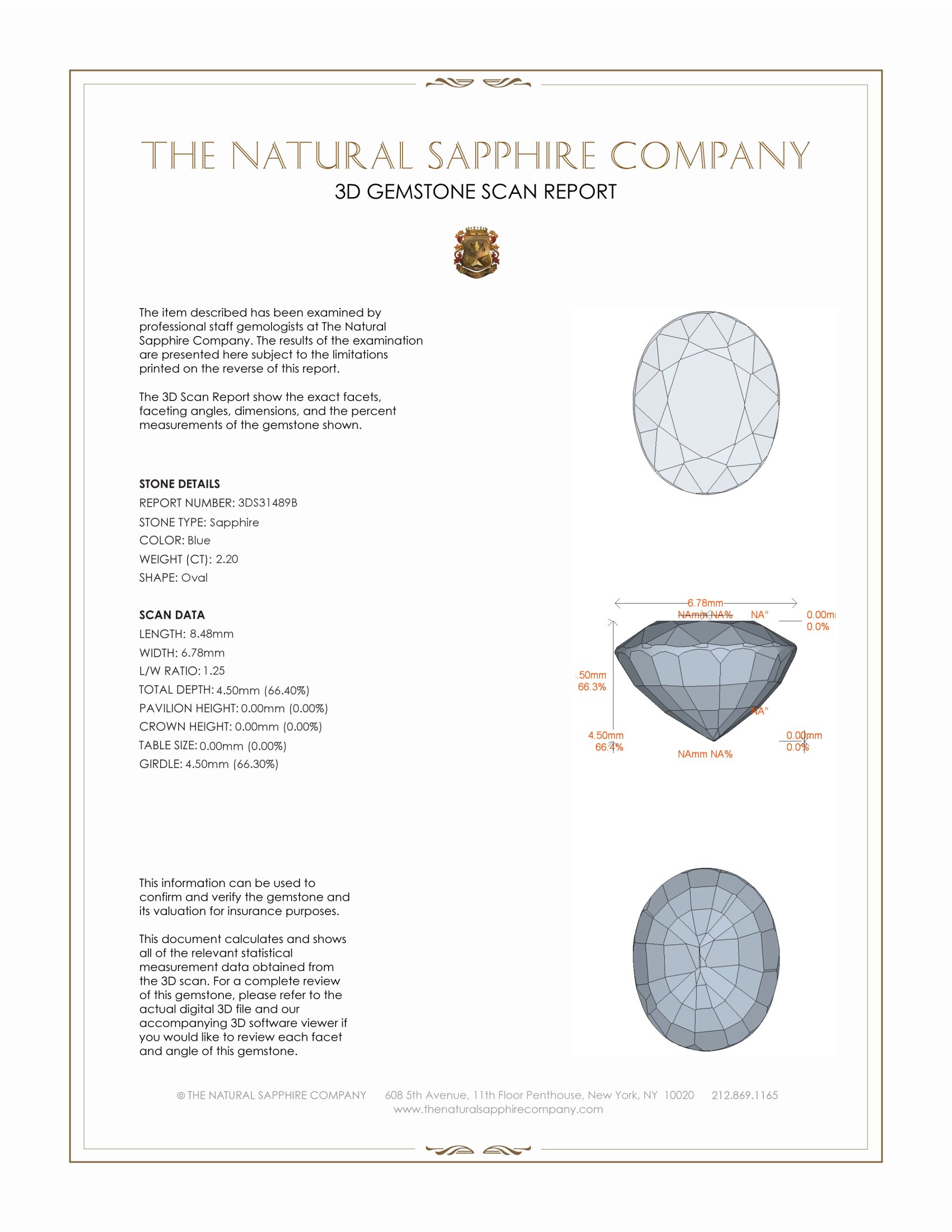

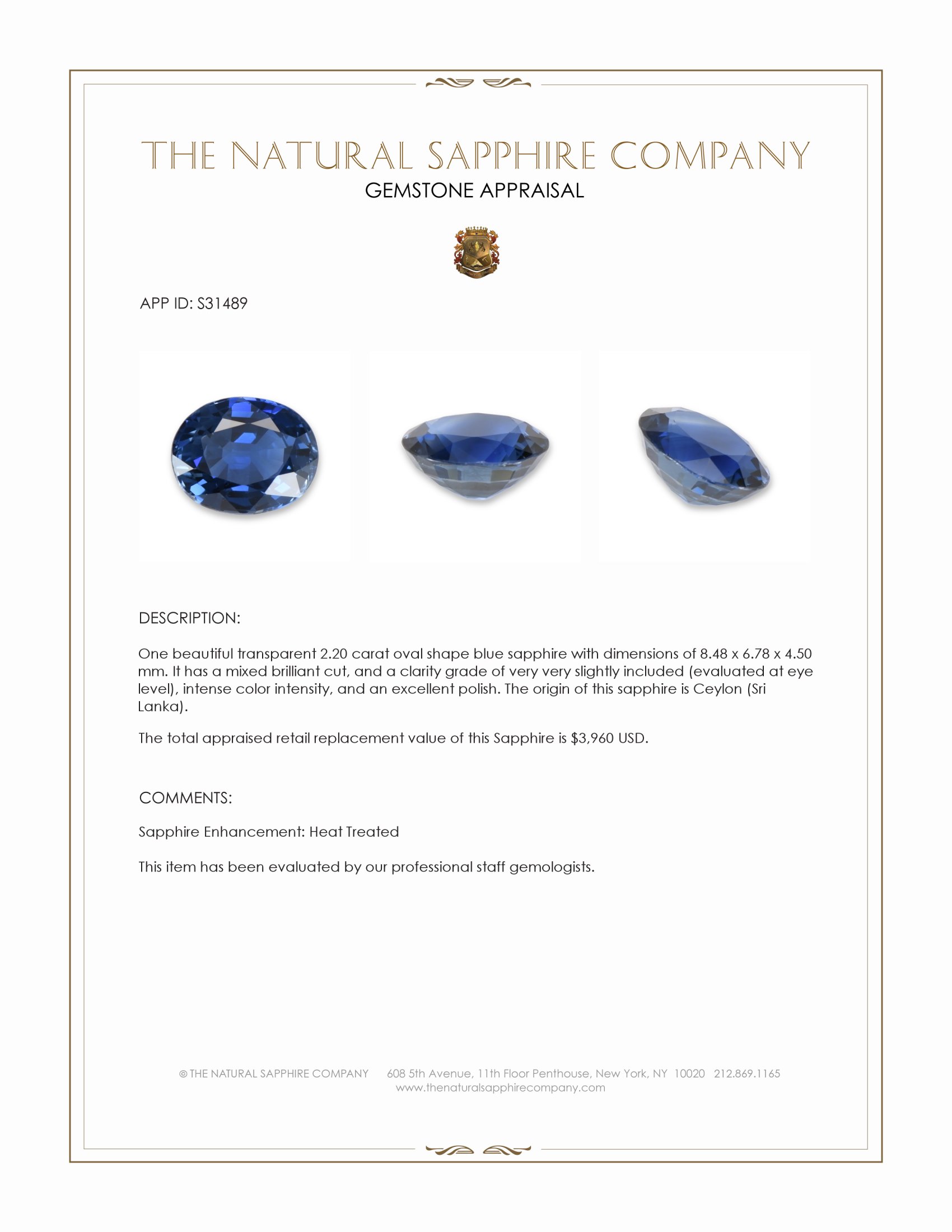
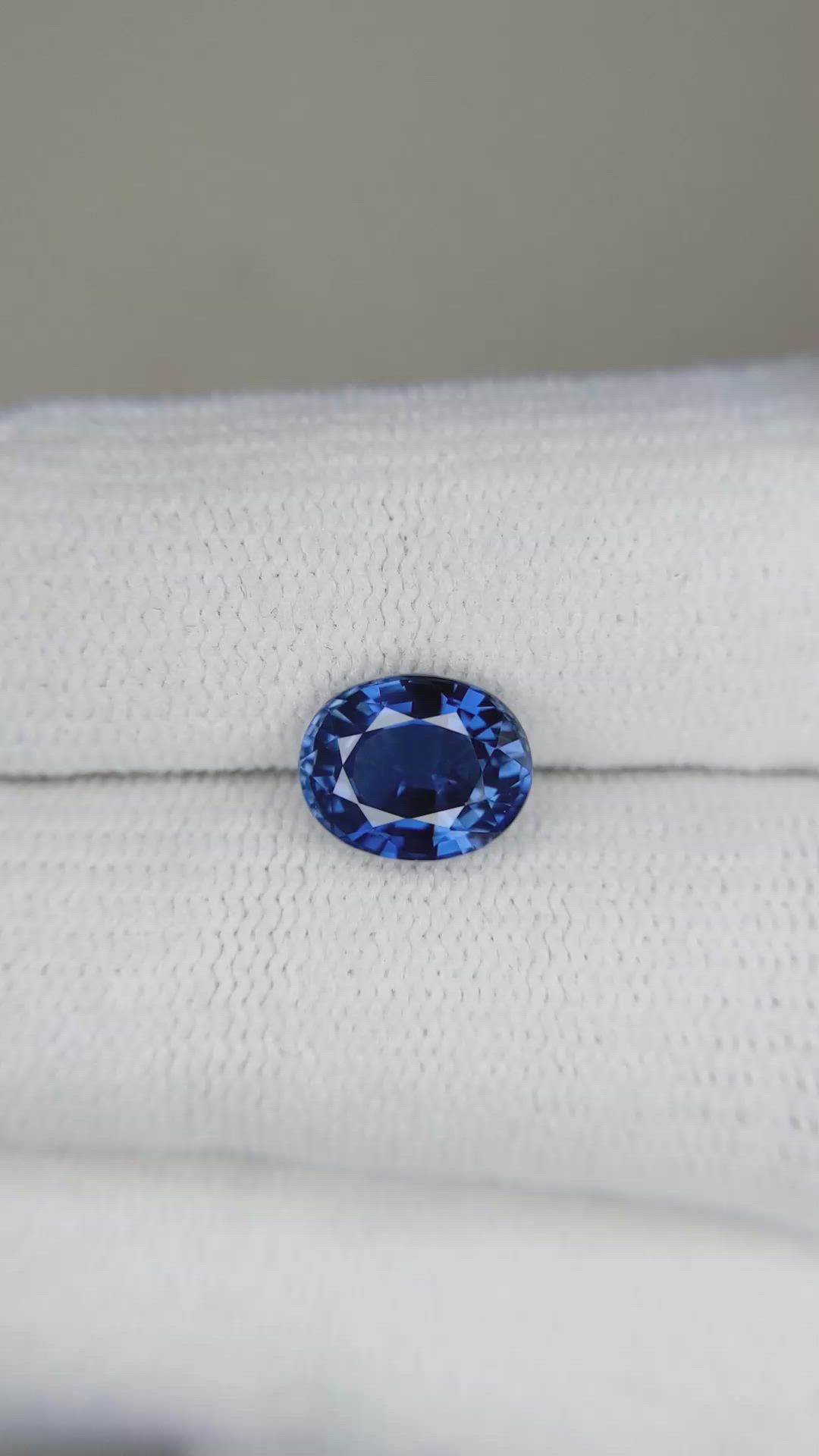
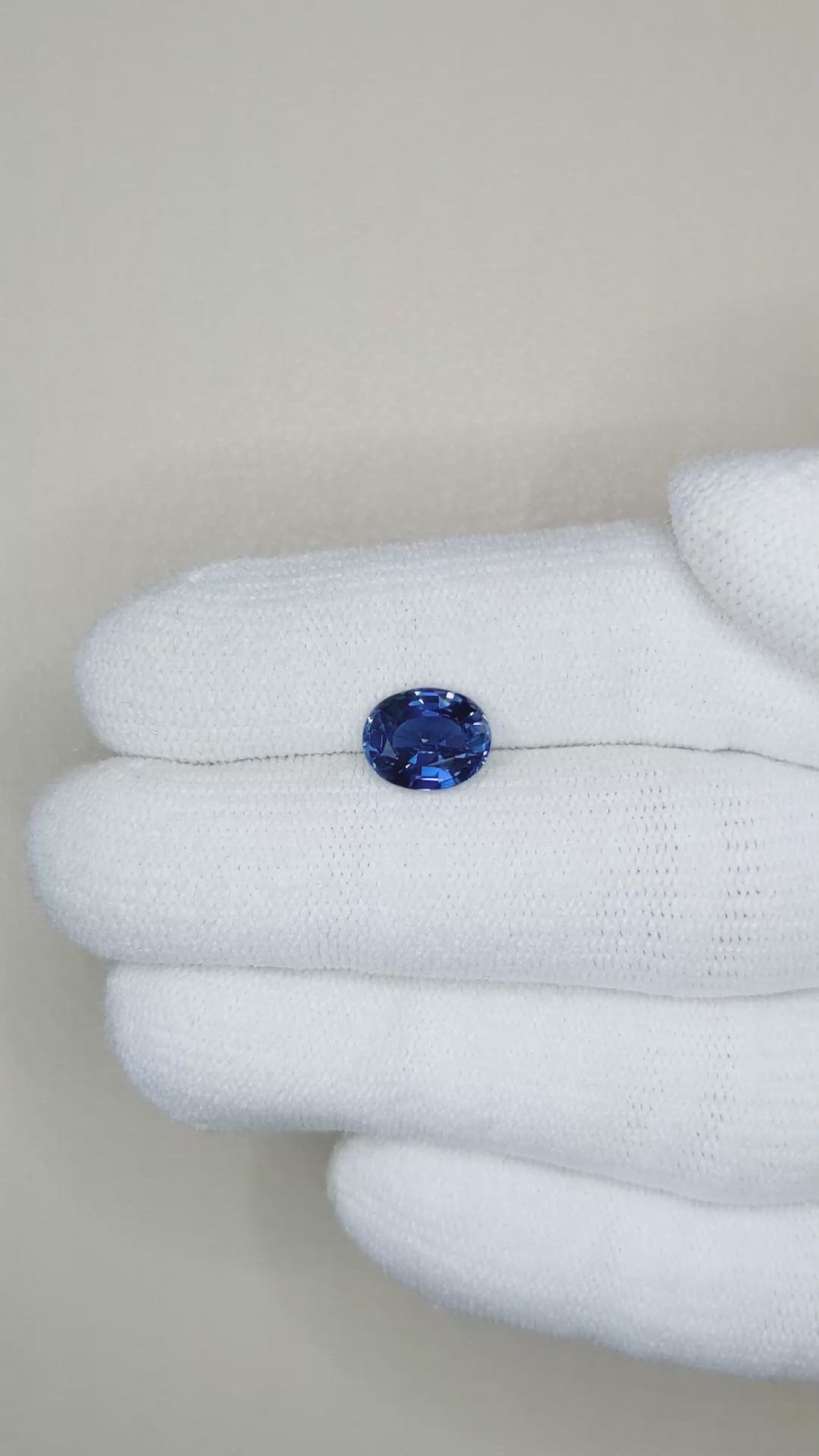
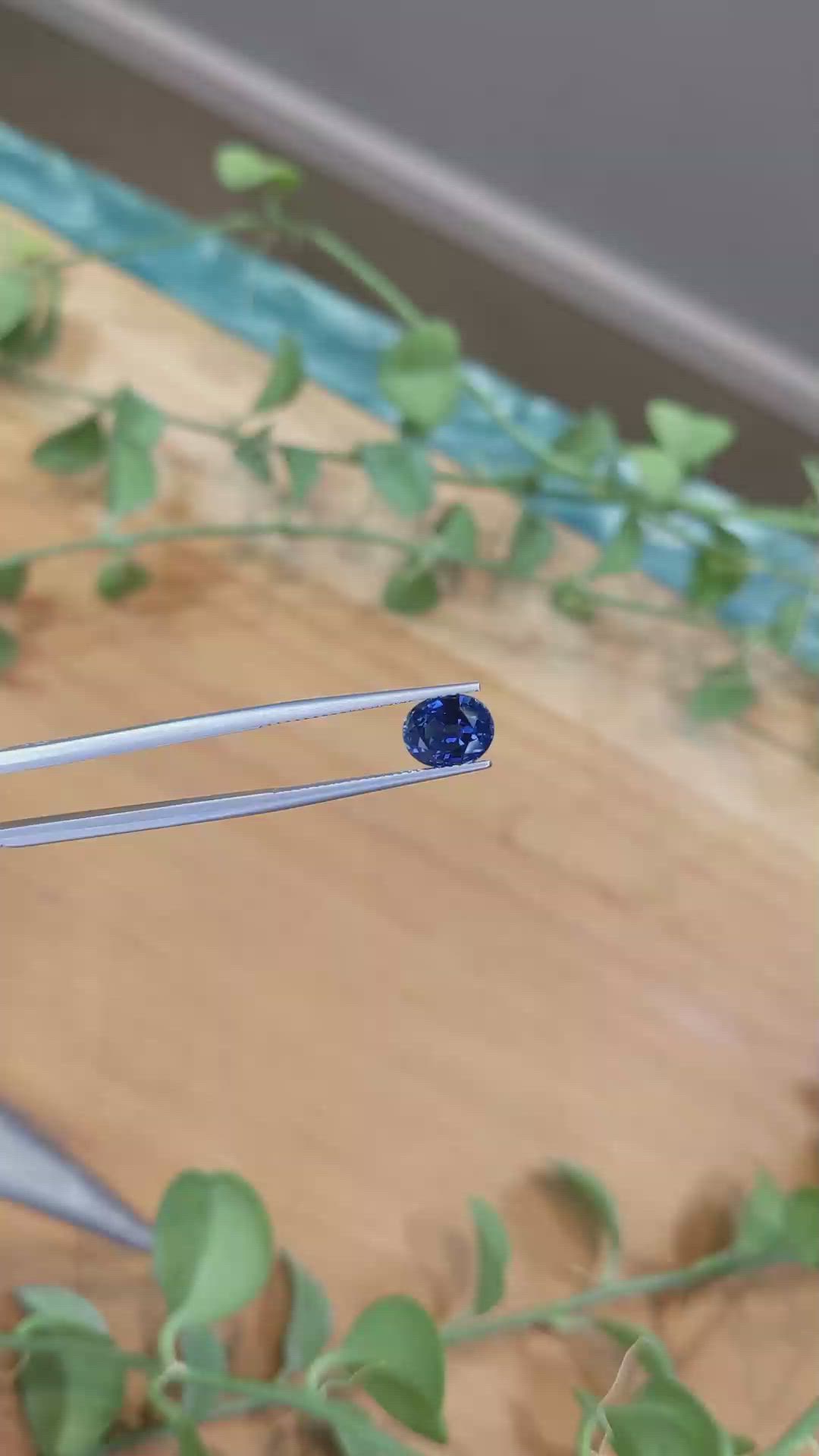
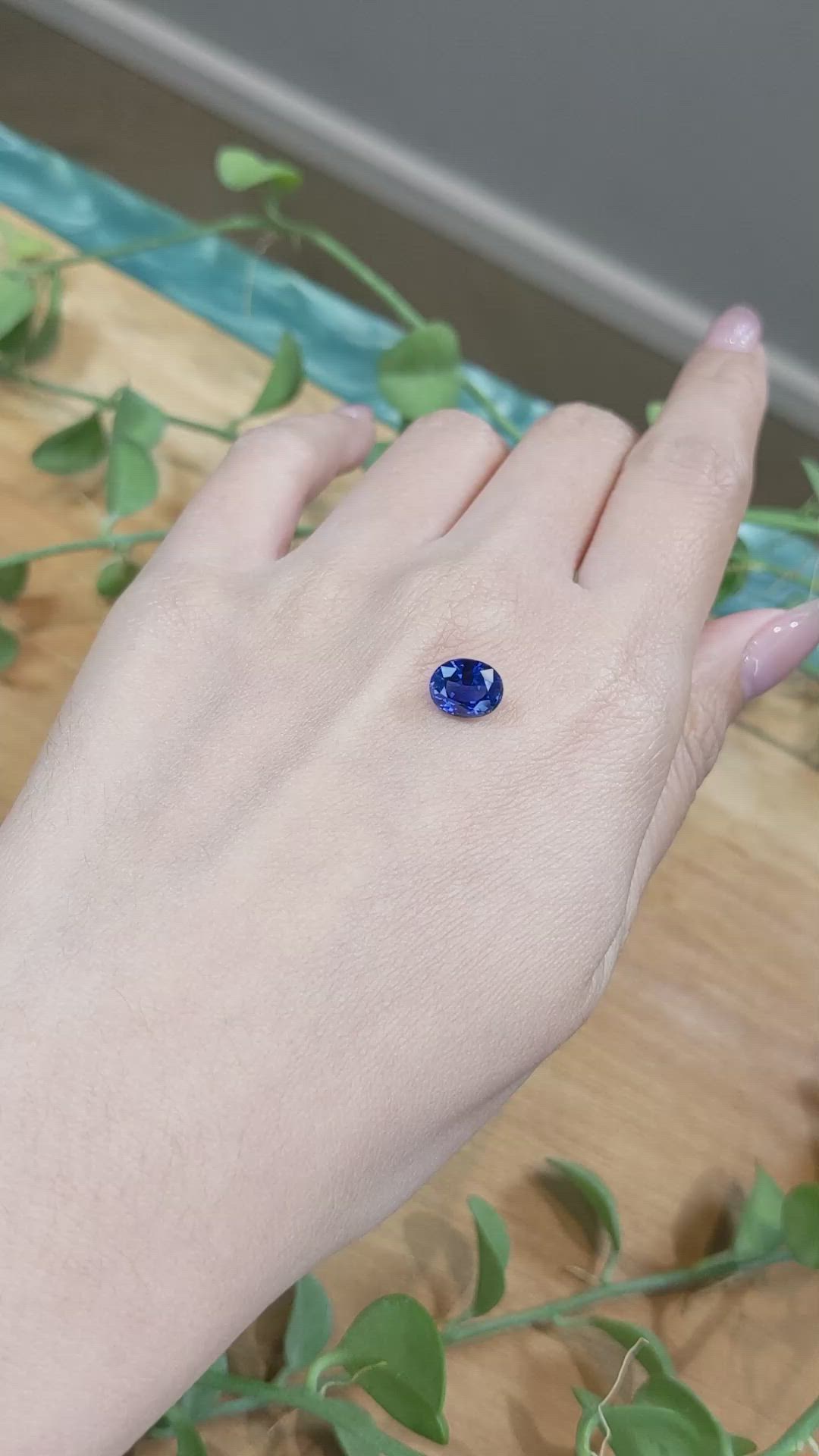
2.20 Ct. Blue Sapphire from Ceylon (Sri Lanka)
This loose stone is available to ship now
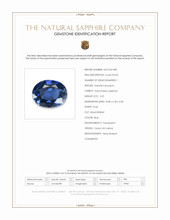
Item ID: | S31489 |
|---|---|
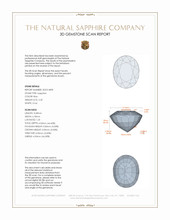
Dimensions (MM): help | Length: 8.48 Width: 6.78 Height: 4.5 |
Weight: | 2.20 Ct. |
Color: help | Blue |
Color intensity: help | Intense |
Clarity: help | Very Very Slightly Included |
Shape: help | Oval |
Cut: | Mixed Brilliant |
Cutting style: | Faceted |
Enhancements: help | Heat Treated |
Origin: help | Ceylon (Sri Lanka) |
Per carat price: help | $1,800 |
This 2.20 carat oval blue sapphire measures 8.48 by 6.78 by 4.50 millimeters, and has been fashioned into a mixed brilliant cut to balance optimized light return with efficient weight retention. The cutter employed a brilliant facet scheme on the pavilion combined with a modified step influenced crown, producing a table and crown relationship that emphasizes scintillation while maintaining an elegant oval silhouette. The pavilion depth relative to the average girdle diameter yields a depth of approximately 59 percent, a proportion that supports strong internal reflection without producing excessive windowing. Facet junctions and facet geometry display controlled alignment and proportionality, and the excellent polish enhances facet transparency and contrast, permitting crisp light return from the crown facets and well defined facet mirrors on the pavilion. The oval outline is symmetrical, with well executed girdle thickness that facilitates secure setting while preserving carat weight, and the overall cutting and finishing reflect systematic attention to facet angles and optical performance.
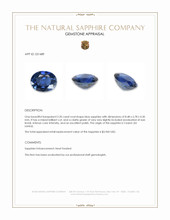
Chromatically this stone presents an intense blue color intensity, derived from natural iron and titanium trace element chemistry typical of Ceylon origin, and the hue leans toward a vivid medium to deep blue that maintains saturation across the table and into the pavilion facets. Optical properties consistent with corundum, including a refractive index in the range commonly cited for sapphire, and low birefringence, contribute to crisp facet delineation and good light return. The clarity has been evaluated as very very slightly included at eye level, indicating inclusions are minimal and do not interfere with visual transparency or light performance when viewed without magnification. Under magnification the stone will reveal diagnostic natural features rather than growth patterns associated with synthetic material, features that can include thin negative crystals and subtle feathering that are stable under normal wear. The sapphire has been heat treated, a standard, controlled enhancement that improves color and clarity by reducing certain inclusions and stabilizing iron titanium chromophore distributions. Heat treatment in corundum is a permanent and industry accepted procedure when conducted correctly, and it preserves the structural integrity and durability of the sapphire while enhancing the visual qualities prized by connoisseurs.
When compared to gem lab grown sapphire, a natural Ceylon stone offers several technical and intrinsic advantages that are relevant to specialists and collectors. Lab grown materials often display growth features such as curved growth lines, particulate distribution and gas flux inclusions that are diagnostic of synthetic growth, while natural sapphires exhibit complex, irregular inclusion suites and zonation patterns that record geological history and provenance. From a material science perspective, natural corundum from a historic source like Ceylon carries a trace element signature and microscopic growth morphology that are unique to its geological environment, allowing gemological laboratories to attribute origin with a degree of confidence and providing provenance that many buyers consider an important part of value. Rarity is another factor, natural stones of this quality and size with intense color and very very slight inclusions are less common than equivalent laboratory productions, and that scarcity is reflected in long term market behavior and collectability. In contrast, lab grown sapphires provide uniformity and often lower cost per carat, however they do not acquire the same historical or geological narrative, nor do they offer the same complexity of natural inclusion structures that can enhance light scattering and create subtle, desirable visual effects. The Natural Sapphire Company stands behind the origin and treatment declaration for this gem, and can provide laboratory documentation and detailed imagery that illustrate the cutting specifications, inclusions observed under magnification, and the measured proportions that contribute to the stones optical performance. For buyers who prioritize certified natural origin, enduring rarity, and the nuanced optical characteristics that arise from natural formation and skilled cutting, this 2.20 carat Ceylon oval sapphire represents a technically refined and materially authentic option. For additional technical data, magnified images, or discussion on mounting and setting geometry to maximize display of the stones performance, please contact The Natural Sapphire Company and we will provide bespoke gemological support.


