
- Stone16
- Reports3
-asscher-octagon-blue-sapphire-2.0800-cts-s35344-1.jpg?d=200x200&v=20260114071029)
-asscher-octagon-blue-sapphire-2.0800-cts-s35344-lifestyleimage-1.jpg?d=200x200&v=20260102054926)
-asscher-octagon-blue-sapphire-2.0800-cts-s35344-lifestyleimage-2.jpg?d=200x200&v=20260102054926)
-asscher-octagon-blue-sapphire-2.0800-cts-s35344-lifestyleimage-3.jpg?d=200x200&v=20260102054926)
-asscher-octagon-blue-sapphire-2.0800-cts-s35344-lifestyleimage-4.jpg?d=200x200&v=20260102054926)


-asscher-octagon-blue-sapphire-2.0800-cts-s35344-1.jpg?d=750x750&s=nsc&v=20260114071029)
-asscher-octagon-blue-sapphire-2.0800-cts-s35344-lifestyleimage-1.jpg?d=750x750&s=nsc&v=20260102054926)
-asscher-octagon-blue-sapphire-2.0800-cts-s35344-lifestyleimage-2.jpg?d=750x750&s=nsc&v=20260102054926)
-asscher-octagon-blue-sapphire-2.0800-cts-s35344-lifestyleimage-3.jpg?d=750x750&s=nsc&v=20260102054926)
-asscher-octagon-blue-sapphire-2.0800-cts-s35344-lifestyleimage-4.jpg?d=750x750&s=nsc&v=20260102054926)


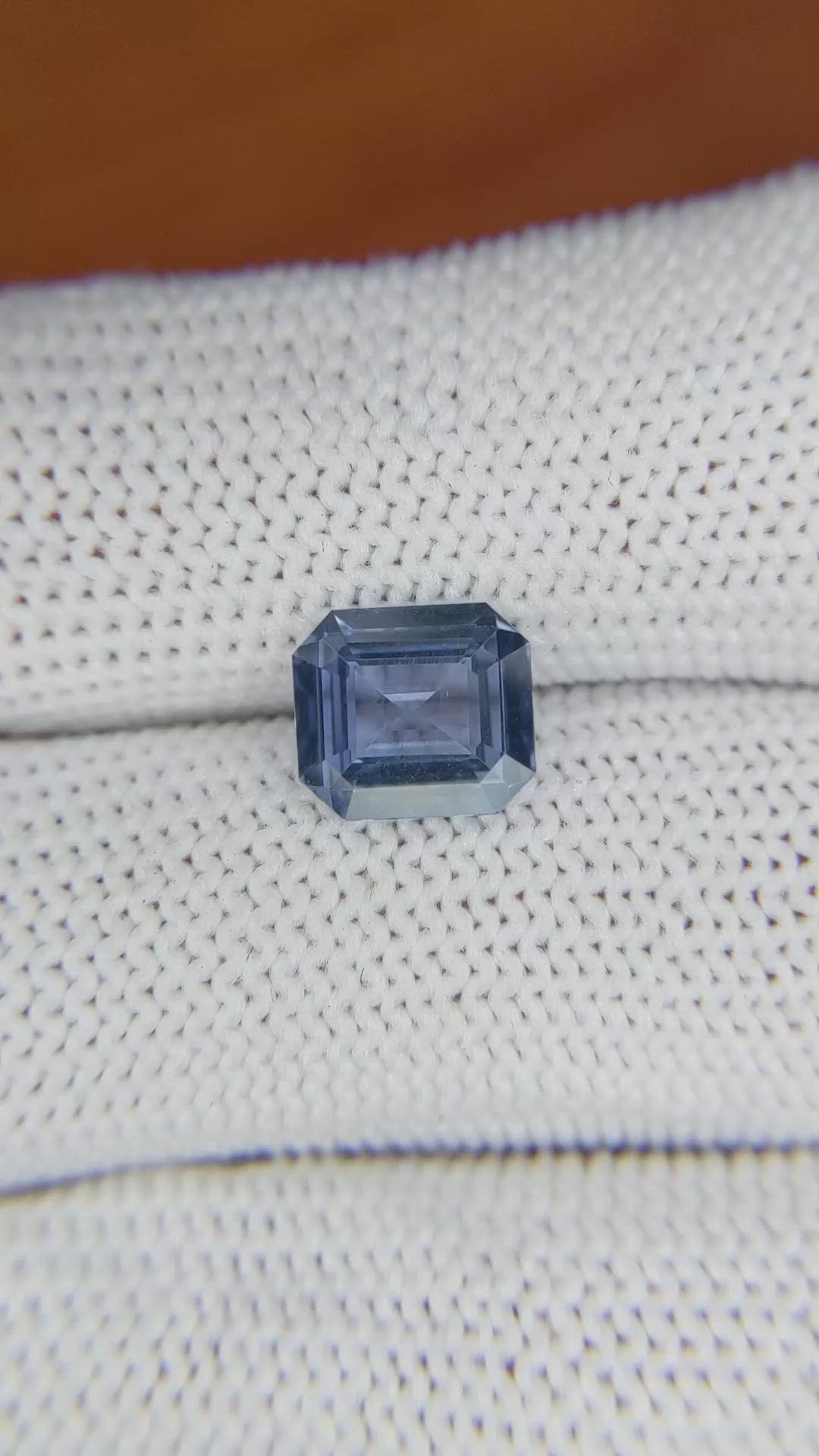
2.08 Ct. Blue Sapphire from Ceylon (Sri Lanka)
This loose stone ships by Feb 19
Item ID: | S35344 |
|---|---|
Dimensions (MM): help | Length: 8.36 Width: 7.42 Height: 3.62 |
Weight: | 2.08 Ct. |
Color: help | Blue |
Color intensity: help | Light |
Clarity: help | Very Very Slightly Included |
Shape: help | Asscher - Octagon |
Cut: | Asscher |
Cutting style: | Faceted |
Enhancements: help | No Enhancement |
Origin: help | Ceylon (Sri Lanka) |
Per carat price: help | $1,700 |
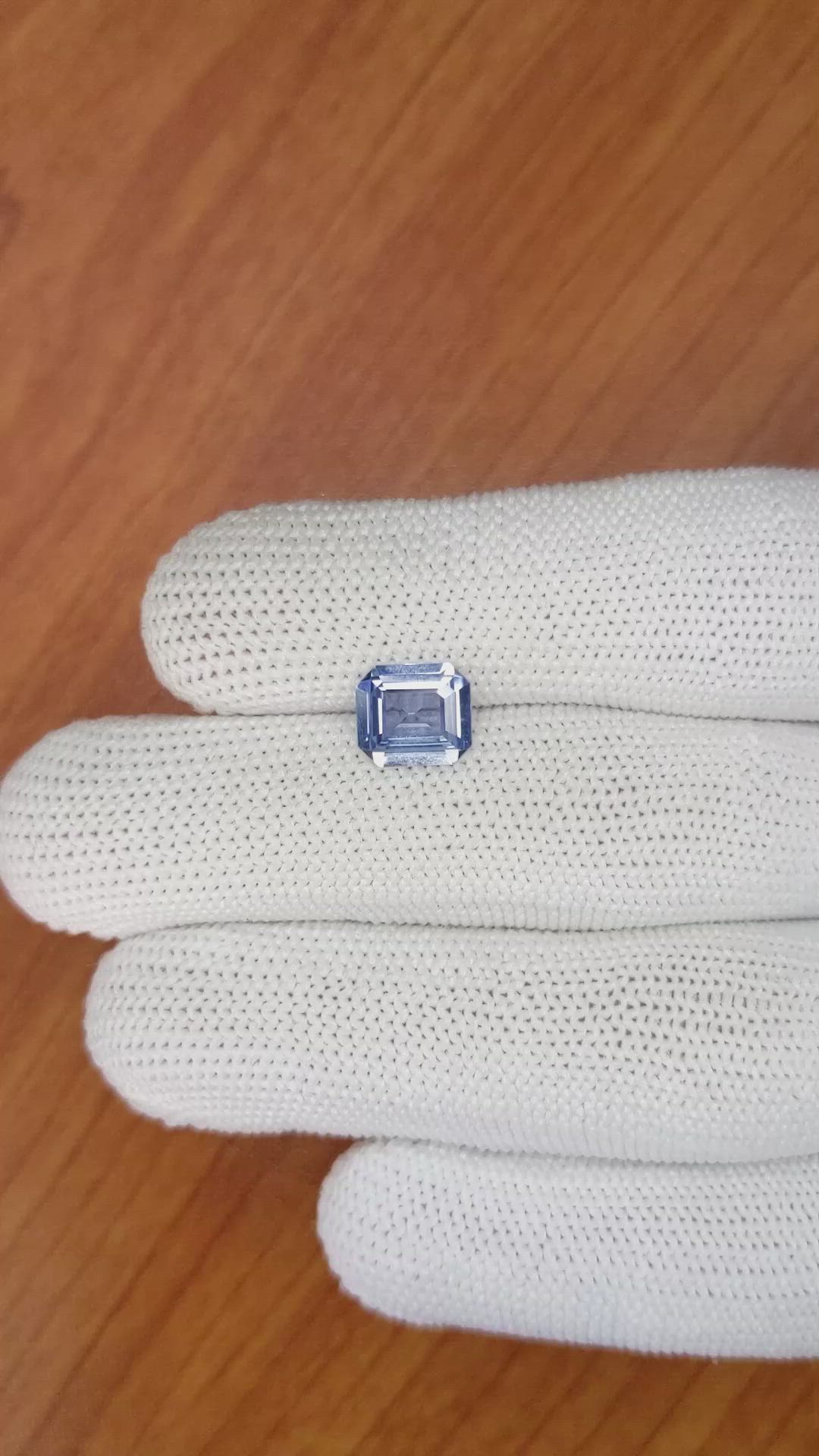
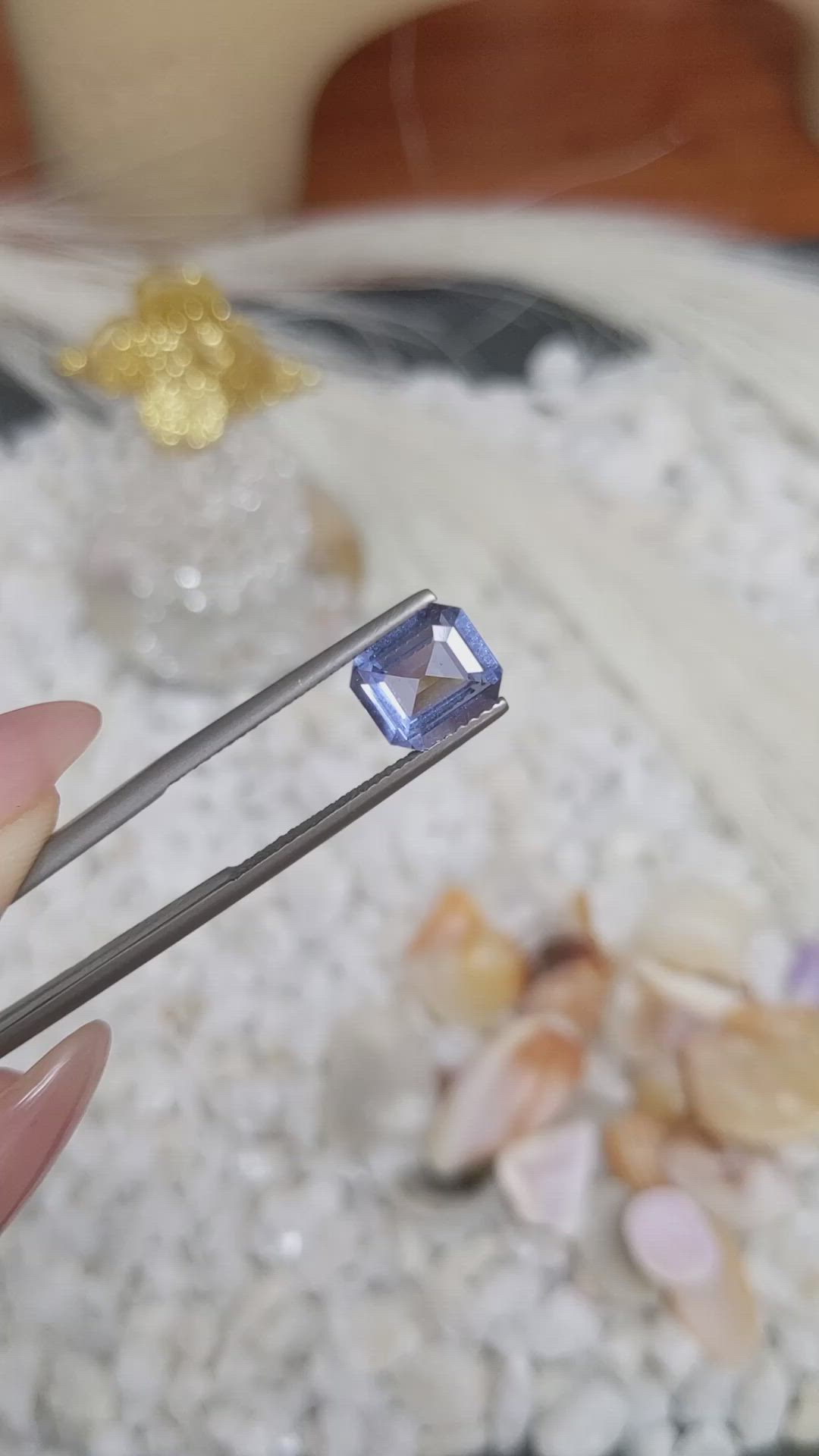
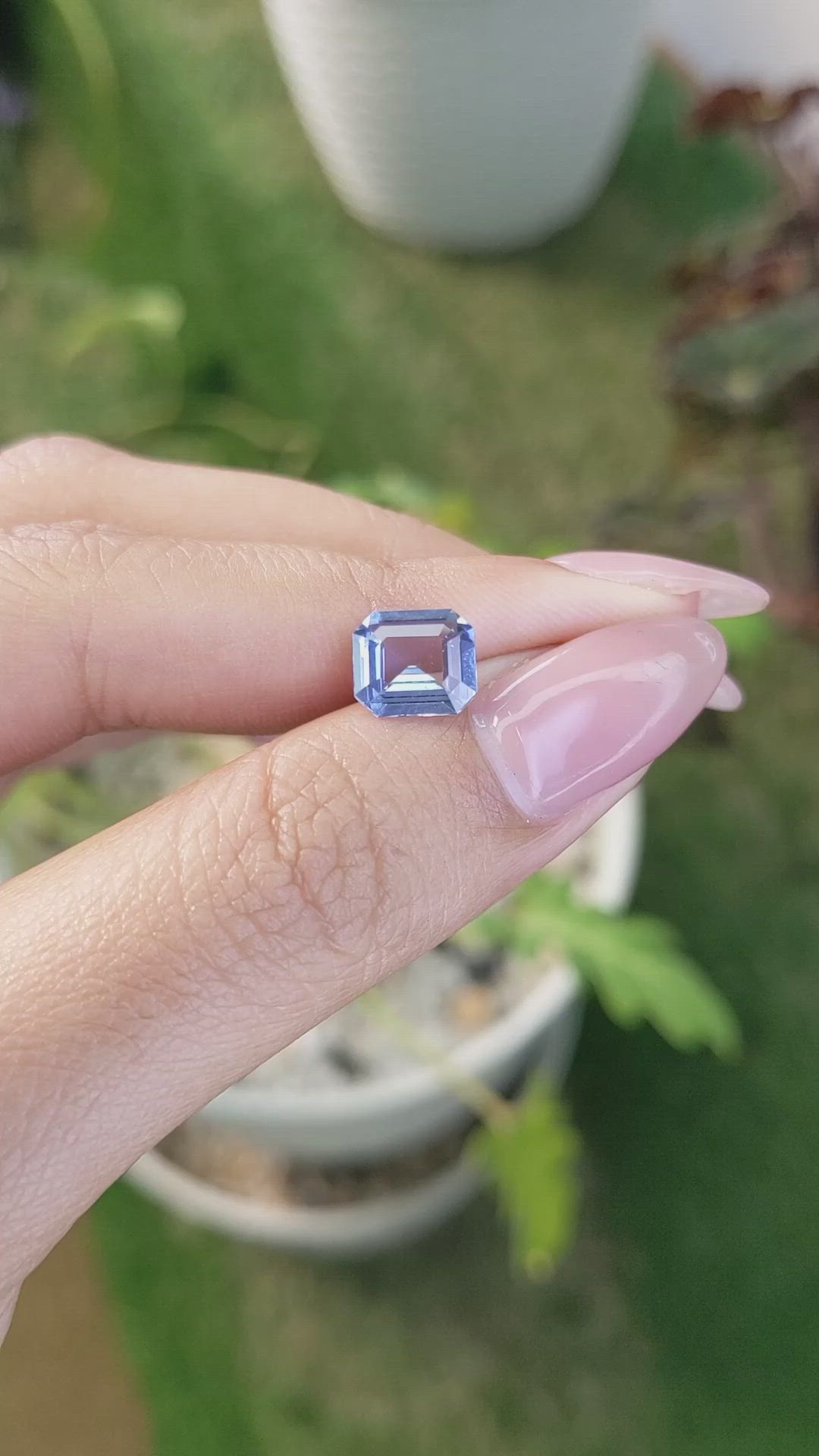
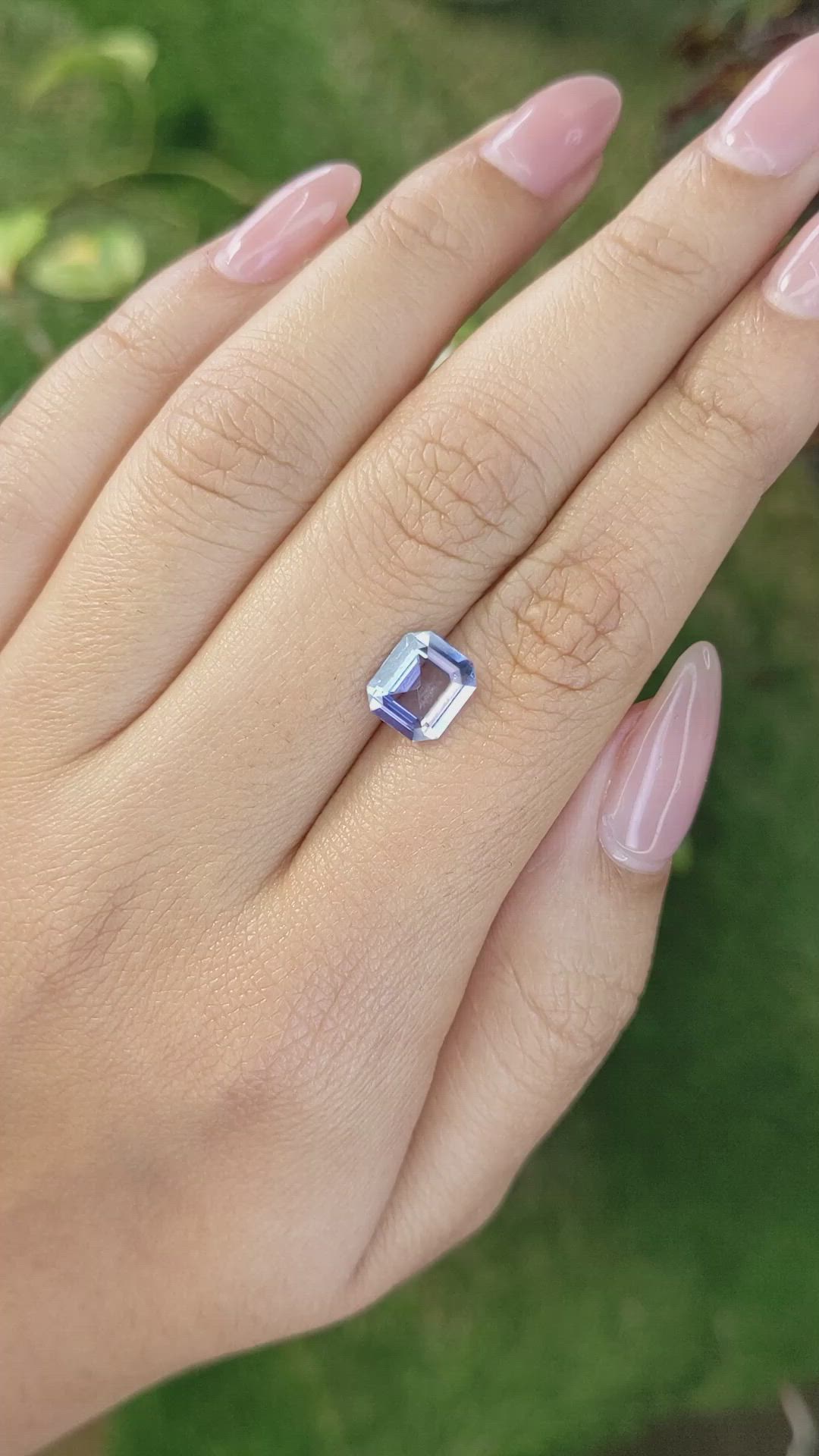
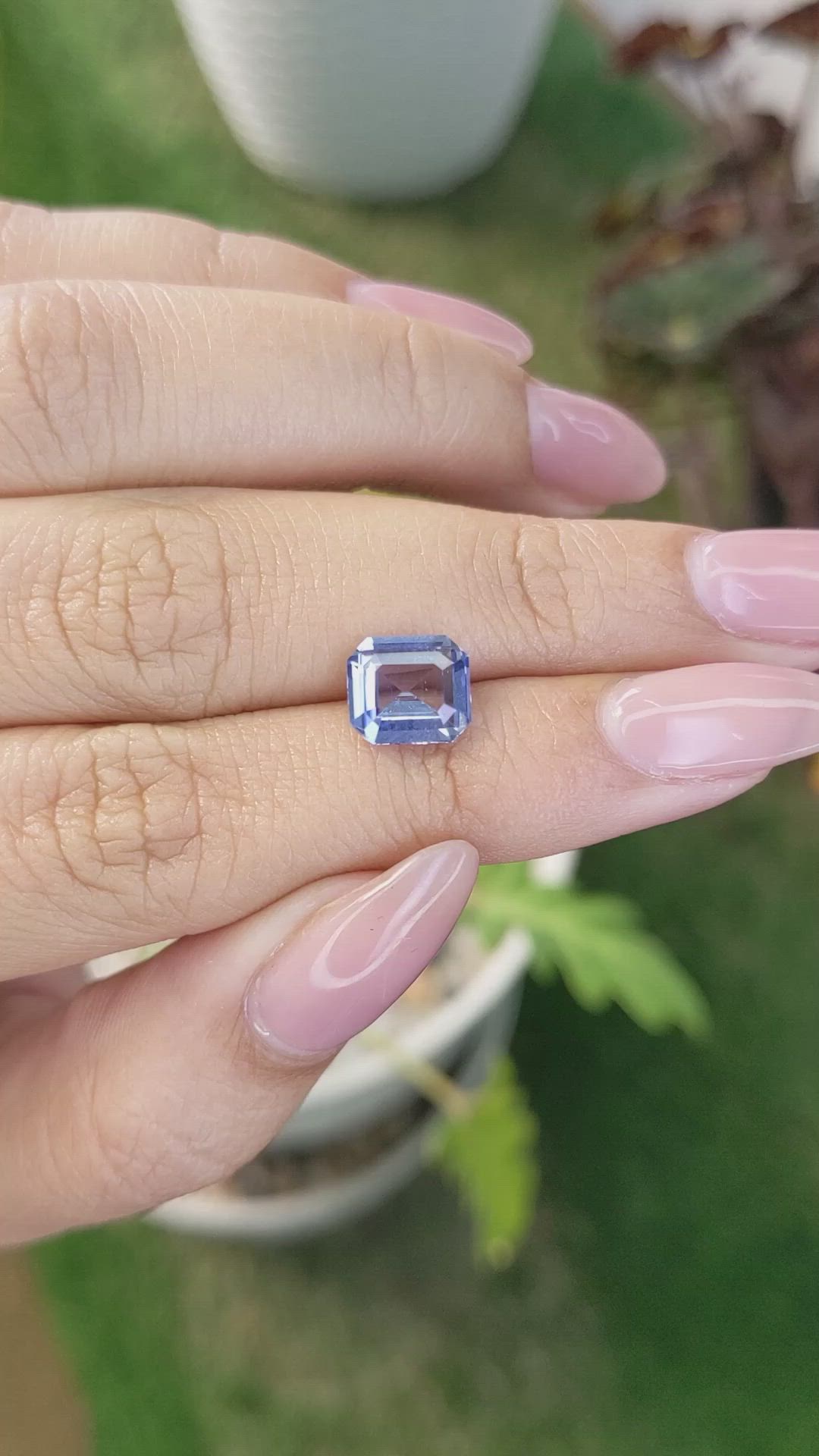
This 2.08 carat, asscher octagon shape blue sapphire measures 8.36 by 7.42 by 3.62 millimeters, a well proportioned gem that presents clean transparency and an asscher cut executed to exacting tolerances. The asscher faceting produces concentric step facets on the crown and pavilion, generating a hall of mirrors effect that emphasizes crisp facet junctions and precise corner truncations. Clarity is graded as very very slightly included when viewed at eye level, indicating only minute internal features that do not interrupt the overall visual purity. Color intensity is described as light, with the gem showing a delicate, airy blue that reads as clean and cool under neutral daylight. Polish is excellent, with facet planes that appear flat and reflective, and there is no enhancement reported, confirming that this is a natural, untreated Ceylon sapphire, supplied by The Natural Sapphire Company.
From a cut and proportion perspective, the stone’s measured depth of 3.62 millimeters over an average girdle diameter of approximately 7.89 millimeters yields a depth percentage of approximately 46 percent, which is relatively shallow for sapphire standards but highly compatible with asscher step cutting. The shallow pavilion and the broad table proportion favor face up brightness, allowing the light to return efficiently through the crown rather than being absorbed in deeper tone. The step facets on the pavilion are balanced against a moderate crown height, creating controlled light return and a sequence of broad flashes rather than scintillating pinpoint brilliance. The octagonal outline retains the geometric symmetry expected of an asscher, with well executed corner bevels that minimize chipping risk in practical mounting, and the excellent polish enhances contrast between the flat facet planes and the internal reflections.
Chromatically this sapphire embodies the classical Ceylon signature of light to medium light blue with a subtle cool bias, showing a primary blue hue with a faint violet modifier in certain lighting angles. Compared directly to Kashmir sapphires, which typically present a richer, more saturated cornflower blue with a velvety diffusion and deeper medium tone, this Ceylon example reads lighter and more crystalline, offering clarity of hue rather than the plush saturation of Kashmir material. Against Burmese sapphires, which often show stronger saturation and a pure vivid blue or slightly greenish blue depending on provenance, this gem is more delicate, favoring transparency and brilliance over saturated depth. Compared to Australian and Thai sapphires that can exhibit darker, inky tones and higher saturation with greater iron induced depth, this Sri Lankan stone is decidedly more luminous and pastel in expression. Montana sapphires, which are known for their lighter, often teal leaning blues, can resemble this specimen in tone, but Montana examples frequently show greener modifiers, whereas this gem retains a clearer cool blue character typical of Ceylon sourcing.
The lack of enhancement is an important technical attribute that significantly affects both rarity and valuation, because it confirms that the observed lightness and saturation are intrinsic properties of the crystal lattice and trace element chemistry rather than the product of heat diffusion or other treatments. The very very slight inclusions observed at eye level are consistent with natural growth zoning and minute mineral inclusions, and they can act as provenance indicators when evaluated against Ceylon formation habits, where minute silk or crystal inclusions occur at low levels. The asscher cut in this instance is a deliberate cutter choice to maximize the appearance of color and clarity in a light toned stone, because step facets preserve the purity of hue and present large reflective planes rather than breaking color into numerous scintillation points. For setting considerations, the gem’s geometry and moderate depth make it ideal for open prong solitaire presentations and for halo settings where the light, clear blue will read larger face up, and the asscher geometry will align well with angular, architectural mounting designs. For those seeking a Ceylon sapphire that offers unheated authenticity, measured proportions, and asscher artistry, this stone from The Natural Sapphire Company provides a nuanced and technically refined option.


