- Stone14
- Reports3


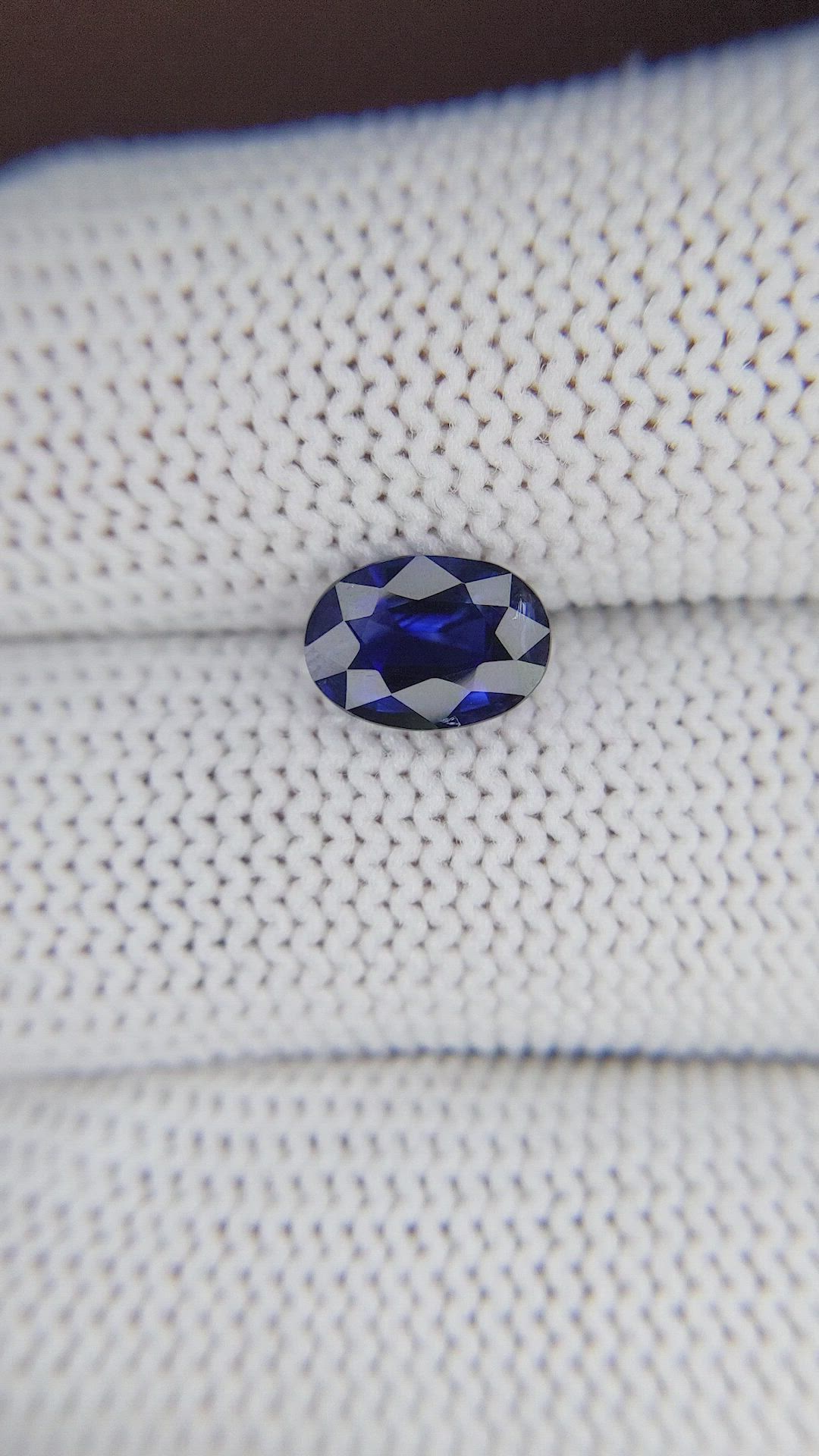
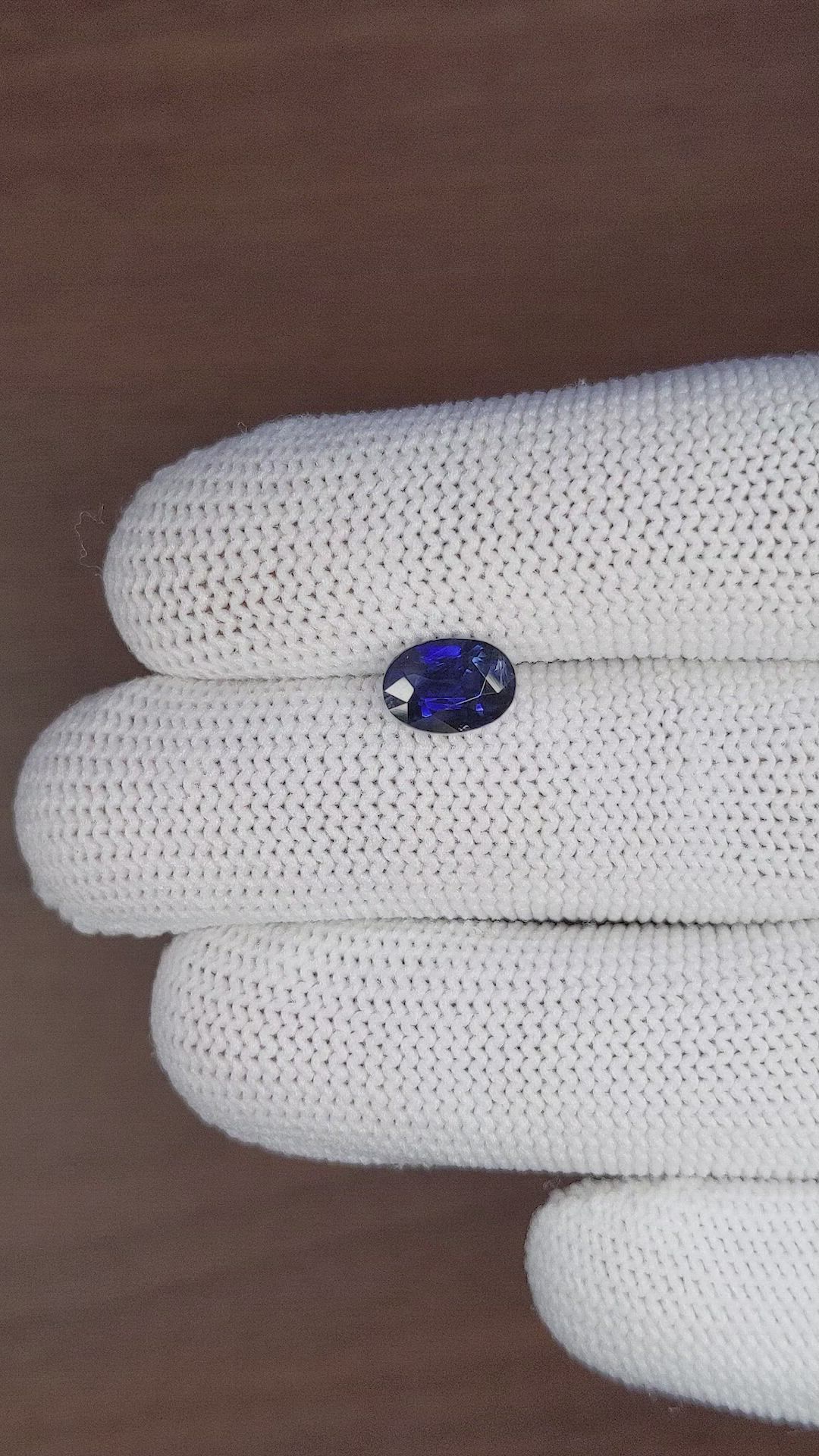
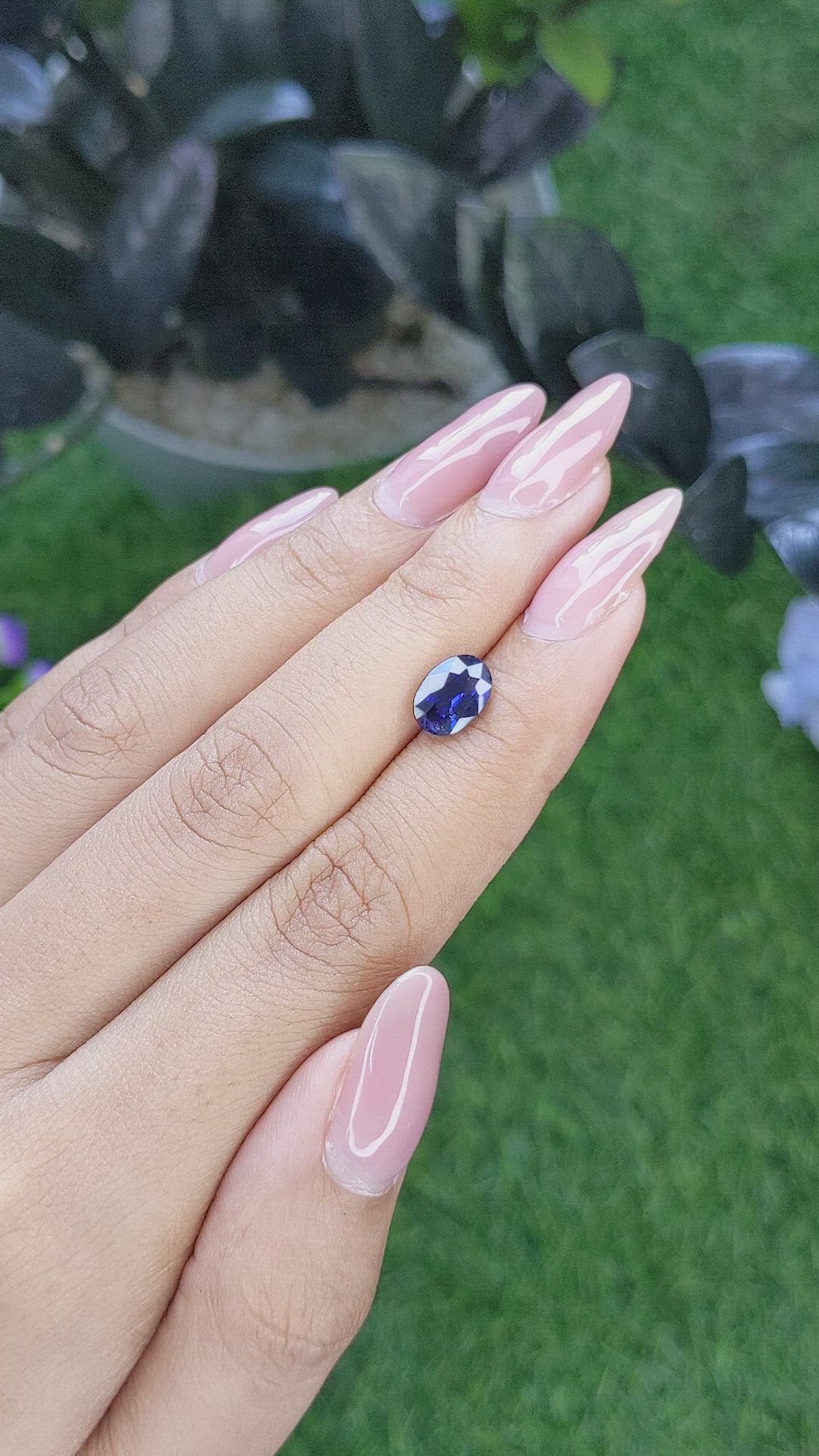
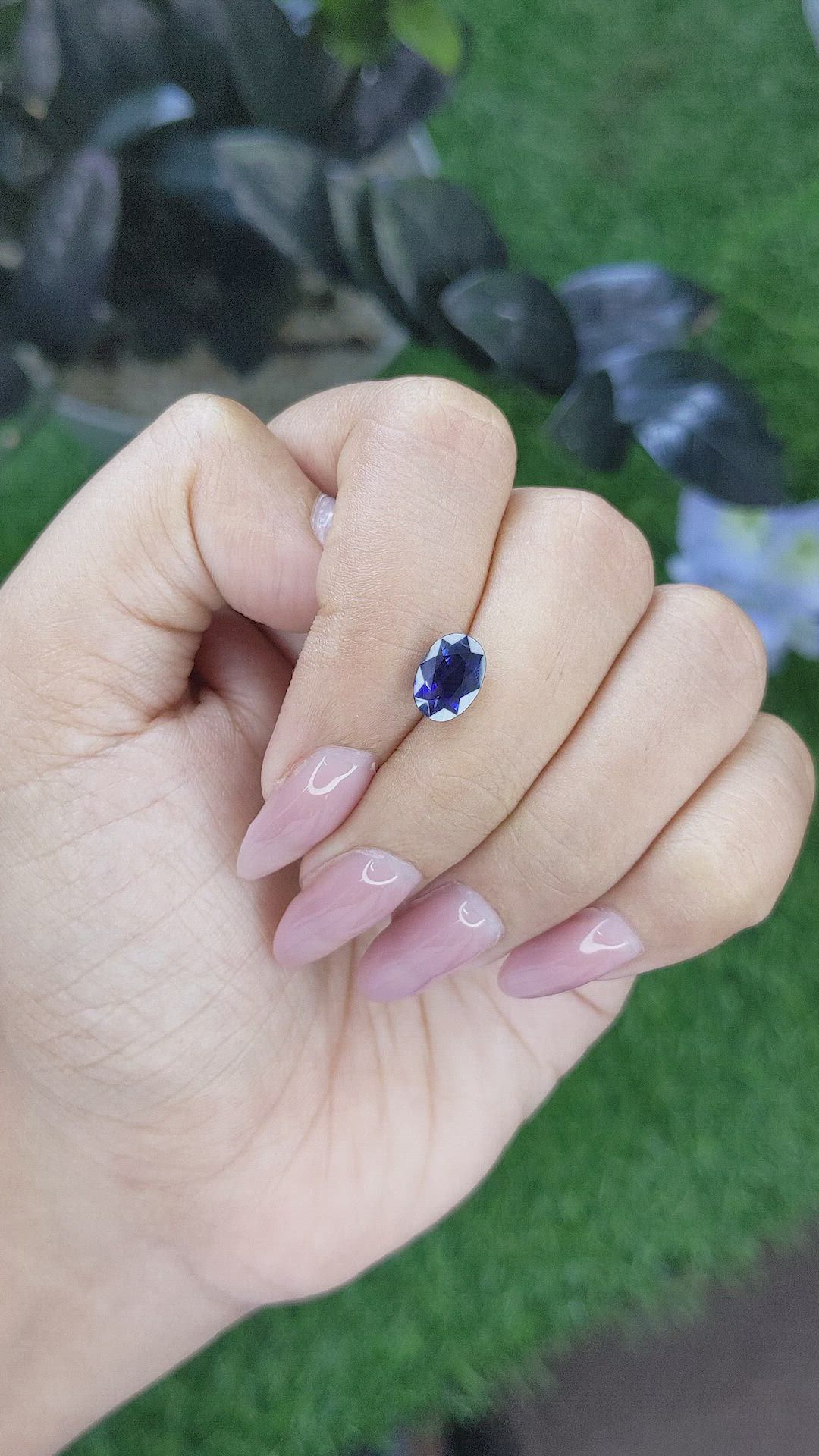
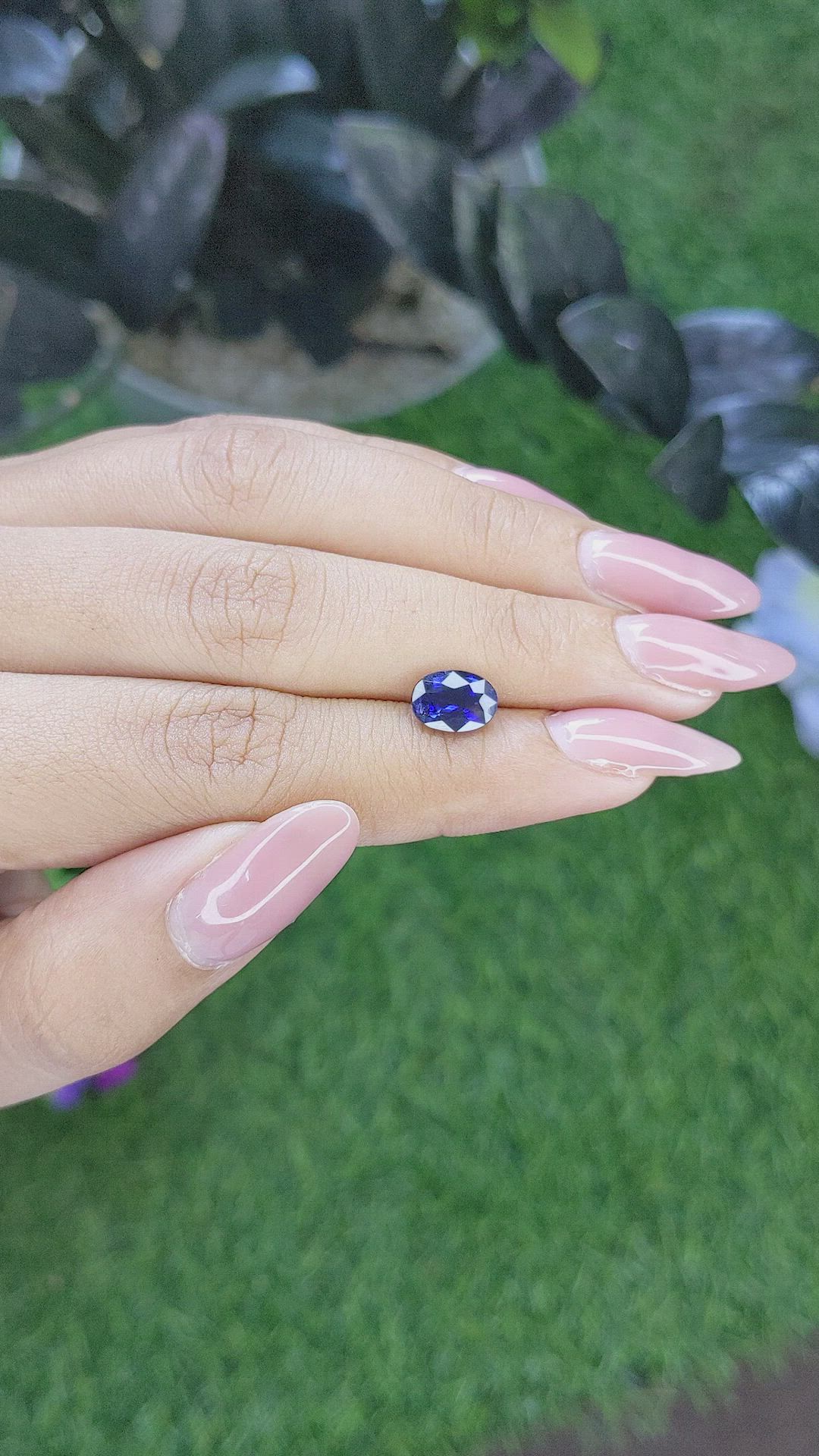






2.03 Ct. Blue Sapphire from Tanzania
This loose stone ships by Apr 27
Item ID: | S34474 |
|---|---|
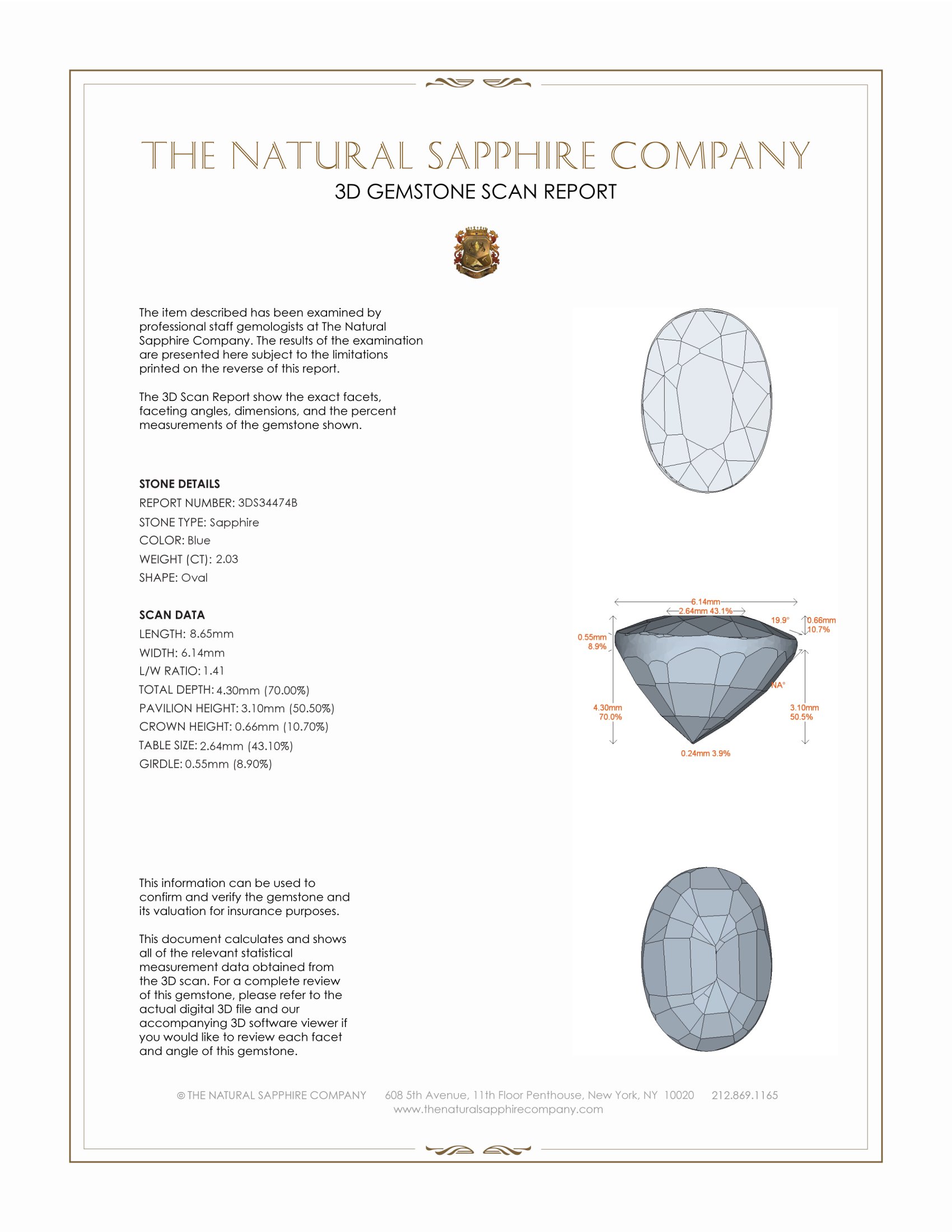
Dimensions (MM): help | Length: 8.65 Width: 6.14 Height: 4.3 |
Weight: | 2.03 Ct. |
Color: help | Blue |
Color intensity: help | Intense |
Clarity: help | Slightly Included |
Shape: help | Oval |
Cut: | Mixed Brilliant |
Cutting style: | Faceted |
Enhancements: help | No Enhancement |
Origin: help | Tanzania |
Per carat price: help | $788 |
This transparent, natural sapphire weighs 2.03 carat, and presents an elegant oval shape with exact dimensions of 8.65 x 6.14 x 4.30 mm. The stone has been fashioned to a mixed brilliant cut, producing a controlled balance of scintillation and depth, and it displays an intense color intensity across the face up view. Clarity has been graded as slightly included, evaluated at eye level, which means minor inclusions are present but do not compromise the gem transparency or overall visual appeal. Polish is graded excellent, contributing to crisp facet junctions and consistent light return. Importantly, this sapphire has no enhancement, and its origin is Tanzania. The Natural Sapphire Company provides full disclosure on all of these characteristics, and the specimen is presented as an untreated, natural gemstone suitable for fine jewelry or for collectors seeking a high quality, natural example.
From a gemological perspective the mixed brilliant cut on this oval sapphire has been executed to preserve weight while optimizing optical performance. The crown receives a series of brilliant style facets to increase surface scintillation, while the pavilion retains facets that emphasize depth of tone and saturation, together creating the intense blue that the stone displays. The proportions, in relation to the 8.65 x 6.14 x 4.30 mm dimensions, promote even color distribution across typical viewing angles, and the excellent polish ensures minimal light scattering from the facet planes. Slightly included clarity, assessed at eye level, is consistent with natural crystallization and growth history, and it offers visual interest without detracting from the gem presence. The combination of transparency, intense color, and lack of enhancement makes this Tanzanian sapphire a representative example of an untreated natural blue sapphire, with characteristics that are both durable and visually enduring.
When compared to lab grown sapphires, natural stones such as this Tanzanian example offer distinct and tangible advantages. Lab grown sapphires replicate the chemistry and crystal structure of natural corundum, and they may display high clarity and uniform color, but they generally lack the unique growth features and internal fingerprint that arise from geological formation over millions of years. Natural inclusions and growth patterns in untreated sapphires function as a record of origin and development, providing each stone with an individual identity that can be documented and, where applicable, traced to a geographic source. From a long term perspective natural, untreated sapphires often hold their market position more robustly than lab grown equivalents, due to relative rarity and collector preference for naturally occurring gemstones. Additionally provenance matters in both gemology and in heritage considerations, and a documented Tanzanian origin, coupled with The Natural Sapphire Company disclosure of no enhancement, supports authenticity and traceability. Lab grown alternatives do offer benefits, including lower price and controlled consistency, and they are a reasonable choice for certain buyers. For those who prioritize natural origin, untreated condition, and the unique characteristics that only geological processes can produce, this 2.03 carat, oval, mixed brilliant cut, natural Tanzanian sapphire presents a clear advantage, combining provable natural origin, intense color, excellent polish, and a transparency and presence that reflect its natural formation.


