
- Stone14
- Reports3
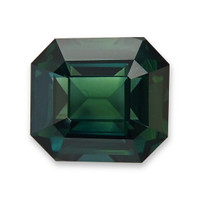
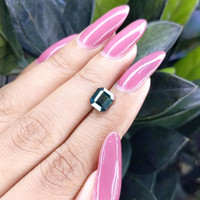
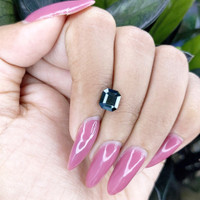
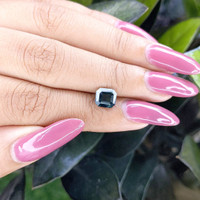
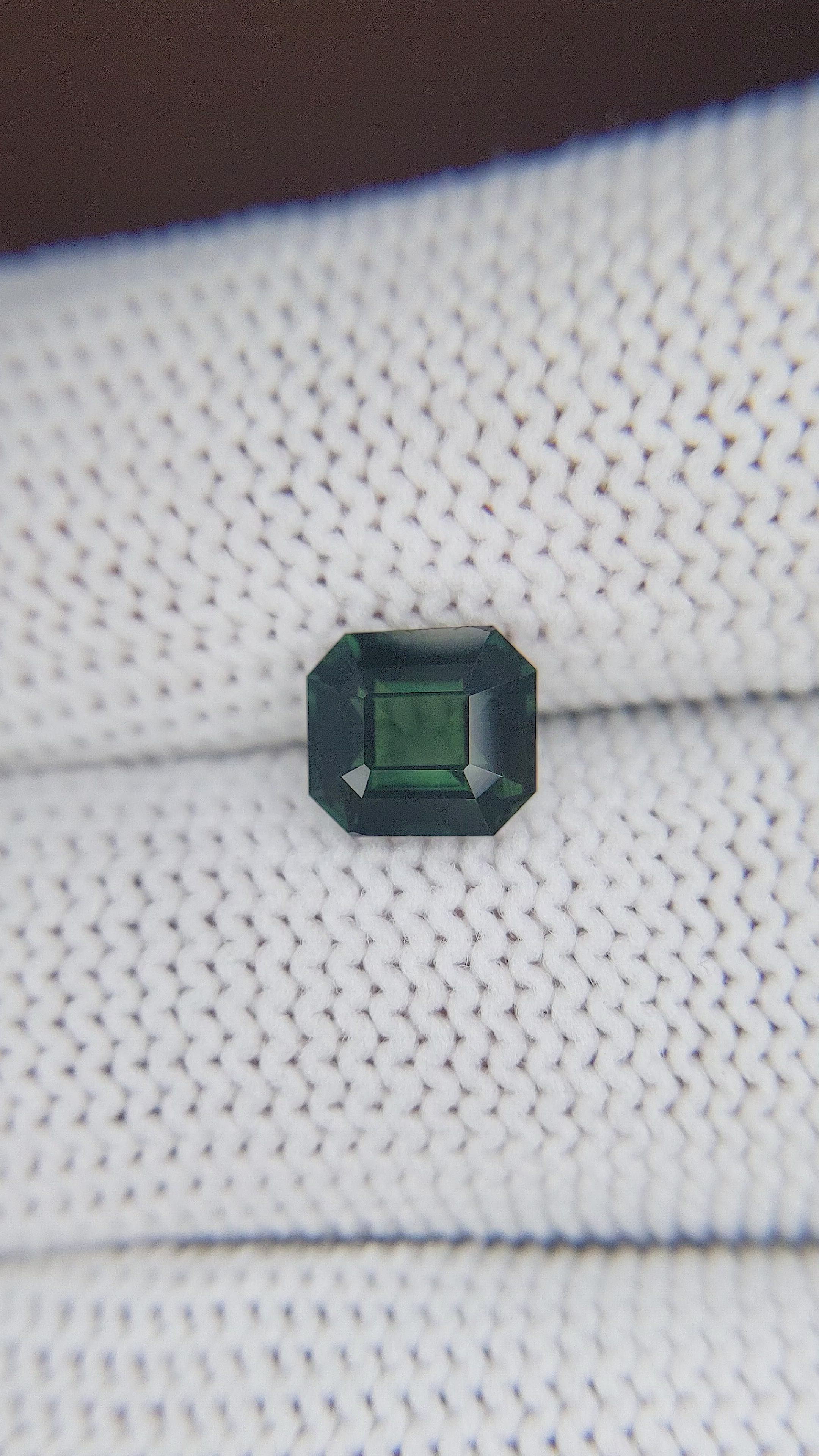
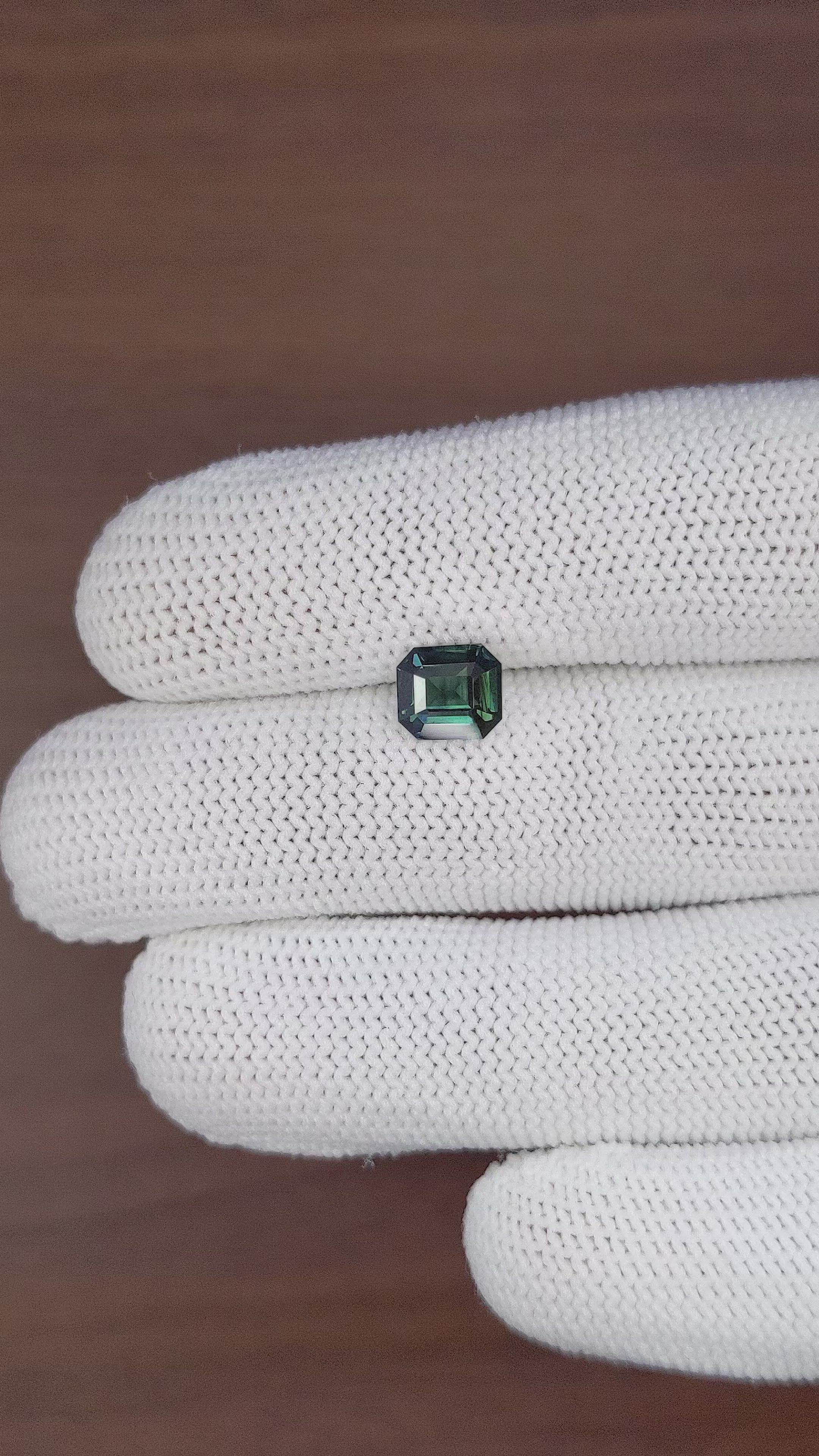
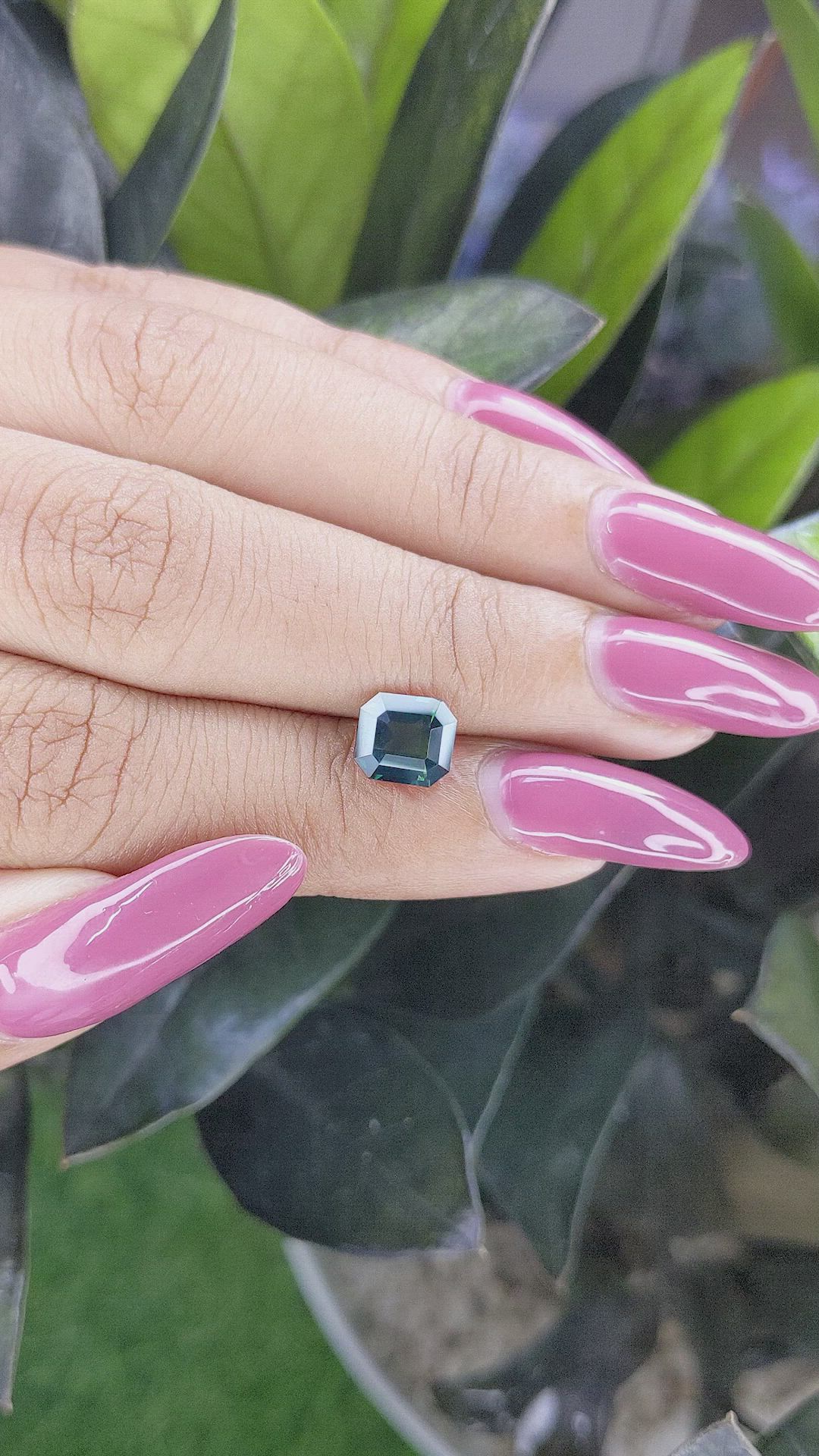
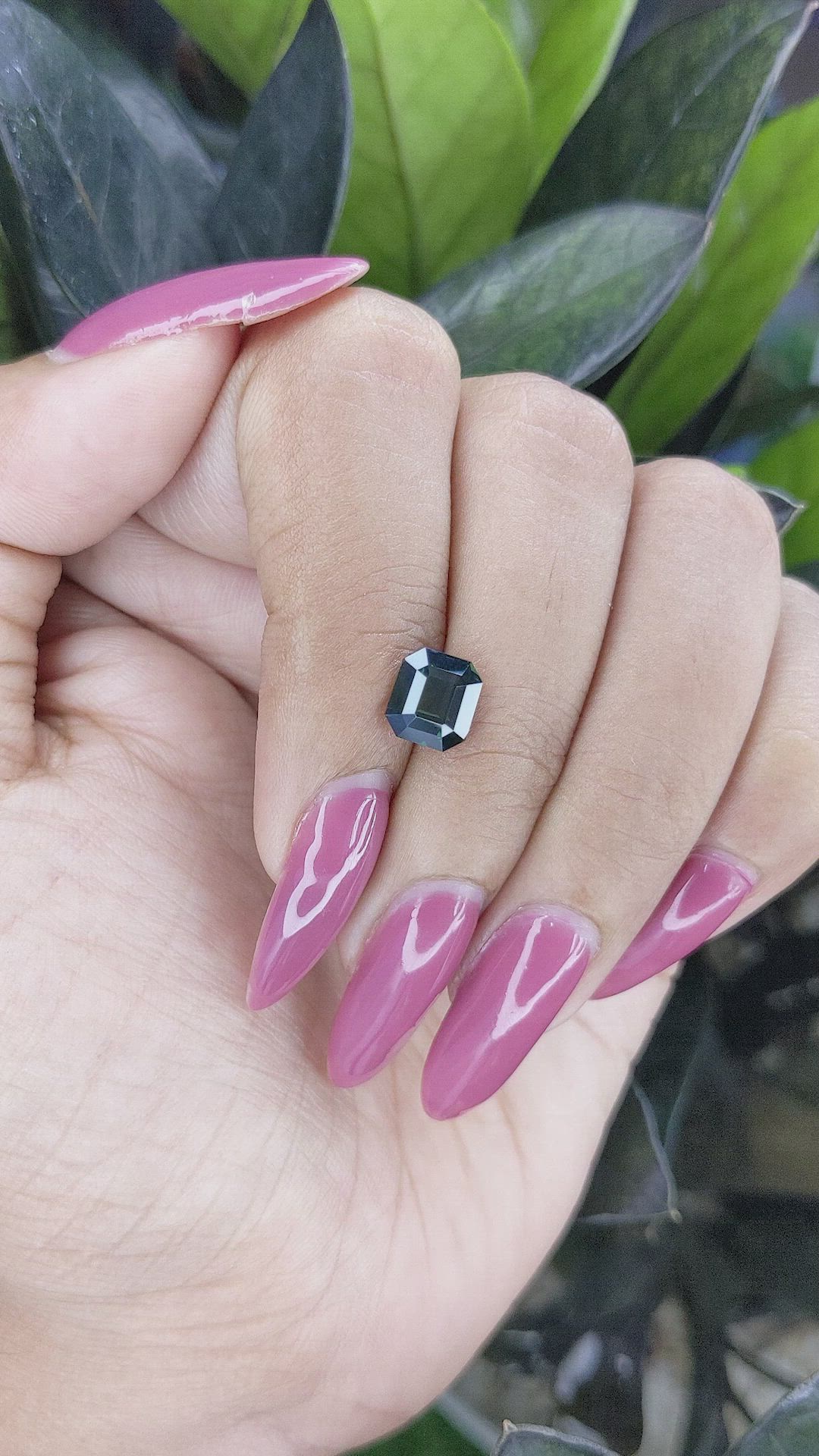
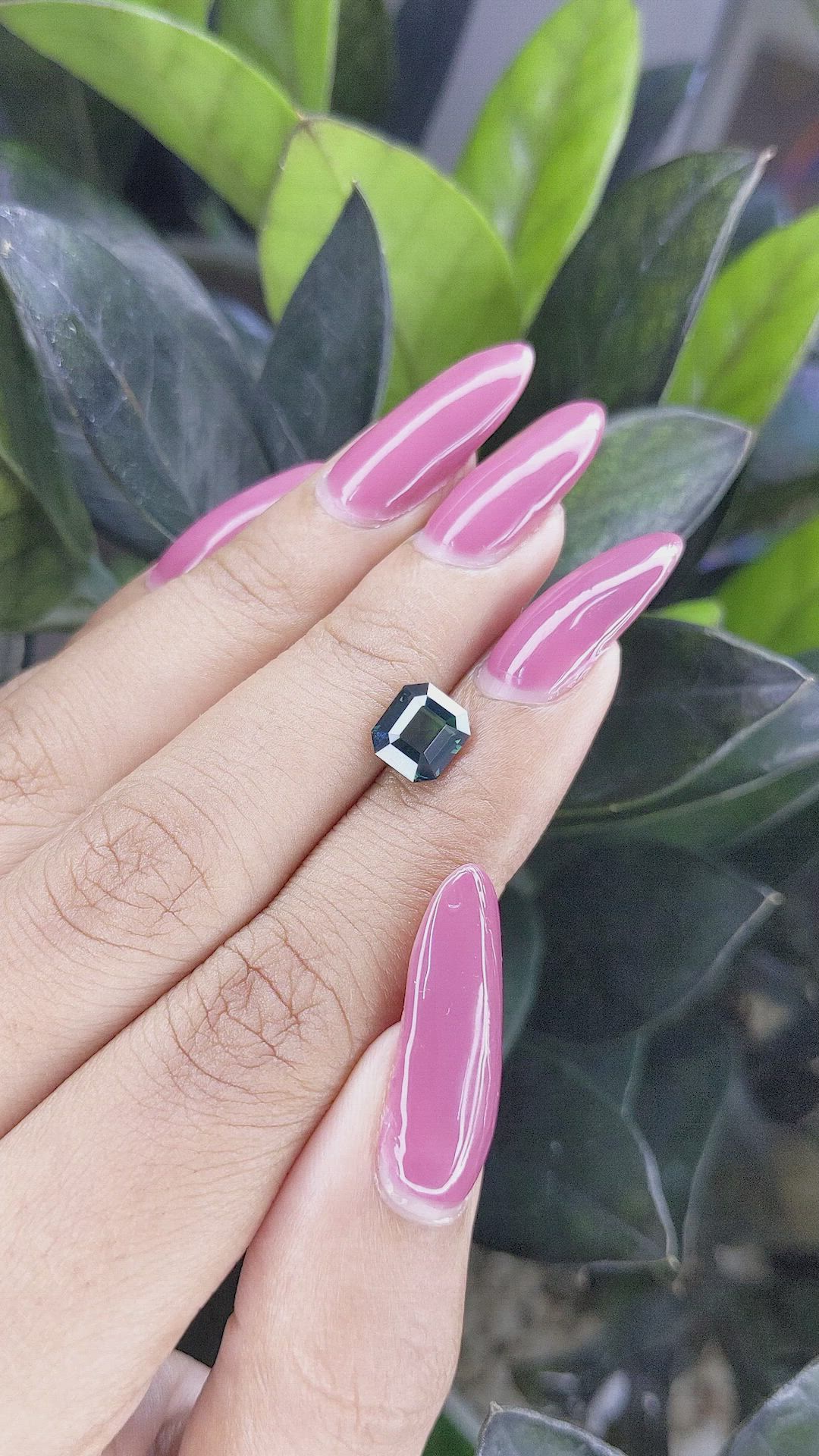


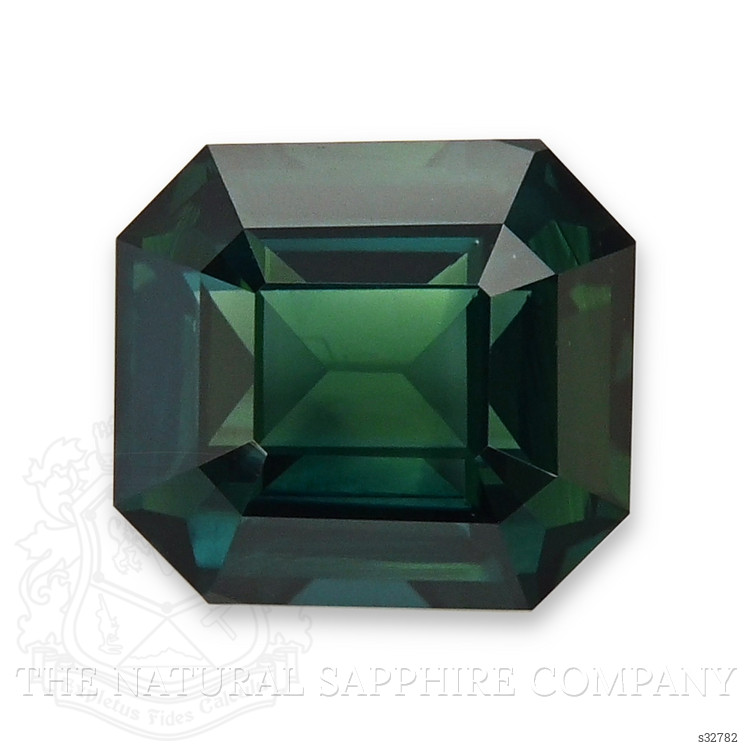
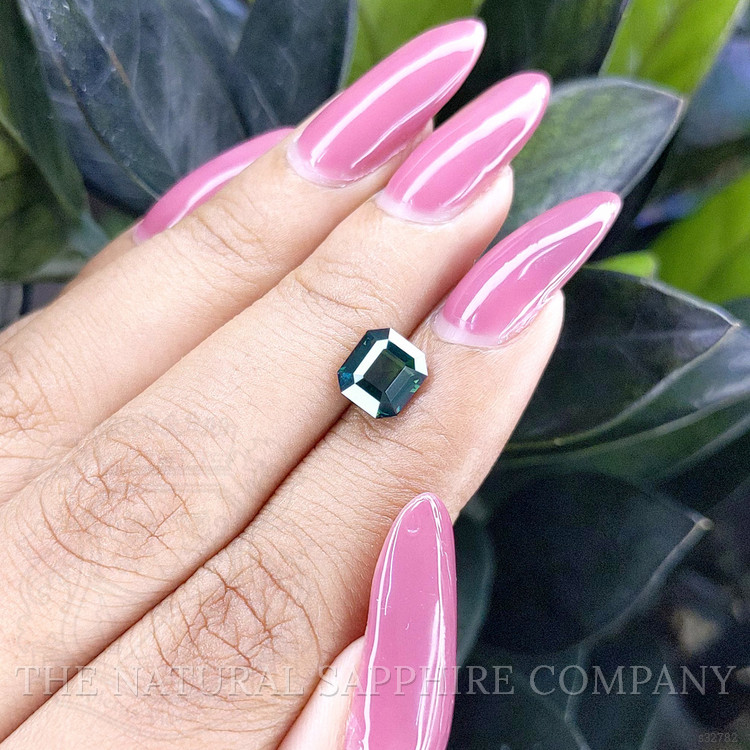
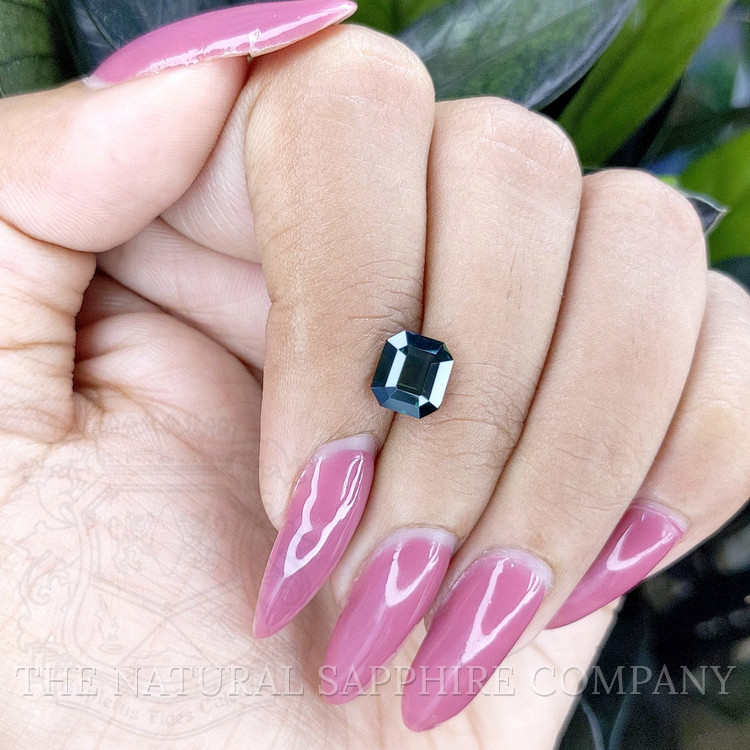
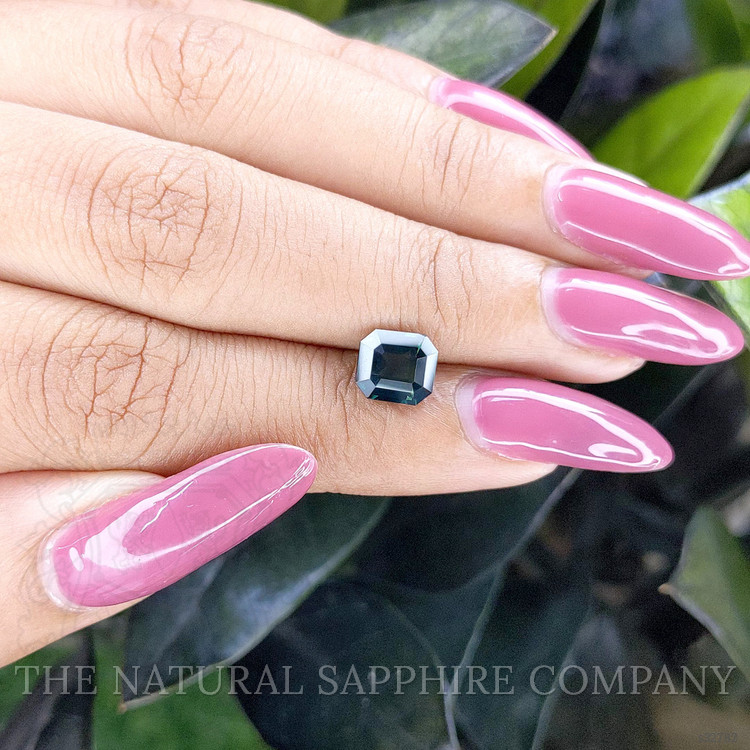

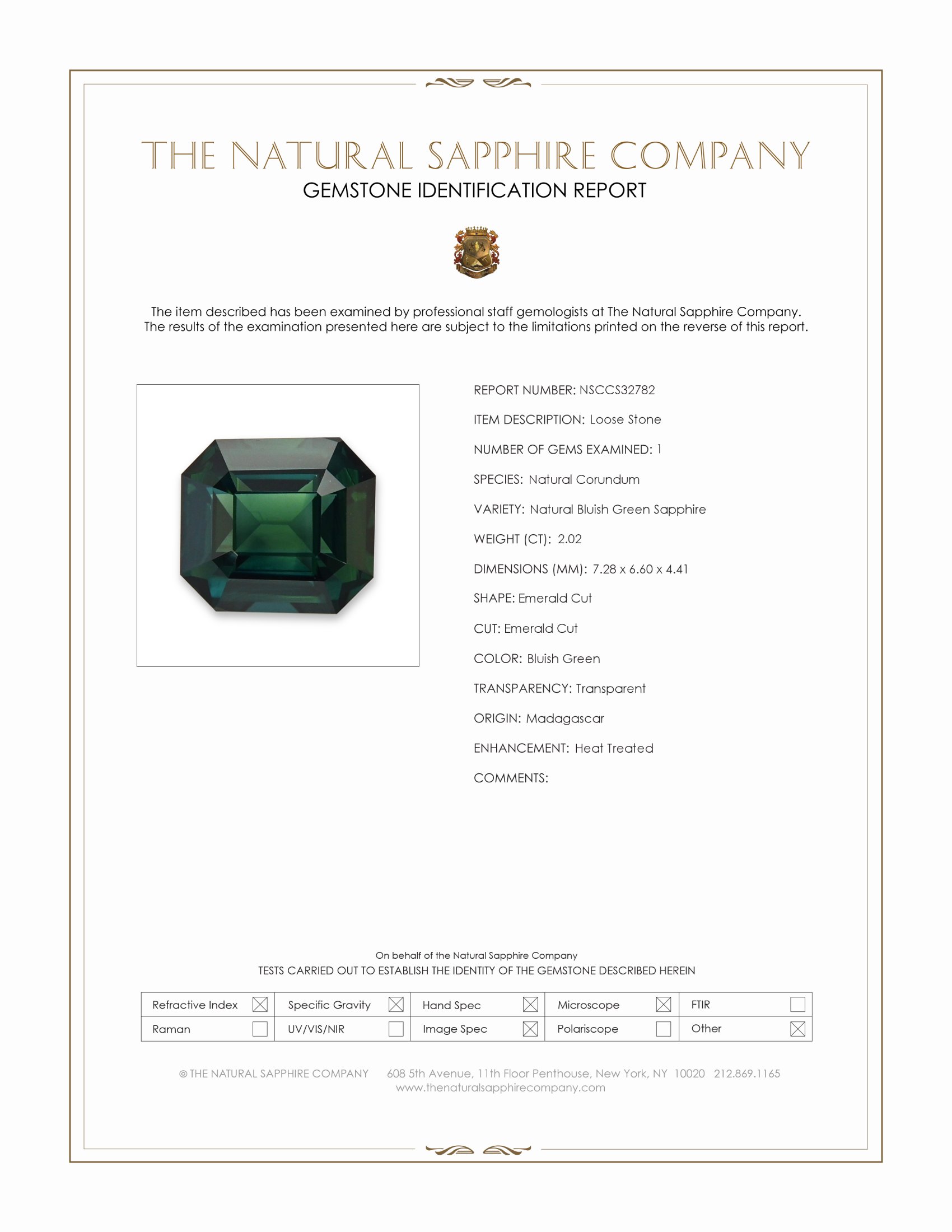
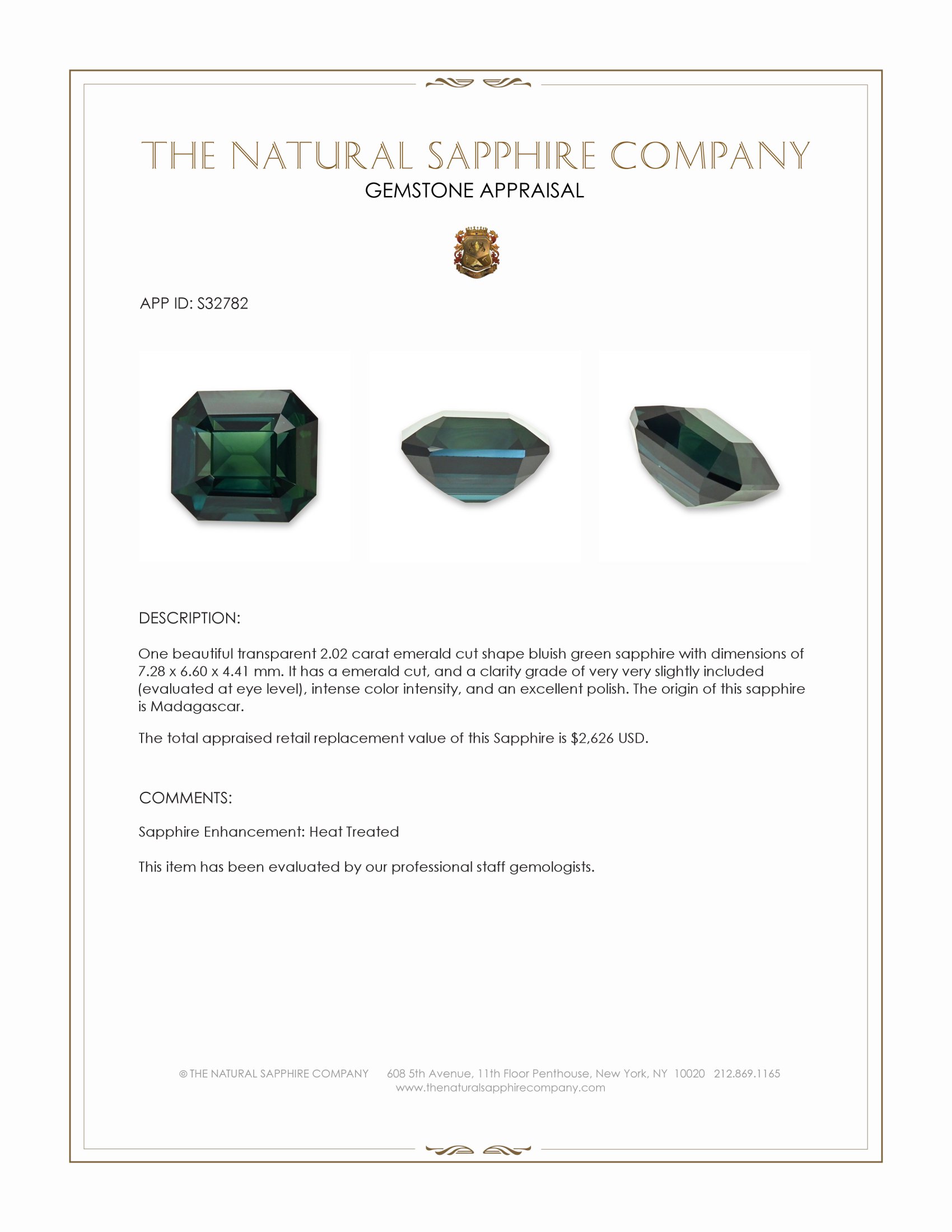
2.02 Ct. Bluish Green Sapphire from Madagascar
This loose stone ships by Mar 23
Item ID: | S32782 |
|---|---|
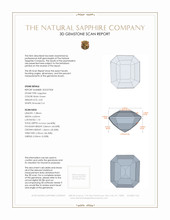
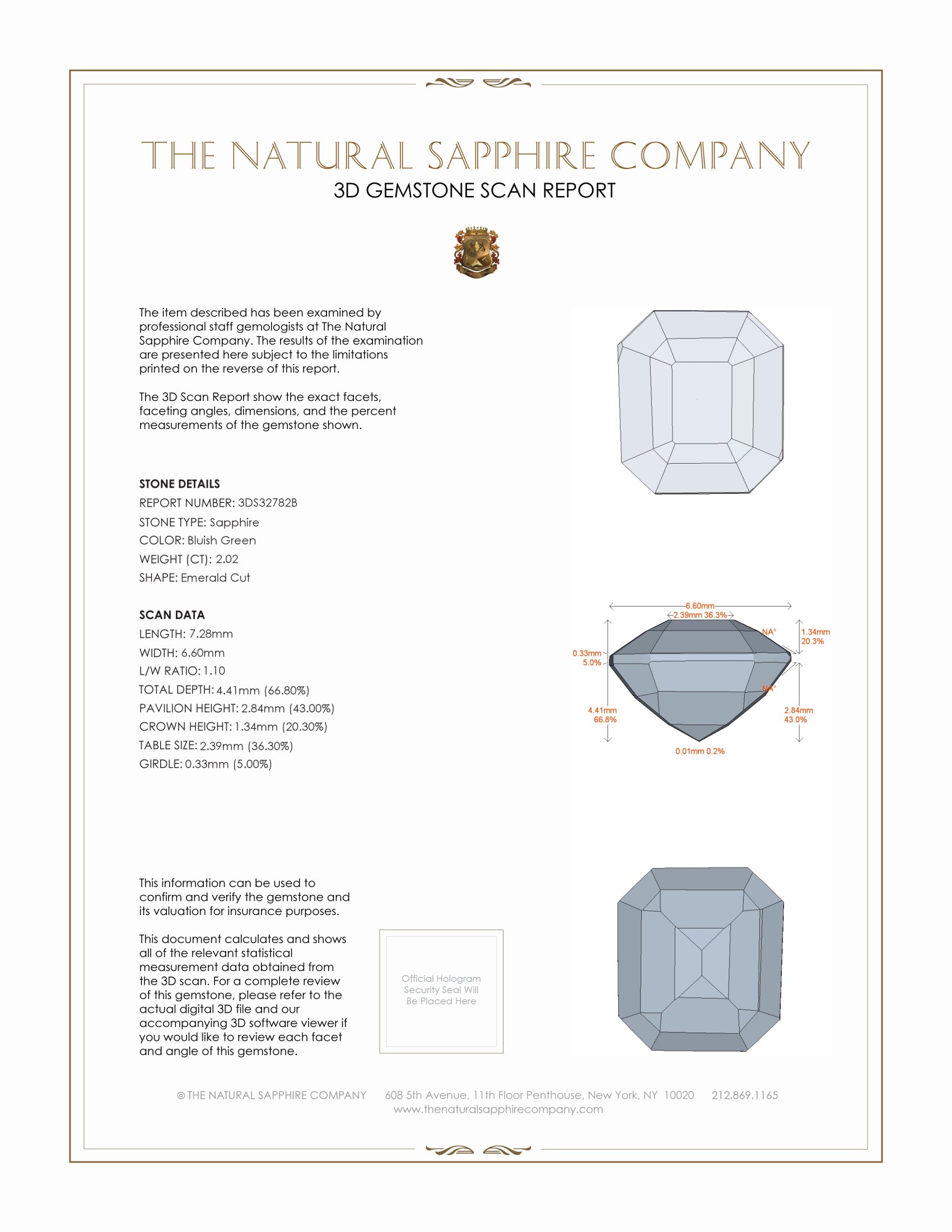
Dimensions (MM): help | Length: 7.28 Width: 6.6 Height: 4.41 |
Weight: | 2.02 Ct. |
Color: help | Bluish Green |
Color intensity: help | Intense |
Clarity: help | Very Very Slightly Included |
Shape: help | Emerald Cut |
Cut: | Emerald Cut |
Cutting style: | Faceted |
Enhancements: help | Heat Treated |
Origin: help | Madagascar |
Per carat price: help | $1,300 |
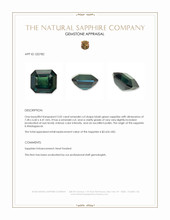
This piece is a transparent 2.02 carat emerald cut bluish green sapphire, with precise dimensions of 7.28 by 6.60 by 4.41 millimeters, presented by The Natural Sapphire Company. The gem is an emerald cut, which in this instance displays a classic step facet architecture, with long rectangular crown and pavilion facets that emphasize color zoning and clarity rather than scintillation. The length to width ratio of approximately 1.10 produces a slightly elongated outline that sits comfortably in both traditional and modern settings. The measured depth yields an effective pavilion that transmits and retains color, resulting in an intense color intensity that reads as a saturated bluish green at the table. Clarity is graded very very slightly included as evaluated at eye level, which means inclusions are minor, typically thin needles or faint crystals aligned parallel to the crystal axis, and they do not materially distract from the visual impact when mounted. The polish is excellent, with crisp facet junctions and smooth facet planes, which preserves light return and ensures that the step facets produce broad flashes of color. The sapphire has undergone standard heat treatment to enhance uniformity and color saturation, a stable and widely accepted enhancement, and its origin from Madagascar is consistent with the gemological characteristics observed, including the particular bluish green tone and inclusion habit typical of that locality.
From a lapidary and setting perspective, the cutter oriented the stone to favor hue and saturation, aligning the pavilion to present a balanced blend of blue and green through the table. The step cut reduces the appearance of windowing in this size by maximizing pavilion depth relative to the average girdle diameter, yielding approximately 63.5 percent depth relative to the mean of the length and width, which is an effective proportion for preserving rich color in a rectangular step cut. The well executed girdle thickness allows for secure setting without excessive material removed during cutting, and the absence of a distracting culet maintains a clean escape of light through the pavilion. With a clarity grade of very very slightly included, the practical durability is excellent, and conventional mounting choices will offer adequate protection. For customers who prioritize color saturation, a low profile bezel setting will deepen perceived color by reducing light leakage around the girdle, while four corner prongs placed at each emerald cut corner will both protect the stone and permit enough exposure to maintain brilliance. The Natural Sapphire Company recommends precision setting tolerances to ensure the pavilion does not sit excessively high, which would create light leakage, and to calibrate prong placement to the step facet geometry so that the stone reads uniformly from the face up view.
When designing a custom piece around this sapphire, complementary gemstones and metal choices can be used to either accentuate the bluish green hue or to create contrast for a more dynamic presentation. For a coherent, refined aesthetic, pair the emerald cut center stone with straight baguette step cut diamonds set as shoulders, matching the step motif and preserving the directional lines of the main gem. Tapered baguette diamonds or straight baguette diamonds will echo the linear faceting and provide luminous white contrast without introducing competing color. For more brilliance and sparkle, a halo of small round brilliant melee diamonds will frame the step cut face and increase perceived size, while preserving the deep tabular color when set with a minimal bezel lip. If the intention is to emphasize the green component, consider small tsavorite garnet accents, their vivid grass green will pick up the green notes in the center stone and create a fresh, botanical palette. For contrast that emphasizes the blue aspect, small teal or cornflower blue sapphires can be graduated along the shoulders to create a tone on tone effect. Alternatively, warm metals such as 18 karat yellow gold or 18 karat rose gold will push the sapphire visually toward the greener end of its spectrum, creating a vintage inspired contrast, whereas platinum or 18 karat white gold will maintain a cooler, more contemporary presentation that highlights the bluish component and maximizes brilliance of accompanying diamonds.
For specific design implementations, consider a three stone ring with two tapered baguette diamonds of total side weight proportionate to the 2.02 carat center, which maintains balance and highlights the step cutting dialogue. In a halo configuration, calibrate the halo diameter to keep the table visible, since the step cut communicates its character through the table plane, and use low crown height settings to reduce the risk of facet damage in daily wear. For pendants and earrings, pairs of smaller round brilliant accents set into a channel or bead setting will create scintillation around the calm, reflective planes of the emerald cut center. For bespoke commissions The Natural Sapphire Company can advise on exact side stone sizes, girdle clearance, and prong dimensions to ensure both visual harmony and structural security, given the stone proportions and the excellent polish present in this Madagascar sapphire.


