
- Stone14
- Reports3
-round-blue-sapphire-1.5300-cts-s31966-1.jpg?d=200x200&v=20251028112701)
-round-blue-sapphire-1.5300-cts-s31966-lifestyleimage-1.jpg?d=200x200&v=20251028024350)
-round-blue-sapphire-1.5300-cts-s31966-lifestyleimage-2.jpg?d=200x200&v=20251028024350)
-round-blue-sapphire-1.5300-cts-s31966-lifestyleimage-3.jpg?d=200x200&v=20251028024351)



-round-blue-sapphire-1.5300-cts-s31966-1.jpg?d=750x750&s=nsc&v=20251028112701)
-round-blue-sapphire-1.5300-cts-s31966-lifestyleimage-1.jpg?d=750x750&s=nsc&v=20251028024350)
-round-blue-sapphire-1.5300-cts-s31966-lifestyleimage-2.jpg?d=750x750&s=nsc&v=20251028024350)
-round-blue-sapphire-1.5300-cts-s31966-lifestyleimage-3.jpg?d=750x750&s=nsc&v=20251028024351)


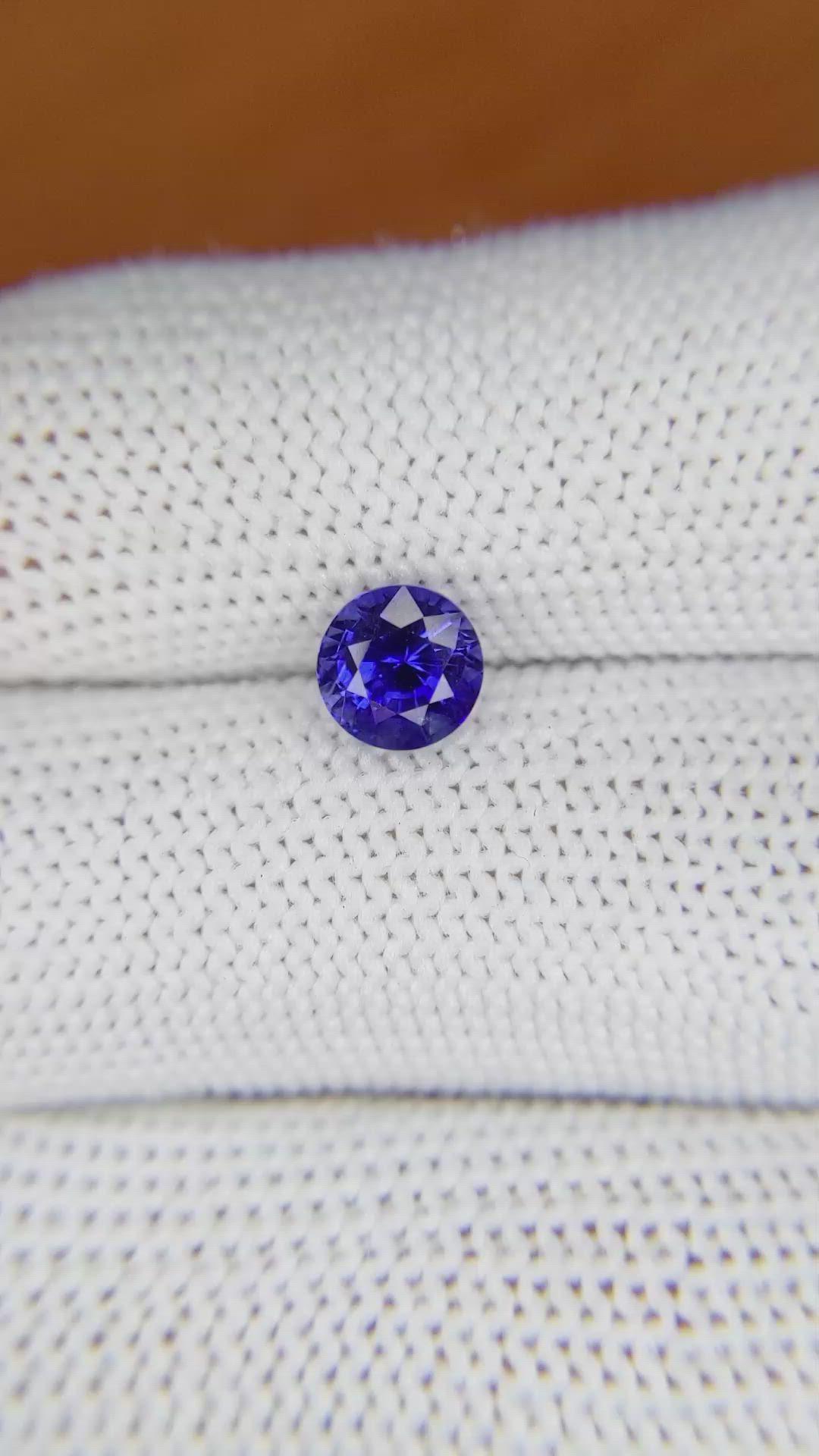
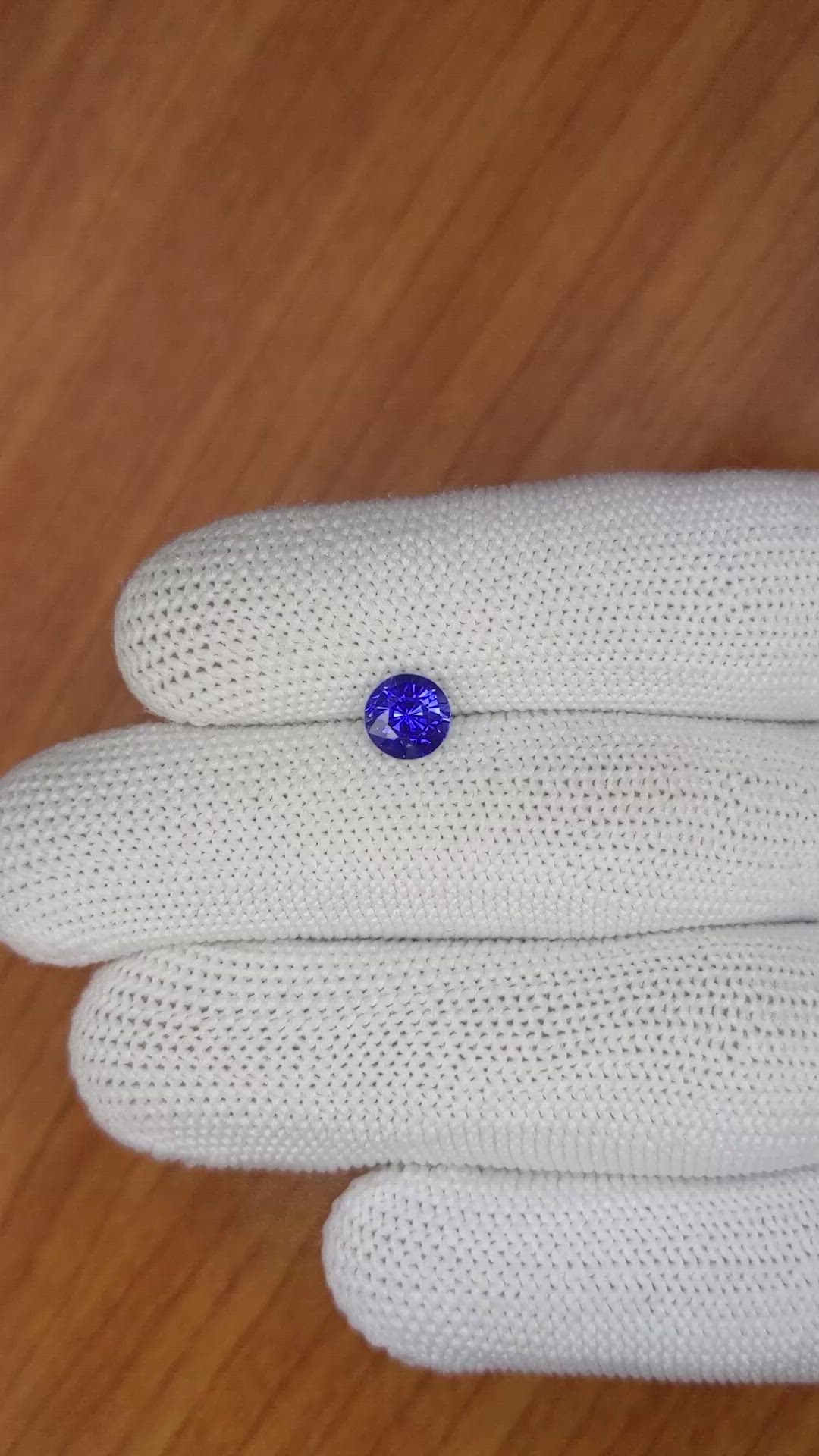
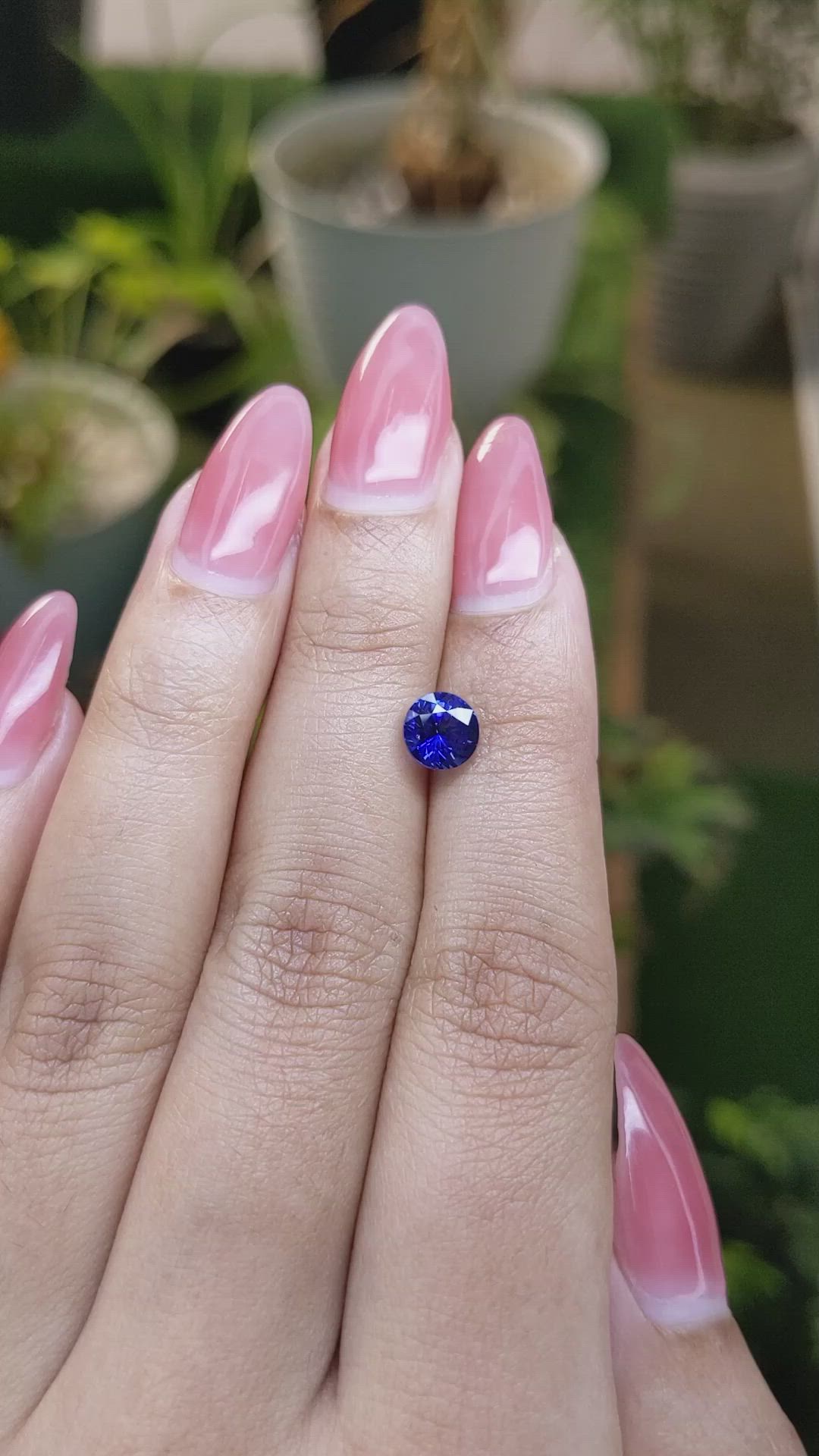
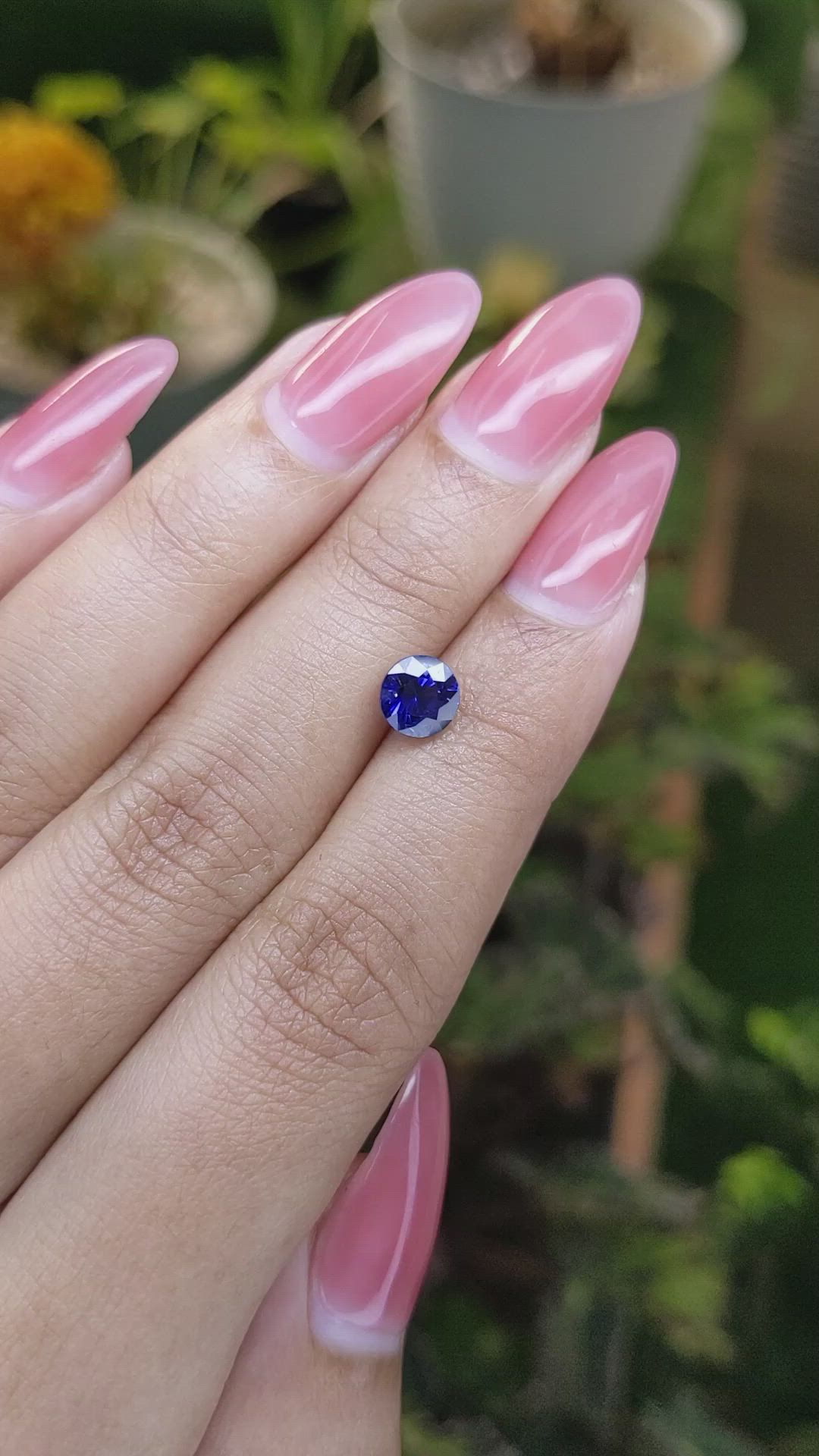
1.53 Ct. Blue Sapphire from Ceylon (Sri Lanka)
This loose stone ships by Jan 28
Item ID: | S31966 |
|---|---|
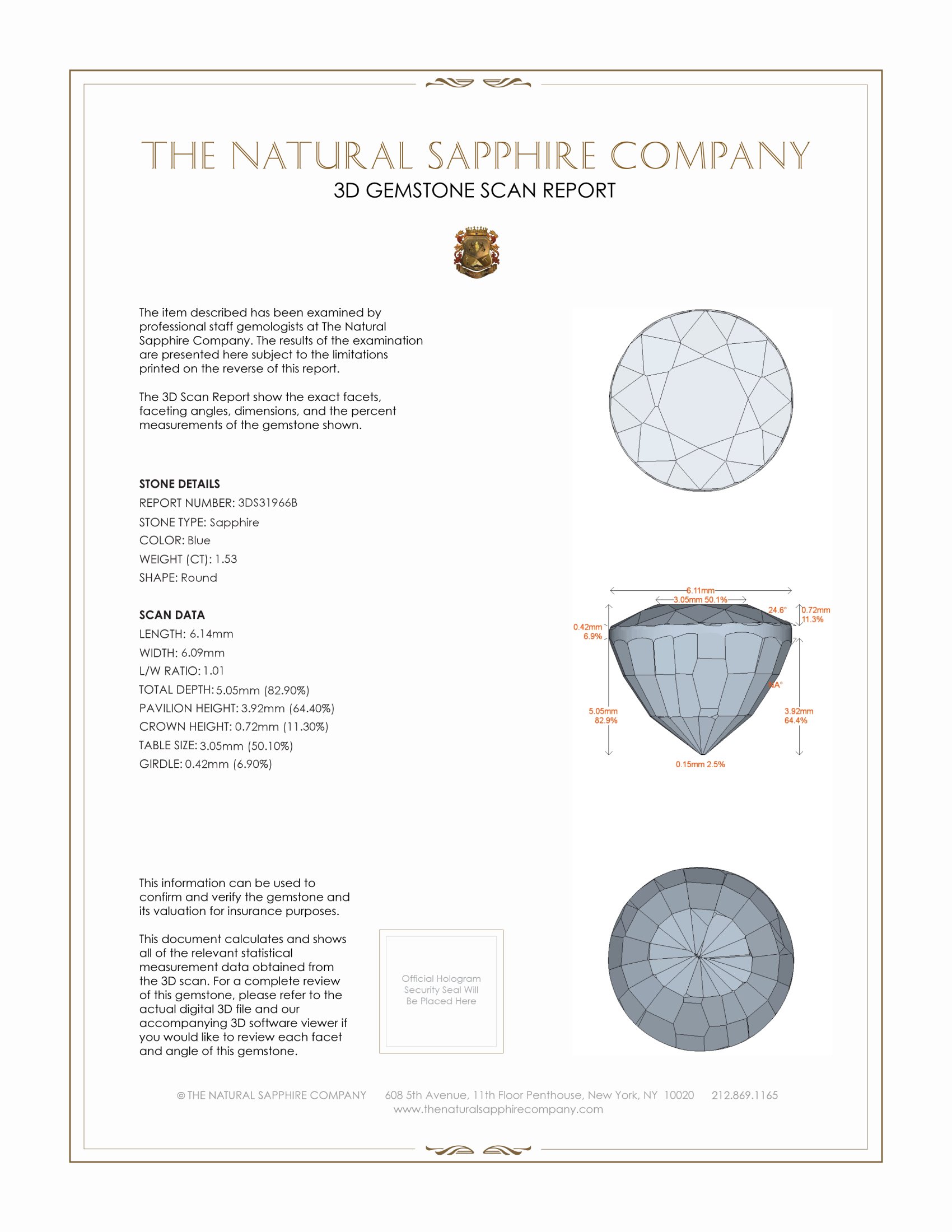
Dimensions (MM): help | Length: 6.14 Width: 6.09 Height: 5.05 |
Weight: | 1.53 Ct. |
Color: help | Blue |
Color intensity: help | Vivid |
Clarity: help | Very Very Slightly Included |
Shape: help | Round |
Cut: | Mixed Brilliant |
Cutting style: | Faceted |
Enhancements: help | Heat Treated |
Origin: help | Ceylon (Sri Lanka) |
Per carat price: help | $1,085 |
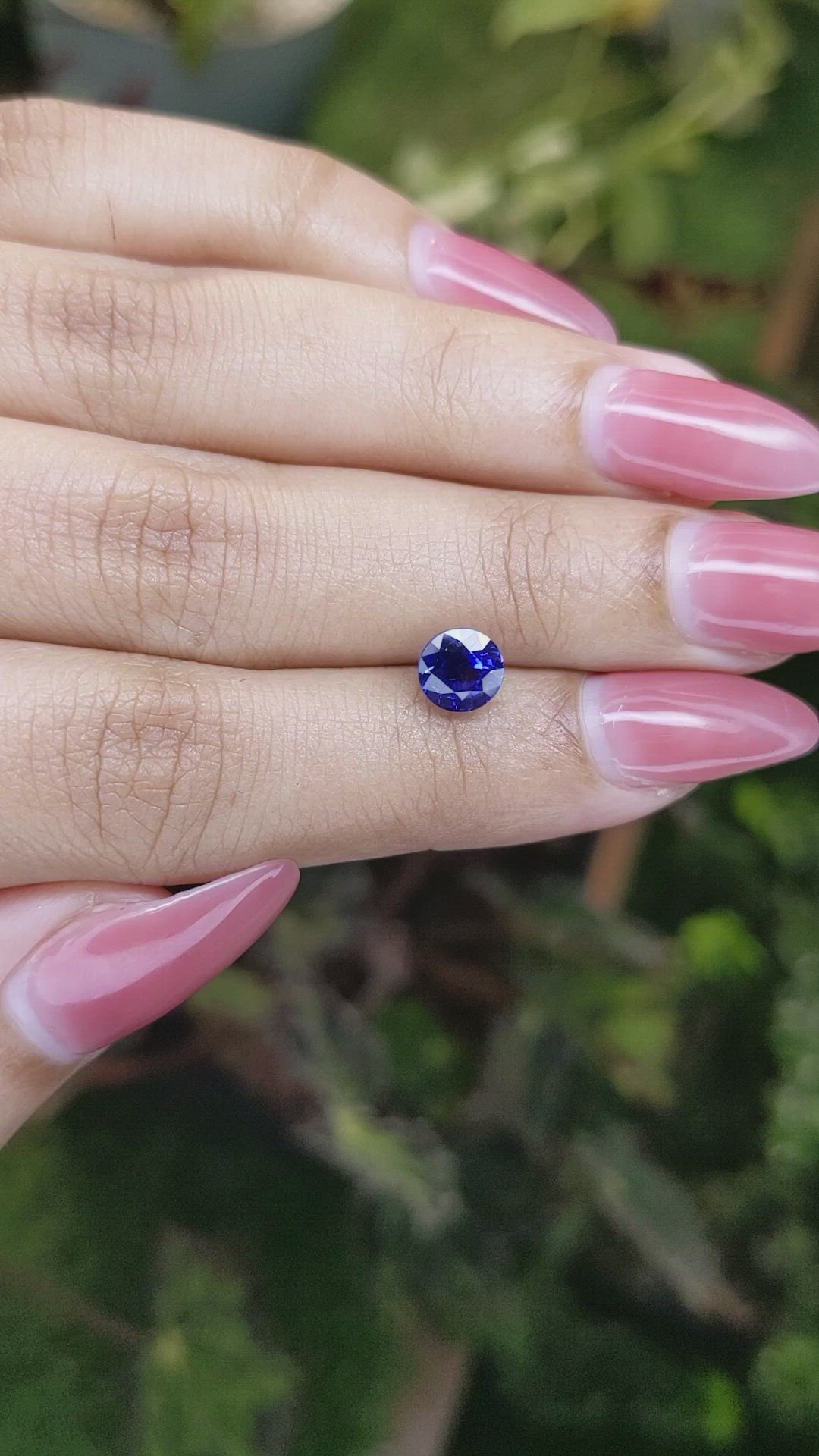
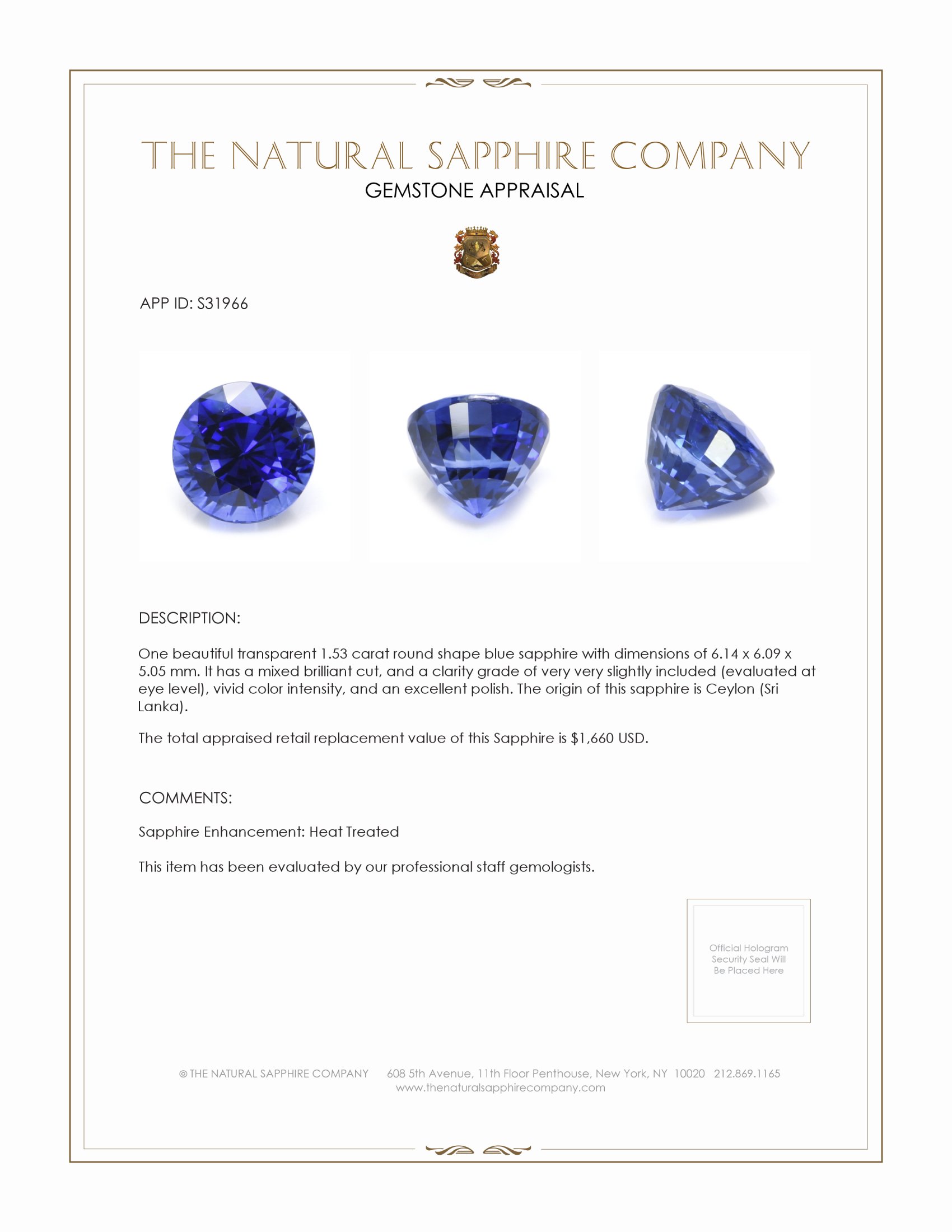
This transparent 1.53 carat round blue sapphire measures 6.14 by 6.09 by 5.05 mm, and it presents a mixed brilliant cut that has been executed to maximize both brilliance and scintillation. The stone displays vivid color intensity, an excellent polish, and a clarity grade described as very very slightly included when evaluated at eye level, meaning it appears clean to the unaided eye with only minute internal features apparent under magnification. This sapphire originates from Ceylon Sri Lanka, a source historically prized for lively, saturated blues that combine vibrancy with a pleasing medium to medium deep tone. The stone has been heat treated, a widely accepted and stable enhancement in the trade that has been applied to optimize its color uniformity and to reduce the visibility of minor inclusions, and by choosing this gem through The Natural Sapphire Company the buyer benefits from careful selection and documentation of origin and treatment.
From a gemological perspective this sapphire offers a compelling balance of optical properties. Corundum has a refractive index in the range of approximately 1.762 to 1.770, which produces strong internal reflection and a good degree of brilliance for a colored stone, while maintaining the richer, saturated color that buyers seek in blue sapphires. The mixed brilliant cut used here combines a brilliant facet arrangement on the crown with a pavilion that supports strong light return and lively scintillation, so the stone will exhibit bright flashes and contrast as it moves. The clarity grade very very slightly included at eye level confirms that inclusions are minimal and do not detract from the visual performance, and the excellent polish ensures that facet junctions are crisp and mirror like, which directly enhances specular reflection and perceived brightness. The Ceylon origin contributes to the particular hue and saturation profile, often yielding a slightly lighter and more vibrant blue than the deeper velvety tone associated with Kashmir sapphires, while typically offering more vividness than many commercial sources. As presented by The Natural Sapphire Company this gem combines an attractive size and classical round shape that is ideal for a precision setting where cut and color can be optimally showcased.
When comparing reflective qualities to other gemstones in the same category this sapphire stands out for its combination of refractive behavior and color saturation. Within the family of corundum, untreated or differently cut sapphires can show varying degrees of light performance, but a well executed mixed brilliant cut as seen here will generally offer greater scintillation and point star like reflections than a shallow step cut, which tends to emphasize color over sparkle. Compared to spinel, which has a refractive index near 1.712 to 1.717, this corundum will usually present stronger brilliance and a more noticeable play of light for a similarly saturated blue, because of the higher refractive index and the way mixed brilliants catch and return light. When set against tanzanite, with a lower refractive index around 1.690 to 1.700 and strong pleochroism, this sapphire rewards movement with stable blue reflections rather than the more pronounced color shifting found in tanzanite. Compared with rubies and other red corundum specimens, the reflective qualities are governed by the same refractive properties, but perceived brightness will depend on the balance of tone and saturation, and this vivid Ceylon blue occupies a sweet spot where saturation is strong without becoming so dark that it kills brilliance. For an educated buyer the result is a gem that provides measurable optical advantages for everyday jewelry, together with provenance and treatment transparency that support both aesthetic satisfaction and long term value. Choosing this sapphire from The Natural Sapphire Company delivers a well documented specimen that combines clarity, cut, polish, and origin to produce superior light return and enduring appeal.


