
- Stone14
- Reports3


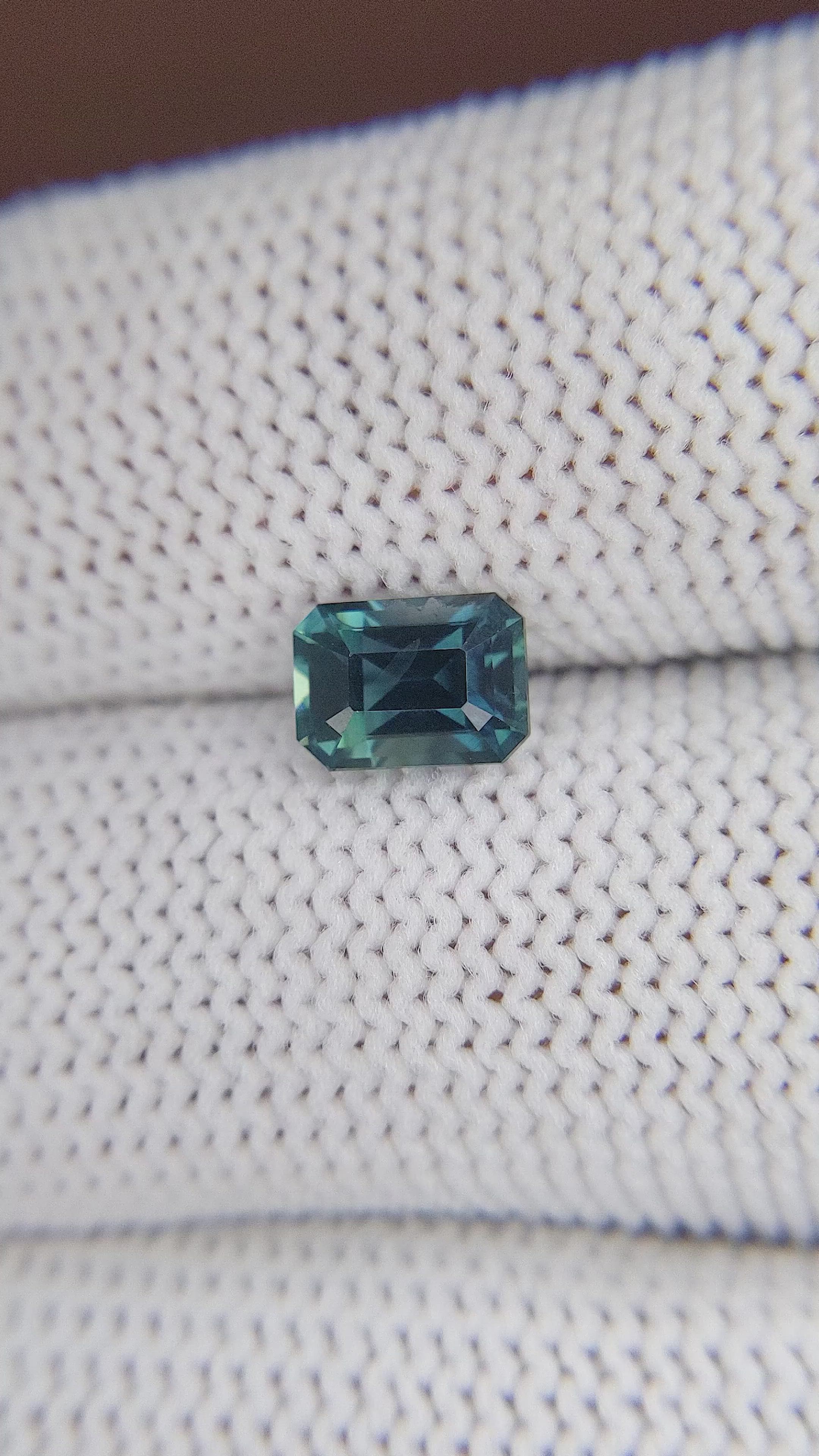
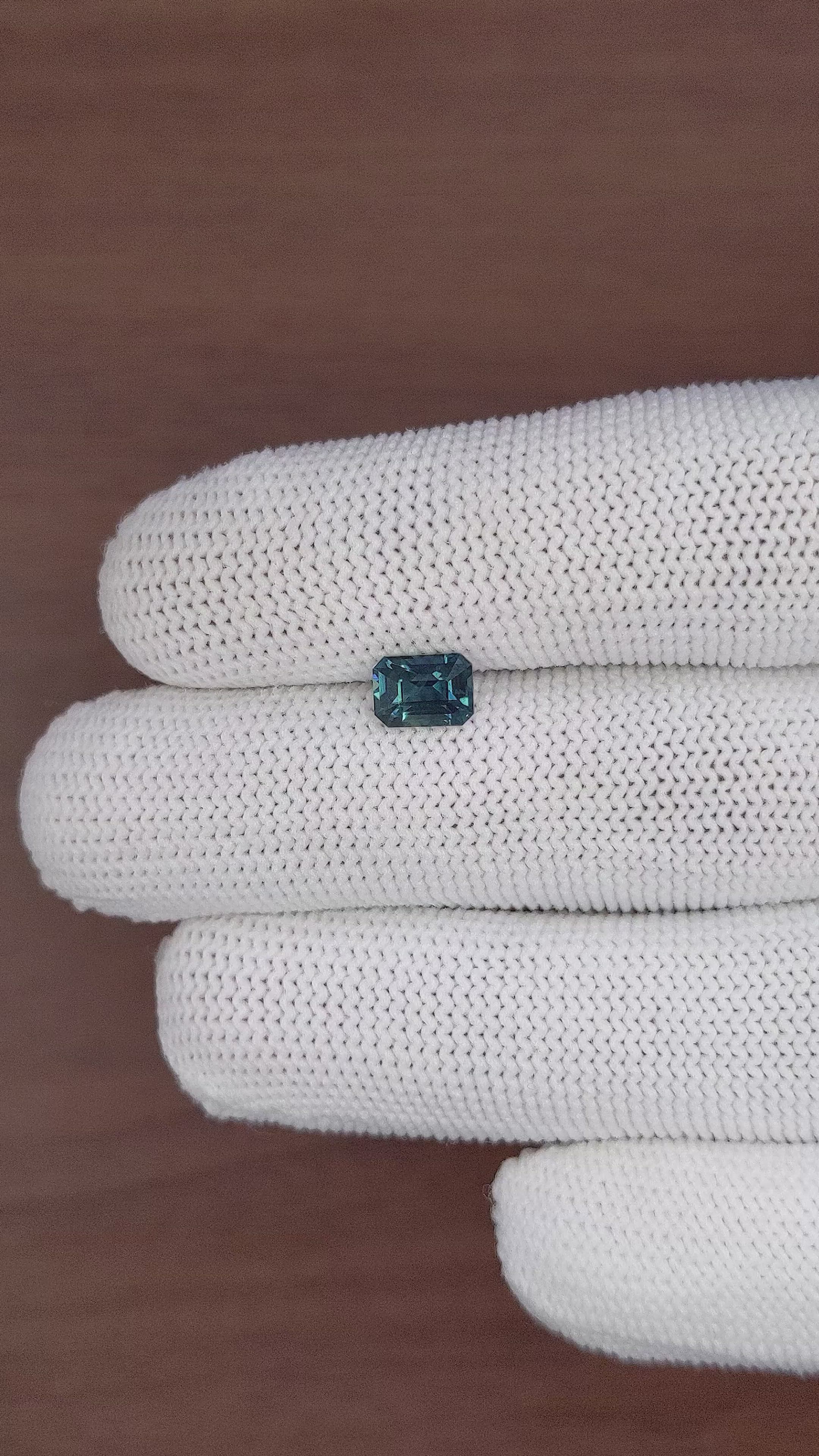
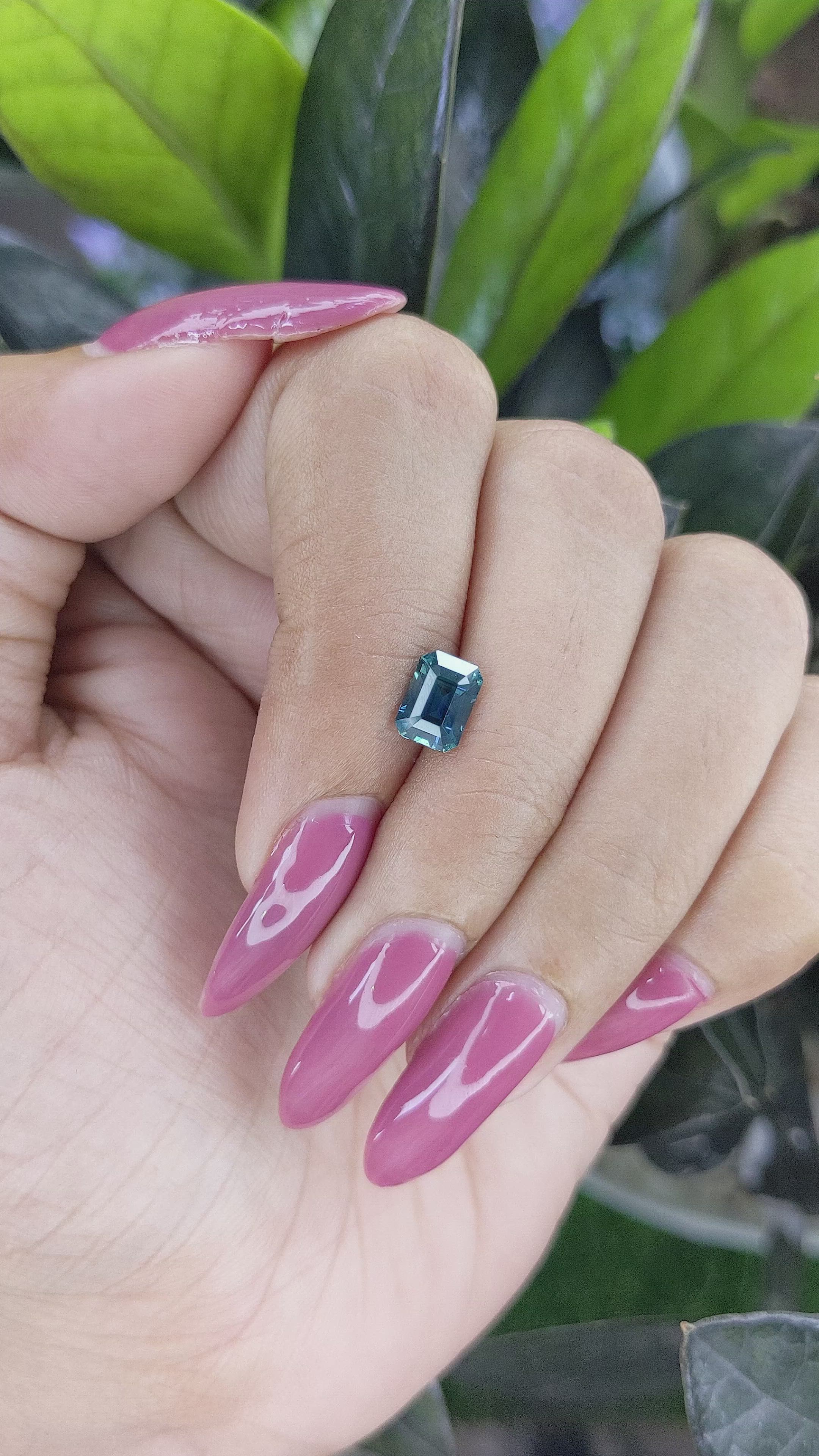
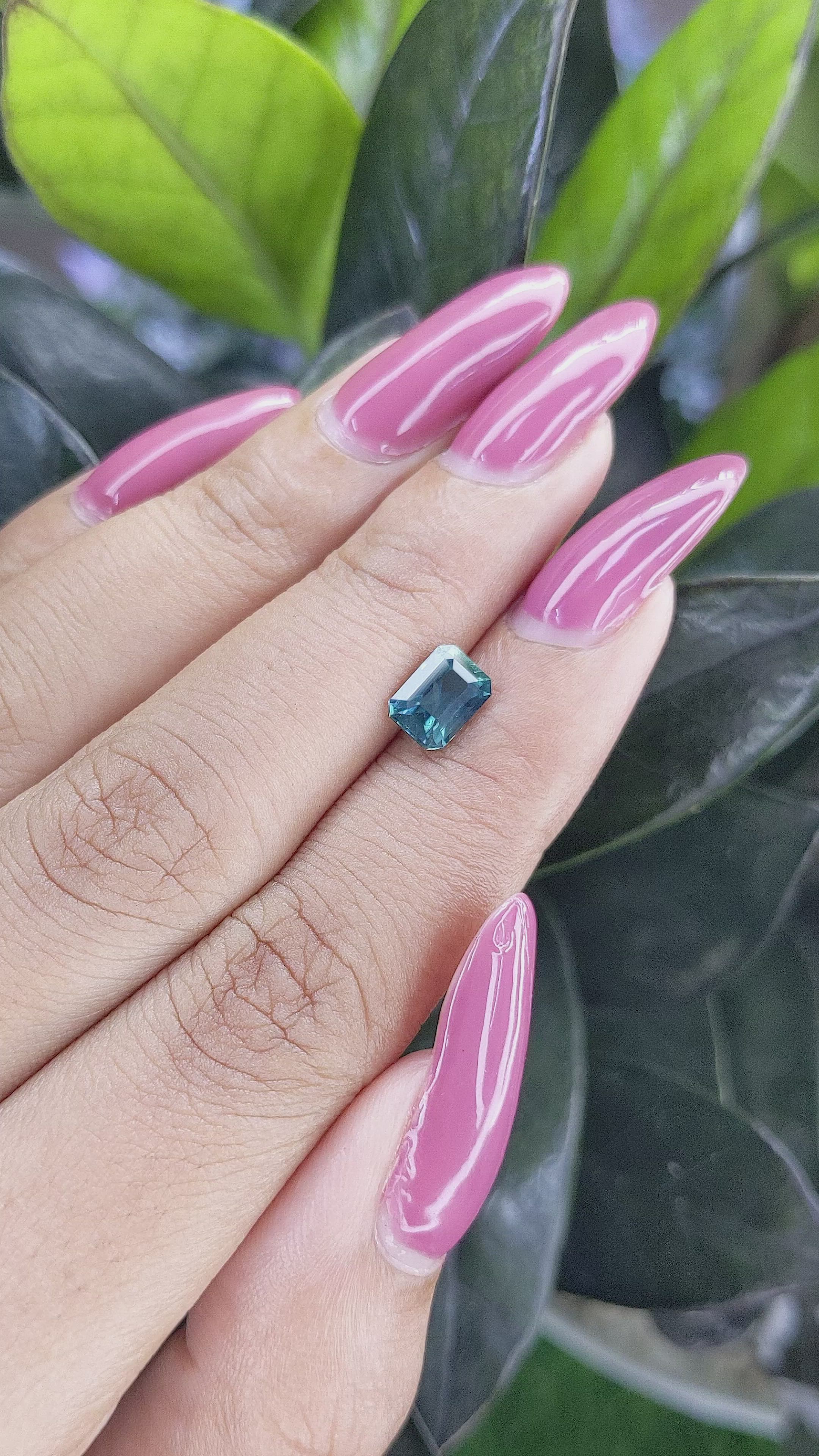
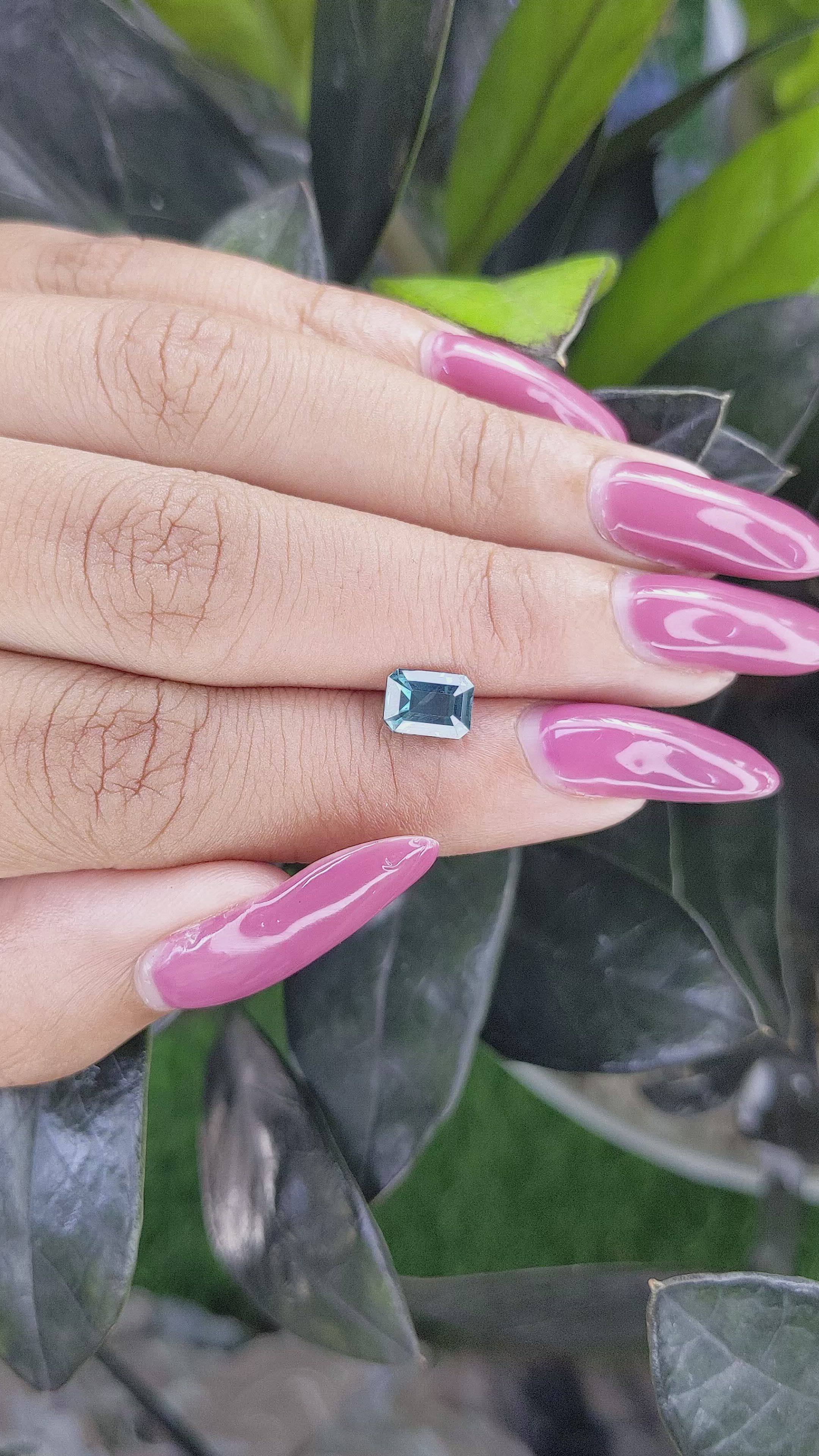


1.36 Ct. Greenish Blue Sapphire from Madagascar
This loose stone ships by Apr 24
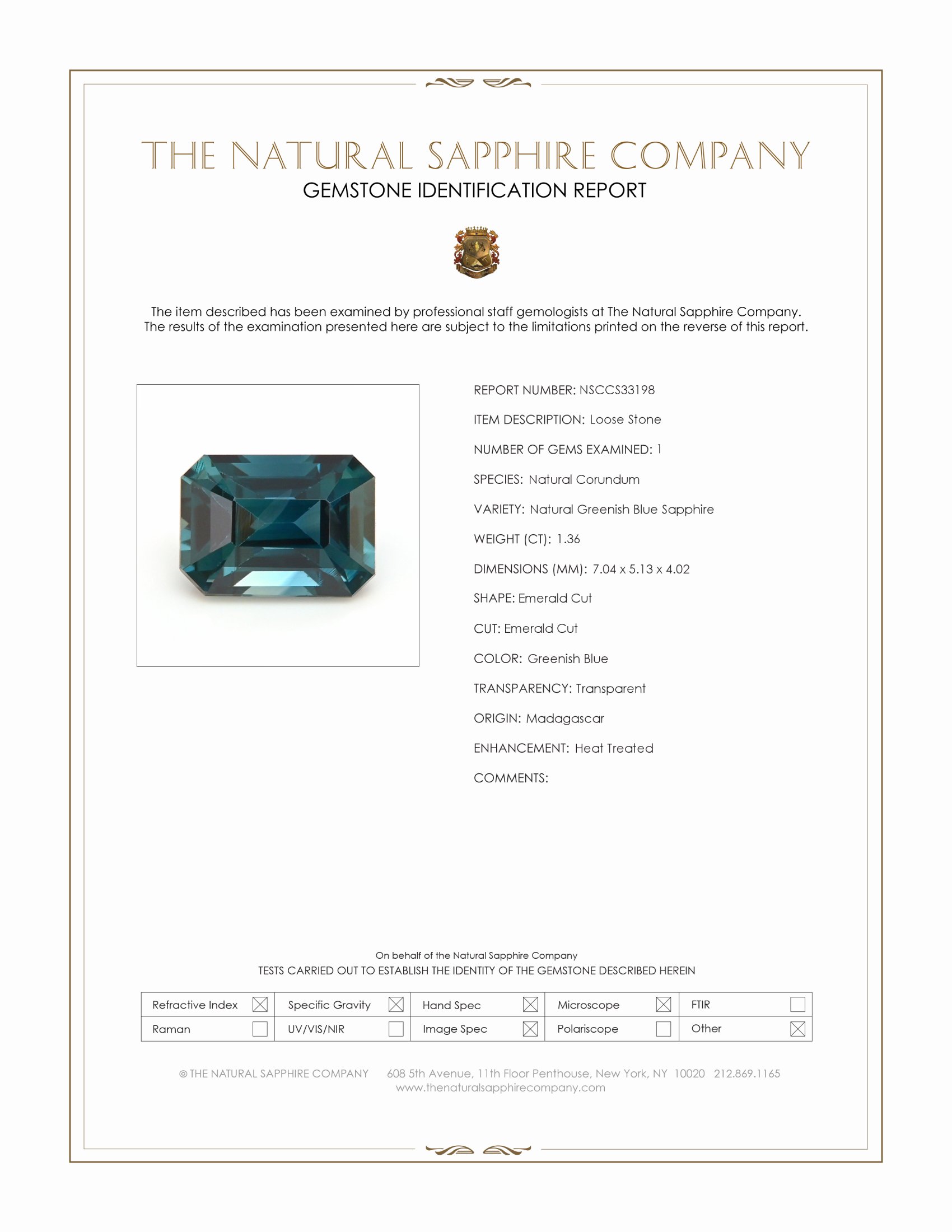
Item ID: | S33198 |
|---|---|
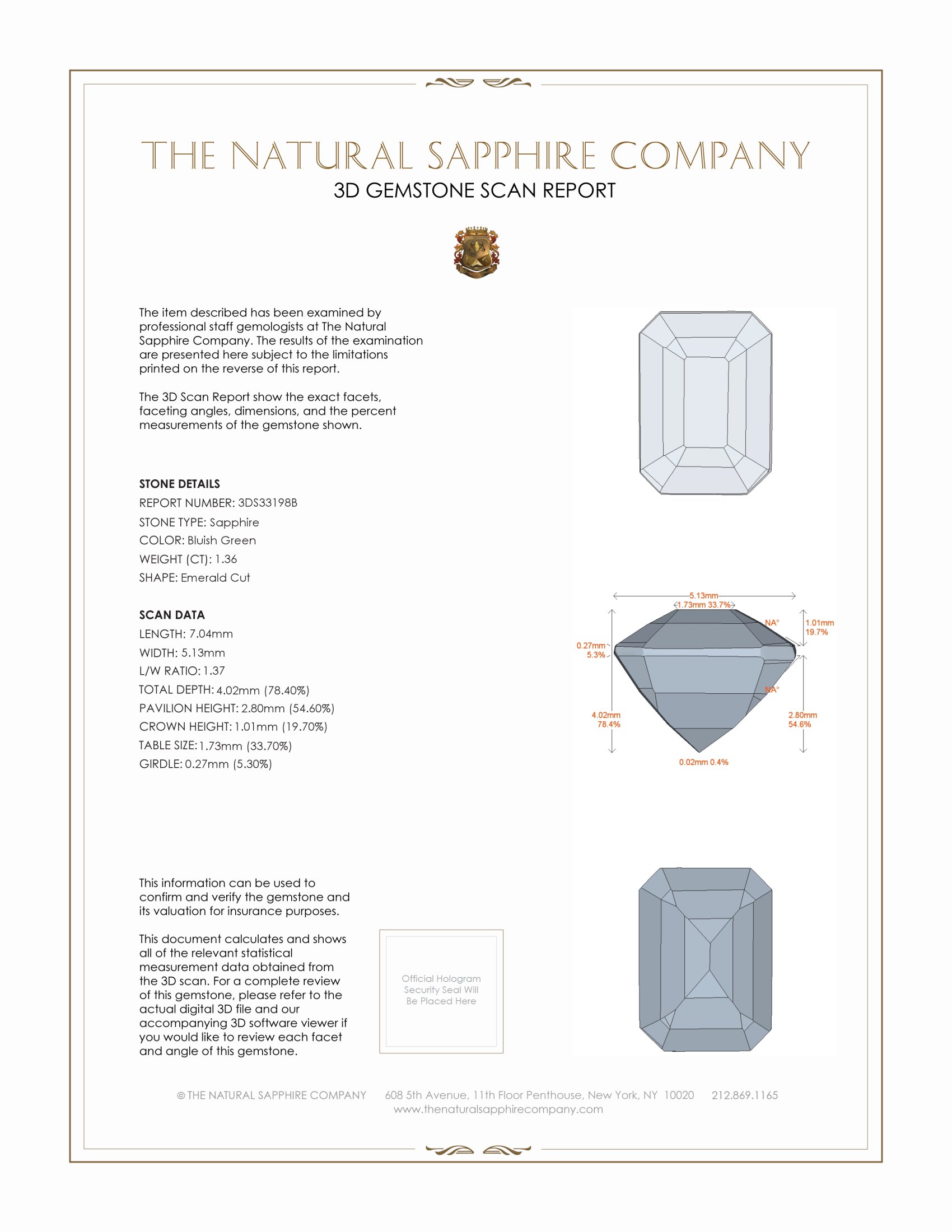
Dimensions (MM): help | Length: 7.04 Width: 5.13 Height: 4.02 |
Weight: | 1.36 Ct. |
Color: help | Greenish Blue |
Color intensity: help | Intense |
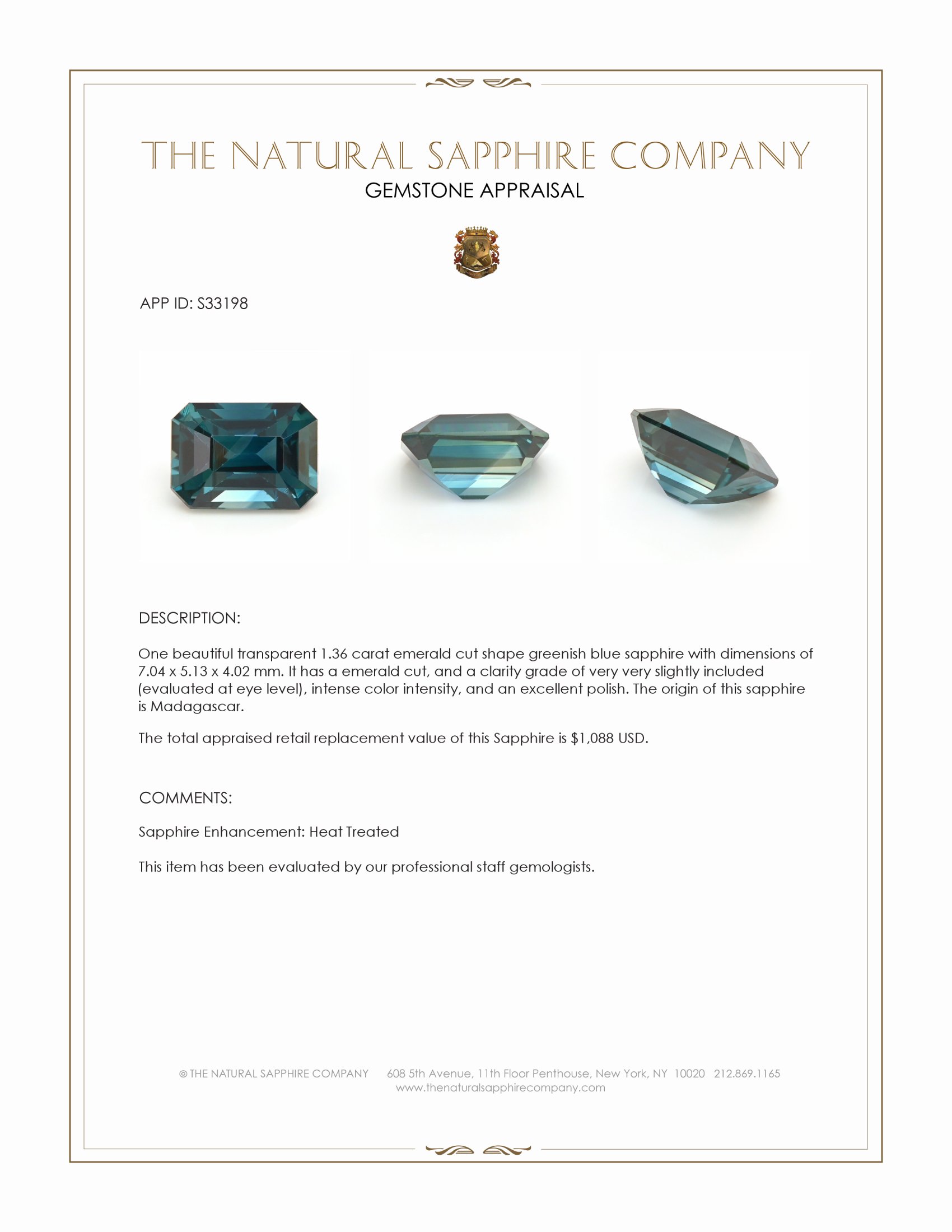
Clarity: help | Very Very Slightly Included |
Shape: help | Emerald Cut |
Cut: | Emerald |
Cutting style: | Faceted |
Enhancements: help | Heat Treated |
Origin: help | Madagascar |
Per carat price: help | $800 |
This 1.36 carat, emerald cut, greenish blue sapphire measures 7.04 by 5.13 by 4.02 millimeters, and presents a transparent, well proportioned profile that blends architectural geometry with gemological finesse. The stone is graded as very, very slightly included when evaluated at eye level, a clarity characteristic that the emerald cut intentionally showcases and that elevates the visual purity of the table plane. Color intensity is described as intense, with a greenish blue hue that reads vibrantly face up and shifts subtly with tilt due to pleochroic behavior typical of corundum. The pavilion depth of approximately 66 percent contributes to the balance between face up color saturation and internal light return, while the excellent polish ensures crisp facet junctions and a clean window through the step facets. Enhancement by controlled heat treatment has been disclosed, a broadly accepted and stable treatment applied to clarify silk and intensify the intrinsic color profile, and the sapphire’s reported origin from Madagascar situates it within a contemporary source known for producing saturated, collector quality material.
The emerald cut itself is an intentional statement in cutting philosophy, favoring broad step facets and a large table to emphasize body color and internal clarity rather than scintillation. In this piece the cut is executed so that the long, parallel facets create a hall of mirrors effect, allowing the eye to travel across consistent planes of color, and permitting the greenish blue tone to read evenly across the table. Step cutting also amplifies surface reflections, which makes polish quality paramount, and the excellent polish here yields crisp facet boundaries that maximize contrast between the step planes. The cutter has oriented the pavilion and crown to address pleochroism, presenting the blue predominant axis face up while retaining the subtle green modifier that gives this sapphire its unique identity. The result is a measured presentation that favors elegant, modern settings, while maintaining the optical integrity that fine collectors seek.
From a material science and treatment perspective, Madagascar sapphires have become increasingly important to the market, offering a range of hues from classical cornflower to teal and greenish blue. Heat treatment in corundum is typically performed at high temperatures in controlled environments to recrystallize silk, reduce rutile intersections that create hazes, and to develop or deepen the desired chromophore expressions, a process that is stable under normal wear and that does not affect the structural integrity of the stone. This sapphire exemplifies those outcomes, with reduced internal diffusion of light that would otherwise desaturate the face up color, and with the clarity grade reflecting minimal, well healed inclusions that do not detract from the visual performance at typical viewing distances. Technically minded buyers will appreciate that the stone’s refractive behavior, consistent with corundum family values, is harnessed by the step cut to emphasize broad zones of color rather than high dispersion, producing a refined, architectural appearance rather than a brilliant, fragmented scintillation.
When set against the canon of famous historical gemstones, this sapphire holds a distinct place through its combination of color, cut, and clarity. The Logan and other renowned museum sapphires are celebrated for vast size and pure cornflower blue saturation, while the Star of India remains iconic for its dramatic asterism and exceptional size, and the Bismarck and similar royal stones are prized for deep, velvety blues and historical provenance. This greenish blue emerald cut diverges from those examples in ways that create unique desirability. It does not compete on scale with museum pieces, and it does not exhibit asterism, but it offers something rarer in the retail and bespoke market, a highly saturated greenish blue hue presented in a precision step cut that emphasizes clarity and linear geometry. For collectors and connoisseurs who value the lineage of classical gems but demand contemporary wearable proportions and cutting finesse, this sapphire channels historical color qualities while delivering the versatility and technical refinement of modern lapidary practice.
The Natural Sapphire Company presents this Madagascar emerald cut sapphire as an item for both collectors and designers who prioritize technical merit, and who understand how cut decisions interact with pleochroism and treatment history to produce the face up color and clarity they desire. In finished jewelry this stone will perform as an elegant centerpiece for an engagement ring, a refined pendant, or a bespoke work where the emerald cut’s linearity complements architectural settings. Prospective buyers who wish to evaluate optical behavior under different lighting environments are invited to request hands on examination or calibrated imaging, and The Natural Sapphire Company can provide additional documentation regarding treatment and verified origin upon request. In summary, this 1.36 carat greenish blue emerald cut sapphire represents a marriage of classic corundum properties and contemporary cutting strategies, offering a distinct aesthetic that references historical blue sapphire ideals while asserting its own modern value through intense color, precise faceting, and exceptional polish.


