
- Stone12
- Reports3


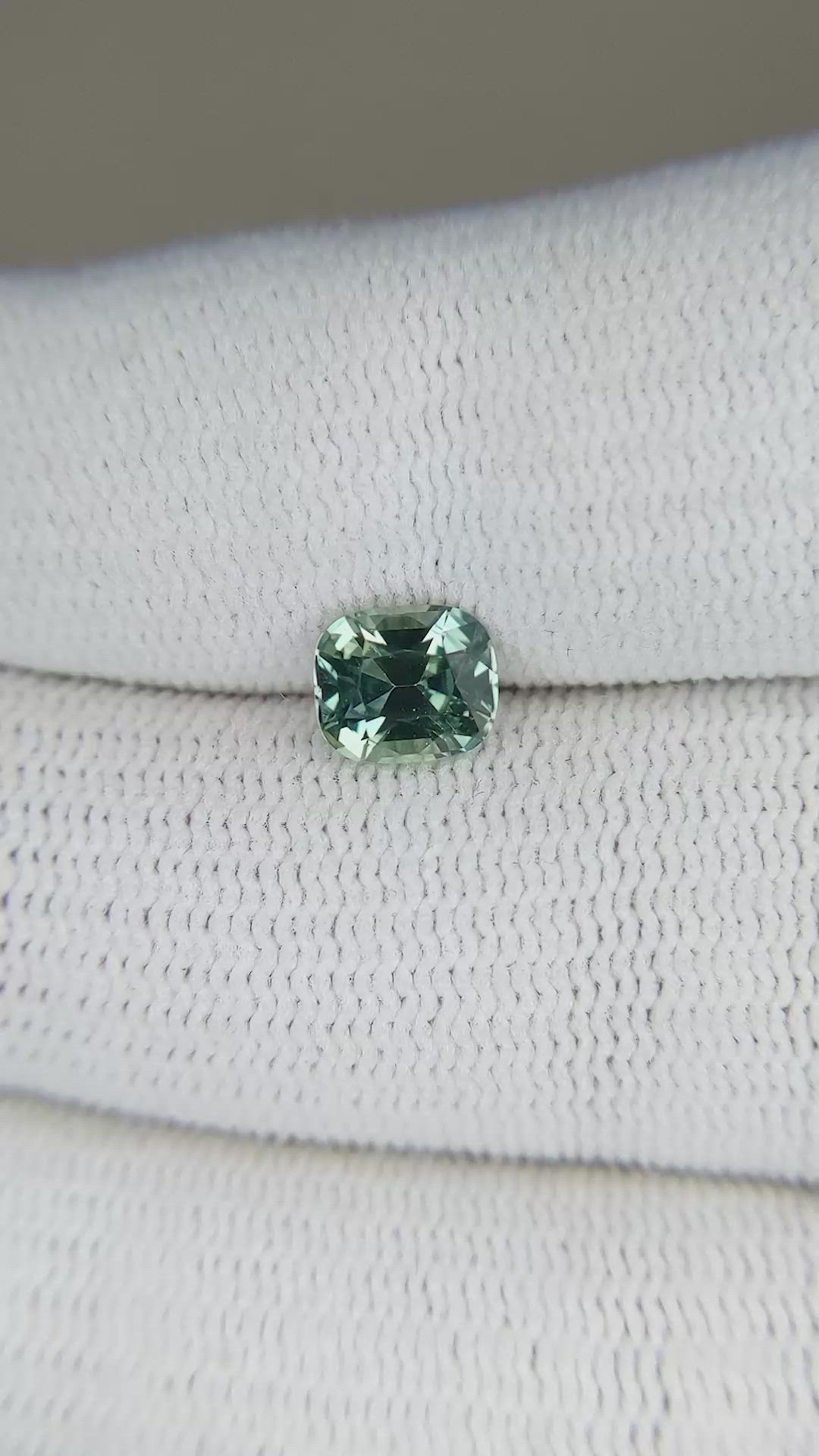
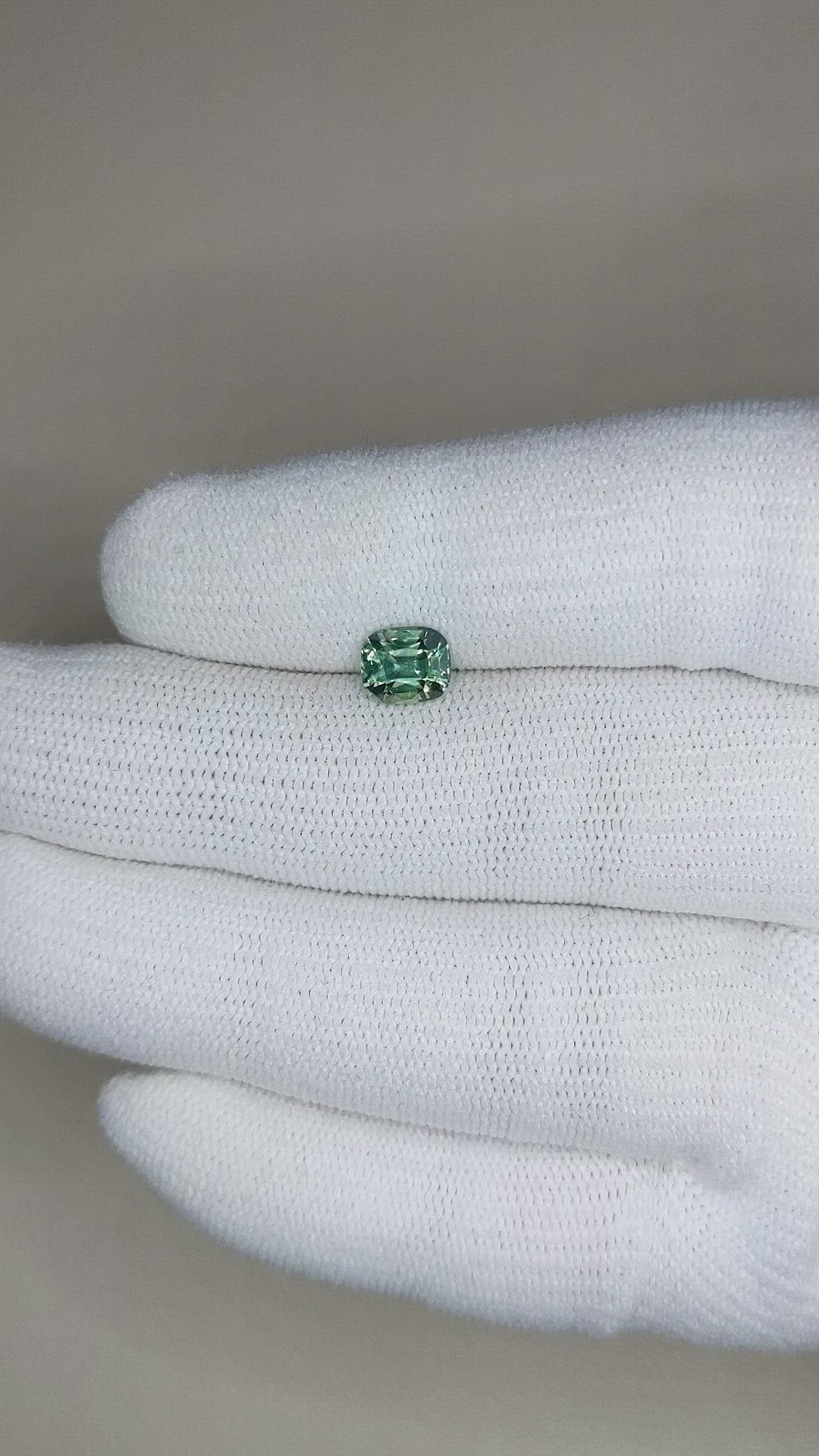
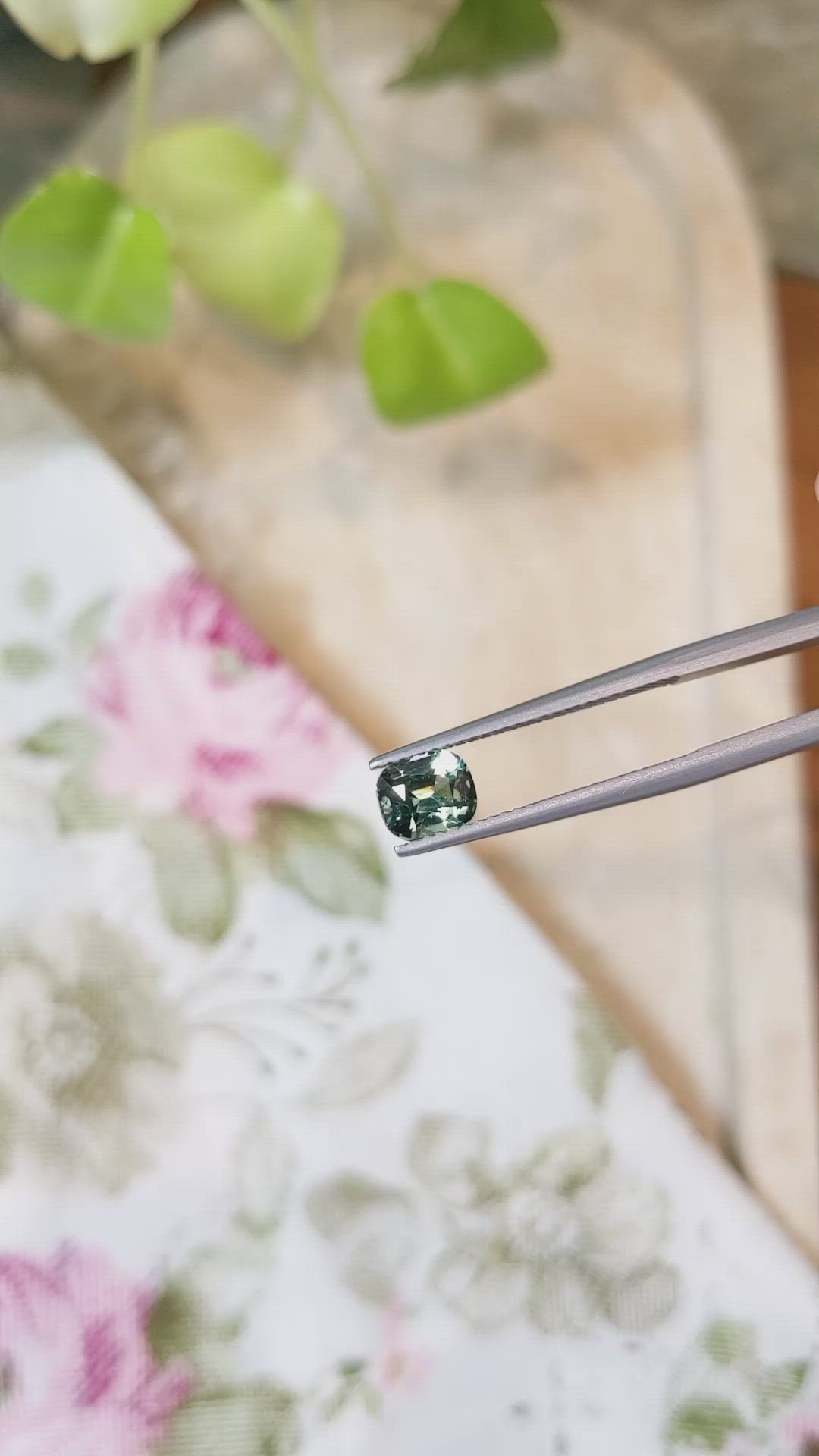
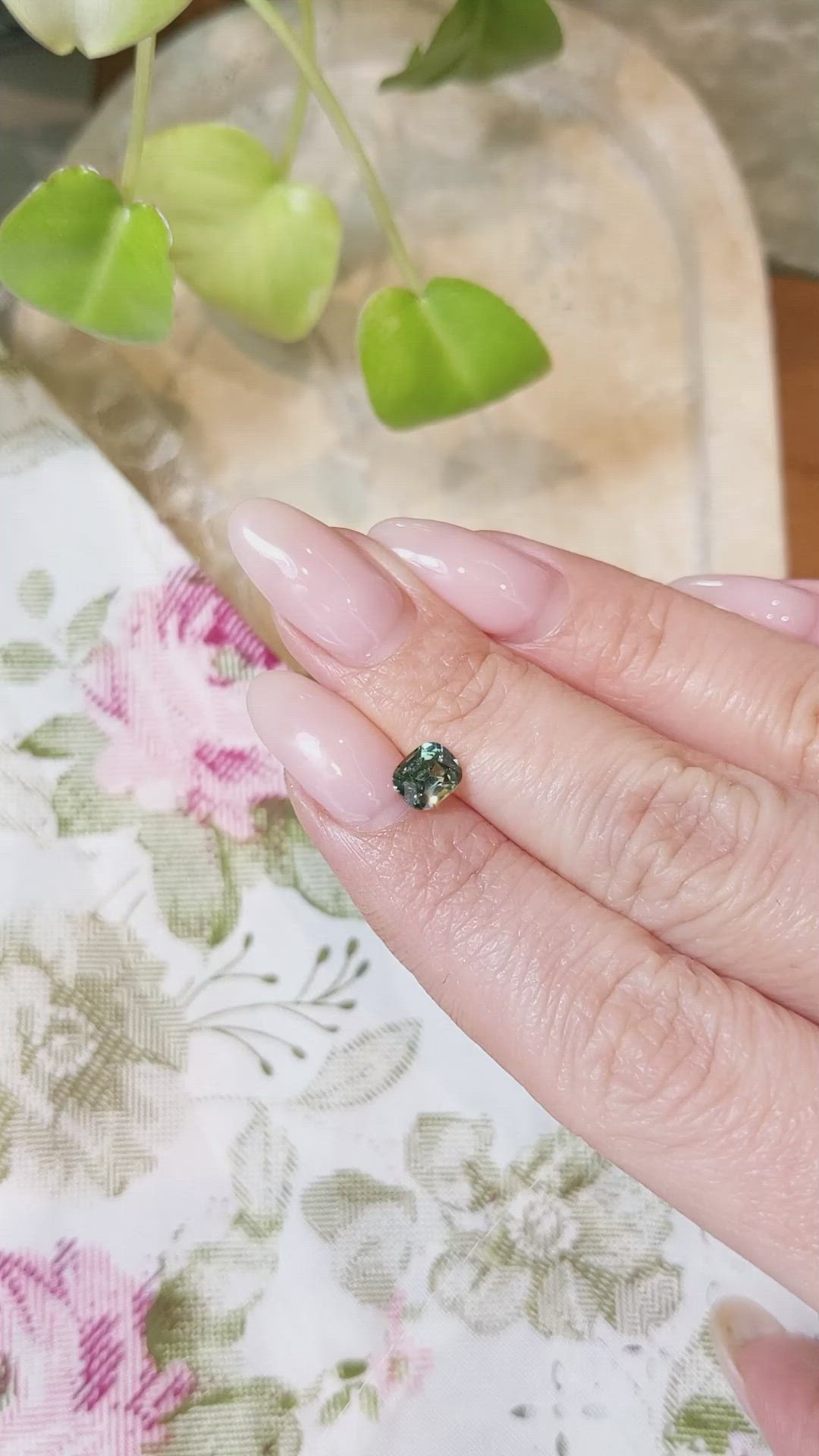


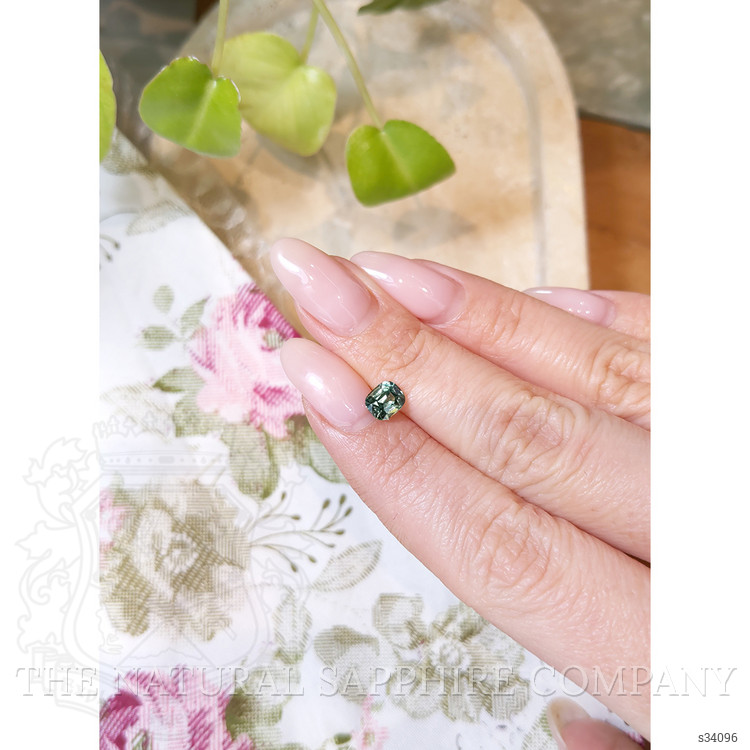


1.20 Ct. Bluish Green Sapphire from Madagascar
This loose stone is available to ship now
Item ID: | S34096 |
|---|---|
Dimensions (MM): help | Length: 6.23 Width: 5.33 Height: 4.08 |
Weight: | 1.20 Ct. |
Color: help | Bluish Green |
Color intensity: help | Intense |
Clarity: help | Very Very Slightly Included |
Shape: help | Cushion |
Cut: | Mixed Brilliant |
Cutting style: | Faceted |
Enhancements: help | No Enhancement |
Origin: help | Madagascar |
Per carat price: help | $1,100 |
From a place where rivers wind through spongy earth and seasonal rains reveal hidden veins of mineral treasure, this sapphire began its life deep within Madagascar, a land that has become known among connoisseurs for producing sapphires with singular personality. Miners in the Ilakaka and Sakaraha regions work with patience and local knowledge that has been refined over generations, following the subtle clues that nature leaves in each wash bed and gravel bar. As part of our careful sourcing at The Natural Sapphire Company, this stone was selected for its transparency and its rare bluish green hue, a color that reads at once oceanic and botanical, like a lagoon lit from below by sunlight. The journey from the moment the rough was lifted from the soil to the finished gem was guided by a respect for the material, and by the intent to reveal its most expressive color and cleanest crystal faces with minimal loss of weight.
The finished gem is a 1.20 carat cushion shape sapphire, with dimensions of 6.23 by 5.33 by 4.08 mm, cut in a mixed brilliant style to balance lively scintillation with broad color windows. It is transparent, with a clarity grade of very very slightly included when evaluated at eye level, and it displays an intense color intensity that reads as bluish green across both the table and under the crown facets. The mixed brilliant cut allows light to enter and return with a vibrant play of tones, so the stone alternates between deep teal flashes and softer sea green fields depending on the angle of view. The polish is excellent, so each facet edge is crisp and reflective, enhancing the gem long after it leaves our hands. Importantly for the purist, this sapphire has no enhancement, so the color and clarity are natural expressions of its Madagascar origin, not the result of heat treatment or other modifications.
When you compare this bluish green Madagascar sapphire to material from other famous sources, the differences become a part of the story that makes each region special. Sapphires from Sri Lanka are often luminous and lighter, leaning toward bright cornflower blue and vivid pastel blues that glow with a soft, clear light, whereas Kashmir sapphires are celebrated for a velvety, saturated cornflower tone that feels almost regal and still in demand by collectors. By contrast, sapphires from Montana in the United States tend to show more pastel teal and icy blue green notes, often with a cooler, airier tone. Australian sapphires frequently present deep blue green tones with strong saturation and a brooding presence, while Madagascan stones like this one sit in a sweet middle ground, offering intense color without heaviness. The bluish green hue of this cushion sapphire has the depth and saturation one might seek in Australian material, but it carries a translucency and a brightness that is closer to finer Sri Lankan stones, creating a balance that is uniquely Madagascan.
If we look again through the lens of tone and bodycolor to draw more comparisons, the way this gem holds light sets it apart from many other famous localities. The tone is intense, but it does not cross into the overly dark range that can mute sparkle, a trait that can be observed in some of the darkest Australian stones. Instead, the tone allows the mixed brilliant facets to communicate flashes of pale aqua and deeper forest green, a dynamic that resembles the shifting blues and greens of Tanzanian and Madagascan sapphires rather than the stable, single note blues of classic Burmese or Kashmir pieces. For those familiar with gemological nuance, this stone will feel more alive and chatoyant in movement than many heat treated or heavily saturated sapphires, because it is unenhanced and its inner structure scatters light in a naturally complex way. At The Natural Sapphire Company we enjoy helping customers appreciate these subtle geographic signatures, because they are part of what makes owning a natural sapphire a story as much as a possession.
In the hands of a jeweler the cushion shape and the mixed brilliant cut invite settings that both protect and display the gem, translating its Madagascar provenance into wearable art. A simple four prong or low bezel in platinum will keep the focus on the jewel, allowing the light to dance through the pavilion and crown, while a warm rose gold mounting will coax out the greenish side of the hue and lend a vintage sensibility. For an engagement piece the stone is a graceful choice because its size and clarity allow for elegance without ostentation, and because the unenhanced natural color will evolve gently on the finger as it meets different light throughout the day. When you choose this sapphire from The Natural Sapphire Company you are taking home more than a measured set of specifications, you are taking home a chapter of Madagascar, a testament to the skill of cutters who brought harmony to rough material, and a gem that will develop a personal story as it is worn and admired. If you would like guidance on mounting styles or to see comparison photos of sapphires from other regions to further explore these hue and tone differences, our team is ready to assist.


