
- Stone6
- Reports3

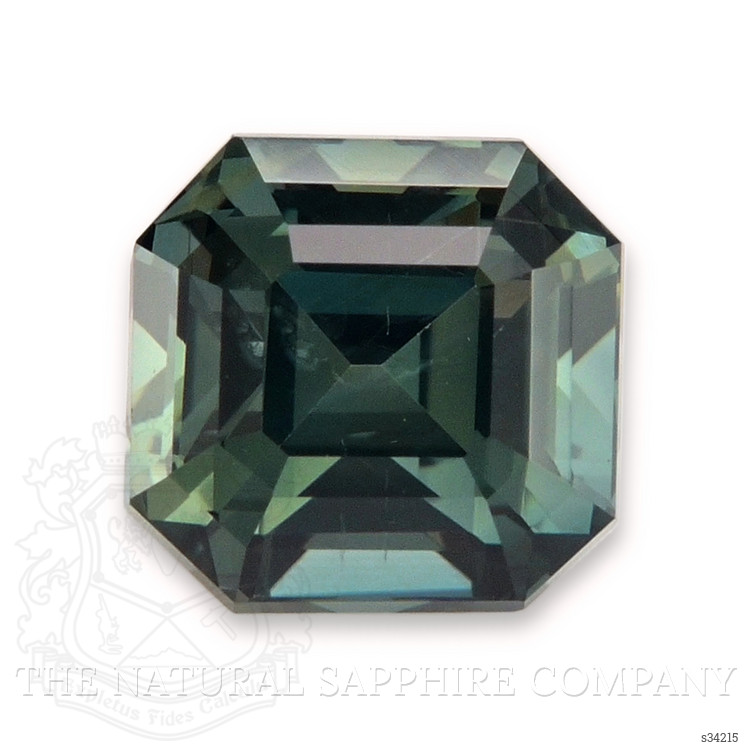

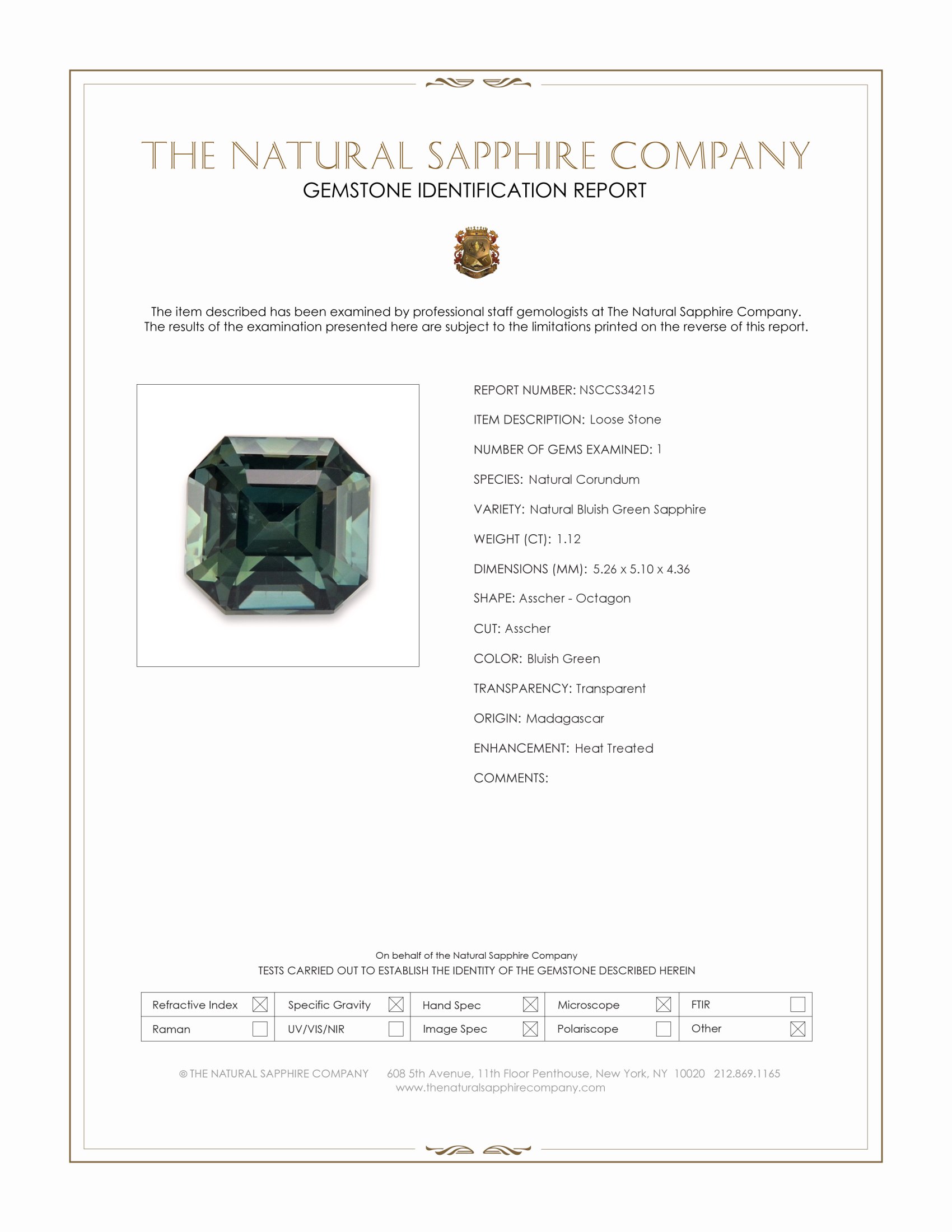
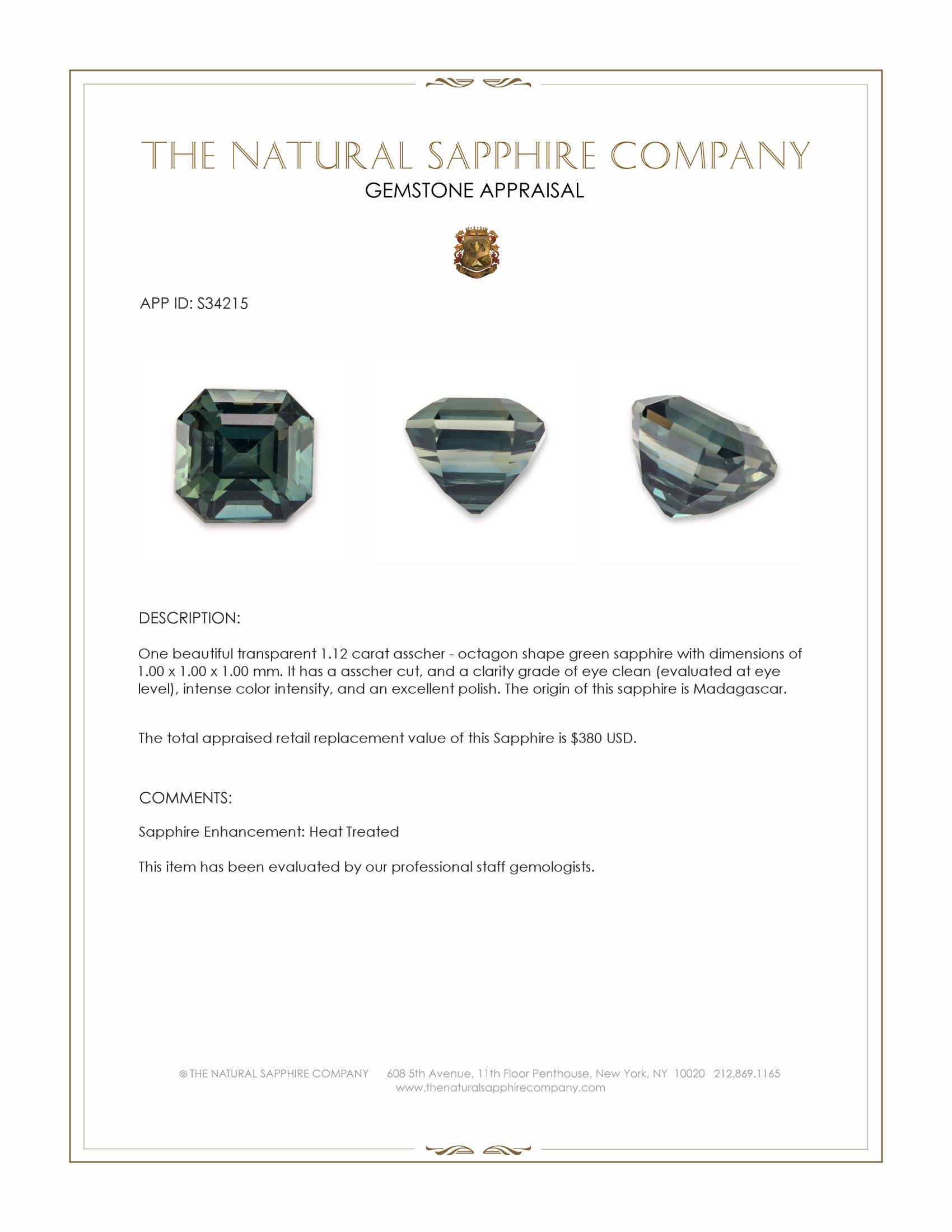
1.12 Ct. Bluish Green Sapphire from Madagascar
This loose stone ships by Jan 3
Item ID: | S34215 |
|---|---|
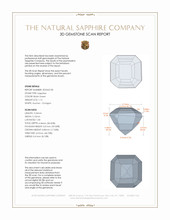
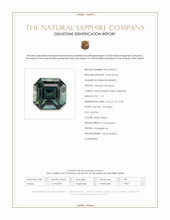
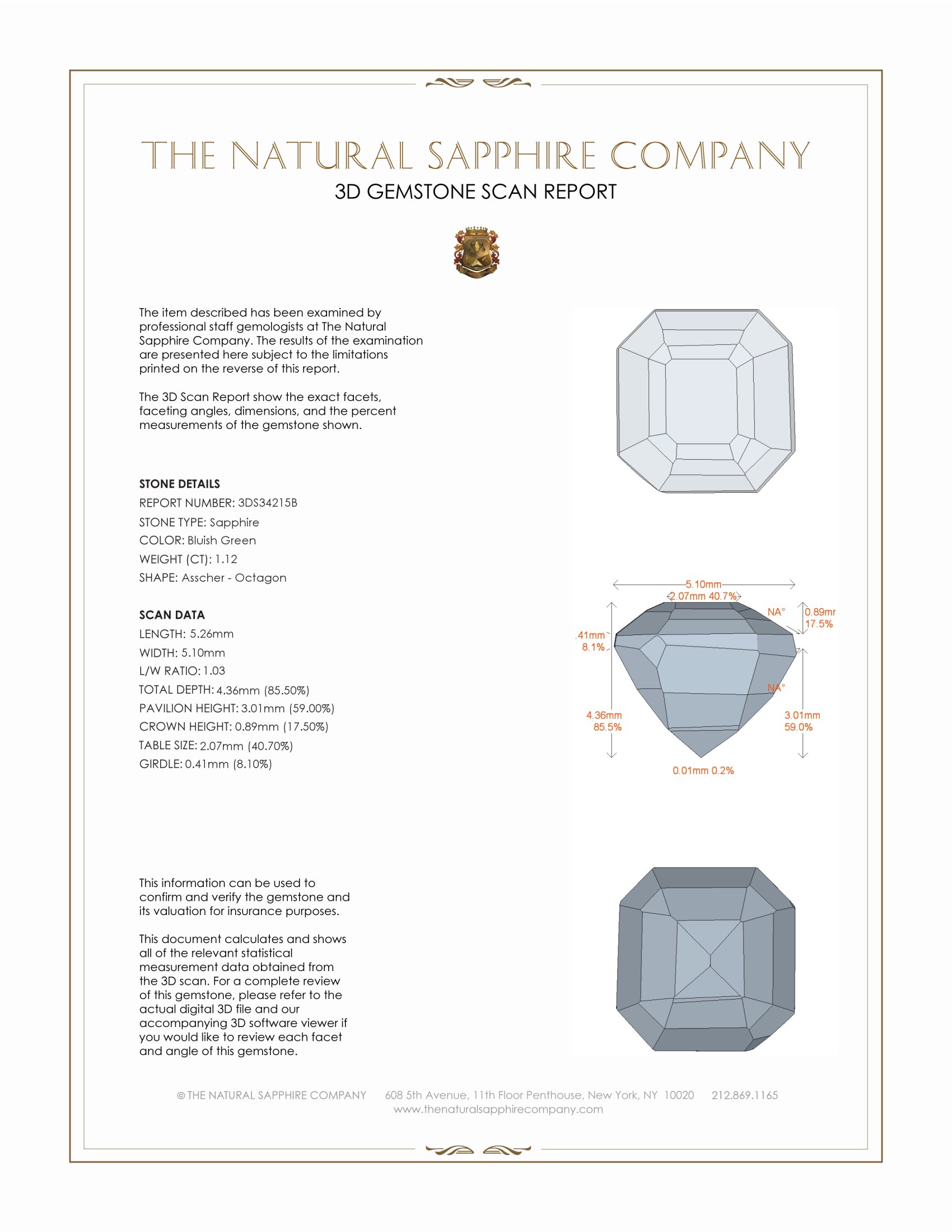
Dimensions (MM): help | Length: 5.26 Width: 5.1 Height: 4.36 |
Weight: | 1.12 Ct. |
Color: help | Bluish Green |
Color intensity: help | Medium Intense |
Clarity: help | Very Slightly Included |
Shape: help | Asscher - Octagon |
Cut: | Asscher |
Cutting style: | Faceted |
Enhancements: help | Heat Treated |
Origin: help | Madagascar |
Per carat price: help | $339 |
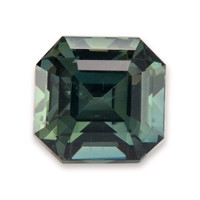
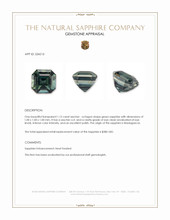
This transparent 1.12 carat asscher octagon bluish green sapphire presents a highly controlled blend of form and natural color, dimensions 5.26 x 5.10 x 4.36 mm, asscher cut with an octagonal outline, very slightly included when evaluated at eye level, medium intense color intensity, excellent polish, heat treated, origin Madagascar. The asscher cut in sapphire is rare compared to more common sapphire shapes, because the step cut architecture emphasizes color saturation and clarity rather than scintillation, and because cutters must work from large, clean rough to achieve the concentric square faceting with truncated corners that characterize a classic asscher. This stone retains high transparency, allowing both internal color depth and the architectural light return of a step cut to be appreciated. The combination of the asscher geometry and the bluish green tone produces a unique visual presence, one that reads as sophisticated and understated in direct light, while revealing layered green and blue notes as the stone is moved.
The faceting design is a true step cut, with broad rectangular crown facets descending to a generous table and successive rows of pavilion steps that create a series of internal mirrors. The proportions give a pavilion depth that is relatively deep for the dimensions provided, with the depth of 4.36 mm yielding an overall depth to diameter ratio of approximately 84 percent based on the average of the two measured diameters. This deeper pavilion enhances the stone color, concentrating the medium intense hue into the central facets and reducing the risk of windowing that can occur in shallow step cuts. The table is deliberately sized to balance face up color and the step pattern, preserving the signature hall of mirrors effect that collectors seek in asscher cuts. Precision at the facet junctions and careful alignment of the crown and pavilion facets maintain crisp light return while avoiding excessive contrast that would otherwise mute the bluish green tone.
Clarity and polish have been treated with equal consideration in the cutting process. The clarity grade is very slightly included at eye level, indicating minute natural features that are visible under careful scrutiny but do not detract from the visual purity of the stone in typical viewing conditions. In material from Madagascar, inclusions commonly take the form of fine crystals or short rutile needles, and the cutter oriented the pavilion and crown to minimize inclusion visibility through the table, situating any minor inclusions toward facet junctions where they are less perceptible. The excellent polish ensures smooth facet planes and sharp facet edges, which reduces light leakage and enhances contrast between the step rows. Heat treatment has been applied, a standard enhancement that stabilizes and intensifies the bluish green color, and that also can diminish the prominence of some inclusions. The result is a stone that combines natural origin characteristics with finished quality that meets strict gemological standards for polish and symmetry.
Rarity for this specimen derives from both its color and its dimensional attributes, relative to the available market of natural sapphires. Bluish green sapphires in the 1 carat plus size range are uncommon, and when they do occur, they are more typically fashioned in mixed or brilliant cuts that maximize brilliance to offset lighter tones. The asscher cut is materially demanding because it requires a large, uniform piece of rough to retain the step sequence and the octagonal outline without excessive clipping of corners, meaning yield from rough is lower and price per carat for well cut asscher shapes increases accordingly. Additionally, the medium intense bluish green hue is a rarer balance point than pure blue or pure green, offering a subtler saturation that reads as unique in jewelry applications, and that appeals to specialist collectors and connoisseurs who prioritize color nuance. Provenance from Madagascar adds further interest, as the island produces material with distinctive trace element balances that often produce attractive green to blue tones. The stone is presented by The Natural Sapphire Company, whose cutting and selection criteria favor specimens that demonstrate both technical excellence and unusual color profiles, making this asscher octagon sapphire an exceptional option for a discerning buyer seeking a rare combination of size, cut, and color.


