
- Stone14
- Reports3


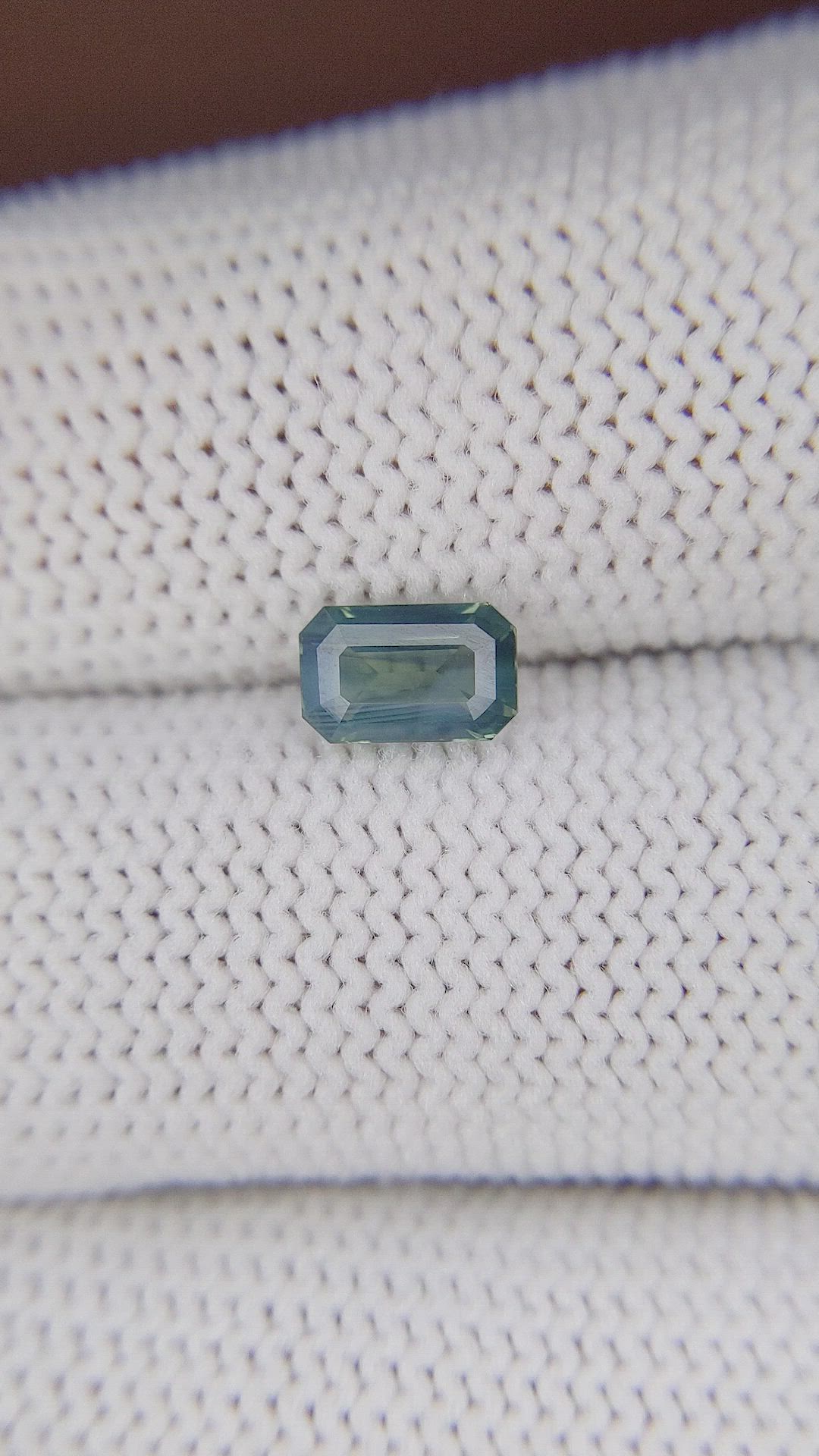
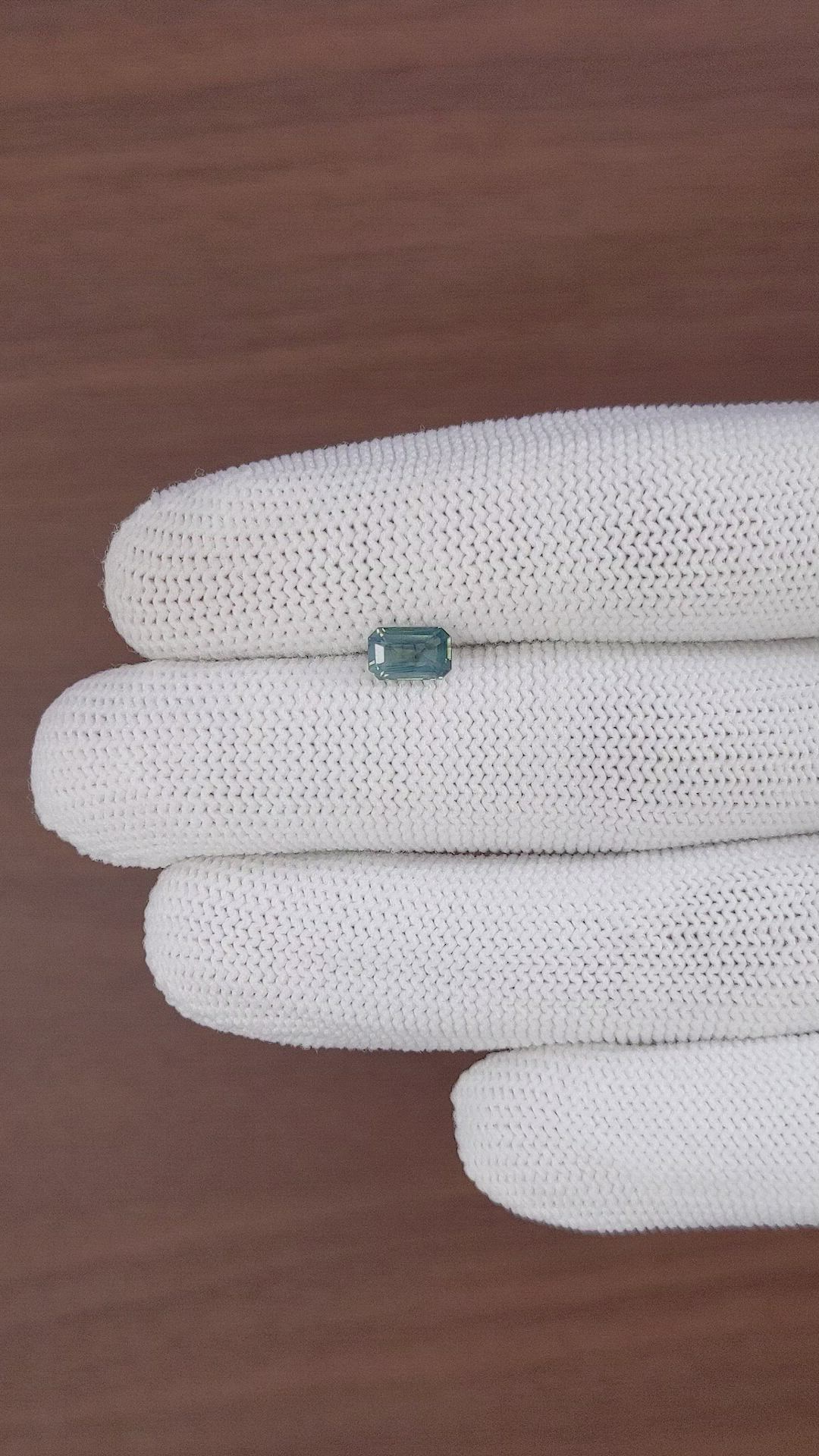
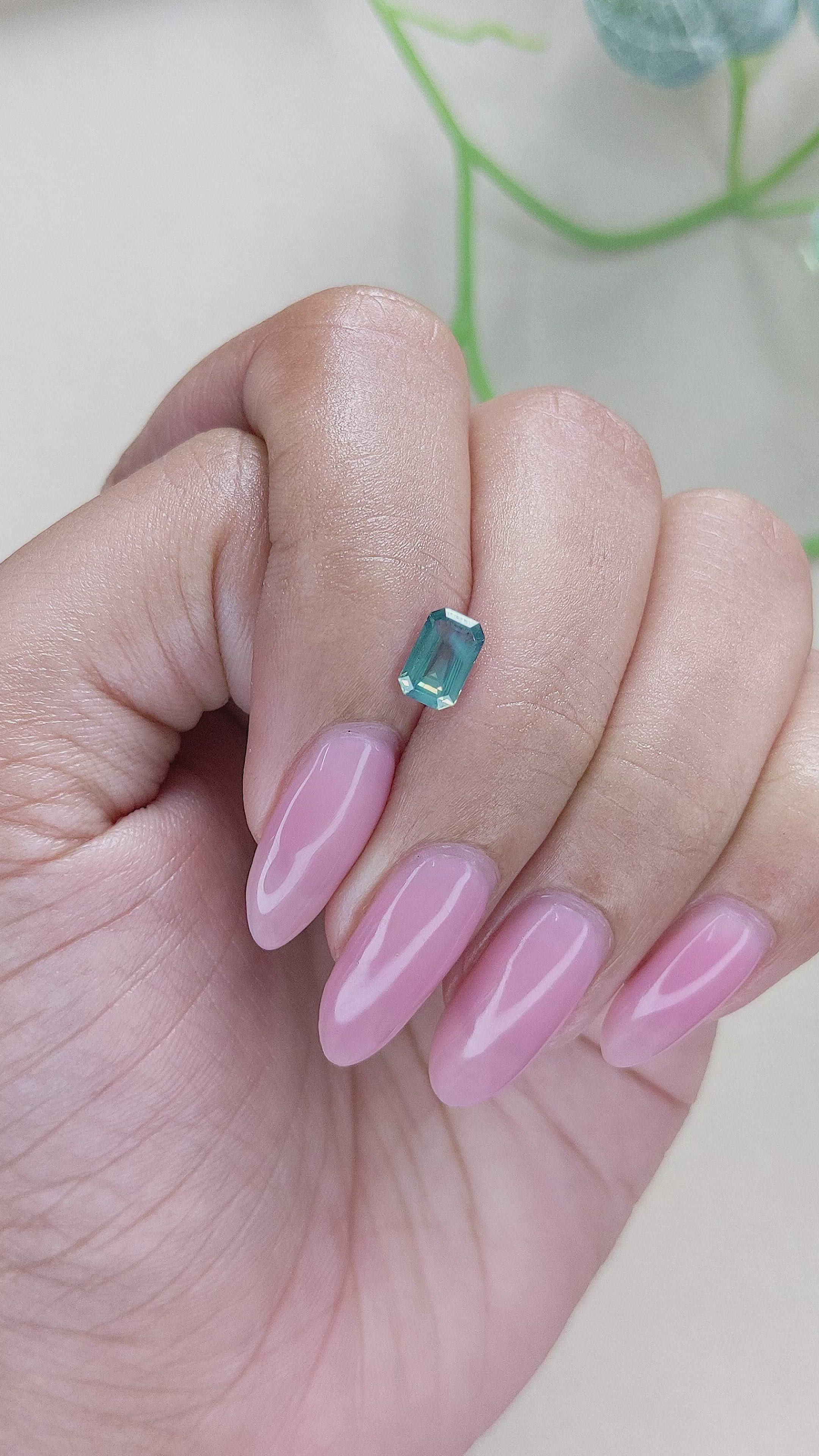
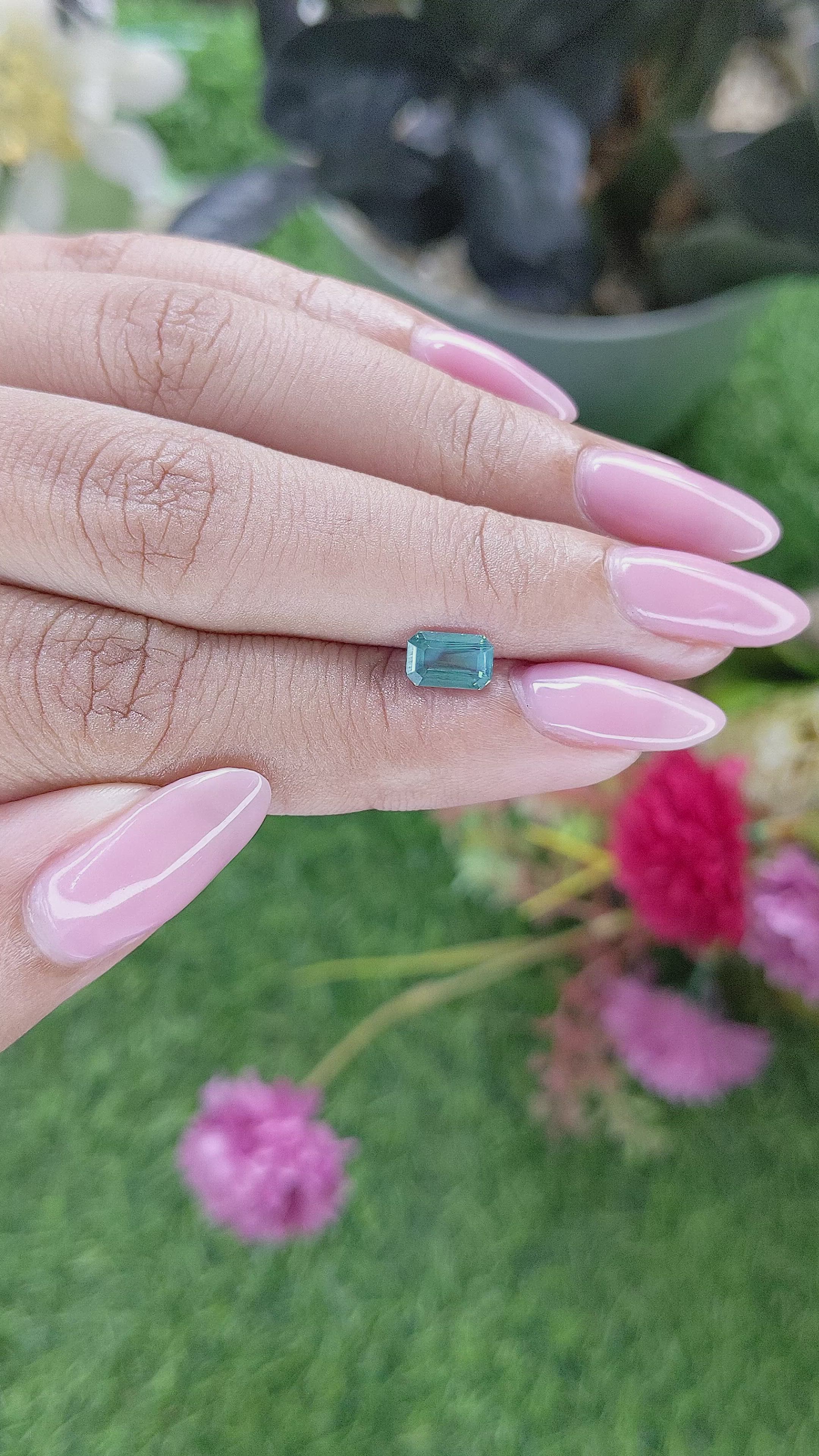
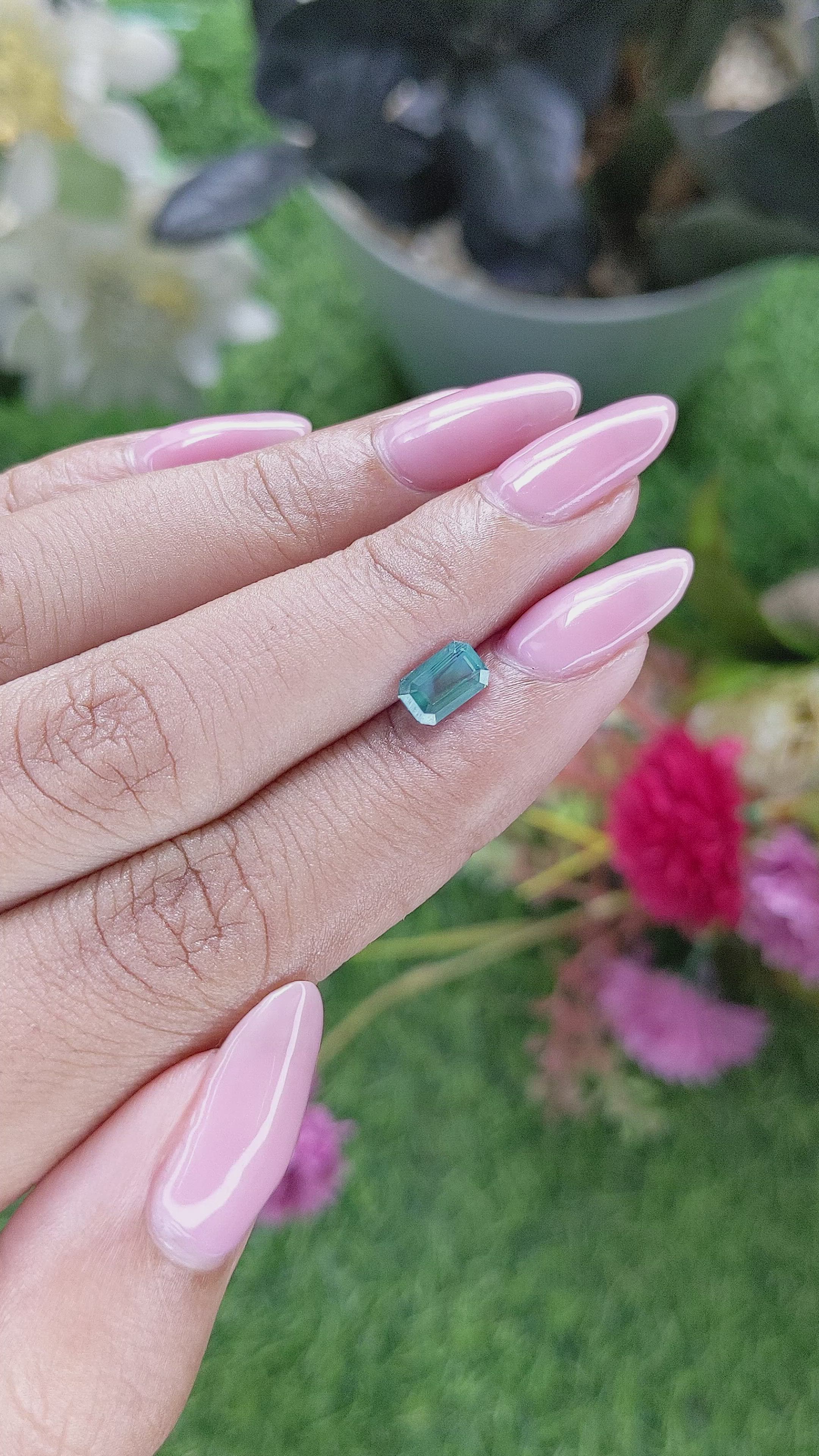




1.02 Ct. Bluish Green Sapphire from Madagascar
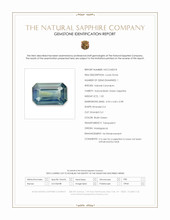
Item ID: | S40218 |
|---|---|
Dimensions (MM): help | Length: 6.94 Width: 4.44 Height: 2.98 |
Weight: | 1.02 Ct. |
Color: help | Bluish Green |
Color intensity: help | Medium |
Clarity: help | Very Very Slightly Included |
Shape: help | Emerald Cut |
Cut: | Emerald Cut |
Cutting style: | Faceted |
Enhancements: help | No Enhancement |
Origin: help | Madagascar |
Per carat price: help | $294 |
This sapphire is a transparent 1.02 carat stone presented in a classic emerald cut, with dimensions of 6.94 x 4.44 x 2.98 mm, and a well balanced rectangular outline. The gem displays a bluish green hue with medium color intensity, and it is described as very very slightly included when evaluated at eye level. The table and step facets are clean and precise, and the stone has an excellent polish that contributes to its clarity and surface brightness. The piece is natural and untreated, with no enhancement, and it originates from Madagascar, a source known for producing sapphires with distinct color characteristics and good crystalline quality. The overall transparency and the controlled depth to table ratio result in a stone that reads true to its stated weight and dimensions, offering reliable proportions for a variety of fine jewelry applications.
The emerald cut is executed with a focus on precise facet alignment and symmetry, delivering a refined optical presentation rather than a glittering scatter of light. The step cut planes create broad flashes of color and light that shift as the stone is moved, producing a calm and architectural brilliance that emphasizes the stone structure. The excellent polish accentuates these planar reflections, allowing light to travel across the gem without obstruction and return as even, mirror like flashes. Because the pavilion and crown are cut to maintain strong table reflection, the stone presents a clear internal field that highlights the bluish green body color, while the step facets provide a layered depth that reads as both elegant and substantial. This combination of cut quality and polish makes the stone a natural centerpiece in any collection, where technical execution and visual restraint combine to emphasize the gem itself.
Visually the color presents as a balanced blend of blue and green tones, with medium saturation that remains neither overly vivid nor washed out, enabling versatility with a range of metals and design treatments. In softer indoor light the green undertone becomes more apparent, while in brighter daylight the blue component gains presence, offering a subtle but attractive pleochroic behavior that enhances interest without distracting from overall harmony. At 1.02 carats and with the measured dimensions, the stone sits comfortably as a focal solitaire in a ring, or as the central element in a three stone or halo style, and it also adapts well to bespoke settings that favor a clean, architectural aesthetic. Photographic scale indicates the stone provides clear visual impact on the finger while maintaining proportions suitable for daily wear when set properly with protective prongs and appropriate bezel or gallery design.
Provenance and treatment status are often decisive factors for discerning buyers, and this sapphire is notable for its natural origin and lack of enhancement, confirming its intrinsic color and clarity characteristics as products of its formation in Madagascar. The very very slightly included clarity grade observed at eye level reflects minimal internal features that do not detract from the gem presence when mounted, and the combination of natural origin, precise emerald cut, and excellent polish supports both collector interest and practical jewelry use. For those considering acquisition, standard gem care practices are advisable, including avoiding sudden temperature extremes, limiting exposure to harsh chemicals, and periodic professional cleaning and inspection of the mounting. This sapphire is offered through The Natural Sapphire Company, where detailed documentation and further gemological information can be provided to support a confident selection and appropriate setting design.


