
- Stone14
- Reports3
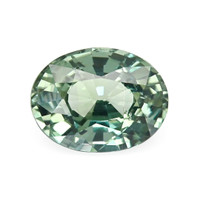
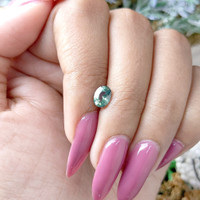
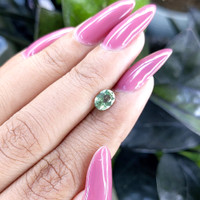
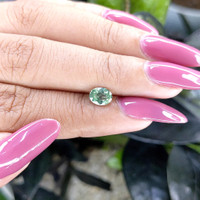
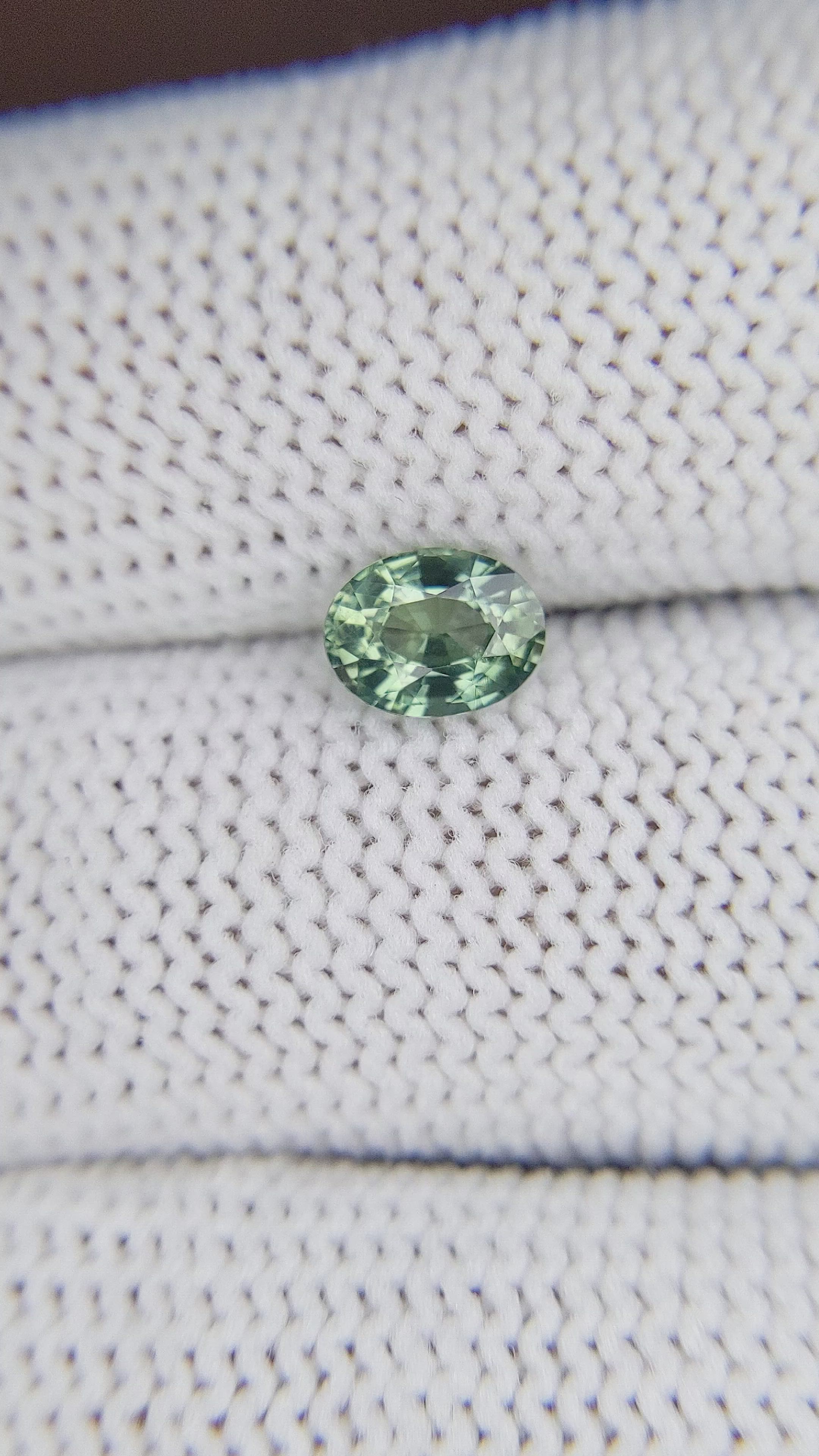
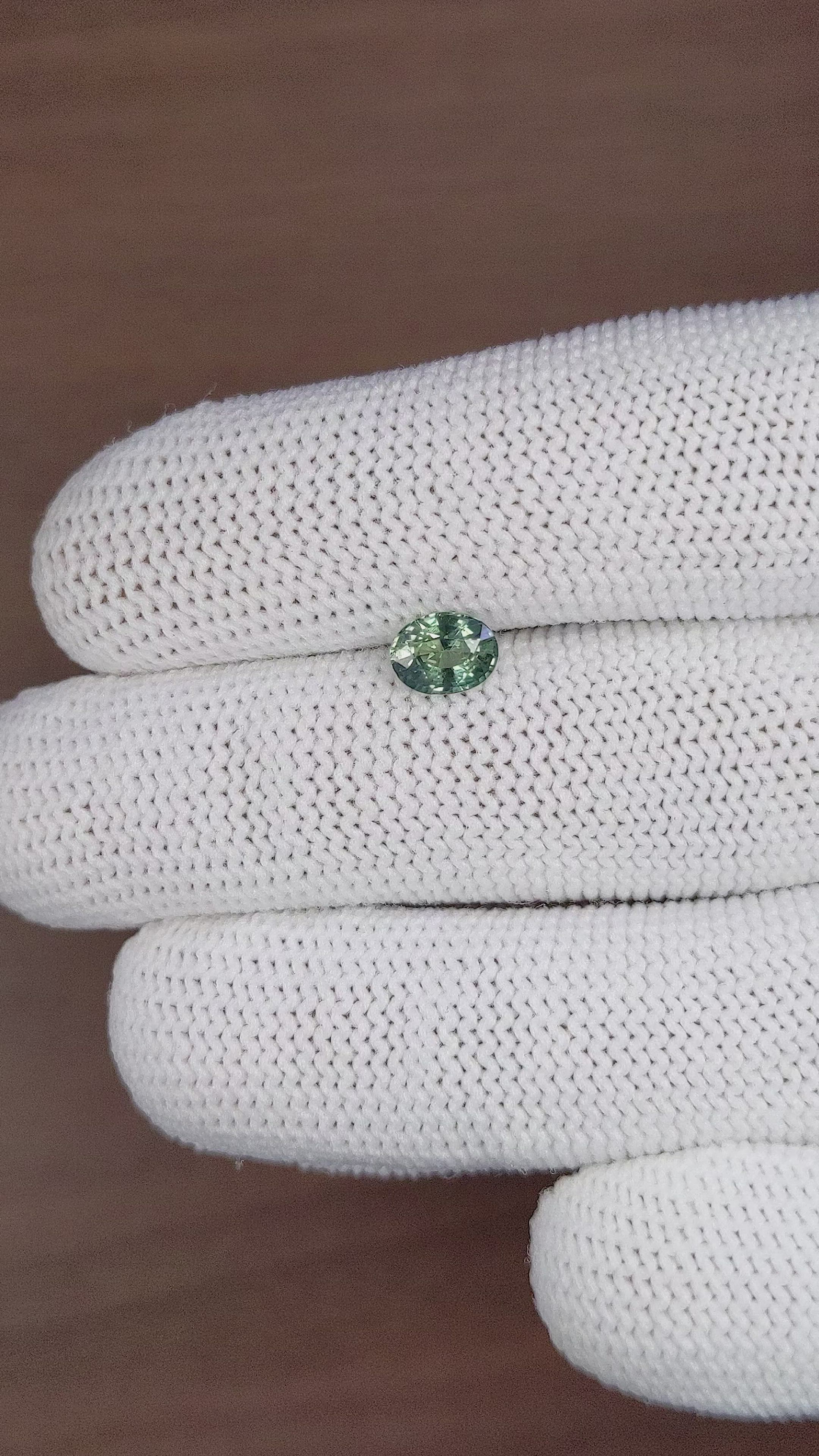
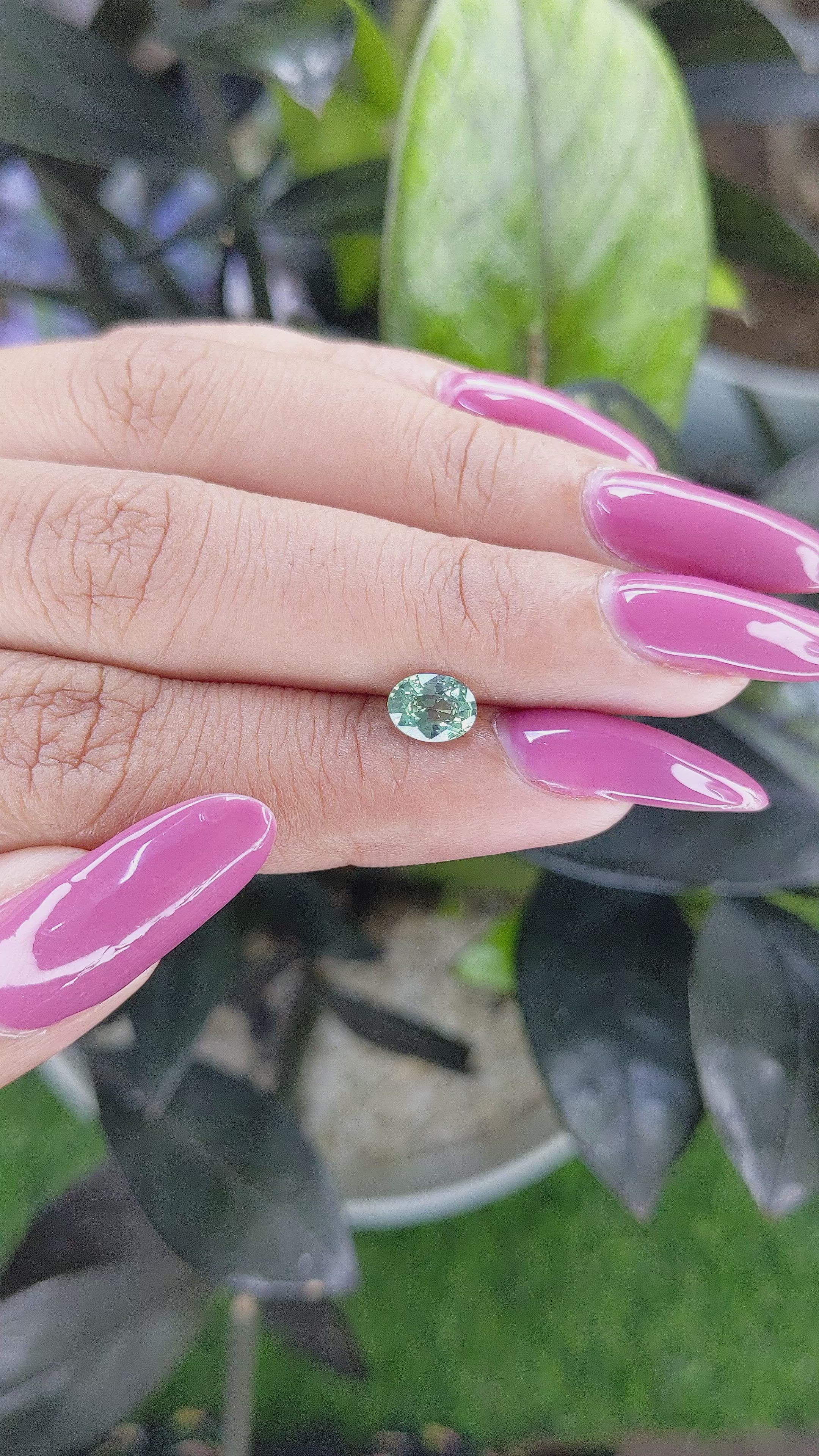
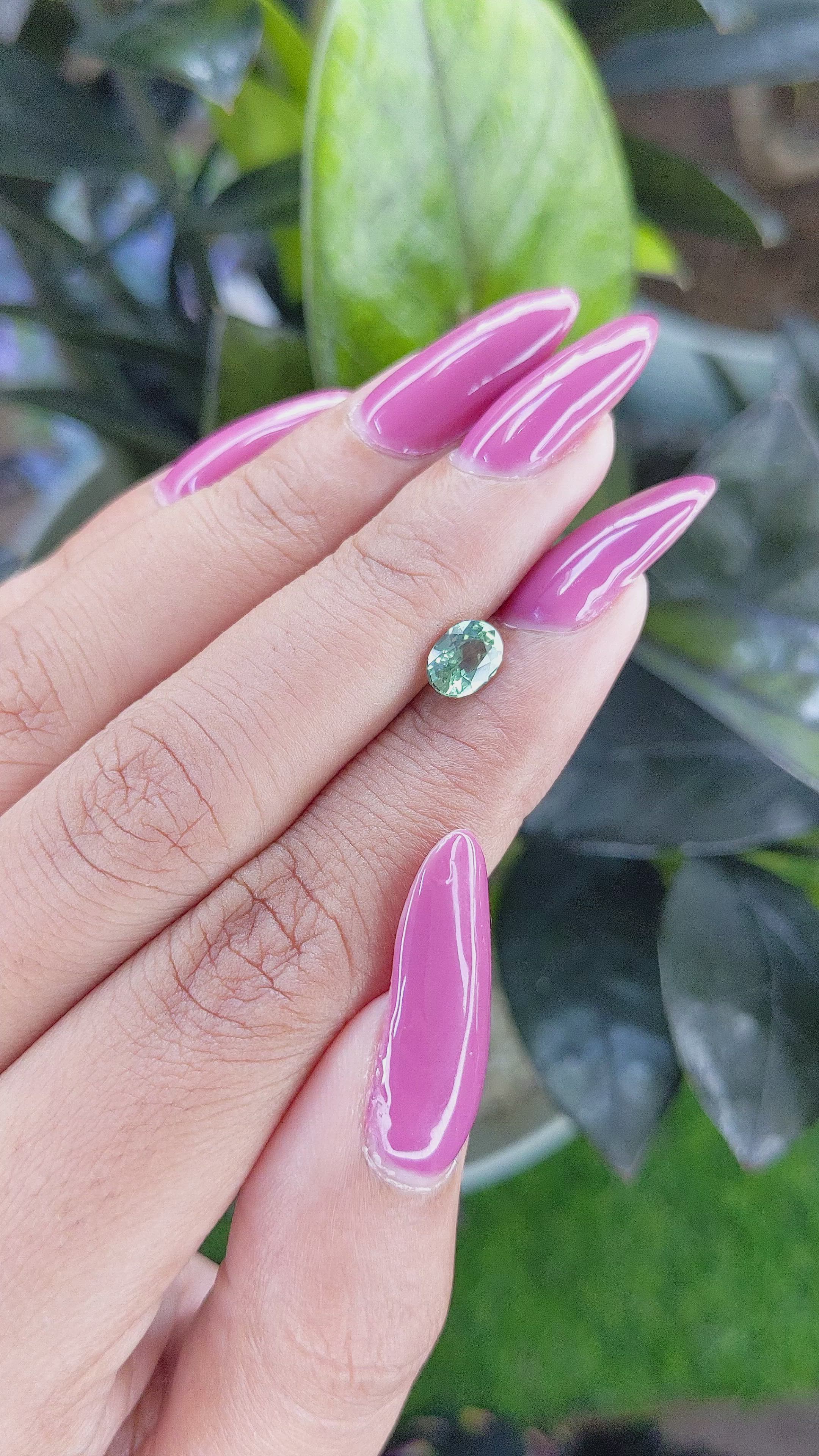
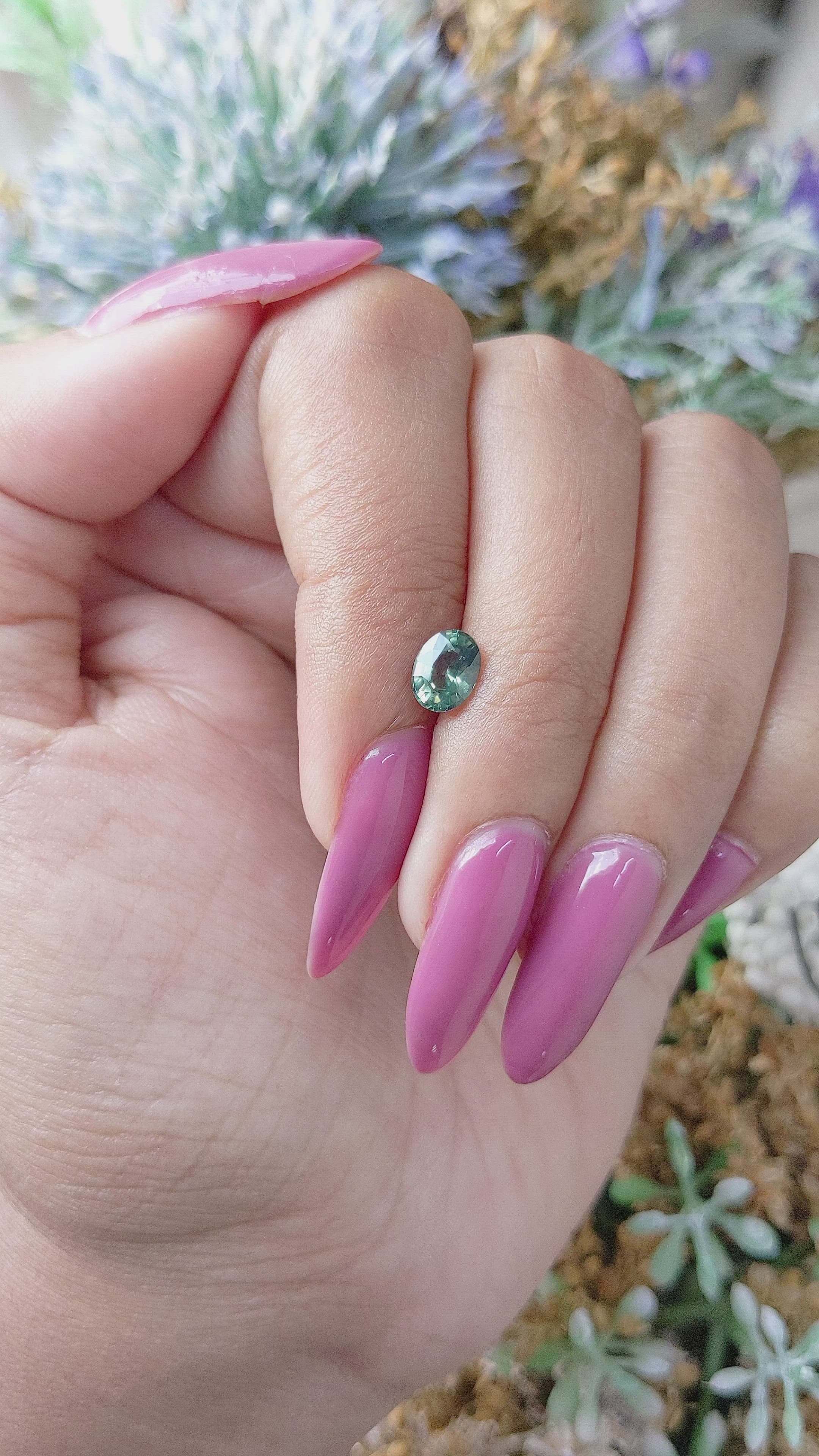



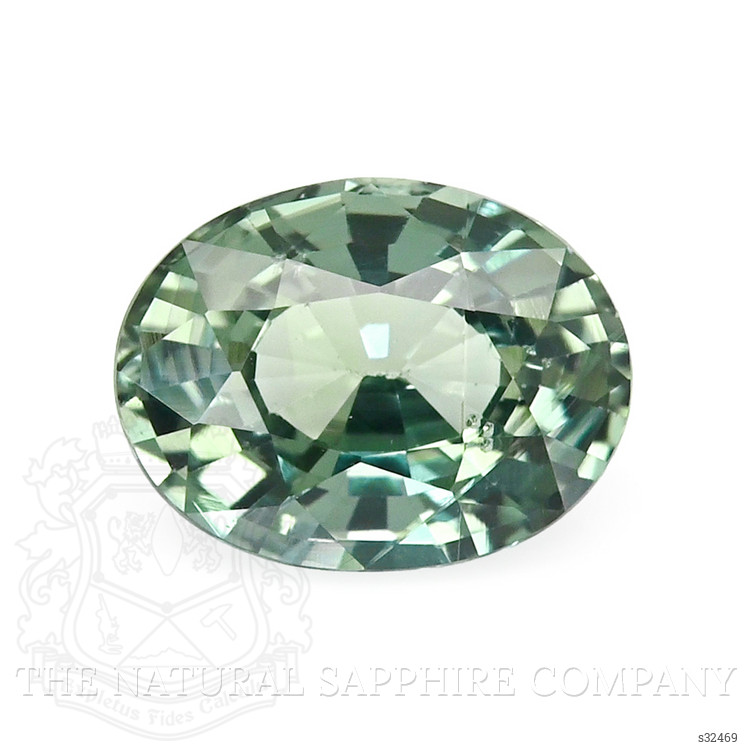
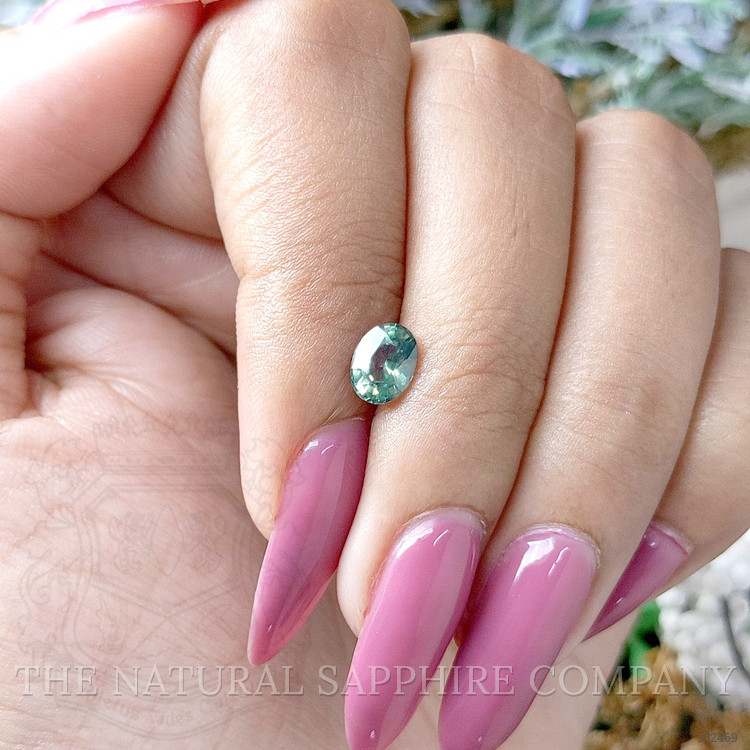
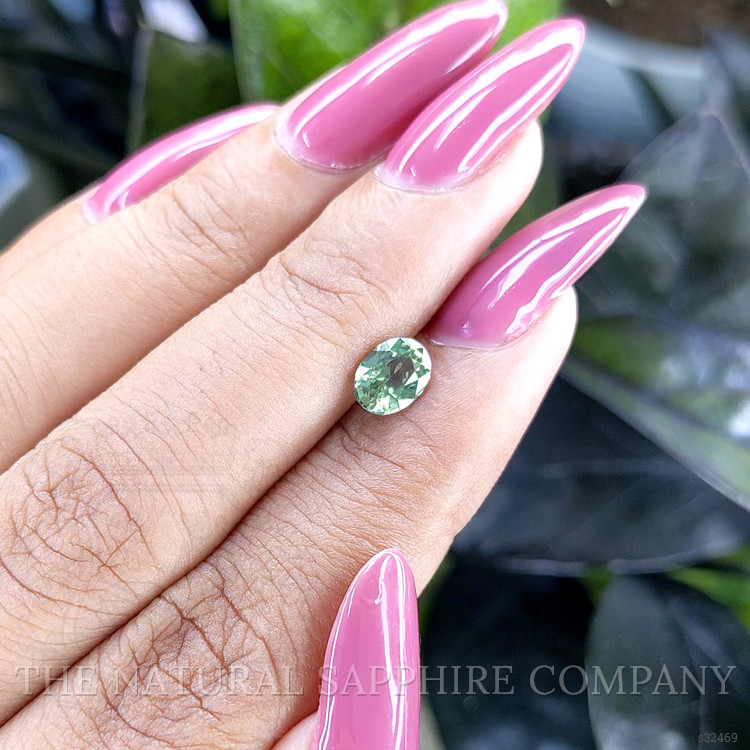
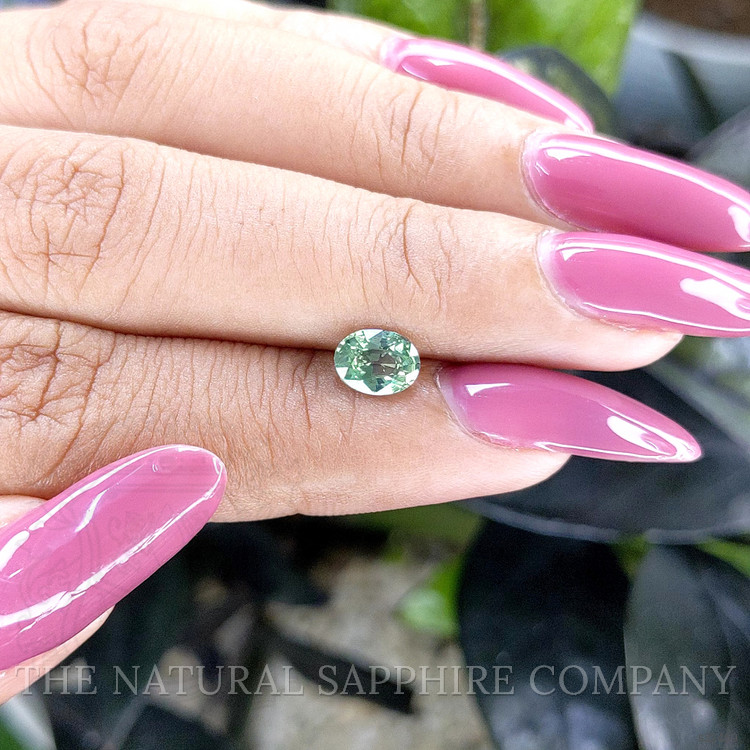


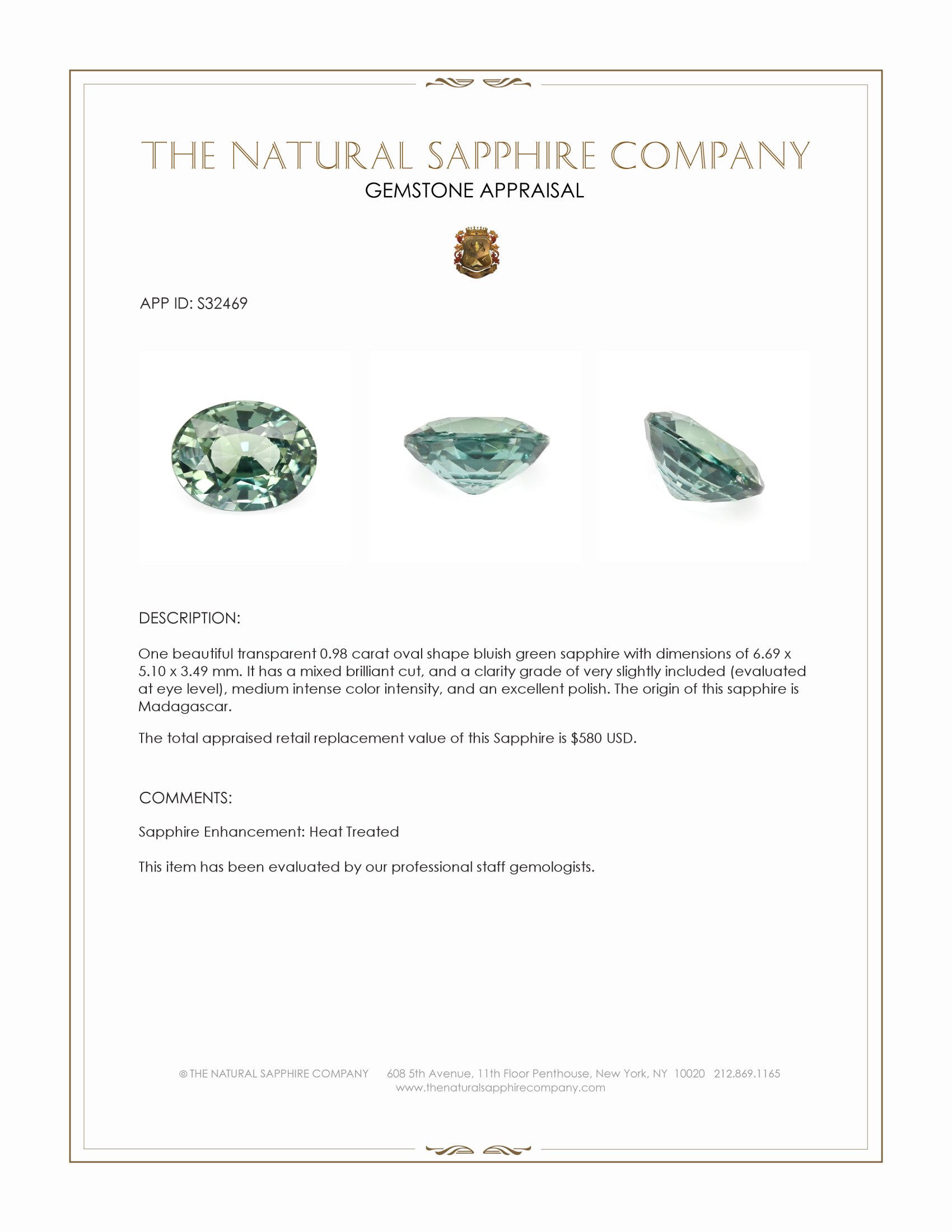
0.98 Ct. Bluish Green Sapphire from Madagascar
This loose stone ships by Mar 6
Item ID: | S32469 |
|---|---|
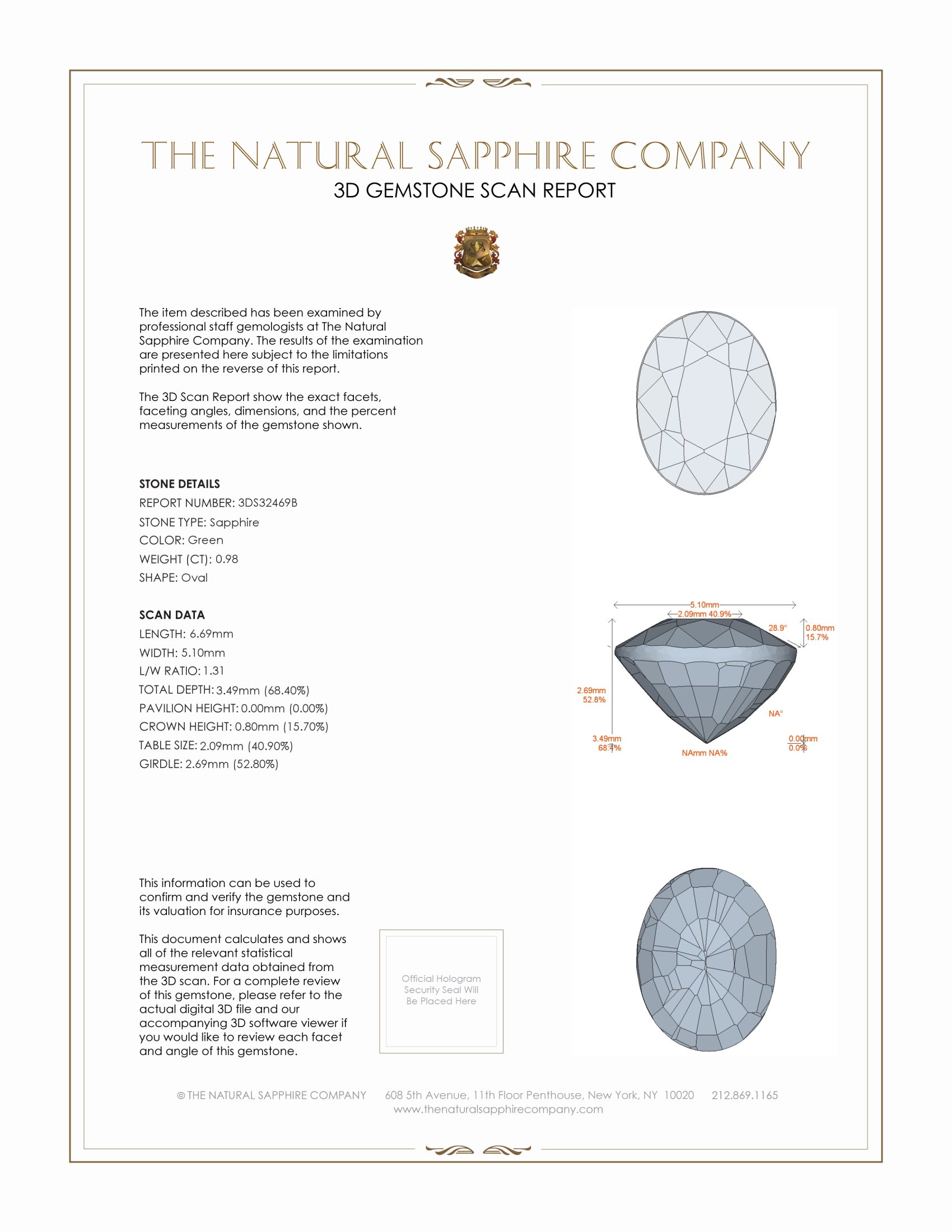
Dimensions (MM): help | Length: 6.69 Width: 5.1 Height: 3.49 |
Weight: | 0.98 Ct. |
Color: help | Bluish Green |
Color intensity: help | Medium Intense |
Clarity: help | Very Slightly Included |
Shape: help | Oval |
Cut: | Mixed Brilliant |
Cutting style: | Faceted |
Enhancements: help | Heat Treated |
Origin: help | Madagascar |
Per carat price: help | $592 |
This transparent bluish green sapphire weighs 0.98 carat, and measures 6.69 by 5.10 by 3.49 millimeters in an elegant oval shape, featuring a mixed brilliant cut that balances scintillation and color depth. The gem presents a medium intense color intensity that is evenly distributed across the table and pavilion, with a clarity grade described as very slightly included when evaluated at eye level, and an excellent polish that maximizes light return from the faceting. The stone has been heat treated, a common and stable enhancement that refines color and minimizes visual inclusions without altering the fundamental nature of the corundum. Origin data indicates Madagascar as the source, and this provenance is reflected in the characteristic color nuances and internal features often associated with that region. At The Natural Sapphire Company we document these attributes so that the gem may be understood in the context of both its gemological profile and its geological history.
The narrative of this sapphire begins deep within the Earth, during episodes of tectonic convergence that shaped the crust of what is now Madagascar, processes that unfolded over tens of millions of years. Corundum, the mineral species of sapphire, is aluminum oxide that crystallizes under conditions of high pressure and elevated temperature in aluminum rich, silica poor environments. In Madagascar, layers of metamorphic rock and igneous intrusions provided the chemical environment necessary for corundum to nucleate and grow, with localized concentrations of trace elements such as iron and titanium imparting the bluish green hue rather than the pure blue or green end members. As continental plates shifted and metamorphism progressed, pockets of corundum could form within marble lenses, in fractures and veins, or in association with basaltic and syenitic host rocks, depending on local geology. Over successive epochs, erosional forces liberated crystals from their primary host rocks, transporting them into river systems and alluvial deposits, where further mechanical sorting and abrasion rounded crystal edges while preserving internal crystal integrity. During this long geological journey, thermal pulses and fluid interactions could subtly modify trace element distributions and inclusion suites, setting the stage for the final appearance of the gem when it reached the surface and was recovered by modern mining operations.
Once recovered, the rough sapphire was evaluated and shaped to accentuate its intrinsic qualities, using a mixed brilliant cutting style that combines the fire and dispersion characteristic of brilliant faceting with the color retention provided by carefully controlled pavilion angles and crown proportions. The cutter considered the stone size of 0.98 carat and the rectangular oval outline to determine facet placement that enhances brilliance without sacrificing the medium intense color intensity that defines the gem. The resulting dimensions of 6.69 by 5.10 by 3.49 millimeters reflect a balance between depth and spread, supporting visual weight on the finger and efficient light performance in mounted settings. The very slightly included clarity grade indicates the presence of minute features that are typical in natural corundum, features that often confirm natural origin and that respond predictably to controlled heat treatment. The excellent polish enables crisp facet junctions and a lively surface luster, bringing forward the stone's bluish green character and allowing observers to appreciate subtle color zonations and the internal fingerprint of its formation. At The Natural Sapphire Company we document each step of this process, from geological formation to cutting and finishing, so that the gem can be evaluated on its merits with clarity and confidence.


