
- Stone11
- Reports3
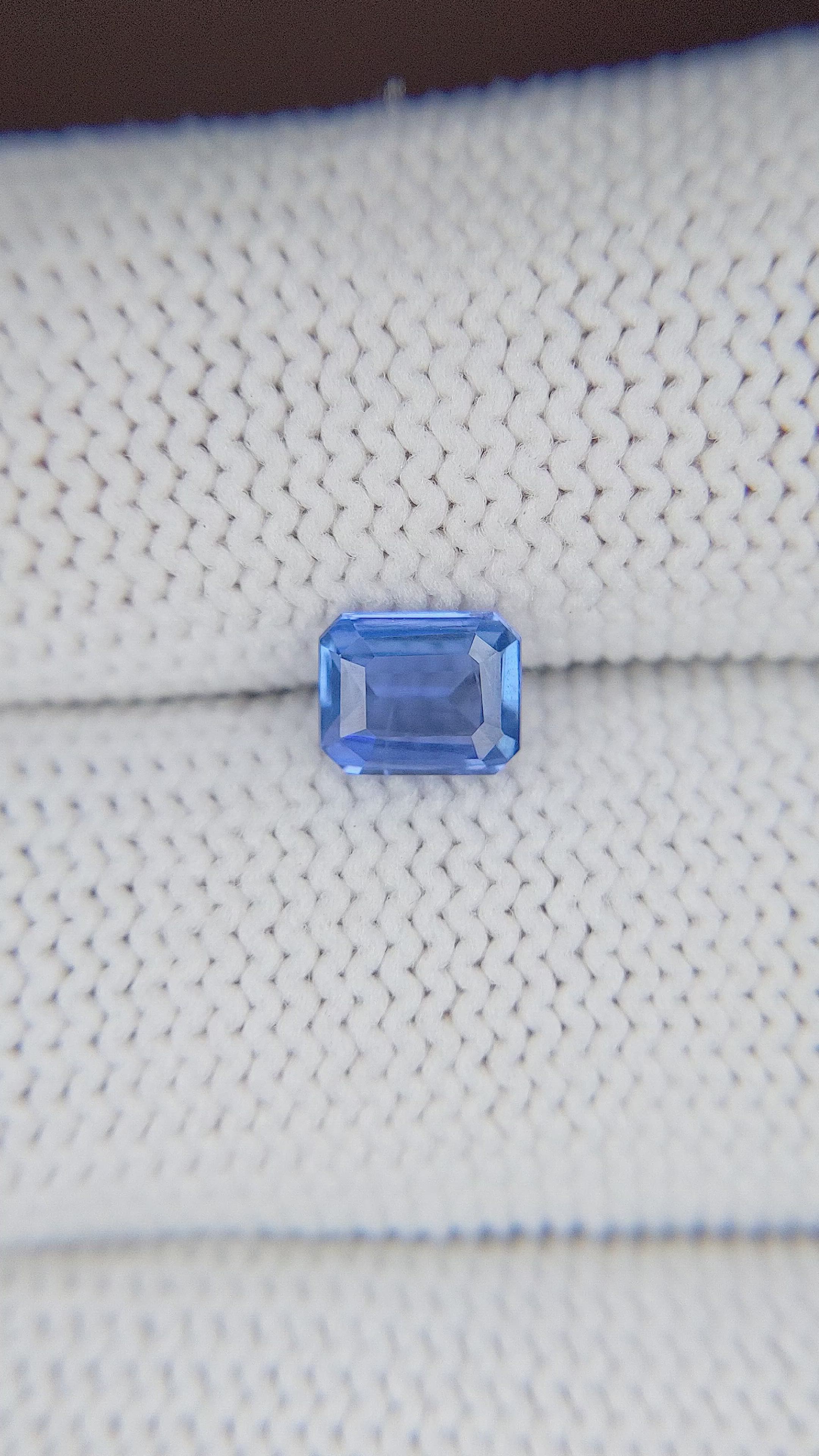
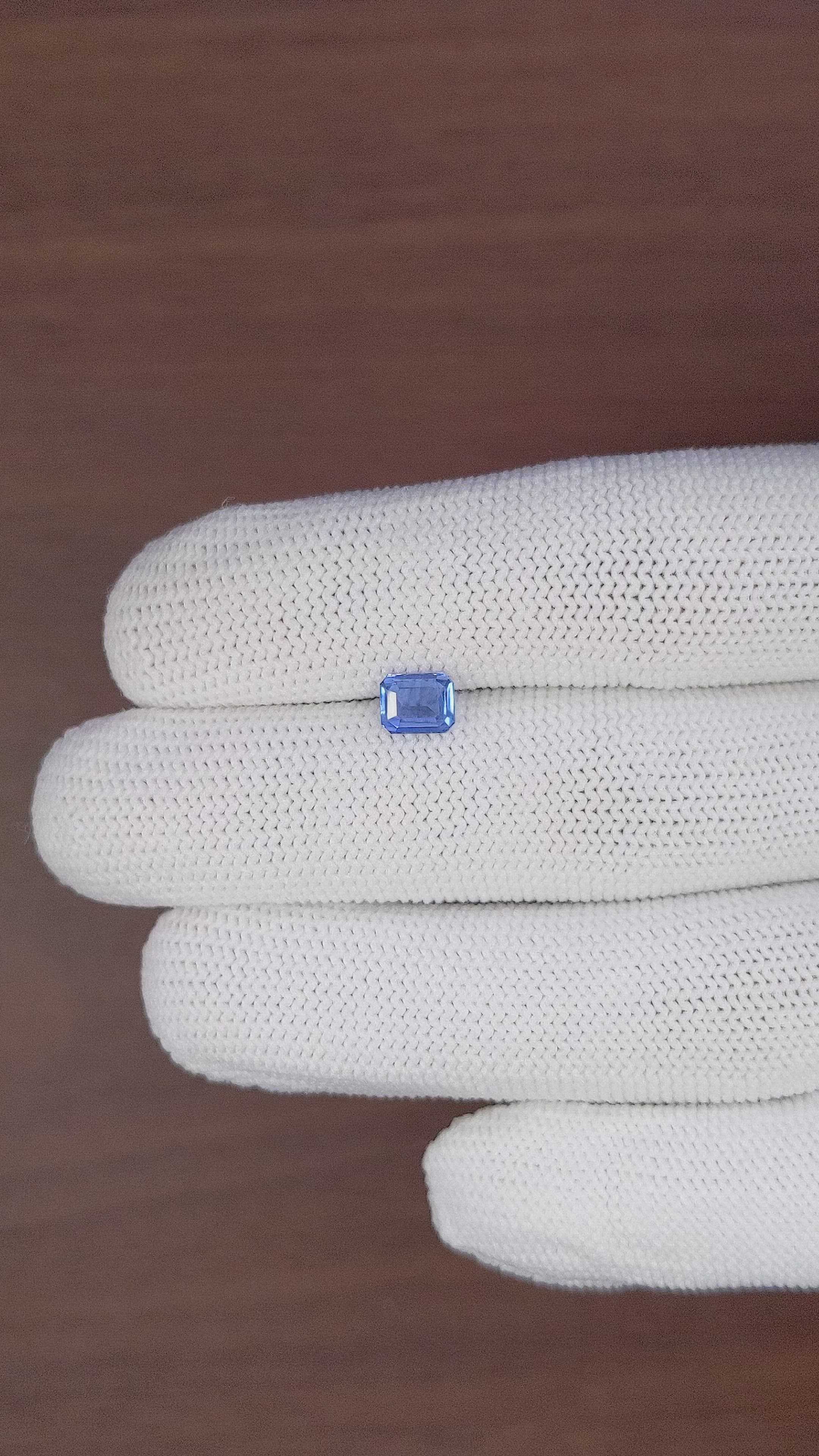
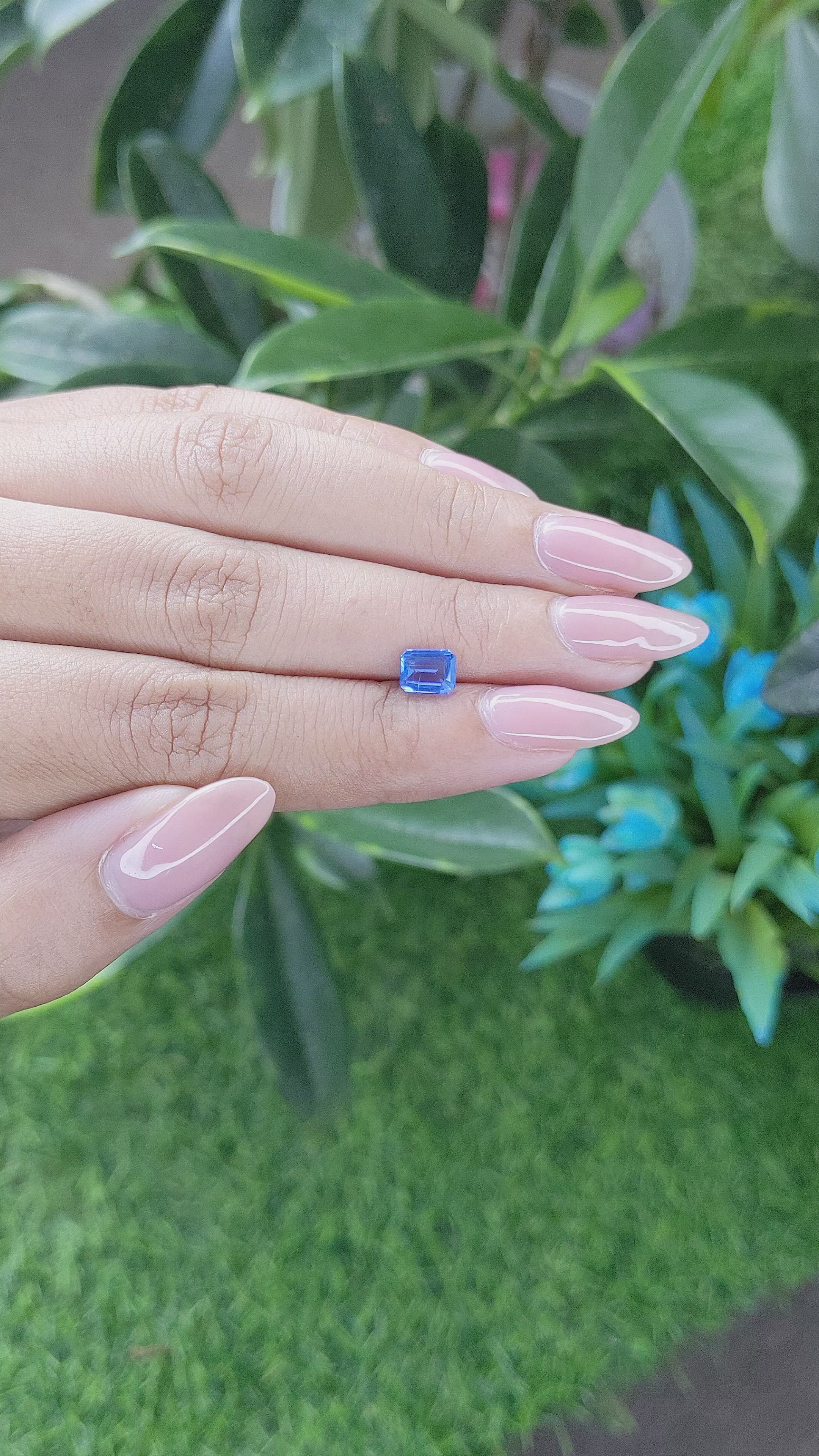
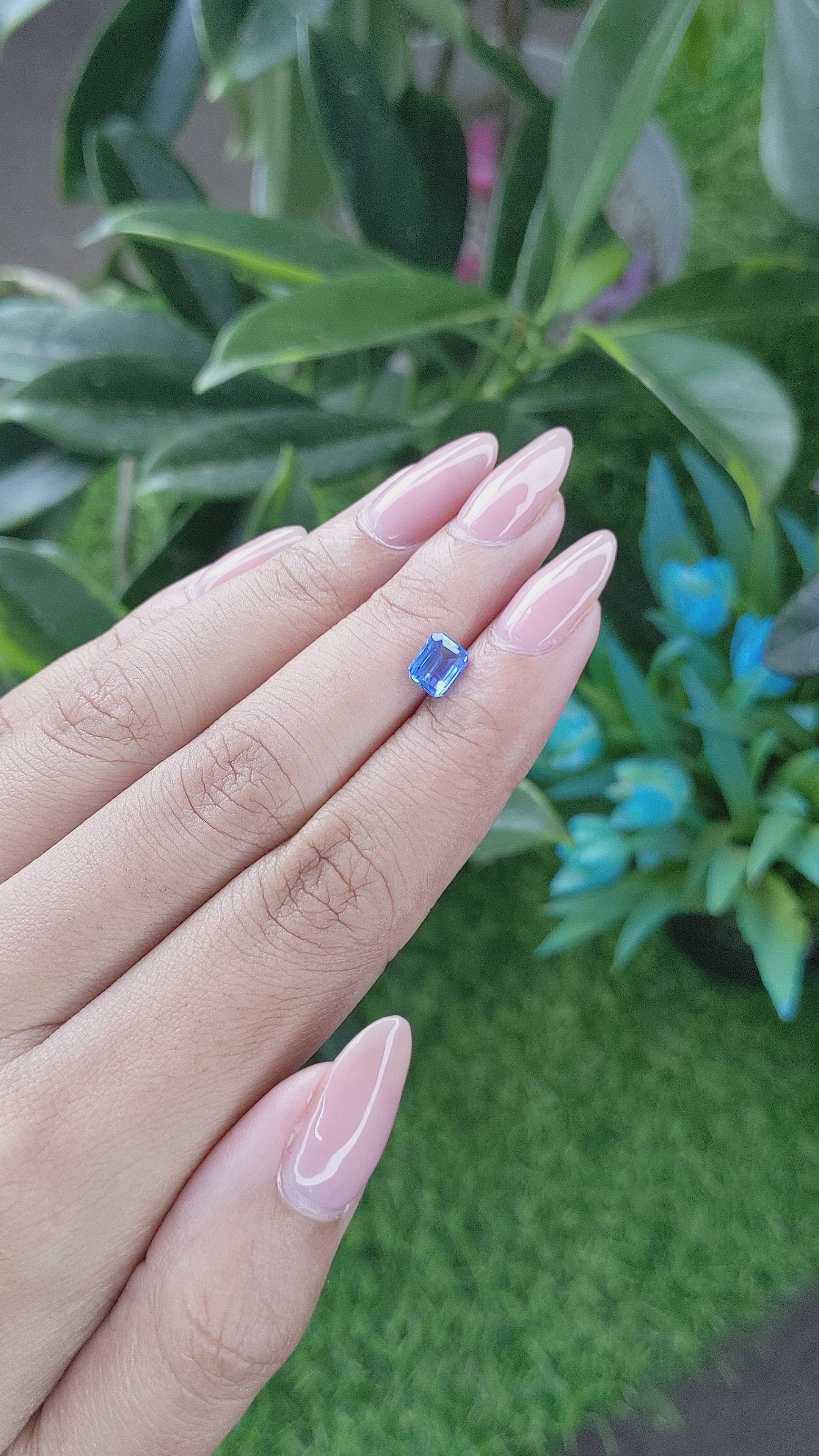
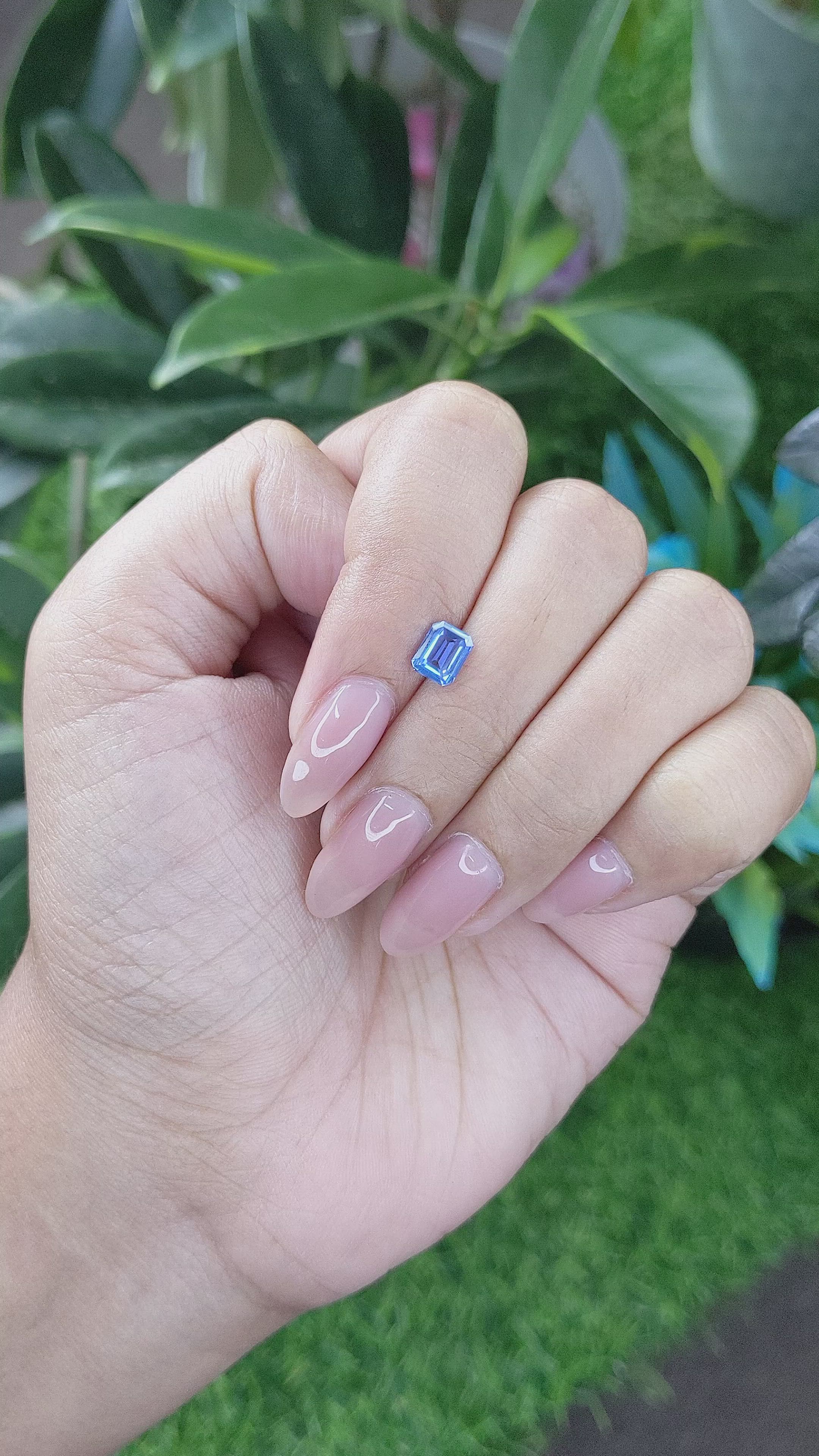

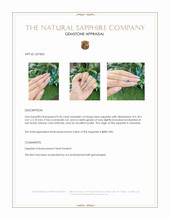


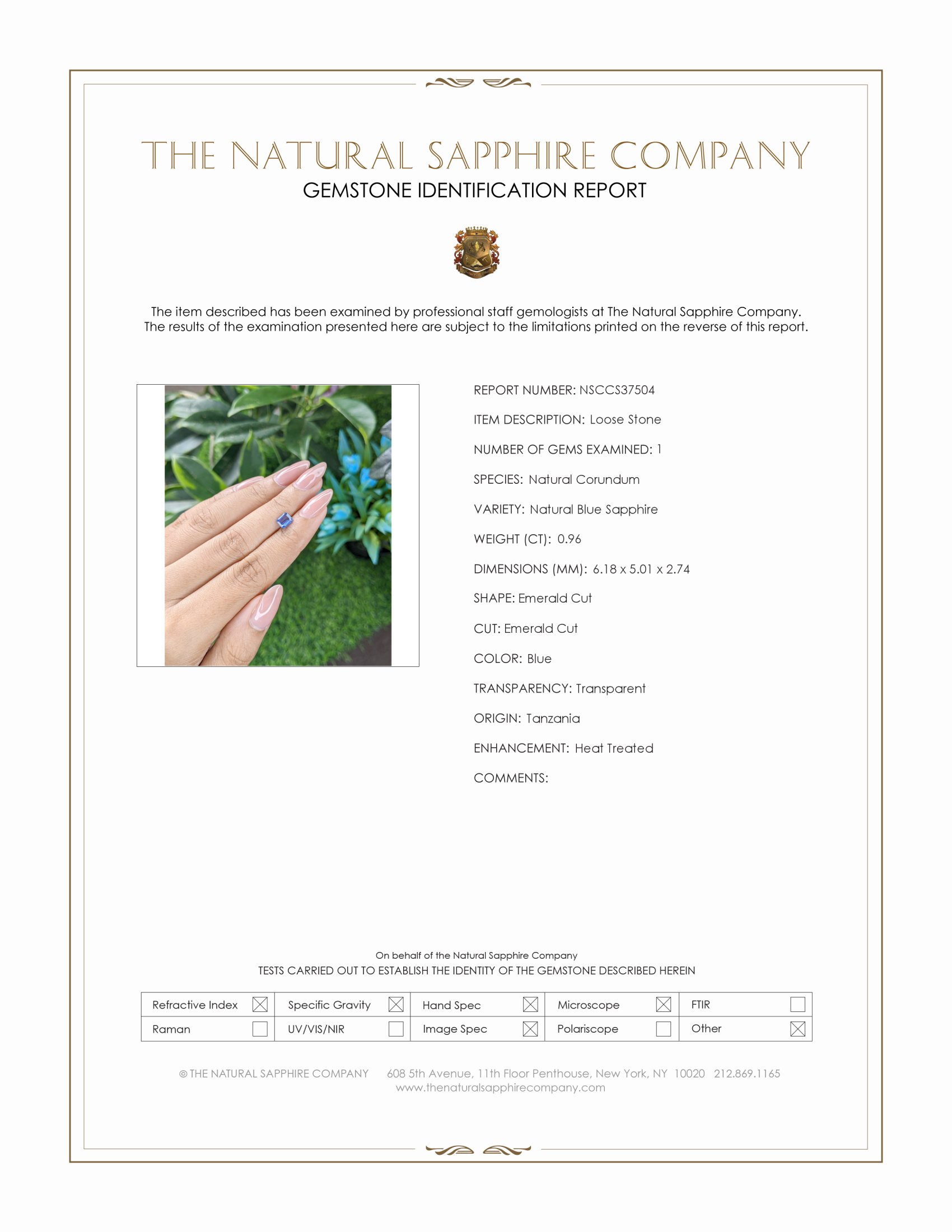
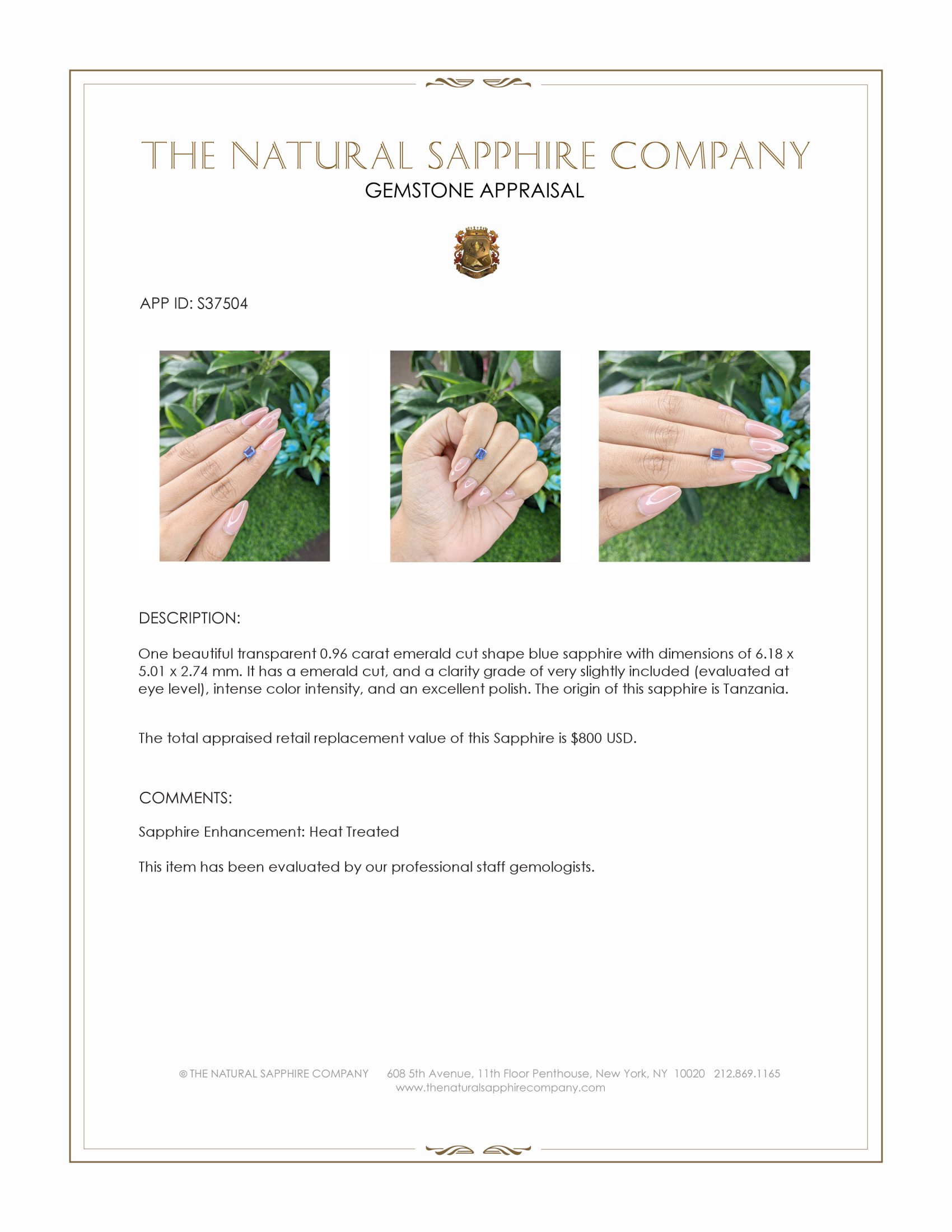
0.96 Ct. Blue Sapphire from Tanzania
This loose stone ships by Mar 27
Item ID: | S37504 |
|---|---|
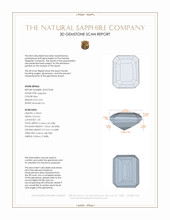
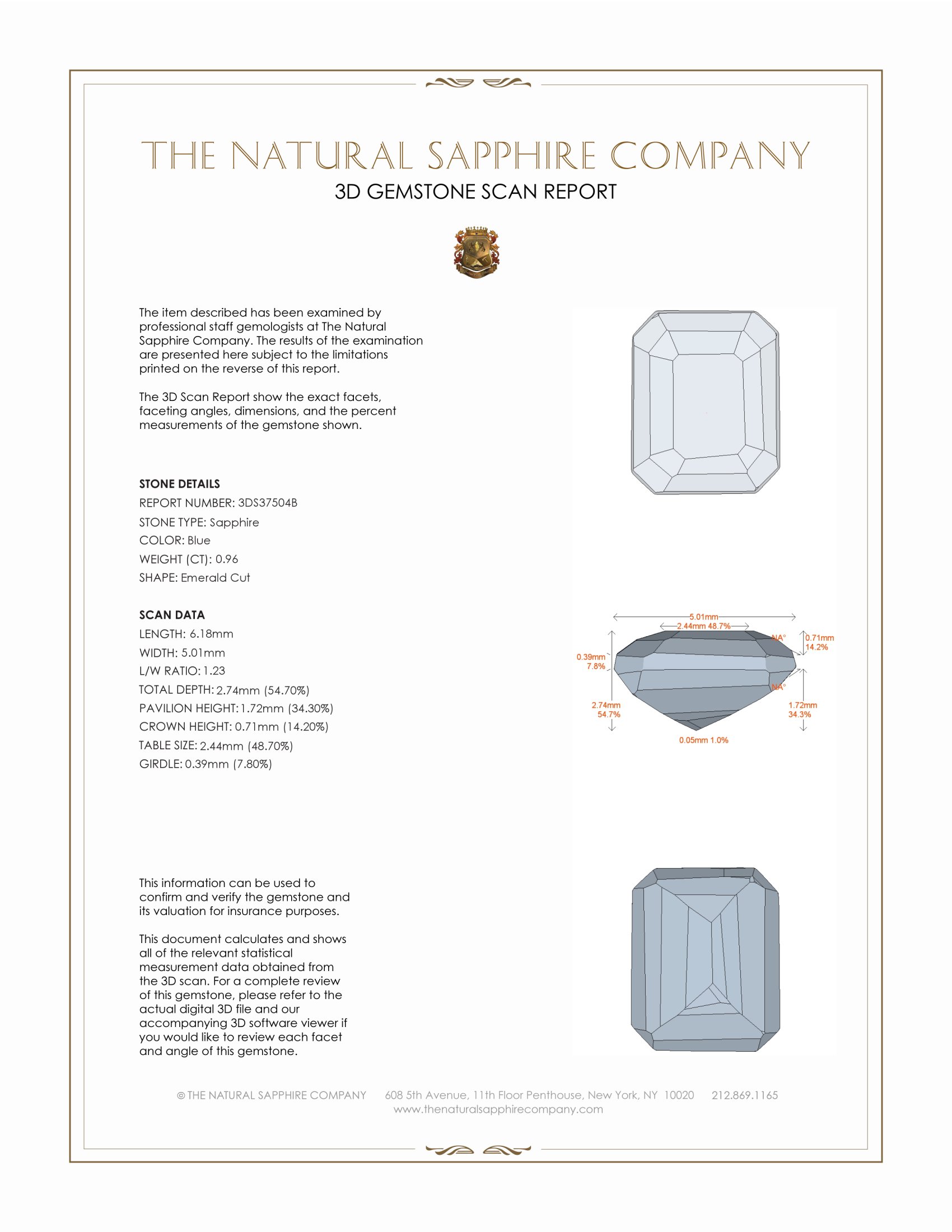
Dimensions (MM): help | Length: 6.18 Width: 5.01 Height: 2.74 |
Weight: | 0.96 Ct. |
Color: help | Blue |
Color intensity: help | Intense |
Clarity: help | Very Slightly Included |
Shape: help | Emerald Cut |
Cut: | Emerald Cut |
Cutting style: | Faceted |
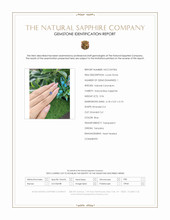
Enhancements: help | Heat Treated |
Origin: help | Tanzania |
Per carat price: help | $833 |
This listing presents a single transparent blue sapphire, precisely measured and graded to industry standards. The stone weighs 0.96 carat and is fashioned in an emerald cut, producing clean linear facets and a refined rectangular outline. Its dimensions are 6.18 x 5.01 x 2.74 millimeters, providing a pleasing table size and pavilion depth that balance face-up presence with wearability. Clarity is graded as Very Slightly Included when evaluated at eye level, indicating only minor internal characteristics that do not distract from the gem’s overall appearance. Color is described as intense, a saturated and vivid blue that carries through the stone rather than appearing washed or overly dark. The polish has been assessed as excellent, resulting in crisp facet junctions and lively light return. The sapphire has undergone a standard, stable heat treatment, disclosed here for full transparency, and its reported origin is Tanzania. The Natural Sapphire Company attests to these specifications to assist accurate evaluation and selection.
The emerald cut is an intentional design choice for a sapphire of this quality, and it imparts a distinctive aesthetic compared with the more common brilliant or mixed cuts used in sapphires. Step facets of the emerald cut emphasize color and clarity rather than scintillation; they create broad, mirror-like planes that allow observers to appreciate the depth and evenness of the blue. For a transparent stone with Very Slightly Included clarity and intense color, the emerald cut maximizes the visual effect of saturation and tone, yielding a clean, architectural look that reads as both modern and classical. The excellent polish enhances the gem’s planes, producing a controlled play of light that is sophisticated rather than flashy. The disclosed heat treatment is a routine enhancement in commercial sapphires and is used to optimize color and remove microscopic inclusions; it is considered stable and permanent under normal wearing conditions. Tanzanian sapphires are known for their variety of fine blues, and this stone’s provenance adds a documented origin that can be of interest to collectors and designers seeking regional character.
Placing this sapphire in historical context clarifies its unique value without overstating equivalence to famous museum pieces. Iconic sapphires such as the Logan Sapphire, with its vast size and royal provenance, or the Stuart Sapphire embedded in historic regalia, are notable for scale and legacy. Kashmir sapphires from the late 19th and early 20th centuries are renowned for a velvety cornflower blue produced by a particular interplay of color and silk-like inclusions; those stones are historically prized for their rare combination of color and texture. Sri Lankan (Ceylon) sapphires are often praised for a lighter, vibrant blue and excellent transparency, and Burmese stones historically provided rich tones prized by connoisseurs. The present 0.96 carat Tanzanian emerald cut differs from those historic examples in scale and expression: it offers intense, concentrated color and modern-cut clarity rather than the larger, soft-velvet or heavily saturated stones that became famous through royal collections. Its unique value lies in the combination of an architectural emerald cut with a high level of polish and an intense blue that reads boldly despite the stone’s modest carat weight, making it a refined, wearable counterpart to the grander historical specimens.
For practical considerations and design recommendations, this sapphire’s proportions and attributes make it particularly well suited to settings that emphasize clarity and color rather than brilliance alone. A single-stone solitaire in a bezel or four-prong setting will showcase the emerald cut’s graphic outline and allow the intense color to read clearly. Alternatively, a halo of small melee diamonds or contrasting metalwork can create a visual frame that amplifies perceived size without obscuring the stone’s step facets. Because the polish is excellent and the clarity is Very Slightly Included, the sapphire will present well under both natural and artificial light and is appropriate for daily wear when set with secure mounting. The disclosed heat treatment and Tanzanian origin provide factual context for appraisal and resale, and The Natural Sapphire Company stands behind the described characteristics for clients seeking documented and responsibly sourced gemstones. This sapphire is offered as a precise, wearable example of contemporary lapidary practice, combining a historic cut form with stable enhancement and a rich, intense color that performs reliably in jewelry.


